Best High-Protein Snacks (2026): 10 Category Winners Ranked by Verified Nutrition Labels
Country Archer Zero Sugar Classic is the best beef jerky, FAGE Total 0% is the best Greek yogurt, and Quest Chocolate Chip Cookie Dough is the best packaged protein bar — one verified pick per category across ten snack formats, ranked on real 2026 nutrition labels with honest sweetener and sodium disclosure. Every pick has 15g+ of protein per serving (or protein-per-100-calorie efficiency that matters more), a clean enough label to defend, and a tracked buy link — with the honest catches on each one so you can pick the right pick for your goal.
The short answer
Our top high-protein picks
Editor-selected and ready to buy. As an Amazon Associate we may earn from qualifying purchases.
Buy the products in this guide: Greek Yogurt · Lactose Free · Total 5% Greek Yogurt
 10g protein
Zero Sugar Beef Jerky - Original
Amazon returns policy · secure checkout
 10g protein
 12g protein
What are the best high-protein snacks?
Best beef jerky: Country Archer Zero Sugar Classic (12g protein/oz, 260mg sodium). Best meat stick: Chomps Original Grass-Fed Beef (10g/stick, 360mg sodium). Best packaged protein bar: Quest Chocolate Chip Cookie Dough (21g protein, 190 cal, 12g fiber). Best whole-food protein bar: RXBAR Chocolate Sea Salt (12g protein, five ingredients, no artificial sweeteners). Best Greek yogurt: FAGE Total 0% Plain (18g protein, 90 cal, 0g added sugar). Best ready-to-drink shake: Fairlife Nutrition Plan Chocolate (30g protein, 150 cal, lactose-free). Best cottage cheese: Good Culture Classic Whole Milk 4%. Best protein cereal: Magic Spoon Frosted (12g protein, 0g sugar per serving). Best protein chip: Quest Loaded Taco Tortilla-Style (19g protein per 32g bag). Best canned/pouch protein: Bumble Bee Chipotle Seasoned Tuna Pouch (14g protein, ready to eat).
Affiliate links — if you buy through them we earn a small commission at no extra cost to you. Every pick and every nutrition figure below comes from 2026 labels we’ve verified on the brand’s own site (or cross-checked against a major retailer) and already published in our per-brand nutrition guides.
All nutrition figures below come from each brand’s current 2026 nutrition panel. Category picks are chosen on a weighted scoring rubric detailed below — protein density (grams per 100 calories) is the primary filter, ingredient quality and honest label are the tiebreakers, and price and availability are the finishing checks. Sweeteners and any incomplete-protein fillers are called out plainly in every write-up so you can pick the right pick for your goal.
How We Picked the Best High-Protein Snacks of 2026
Every “best high-protein snacks” list on the internet has the same problem: it stops at the front-of-package protein number and calls it a day. We built the rubric below to catch the things that ranking-by-protein-alone misses — incomplete proteins that inflate the label, sugar-alcohol loads that make people bloat, sodium hits that are easy to eat twice in one snack, and marinades that turn savory snacks into candy.
- Protein density (40% of the score). Grams of protein per 100 calories, not per serving — a 300-calorie granola bar with 20g of protein is not the same “20g bar” as a 190-calorie whey bar with the same headline number. Anything above 15g of protein per 100 calories is elite; 10–15g is solid; below 8g is a snack that happens to contain protein rather than a protein snack.
- Protein completeness and honest source (20%). Complete dairy protein (whey, casein, milk protein isolate) and animal protein (beef, egg, tuna) earn full credit. Collagen and gelatin fillers get called out and cost points, because they are incomplete proteins (missing tryptophan) that pad the label without delivering the same muscle-supporting amino acid profile. We disclose every collagen blend so you can decide.
- Sweetener and sugar honesty (15%). Low sugar is table stakes on a protein snack; how it’s achieved is the real question. We prefer non-nutritive sweeteners with fewer GI side effects (monk fruit, stevia, allulose) over the classic candy-bar stack of maltitol, sucralose, and acesulfame potassium. Any bar or shake using more than one artificial sweetener gets the disclosure — not necessarily a downgrade, but noted.
- Ingredient count and processing (15%). Fewer ingredients is a real advantage. Five-ingredient labels on Country Archer, RXBAR, and FAGE beat 25-ingredient formulas by default. We rate whole-food snacks (yogurt, cottage cheese, tuna, jerky) separately from engineered snacks (bars, chips, shakes) because they play a different role in a real routine.
- Price and availability (10%). A great snack you can’t find at Target on a Tuesday night is worse than a good snack you can. Where we know the typical 2026 US retail range, it’s in the write-up. Every pick below is stocked at at least one major national retailer or Amazon.
The floor across every pick: at least 10g of complete protein per serving (or per 100 calories on a small-serving format like cottage cheese), a real ingredient panel we can defend, and a nutrition label we’ve already verified and published on this site. If you don’t see a household brand on this list, it’s because it didn’t clear the bar — not because we skipped it. That includes a few well-marketed “protein” snacks with under 8g of protein per 100 calories that most category rankings still recommend anyway.
Best High-Protein Snacks 2026: The Category Winners at a Glance
The table below is the whole ranking on one screen. Numbers are per single serving as sold (per stick, per bar, per cup, per bottle, per bag). The last column — protein per 100 calories — is the fairest apples-to-apples comparison across formats and is the primary reason each pick beat the rest of its category.
| Category | Winner | Serving | Protein | Calories | Total Sugar | Protein / 100 cal |
|---|---|---|---|---|---|---|
| Beef jerky | Country Archer Zero Sugar Classic | 1 oz (28g) | 12g | 70 | 0g | 17.1g |
| Meat stick | Chomps Original Grass-Fed Beef | 1 stick (33g) | 10g | 100 | 0g | 10.0g |
| Packaged protein bar | Quest Chocolate Chip Cookie Dough | 1 bar (60g) | 21g | 190 | 1g | 11.1g |
| Whole-food protein bar | RXBAR Chocolate Sea Salt | 1 bar (52g) | 12g | 210 | 13g | 5.7g |
| Greek yogurt | FAGE Total 0% Plain | 170g (¾ cup) | 18g | 90 | 6g* | 20.0g |
| Ready-to-drink shake | Fairlife Nutrition Plan Chocolate | 11.5 fl oz | 30g | 150 | 2g | 20.0g |
| Cottage cheese | Good Culture Classic Whole Milk 4% | 5.3oz cup | 14g | 110 | 3g* | 12.7g |
| Protein cereal | Magic Spoon Frosted | 35g (~1 cup) | 12g | 150 | 0g | 8.0g |
| Protein chips | Quest Loaded Taco Tortilla-Style | 1 bag (32g) | 19g | 140 | <1g | 13.6g |
| Canned / pouch protein | Bumble Bee Chipotle Seasoned Tuna Pouch | 1 pouch (2.5oz) | 14g | ~60 | 0g | 23.3g |
* The 6g of sugar on the FAGE label and the 3g on Good Culture are both naturally occurring lactose from milk — there is 0g of added sugar in either product. That is the honest way to read plain dairy nutrition labels and one of the reasons plain FAGE and plain cottage cheese top their respective categories on protein density.
Reading the table: plain dairy (FAGE, Good Culture) and a lean lactose-free protein shake (Fairlife Nutrition Plan) win the protein-per-calorie race outright at 20g per 100 calories — a level no engineered bar in this list reaches. The Bumble Bee tuna pouch at 23.3g per 100 calories is technically the leanest protein source on this list, at the cost of a much smaller serving. Country Archer Zero Sugar beef jerky (17.1g/100 cal) and Quest Loaded Taco protein chips (13.6g/100 cal) are the best shelf-stable, no-refrigeration picks by the same math — our ranked high-protein snacks without refrigeration guide covers all eight shelf-stable picks.
The 10 Best High-Protein Snacks by Category
#1 Best Beef Jerky — Country Archer Zero Sugar Classic

Country Archer Zero Sugar Classic Beef Jerky, 2oz
12g protein/oz · 70 cal · 260mg sodium · 0g sugar · 5 ingredients · grass-fed
Check price on Amazon →Country Archer Zero Sugar Classic is the only mainstream beef jerky in the US market that hits 12g of protein per ounce, 0g of sugar, AND meaningfully lower sodium (260mg per ounce, roughly a third of Jack Link’s ~770mg) at the same time. The ingredient list stops at beef, sea salt, garlic, black pepper, and celery powder. The beef is 100% grass-fed and finished. At 17.1g of protein per 100 calories, it’s the highest-protein-density shelf-stable savory snack in this ranking.
Why it beat the field: Country Archer is the only zero-sugar, sub-300mg-sodium, five-ingredient jerky in the mass-market beef jerky category we’ve verified. Tillamook Zero Sugar Original edges it on raw protein density (13g/oz) but runs about 520mg of sodium per ounce — twice Country Archer’s number. People’s Choice Old Fashioned 16oz matches the 12g protein and 0g sugar for less than half the per-ounce price but at 440mg of sodium.
The honest catch: price. At $4.00–$5.00 per ounce in a 2oz single-serve bag, Country Archer runs 3–4x the per-ounce cost of Jack Link’s Original. If price is the constraint, People’s Choice Old Fashioned Original 16oz is the best-value clean-label jerky at $1.88–$2.19 per ounce — the full head-to-head is in our beef jerky reviews.
#2 Best Meat Stick — Chomps Original Grass-Fed Beef
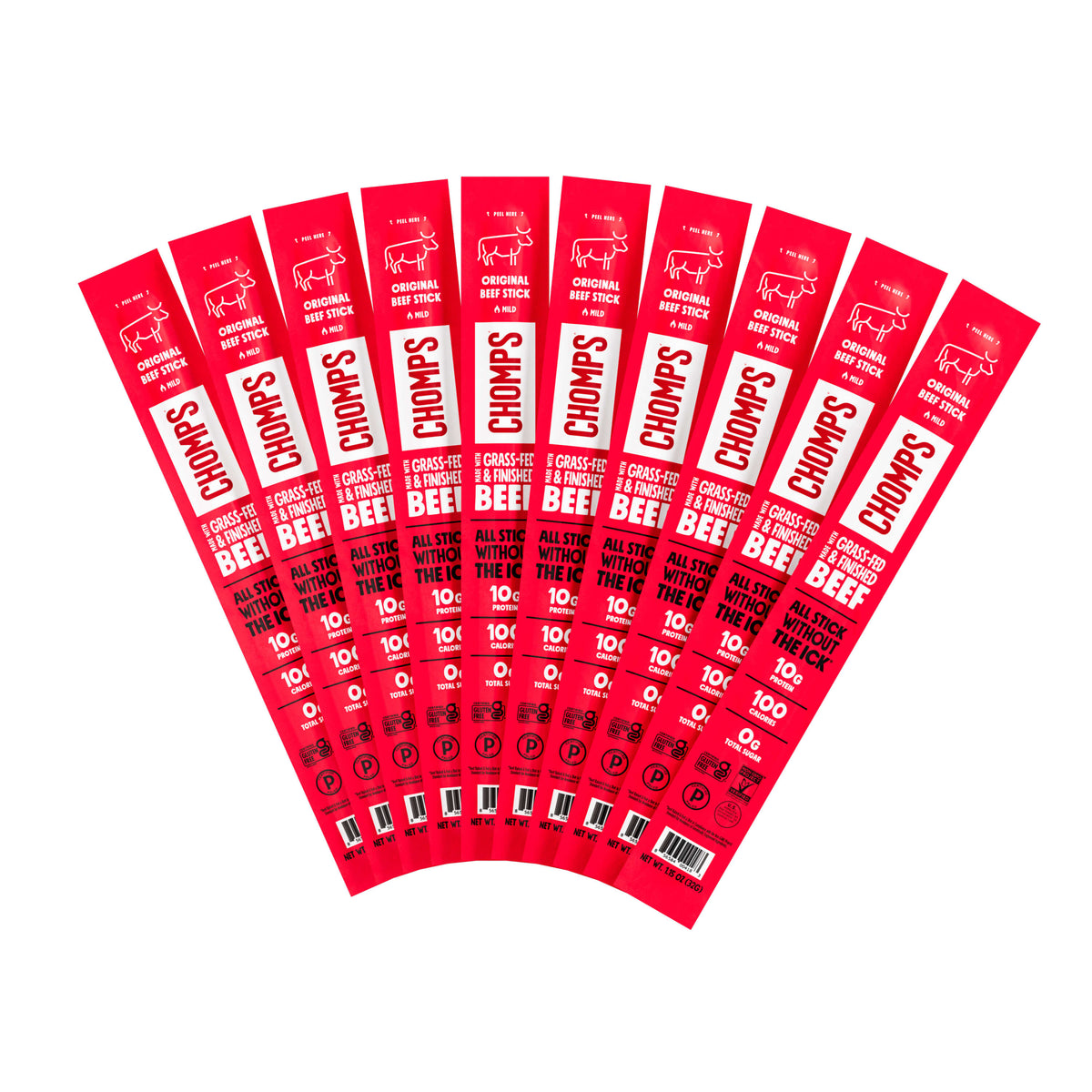
Chomps Original Grass-Fed Beef Stick, 1.15oz (10-Pack)
10g protein/stick · 100 cal · 360mg sodium · 0g sugar · grass-fed & finished
Check price on Amazon →Chomps is the pick any time flat jerky is the wrong shape for what you’re doing — a lunchbox, a carry-on, a jacket pocket, a car console. The Original Beef stick delivers 10g of protein per 1.15oz stick for 100 calories, with 0g of sugar and 360mg of sodium (less than half of a Slim Jim’s typical ~440mg and roughly a third of Jack Link’s Beef Stick’s ~460mg). Ingredients stop at grass-fed and finished beef, water, sea salt, celery powder, and spices. That is one of the shortest ingredient lists in the entire snack-stick aisle.
Why it beat the field: Chomps is one of the very few widely-available meat snacks that combines grass-fed beef, no added sugar, and an individually-wrapped portable format. The Whole30 / Paleo / Keto compatibility is real, not marketing — the ingredient list is short enough to defend on any of those protocols.
The honest catch: ground meat means more fat. The stick uses ground beef stuffed in a natural casing rather than whole-muscle jerky, so fat runs 7g per stick vs. 1–2g per ounce for flat jerky. Total calories per gram of protein is higher than flat jerky as a result — a feature if you want the satiety, a small drawback if you’re strictly tracking calories. Full head-to-head against flat jerky in our Jack Link’s vs. Chomps deep dive.
#3 Best Packaged Protein Bar — Quest Chocolate Chip Cookie Dough
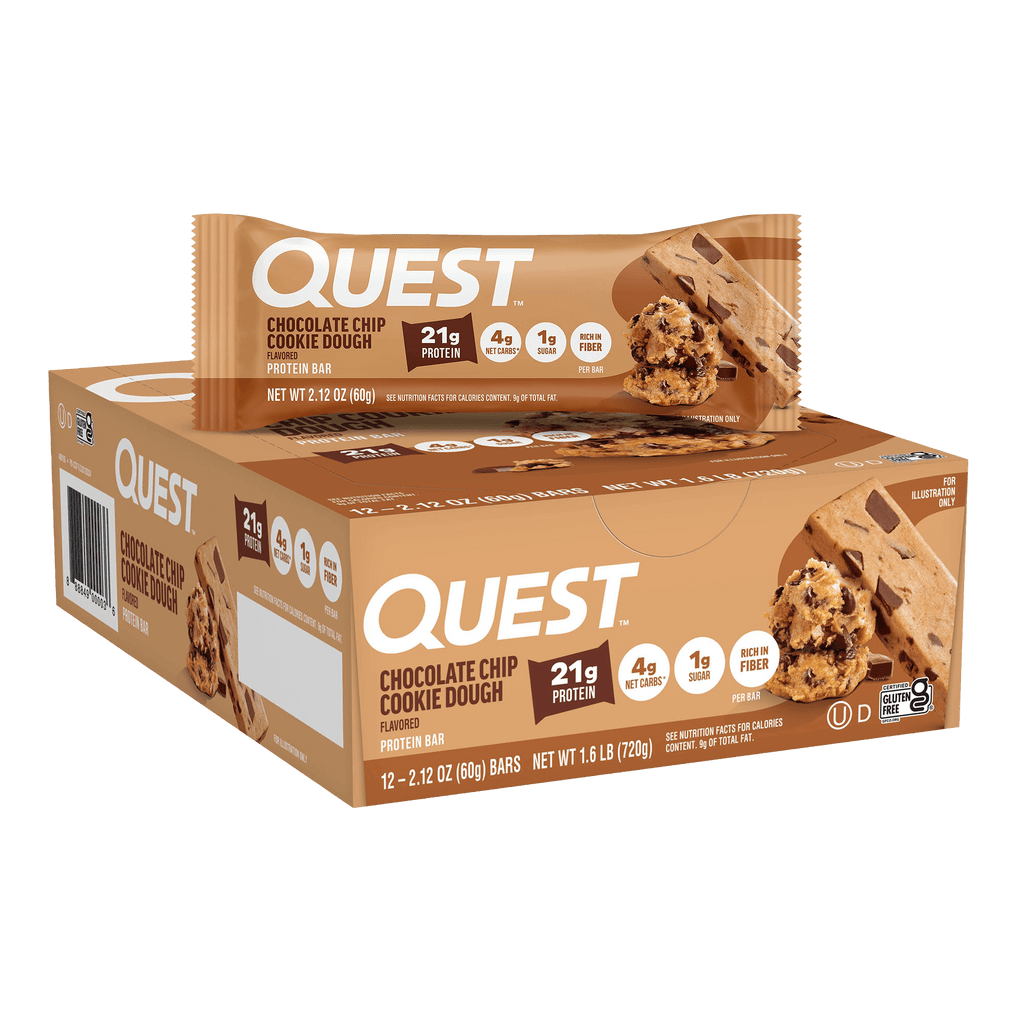
Quest Chocolate Chip Cookie Dough Protein Bar, 12-Pack (60g bars)
21g protein · 190 cal · 12g fiber · 1g sugar · ~10g net carbs
Check price on Amazon →Quest Chocolate Chip Cookie Dough is the strongest macro-per-calorie bar on the mainstream shelf. Every 60g bar delivers 21g of protein for 190 calories with 12g of fiber and 1g of sugar — that’s roughly 10g of net carbs. The protein blend is whey protein isolate plus milk protein isolate: two complete dairy proteins with the full amino acid profile, and no collagen filler. Sweeteners are erythritol, stevia, and sucralose.
Why it beat the field: the fiber gap. Quest’s 12g per bar is 4x what most candy-bar-style competitors deliver (Barebells: ~3g). Fiber is a real satiety lever — a 190-calorie Quest bar feels more like a small meal than a 200-calorie Barebells does, at basically the same protein number. And Quest’s protein blend is 100% complete dairy protein, while several bars that match Quest on the front-of-package protein claim quietly stretch it with hydrolyzed collagen (an incomplete protein missing tryptophan). We call out the collagen blends by name in our Barebells nutrition guide and Grenade nutrition guide.
The honest catches: Quest is the poster child for the sugar-alcohol GI problem. Erythritol and added soluble corn fiber (a prebiotic) can ferment in the gut and cause bloating, gas, or loose stools — especially if you eat two or three bars in a day. If sugar alcohols don’t sit well with you, RXBAR (pick #4) is the whole-food alternative on this list. And sucralose is FDA-approved but if you avoid artificial sweeteners entirely, RXBAR is again the pick. Full breakdown in our Quest protein nutrition guide.
#4 Best Whole-Food Protein Bar — RXBAR Chocolate Sea Salt
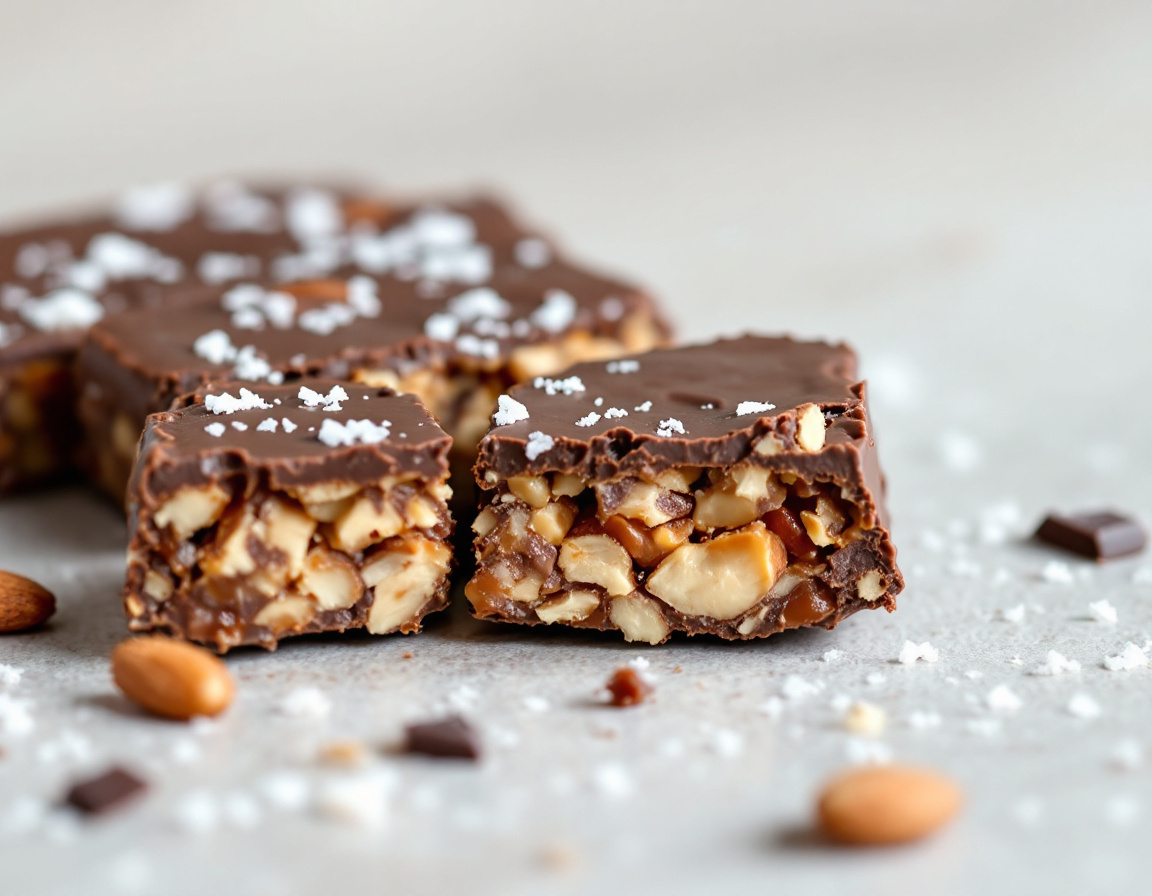
RXBAR Chocolate Sea Salt Protein Bar, 12-Pack (52g bars)
12g protein · 210 cal · 5-ingredient panel · no added sugar · no artificial sweeteners
Check price on Amazon →RXBAR is the pick if you’ve quit protein bars because the sweeteners, sugar alcohols, or fake-vanilla aftertaste kept ruining them. The Chocolate Sea Salt bar delivers 12g of protein for 210 calories from a five-ingredient label: 3 egg whites, 6 almonds, 4 dates, cocoa, and sea salt. No added sugar, no artificial sweeteners, no sugar alcohols, no collagen, no soy, no fillers. The sweetness is dates. That is unusual on a shelf-stable protein bar and is the entire reason RXBAR earned a spot on this list despite lower protein density than Quest.
Why it beat the field: the label. RXBAR is the only major-brand bar in the US market where the ingredient list is short enough to print on the front of the package (they do). Every other “whole-food” protein bar in this weight class either uses date syrup instead of whole dates, adds rice protein or pea protein isolate on top of the egg whites, or slips in natural flavors and gums. RXBAR does none of it. The egg white protein is a complete protein with the full amino acid profile, at a slightly lower digestion-and-absorption rate than dairy whey.
The honest catches: the 13g of total sugar per bar comes from the dates. It’s naturally-occurring, not added — but if you’re watching total sugar (diabetes, cutting), that number is meaningfully higher than Quest’s 1g. Protein density (5.7g per 100 calories) is roughly half of Quest’s, so RXBAR is a fine snack but a less efficient way to hit a protein target. And the texture is dense, chewy, and unmistakably date-forward — it does not taste like a candy bar and doesn’t try to.
#5 Best Greek Yogurt — FAGE Total 0% Plain
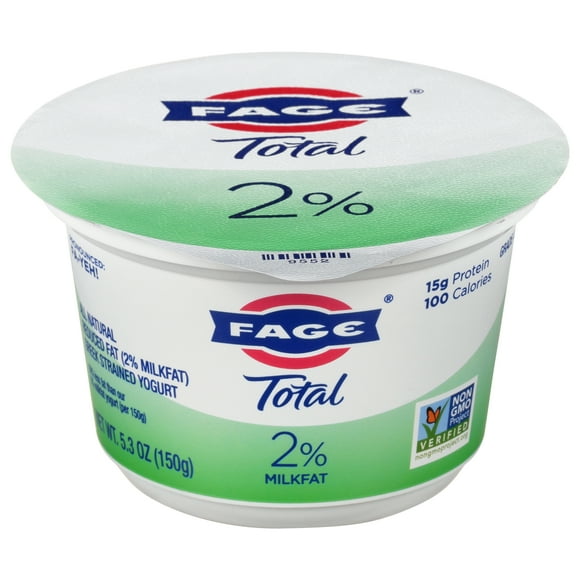
FAGE Total 0% Plain Greek Yogurt, 5.3oz single-serve cup
18g protein / 170g · 90 cal · 0g fat · 0g added sugar · 3-ingredient label
Check availability on Amazon →FAGE Total 0% Plain delivers 18g of protein for 90 calories per 170g serving (about three-quarters of a cup) — the highest protein density of any mainstream Greek yogurt in the US at 20g of protein per 100 calories. There is 0g of fat in the 0% version, 0g of added sugar, and only three ingredients: pasteurized skimmed milk and two live yogurt cultures. The roughly 6g of sugar on the label is naturally occurring lactose from the milk, not anything added.
Why it beat the field: straining. FAGE is strained (real Greek-style), which concentrates protein into each spoonful and removes most of the lactose and whey. That’s why a fat-free yogurt can still hit 18g of protein. siggi’s Nonfat Plain (17g protein per 5.3oz) and Chobani Nonfat Plain (14g) are close behind on protein density but sit at 17g and 17.5g of protein per 100 calories — FAGE’s 20g per 100 calories is the honest winner. If you want a flavored zero-added-sugar cup instead of plain, Oikos Triple Zero Vanilla (stevia) and Two Good Vanilla (allulose + stevia) are the strongest sweetened picks — ranked in our best Greek yogurt brands guide.
The honest catch: plain FAGE is plain. If you don’t like unsweetened yogurt, you’ll need to add fruit, honey, or granola yourself — and the pre-mixed FAGE split-cups you see in US stores are the 2% version, not 0%, with the fruit compartment dropping protein to 12g per cup and adding 11g of sugar. Full breakdown of every FAGE variety in our FAGE Total 0% nutrition guide.
#6 Best Ready-to-Drink Protein Shake — Fairlife Nutrition Plan Chocolate
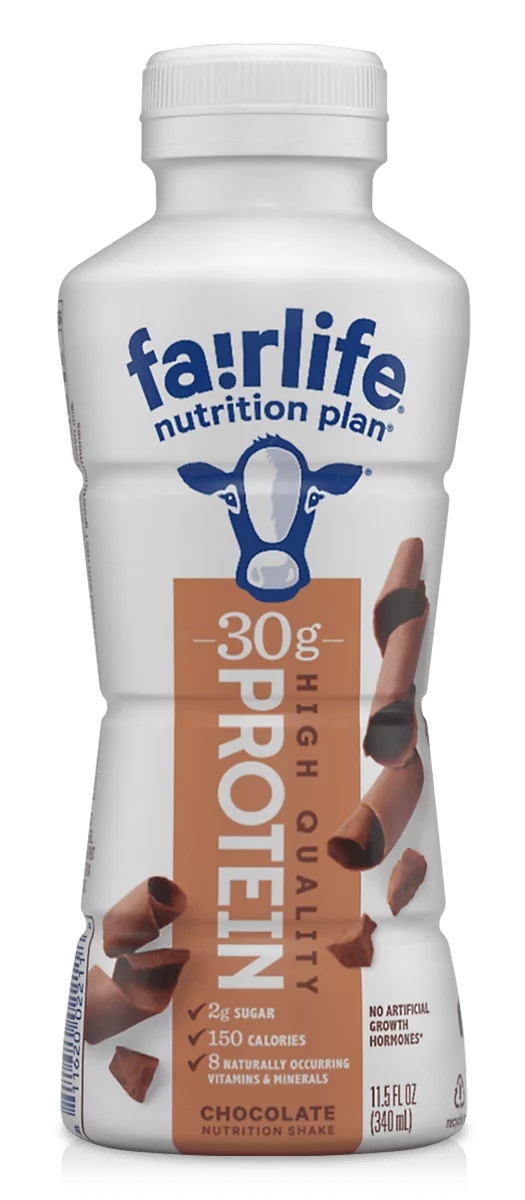
Fairlife Nutrition Plan Chocolate Protein Shake, 11.5 fl oz (12-Pack)
30g protein · 150 cal · 2g total sugar · 0g added sugar · lactose-free
Check price on Amazon →Fairlife Nutrition Plan Chocolate is the best macro-per-calorie ready-to-drink shake on the mainstream US shelf. Every 11.5 fl oz bottle delivers 30g of complete dairy protein for just 150 calories, with 2g of total sugar (all naturally-occurring milk sugar), 0g of added sugar, and 2.5g of fat. That works out to 20g of protein per 100 calories — tied with plain FAGE for the top protein density of any snack in this ranking. Sweeteners are monk fruit juice concentrate and stevia leaf extract alongside sucralose and acesulfame potassium.
Why it beat the field: the ultra-filtered, lactose-free milk base is what unlocks the numbers. Fairlife starts with real dairy milk, ultra-filters out most of the lactose and sugar, and concentrates the protein. That’s different from a Muscle Milk or a Premier Protein, which build back up from protein isolates. Premier Protein Chocolate matches the 30g/150 cal profile closely (30g protein, 160 cal, 1g sugar) and is the honest runner-up — a few cents cheaper per bottle, more heavily fortified (24 vitamins & minerals), but not lactose-free. Full head-to-head in our Fairlife Nutrition Plan vs Core Power guide and our Premier vs Fairlife breakdown.
The honest catches: the sweetener list. Even with monk fruit and stevia doing part of the work, sucralose and acesulfame potassium (Ace-K) are in every bottle — not an artificial-sweetener-free product. And the Nutrition Plan is not the recovery shake for max-protein training days: for 42g of protein in a bottle, step up to Fairlife Core Power Elite (14 fl oz, 42g protein, 230 cal) covered in our Core Power nutrition guide.
#7 Best Cottage Cheese — Good Culture Classic Whole Milk 4%
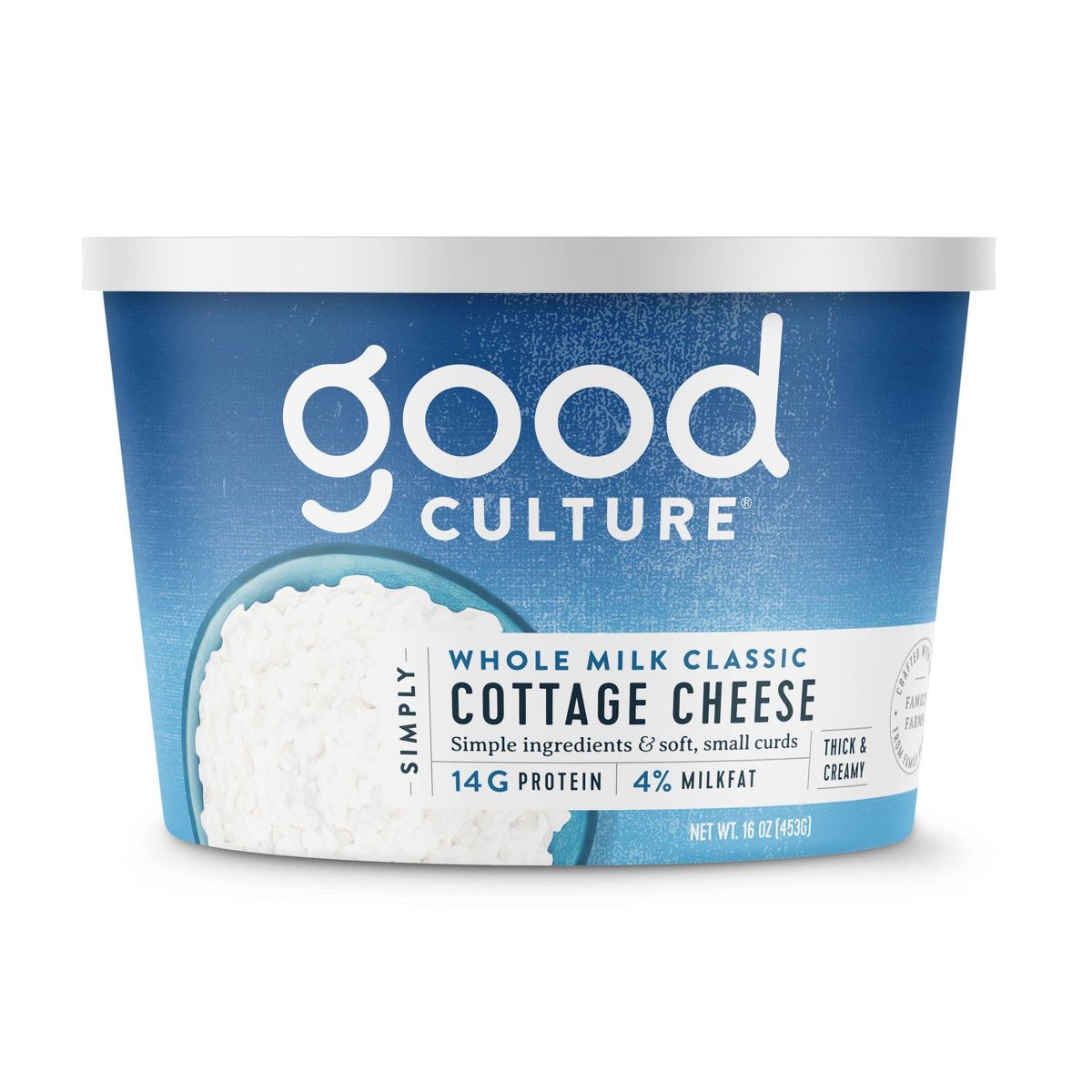
Good Culture Classic Whole Milk 4% Cottage Cheese, 5.3oz cup
14g protein · 110 cal · 4g fat · 0g added sugar · live & active cultures
Check availability on Amazon →Good Culture is the honest pick for cottage cheese as a real high-protein snack, not a sad diet food. The Classic Whole Milk 4% single-serve 5.3oz cup delivers 14g of protein and 110 calories, with 4g of fat from real whole milk (the reason it tastes creamy rather than gluey), 3g of naturally-occurring milk sugar, and 0g of added sugar. The ingredient list stops at pasteurized cultured whole milk, cream, sea salt, and live cultures (S. thermophilus, L. bulgaricus, and Bifidobacterium BB-12). No gums, no thickeners, no modified food starch.
Why it beat the field: most mainstream cottage cheese still uses modified food starch and other gums to hold the texture together, and the “low fat” versions of every major brand replace whole-milk cream with more thickeners. Good Culture’s Classic Whole Milk skips all of that in favor of a shorter ingredient list — and the 4% fat is what makes it satiating enough to work as a real snack rather than a spoonful of protein you get bored of halfway through. On protein density, plain FAGE Total 0% still beats it (20g vs. 12.7g per 100 calories), but cottage cheese is a different eating experience — curdy, savory, and higher in casein specifically, which digests slowly and is why cottage cheese is a common pre-bed snack.
The honest catches: not as protein-dense per calorie as strained Greek yogurt — if maximum protein per calorie is your goal, plain FAGE wins. And the whole-milk version is the tastier pick but adds 30–40 calories over the low-fat version. The low-fat Good Culture cottage cheese cups run about 90 calories and 15g of protein per 5.3oz — a leaner option with the same clean-label list.
#8 Best Protein Cereal — Magic Spoon Frosted

Magic Spoon Frosted Cereal, 4-Pack (7oz boxes)
12g protein / serving · 150 cal · 0g sugar · 4g net carbs · grain-free
Check price on Amazon →Magic Spoon Frosted delivers 12g of protein and 0g of sugar per 35g (~1 cup) serving for about 150 calories. The protein blend is whey protein concentrate and milk protein isolate — complete dairy protein, no collagen filler — and the cereal is sweetened with allulose and monk fruit rather than the maltitol-and-sucralose stack most low-sugar packaged foods rely on. Grain-free, gluten-free, keto-friendly on paper at ~4g of net carbs per bowl. The taste is genuinely close to a sugary childhood cereal without spiking blood sugar the same way.
Why it beat the field: Magic Spoon is one of the few “protein cereals” on the market where the front-of-package protein claim survives the fine print. Traditional-brand “protein” cereals (Special K Protein, Kashi GO Protein) run 6–10g of protein per serving and rely on soy protein isolate, and most add 8–12g of sugar. On price-per-gram-of-protein, mainstream grocery options like Kashi GO Original ($0.55/serving for 13g protein and 8g fiber) win outright, but Magic Spoon wins on taste, macro cleanliness, and zero-sugar credibility for anyone specifically avoiding sugar. Full head-to-head in our best protein cereal ranking.
The honest catches: price. Magic Spoon runs about $1.32 per serving at direct-to-consumer pricing — roughly 2.5x the per-serving cost of Kashi GO Protein. If cost per gram of protein is your primary metric, Kashi and even Kellogg’s Special K Protein are cheaper. And allulose can cause mild GI distress in larger doses (2+ servings), similar to sugar alcohols — a small share of eaters notice it. Add real milk and you’ve got a 20g+ protein breakfast for well under 300 calories, which is the single strongest use case for this product.
#9 Best Protein Chips — Quest Loaded Taco Tortilla-Style

Quest Loaded Taco Tortilla-Style Protein Chips, 12-Pack (32g bags)
19g protein / bag · 140 cal · 4g net carbs · baked, not fried
Check price on Amazon →Quest Loaded Taco Tortilla-Style Protein Chips deliver 19g of protein per 32g single-serve bag for 140 calories, with 5g of total carbs, 4g of net carbs, less than 1g of sugar, and 5g of fat. Protein comes from a milk and whey protein isolate blend — complete dairy protein, no soy protein isolate padding the number. Baked, not fried. At 13.6g of protein per 100 calories, it’s one of only two shelf-stable savory snacks in this ranking above 13g/100 cal (the other is Country Archer beef jerky).
Why it beat the field: the single most protein-dense chip on the mainstream shelf. Wilde Chicken Protein Chips (chicken breast base) hit similar protein density but come in a bigger 3.5oz bag, and the flavor lineup and availability are narrower. PopCorners are only ~4g of protein per bag despite the “better-for-you” positioning. If crunch is what’s keeping you off protein snacks (bars, yogurt, jerky don’t scratch that itch), Quest chips are the pick.
The honest catches: the same sugar-alcohol / soluble-corn-fiber issue as Quest bars. If Quest bars mess with your stomach, Quest chips will too. And a 32g bag is a snack, not a share bag — the price per bag runs $2.00–$2.50 depending on the multipack, which is a real premium over PopCorners. Full brand comparison in our best protein chips comparison.
#10 Best Canned / Pouch Protein — Bumble Bee Chipotle Seasoned Tuna Pouch

Bumble Bee Chipotle Seasoned Tuna Pouch, 2.5oz (12-Pack)
14g protein · ~60 cal · 0g sugar · ready to eat · no can opener needed
Check price on Amazon →The Bumble Bee Chipotle Seasoned Tuna Pouch is the sleeper pick on this list and, on paper, the most protein-dense snack in the whole ranking: 14g of protein per 2.5oz pouch for roughly 60 calories — 23.3g of protein per 100 calories, higher than plain Greek yogurt, higher than Fairlife, higher than any bar. It’s wild-caught seasoned tuna in a foil pouch you tear and eat with a fork (or straight, in the parking lot, if we’re being honest). No refrigeration required, no can opener, no drain step.
Why it beat the field: the pouch format changed the math. Regular canned tuna delivers similar protein per gram but is annoying to eat on the go — a Bumble Bee pouch is a spoonable, portable protein snack that lives in a desk drawer for weeks. The Chipotle Seasoned version is our pick over plain because the flavor is honest and the sodium (roughly 450–500mg per pouch) is in-line with a small savory snack rather than absurd. StarKist Tuna Creations pouches are the runner-up format — the flavor lineup is broader but StarKist’s sodium runs slightly higher in most varieties.
The honest catches: mercury. Canned/pouched light tuna is the pick over albacore for lower mercury; the FDA guidance is that light tuna is safe at 2–3 servings per week for most adults but pregnant women and small children should limit further. And it’s a tuna pouch. If the smell in an open office is going to embarrass you, buy the plain version and pack a fork.
How Much Protein Do You Actually Need in a Snack?
The number that matters more than any single snack is your daily protein target. A commonly-cited working number for active adults is roughly 0.7–1.0g of protein per pound of body weight per day, or about 1.6–2.2g per kilogram — higher end for muscle gain or aggressive weight loss, lower end for general maintenance. That’s the target most sports-nutrition and dietitian sources land on, and it’s the assumption baked into this ranking. This is general information, not medical advice.
A 180-lb adult eating for muscle maintenance is looking at roughly 130–180g of protein per day. Three meals plus two snacks is a reasonable structure. If two snacks each deliver 15–25g of protein (well within the range of every pick above), you’ve got 30–50g of protein coming from snacks alone — and your meals only need to cover 100–130g, which is the difference between a plan that works and a plan that’s all almonds and hope. The right number of grams per snack is a function of your total daily target and how many meals you can fit around it. On a lower-appetite day when a full meal is skipped, one 30g-protein pick (Fairlife Nutrition Plan, Quest bar plus FAGE cup, or Country Archer Zero Sugar plus Chomps stick) is the closest thing on this list to a real emergency meal.
What Actually Counts as a “High-Protein” Snack?
The FDA regulates when a food can be labeled “high protein” on the front of the package, but the threshold is looser than most shoppers realize. Under 21 CFR 101.54, a “high protein” claim requires at least 20% of the Daily Value per serving — roughly 10g of protein at the standard 50g Daily Value. That’s a low bar for a snack that actually moves your daily protein total. A better working bar, and the one used in this ranking, is at least 15g of protein per serving OR at least 15g of protein per 100 calories. That catches high-density small servings (like the tuna pouch at 14g per 60 calories or a plain FAGE cup at 18g per 90 calories) that are technically small but honestly high-protein by any real metric.
The line to hold: if the snack is under 8g of protein per 100 calories, it’s a snack that contains protein, not a protein snack — it won’t meaningfully move your daily total unless you eat several. Most granola bars, most trail mix, most “protein cookies” from grocery bakeries, and every KIND bar in the mainstream lineup fall into this category. There’s nothing wrong with them as snacks. They’re just not the ones we’d rank on a protein list.
How to Read a High-Protein Snack Label
Three numbers on the nutrition panel tell you most of what you need to know before you buy. The other two live in the ingredient list.
- Protein per 100 calories, not per serving. Serving sizes are engineered. A 300-calorie granola bar and a 100-calorie yogurt cup with 15g of protein each are not comparable snacks — the yogurt is 3x more protein-dense per calorie. Multiply out protein-per-serving to per-100-calorie in your head; anything above 10g/100 cal is honestly high-protein.
- Added sugar, not total sugar. Plain FAGE has 6g of sugar on the label and Good Culture cottage cheese has 3g — both are naturally occurring lactose from milk, not something added. That’s a very different label than an RXBAR’s 13g (naturally-occurring from whole dates) or a KRAVE beef jerky’s 11g (added brown sugar in a marinade). The added-sugar line is the honest one; the total-sugar line can be misleading.
- Sodium per serving, especially on savory snacks. Jerky and meat sticks vary wildly — Country Archer at 260mg per ounce vs. Jack Link’s Original at ~770mg per ounce is a 3x range in the same category. The American Heart Association’s cap is 2,300mg per day. A 700mg-per-ounce jerky eats a third of that in a single ounce.
- Ingredient list length. A five-ingredient label (Country Archer, RXBAR, FAGE) is a genuinely clean product. A 25-ingredient label built on protein isolates, gums, and sweeteners is a supplement-style snack — not a downgrade automatically, but a different food category from a whole-food snack, and worth choosing consciously.
- Collagen and gelatin fillers. If a protein bar lists hydrolyzed collagen, bovine collagen, or gelatin in the protein blend, the front-of-package protein number is padded with an incomplete protein missing tryptophan. It’s not fraud — collagen is protein — but the effective complete-protein content is lower than the label implies. Every bar with collagen on this site is called out in the individual review.
Best High-Protein Snack by Goal
A single winner doesn’t fit every buying reason. Here’s the honest decision tree:
- Best for weight loss / cutting: Fairlife Nutrition Plan Chocolate (30g protein for 150 calories, lactose-free) or plain FAGE Total 0% (18g for 90 calories). Both hit 20g of protein per 100 calories — the leanest ratio on this list.
- Best for building muscle / max protein per dollar: plain FAGE Total 0% (the tub, not the split-cup) plus a Fairlife Nutrition Plan on training days. Two shelf-stable snacks stacked deliver 48g of protein for under 250 calories.
- Best for on-the-go / travel: Chomps Original Grass-Fed Beef Sticks. Individually wrapped, shelf-stable, low sodium relative to the jerky category, and the ingredient list defends on any protocol.
- Best for a sweet tooth / dessert swap: Quest Chocolate Chip Cookie Dough Bar or Magic Spoon Frosted with milk. Both scratch a sugary craving without the sugar.
- Best clean-label / no artificial sweeteners: RXBAR Chocolate Sea Salt (5-ingredient bar), plain FAGE Total 0% (3 ingredients), Country Archer Zero Sugar Classic (5 ingredients), or Good Culture Whole Milk Cottage Cheese (4 ingredients).
- Best for a savory craving / crunch: Quest Loaded Taco Tortilla-Style Chips or Country Archer Zero Sugar Beef Jerky. Both hit above 13g of protein per 100 calories, which is exceptional for a savory shelf-stable snack.
- Best when a real meal was skipped: Fairlife Nutrition Plan (30g protein, 150 cal) plus a Bumble Bee Chipotle Tuna Pouch (14g protein, ~60 cal). That’s 44g of protein for roughly 210 calories — the closest thing on this list to a full-meal replacement.
- Best pre-bed protein snack: Good Culture Classic Whole Milk Cottage Cheese. Casein-heavy (slow-digesting) and satiating enough to actually keep you asleep.
Frequently Asked Questions
What are the best high-protein snacks in 2026?
Across the ten major snack categories on this site, the 2026 category winners are Country Archer Zero Sugar Classic (beef jerky), Chomps Original Grass-Fed Beef (meat stick), Quest Chocolate Chip Cookie Dough (packaged protein bar), RXBAR Chocolate Sea Salt (whole-food bar), FAGE Total 0% Plain (Greek yogurt), Fairlife Nutrition Plan Chocolate (ready-to-drink shake), Good Culture Classic Whole Milk (cottage cheese), Magic Spoon Frosted (protein cereal), Quest Loaded Taco Tortilla-Style (protein chips), and Bumble Bee Chipotle Seasoned Tuna Pouch (canned/pouch protein). Every pick was chosen on verified 2026 nutrition labels using the protein-per-100-calorie rubric detailed above.
What is the single most protein-dense snack in this ranking?
By protein per 100 calories, the Bumble Bee Chipotle Seasoned Tuna Pouch tops the list at 23.3g of protein per 100 calories (14g of protein in a ~60-calorie pouch). Plain FAGE Total 0% Greek yogurt and Fairlife Nutrition Plan Chocolate are tied for second at 20g of protein per 100 calories. Country Archer Zero Sugar Classic beef jerky (17.1g/100 cal) and Quest Loaded Taco Tortilla-Style protein chips (13.6g/100 cal) are the strongest shelf-stable savory picks.
Is a protein bar or a protein shake better?
On raw protein density per calorie, ready-to-drink shakes win. Fairlife Nutrition Plan Chocolate delivers 30g of protein for 150 calories (20g per 100 calories); a Quest bar delivers 21g for 190 calories (11.1g per 100 calories). Shakes also digest faster, which matters post-workout. Bars win on portability (no refrigeration between openings), fiber (Quest bars carry 12g), and satiety (chewing is a real hunger lever). Use shakes when you need protein fast and lean; use bars when you need protein plus a real snack experience.
Which high-protein snacks are truly low sugar?
Country Archer Zero Sugar Classic (0g), Chomps Original Beef (0g), Quest Chocolate Chip Cookie Dough (1g), Magic Spoon Frosted (0g), Quest Loaded Taco Chips (<1g), Bumble Bee Chipotle Tuna Pouch (0g), Fairlife Nutrition Plan Chocolate (2g total, 0g added), plain FAGE Total 0% (6g of naturally occurring lactose, 0g added), and Good Culture Classic Cottage Cheese (3g of naturally occurring lactose, 0g added) are all honestly low-sugar. RXBAR Chocolate Sea Salt carries 13g of total sugar — naturally occurring from dates, not added — which is meaningfully higher and worth knowing if you’re tracking total sugar for medical reasons.
Are protein bars healthy?
For a specific goal (hitting a daily protein target between meals), a well-chosen protein bar is a legitimate convenience snack, not a health food. Quest bars deliver 21g of protein for 190 calories with 12g of fiber and 1g of sugar — a genuinely strong macro profile. The caveats: they’re highly processed foods built from protein isolates, fibers, and sweeteners, so they’re a supplement-style snack rather than a substitute for whole foods (yogurt, eggs, cottage cheese, tuna). And sugar alcohols in most low-sugar bars (Quest’s erythritol, Barebells’ maltitol) cause GI issues for some people, especially at 2+ bars per day. Compare bars head-to-head in our best protein bars of 2026 guide.
What’s the best high-protein snack for weight loss?
For pure protein-per-calorie, plain FAGE Total 0% (20g protein per 100 calories) and Fairlife Nutrition Plan Chocolate (30g protein per 150 calories, also 20g per 100 calories) are the two leanest snacks on this list. Country Archer Zero Sugar Classic beef jerky (17.1g protein per 100 calories) is the leanest savory shelf-stable pick. All three deliver enough protein per serving to keep hunger down without adding meaningful calories — the standard weight-loss combination. Full ranking in our best high-protein snacks for weight loss guide.
What’s the best high-protein snack for muscle building?
For hitting a high daily protein target on training days, Fairlife Core Power Elite (42g of protein per 14 fl oz bottle, 230 calories) delivers the most protein per single unit of any snack on this site. Quest Chocolate Chip Cookie Dough (21g complete dairy protein per bar) and plain FAGE Total 0% (18g per 170g) are the strongest between-meal picks. All three deliver a full complete-protein amino acid profile — important because muscle protein synthesis needs the essential amino acids, especially leucine, from complete sources. Full guide: best protein snacks for muscle building.
What’s the cheapest high-protein snack per gram of protein?
For per-gram-of-protein cost, plain FAGE Total 0% tubs (the 32oz size, ~$5–$6 at grocery for ~108g of protein) and Costco Kirkland Signature protein bars are the leaders. Jack Link’s Original beef jerky (~$0.10–$0.13 per gram of protein) is the cheapest widely-available savory jerky option, though it’s not on this ranking’s top-10 because its ~770mg-per-ounce sodium and 3g of added sugar per ounce cost it points on the rubric. Full per-gram-of-protein breakdown in our cheapest high-protein snacks guide.
Do high-protein snacks contain hidden low-quality protein?
Sometimes. The three ingredients to look for on a protein bar label are hydrolyzed collagen, bovine collagen, and gelatin — all three are incomplete proteins (missing tryptophan) that pad the front-of-package protein number without delivering the full amino acid profile of complete dairy or animal protein. Barebells and Grenade both include collagen in the blend; Quest, RXBAR, and Built Bar do not. On protein shakes, look for “milk protein isolate” and “whey protein isolate” on the label — both are complete. Every product on this list has been checked for collagen fillers and any that use them is called out in its per-brand nutrition guide.
Where should I buy these high-protein snacks?
Amazon carries every product on this list at the tracked buy links above. Target stocks Country Archer, Chomps, Quest bars and chips, Fairlife, Good Culture, Magic Spoon (in most stores), RXBAR, and FAGE. Costco is the best per-unit-price destination for Fairlife multipacks, Quest bar variety packs, and Kirkland Signature protein products (not ranked here because they’re Costco-exclusive). Whole Foods stocks the cleaner-label picks (Country Archer, Chomps, Good Culture, FAGE, RXBAR). A single Costco run plus one Amazon Subscribe & Save order per month covers most of the top-10 above.
Bottom line: the best high-protein snack of 2026 is the one that fits the shape you actually need — and every category on this site now has a verified winner. If you buy one thing on this list, buy plain FAGE Total 0% (20g of protein per 100 calories, three ingredients, works as breakfast, dessert base, or standalone snack) or Fairlife Nutrition Plan Chocolate (30g of protein per 150-calorie bottle, no refrigeration between openings, in and out of the fridge for weeks). If you want the honest full stack: Country Archer Zero Sugar Classic for a savory shelf-stable jerky, Chomps for a portable meat stick, Quest Chocolate Chip Cookie Dough for a candy-bar-style bar, RXBAR Chocolate Sea Salt for a clean-label whole-food bar, plain FAGE for a spoonable dairy pick, Fairlife Nutrition Plan for a shake, Good Culture for a satiating cottage cheese, Magic Spoon Frosted for a sugar-free cereal, Quest Loaded Taco chips for a crunchy craving, and a Bumble Bee Chipotle Tuna Pouch for the closest thing to a shelf-stable emergency meal. Every pick has real 2026 numbers, a defensible ingredient list, and a tracked buy link above. Compare them against every other product on the site in the protein snacks directory, or dive deeper into any single category via the linked guides throughout.
Shop our top high-protein picks
Editor-selected high-protein options related to this guide. As an Amazon Associate we may earn from qualifying purchases.
Buy the products in this guide: Greek Yogurt · Lactose Free · Total 5% Greek Yogurt
10g proteinZero Sugar Beef Jerky - Original
Amazon returns policy · secure checkout
10g protein12g proteinTags
High Protein Snacks Pro Editorial Team
Independently researched and editorially reviewed. We compare real nutrition labels and never accept payment for coverage.
Get the best new protein snacks in your inbox
Weekly picks and honest reviews — no spam, unsubscribe anytime.
More from the journal
Best High-Protein Snacks at Sam's Club 2026: 10 Bulk Picks Ranked by Real Protein, Price Per Serving, and Ingredients
The best high-protein snack at Sam's Club in 2026 is the Fairlife Nutrition Plan Chocolate Shake 18-pack — 30g of complete dairy protein for 150 calories per 11.5oz bottle, sold in the Sam's Club exclusive 18-count for roughly $32–$36 (about $1.80–$2.00 per bottle, the cheapest 30g dairy shake anywhere in club-store retail). For the absolute-highest per-bottle protein, the Fairlife Core Power Elite 42g 12-pack lands at 42g/230 cal, and Muscle Milk Pro Series 40g is the alternative at 40g per 14oz bottle. On the whole-food side, FAGE Total 5% Plain Greek Yogurt in the 35.3oz Sam's tub delivers 18g per cup on a two-ingredient label. Ten Sam's Club-carried bulk picks — shakes, bars, meat sticks, cottage cheese, and yogurt — compared on real 2026 nutrition labels and typical Sam's Club per-serving price.
Read more
Best High-Protein Snacks at Target 2026: 10 Picks Ranked by Real Protein, Ingredients, and Shelf Price
The best high-protein snack at Target in 2026 is the Fairlife Nutrition Plan Chocolate Shake — 30g of complete dairy protein for 150 calories per 11.4oz bottle, the leanest protein-to-calorie ratio in Target's ready-to-drink cooler. For a real vegan alternative Target actually stocks, OWYN Pro Elite Chocolate hits 32g of complete plant protein at 200 calories. For grab-and-go dairy, FAGE Total 5% Plain Greek Yogurt delivers 16g per 6oz cup with a two-ingredient label, and Good Culture Organic Classic Cottage Cheese hits 14g per half-cup on organic milk. Ten Target-carried picks — shakes, bars, yogurt, cottage cheese, and meat sticks — compared on real 2026 nutrition labels, ingredient quality, and typical Target shelf price.
Read more
Best High-Protein Snacks at Walmart 2026: 10 Picks Ranked by Real Protein, Price, and Ingredients
The best high-protein snack at Walmart in 2026 is the Fairlife Nutrition Plan Chocolate Shake — 30g of complete dairy protein for 150 calories and just 2g of sugar per 11.4oz bottle, which is the best protein-to-calorie ratio of any ready-to-drink shake in Walmart's cooler. For the cheapest 30g protein hit, the Premier Protein Shake in a 12-pack is the value pick. For grab-and-go dairy, Oikos Triple Zero Vanilla delivers 15g of protein at 100 calories with 0g of added sugar, and FAGE Total 5% Plain Greek Yogurt hits 16g per cup in a 32oz meal-prep tub. Ten Walmart-carried picks — shakes, bars, yogurt, cottage cheese, and meat sticks — compared on real 2026 nutrition labels, ingredient quality, and per-serving cost.
Read more