Best Protein Bars (2026): DAVID Gold Leads at 28g/150 Cal — 10 Bars Ranked
Top protein bars ranked by protein density, fiber content, sweetener profile, and ingredient quality. DAVID Gold leads with 28g protein at 150 calories; Ghost Protein Bar is the new dual-bar pick with 20g protein and 7g prebiotic fiber. Quest, Barebells, ONE Bar, think!, RXBAR, Kirkland, Built Bar, and Pure Protein — what each one actually delivers.
The short answer
Our top protein bar picks
Editor-selected and ready to buy. As an Amazon Associate we may earn from qualifying purchases.
Buy the products in this guide: Blueberry Pie Carton · Blueberry Pie · Peanut Butter Chocolate Chunk
 28g protein
 28g protein
Chocolate Chip Cookie Dough
Amazon returns policy · secure checkout
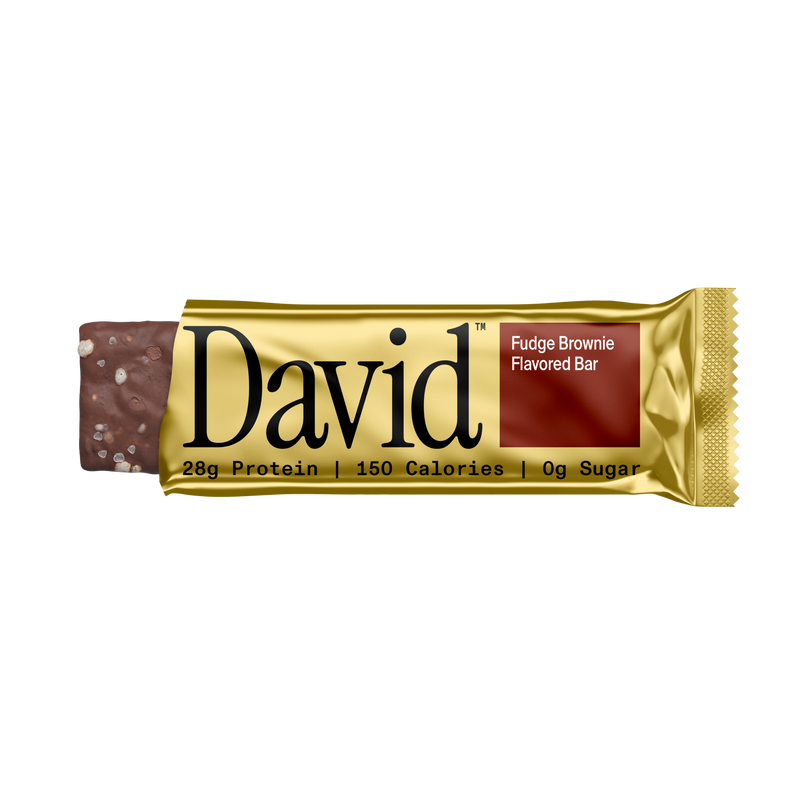 28g protein
Best Protein Bars of 2026: 10 Top Picks Compared
Every number below is verified from the official product nutrition panel. All bars are single-serving and shelf-stable. Sugar alcohols (erythritol, maltitol, sorbitol) count toward total carbs but are excluded from net carb calculations used by low-carb dieters. DAVID bars use EPG (esterified propoxylated glycerol), a modified fat at ~0.7 cal/g, which is how the calorie count stays low at a high protein dose. Ghost is a 2-bar dual-pack (65g serving), so its protein-per-calorie ratio is measured against the full pack.
| Bar (per serving) | Protein | Calories | Total Sugar | Fiber | Best for |
|---|---|---|---|---|---|
| DAVID Gold (62g) | 28g | 150 | 0g | ~1g | Highest protein-to-calorie ratio (18.7g/100 cal); 0g sugar |
| Quest Protein Bar (60g) | 21g | 190 | 1g | 12g | Best protein density plus fiber; most filling |
| Barebells Original (55g) | 20g | 200 | 1g | ~3g | Best taste; candy-bar texture |
| ONE Bar (60g) | 20g | 220 | 1g | 9g | Widest flavor range at major retailers |
| Kirkland Protein Bar (60g) | 21g | 190 | 1g | 12g | Best value when bought in bulk at Costco |
| RXBAR (52g) | 12g | 210 | 13g | 5g | Best whole-food ingredient list |
| Built Puff (40–44g) | 15–17g | 140–160 | 6–8g real sugar | <1g | Best calorie-to-protein ratio; no artificial sweeteners |
| Pure Protein Bar (50g) | 20g | 190 | 0g sugar | <1g | Best retail price: $1.50–$2.00/bar vs. $2.50+ for competitors |
| think! High Protein (60g) | 20g | 230 | 1g | 2g | Best pick if avoiding sucralose, aspartame, and Ace-K; complete protein blend (no collagen) |
| Ghost Protein Bar (65g, 2-bar pack) | 20g | 270 | 2g (0g added) | 7g | Dual candy-bar format; prebiotic fiber; collagen-free; no sucralose or Ace-K |
DAVID Gold leads on raw protein per calorie (18.7g per 100 cal, 28g total); Quest and Kirkland lead on protein-plus-fiber; Barebells leads on taste; RXBAR leads on ingredient simplicity; Built Bar leads on calorie efficiency among taste-first bars. The bars with 0–1g sugar (DAVID, Quest, Kirkland, Barebells, ONE Bar) achieve this via EPG (DAVID) or sugar alcohols and artificial sweeteners. RXBAR’s 13g of sugar is entirely natural — from dates and egg whites — with no sweeteners added.
Best Protein Bar for Most People: Quest
Quest Protein Bar is the most consistently useful bar because of one stat that does not get enough attention: 12g of fiber per bar. That high fiber count, from soluble corn fiber and chicory root, is why a Quest bar at 190 calories keeps people full longer than competitors with more calories. The protein comes from whey protein isolate and milk protein isolate — both complete proteins with all essential amino acids. The sweetness comes from erythritol and stevia, which cause fewer GI issues at normal doses than the maltitol in Barebells. For detailed flavor-by-flavor nutrition, see our Quest protein nutrition guide.
Best-Tasting Bar: Barebells
Barebells (originally from Sweden, now widely available in the US) is the bar most people actually want to eat. The Caramel Cashew and Cookies & Cream flavors taste closer to a candy bar than to a protein supplement, and that palatability is a legitimate competitive advantage. At 20g protein for 200 calories and 1g sugar, the macro profile is nearly identical to Quest. The caveats: the protein blend includes hydrolyzed bovine collagen (an incomplete protein without tryptophan), which dilutes the quality of the 20g claim; the sweeteners are maltitol, sucralose, and acesulfame K; and the fiber is only approximately 3g per bar vs. Quest’s 12g. See our full Barebells nutrition guide for flavor-by-flavor data.
Best Flavor Variety: ONE Bar
ONE Bar (from ONE Brands, a Hershey subsidiary since 2021) is the pick for people who want a wide flavor rotation without sacrificing protein quality. Birthday Cake, Maple Glazed Doughnut, Peanut Butter Pie, and branded collaborations with Hershey’s and Reese’s are genuinely distinctive options that Quest and Barebells do not match. The nutrition delivers 20g of protein, 220 calories, and 1g of sugar per 60g bar — solid numbers. Critically, the protein blend is complete (milk protein isolate plus whey protein isolate, no collagen), making ONE Bar a better quality protein source than Barebells despite the same 20g headline. The trade-offs: at 220 calories it runs 20 to 30 calories higher than Quest or Barebells for the same protein dose; the main sweetener is maltitol, which has a higher glycemic impact than Quest’s erythritol; and the 9g of fiber comes from added prebiotic fiber including IMOs rather than traditional whole-food fiber sources. For the full ONE Bar flavor-by-flavor breakdown, sweetener details, and a side-by-side with Quest and Barebells, see our ONE Bar nutrition guide.
Best Whole-Food Bar: RXBAR
RXBAR is the outlier in this group. The front of the bar lists its ingredients: egg whites, dates, almonds or cashews, and cocoa. No added sweeteners, no protein isolate, no sugar alcohols. The 12g of protein is lower than the other bars here, and the 13g of total sugar comes entirely from dates rather than from added sugar. RXBAR is for people who want a real food bar with a simple ingredient list. The trade-off is protein density: 12g per bar is less than half a scoop of whey, so if hitting a protein target is the main goal, RXBAR is the weakest tool for that job.
Best No-Artificial-Sweetener Bar (High-Protein): think!
think! High Protein bars are the go-to choice for buyers who want 20g of complete protein with zero synthetic sweeteners. No sucralose, no aspartame, no acesulfame potassium (Ace-K) — the sweetener is maltitol syrup, a sugar alcohol derived from maltose that is classified as natural rather than artificial. At 230 calories and 20g of protein per 60g bar, the macro profile is slightly less efficient than Quest (which also avoids sucralose with erythritol + stevia), but think! uses only maltitol with no synthetic sweetener at all, making it the cleaner choice for people with strong sucralose aversions. The protein blend — whey protein isolate, soy protein isolate, and calcium caseinate — covers all nine essential amino acids with no collagen filler, a meaningful differentiator from Barebells and Pure Protein. The trade-offs: maltitol has a glycemic index of ~35–52 (higher glycemic impact than Quest’s erythritol), fiber is low at 1–2g per bar, and the bars contain both dairy and soy. For people specifically avoiding synthetic sweeteners who can accept a sugar alcohol with partial glycemic impact, think! is one of the few mainstream options. For more details, see our think! High Protein bar nutrition guide.
Most Unique Format: Ghost Protein Bar
Ghost Protein Bar (launched September 2025, distributed through General Mills) is the only mainstream bar sold as two slim chocolate-coated sticks that form a single serving together. The dual-bar candy-bar experience — available in Chocolate Caramel, Chocolate Peanut Butter, and Choco Chip Cookie Dough — is genuinely different from every other bar on this list. Each 65g two-bar pack delivers 20g of protein, 7g of prebiotic fiber (from oligofructose and inulin), and 2g of total sugar with 0g of added sugar. The sweetener system is maltitol syrup plus allulose plus sorbitol plus stevia — no sucralose, no acesulfame K, the same two synthetic sweeteners that some buyers avoid when choosing think! over Quest. The protein blend is hydrolyzed milk protein isolate, whey protein concentrate, and milk protein isolate — all complete dairy proteins with no collagen filler. The trade-offs: at 270 calories per serving (Chocolate Caramel and Chocolate Peanut Butter) the calorie cost is higher than Quest or Kirkland at the same 20g protein dose; the dual-bar format means eating one stick is half a serving with 10g of protein, which can be useful or awkward depending on your goal; and the maltitol and sorbitol combination has a higher glycemic impact than Quest’s erythritol. Priced at $9.99 for a 4-pack and $29.99 for a 12-pack, Ghost comes in at roughly $2.50 per serving — above Pure Protein but in line with most premium bars. For the full three-flavor nutrition breakdown, protein blend details, and a direct comparison with Quest and Barebells, see our Ghost protein bar nutrition guide.
Best Value Bar: Kirkland Protein Bar (Costco)
The Kirkland Signature Protein Bar is sold exclusively through Costco in bulk boxes, and on a per-bar price basis it undercuts every other option on this list. The nutrition panel matches Quest almost exactly — 21g protein, 190 calories, 1g sugar, 12g fiber, 7g fat per bar. Kirkland is the smart pick for households that go through protein bars regularly and want to stock up. The flavor range is narrower than Quest or ONE Bar, but buying in bulk saves meaningfully over convenience-store prices.
Best Low-Calorie Bar: Built Bar
Built Bar is the outlier on calories. At 140 to 160 calories per bar with 15–17g of protein, it achieves the best protein-per-calorie ratio of any bar in this comparison — roughly 10 to 12g of protein per 100 calories. Built Puffs are sold primarily direct-to-consumer at builtbar.com and in some retail chains, with a wide flavor range. The protein source is a blend of partially hydrolyzed whey protein isolate and collagen peptides; unlike most competitors, Built Puffs use real cane sugar (6–8g per bar) with no artificial sweeteners or erythritol — a meaningful distinction for people sensitive to sugar alcohols. The structural trade-offs: each bar is lighter (roughly 40–44g vs. 60g for Quest), absolute protein per bar (15–17g depending on flavor) is lower than Quest (21g), and fiber is under 1g vs. Quest’s 12g. If fitting a high-protein snack into a very tight calorie budget is the main goal — for a weight-loss phase, or a day already high in calories from food — Built Bar earns its place here. For more calorie-efficient picks, see our best high-protein snacks for weight loss guide.
Best Budget Bar: Pure Protein
Pure Protein bars are the most affordable mainstream protein bar sold at US retail, typically priced at $1.50 to $2.00 per bar at Walmart, Target, Walgreens, and Amazon — roughly 30 to 50 percent less than Quest, ONE Bar, or Barebells at the same retailers. Each 50g bar delivers 20g of protein and approximately 190 calories, making the macro profile nearly identical to Barebells and ONE Bar at a fraction of the cost. The sweetener is maltitol plus sucralose, and fiber is low (under 1g), so Pure Protein is not the pick for satiety or gut health — it is purely the pick for protein per dollar. One honest caveat: the protein blend includes hydrolyzed collagen alongside whey isolate, the same incomplete-protein dilution found in Barebells. At $1.50 to $2.00 per bar, a $50 monthly budget buys roughly 28 Pure Protein bars (560g protein) vs. 18 Quest bars (378g protein) — a 48 percent protein advantage for the same spend. For a full flavor-by-flavor breakdown, sweetener details, and a side-by-side cost comparison with Quest and ONE Bar, see our Pure Protein bar nutrition guide.
Highest Protein Density: DAVID Gold
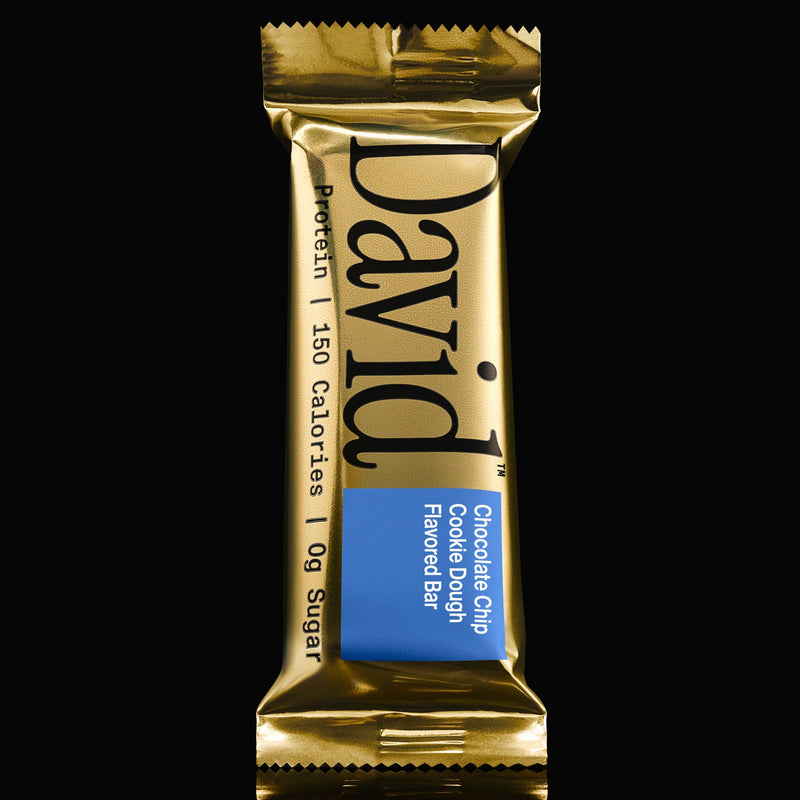
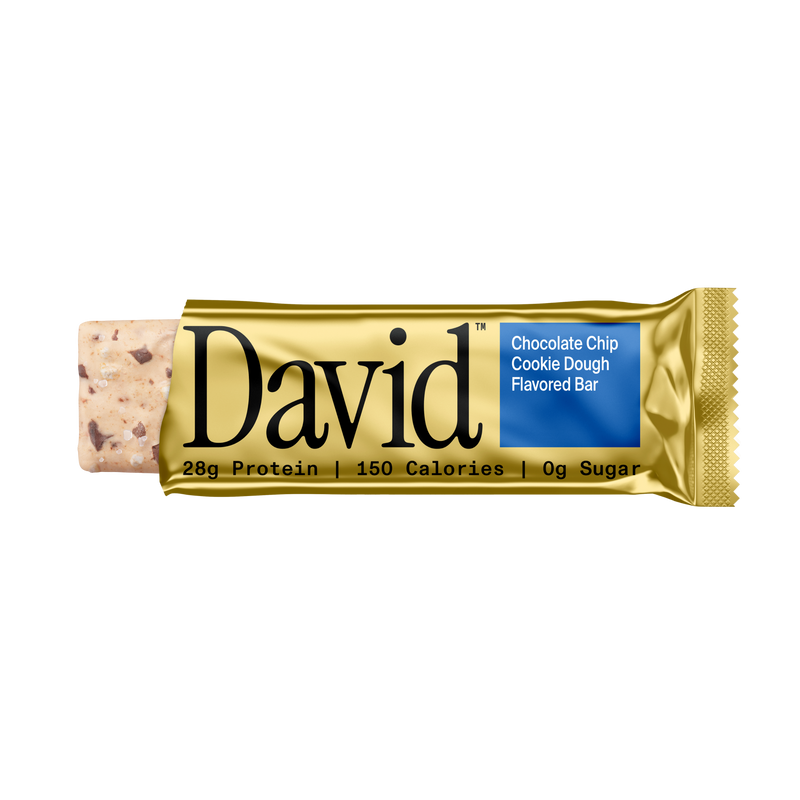
DAVID Gold bars deliver 28g of protein and 150 calories per 62g bar — the highest protein count and best protein-to-calorie ratio (18.7g per 100 cal) of any mainstream bar in this comparison. The bar contains 0g of sugar and approximately 3g of net carbs. DAVID achieves this calorie count through EPG (esterified propoxylated glycerol), a synthetic modified fat that contributes roughly 0.7 cal/g instead of the normal 9 cal/g. The FDA classifies EPG as GRAS (Generally Recognized As Safe). A class-action lawsuit filed in 2025 challenged the EPG calorie count, but was dismissed by a US district court in April 2026. The protein blend includes whey protein isolate and milk protein isolate, with a small amount of hydrolyzed collagen in some flavors — the same collagen caveat that applies to Barebells, though DAVID’s higher total protein count (28g vs. 20g) mitigates the quality dilution. For a full flavor-by-flavor breakdown, EPG explainer, and direct comparison with Quest and Barebells, see our DAVID protein bar nutrition guide.
What to Look for in a Protein Bar
The protein number on the front is the starting filter, not the whole story. Four things that actually differentiate a good bar from a dressed-up candy bar:
- Protein source: Whey isolate, milk protein isolate, and egg whites are complete proteins. Collagen is not — it lacks tryptophan. Bars that include collagen in their blend (Barebells, some others) deliver lower-quality protein than the gram count implies.
- Fiber: Fiber determines how long a bar keeps you full. Quest and Kirkland at 12g beat most competitors by a wide margin. A bar with 20g protein and 2g fiber will leave you hungry in 45 minutes; the same bar with 12g fiber will not.
- Sweeteners: Low-sugar bars use sweeteners. Erythritol and stevia (Quest, Kirkland) cause fewer GI issues than maltitol (Barebells) at normal doses. If avoiding artificial sweeteners matters, RXBAR is the only clean option here.
- Calorie-to-protein ratio: Target roughly 10g of protein per 100 calories. Quest and Kirkland hit 11g per 100 cal. Barebells and ONE Bar land at 9 to 10g. RXBAR is around 6g per 100 cal.
Frequently Asked Questions
What is the best protein bar for weight loss?
Quest or Built Bar. Quest gives you 21g of protein and 12g of fiber for 190 calories — the high fiber is what makes a bar filling enough to replace a snack during a calorie deficit. Built Puff is even lower in calories (140 to 160 per bar) with 15–17g of protein and no artificial sweeteners, making it the leanest option per calorie in this group. For more options, see our best high protein snacks for weight loss guide.
Are protein bars actually high in protein?
Yes, but read the label carefully. The bars in this guide deliver 12 to 21g of protein per serving. The important nuance is protein quality: a bar with 20g of protein that includes collagen in the blend is not delivering 20g of complete protein. Look for bars that list whey isolate, milk protein isolate, or egg whites as the main protein sources.
Do protein bars cause bloating?
Some do, primarily because of sugar alcohols and added fiber. Quest and Kirkland use soluble corn fiber and erythritol, which can cause gas or bloating at higher doses. Barebells uses maltitol, which has a stronger laxative potential than erythritol at equivalent doses. Start with one bar per day and see how you respond before committing to a whole box.
What is the healthiest protein bar?
RXBAR is the cleanest from an ingredients standpoint — egg whites, dates, nuts, and nothing else. For protein density and satiety, Quest is the strongest option. The best answer depends on what you mean by healthy: if clean ingredients matter most, RXBAR; if protein per calorie matters most, Quest or Kirkland; if minimizing calories matters most, Built Bar.
When is the best time to eat a protein bar?
The most useful times are mid-afternoon when hunger peaks, before a workout when you need something quick and shelf-stable, or as a post-workout snack when you cannot access a full meal. Protein bars are convenience tools — they work best as a protein top-up between meals rather than as a primary food source.
Shopping for a specific person? For soft, easy-to-chew options suited to older adults, see our best protein bars for seniors shortlist, ranked from live nutrition data, and our high-protein snacks for seniors guide for whole-food options beyond bars.
Bottom line: DAVID Gold wins on sheer protein density (28g protein, 150 cal, 0g sugar, 18.7g per 100 cal); Quest wins on protein plus fiber and is the best all-around choice for most people; Barebells wins on taste experience; ONE Bar wins on flavor variety; think! wins for sucralose-averse buyers who want a complete 20g protein blend with no synthetic sweeteners; RXBAR wins on clean whole-food ingredients; Kirkland wins on bulk value at Costco; Built Bar wins on calorie efficiency among taste-first bars; Pure Protein wins on retail price at $1.50–$2.00 per bar; Ghost wins on format originality — a dual-bar candy experience with 20g collagen-free protein, 7g prebiotic fiber, and no sucralose or Ace-K. Browse brand-specific guides for DAVID, Quest, Ghost, Barebells, ONE Bar, think!, RXBAR, and Pure Protein, or compare against protein shakes and yogurt in the full protein snacks directory.
Shop our top protein bar picks
Editor-selected high-protein options related to this guide. As an Amazon Associate we may earn from qualifying purchases.
Buy the products in this guide: Blueberry Pie Carton · Blueberry Pie · Peanut Butter Chocolate Chunk
28g protein28g proteinChocolate Chip Cookie Dough
Amazon returns policy · secure checkout
28g proteinTags
High Protein Snacks Pro Editorial Team
Independently researched and editorially reviewed. We compare real nutrition labels and never accept payment for coverage.
Get the best new protein snacks in your inbox
Weekly picks and honest reviews — no spam, unsubscribe anytime.
More from the journal
Best Protein Bars for Weight Loss 2026: 6 Sub-200-Calorie Picks Ranked by Protein Density and Fiber
The best protein bar for weight loss in 2026 is DAVID Gold — 28g of protein for 150 calories, the highest protein-per-calorie ratio of any mainstream bar and zero total sugar. For satiety, Quest Chocolate Chip Cookie Dough wins with 21g of protein and 12g of fiber at 190 calories. For the leanest sub-160-calorie option with no artificial sweeteners, Built Puff. Six verified picks compared on protein-per-calorie, fiber, sweeteners, and cost — plus the honest catches for each, and the two popular bars we do not recommend on a cut.
Read more
Best Chocolate Protein Bars 2026: 10 Top Picks Ranked by Protein, Sugar, and Real Cocoa Flavor
The best chocolate protein bar in 2026 is DAVID Chocolate Chip Cookie Dough — 28g of protein for 150 calories and 0g sugar, the highest protein-per-calorie ratio in the mainstream chocolate lineup. For a candy-bar experience, Barebells Chocolate Dough delivers 20g protein and 1g sugar in a real-chocolate coating. For satiety, Quest Chocolate Chip Cookie Dough wins with 21g protein and 14g fiber. Ten verified chocolate-flavored picks — from whey isolate to vegan pea to whole-food date bars — ranked on protein density, sweetener honesty, and real cocoa content, with tracked buy buttons and the honest catches for each.
Read more
Best High-Protein Snacks (2026): 10 Category Winners Ranked by Verified Nutrition Labels
Country Archer Zero Sugar Classic is the best beef jerky, FAGE Total 0% is the best Greek yogurt, and Quest Chocolate Chip Cookie Dough is the best packaged protein bar — one verified pick per category across ten snack formats, ranked on real 2026 nutrition labels with honest sweetener and sodium disclosure. Every pick has 15g+ of protein per serving (or protein-per-100-calorie efficiency that matters more), a clean enough label to defend, and a tracked buy link — with the honest catches on each one so you can pick the right pick for your goal.
Read more