Fairlife Core Power Nutrition Facts: Every Line Ranked by Protein Density (2026)
Core Power packs 26g protein for 170 calories, Elite hits 42g, and Nutrition Plan delivers 30g for just 150 — every line ranked by protein density.
The short answer
Our top protein drink picks
Editor-selected and ready to buy. As an Amazon Associate we may earn from qualifying purchases.
 30g protein
 42g protein
Core Power Elite - Chocolate
Amazon returns policy · secure checkout
 30g protein
Nutrition Plan Shake - Chocolate
Amazon returns policy · secure checkout
Fairlife Core Power Nutrition Facts (26g Line, 14 fl oz Bottle)
Core Power is fairlife's original ready-to-drink recovery shake. Each 14 fl oz (414 mL) bottle delivers 26g of high-quality protein for 170 calories, with 0g of added sugar. The natural milk sugar that survives the ultra-filtration process accounts for the ~5g of total sugars. Carb counts vary by a gram or two between flavors.
| Core Power 26g (14 fl oz) | Calories | Protein | Total Sugar | Added Sugar | Total Carbs | Fat |
|---|---|---|---|---|---|---|
| Chocolate | 170 | 26g | 5g | 0g | 8g | 4.5g |
| Vanilla | 170 | 26g | 5g | 0g | 6g | 4.5g |
| Strawberry Banana | 170 | 26g | 6g | 0g | 7g | 4.5g |
Strawberry Banana adds a slightly higher total sugar (6g vs. 5g) and carb count (7g vs. 6g) reflecting natural fruit flavoring, but calories, protein, fat, and added sugar remain identical across all three flavors. The headline to remember: 26g protein, 170 calories, 0g added sugar across the entire Core Power 26g line.
Fairlife Core Power Elite Nutrition Facts (42g Line, 14 fl oz Bottle)
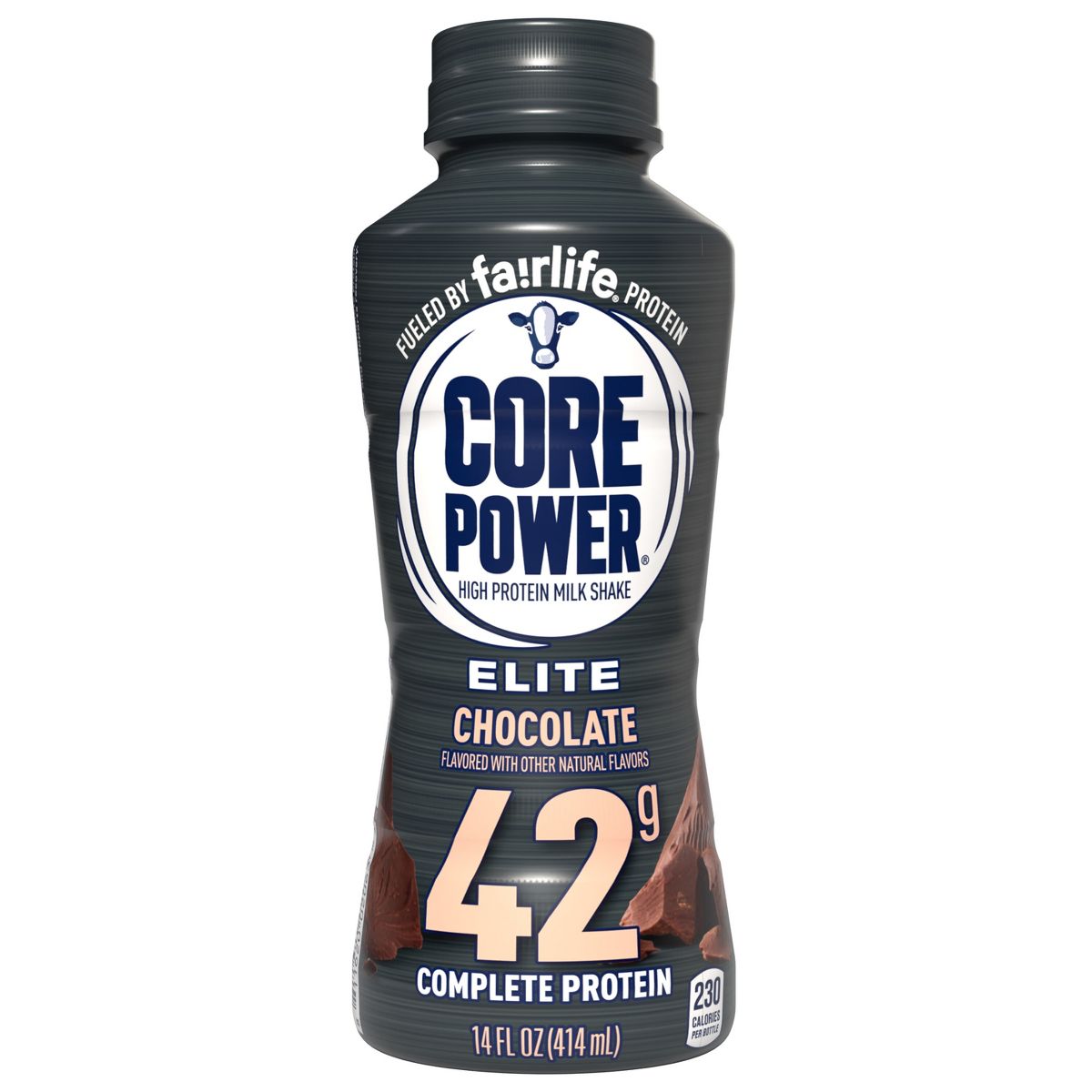
Core Power Elite is the high-protein version in the same 14 fl oz bottle. fairlife packs 42g of protein into it for 230 calories and, again, 0g of added sugar. It is aimed at heavier training days and bigger recovery needs where 26g is not enough.
| Core Power Elite 42g (14 fl oz) | Calories | Protein | Total Sugar | Added Sugar | Total Carbs | Fat |
|---|---|---|---|---|---|---|
| Chocolate | 230 | 42g | 7g | 0g | 9g | 3.5g |
| Vanilla | 230 | 42g | 8g | 0g | 8g | 3.5g |
Note that some retailer listings show Elite at 240 calories with 11g carbs. fairlife's own product pages list 230 calories and 8 to 9g total carbs, so we use the brand's official figures here. Either way, you get roughly 42g of protein for around 230 to 240 calories.
Fairlife Nutrition Plan Nutrition Facts (30g Line, 11.5 fl oz Bottle)
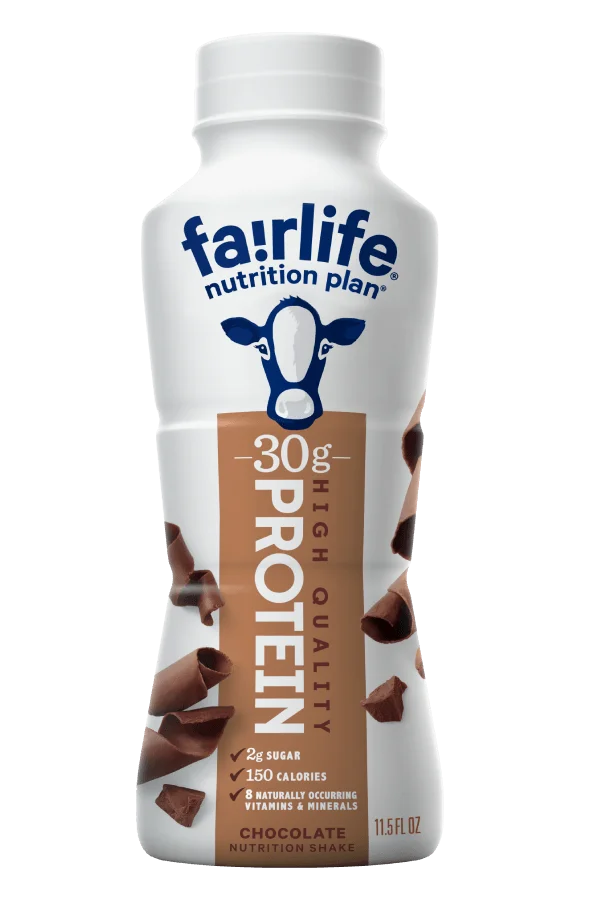
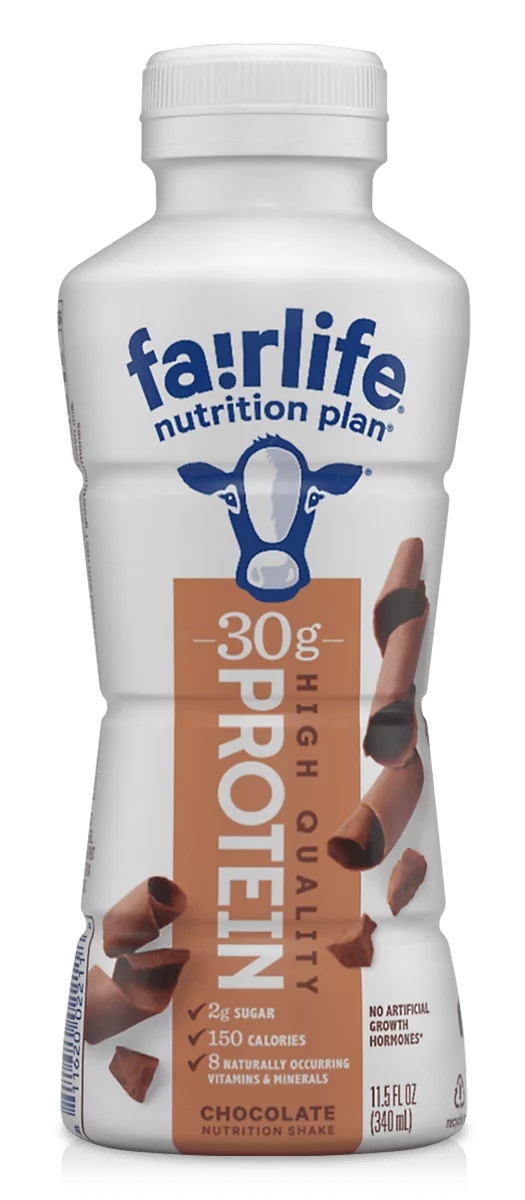
The Fairlife Nutrition Plan is the line most people find in Costco's bulk multipacks. It comes in a smaller 11.5 fl oz (340 mL) bottle and is the leanest of the three: 30g of protein for just 150 calories, with only 2g of sugar and 0g added. It also delivers a meaningful dose of calcium and other vitamins and minerals.
| Nutrition Plan 30g (11.5 fl oz) | Calories | Protein | Total Sugar | Added Sugar | Total Carbs | Fat |
|---|---|---|---|---|---|---|
| Chocolate | 150 | 30g | 2g | 0g | 4g | 2.5g |
| Vanilla | 150 | 30g | 2g | 0g | 4g | 2.5g |
The chocolate bottle carries about 730mg of calcium (60% DV) plus added vitamin D, B12, zinc, iodine, selenium, and phosphorus. On a protein-per-calorie basis (30g for 150 calories) the Nutrition Plan line is the most efficient of the three, which is exactly why it is popular for weight management. If lean, high-protein picks are your goal, it fits the same logic as our best high protein snacks for weight loss guide. For the three fairlife lines head-to-head, see our Fairlife Nutrition Plan vs Core Power Elite breakdown; against the other big brand, see Core Power vs Muscle Milk.
Core Power vs Core Power Elite vs Nutrition Plan (Side by Side)
Here is the cleanest way to see the three lines together. Remember the bottle sizes differ: Core Power and Elite are 14 fl oz, while the Nutrition Plan is 11.5 fl oz.
| Line | Bottle | Protein | Calories | Total Sugar | Best for |
|---|---|---|---|---|---|
| Core Power | 14 fl oz | 26g | 170 | 5g | Everyday post-workout recovery |
| Core Power Elite | 14 fl oz | 42g | 230 | 7-8g | Max protein, heavy training days |
| Nutrition Plan | 11.5 fl oz | 30g | 150 | 2g | Lean protein, weight management, value |
The pattern is clear: Elite gives you the most total protein, the Nutrition Plan gives you the best protein-per-calorie and the lowest sugar, and standard Core Power sits in the middle as the original recovery shake. All three are lactose-free and have 0g added sugar, so the choice comes down to how much protein and how many calories you want per bottle.
Is Core Power or the Nutrition Plan Good for Diabetics?
On paper, these shakes look diabetes-friendly: they are low in sugar (2 to 8g total per bottle, all from natural milk sugar, with 0g added), they are sweetened with non-nutritive sweeteners (monk fruit, stevia, sucralose, and Ace-K) rather than sugar, and the high protein and lactose-free, ultra-filtered milk base mean a gentler impact on blood sugar than a sugary drink. The Nutrition Plan line in particular, at just 2g of sugar and 4g of total carbs per bottle, fits comfortably into most carb budgets.
That said, fairlife does not market these as medical or diabetic-specific products, and there is no official claim that they are "for diabetics." Individual blood-sugar responses vary, and a shake is not a substitute for a meal plan built with your care team. If you manage diabetes, treat the low-sugar, high-protein profile as a point in their favor, but confirm with your doctor or a registered dietitian before making any shake a regular part of your routine. We do not provide medical advice.
Can Kids Drink Fairlife Protein Shakes?
Core Power and Nutrition Plan are marketed to adults, athletes, and active teens for recovery and protein needs, not to young children. There is no official fairlife guidance recommending them for kids. A single bottle is not unsafe for an older child, but most children already get plenty of protein from a normal diet, and pediatric and consumer-health sources generally agree that protein shakes are not a necessary part of a healthy child's diet.
The bigger concern is using a shake to replace whole-food meals, which can crowd out nutrients kids need. For a child or teen who is simply hungry, plain fairlife milk, Greek yogurt, or real food is usually the better call. If you are considering a protein shake for a specific child, especially a younger one, ask your pediatrician first. Again, this is general information, not medical advice.
Comparing Core Power to Other Shakes
Shoppers cross-shop these bottles against Premier Protein more than any other shake. The full comparison — sweeteners, lactose, vitamins, and price per gram of protein — lives in our dedicated Premier Protein vs Core Power guide. And for whether these shakes fit a low-carb eating pattern, our keto-friendly protein snacks ranking covers Core Power alongside every qualifying pick in the catalog.
Frequently Asked Questions
How much protein is in a Fairlife Core Power shake?
Standard Core Power has 26g of protein per 14 fl oz bottle. Core Power Elite has 42g in the same size bottle. The separate Fairlife Nutrition Plan line has 30g in a smaller 11.5 fl oz bottle.
What is the difference between Core Power and the Fairlife Nutrition Plan?
Core Power is a 14 fl oz recovery shake with 26g protein and 170 calories (or 42g and 230 calories for Elite). The Nutrition Plan is a smaller 11.5 fl oz bottle with 30g protein, only 150 calories, and just 2g sugar, making it the leanest, most calorie-efficient option and the one usually sold in Costco multipacks.
Are Fairlife Core Power shakes lactose-free?
Yes. All three lines are made from fairlife's ultra-filtered milk and include lactase enzyme, so they are lactose-free while still being real dairy. That makes them an option for many people who are lactose intolerant, though they still contain milk and are not suitable for a milk allergy.
Do Fairlife shakes have added sugar?
No. Every line lists 0g of added sugar. The 2 to 8g of total sugar comes from naturally occurring milk sugar, and the sweetness is rounded out with non-nutritive sweeteners — monk fruit juice concentrate and stevia leaf extract along with sucralose and acesulfame potassium (Ace-K) — rather than added sugar.
Which Fairlife line is best for building muscle?
Core Power Elite gives the most protein per bottle at 42g, which is convenient for hitting higher daily protein targets on training days. The Nutrition Plan's 30g for 150 calories is excellent when you want protein without many extra calories. For more on hitting protein targets, see our high protein snacks guide and the full protein snacks directory.
Bottom line: Pick standard Core Power (26g, 170 cal) for everyday recovery, Core Power Elite (42g, 230 cal) when you want maximum protein in one bottle, and the Fairlife Nutrition Plan (30g, 150 cal, 2g sugar) when you want the leanest, most cost-effective option. All three are lactose-free with 0g added sugar. Compare them against bars, yogurt, and jerky in the protein snacks directory to round out your routine.
Shop our top protein drink picks
Editor-selected high-protein options related to this guide. As an Amazon Associate we may earn from qualifying purchases.
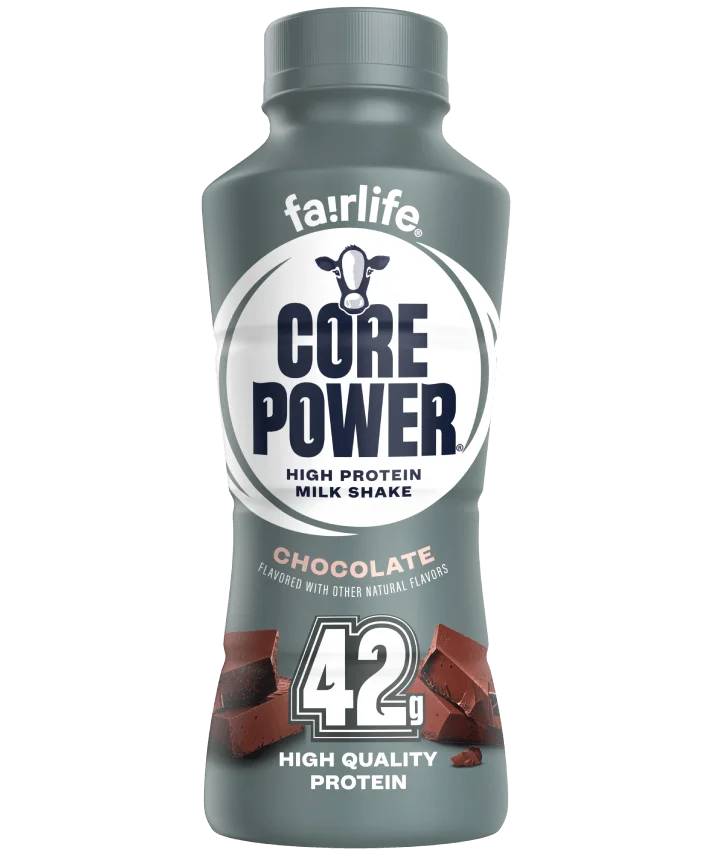 42g protein
Core Power Elite High Protein Shake
Amazon returns policy · secure checkout
30g protein42g proteinCore Power Elite - Chocolate
Amazon returns policy · secure checkout
Tags
High Protein Snacks Pro Editorial Team
Independently researched and editorially reviewed. We compare real nutrition labels and never accept payment for coverage.
Get the best new protein snacks in your inbox
Weekly picks and honest reviews — no spam, unsubscribe anytime.
More from the journal
Fairlife Nutrition Plan vs Core Power (2026): 30g in 150 Calories or 26g in a Bigger Bottle — Which Fairlife Shake Wins?
Nutrition Plan: 30g protein for 150 calories. Core Power: 26g for 170. Elite: 42g for 230. The verified head-to-head using fairlife's own labels.
Read more
Fairlife Nutrition Plan Nutrition Facts: 30g Protein, 150 Calories, 2g Sugar Per Bottle (2026)
A Fairlife Nutrition Plan shake delivers 30g of protein at 150 calories with 2g of sugar per 11.5 fl oz bottle — 20g of protein per 100 calories, the leanest ratio of any major ready-to-drink shake. Verified 2026 label data for Chocolate and Vanilla, the truth about its sweeteners (the label does list sucralose and Ace-K), and how it compares to Premier Protein and Core Power.
Read more
Core Power vs Muscle Milk (2026): The Full Head-to-Head on Protein, Sugar, Sweeteners, and Value
Fairlife Core Power and Muscle Milk both build their 2026 shakes on ultra-filtered milk — and after Muscle Milk's Spring 2026 reformulation dropped sucralose and Ace-K, the comparison is closer than it has ever been. The standard bottles tie on protein (26g), and the high-protein bottles tie again (42g for both Core Power Elite and Muscle Milk Pro 14oz). Muscle Milk has the cleaner ingredient list; Core Power still holds a real edge on certified lactose-free labeling and fortification. Here is the verified head-to-head on protein per calorie, sugar, sweeteners, lactose, and price per gram of protein — with clear picks for lactose intolerance, maximum protein, weight loss, and value.
Read more