Fairlife Nutrition Plan vs Core Power (2026): 30g in 150 Calories or 26g in a Bigger Bottle — Which Fairlife Shake Wins?
Nutrition Plan: 30g protein for 150 calories. Core Power: 26g for 170. Elite: 42g for 230. The verified head-to-head using fairlife's own labels.
The short answer
Our top protein drink picks
Editor-selected and ready to buy. As an Amazon Associate we may earn from qualifying purchases.
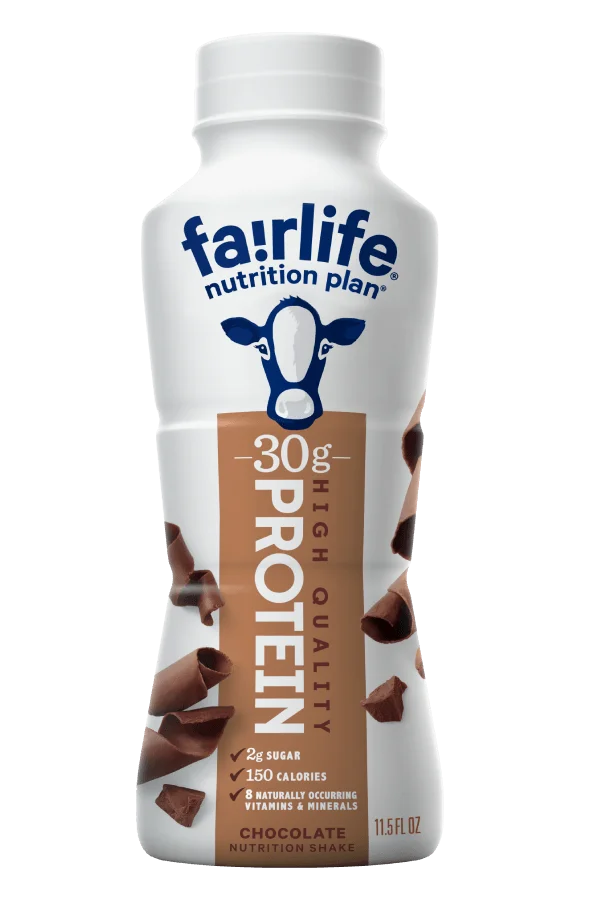 30g protein
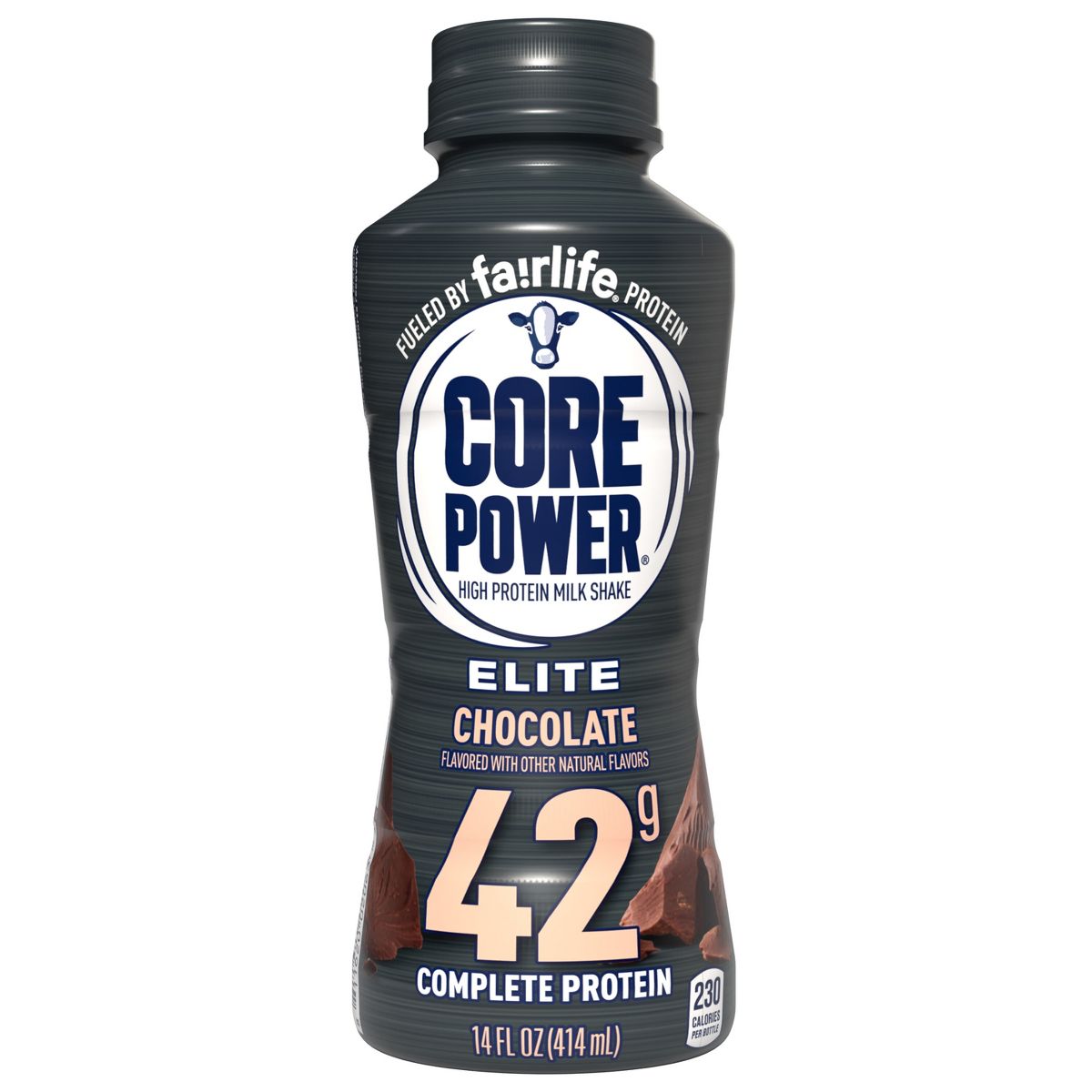 42g protein
Core Power Elite - Chocolate
Amazon returns policy · secure checkout
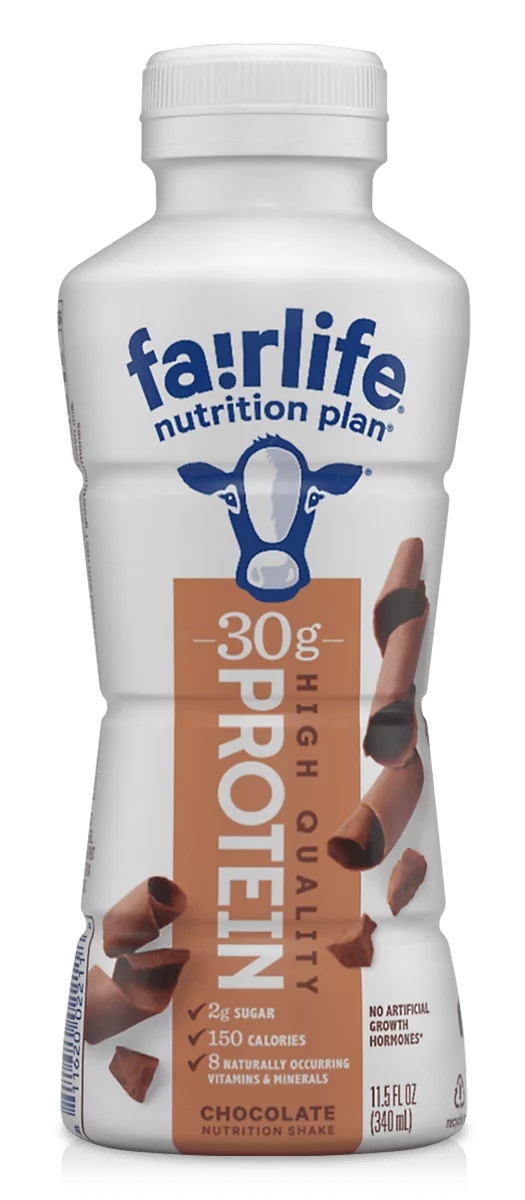 30g protein
Nutrition Plan Shake - Chocolate
Amazon returns policy · secure checkout
The Quick Verdict
- Leanest protein-per-calorie: Nutrition Plan — 20.0g of protein per 100 calories, the strongest ratio of any major bottled shake, fairlife's or not.
- Most protein in a single bottle: Core Power Elite — 42g in one 14 fl oz bottle. Standard Core Power comes second at 26g. Nutrition Plan is third at 30g in a smaller bottle.
- Biggest, most milkshake-like serve: Core Power — 14 fl oz vs. Nutrition Plan's 11.5 fl oz. Same protein per bottle as Nutrition Plan is roughly 22% more liquid to drink.
- Sweetener difference: None. Both lines use the same monk fruit + stevia + sucralose + Ace-K combination. Neither is artificial-sweetener-free.
- Lactose-free: Both. All three fairlife lines are made from the same ultra-filtered milk with lactase added.
- Best for weight management: Nutrition Plan — you buy the most protein for the fewest calories in the aisle.
- Best for a heavy-training day: Core Power Elite — 42g of complete dairy protein in one bottle, without stacking two shakes.
Side-by-Side Nutrition (Per Bottle)
Chocolate flavor shown for all three, since that's the flavor fairlife publishes a complete panel for on every line. Vanilla numbers are within a gram or two of these across all three lines.
| Per bottle | Nutrition Plan Chocolate | Core Power Chocolate | Core Power Elite Chocolate |
|---|---|---|---|
| Bottle size | 11.5 fl oz (340 mL) | 14 fl oz (414 mL) | 14 fl oz (414 mL) |
| Calories | 150 | 170 | 230 |
| Protein | 30g | 26g | 42g |
| Total Sugar | 2g | 5g | 7g |
| Added Sugar | 0g | 0g | 0g |
| Total Carbs | 4g | 8g | 9g |
| Total Fat | 2.5g | 4.5g | 3.5g |
| Saturated Fat | 1.5g | — | — |
| Sodium | 230mg | — | — |
| Cholesterol | 25mg | — | — |
| Calcium | 730mg (60% DV) | — | — |
| Vitamin B12 | 1.4mcg (60% DV) | — | — |
| Lactose-free | Yes | Yes | Yes |
“—” means the number isn't broken out on fairlife's current published Core Power panels the same way it is on Nutrition Plan — not that the nutrient is absent. All three shakes are built on the same ultra-filtered lowfat milk base, so their micronutrient profiles are broadly similar even where fairlife emphasizes different numbers on each label.
Protein Per 100 Calories: The Number That Matters
If you're drinking a shake to hit a protein target without spending many calories — the entire logic of the Nutrition Plan's Costco success — protein density is the single most important number on the bottle. Here is how the three fairlife lines rank against each other and the other big bottled shakes.
| Shake | Bottle | Protein | Calories | Protein / 100 cal |
|---|---|---|---|---|
| Fairlife Nutrition Plan | 11.5 fl oz | 30g | 150 | 20.0g |
| Premier Protein | 11.5 fl oz | 30g | 160 | 18.8g |
| Fairlife Core Power Elite | 14 fl oz | 42g | 230 | 18.3g |
| Fairlife Core Power | 14 fl oz | 26g | 170 | 15.3g |
The Nutrition Plan tops every major bottled shake on this metric, including fairlife's own two Core Power lines. Elite comes closer than standard Core Power because its formula concentrates more protein into a similar calorie budget; standard Core Power trades some of that density for a larger, more milkshake-like 14 fl oz serve. See how the field compares beyond fairlife in our best ready-to-drink protein shakes guide.
Protein Per Fluid Ounce: How Concentrated Each Bottle Is
Another useful way to read the same data — grams of protein per fluid ounce of liquid you actually swallow. This one changes the ranking.
| Shake | Bottle | Protein | Protein / fl oz |
|---|---|---|---|
| Fairlife Core Power Elite | 14 fl oz | 42g | 3.0g |
| Fairlife Nutrition Plan | 11.5 fl oz | 30g | 2.6g |
| Fairlife Core Power | 14 fl oz | 26g | 1.9g |
Elite is the most concentrated protein per sip. That's why heavy lifters often reach for it — you don't have to drink much liquid to close a big protein gap. The Nutrition Plan is a close second; standard Core Power comes last because the extra fluid isn't paired with proportionally more protein.
Sweeteners: Same Four-Sweetener Stack on Both
This is where a lot of write-ups get sloppy, so worth stating plainly: the Nutrition Plan and every Core Power line use the same four non-nutritive sweeteners. Here's the current official ingredient list for the Nutrition Plan Chocolate, verbatim from fairlife:
Filtered Lowfat Grade A Milk, Contains Less Than 1% Of: Alkalized Cocoa, Natural Flavors, Cellulose Gel, Cellulose Gum, Salt, Carrageenan, Lactase Enzyme, Monk Fruit Juice Concentrate, Acesulfame Potassium, Sucralose, Stevia Leaf Extract, Vitamin A (Palmitate), Vitamin D3.
The Core Power lines list the same four sweeteners: monk fruit juice concentrate and stevia leaf extract (plant-derived, non-nutritive), plus sucralose and acesulfame potassium (Ace-K) — both FDA-approved artificial sweeteners. That means:
- The 0g added sugar claim is legitimate across every line. Non-nutritive sweeteners aren't sugar, so the 2 to 7g of total sugar on each label is naturally occurring milk sugar that survives fairlife's ultra-filtration.
- Neither line is artificial-sweetener-free. If sucralose or Ace-K is a deal-breaker for you, the sweetener question can't decide this comparison for you — both are the same — and you'll need to look outside the fairlife lineup entirely. A whey powder mixed with unsweetened milk or a stevia-only Greek yogurt like Oikos Triple Zero are two options.
- The Ace-K + sucralose pair is the same combination Premier Protein uses, which is one reason the two brands cross-shop so easily at Costco.
Sugar and Carbs: The Real Gap
The naturally occurring milk sugar count is where the two lines actually differ. The Nutrition Plan lands at 2g of total sugar per bottle; standard Core Power lands at 5g; Core Power Elite at 7g. Same for carbs: 4g on the Nutrition Plan, 8g on Core Power, 9g on Core Power Elite. Two things to note about that:
- All three still show 0g of added sugar because none of it is added — it's the milk itself.
- The Nutrition Plan comes closest to fitting a strict-keto or diabetes carb budget at just 2g sugar and 4g total carbs per bottle. That's why it earned a spot in our low-sugar snack guide's shake shortlist. Standard Core Power's 8g total carbs and Elite's 9g are still low, but they're double the Nutrition Plan. fairlife makes no medical claims and neither do we — if you manage diabetes, confirm with your care team. This is general information, not medical advice.
Bottle Size: The Practical Difference Most People Miss
The Nutrition Plan comes in a 11.5 fl oz bottle; both Core Power lines come in 14 fl oz. That 2.5 fl oz gap is about 22% more liquid per Core Power bottle — roughly two big extra swallows. Practical implications:
- Meal-replacement feel: Core Power's 14 fl oz drinks more like an actual milkshake or breakfast substitute. The Nutrition Plan's 11.5 fl oz drinks more like a small snack or a coffee-and-protein pairing.
- Fridge-space math: If you buy the Costco 18-pack, Nutrition Plan cases take up less shelf room per bottle. Core Power 12-packs need more depth.
- Hydration angle: All three shakes are largely water plus milk solids, so the bigger 14 fl oz Core Power bottle also contributes more fluid to your day. Not a big number, but real if you tend to under-hydrate.
Micronutrients: Where the Nutrition Plan Publishes More Detail
Every fairlife shake is built on the same ultra-filtered lowfat Grade A milk, so all three lines pick up a meaningful natural micronutrient load from the base milk — calcium, vitamin D, potassium, and B-vitamins — concentrated by the same filtration that concentrates the protein. The Nutrition Plan's published panel breaks out the specific numbers most clearly. Here's what one Nutrition Plan bottle carries (Chocolate flavor):
| Nutrient | Per 11.5 fl oz bottle | % Daily Value |
|---|---|---|
| Calcium | 730mg | 60% |
| Vitamin B12 | 1.4mcg | 60% |
| Vitamin D | 5mcg | 25% |
| Vitamin A | 200mcg | 20% |
| Potassium | 460mg | 10% |
60% of a day's calcium and B12 in one bottle is genuinely useful if you don't eat much dairy otherwise. Standard Core Power and Core Power Elite draw from the same ultra-filtered milk base, so their micronutrient profiles are broadly similar; fairlife just doesn't publish the numbers as prominently on those labels. If you cross-shop with Premier Protein, note that Premier counters with a broader 24-vitamin fortification blend — but its vitamins are added, while fairlife's mostly come from the milk itself.
Where Each One Wins
Pick Nutrition Plan if…
- You want the best protein-per-calorie ratio in the aisle — 30g for 150 calories is the leanest big-brand bottled shake, period.
- You're in a calorie deficit for weight management. Fits our best high-protein snacks for weight loss shortlist for the same reason.
- You watch total carbs closely and want to keep every drink under 5g of sugar and under 5g of total carbs.
- You shop at Costco and want the biggest bulk buy per dollar — the 18-pack has been a Costco staple for years.
Pick standard Core Power if…
- You want a more milkshake-sized serve (14 fl oz vs 11.5 fl oz) that feels more like a meal or a real drink.
- 26g of protein is enough for your target and you'd rather have more liquid than more grams.
- You're using it as an everyday post-workout recovery shake and don't need Elite's 42g.
Pick Core Power Elite if…
- You want the most protein in a single bottle — 42g without stacking two shakes.
- You're a heavy lifter, a large person, or on a high-protein diet where 30g bottles fall short.
- You value protein per fluid ounce (3.0g) over protein per calorie — you want the most protein in the fewest swallows.
What This Comparison Doesn't Settle
Two things worth naming plainly so a shake choice isn't asked to do more work than it can:
- None of the three is a meal. The Nutrition Plan at 150 calories is light for a full meal on its own, and even Elite's 230 calories is closer to a big snack than a proper breakfast. If you're using a shake as a meal replacement, pair it with real food — fruit, oats, a piece of toast, a hard-boiled egg from our egg-snack roundup — and you'll stay full longer.
- None of the three is a whole-food protein source. A chewed meal with fiber and micronutrients from actual food is a better default. A fairlife shake is a genuinely useful supplement when convenience or a protein gap is the problem — it isn't the base of a good diet.
Frequently Asked Questions
Is Fairlife Nutrition Plan the same as Core Power?
No. Both are made by fairlife from the same ultra-filtered lactose-free milk, but they're two different product lines with different bottles and macros. The Nutrition Plan is an 11.5 fl oz bottle with 30g protein and 150 calories — the leanest ratio in the aisle. Standard Core Power is a 14 fl oz bottle with 26g protein and 170 calories — the everyday recovery shake. Core Power Elite is a 14 fl oz bottle with 42g protein and 230 calories — the high-protein option.
Which has more protein, Nutrition Plan or Core Power?
Nutrition Plan has more protein per bottle (30g vs 26g) even though the bottle is smaller. Core Power Elite has the most per bottle at 42g. On protein per calorie, the Nutrition Plan wins the whole fairlife lineup at 20g per 100 calories.
Are both fairlife shakes lactose-free?
Yes. Every fairlife shake — Nutrition Plan, Core Power, and Core Power Elite — is made from ultra-filtered milk with lactase enzyme added, so all three are lactose-free real dairy. They all still contain milk, so none of them is appropriate for a milk allergy.
Do the Nutrition Plan and Core Power use different sweeteners?
No. Both lines use the same four non-nutritive sweeteners on the current official ingredient lists: monk fruit juice concentrate, stevia leaf extract, sucralose, and acesulfame potassium (Ace-K). Neither line is artificial-sweetener-free.
Which is better for weight loss?
The Nutrition Plan, by a clear margin. 30g of protein for just 150 calories is the strongest protein-per-calorie deal in the bottled-shake aisle, which makes it easier to hit a daily protein target inside a calorie deficit. Core Power lines are still lean, but you spend 20 to 80 more calories per bottle for less protein per calorie.
Which is better for building muscle on a heavy training day?
Core Power Elite, if you want the whole 42g dose in one bottle rather than stacking two Nutrition Plan bottles (60g, 300 calories) or two standard Core Power bottles (52g, 340 calories). Elite is the highest concentration of protein per fluid ounce fairlife makes.
Which is better for diabetics?
The Nutrition Plan has the lowest sugar (2g) and lowest total carb (4g) count per bottle, so on paper it fits a tight carb budget most easily. That said, fairlife makes no medical claims about any of its shakes and neither do we — individual blood-sugar responses vary. Confirm with your doctor or dietitian before making any shake a regular part of your routine.
Bottom line: The Nutrition Plan wins on protein-per-calorie (20g per 100 calories) and lowest sugar (2g); standard Core Power gives you a bigger 14 fl oz serve at 26g and 170 calories; Core Power Elite gives you the most protein per bottle at 42g. Sweeteners are identical across all three (monk fruit + stevia + sucralose + Ace-K), and all three are lactose-free with 0g added sugar. Choose by calorie budget and how much protein you need in one bottle. See the full fairlife breakdown in our Fairlife Nutrition Plan nutrition guide and Fairlife Core Power nutrition breakdown, or compare them against the full field in our best ready-to-drink protein shakes of 2026.
Shop our top protein drink picks
Editor-selected high-protein options related to this guide. As an Amazon Associate we may earn from qualifying purchases.
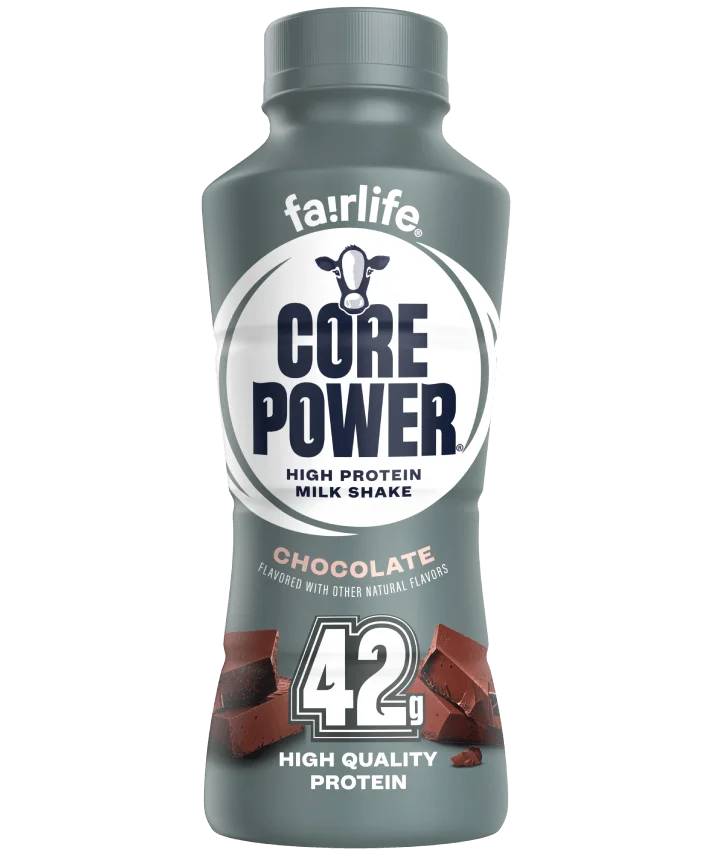 42g protein
Core Power Elite High Protein Shake
Amazon returns policy · secure checkout
30g protein42g proteinCore Power Elite - Chocolate
Amazon returns policy · secure checkout
Tags
High Protein Snacks Pro Editorial Team
Independently researched and editorially reviewed. We compare real nutrition labels and never accept payment for coverage.
Get the best new protein snacks in your inbox
Weekly picks and honest reviews — no spam, unsubscribe anytime.
More from the journal
Core Power vs Muscle Milk (2026): The Full Head-to-Head on Protein, Sugar, Sweeteners, and Value
Fairlife Core Power and Muscle Milk both build their 2026 shakes on ultra-filtered milk — and after Muscle Milk's Spring 2026 reformulation dropped sucralose and Ace-K, the comparison is closer than it has ever been. The standard bottles tie on protein (26g), and the high-protein bottles tie again (42g for both Core Power Elite and Muscle Milk Pro 14oz). Muscle Milk has the cleaner ingredient list; Core Power still holds a real edge on certified lactose-free labeling and fortification. Here is the verified head-to-head on protein per calorie, sugar, sweeteners, lactose, and price per gram of protein — with clear picks for lactose intolerance, maximum protein, weight loss, and value.
Read more
Premier Protein vs Core Power (2026): The Full Head-to-Head on Protein, Sugar, Sweeteners, and Value
Premier Protein (11.5 fl oz) delivers 30g protein and 160 calories for 1g sugar. Fairlife Core Power sells three different shakes with three different answers: the original 26g Core Power (14 fl oz, 170 cal), the high-protein Core Power Elite (14 fl oz, 42g, 230 cal), and the 30g Nutrition Plan (11.5 fl oz, 150 cal). We compared all four bottle-for-bottle on protein per calorie, sugar, sweeteners, lactose, vitamins, and price per gram of protein — with a clear pick for lactose intolerance, muscle-building, weight loss, and budget.
Read more
Fairlife Core Power Nutrition Facts: Every Line Ranked by Protein Density (2026)
Core Power packs 26g protein for 170 calories, Elite hits 42g, and Nutrition Plan delivers 30g for just 150 — every line ranked by protein density.
Read more