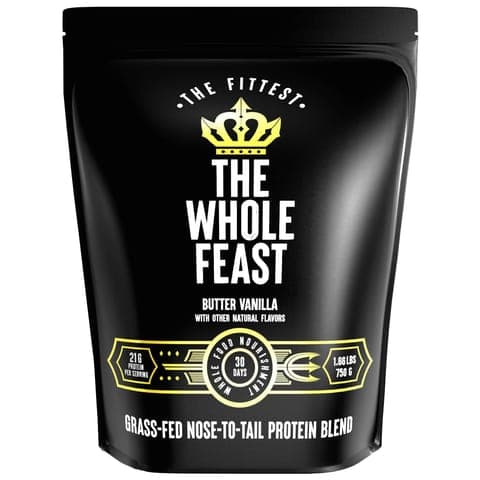
Best Protein Bars for Intermittent Fasting (2026): 5 Picks Ranked by Protein per Calorie, Fiber, and Sugar
The best protein bar for intermittent fasting in 2026 is DAVID Gold — 28g of protein at 150 calories with 0g of sugar, the highest protein-per-calorie ratio of any mainstream bar and the most efficient way to hit a protein target inside a restricted eating window. Quest Chocolate Chip Cookie Dough earns the satiety pick at 21g of protein and 14g of fiber in 190 calories — the fiber extends fullness to bridge the next fasting window. Five protein bars ranked for the IF eating window by protein per calorie, fiber, and sugar, with verified 2026 nutrition label data.
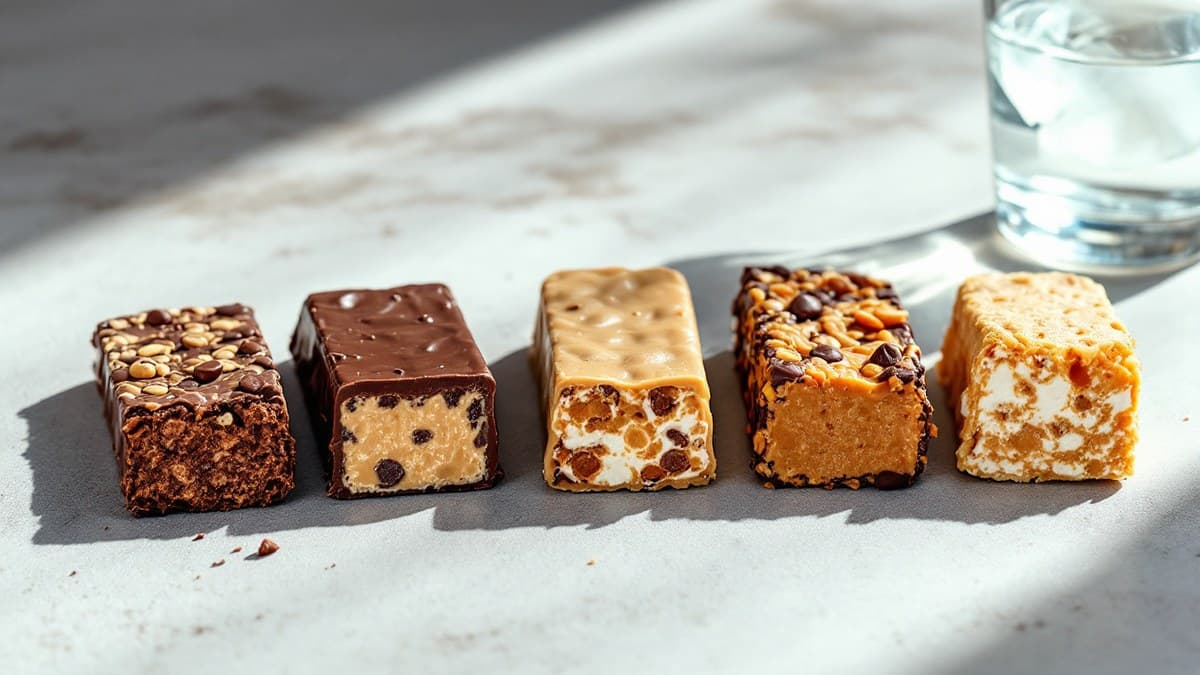
Our top protein bar picks
Editor-selected and ready to buy. As an Amazon Associate we may earn from qualifying purchases.
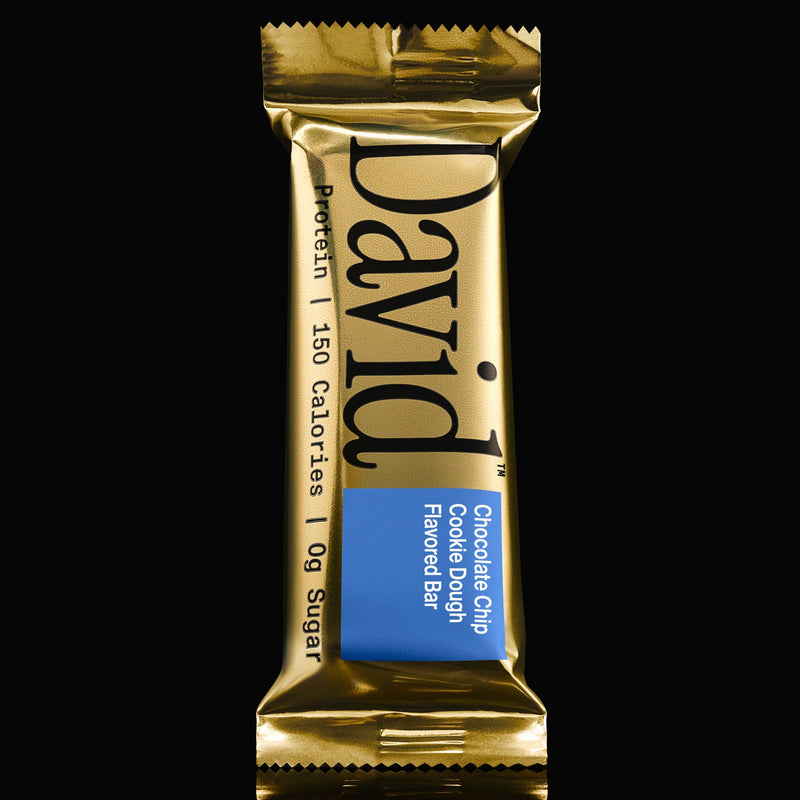 28g protein
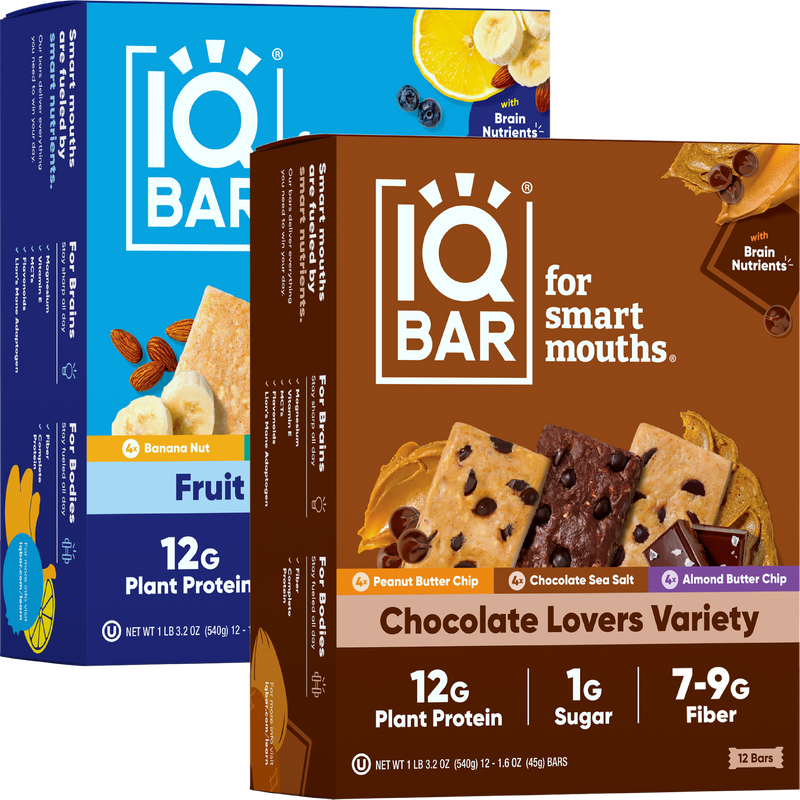 12g protein
Chocolate Lovers & Fruit Lovers (24 Bars)
Amazon returns policy · secure checkout
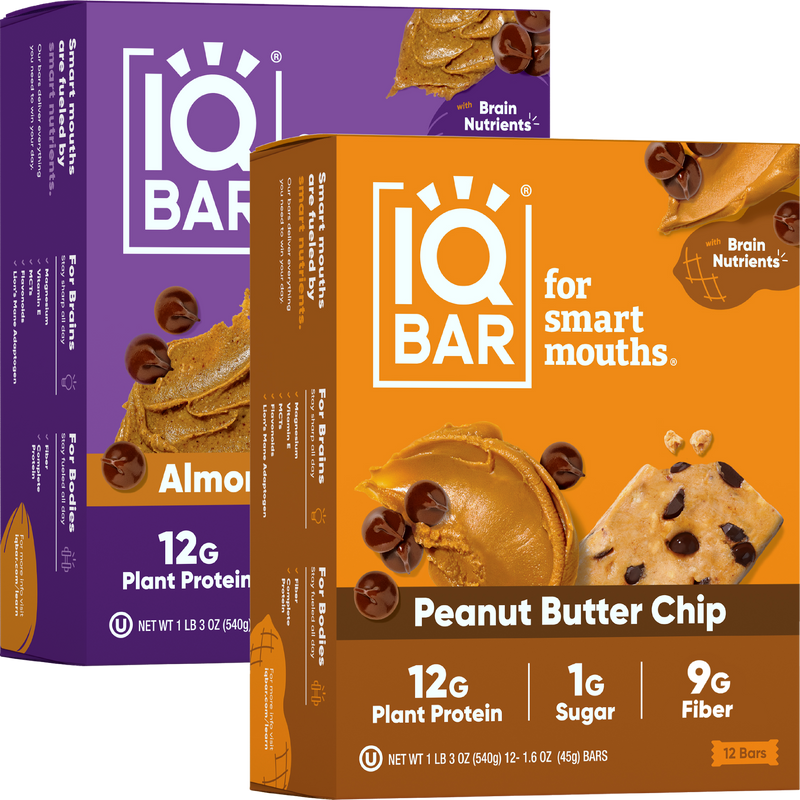 12g protein
Almond Butter Chip & Peanut Butter Chip (24 Bars)
Amazon returns policy · secure checkout
The 30-second answer
Best overall (highest protein per calorie): DAVID Gold — 28g of protein at 150 calories, 0g of sugar, the most efficient bar for hitting your protein target inside a calorie-restricted eating window. Best for satiety (fiber + protein): Quest Chocolate Chip Cookie Dough — 21g of protein and 14g of fiber at 190 calories; the fiber extends fullness for three to four hours, the most important thing a bar can do for an IF eating window. Best taste for long-term adherence: Barebells Caramel Cashew — 20g of protein, 200 calories, 1g of sugar; real milk chocolate coating that keeps the daily bar habit enjoyable. Widest availability: ONE Bar Peanut Butter Pie — 20g of protein, 220 calories, 1g of sugar, stocked in nearly every grocery and convenience store in the US. No artificial sweeteners: Built Puff — 17g of protein at 140 calories with 6g of real cane sugar and no sugar alcohols or synthetic sweeteners, the lowest-calorie pick of the five.
Intermittent fasting restricts when you eat, not what you eat — and that distinction completely changes how to think about protein bars. Any bar with calories breaks a strict zero-calorie fast. But for the 16:8, 18:6, and OMAD patterns most IF practitioners follow, the question is not “will this bar break my fast?” The question is “what is the most useful bar to eat during my eating window?” A smaller eating window means fewer total calories and fewer total grams of food, which makes two things disproportionately important: protein density (the grams of protein per calorie — because IF naturally restricts total intake while muscle preservation demands adequate protein throughout) and fiber (the grams of satiety per calorie — because a bar with high fiber keeps you full for three to four hours, which is the practical difference between making it through the next fasting window comfortably and reaching for food early). The five bars below are ranked on both variables: protein per 100 calories and fiber per bar, alongside total sugar and total calories. Every nutrition figure comes from each brand’s own published 2026 label; anything not confirmed by the label is marked with a dash rather than a guess.
Affiliate links — if you buy through them we earn a small commission at no extra cost to you. Every number below comes from each brand’s own published 2026 nutrition panel.
Protein Bar Comparison for Intermittent Fasting: 2026 Verified Nutrition
| # | Bar (per bar) | Protein | Calories | Protein / 100 cal | Sugar | Fiber |
|---|---|---|---|---|---|---|
| 1 | DAVID Gold (62g) | 28g | 150 | 18.7g | 0g | ~1g |
| 2 | Quest Chocolate Chip Cookie Dough (60g) | 21g | 190 | 11.1g | 1g | 14g |
| 3 | Barebells Caramel Cashew (55g) | 20g | 200 | 10.0g | 1g | 3g |
| 4 | ONE Bar Peanut Butter Pie (60g) | 20g | 220 | 9.1g | 1g | 9g |
| 5 | Built Puff (40g) | 17g | 140 | 12.1g | 6g | <1g |
Protein / 100 cal = (protein ÷ calories) × 100. All figures per the manufacturer’s published 2026 label. DAVID Gold uses a novel fat (EPG) and a protein blend that includes collagen alongside complete proteins — see the write-up below. Quest fiber is from soluble corn fiber plus IMO. Built Puff fiber is <1g; sweetness is 6g of real cane sugar with no sugar alcohols or synthetic sweeteners.
The 5 Best Protein Bars for Intermittent Fasting in 2026
#1 Best Overall for IF — DAVID Gold Protein Bar
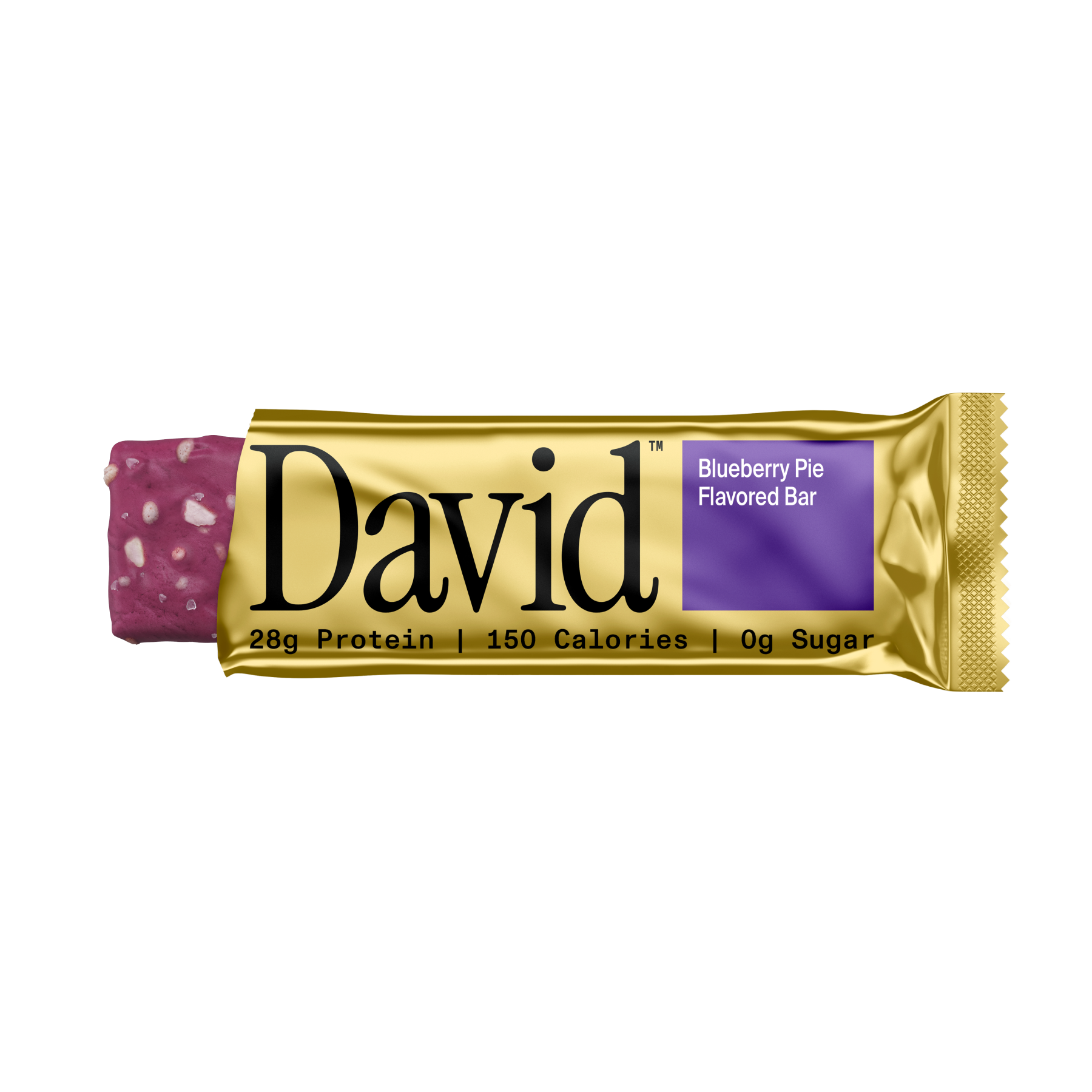
DAVID Gold Protein Bar (2.19 oz / 62g)
28g protein · 150 cal · 0g sugar · ~3g net carbs · 18.7g protein per 100 cal · novel EPG fat system · protein blend includes collagen + complete proteins
Check price on Amazon →DAVID Gold earns the top IF pick by the only metric that matters most for a calorie-restricted eating window: protein per calorie. At 28g of protein for 150 calories — 18.7g of protein per 100 calories — DAVID Gold gives you more muscle-preserving protein for fewer calories than any other mainstream bar in the US. For an IF practitioner eating in a 6-hour window at a 500-calorie daily deficit, every calorie saved on protein delivery is a calorie that can go toward a real meal. The 0g of sugar and ~3g of net carbs also mean a minimal insulin response, which most IF practitioners actively want at the edges of their eating window — a sharp blood-sugar spike followed by a crash is exactly what triggers early hunger and makes the next fasting window harder to start. Sweeteners are maltitol (a sugar alcohol), allulose, sucralose, and acesulfame potassium. Available in Chocolate Chip Cookie Dough, Fudge Brownie, Blueberry Pie, Cinnamon Roll, and Peanut Butter Chocolate Chunk at Walmart, Target, and direct from davidprotein.com. Full nutrition breakdown in our DAVID protein bar nutrition guide.
The honest catch: DAVID Gold’s protein blend includes collagen alongside milk protein isolate, whey protein concentrate, and egg white. Collagen is an incomplete protein — it lacks tryptophan and is low in branched-chain amino acids (BCAAs) compared to whey or milk protein isolate, which are the drivers of muscle protein synthesis. The three complete proteins in the blend compensate for what collagen lacks, so the total 28g still delivers all essential amino acids, but a pure whey isolate bar like Quest delivers a slightly higher-quality protein per gram for muscle preservation. Second honest catch: fiber is only ~1g per bar, compared to Quest’s 14g. DAVID Gold is the top pick for raw protein efficiency — it is not the top pick for satiety. If staying full through a long fasting window is your primary goal, jump to Quest.
#2 Best for Satiety — Quest Chocolate Chip Cookie Dough Bar
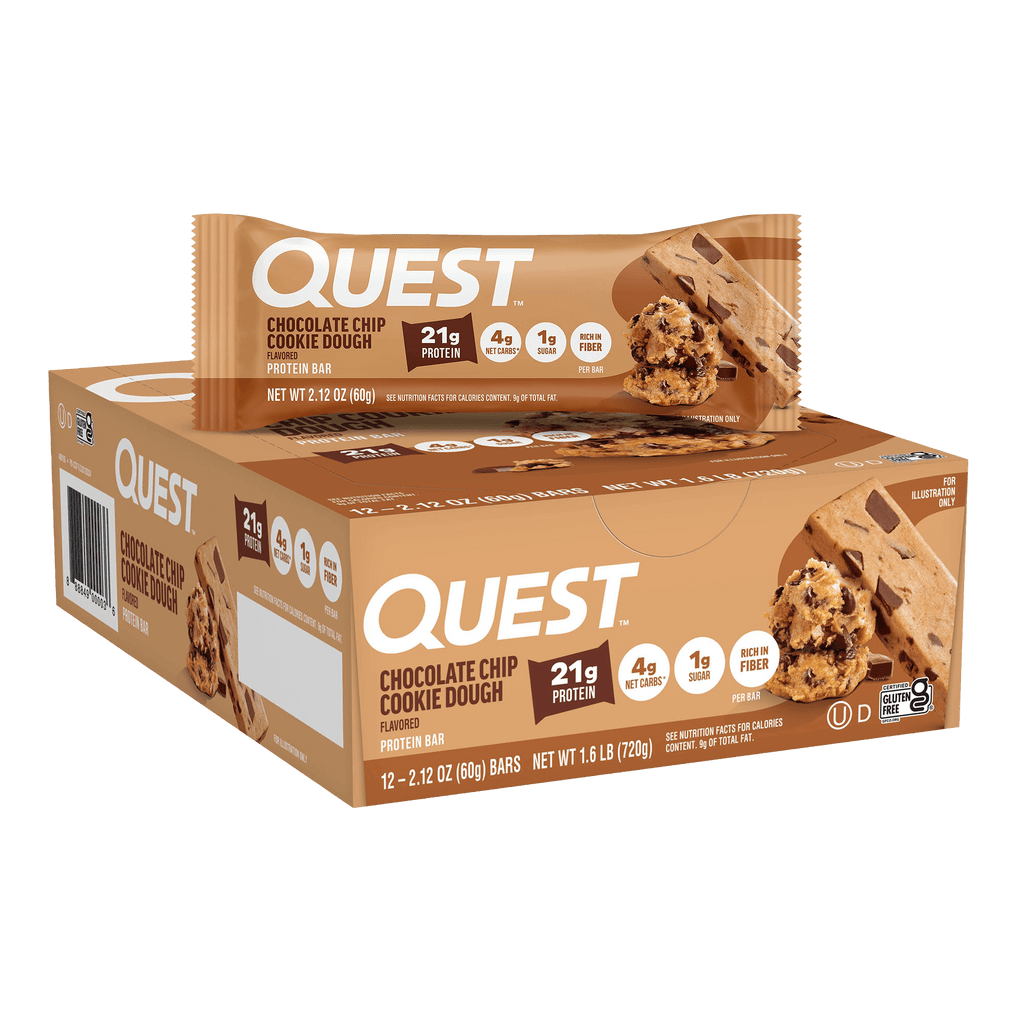
Quest Chocolate Chip Cookie Dough (60g / 2.12 oz)
21g protein · 190 cal · 1g sugar · 14g fiber · whey isolate + milk protein isolate (no collagen) · erythritol + sucralose · 11.1g protein per 100 cal
Check price on Amazon →Quest Chocolate Chip Cookie Dough is the satiety pick for IF for a simple, measurable reason: 14g of soluble fiber per bar. Soluble corn fiber slows gastric emptying, blunts the rate at which nutrients are absorbed into the bloodstream, and genuinely keeps you full for three to four hours — which is the practical timescale of most IF eating windows. If your eating window is 12pm to 8pm, one Quest bar eaten at noon can realistically carry you to 3pm or 4pm before you need another meal, which is exactly what good IF food should do. The protein is 21g of pure complete protein (whey isolate + milk protein isolate, no collagen) — the highest-quality protein blend of the five picks on this list. Sweetener is erythritol, which has a glycemic index of essentially zero and the smallest insulin response of any sweetener in this category, including sucralose. For IF practitioners who are specifically managing blood sugar or insulin sensitivity, erythritol-sweetened Quest bars are the cleanest option. Full breakdown in our Quest protein nutrition guide.
The honest catch: Quest uses soluble corn fiber and isomalto-oligosaccharide (IMO) as its fiber sources. At 14g of fiber per bar, some people experience gas, bloating, or loose stools — especially if you’re not already eating a high-fiber diet. Start with one bar per day and increase gradually rather than eating two or three bars in a single eating window on day one. Erythritol is also associated with cooling sensation and occasional GI sensitivity in some individuals at high doses; 190 calories for 21g of protein is also 40 more calories than DAVID Gold for 7g less protein — a genuine trade-off if raw protein efficiency is the main goal. Full head-to-head in our Quest vs. ONE Bar comparison.
#3 Best Taste for Long-Term Adherence — Barebells Caramel Cashew
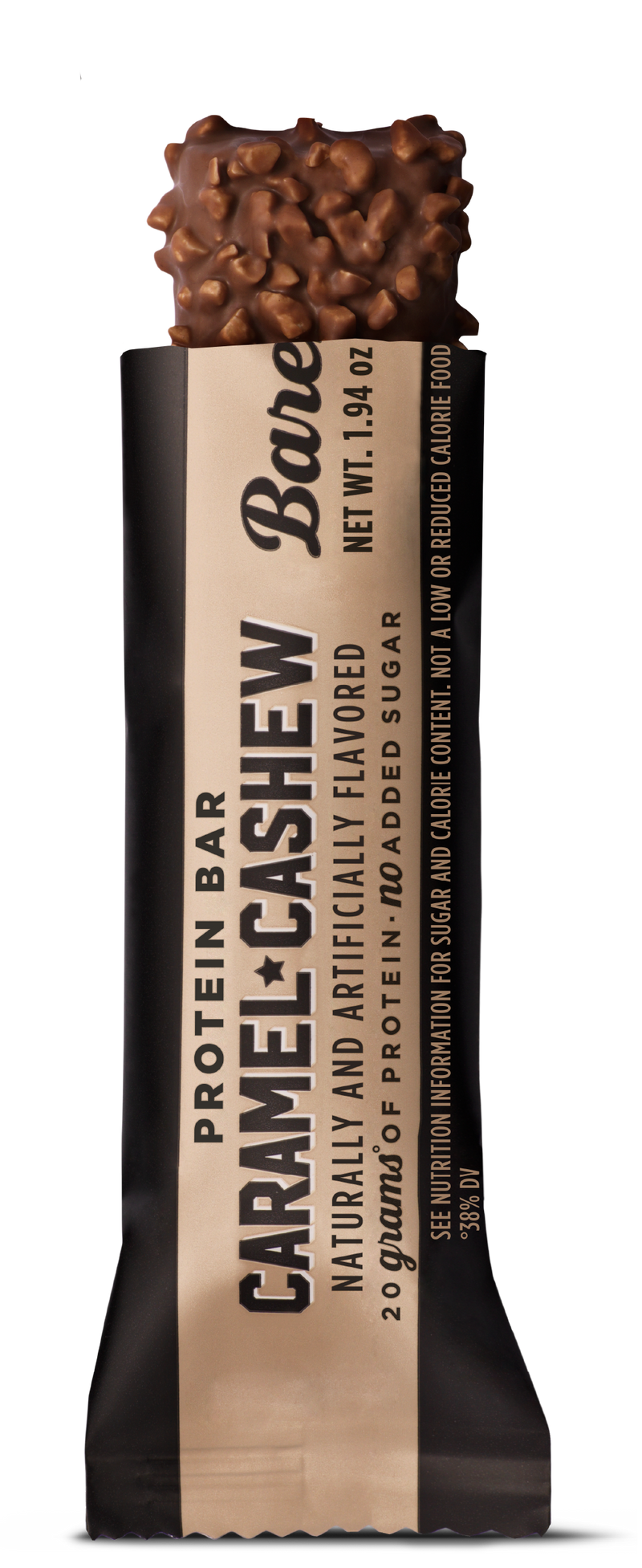
Barebells Caramel Cashew (55g)
20g protein · 200 cal · 1g sugar · 3g fiber · whey + milk protein · real milk chocolate coating · 10.0g protein per 100 cal
Check price on Amazon →Barebells earns the adherence pick, and adherence is genuinely one of the most important variables in IF. A bar you enjoy eating every day is one you will actually eat every day — which means you will hit your protein target consistently, rather than sporadically when you can tolerate the taste. Barebells Caramel Cashew has real milk chocolate on the outside (not a compound chocolatey coating) over a caramel and cashew nougat interior. That is the design that makes it genuinely competitive with candy bars on taste, while still delivering 20g of protein from a whey and milk protein blend at 200 calories and 1g of total sugar. Sweeteners are maltitol, sucralose, and acesulfame potassium. Maltitol is a sugar alcohol with a lower glycemic index than table sugar but higher than erythritol — the insulin response is small but slightly larger than Quest’s. For full flavor breakdown see our Barebells protein bar nutrition guide.
The honest catch: fiber is only 3g per bar — the lowest of any milk-protein bar on this list and a meaningful satiety gap versus Quest (14g) or ONE Bar (9g). Barebells will not keep you full for three to four hours the way Quest will; it will keep you satisfied (not hungry, not craving sugar) for one to two hours. Maltitol can cause GI discomfort at higher daily doses — two bars in a four-hour window is the upper limit most people tolerate without symptoms. At $2.65–$3.10 per bar, Barebells is also the most expensive pick on a per-bar basis. The taste premium is real; the satiety premium versus Quest is not.
#4 Best Availability — ONE Bar Peanut Butter Pie
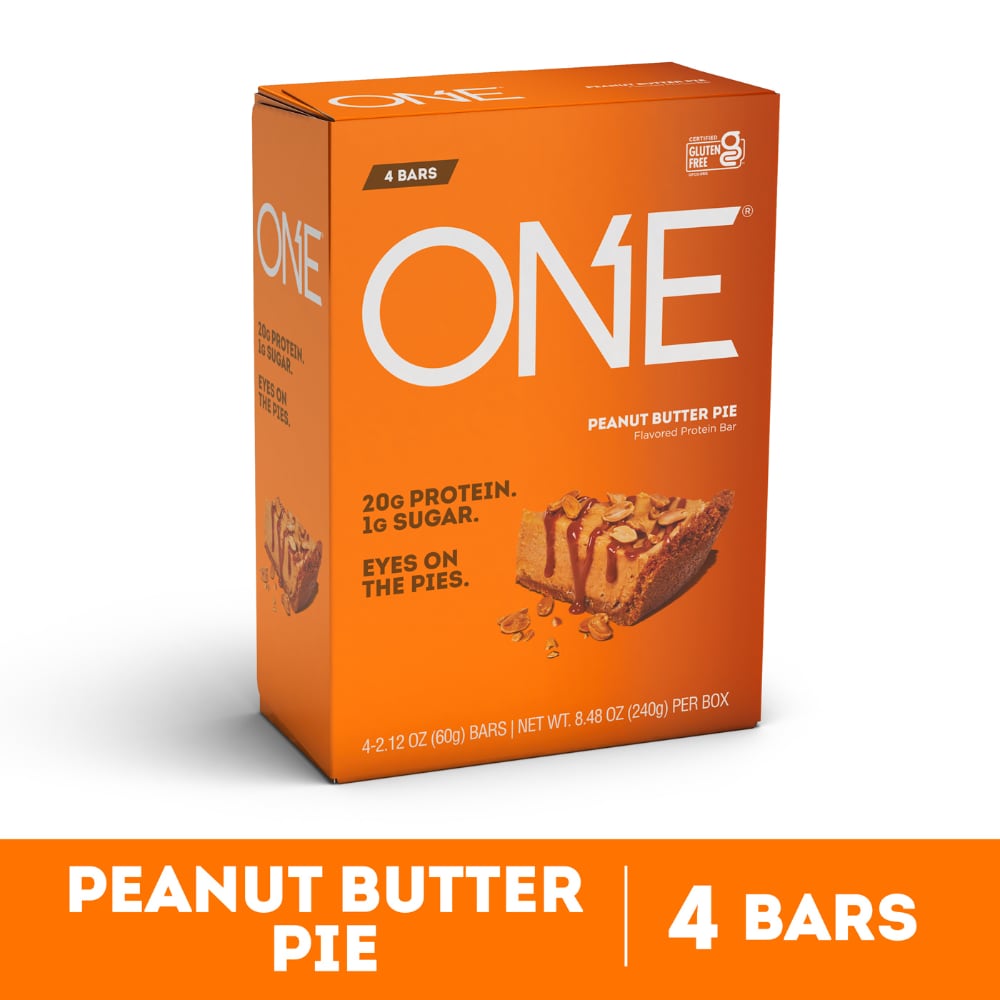
ONE Bar Peanut Butter Pie (60g / 2.12 oz)
20g protein · 220 cal · 1g sugar · 9g prebiotic fiber · milk protein isolate + whey isolate (no collagen) · 9.1g protein per 100 cal · 25+ flavors
Check price on Amazon →ONE Bar earns its spot on ubiquity. It is available in almost every grocery store, Walmart, Target, Kroger, Walgreens, CVS, airport newsstand, and gas station in the United States — which matters enormously for IF practitioners whose eating window sometimes opens away from home without access to a planned snack. The 20g of complete protein (milk protein isolate + whey isolate, no collagen) at 220 calories and 1g of sugar is a solid IF profile. The 9g of prebiotic fiber (isomalto-oligosaccharide) provides real satiety benefit — not as strong as Quest’s 14g of soluble corn fiber, but meaningfully more than Barebells’ 3g. The 25+ flavors (Birthday Cake, Cinnamon Roll, Almond Bliss, Blueberry Cobbler, Maple Glazed Doughnut) prevent the flavor fatigue that kills daily bar habits faster than anything else. Full nutrition breakdown in our ONE Bar nutrition guide.
The honest catch: at 220 calories for 20g of protein, ONE Bar is the least efficient on a protein-per-calorie basis of the five picks (9.1g per 100 cal), and the highest absolute calorie count per bar. For an IF practitioner in a tight calorie window, those extra calories versus DAVID or Quest add up across a week. Sweeteners are sucralose and maltitol; the 9g of IMO fiber on the label is a prebiotic fiber that the FDA no longer counts as a dietary fiber under updated rules — the satiety benefit is real but smaller than an equivalent 9g of soluble corn fiber or oat fiber. Worth it for the convenience and variety; not the pick if you are optimizing every calorie of the eating window.
#5 No Artificial Sweeteners — Built Puff (Brownie Batter)
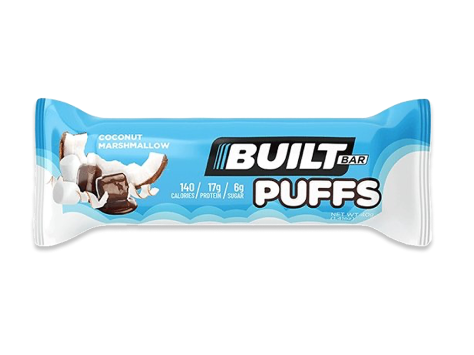
Built Puff (40g)
17g protein · 140 cal · 6g real cane sugar · <1g fiber · chocolate-coated aerated marshmallow texture · no sugar alcohols · no artificial sweeteners · 12.1g protein per 100 cal
Check price on Amazon →Built Puff earns the last spot for one specific reader: the IF practitioner who avoids sugar alcohols, sucralose, and artificial sweeteners entirely — either for GI reasons or by dietary philosophy. At 140 calories and 17g of protein, Built Puff is also the lowest-calorie bar on this list, which makes it the easiest fit inside a tight eating window. The texture is genuinely different from every other bar here: an aerated, marshmallow-style core under a thin chocolate coat that compresses like a firm marshmallow rather than resisting like a dense slab. Sweetening is 6g of real cane sugar — disclosed and real, no sugar alcohol euphemism. Protein comes from a whey and collagen blend. Flavors vary between 140 and 160 calories and 15–17g of protein; Brownie Batter, Coconut Marshmallow, and Caramel Pretzel are the most-stocked. Full breakdown in our Built Bar nutrition guide.
The honest catch: 6g of real cane sugar produces a larger insulin response than the sugar-alcohol-sweetened bars above — not dramatic, but real. For IF practitioners who are specifically following a protocol to manage insulin sensitivity or who are doing IF alongside a strict low-glycemic diet, the 1g sugar in Quest or DAVID’s 0g is a meaningfully cleaner option. Built Puff protein also includes collagen alongside the whey, so the protein quality per gram is similar to DAVID (complete proteins compensate for collagen’s limitations, but it is not pure whey). And at <1g of fiber, Built Puff is the weakest pick for satiety — the 140 calories will satisfy a light snack craving for 60–90 minutes, not carry you through a four-hour fasting-window approach.
Do Protein Bars Break a Fast?
Yes — any food with calories breaks a strict fast. A protein bar eaten during your fasting window ends the fast at that moment. This is not a technicality: the metabolic shifts that IF creates (lowered insulin, elevated glucagon, increased fat oxidation, autophagy in extended fasts) all require a calorie-free state to sustain. A protein bar delivers calories, which triggers an insulin and glucagon response and ends those processes.
However, the way most people practice IF — 16:8, 18:6, 5:2, or OMAD — protein bars are eaten entirely within the eating window. If your eating window is noon to 8pm, a bar eaten at noon, 2pm, or 5pm is fully compatible with the protocol. The fast runs from 8pm to noon the next day on its own, undisturbed. During that fast, the correct options are water, black coffee, unsweetened tea, and plain electrolytes (zero-calorie). The protein bar question is not “should I eat this bar instead of fasting?” It is “what is the best bar to eat in my eating window so that the next fasting window is easier and my protein target is hit?”
What Should You Look For in a Protein Bar for Intermittent Fasting?
Four variables separate an IF-useful bar from an ordinary snack bar:
Protein per calorie. IF eating windows are smaller, which means total daily caloric intake is naturally lower. In that compressed window, you need protein to do more work per calorie than it does in a full-day eating pattern. A bar at 18.7g of protein per 100 calories (DAVID Gold) leaves more caloric room for real meals than one at 9.1g per 100 calories (ONE Bar) for the same protein contribution.
Fiber. The job of a bar in an IF eating window is not just to deliver protein — it is to extend satiety so the next fasting window is tolerable. High-fiber bars (Quest at 14g, ONE Bar at 9g) keep you full for three to four hours after eating. Low-fiber bars (Built Puff at <1g, DAVID at ~1g) satisfy for 60–90 minutes and then release you back into hunger. The bar you eat at noon should ideally carry you to 3pm without a second snack.
Sugar. A sharp blood-sugar spike followed by a glucose crash triggers hunger and cravings that make the fasting window much harder to restart. Bars with 0–1g of total sugar (DAVID, Quest, Barebells, ONE Bar) minimize this; Built Puff at 6g of real sugar is moderate. The bigger concern is the sweetener type: erythritol (Quest) has a glycemic index of essentially zero; maltitol (Barebells, ONE, DAVID) is lower-glycemic than table sugar but not zero; sucralose raises no blood glucose. If insulin response during your eating window matters to you specifically, Quest’s erythritol system is the cleanest.
Total calories. Lower total calories for the same protein contribution means more caloric room for nutrient-dense whole foods in the eating window. DAVID Gold at 150 calories for 28g of protein leaves more room than ONE Bar at 220 calories for 20g of protein. For IF practitioners not tracking calories strictly, this is a secondary concern; for those running a deliberate caloric deficit inside the eating window, it matters.
When Is the Best Time to Eat a Protein Bar on Intermittent Fasting?
The strongest use case is at the transition point when the fast ends. When the eating window opens — at noon on a 16:8 schedule, for example — cortisol is still elevated and hunger is at its peak. A protein bar eaten immediately at the start of the eating window blunts the hunger spike without requiring a full meal to be prepared or consumed. This is especially useful on workdays when breaking the fast with a proper meal is not practical at 12pm. A bar at noon bridges to a proper meal at 2pm or 3pm, and the whole eating window is more manageable.
A second use case is pre-workout, for IF practitioners whose training session falls near the start or end of their eating window. A protein bar 30–60 minutes before training provides fast-available amino acids for the training session and prevents muscle breakdown during exercise. Post-workout protein is the higher-priority of the two — if your eating window and your training session are both in the afternoon, prioritize a high-protein whole meal within 60–90 minutes of finishing the workout, and use the bar elsewhere in the window. For specific pre-workout bar guidance, see our best pre-workout protein snacks guide.
Frequently Asked Questions
What is the best protein bar for intermittent fasting?
DAVID Gold is the best protein bar for IF on a protein-per-calorie basis: 28g of protein at 150 calories, 0g of sugar, and the most efficient way to hit a protein target inside a calorie-restricted eating window. Quest Chocolate Chip Cookie Dough is the best for satiety: 21g of protein and 14g of soluble fiber at 190 calories extends fullness for three to four hours, the most valuable property a bar can have for making the next fasting window manageable. Which is right depends on your specific IF goal — if maximum muscle-preserving protein density is the priority, DAVID; if staying full long enough to extend the fast is the priority, Quest.
Can you eat a protein bar during the fasting window?
No. A protein bar contains calories and macronutrients that trigger an insulin and glucagon response — this ends the fast immediately. The fasting window requires a calorie-free state to sustain the metabolic shifts IF is designed to produce. Eat protein bars during your eating window only. During the fast, stick to water, black coffee, unsweetened tea, or zero-calorie electrolytes. If your eating window is noon to 8pm, a bar at 12:01pm is fine; a bar at 11:59am breaks the fast.
Do protein bars spike insulin and break ketosis?
Bars sweetened with erythritol (Quest) have virtually no glycemic index and do not meaningfully spike insulin. Bars sweetened with maltitol (Barebells, ONE Bar, DAVID Gold) have a lower glycemic index than table sugar but are not zero — they produce a modest insulin response. Bars with real sugar (Built Puff, 6g) produce the largest insulin response of the five picks, though still moderate. For IF practitioners who are also following a ketogenic diet, DAVID Gold (0g net carbs after accounting for EPG and sugar alcohols) and Quest (4g net carbs from a 190-calorie bar) are both compatible with standard ketogenic macros. See our best keto protein bars guide for the full low-carb ranking.
Which protein bars have the least sugar for intermittent fasting?
DAVID Gold has 0g of total sugar and 0g of added sugar — the lowest on this list. Quest Chocolate Chip Cookie Dough, Barebells Caramel Cashew, and ONE Bar Peanut Butter Pie all list 1g of total sugar on the label. Built Puff has 6g of real cane sugar, the highest of the five. For the very lowest insulin impact during the eating window, DAVID Gold (0g sugar, erythritol-adjacent sweetener stack) or Quest (1g sugar, erythritol-sweetened) are the cleanest options.
How many protein bars can I eat during an IF eating window?
One bar per day is the appropriate use case for most IF practitioners — as a snack, a meal bridge, or a post-workout protein hit inside the eating window. Two bars per day is common for athletes with high protein targets (over 160g per day) or people whose eating window does not accommodate enough whole-food protein. More than two bars per day pushes toward an over-reliance on processed protein sources and reduces the satiety benefit of the IF pattern (bars digest faster than whole food). Do not replace all eating-window meals with protein bars; the dietary fibers, micronutrients, and whole-food satiety of actual meals are not substitutable by any bar on this list.
Are protein bars good for weight loss with intermittent fasting?
Yes, when used correctly. IF creates a caloric deficit by restricting the eating window; protein bars reduce the muscle loss that typically accompanies caloric restriction, because adequate protein intake (0.7–1g per pound of body weight per day) is required to preserve lean mass during a deficit. High-fiber bars (Quest at 14g) also reduce overall caloric intake by extending satiety and reducing between-meal snacking. The key is treating bars as protein supplements within the eating window’s total calorie budget — not as bonus calories on top of full meals. For the broader strategy, see our best high-protein snacks for weight loss guide and the best protein bars for weight loss 2026 ranking.
Which protein bars have the most protein for IF?
DAVID Gold at 28g per bar is the highest-protein mainstream bar in the US, followed by Quest at 21g, then Barebells and ONE Bar both at 20g, then Built Puff at 17g. For an expanded ranking that goes beyond this list, our highest protein bars ranked by grams covers the full category. For IF specifically, protein per calorie matters more than raw grams — DAVID delivers 28g at only 150 calories, while some 20g bars cost 250+ calories to get there.
Where can you buy protein bars for intermittent fasting?
Amazon carries all five picks with Prime shipping and multi-count box pricing. Quest, ONE Bar, and Barebells are available at Walmart, Target, Kroger, Costco, CVS, Walgreens, and most grocery stores across the US. DAVID Gold is at Walmart, Target, and direct from davidprotein.com. Built Puff is at Target, Amazon, and direct from built.com. Subscribe-and-save on Amazon typically saves 10–15% versus one-time purchases on any of these.
Bottom line: for most IF practitioners in 2026, the right protein bar depends on one question — do you need maximum protein per calorie, or maximum fullness per calorie? For protein efficiency, DAVID Gold (28g at 150 calories, 0g sugar) is the clear answer. For satiety, Quest Chocolate Chip Cookie Dough (21g protein + 14g fiber at 190 calories) is the bar that actually extends the eating window’s satisfaction into the fasting period that follows. Both are eaten in the eating window — the fast runs on water, black coffee, and plain electrolytes only. For taste-based adherence on a daily bar habit, Barebells is the pick you will not get tired of. For availability when you are breaking your fast away from home, ONE Bar is in every store. For avoiding all artificial sweeteners, Built Puff runs on real cane sugar at the lowest calorie count of the group. Browse all high-protein snacks in the protein snacks directory, see the full cross-category best protein bars of 2026 ranking, and see best protein bars for weight loss 2026 for the broader weight-management ranking.
Shop our top protein bar picks
Editor-selected high-protein options related to this guide. As an Amazon Associate we may earn from qualifying purchases.
28g protein12g proteinChocolate Lovers & Fruit Lovers (24 Bars)
Amazon returns policy · secure checkout
12g proteinAlmond Butter Chip & Peanut Butter Chip (24 Bars)
Amazon returns policy · secure checkout
Tags
High Protein Snacks Pro Editorial Team
Independently researched and editorially reviewed. We compare real nutrition labels and never accept payment for coverage.
Get the best new protein snacks in your inbox
Weekly picks and honest reviews — no spam, unsubscribe anytime.
More from the journal
Best Protein Bars for Endurance Athletes (2026): 5 Picks Ranked by Carb-to-Protein Ratio, Digestibility, and Portable Fueling for Runners, Cyclists, and Triathletes
The best protein bar for endurance athletes in 2026 is CLIF Builders Chocolate Peanut Butter — 20g of soy-isolate complete protein plus 30g of real carbs at 280 calories, the strongest post-workout recovery bar for runners, cyclists, and triathletes replacing glycogen after a long session. PROBAR Meal Bar is the ultra-endurance fueling pick at 370 calories and 42g of whole-food carbs. Five protein bars ranked for endurance training by carb-to-protein ratio, real-food digestibility, and portability, with verified 2026 nutrition label data from each manufacturer's own panel.
Read more
Best Protein Bars for Cutting (2026): 5 Picks Ranked by Protein per Calorie, Net Carbs, and Muscle-Preserving Complete Protein
The best protein bar for cutting in 2026 is DAVID Gold — 28g of protein at 150 calories with 0g of sugar and ~3g of net carbs, the highest protein density of any mainstream bar and the leanest fit inside a calorie deficit. Quest Chocolate Chip Cookie Dough is the satiety pick for cutters at 21g of pure complete protein and 14g of fiber in 190 calories — the fiber blunts hunger for three to four hours when calories are scarce. Five protein bars ranked for a cutting phase by protein per calorie, net carbs, calorie floor, and muscle-preserving complete-protein quality, with verified 2026 nutrition label data.
Read more
Best Low Calorie Protein Bars 2026: 10 Bars Ranked by Protein Per Calorie
The DAVID Protein Bar (Chocolate Chip Cookie Dough) is the strongest low-calorie protein bar in 2026 — 28g of protein at 150 calories, 18.7g of protein per 100 calories, the highest ratio of any widely-available bar. These 10 low-calorie protein bars are ranked strictly by protein per 100 calories with verified nutrition data, so you can compare bars fairly regardless of serving size.
Read more