David Protein Bar Nutrition Facts: 28g Protein in 150 Calories — Gold vs Bronze, Every Flavor, EPG Explained
DAVID Gold bars deliver 28g of protein and 150 calories with 0g of sugar per 62g bar — the highest protein-to-calorie ratio of any mainstream US protein bar. Here are the verified nutrition facts for every Gold and Bronze flavor, what EPG is and why it matters, and how DAVID compares to Quest, Barebells, and Built Bar.
The short answer
Our top protein bar picks
Editor-selected and ready to buy. As an Amazon Associate we may earn from qualifying purchases.
Shopping for David? Blueberry Pie · Peanut Butter Chocolate Chunk · Salted Peanut Butter
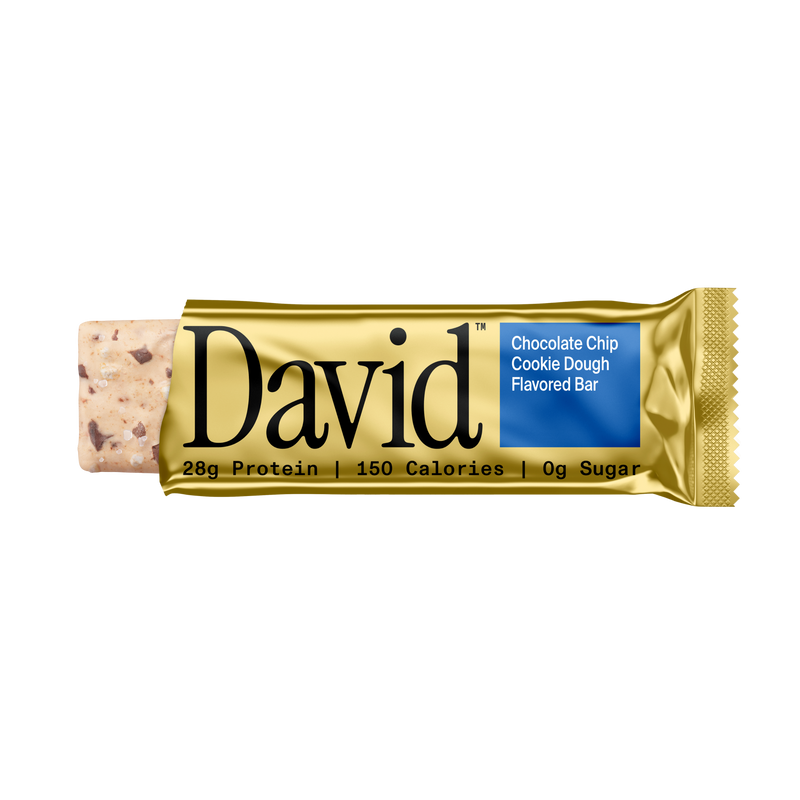 28g protein
Chocolate Chip Cookie Dough
Amazon returns policy · secure checkout
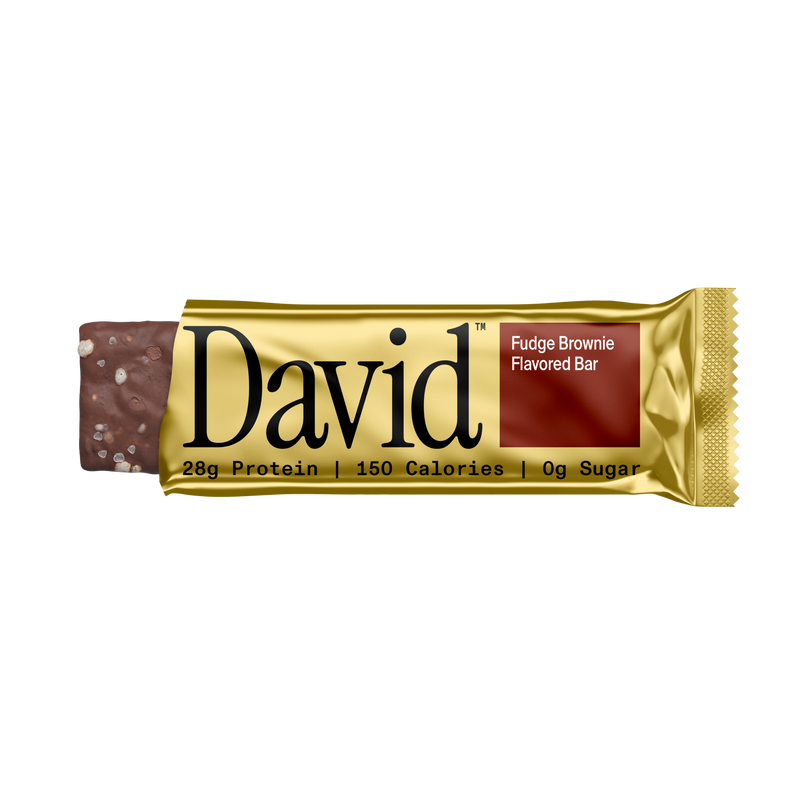 28g protein
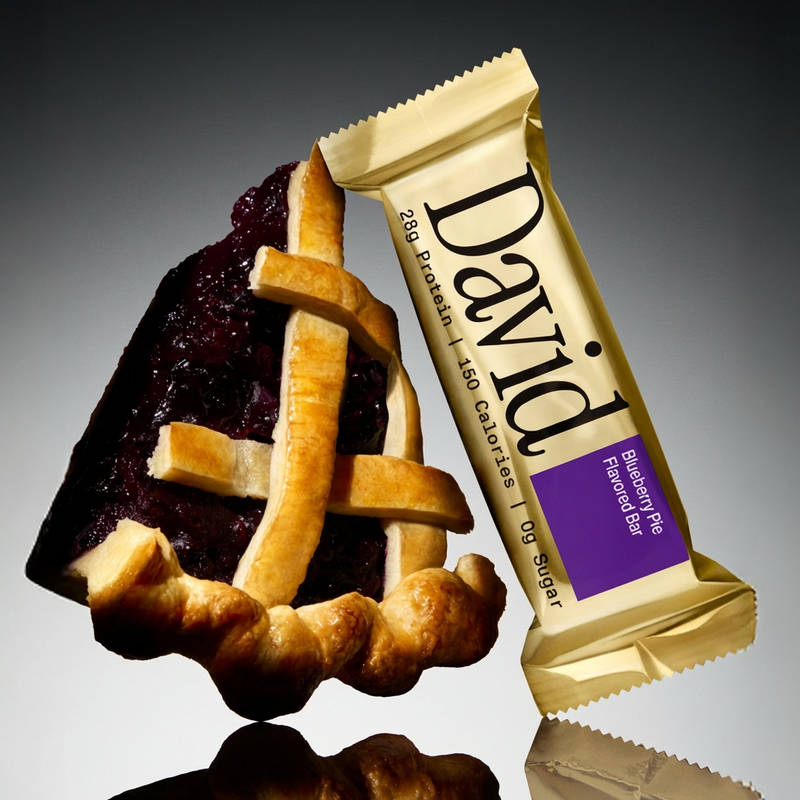 28g protein
DAVID Gold Bar Nutrition Facts (28g Protein, All Flavors)
DAVID Gold is the flagship line: every flavor delivers 28g of protein, 150 calories, and 0g of total sugar per 62g bar. Numbers below are compiled from multiple retail product listings (Walmart, Target) and FatSecret database entries. Carbohydrate and fat figures are close approximations — confirm against your specific package label, especially for peanut-containing flavors which carry slightly more fat.
| Flavor (62g bar) | Calories | Protein | Total Carbs | Fiber | Total Sugar | Total Fat | Sodium |
|---|---|---|---|---|---|---|---|
| Chocolate Chip Cookie Dough | 150 | 28g | ~12g | ~1g | 0g | ~2g | ~160mg |
| Fudge Brownie | 150 | 28g | ~12g | ~1g | 0g | ~2g | ~140mg |
| Blueberry Pie | 150 | 28g | ~12g | ~1g | 0g | ~2g | ~140mg |
| Cinnamon Roll | 150 | 28g | ~12g | ~1g | 0g | ~2g | ~140mg |
| Cake Batter | 150 | 28g | ~12g | ~1g | 0g | ~2g | ~140mg |
| Red Velvet | 150 | 28g | ~12g | ~1g | 0g | ~2g | ~140mg |
| Peanut Butter Chocolate Chunk | 150 | 28g | ~12g | ~1g | 0g | ~2.5g | ~160mg |
| Salted Peanut Butter | 150 | 28g | ~12g | ~1g | 0g | ~2.5g | ~200mg |
Several things to note. First, the ~12g of total carbohydrates on the Gold bar label includes approximately 8g of maltitol (a sugar alcohol). Maltitol is partially absorbed by the body and contributes roughly 2 calories per gram rather than the full 4 cal/g of regular carbs, but it does count toward total carbohydrates on the Nutrition Facts panel. Second, the ~2g of total fat is almost entirely EPG (esterified propoxylated glycerol) — a novel modified fat explained in detail below. Third, DAVID Gold bars are gluten-free. Fourth, allergens depend on flavor: peanut flavors contain peanuts; all Gold flavors contain milk, eggs, and soy.
DAVID Bronze Bar Nutrition Facts (20g Protein, All Flavors)
The DAVID Bronze line is the lower-protein, more indulgent tier. Bronze bars weigh 58g each, deliver 20g of protein for 150 calories, and use a different formula from Gold: no EPG fat system, more fiber, and a different protein blend (notably without collagen). The Bronze line uses maltitol, sucralose, and acesulfame potassium as sweeteners.
| Flavor (58g bar) | Calories | Protein | Total Carbs | Fiber | Sugar Alcohols | Total Sugar | Total Fat |
|---|---|---|---|---|---|---|---|
| Double Chocolate | 150 | 20g | ~18g | ~5g | ~11g | 0g | ~3.5g |
| Cookie Dough Caramel Chocolate | 150 | 20g | ~18g | ~5g | ~11g | 0g | ~4g |
| Peanut Butter Chocolate | 150 | 20g | ~18g | ~5g | ~11g | 0g | ~4g |
| S’mores Chocolate | 150 | 20g | ~18g | ~5g | ~11g | 0g | ~3.5g |
The Bronze bars have meaningfully more fiber (~5g vs. ~1g in Gold) and more total carbs (~18g vs. ~12g), mostly from higher maltitol and fiber content. On a net-carb basis, Bronze bars work out to roughly 2g of net carbs (18g total carbs minus ~5g fiber minus ~11g sugar alcohols), similar to Gold. Bronze bars use a different protein blend from Gold: whey protein isolate, milk protein isolate, egg white, and calcium caseinate — with no collagen. This makes the Bronze protein more straightforward from a quality standpoint. Bronze bars are also gluten-free.
What Is EPG, and Why Does the Gold Bar Have Only 2g of Fat?
This is the most technically unusual aspect of DAVID Gold bars, and it deserves a clear explanation.
EPG stands for esterified propoxylated glycerol, a synthetic modified fat molecule engineered so that the human body absorbs very little of it. While regular dietary fat contributes 9 calories per gram, EPG contributes only about 0.7 calories per gram — roughly 92% fewer calories than an equivalent weight of regular fat. DAVID bars use EPG as their primary fat source to achieve the combination of a creamy, satisfying texture and an extremely low calorie count. Without EPG, a 28g-protein bar in a 62g serving would require significantly more fat from conventional sources to achieve the same mouthfeel, which would raise the calorie count substantially.
Is EPG safe? EPG was granted GRAS (Generally Recognized As Safe) status by the FDA, but importantly this was via a self-affirmation process by Epogee LLC (the manufacturer), not through an independent FDA review. Long-term human safety data on EPG is limited compared to conventional fats. At high doses, EPG has been linked to gastrointestinal symptoms including gas, bloating, and oily spotting — similar to the side effects that high doses of olestra (a different fat substitute) can cause. At the one- to two-bar-per-day level most people use, GI complaints from EPG appear to be uncommon.
DAVID acquired Epogee in May 2025, making the EPG supply chain vertically integrated. As a result, Epogee stopped selling EPG to third parties.
Lawsuit context: A class action lawsuit filed in 2025 alleged that DAVID bars contained 400% more fat and 80% more calories than listed on the label — the core argument being that EPG should be counted using its conventional-fat caloric value (9 cal/g) rather than its absorbed caloric value (0.7 cal/g). In April 2026, a US district court judge dismissed the case, siding with DAVID, finding that DAVID’s labeling complied with FDA regulations. The bars remain on sale with the same formula. This is an evolving area of food law and novel ingredient regulation, but as of mid-2026, the nutrition label as printed is the regulatory-compliant one.
The Gold Bar Protein Blend: What the 28g Actually Delivers
DAVID Gold bars use a four-source protein system: milk protein isolate, collagen, whey protein concentrate, and egg white. Three of these (milk protein isolate, whey concentrate, egg white) are complete proteins containing all nine essential amino acids, including tryptophan and the branched-chain amino acids leucine, isoleucine, and valine that drive muscle protein synthesis. Collagen, however, is an incomplete protein — it lacks tryptophan entirely and is low in BCAAs.
Because DAVID lists the proteins in the order milk protein isolate → collagen → whey concentrate → egg white under FDA ingredient-listing rules (which require descending order by weight), and because it is a close race between ingredients, the exact collagen fraction of the total 28g is not disclosed by DAVID. The combined blend delivers all essential amino acids because the complete proteins compensate for what collagen lacks.
The practical implication: for general health, weight management, and everyday protein goals, the 28g blend works. For athletes specifically optimizing muscle protein synthesis around training — where maximizing leucine delivery and avoiding incomplete protein sources per gram matters — a pure whey isolate or milk protein bar (like Quest or a pure-whey option) is a slightly higher-quality protein vehicle per gram. See whole-food options in our best post-workout protein snacks guide.
By contrast, the DAVID Bronze protein blend (whey protein isolate, milk protein isolate, egg white, calcium caseinate — no collagen) is entirely complete-protein and does not carry this caveat. Bronze's protein quality is stronger on a per-gram basis.
DAVID Gold vs Quest vs Barebells vs Built Bar vs RXBAR: Full Comparison
Here is how the DAVID Gold bar stacks up against the other top protein bars on the metrics that matter most. All bars are a single serving.
| Bar (per bar) | Calories | Protein | Protein / 100 cal | Total Sugar | Net Carbs | Fiber | Sweeteners |
|---|---|---|---|---|---|---|---|
| DAVID Gold Chocolate Chip Cookie Dough (62g) | 150 | 28g | 18.7g | 0g | ~3g | ~1g | Maltitol, allulose, sucralose, Ace-K |
| Quest Choc. Chip Cookie Dough (60g) | 190 | 21g | 11.1g | 1g | ~10g | 12g | Erythritol, sucralose, stevia |
| Barebells Original Cookies & Cream (55g) | 200 | 20g | 10.0g | 1g | ~12g | ~3g | Maltitol, sucralose, Ace-K |
| Built Puff Brownie Batter (40g) | 140 | 17g | 12.1g | 6g | ~13g | <1g | Real sugar, no artificial |
| RXBAR Chocolate Sea Salt (52g) | 210 | 12g | 5.7g | 13g | ~15g | 5g | Dates (natural sugar) |
DAVID Gold wins the protein-to-calorie contest by a wide margin. The honest caveats: (1) the protein blend includes collagen, so the complete-protein fraction per gram is lower than bars that use pure whey isolate or milk protein; (2) EPG is a novel ingredient with limited long-term safety data, unlike the well-studied fat sources in every other bar; (3) fiber is minimal (~1g) versus Quest at 12g, so DAVID bars are less filling per calorie than Quest despite the higher protein; (4) at ~3g net carbs per bar, DAVID Gold is very low-carb. For detailed breakdowns on the other bars, see our guides for Quest protein nutrition, Barebells nutrition, Built Bar nutrition, and RXBAR nutrition.
Is the DAVID Protein Bar Healthy? Who It’s For
For most people with standard protein goals: DAVID Gold is a genuinely effective, unusually efficient protein snack. 28g of protein for 150 calories is exceptional, and both lines are third-party tested (Light Labs December 2025: 65 of 65 bars passed). For hitting daily protein targets, building or maintaining muscle mass, or replacing higher-calorie snacks, the macro profile is hard to beat.
The caveats to weigh:
- Novel fat ingredient (EPG): EPG does not have the decades of safety data behind conventional fats. If you prefer to eat only ingredients with extensive long-term human studies, RXBAR (whole food ingredients) or Quest (well-studied fats) are cleaner choices from that standpoint.
- Artificial sweeteners: Gold bars contain sucralose and acesulfame potassium in addition to maltitol. If avoiding artificial sweeteners is a priority, these bars are not for you. See our protein snacks without added sugar guide for alternatives.
- Very low fiber: ~1g of fiber per Gold bar means DAVID bars are less satiating than Quest (12g fiber) at a similar calorie level. You may feel hungrier sooner after a DAVID bar than after a Quest bar, despite the higher protein.
- GI sensitivity: Maltitol at higher doses can cause bloating or a laxative effect in some people. This is a common complaint with several protein bars, not unique to DAVID, but worth noting.
- Not for children as a regular snack: Like other protein bars, DAVID bars are formulated for active adults. High protein intake from novel-ingredient supplements is not recommended for young children. Whole food protein sources are the appropriate primary protein vehicle for kids.
Best fit: Athletes and active adults with high daily protein targets, people managing their weight who want a high-protein dessert-style snack, anyone who has read this guide and is comfortable with EPG as an ingredient. For more high-efficiency protein snack options, see our best high-protein snacks for weight loss guide or the full protein snacks directory.
Frequently Asked Questions
How much protein is in a DAVID protein bar?
DAVID Gold bars deliver 28g of protein per 62g bar at 150 calories — 56% of the daily value for protein in a single bar. DAVID Bronze bars deliver 20g of protein per 58g bar, also at 150 calories. All flavors within each line are consistent on these headline numbers.
Why does a DAVID Gold bar have so few calories for 28g of protein?
Two ingredients make this possible. First, EPG (esterified propoxylated glycerol), a modified fat that provides texture and mouthfeel with only ~0.7 calories per gram (versus 9 cal/g for regular fat), dramatically reduces the fat calorie contribution. Second, maltitol, a sugar alcohol that provides sweetness at roughly 2 cal/g (versus 4 cal/g for regular sugar). Together, these ingredients allow the bar to carry dense protein (28g × 4 cal/g = 112 calories from protein, which is 75% of the bar’s 150 total calories) with very little remaining calorie “budget” for fat and carbs.
Is DAVID protein bar safe?
DAVID bars contain ingredients that are either FDA-approved (milk protein, whey, egg white) or GRAS-affirmed (EPG, maltitol, sucralose). The class action lawsuit challenging DAVID’s calorie labeling was dismissed in April 2026 — the court found the labeling compliant with FDA regulations. The main uncertainty is EPG, which has limited long-term human safety data compared to conventional fats. At one to two bars per day, GI side effects from EPG appear to be uncommon based on available consumer data. This is general information, not medical advice.
What is the difference between DAVID Gold and Bronze bars?
Gold bars are 62g and deliver 28g of protein for 150 calories using a protein blend that includes collagen, and a fat system based on EPG. Bronze bars are 58g and deliver 20g of protein for 150 calories using a cleaner protein blend (whey isolate, milk protein isolate, egg white, caseinate — no collagen) without EPG. Bronze bars have more fiber (~5g vs. ~1g) and more carbs, making them more substantial but slightly less protein-efficient. If you prioritize protein quality over maximum protein quantity, Bronze is the stronger choice.
Do DAVID bars have sugar?
No — every DAVID Gold and Bronze bar lists 0g of total sugar and 0g of added sugar. Sweetness comes from maltitol (a sugar alcohol, ~2 cal/g), allulose, sucralose, and acesulfame potassium in the Gold bars; Bronze uses sucralose and acesulfame potassium. None of these are sugars on the Nutrition Facts panel.
Are DAVID bars keto-friendly?
Yes, comfortably. DAVID Gold bars have approximately 3g of net carbs per bar (12g total carbs minus ~1g fiber minus ~8g maltitol), and Bronze bars have approximately 2g net carbs. Both lines are marketed as low-carb and fit well within standard ketogenic daily carb budgets. Note that maltitol has a higher glycemic index than erythritol (used in Quest and Kirkland bars), so blood sugar response may vary slightly — individual responses differ.
Bottom line: DAVID Gold bars achieve 28g of protein at 150 calories with 0g of sugar through two novel ingredients: EPG (a calorie-reduced synthetic fat) and a multi-source protein blend that includes collagen alongside complete proteins. The protein-to-calorie ratio of 18.7g per 100 calories is unmatched among mainstream US protein bars. The honest trade-offs are limited fiber (~1g per Gold bar vs. 12g in Quest), a protein blend that includes incomplete-protein collagen, and EPG as a novel ingredient with less long-term safety data than conventional fats. The Bronze line avoids both EPG and collagen at the cost of 8g less protein per bar. Third-party tested and widely available at Walmart, Target, and direct from davidprotein.com. Compare all options side by side in our best protein bars of 2026 guide or browse the full protein snacks directory.
Shop our top protein bar picks
Editor-selected high-protein options related to this guide. As an Amazon Associate we may earn from qualifying purchases.
Shopping for David? Blueberry Pie · Peanut Butter Chocolate Chunk · Salted Peanut Butter
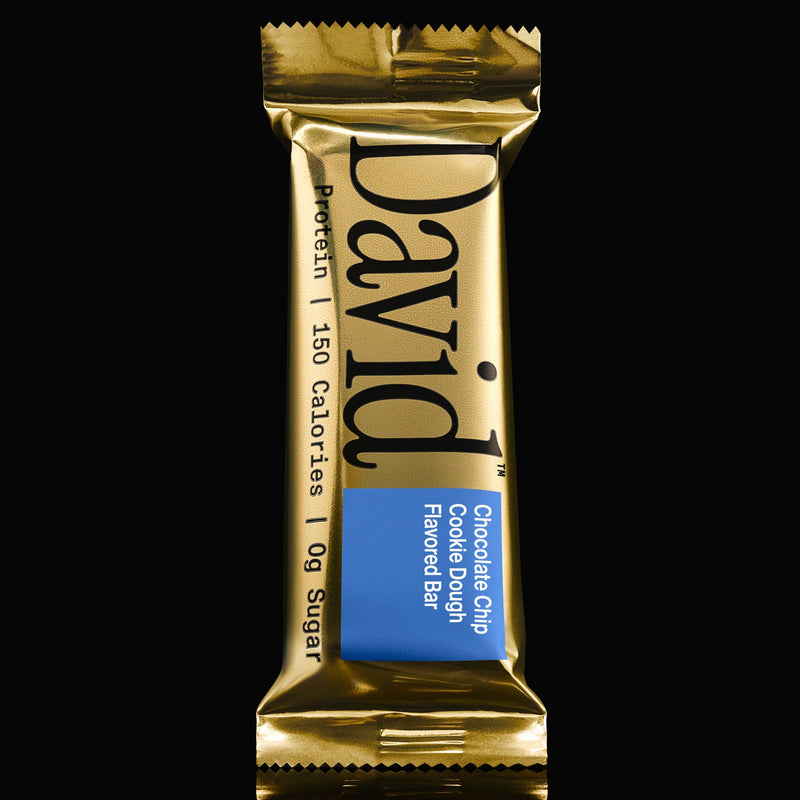 28g protein28g protein
Chocolate Chip Cookie Dough
Amazon returns policy · secure checkout
28g proteinTags
High Protein Snacks Pro Editorial Team
Independently researched and editorially reviewed. We compare real nutrition labels and never accept payment for coverage.
Get the best new protein snacks in your inbox
Weekly picks and honest reviews — no spam, unsubscribe anytime.
More from the journal
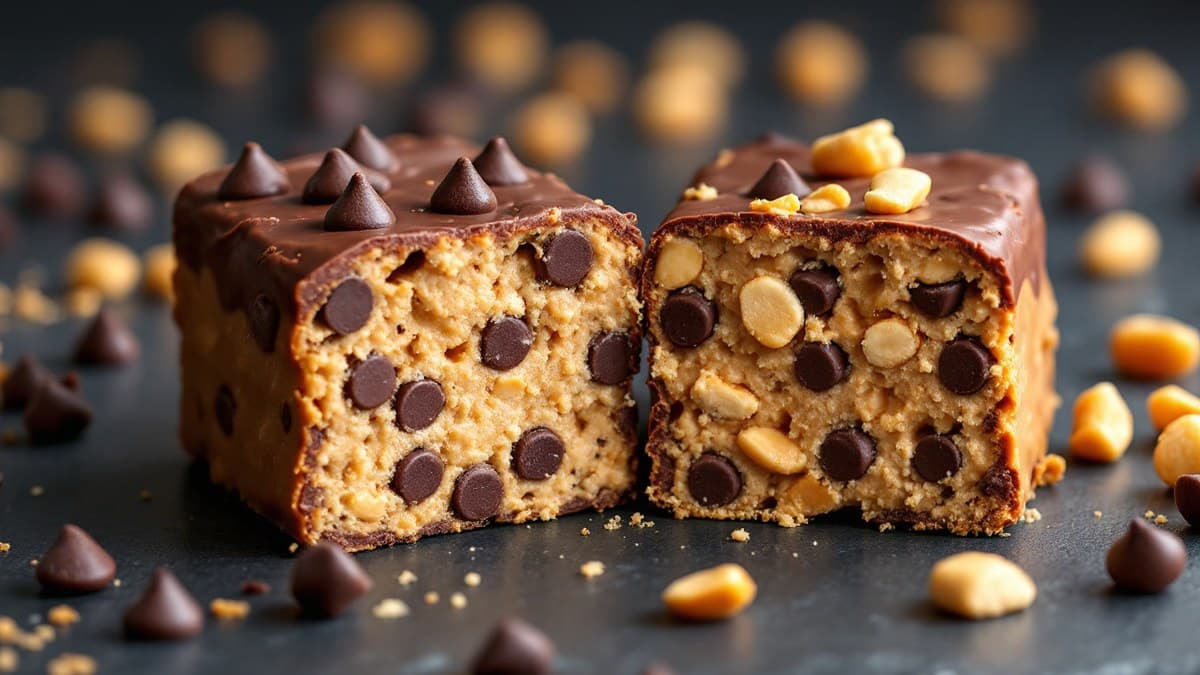
Quest Bar vs DAVID Protein Bar (2026): 21g vs 28g Protein — Which Bar Actually Wins?
Quest Chocolate Chip Cookie Dough delivers 21g of protein, 190 calories, and 12g of fiber per 60g bar. DAVID Gold Chocolate Chip Cookie Dough delivers 28g of protein, 150 calories, and roughly 1g of fiber per 62g bar. Verified 2026 head-to-head from each brand’s own published nutrition facts — the protein-to-calorie math, why Quest has no collagen while DAVID does, the erythritol-vs-maltitol sweetener gap, the EPG fat story, fiber and satiety, sodium, and who each bar actually fits.
Read more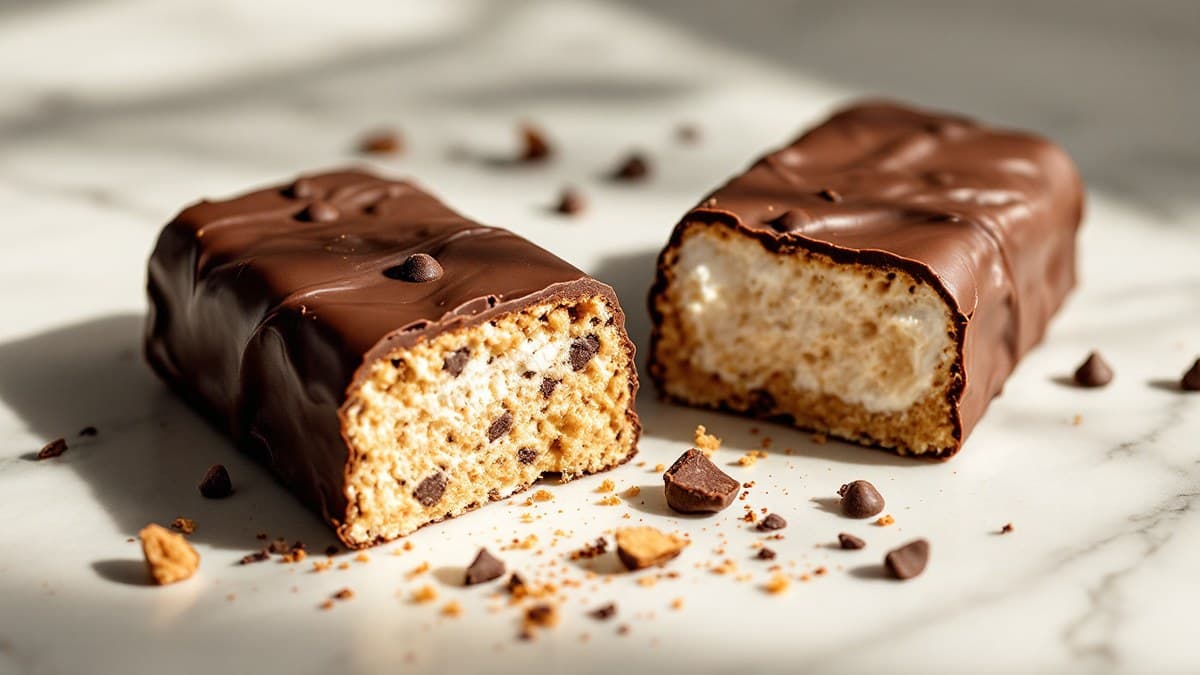
DAVID Protein Bar vs Built Bar (2026): 28g vs 17g Protein — Which Low-Calorie Bar Actually Wins?
DAVID Gold Chocolate Chip Cookie Dough delivers 28g of protein for 150 calories and 0g of sugar per 62g bar. Built Puff Brownie Batter delivers 17g of protein for 140 calories and 6g of real sugar per 40g bar. Verified 2026 head-to-head from each brand’s own published nutrition facts — the protein-to-calorie math, the collagen-in-both-blends story, the EPG-vs-palm-oil ingredient trade-off, and which bar actually fits your goals.
Read more
Built Bar Nutrition Facts: 140 Cal, 17g Protein, 6g Real Sugar — Every Flavor (2026)
Built Puff bars: 140–160 calories and 15–17g protein per bar, verified for every flavor — plus how the whey + collagen blend compares to Quest and RXBar.
Read more