Quest Bar vs ONE Bar (2026): Sweetener, Fiber, and Blood Sugar — Full Comparison
Quest uses erythritol (GI ≈1); ONE Bar uses maltitol (GI ≈35–52). Despite identical "1g sugar" labels, their effective blood sugar impact differs by roughly 3×. Full 2026 nutrition comparison: protein, fiber quality, saturated fat, sodium, sweeteners, price, and who should buy which.
The short answer
Our top protein bar picks
Editor-selected and ready to buy. As an Amazon Associate we may earn from qualifying purchases.
Buy the products in this guide: Chocolate Chip Cookie Dough Flavored Protein Bar · Chocolate Chip Cookie Dough Protein Bars · Oatmeal Chocolate Chip Protein Bars
 20g protein
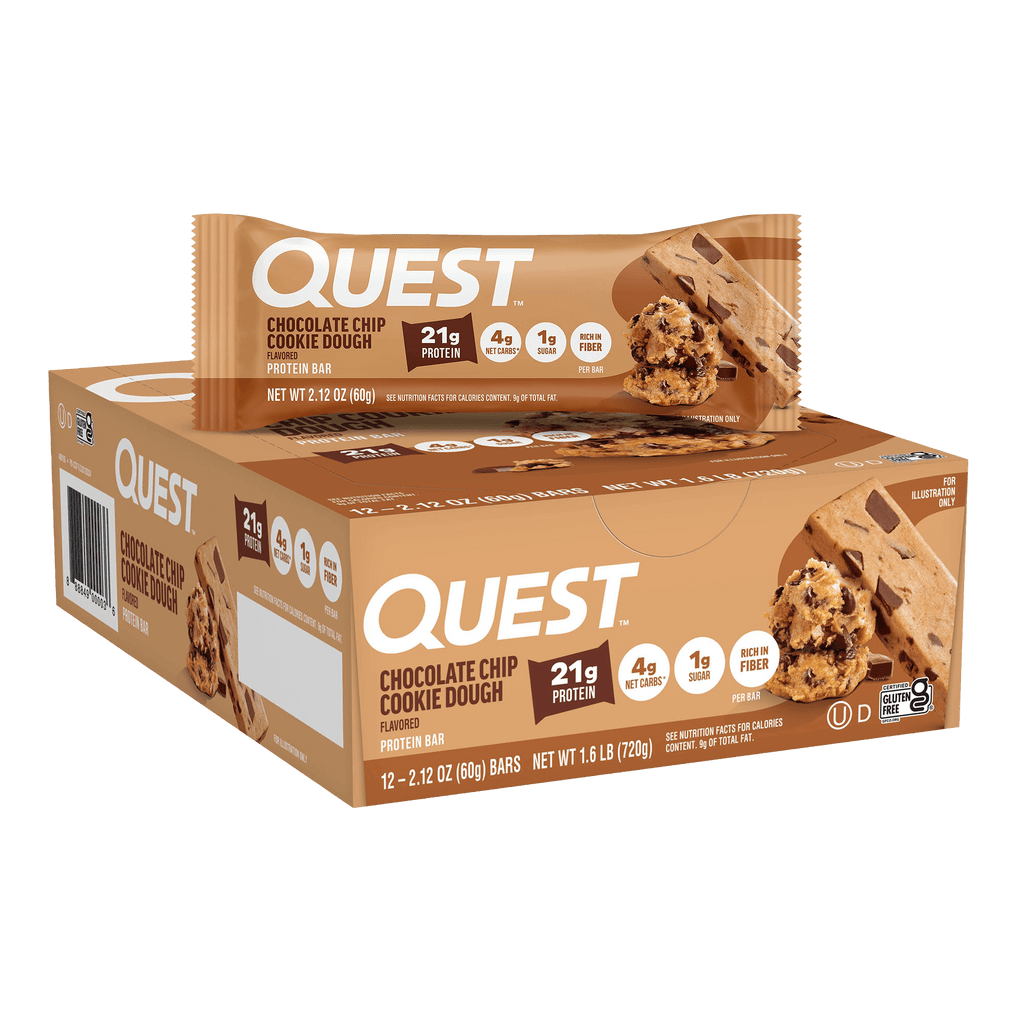
Chocolate Chip Cookie Dough Protein Bar
Amazon returns policy · secure checkout
 21g protein
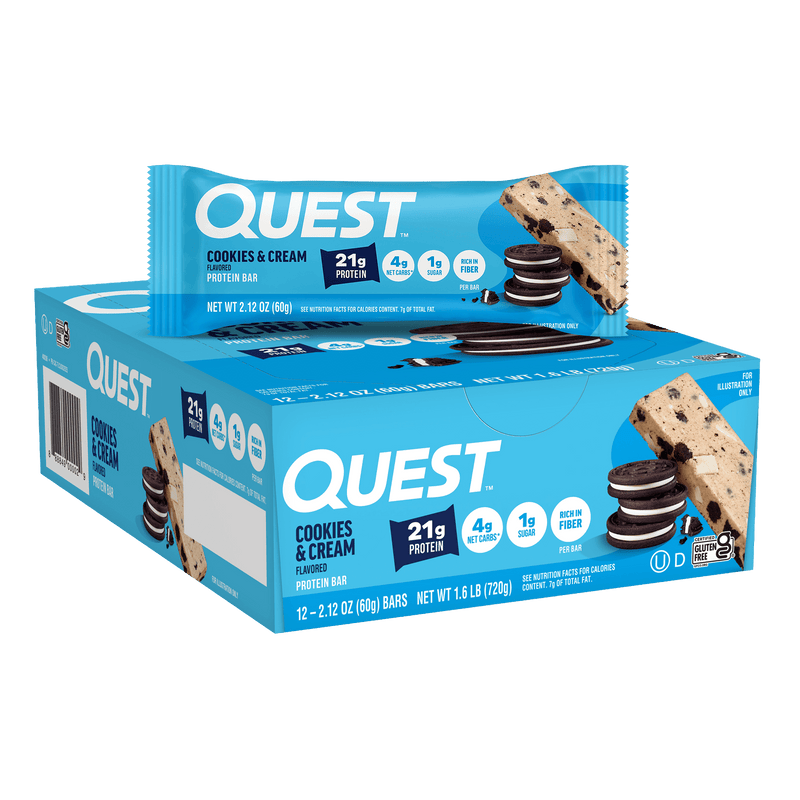
Cookies & Cream Protein Bars
Amazon returns policy · secure checkout
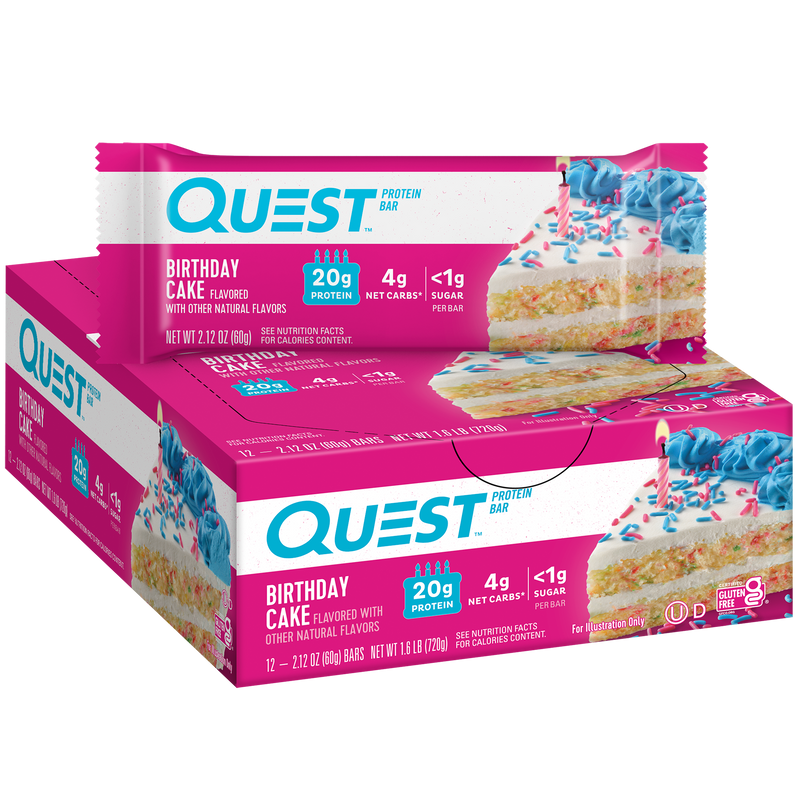 20g protein
Birthday Cake Protein Bars
Amazon returns policy · secure checkout
Quest Bar vs ONE Bar: Side-by-Side Nutrition
Numbers reflect typical values across common flavors. Individual flavors vary by 1–3g of carbs, 5–15 calories, and 0.5–1g of protein. Always check the label for your specific bar.
| Metric (per bar) | Quest Protein Bar | ONE Bar |
|---|---|---|
| Calories | 190 | 220 |
| Protein | 21g | 20g |
| Total Fat | 8–9g | 8–9g |
| Saturated Fat | 2.5–3g | ≈5g |
| Total Carbs | 22g | 23–25g |
| Dietary Fiber | 12g | 8–10g |
| Sugar | 1g | 1g |
| Added Sugar | 0g | ≈1g |
| Sugar Alcohols | 5–6g erythritol | 4–5g maltitol |
| Net Carbs (fiber only) | ≈10g (per label) | ≈15g |
| Effective Net Carbs | ≈4–5g (erythritol subtracted) | ≈12g (maltitol has partial impact) |
| Sodium | 220–290mg | 140–180mg |
| Primary Sweetener | Erythritol + stevia + sucralose | IMO + maltitol + sucralose |
| Protein Source | Whey protein isolate + milk protein isolate | Protein blend (whey + milk isolate) |
| Bar size | ≈60g | ≈60g |
| Price range | $2.00–$2.75/bar | $1.90–$2.50/bar |
The Sweetener Gap: The Most Important Difference
The single most consequential difference between Quest and ONE Bar is sweetener type. Both bars list “1g sugar” on the Nutrition Facts panel. Both look nearly identical on the sugar line. But the sugar alcohol each uses changes the effective blood sugar impact significantly.
Quest: Erythritol (glycemic index ≈1)
Quest uses erythritol as its primary sugar alcohol. Erythritol is absorbed in the small intestine but is not metabolized — it exits the body intact in urine rather than being converted to glucose. Its glycemic index is approximately 1, meaning it has virtually no effect on blood sugar or insulin levels at typical serving sizes. This is why the standard advice for Quest bars is to subtract erythritol from net carb calculations: if Quest's Chocolate Chip Cookie Dough bar shows 22g total carbs and 12g fiber, leaving 10g net carbs on the label — you can legitimately subtract the ≈6g of erythritol to arrive at roughly 4–5g effective carbs. For people on keto, managing diabetes, or using continuous glucose monitors, this is a meaningful difference. Quest also combines erythritol with stevia and sucralose, both of which have zero glycemic index.
ONE Bar: Maltitol (glycemic index ≈35–52) and IMO
ONE Bar's sweetener profile is more complex and less favorable for blood sugar control. The primary sweetening system combines isomalto-oligosaccharides (IMO), maltitol, and sucralose.
Maltitol has a glycemic index of approximately 35–52 depending on the form (powder vs syrup) — substantially lower than table sugar (GI 65+), but not negligible the way erythritol is. Roughly half of consumed maltitol is absorbed as glucose in the small intestine, with the remainder fermented in the large intestine. At 4–5g of maltitol per bar, the glycemic contribution is moderate but real. Unlike erythritol, maltitol should not be fully subtracted from net carbs for blood sugar calculations, and maltitol-sensitive individuals can experience GI discomfort (bloating, gas) at these doses.
IMO (isomalto-oligosaccharides) is listed as dietary fiber on ONE Bar's label, contributing to its 8–10g fiber count. However, the FDA does not classify IMO as a dietary fiber under its updated 2016 definition because IMO is partially digested in the small intestine rather than fermenting in the colon like true dietary fibers. Research shows IMO raises blood glucose more than recognized fibers like inulin or psyllium. This means ONE Bar's effective carb count is meaningfully higher than its label suggests for people managing blood sugar carefully.
The practical implication: Quest's 4–5g effective net carbs (after erythritol subtraction) vs ONE Bar's ≈12g effective net carbs (accounting for maltitol impact and IMO). This is roughly a 3× difference in blood sugar load despite near-identical labels. For a full comparison of protein bar sweeteners for blood sugar management, see our best protein bars for diabetics guide.
Saturated Fat: The Other Gap
Quest and ONE Bar have similar total fat (8–9g per bar), but the saturated fat content differs significantly:
- Quest: approximately 2.5–3g saturated fat per bar
- ONE Bar: approximately 5g saturated fat per bar
ONE Bar's higher saturated fat comes from palm kernel oil, which appears in the ingredient list and contributes a thick, chocolatey coating texture. Palm kernel oil is approximately 80–85% saturated fat — one of the most saturated-fat-dense plant oils available. At ≈5g per bar, ONE Bar delivers roughly the same saturated fat as a tablespoon of butter. For someone eating one bar per day this is not a significant concern, but for people tracking saturated fat intake or consuming multiple bars daily, the difference matters. Quest achieves its coating with cocoa butter and chocolate liquor at lower saturated fat levels.
Protein Sources: Similar Quality, Comparable Performance
Both bars use whey protein isolate as the primary protein source, with a secondary milk protein component:
- Quest: whey protein isolate and milk protein isolate. Whey isolate delivers high leucine content and fast absorption — well-established for muscle protein synthesis. Milk protein isolate adds a slower-digesting casein fraction.
- ONE Bar: similar protein blend approach. Both bars are adequate post-workout protein sources at 20–21g per bar.
The 1g protein difference (21g Quest vs 20g ONE Bar) is insignificant for daily protein targets. Either bar adequately tops up protein intake as a snack. For a full look at how protein quality affects recovery, see our whey vs plant-based protein bars guide.
Fiber: Quest Wins Clearly
Quest delivers 12g of dietary fiber per bar vs ONE Bar's 8–10g. Quest's fiber comes primarily from soluble corn fiber and chicory root (inulin) — both recognized by the FDA as dietary fibers, and both slow gastric emptying, supporting blood sugar control and satiety. ONE Bar's fiber count includes IMO, which inflates the apparent fiber number beyond what the FDA recognizes as dietary fiber. On a like-for-like basis comparing only FDA-recognized fibers, Quest's fiber advantage is wider than the label suggests.
High fiber matters for several reasons: it slows digestion of the carbohydrates in the bar, reduces the post-meal glucose spike, increases satiety duration, and supports gut microbiome health. Quest's 12g fiber is one of the highest in the mainstream protein bar category.
Sodium: ONE Bar Wins
ONE Bar carries significantly less sodium: 140–180mg per bar vs Quest's 220–290mg. For most healthy adults eating one bar per day, this difference is not clinically significant — both are below 400mg. But for people with hypertension or those tracking sodium tightly, ONE Bar's lower sodium is a consistent advantage across its flavor lineup.
Taste and Texture
Taste is subjective, but the texture difference is structural:
- Quest: denser, chewier, closer to a thick brownie or cookie dough in texture. The base is somewhat doughy. The chocolate coating is thinner. More filling per bite due to density. Some find it harder to eat quickly, which can be an advantage for appetite control.
- ONE Bar: softer, slightly candy-bar-like. The coating is thicker and more prominent. Maltitol and IMO contribute a slightly different sweetness profile — many people find ONE Bar tastes closer to a dessert bar. Quest can taste more “protein bar-like.” ONE Bar is frequently described as more enjoyable for casual snacking; Quest is described as more satisfying for appetite control.
Neither is objectively better — the preference depends on whether you want the bar to feel like a treat or a structured food. For people with bar fatigue from Quest's texture, ONE Bar's softer format is often the reason they switch.
Flavor Selection
Both brands offer wide flavor variety:
- Quest top flavors: Chocolate Chip Cookie Dough, Double Chocolate Chunk, Peanut Butter Brownie, Birthday Cake, S'mores, Blueberry Muffin, Maple Waffle. Over 20 flavors currently active.
- ONE Bar top flavors: Birthday Cake, Almond Bliss, Peanut Butter Pie, Cookies & Cream, Dark Chocolate Almond, Lemon Cake. Over 15 flavors currently active.
Quest has a wider flavor catalog and more limited-edition releases. ONE Bar's Birthday Cake flavor has a particularly loyal following and is frequently cited as one of the best-tasting protein bars in the category regardless of brand. For a broader flavor comparison across the protein bar market, see the best protein bars of 2026 guide.
Price Comparison
ONE Bar is typically priced slightly below Quest at major retailers:
- Quest: $2.00–$2.75 per bar ($32–$44 for a 12-count box)
- ONE Bar: $1.90–$2.50 per bar ($22–$36 for a 12-count box)
Both are available at Target, Walmart, Costco, Amazon, and most grocery chains. Per-bar prices vary by retailer, box size, and sales. For budget buyers, ONE Bar edges out Quest, but the difference is typically under $0.50 per bar.
Who Should Buy Quest
- Keto or very low-carb: Quest's erythritol sweetener makes it far more keto-compatible than ONE Bar. At ≈4–5g effective net carbs, Quest fits a keto macro budget that ONE Bar's ≈12g effective carbs would disrupt. See best keto protein bars for a full ranking.
- Diabetes or blood sugar management: Quest's erythritol plus high recognized fiber produces a minimal blood sugar response. ONE Bar's maltitol and IMO-inclusive fiber count create a meaningfully higher glucose impact. See best protein bars for diabetics for a full comparison.
- Maximum protein per calorie: at 21g protein and 190 calories, Quest delivers 11.1g of protein per 100 calories. ONE Bar delivers 9.1g per 100 calories at 220 calories.
- High fiber priority: Quest's 12g of FDA-recognized dietary fiber is among the highest in the mainstream bar category. If fiber is a daily target, Quest is meaningfully ahead.
Who Should Buy ONE Bar
- Taste-first buyers: ONE Bar consistently scores higher in casual taste comparisons, particularly for Birthday Cake, Almond Bliss, and Peanut Butter Pie. If the bar needs to feel like a treat to sustain the habit, ONE Bar is usually the better pick.
- Lower sodium: at 140–180mg per bar vs Quest's 220–290mg, ONE Bar is the better choice for people tracking sodium.
- Price-sensitive buyers: ONE Bar's typical $0.25–$0.50 lower price per bar adds up for daily snackers.
- Saturated fat is not a concern: buyers who prioritize taste profile over saturated fat tracking will generally prefer ONE Bar's thicker coating and softer texture.
Frequently Asked Questions
Is Quest Bar or ONE Bar better for keto?
Quest is significantly better for keto. Quest uses erythritol (GI ≈1), which can be fully subtracted from net carbs, bringing effective carbs to approximately 4–5g per bar. ONE Bar uses maltitol (GI ≈35–52), which has a partial glycemic impact and should not be fully subtracted, plus IMO which the FDA does not recognize as dietary fiber. Quest's effective net carbs are roughly 3× lower than ONE Bar's. For a dedicated keto bar comparison, see best keto protein bars.
Does ONE Bar use erythritol?
No. ONE Bar uses maltitol (not erythritol) as its primary sugar alcohol, along with isomalto-oligosaccharides (IMO) and sucralose. This is a meaningful distinction: maltitol has a glycemic index of approximately 35–52, while erythritol has a GI of approximately 1. ONE Bar's blood sugar impact is higher than Quest's for this reason. Always verify on the current ingredient list for your specific flavor, as formulations can change.
Which bar has less sugar — Quest or ONE Bar?
Both bars show approximately 1g of sugar per bar on the Nutrition Facts panel — effectively the same. The more useful comparison is effective blood sugar impact, which depends on sweetener type (erythritol in Quest vs maltitol in ONE Bar) and fiber quality (12g recognized fiber in Quest vs 8–10g including IMO in ONE Bar). On effective glycemic impact, Quest is substantially lower despite identical sugar lines.
Is ONE Bar's 8–10g of fiber real fiber?
Partly. ONE Bar's fiber count includes isomalto-oligosaccharides (IMO), which the FDA does not recognize as dietary fiber under its updated 2016 definition because IMO is partially digested in the small intestine rather than fermenting in the colon like true fibers. Quest's 12g of fiber comes from sources the FDA does recognize — soluble corn fiber and chicory root (inulin) — making it a higher-quality fiber count for practical purposes.
Can I eat Quest or ONE Bar every day?
Either bar can be part of a daily diet for most healthy adults. The main considerations: Quest's 12g of soluble fiber per bar can cause gas and bloating until the gut adapts, particularly for people who were previously eating low-fiber diets. ONE Bar's maltitol can cause GI discomfort in sensitive individuals at higher doses — one bar per day is typically below the threshold for most people, but sensitivity varies. Both bars deliver 20–21g of protein efficiently. For the full protein bar landscape, see our best protein bars of 2026 ranking or browse the protein snacks directory.
Bottom line: Quest is the better bar for blood sugar management, keto, and maximum protein efficiency — its erythritol sweetener and 12g of recognized fiber combine to produce a significantly lower effective carb load than its label alone suggests. ONE Bar is the better pick for taste-first buyers and those managing sodium, and it edges out Quest on price. The sweetener difference (erythritol vs maltitol) is the single most important fact to understand before choosing between them. For a deeper look at Quest's nutrition profile, see our Quest protein bar nutrition guide, or for the full category see best protein bars of 2026.
Shop our top protein bar picks
Editor-selected high-protein options related to this guide. As an Amazon Associate we may earn from qualifying purchases.
Buy the products in this guide: Chocolate Chip Cookie Dough Flavored Protein Bar · Chocolate Chip Cookie Dough Protein Bars · Oatmeal Chocolate Chip Protein Bars
20g proteinChocolate Chip Cookie Dough Protein Bar
Amazon returns policy · secure checkout
21g proteinCookies & Cream Protein Bars
Amazon returns policy · secure checkout
20g proteinBirthday Cake Protein Bars
Amazon returns policy · secure checkout
Tags
High Protein Snacks Pro Editorial Team
Independently researched and editorially reviewed. We compare real nutrition labels and never accept payment for coverage.
Get the best new protein snacks in your inbox
Weekly picks and honest reviews — no spam, unsubscribe anytime.
More from the journal
Clif Builder's Bar vs Quest Bar (2026): Same 20g Protein, Very Different Nutrition
Clif Builder's and Quest bars both deliver 20g of protein, but Quest does it at 190 calories with 1g of sugar — versus Clif Builder's 263 calories and 17g of sugar. Verified 2026 nutrition facts for all core flavors, a soy vs whey protein comparison, and a clear breakdown of who should buy each bar.
Read more
Fulfil Vitamin Protein Bar Review (2026): 20g Protein and 9 Vitamins Per Bar — Nutrition Facts and Honest Comparison
Fulfil Vitamin Protein Bar delivers 20g of protein and 9 vitamins (B1, B2, B3, B6, B12, C, D, folate, biotin) in a 40g bar at approximately 190–200 calories. Sweetened with maltitol and sucralose. Full 2026 nutrition facts for every flavor, a direct comparison with Quest, ONE Bar, and Barebells, and an honest look at who this vitamin-fortified bar is actually built for.
Read more
FitCrunch Protein Bar Nutrition Facts 2026: 30g Whey Protein, 6-Layer Baked Bar — Every Flavor Compared
FitCrunch full-size bars deliver 30g of whey protein at 380 calories with 6g of total sugar — the only mainstream 6-layer baked protein bar in the US, created by Food Network chef Robert Irvine. Snack-size bars deliver 16g of protein at 190 calories and 3g of sugar. Every flavor compared by calories, protein, fat, fiber, sugar, and sodium, with verified 2026 nutrition label data.
Read more