Best Low Calorie Protein Bars 2026: 10 Bars Ranked by Protein Per Calorie
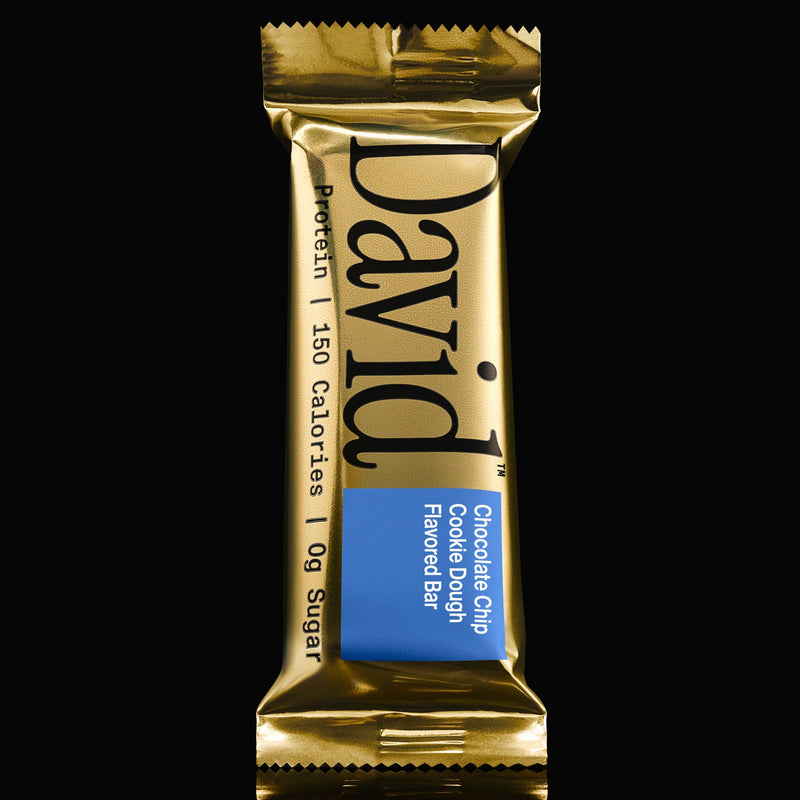
The DAVID Protein Bar (Chocolate Chip Cookie Dough) is the strongest low-calorie protein bar in 2026 — 28g of protein at 150 calories, 18.7g of protein per 100 calories, the highest ratio of any widely-available bar. These 10 low-calorie protein bars are ranked strictly by protein per 100 calories with verified nutrition data, so you can compare bars fairly regardless of serving size.
Our top protein bar picks
Editor-selected and ready to buy. As an Amazon Associate we may earn from qualifying purchases.
 28g protein
 12g protein
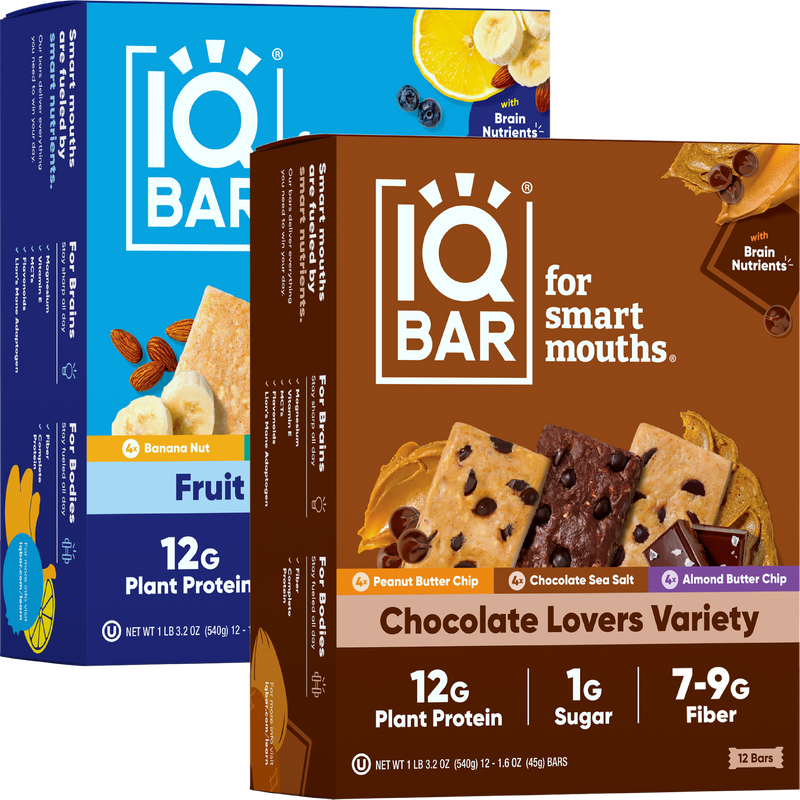
Chocolate Lovers & Fruit Lovers (24 Bars)
Amazon returns policy · secure checkout
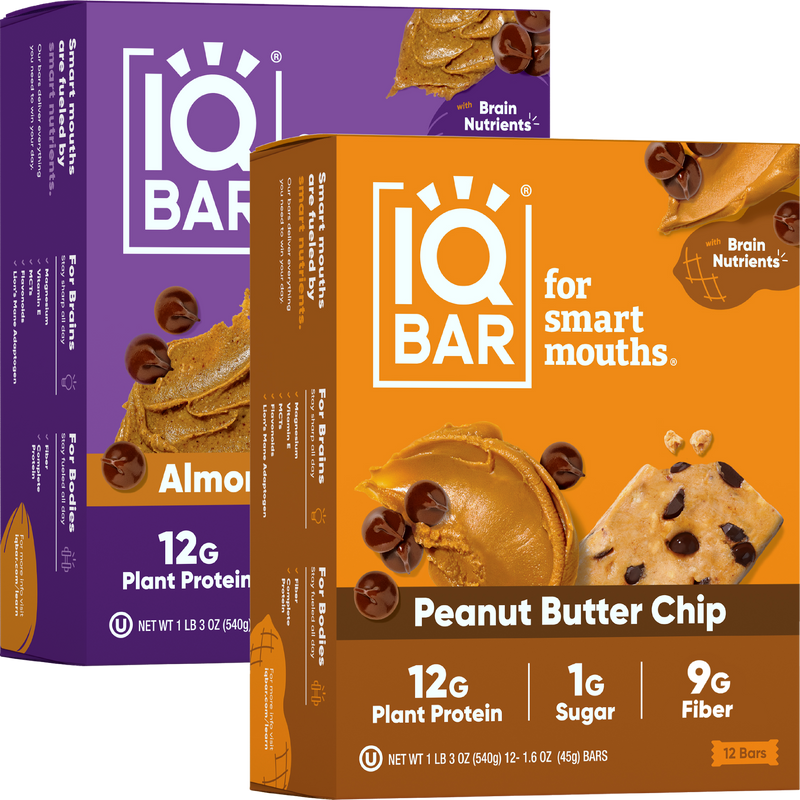 12g protein
Almond Butter Chip & Peanut Butter Chip (24 Bars)
Amazon returns policy · secure checkout
Direct Answer
The best low-calorie protein bar in 2026 is the DAVID Protein Bar (Chocolate Chip Cookie Dough) at 28g of protein for 150 calories — 18.7g of protein per 100 calories, the highest ratio of any widely-available protein bar. For a plant-based low-calorie pick, ALOHA Peanut Butter & Cookie Dough leads at 14g protein / 120 calories. For the highest-fiber option at low calories, Quest Chocolate Chip Cookie Dough delivers 20g protein / 200 calories with 14g fiber.
“Low-calorie” on a protein bar shelf means one thing: how much protein you get per calorie you spend. The strongest bars in this category deliver 10g of protein or more per 100 calories — a ratio that leaves standard snack bars (2–4g per 100 calories) and even most granola bars (4–6g) well behind. Below are the 10 best low-calorie protein bars on the US market in 2026, ranked strictly by protein per 100 calories, with the actual protein / calorie / sugar / fiber label numbers verified from each brand’s nutrition facts panel. Every bar in this ranking has 200 calories or fewer per bar. For a broader value ranking that also weighs cost per gram of protein, see our cheapest protein bars guide; for a general best-of ranking across all calorie levels, see the 2026 best protein bars roundup.
How We Ranked: Protein Per 100 Calories
Every pick here is scored the same way — grams of protein divided by calories per bar, multiplied by 100. That number (protein per 100 cal) is the fair way to compare bars with different serving sizes and different calorie counts. A 20g protein bar at 200 calories scores the same as a 10g protein bar at 100 calories: 10.0g of protein per 100 calories. The higher that number, the more protein you get for each calorie you spend — which is the exact reason someone reaches for a low-calorie bar in the first place. Where two bars tie on that ratio, we tie-break on fiber (satiety), then sugar (added sugar penalty), then price and Amazon review count.
Every macro number in this guide is copied verbatim from each brand’s current nutrition facts panel and cross-checked against the product listing at time of writing. Prices are the current one-time Amazon US pack price (non-Subscribe & Save) at time of writing and can move — the buy buttons take you to the current live listing.
The 10 Best Low-Calorie Protein Bars: Full Ranking
| # | Bar | Protein | Calories | Protein / 100 cal | Sugar | Fiber | Current price |
|---|---|---|---|---|---|---|---|
| 1 | David Chocolate Chip Cookie Dough | 28g | 150 | 18.7g | 0g | 0g | $39.00 / 12-bar carton |
| 2 | Built Bar Coconut | 17g | 130 | 13.1g | 5g | 5g | $27.99 / 12-bar pack |
| 3 | ALOHA Peanut Butter & Cookie Dough Variety | 14g | 120 | 11.7g | 5g | 5g | $38.99 / 24-bar variety pack |
| 4 | Quest Nutrition Chocolate Chip Cookie Dough | 20g | 200 | 10.0g | 1g | 14g | $27.99 / 12-bar box |
| 5 | No Cow Upgraded — Fudge Brownie | 20g | 200 | 10.0g | 3g | 10g | $32.99 / 12-bar box |
| 6 | Barebells Caramel Cashew | 20g | 200 | 10.0g | 2g | 3g | $26.99 / 12-bar box |
| 7 | Pure Protein Chocolate Peanut Butter | 20g | 200 | 10.0g | 2g | 1g | $19.99 / 12-bar box |
| 8 | Fulfill Chocolate Salted Caramel | 20g | 200 | 10.0g | 1g | 3g | $25.99 / 12-bar box |
| 9 | think! Crispy Squares — Marshmallow Crunch | 15g | 150 | 10.0g | 3g | 1g | $22.00 / 6-square pack |
| 10 | Atkins Endulge Chocolate Peanut Butter | 15g | 170 | 8.8g | 1g | 10g | $20.99 / 12-bar pack |
#1. David Chocolate Chip Cookie Dough — 28g Protein at 150 Calories (18.7g per 100 cal)
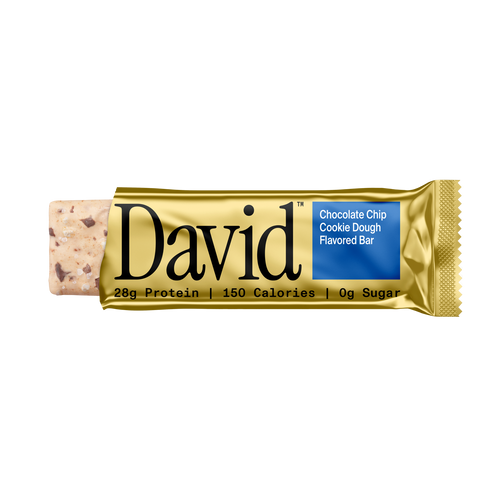
David Chocolate Chip Cookie Dough
28g protein · 150 cal · 18.7g per 100 cal · 0g sugar · 0g fiber
Rated 4.7★ from 1,877 Amazon reviews at time of writing.
DAVID Protein Bar delivers 28g of protein at 150 calories per 60g bar — a protein-to-calorie ratio of 18.7g per 100 calories, the highest of any bar in this ranking by a wide margin. The bar uses EPG (esterified propoxylated glycerol), a modified fat substitute that carries the mouthfeel of fat without contributing digestible calories, alongside milk protein isolate and whey concentrate to hit the protein number. Zero grams of sugar, zero grams of fiber, and a clean sweet profile. The trade-off is straightforward: DAVID is the most expensive bar on this list at roughly $3.25 per bar (12-carton at $39.00 on Amazon at time of writing) and the fat-substitute ingredient will be a dealbreaker for shoppers who prefer only whole-food-based bars. For dieters counting every calorie against a protein target, though, nothing else clears the same efficiency bar.
Why it ranks: The single strongest protein-per-calorie ratio of any mainstream bar in 2026 — 18.7g of protein for every 100 calories.
#2. Built Bar Coconut — 17g Protein at 130 Calories (13.1g per 100 cal)
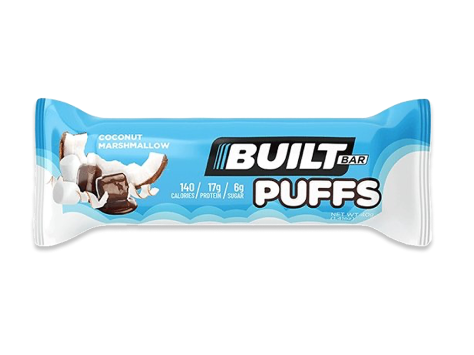
Built Bar Coconut
17g protein · 130 cal · 13.1g per 100 cal · 5g sugar · 5g fiber
Rated 4.3★ from 1,789 Amazon reviews at time of writing.
Built Bar’s Coconut variety delivers 17g of protein at 130 calories per 54g bar — 13.1g of protein per 100 calories with 5g of fiber and 5g of sugar. The bar is built on whey and collagen protein with a thin chocolate coating over a light, marshmallow-style filling that eats more like a candy bar than a compressed protein brick. Because collagen is an incomplete protein (missing tryptophan), the muscle-building fraction of the 17g label figure is lower than a pure-whey bar — a distinction worth knowing if hitting a strict daily protein target for training is the primary goal. For dieters who care more about the eating experience at low calories and are already hitting a protein target from other sources, Built Bar Coconut is one of the most satisfying low-calorie bar formats made.
Why it ranks: 17g protein at 130 calories in a chocolate-coated marshmallow-textured bar — 13.1g per 100 calories with 5g of fiber.
#3. ALOHA Peanut Butter & Cookie Dough Variety — 14g Protein at 120 Calories (11.7g per 100 cal)
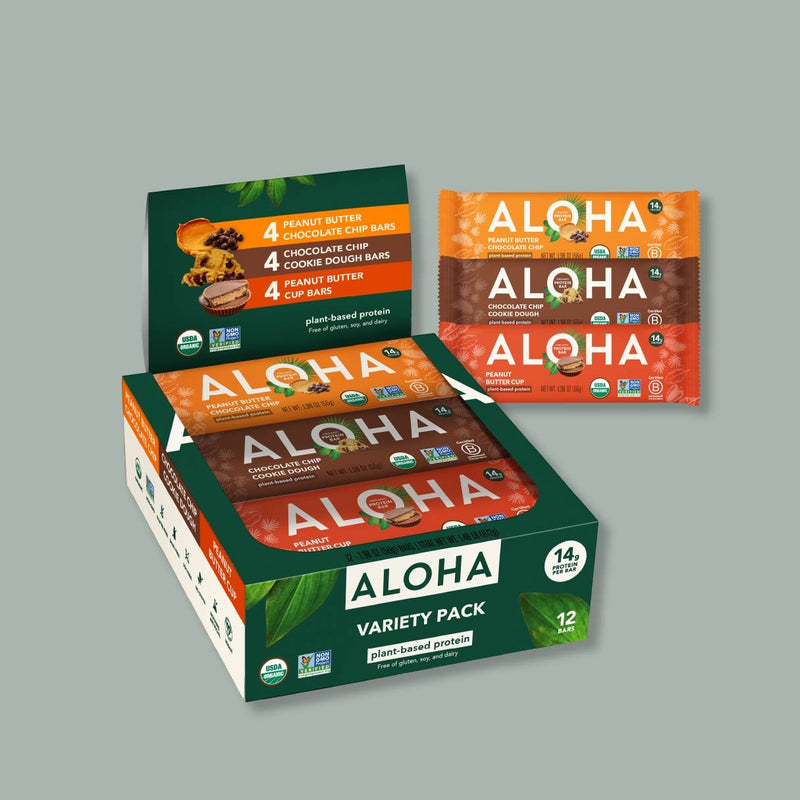
ALOHA Peanut Butter & Cookie Dough Variety
14g protein · 120 cal · 11.7g per 100 cal · 5g sugar · 5g fiber
Rated 4.9★ from 409 Amazon reviews at time of writing.
ALOHA’s Peanut Butter & Cookie Dough Variety Pack delivers 14g of protein at 120 calories per 60g bar (11.7g protein per 100 calories) using organic brown rice and pea protein — a complete plant-protein blend. What sets ALOHA apart in the plant category is the sweetener choice: no stevia, no erythritol, no sucralose, no monk fruit. Sweetness comes from a small amount of organic tapioca syrup and organic cane sugar (5g total sugar, 2g added). For readers who avoid dairy protein or who find stevia and sugar alcohol aftertastes off-putting, ALOHA is the strongest low-calorie option on the market. The 24-pack is the highest-rated protein bar in this ranking at 4.9 stars across 409 reviews.
Why it ranks: The best plant-based low-calorie bar — 14g protein at 120 calories, organic ingredients, no stevia or sugar alcohols.
#4. Quest Nutrition Chocolate Chip Cookie Dough — 20g Protein at 200 Calories (10.0g per 100 cal)
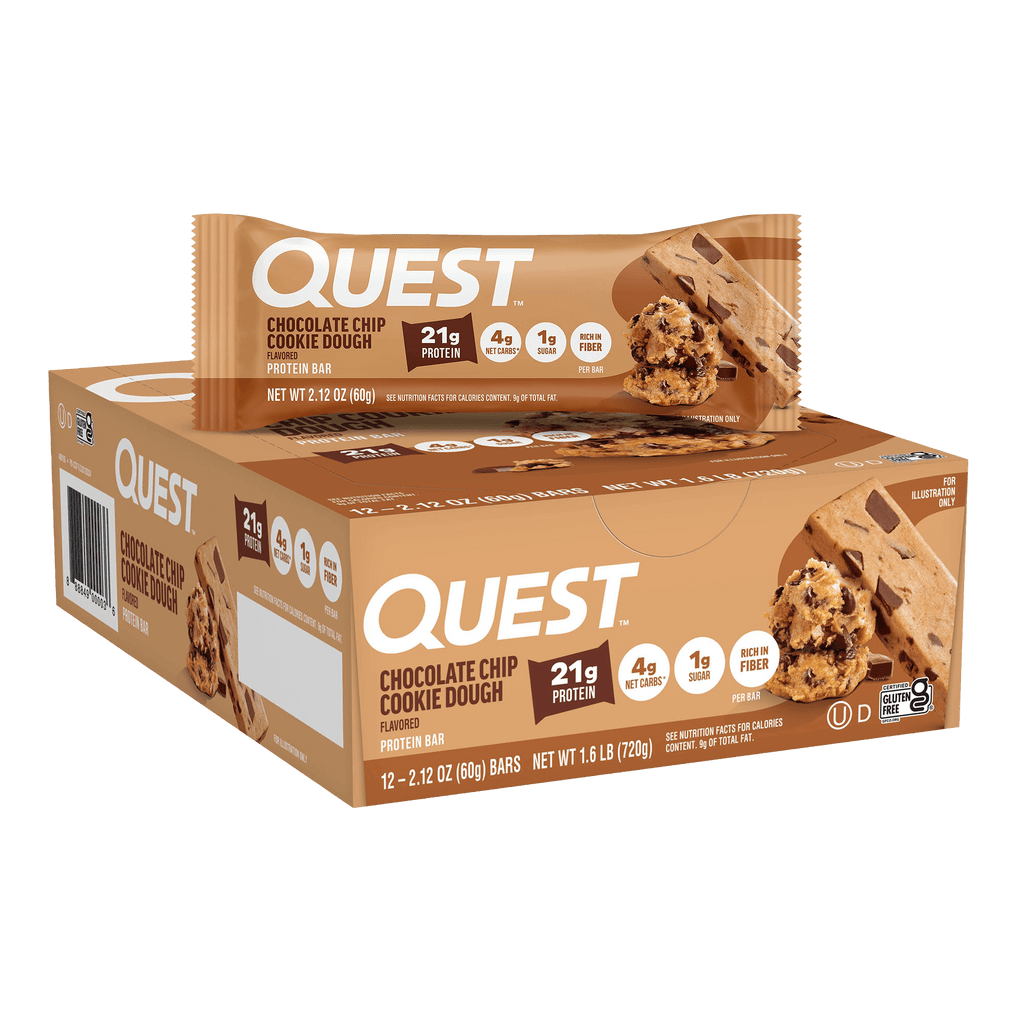
Quest Nutrition Chocolate Chip Cookie Dough
20g protein · 200 cal · 10.0g per 100 cal · 1g sugar · 14g fiber
Rated 4.5★ from 3,247 Amazon reviews at time of writing.
Quest Chocolate Chip Cookie Dough is the reference protein bar for a reason: 20g of protein at 200 calories (10.0g per 100 calories) with only 1g of sugar and a genuinely large 14g of fiber — the highest fiber content of any bar in this ranking. Fiber slows gastric emptying, which is why a single Quest bar feels more filling than the macros alone would suggest, and why it remains the go-to bar for dieters managing hunger between meals. The catch is texture: Quest uses whey and milk protein isolate with a high dose of soluble corn fiber, which some readers find dense and chewy compared to the marshmallow-lighter options above. For pure macro efficiency at a reasonable price ($27.99 per 12-pack, roughly $2.33 per bar), Quest remains the workhorse.
Why it ranks: The highest-fiber pick on this list — 14g fiber locks in fullness while 20g protein and 200 calories keep the macros clean.
#5. No Cow Upgraded — Fudge Brownie — 20g Protein at 200 Calories (10.0g per 100 cal)
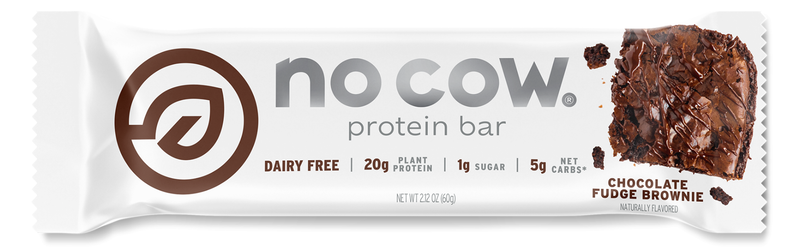
No Cow Upgraded — Fudge Brownie
20g protein · 200 cal · 10.0g per 100 cal · 3g sugar · 10g fiber
Rated 4.7★ from 219 Amazon reviews at time of writing.
No Cow’s Upgraded Fudge Brownie is the strongest 20g-protein plant-based bar in the low-calorie category: 20g of protein at 200 calories (10.0g per 100 calories) with 10g of fiber and 3g of sugar. It uses brown rice and pea protein blended for a complete amino acid profile, sweetened with stevia and monk fruit rather than sucralose or artificial sweeteners. For readers avoiding dairy and artificial sweeteners simultaneously, No Cow is the clearest 20g pick — Quest and Barebells both rely on dairy protein plus sucralose. Priced at $32.99 per 12-bar box, No Cow runs about $0.50 per bar more than Quest but is the correct pick for the specific dietary profile.
Why it ranks: The strongest plant-based bar at 20g protein — 200 calories, 10g fiber, dairy-free, no artificial sweeteners.
#6. Barebells Caramel Cashew — 20g Protein at 200 Calories (10.0g per 100 cal)
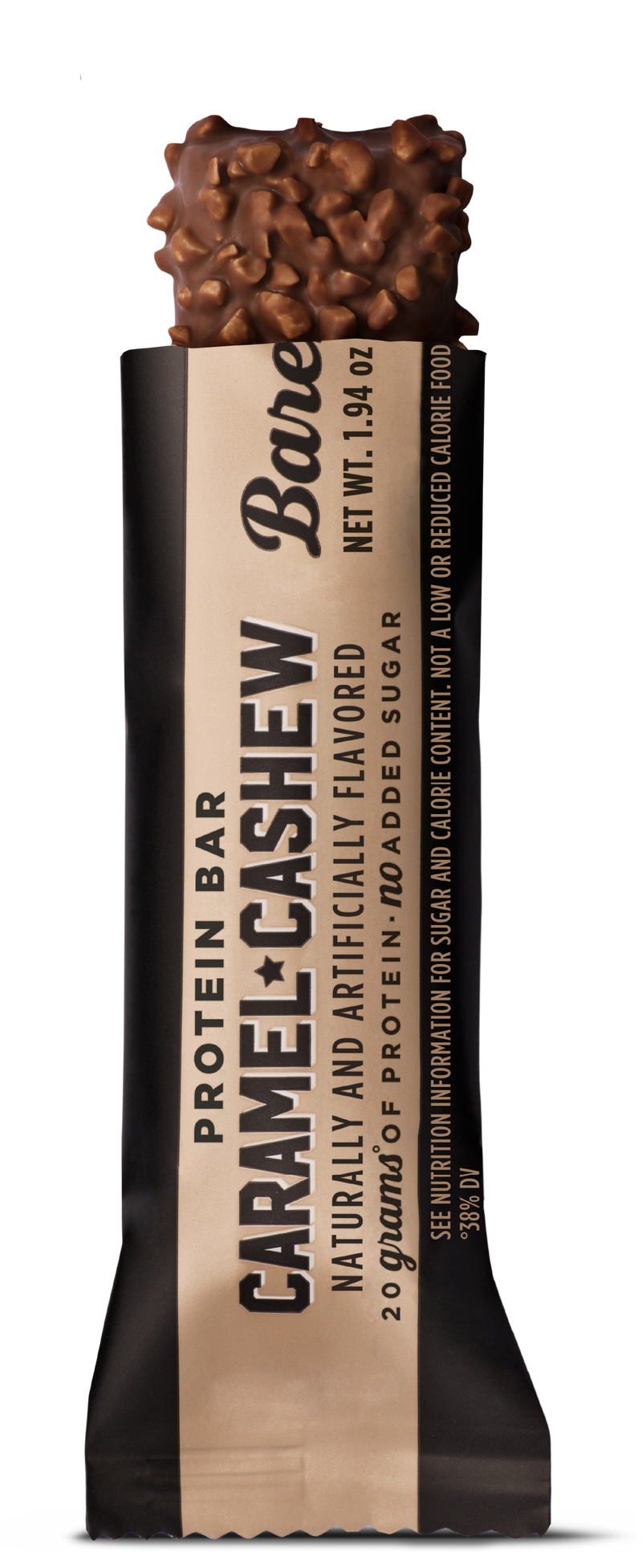
Barebells Caramel Cashew
20g protein · 200 cal · 10.0g per 100 cal · 2g sugar · 3g fiber
Rated 4.7★ from 4,567 Amazon reviews at time of writing.
Barebells Caramel Cashew delivers the same headline macros as Quest and No Cow (20g protein, 200 calories, 10.0g per 100 calories) but wins on eating experience: it is the highest-reviewed bar in this ranking at 4,567 reviews averaging 4.7 stars. Barebells uses a whey and milk protein blend with a smooth caramel and cashew-piece filling under a thin milk chocolate coating — the closest a 200-calorie protein bar comes to a Snickers or Twix without the sugar hit (2g of sugar per bar). Fiber is modest at 3g, so it is less satiating than Quest or No Cow, but for readers whose issue with protein bars is that they taste medicinal, Barebells is the direct fix.
Why it ranks: The best-tasting 20g bar on this list — a candy-bar mouthfeel at 200 calories with 4,567 reviews averaging 4.7 stars.
#7. Pure Protein Chocolate Peanut Butter — 20g Protein at 200 Calories (10.0g per 100 cal)
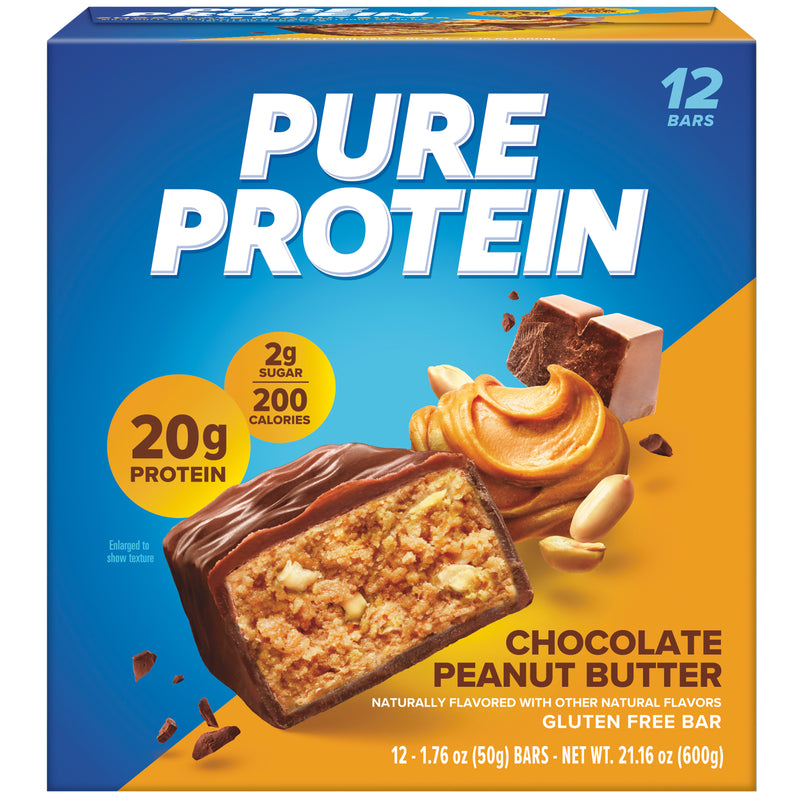
Pure Protein Chocolate Peanut Butter
20g protein · 200 cal · 10.0g per 100 cal · 2g sugar · 1g fiber
Rated 4.3★ from 3,421 Amazon reviews at time of writing.
Pure Protein Chocolate Peanut Butter delivers 20g of protein at 200 calories (10.0g per 100 calories) with 2g of sugar and just 1g of fiber — the lowest fiber content in this ranking. What earns Pure Protein a spot is the price: $19.99 per 12-bar box on Amazon at time of writing, which works out to roughly $1.67 per bar — the cheapest 20g bar in the low-calorie category by a meaningful margin. The trade-offs are the low fiber (less satiating), a firmer chewy texture that some readers dislike, and the use of sucralose as the primary sweetener. For a shopper optimizing for cost per gram of protein at the low-calorie tier, Pure Protein is the correct answer.
Why it ranks: The cheapest 20g/200-calorie bar on the market — roughly $1.67 per bar and consistently in stock at grocery.
#8. Fulfill Chocolate Salted Caramel — 20g Protein at 200 Calories (10.0g per 100 cal)

Fulfill Chocolate Salted Caramel
20g protein · 200 cal · 10.0g per 100 cal · 1g sugar · 3g fiber
Rated 4.5★ from 3,892 Amazon reviews at time of writing.
Fulfill Chocolate Salted Caramel delivers 20g of protein at 200 calories (10.0g per 100 calories) with 1g of sugar. What separates it from the other 200-calorie 20g bars is the added micronutrient profile: nine added vitamins and minerals (vitamins B6, B12, D, biotin, folic acid, pantothenic acid, and iodine among them) at 30% or more of the daily value in a single bar. That means a Fulfill bar swapped in as a meal replacement partially covers the vitamin gap a skipped meal would create — a small but real convenience for readers using bars as occasional meal substitutes rather than snacks. Texture is caramel-and-crisp similar to Barebells but with a slightly softer bite.
Why it ranks: 20g protein, 200 calories, 1g sugar, plus nine added vitamins and minerals — the only pick on this list that doubles as a light multivitamin.
#9. think! Crispy Squares — Marshmallow Crunch — 15g Protein at 150 Calories (10.0g per 100 cal)
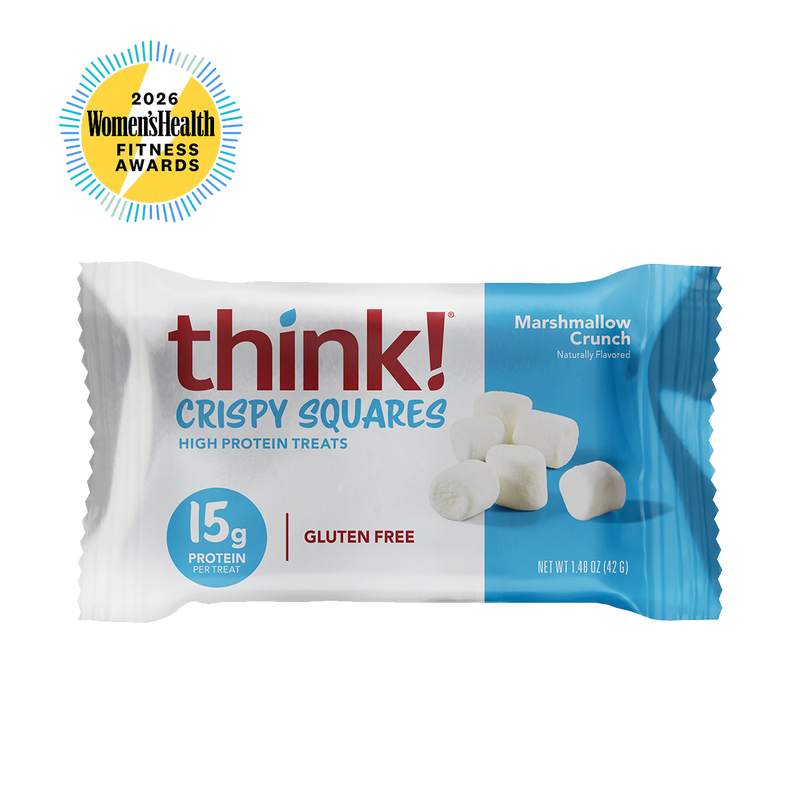
think! Crispy Squares — Marshmallow Crunch
15g protein · 150 cal · 10.0g per 100 cal · 3g sugar · 1g fiber
Rated 4.0★ from 336 Amazon reviews at time of writing.
think! Crispy Squares Marshmallow Crunch delivers 15g of protein at 150 calories (10.0g per 100 calories) with 3g of sugar in a puffed-protein-crispy format that eats closer to a Rice Krispies Treat than a compressed protein bar. For readers whose main obstacle with protein bars is the dense, gummy texture of most 20g options, the Crispy Squares are a legitimate reset. The trade-offs are two: lower total protein than the 20g bars above, so it takes more bars to hit a protein target from this format; and the ingredient list uses soy protein isolate, whey, and sucralose — not a fit for a strictly whole-food diet. For a light, low-calorie afternoon snack, though, it lands well.
Why it ranks: A protein-crispy-treat format — 15g protein at 150 calories in a bar that eats like a Rice Krispies Treat rather than a protein brick.
#10. Atkins Endulge Chocolate Peanut Butter — 15g Protein at 170 Calories (8.8g per 100 cal)
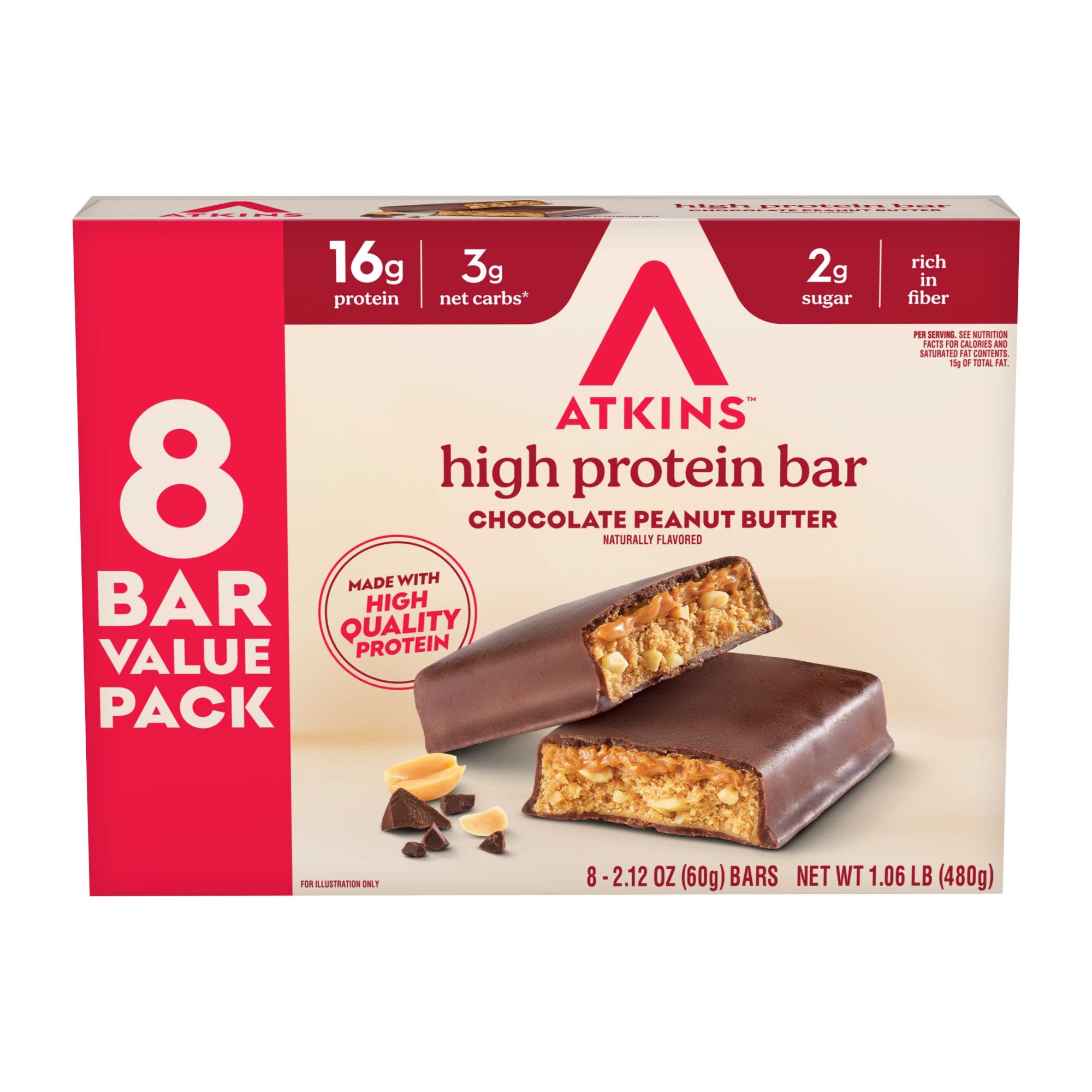
Atkins Endulge Chocolate Peanut Butter
15g protein · 170 cal · 8.8g per 100 cal · 1g sugar · 10g fiber
Rated 4.2★ from 2,987 Amazon reviews at time of writing.
Atkins Endulge Chocolate Peanut Butter delivers 15g of protein at 170 calories (8.8g per 100 calories) with 1g of sugar and 10g of fiber — the strongest fit for a keto or strict low-carb reader in this ranking. The bar is formatted as a chocolate-coated peanut butter cup and uses milk protein, palm kernel oil, maltitol, and sucralose (readers sensitive to sugar alcohols should note the maltitol — it can cause GI distress in larger doses). At $20.99 per 12-pack it is one of the cheaper picks here, and the eating experience is closer to a Reese’s Peanut Butter Cup than a protein bar — the intended feature.
Why it ranks: The keto pick — 15g protein at 170 calories, only 1g sugar, 10g fiber, and a chocolate-coated peanut butter cup format.
What Actually Counts as a “Low-Calorie” Protein Bar?
For this ranking, a low-calorie protein bar is any bar at 200 calories or fewer per bar with at least 10g of protein. That threshold matters because most bars sold as “protein bars” land at 210–340 calories — RxBar at 210, KIND Protein at 250, CLIF Builder’s at 280, Perfect Bar at 330–340. Anything under 200 calories that still hits 15g of protein or more is doing real work; anything at 130–150 calories hitting 15–28g of protein is the elite tier.
How Do You Compare Two Protein Bars Fairly on Calories?
Divide the protein grams by the calories, multiply by 100 — that’s protein per 100 calories, the only fair comparison metric. A 400-calorie bar with 24g protein (6.0g per 100 cal) is not a stronger protein bar than a 150-calorie bar with 15g protein (10.0g per 100 cal); it is just a bigger bar. Use the same math to check any bar on a shelf: if the ratio is under 8g per 100 calories, it is a snack bar with some protein added, not a real protein bar.
Are Low-Calorie Protein Bars Actually Good for Weight Loss?
Yes, with the qualification that the bar has to replace something with a worse macro profile — not add to your existing intake. A 150–200-calorie bar at 15–28g of protein, eaten as a genuine meal or snack replacement, delivers a satiety signal (protein triggers GLP-1 and PYY release) that a similar-calorie muffin or granola bar does not. Where low-calorie protein bars fail dieters is when they are eaten as extra treats on top of the day’s meals — at that point they are just 200 calories of chocolate-flavored dietary friction. For the underlying research on protein and satiety, see our high-protein snacks for weight loss guide.
Which Low-Calorie Protein Bar Should You Actually Buy?
Three-way split, decided by what you care about most: if calories are the single tightest constraint, DAVID at 28g / 150 cal is the answer — nothing else on the market comes close on ratio. If you want the highest fiber for satiety on a diet, Quest Chocolate Chip Cookie Dough at 20g protein / 200 cal / 14g fiber is the workhorse. If you avoid dairy or artificial sweeteners, ALOHA Peanut Butter & Cookie Dough (plant-based, no stevia, no sugar alcohols) at 14g / 120 cal is the correct pick.
Frequently Asked Questions
What is the lowest-calorie protein bar with 20g of protein?
DAVID Protein Bar is the closest on the market at 28g of protein and 150 calories per bar — more protein at fewer calories than any 20g-tier bar. Among strict 20g/200-calorie bars, Quest, Barebells, No Cow Upgraded, Pure Protein, and Fulfill all deliver 20g protein at 200 calories exactly. Nothing widely available currently delivers 20g of protein under 150 calories.
Are low-calorie protein bars good for building muscle?
Yes, as long as total daily protein is adequate (roughly 0.7–1.0g per pound of body weight for someone training). A 150–200-calorie protein bar at 15–28g of protein is an efficient way to top up daily protein without adding significant calories. The one caveat is protein source: bars that rely heavily on collagen (an incomplete protein) contribute less to muscle protein synthesis per gram than whey, casein, or complete plant blends — check the ingredient list, not just the label protein number.
How many protein bars per day is too many?
Most nutrition guidance lands on one to two protein bars per day as a reasonable ceiling when used as meal or snack replacements. The reasoning is not about the protein — it is about the additives: soluble corn fiber, sugar alcohols (especially maltitol), sucralose, and gum thickeners in high doses can cause bloating, gas, or laxative effects. Rotate bars into a diet that also includes whole-food protein sources (chicken, eggs, Greek yogurt, cottage cheese, fish, edamame) rather than treating them as the primary protein delivery vehicle.
Are these bars keto-friendly?
The strictest keto pick in this ranking is Atkins Endulge Chocolate Peanut Butter (170 calories, 1g sugar, 10g fiber, high fat from palm kernel oil). DAVID (0g sugar, 0g fiber but very low net carbs) is also keto-compatible, as are Quest and No Cow Upgraded (both around 5–7g net carbs after fiber subtraction). Barebells, Fulfill, and Pure Protein trend higher on net carbs and are borderline for strict keto.
What is the difference between “low-calorie” and “low-sugar” protein bars?
Low-calorie is about total energy per bar; low-sugar is about grams of added or total sugar. They overlap heavily but are not the same. DAVID and Fulfill are both low-calorie AND low-sugar (0–1g); ALOHA is low-calorie but has 5g of sugar (mostly from a small amount of organic cane sugar and dates). Perfect Bar, at 5g of added sugar, is very low-sugar for its calorie count but not low-calorie (330–340 cal per bar). If you are diabetic or on a strict sugar restriction, check both numbers separately — see also our low-sugar bars for diabetics guide.
Are there low-calorie protein bars that are also gluten-free?
Yes. ALOHA, Quest, No Cow Upgraded, DAVID, and Barebells are all labeled gluten-free in current formulations. Built Bar, Fulfill, and Pure Protein do not carry gluten-free labels as of this writing — check each brand’s current label if celiac disease or serious gluten sensitivity is a concern.
Bottom line: for pure protein-per-calorie efficiency, DAVID Chocolate Chip Cookie Dough (28g / 150 cal, 18.7g per 100 calories) leads by a wide margin and is the correct answer if calories are the single tightest constraint. For the best all-purpose 20g bar at 200 calories, Quest Chocolate Chip Cookie Dough wins on fiber-driven satiety; Barebells Caramel Cashew wins on taste; Pure Protein Chocolate Peanut Butter wins on price. For the strongest plant-based low-calorie pick, ALOHA and No Cow Upgraded are the clean answers. Every bar in this ranking is available on Amazon at time of writing — the buy buttons take you to the current live listing.
For companion rankings, see our highest-protein bars ranking, the cheapest protein bars guide, and the best protein bars for weight loss for the broader picture.
Shop our top protein bar picks
Editor-selected high-protein options related to this guide. As an Amazon Associate we may earn from qualifying purchases.
28g protein12g proteinChocolate Lovers & Fruit Lovers (24 Bars)
Amazon returns policy · secure checkout
12g proteinAlmond Butter Chip & Peanut Butter Chip (24 Bars)
Amazon returns policy · secure checkout
Tags
High Protein Snacks Pro Editorial Team
Independently researched and editorially reviewed. We compare real nutrition labels and never accept payment for coverage.
Get the best new protein snacks in your inbox
Weekly picks and honest reviews — no spam, unsubscribe anytime.
More from the journal
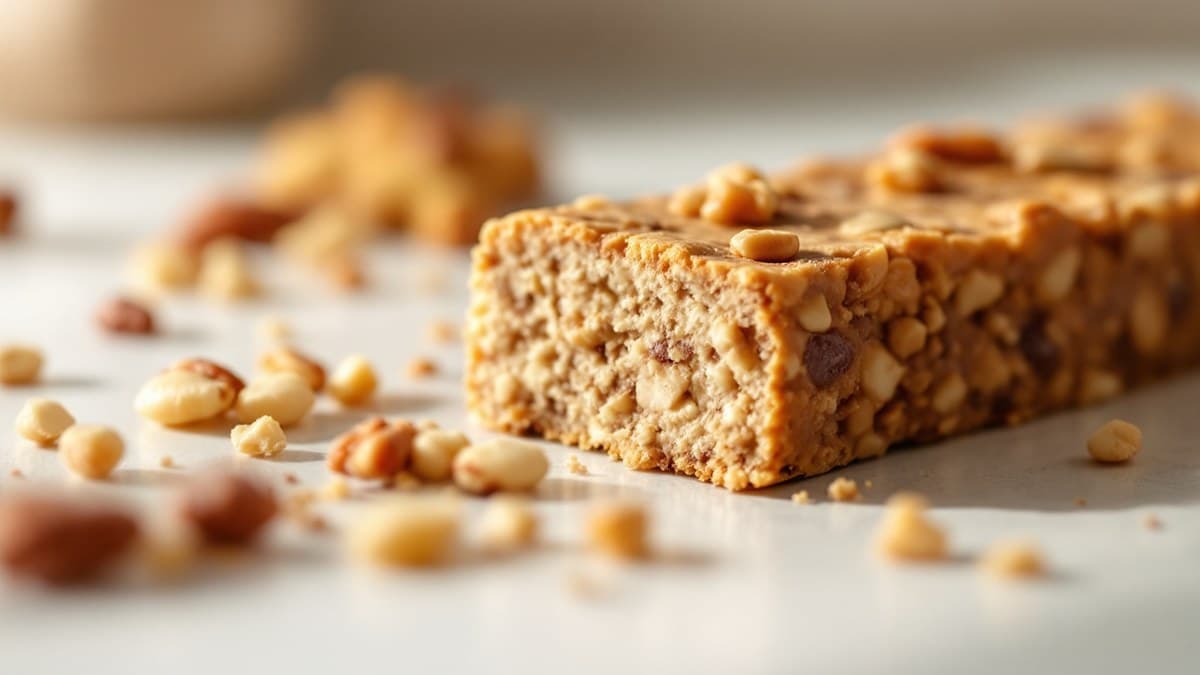
FitCrunch Protein Bar Nutrition Facts 2026: 30g Whey Protein, 6-Layer Baked Bar — Every Flavor Compared
FitCrunch full-size bars deliver 30g of whey protein at 380 calories with 6g of total sugar — the only mainstream 6-layer baked protein bar in the US, created by Food Network chef Robert Irvine. Snack-size bars deliver 16g of protein at 190 calories and 3g of sugar. Every flavor compared by calories, protein, fat, fiber, sugar, and sodium, with verified 2026 nutrition label data.
Read more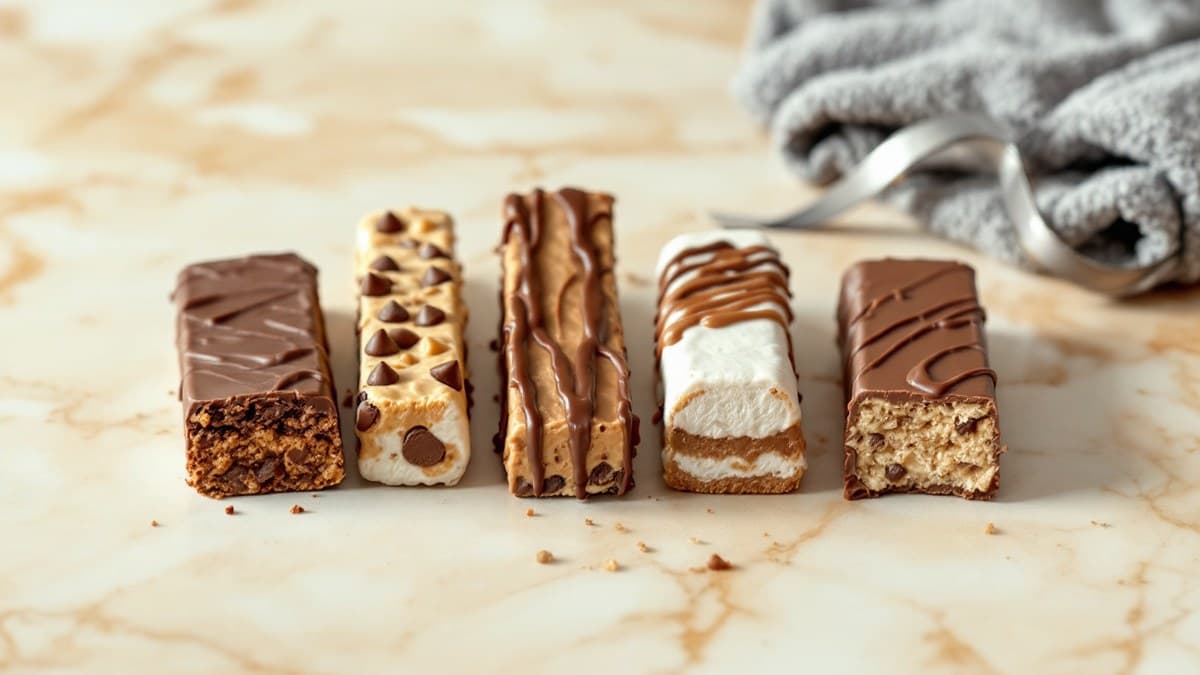
Best Protein Bars for Cutting (2026): 5 Picks Ranked by Protein per Calorie, Net Carbs, and Muscle-Preserving Complete Protein
The best protein bar for cutting in 2026 is DAVID Gold — 28g of protein at 150 calories with 0g of sugar and ~3g of net carbs, the highest protein density of any mainstream bar and the leanest fit inside a calorie deficit. Quest Chocolate Chip Cookie Dough is the satiety pick for cutters at 21g of pure complete protein and 14g of fiber in 190 calories — the fiber blunts hunger for three to four hours when calories are scarce. Five protein bars ranked for a cutting phase by protein per calorie, net carbs, calorie floor, and muscle-preserving complete-protein quality, with verified 2026 nutrition label data.
Read more
Best Protein Bars for Intermittent Fasting (2026): 5 Picks Ranked by Protein per Calorie, Fiber, and Sugar
The best protein bar for intermittent fasting in 2026 is DAVID Gold — 28g of protein at 150 calories with 0g of sugar, the highest protein-per-calorie ratio of any mainstream bar and the most efficient way to hit a protein target inside a restricted eating window. Quest Chocolate Chip Cookie Dough earns the satiety pick at 21g of protein and 14g of fiber in 190 calories — the fiber extends fullness to bridge the next fasting window. Five protein bars ranked for the IF eating window by protein per calorie, fiber, and sugar, with verified 2026 nutrition label data.
Read more