ONE Bar Nutrition Facts: 20g Protein, 1g Sugar, 220 Calories per Bar (All Flavors Compared)
Every ONE Bar delivers 20g of protein, 220 calories, and 1g of total sugar per 60g bar — with a complete milk+whey protein blend and no collagen. Verified nutrition for every core flavor plus sweetener analysis and a comparison with Quest and Barebells.
The short answer
Our top high-protein picks
Editor-selected and ready to buy. As an Amazon Associate we may earn from qualifying purchases.
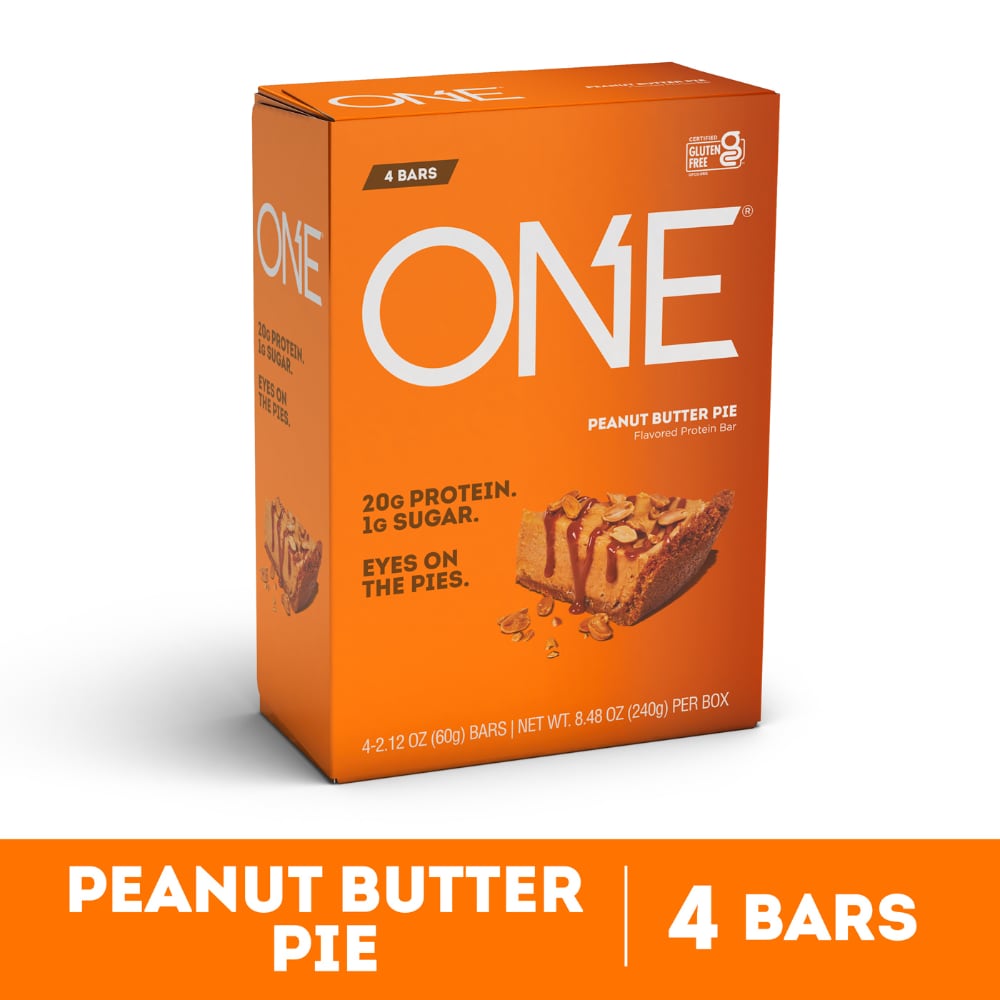 20g protein
Peanut Butter Pie Protein Bar
Amazon returns policy · secure checkout
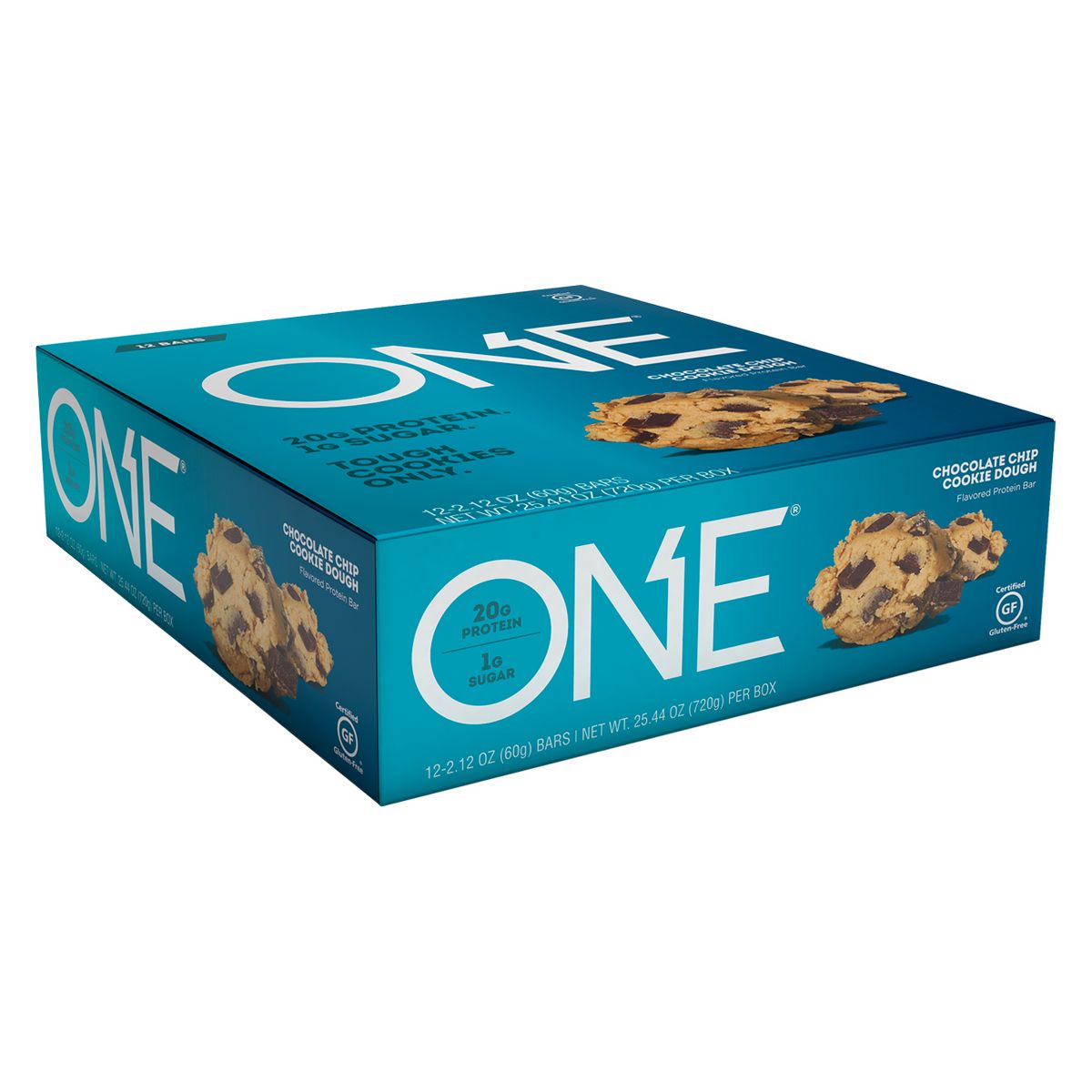 20g protein
Protein Bar - Chocolate Chip Cookie Dough
Amazon returns policy · secure checkout
20g proteinONE Bar Nutrition Facts Per Bar (All Core Flavors)
Every core ONE Bar is a single 2.12 oz (60g) serving. Protein is always 20g and total sugar is always 1g across the standard lineup. The variation between flavors comes from fat content: peanut-butter-heavy flavors like Peanut Butter Pie run higher in fat and fat calories, while chocolate and cake flavors stay at the leaner end. Numbers below are cross-checked against multiple nutrition databases and official retailer product listings.
| Flavor (60g bar) | Calories | Protein | Total Carbs | Fiber | Total Sugar | Fat |
|---|---|---|---|---|---|---|
| Birthday Cake | 220 | 20g | 24g | 9g | 1g | 6g |
| Chocolate Chip Cookie Dough | 220 | 20g | 24g | 9g | 1g | 6g |
| Peanut Butter Pie | 220 | 20g | 23g | 10g | 1g | 9g |
| Maple Glazed Doughnut | 220 | 20g | 24g | 9g | 1g | 7g |
| Almond Bliss | 230 | 20g | 24g | 9g | 1g | 9g |
| S’mores | 220 | 20g | 24g | 9g | 1g | 7g |
A few notes. First, Almond Bliss runs 230 calories because the coconut and almond filling is higher in fat than the cake-style flavors. Second, Peanut Butter Pie has 10g of fiber (vs. 9g for most others) and 9g of fat from the peanut content. Third, the Hershey’s Cookies ’N’ Creme and Reese’s Peanut Butter Lovers collaboration flavors may carry up to 3g of total sugar due to the branded ingredient blend — slightly above the 1g standard. Always check the specific label when buying a collaboration flavor. Each bar also contains approximately 5g of maltitol (a sugar alcohol) within the total carb count. Sugar alcohols are included in total carbs on the label but can be subtracted in net carb calculations. Net carbs per bar work out to roughly 15g subtracting only fiber, or approximately 10g if you also subtract the sugar alcohols — similar to Quest on a net-carb basis.
What Sweeteners Does ONE Bar Use?
ONE Bar keeps total sugar at 1g using two sweeteners, and understanding both is important for anyone managing blood sugar, following keto, or sensitive to GI issues from protein bars.
Maltitol: The Main Sweetener
Maltitol is a sugar alcohol that provides most of the sweetness in ONE Bar — approximately 5g per bar. It has a candy-like flavor that is partly why ONE Bar tastes more like a dessert than a typical protein bar. The important caveats: maltitol has a higher glycemic index than erythritol (the sugar alcohol used by Quest) and absorbs more slowly than regular sugar but more completely than erythritol. This means it has a real, if partial, blood sugar effect that erythritol does not. At 5g per bar, the dose is moderate for most people, but eating two bars in a day doubles it, and maltitol at higher doses is the most common cause of GI distress from this bar (bloating, loose stools). Compared with Barebells, which also uses maltitol but pairs it with acesulfame potassium (Ace-K), ONE Bar’s sweetener profile is essentially the same minus the Ace-K.
Sucralose: A Trace Artificial Sweetener
Sucralose (the same sweetener in Splenda) appears in small amounts in the ONE Bar blend. It provides additional sweetness amplification alongside maltitol. If you are specifically avoiding artificial sweeteners — sucralose and Ace-K — Quest uses primarily erythritol and stevia (with trace sucralose in some flavors), and RXBAR uses no sweeteners at all. See our RXBAR nutrition guide for the clean-label alternative.
ONE Bar’s Fiber: What Is Providing That 9 to 10g?
Nine to ten grams of dietary fiber in a 60g bar is notably high, and the source matters. ONE Bar’s fiber comes from added prebiotic fiber ingredients — primarily isomalto-oligosaccharides (IMOs) and polydextrose, rather than from whole-food sources like oat bran, chia seeds, or psyllium. IMOs are a prebiotic fiber ingredient that generated labeling controversy: the FDA’s updated 2018 dietary fiber definition required that fiber ingredients provide a genuine physiological benefit, and IMOs were among the ingredients whose classification was reviewed. When counting net carbs or assessing the fullness effect of the fiber, the impact may not be identical to an equivalent amount of traditional fiber. Quest uses soluble corn fiber and chicory root fiber, which have their own prebiotic properties.
The practical takeaway: the listed 9g of fiber contributes to net carb calculations and is unlikely to cause harm, but for strict keto or diabetic management, the actual metabolic effect may differ from traditional fiber. Eat one bar, observe your personal response, and count carbs conservatively on the first try. ONE Bar’s 9g fiber still compares favorably with Barebells (approximately 3g per bar), even accounting for the prebiotic-fiber sourcing.
ONE Bar Protein Quality: Complete and Collagen-Free
The protein in every ONE Bar comes from a blend of milk protein isolate and whey protein isolate — both complete proteins that contain all nine essential amino acids including tryptophan. This is a meaningful advantage over Barebells, which dilutes its protein blend with hydrolyzed bovine collagen. Collagen lacks tryptophan, making it an incomplete protein that inflates the gram count on the label without delivering the same amino acid quality. ONE Bar does not use collagen.
The blend is similar in quality to Quest, which uses whey protein isolate and milk protein isolate without collagen. The difference is quantity: Quest provides 21g of complete protein for 190 calories, while ONE Bar provides 20g for 220 calories — slightly less protein and more calories per bar. Neither dilutes with collagen, so for protein quality both are a step above Barebells.
ONE Bar vs Quest vs Barebells: Side-by-Side Comparison
These three bars dominate the low-sugar, sub-230-calorie protein bar segment. Here is how they compare where it matters.
| Bar | Calories | Protein | Sugar | Fiber | Net Carbs | Sweeteners | Protein Source |
|---|---|---|---|---|---|---|---|
| ONE Bar Birthday Cake (60g) | 220 | 20g | 1g | 9g | ~10–15g | Maltitol, Sucralose | Milk PI + Whey PI |
| Quest Cookie Dough (60g) | 190 | 21g | 1g | 12g | ~10g | Erythritol, Stevia, Sucralose | Whey PI + Milk PI |
| Barebells Cookies & Cream (55g) | 200 | 20g | 1g | ~3g | ~12g | Maltitol, Sucralose, Ace-K | Whey blend + Collagen |
The key differences: Quest wins on protein efficiency (21g for 190 calories vs. 20g for 220), on fiber (12g vs. 9g), and on sweetener profile (erythritol is gentler on blood sugar and GI than maltitol). ONE Bar wins on flavor variety — Birthday Cake and Maple Glazed Doughnut are genuinely distinctive flavors that Quest and Barebells do not offer. Barebells wins on taste experience (candy-bar texture) but carries the weakest protein quality due to collagen in the blend. ONE Bar and Quest are protein-quality peers; their real differences are calorie efficiency (Quest) vs. flavor variety (ONE Bar). For the full Quest breakdown, see our Quest nutrition guide.
Is ONE Bar Healthy? Who It Is For
For most goals, ONE Bar is a solid convenience protein snack with clear trade-offs. The 20g of complete protein, 220 calories, and 1g of sugar profile fits weight management, daily protein targets, and muscle maintenance. It is widely available at Target, Walmart, Costco, GNC, and Amazon, shelf-stable without refrigeration, and the dessert-inspired flavors make it one of the most enjoyable protein bars to eat regularly.
The honest trade-offs: at 220 calories per bar, it is 20 to 30 calories higher than Quest (190) or Barebells (200) for essentially the same protein dose. The 9g of fiber is from added prebiotic fiber sources (including IMOs) rather than whole-food fiber, which matters more if you are counting strictly for keto. The maltitol sweetener has a higher glycemic index than erythritol and causes more GI distress at higher doses than Quest’s erythritol blend.
Best for: People who find Quest and Barebells too boring and want a wider flavor rotation; anyone who tolerates maltitol well and wants 20g of complete protein in a shelf-stable bar; Hershey’s or Reese’s fans who want a protein-boosted version of their favorite flavors.
Less ideal for: Strict keto dieters (maltitol has a real blood sugar impact that erythritol does not); anyone with GI sensitivity to maltitol or higher-fiber bars; people focused purely on maximizing protein per calorie (Quest wins that comparison at 21g for 190 calories). For lower-carb bar options, see our best keto protein bars guide.
Frequently Asked Questions
How much protein is in a ONE Bar?
Every ONE Bar in the core lineup contains 20g of protein per 2.12 oz (60g) bar, from a blend of milk protein isolate and whey protein isolate. Both are complete proteins with all nine essential amino acids. This is 1g less than Quest (21g) per bar and the same as Barebells (20g), though neither ONE Bar nor Quest dilutes its blend with collagen the way Barebells does.
How many calories are in a ONE Bar?
Most core flavors have 220 calories per bar. Fat-heavier flavors that contain more coconut or almond content (like Almond Bliss) can reach 230 calories. That is 20 to 30 more calories than Quest (190 calories) or Barebells (200 calories) for the same 20g of protein, making ONE Bar the highest-calorie of the three main competitors.
Is ONE Bar keto-friendly?
With caution. Net carbs depend on how you calculate: subtracting only the 9g fiber from 24g total carbs gives roughly 15g net; also subtracting the approximately 5g of maltitol (sugar alcohol) gives closer to 10g net. Either way it fits most keto budgets as one bar per day. The bigger keto concern is the maltitol itself: unlike erythritol (used in Quest bars), maltitol has a meaningful glycemic index (~53 on a scale of 100 for glucose) and can raise blood sugar more than the net carb count suggests. For strict keto, Quest or the options in our best keto protein bars guide are safer choices.
What sweeteners are in ONE Bar?
The two main sweeteners are maltitol (a sugar alcohol, approximately 5g per bar) and sucralose (a trace artificial sweetener). ONE Bar does not use erythritol, aspartame, acesulfame potassium, or stevia in the standard lineup. The maltitol is what gives ONE Bar a richer sweetness than erythritol-based bars, but it carries a higher glycemic index and GI risk at larger doses.
Is ONE Bar gluten-free?
Yes, ONE Bars are certified gluten-free. The protein blend uses milk protein isolate and whey protein isolate, neither of which contains wheat gluten, and the brand certifies the product as gluten-free. ONE Bars are not nut-free (most flavors contain peanuts, almonds, or tree nuts) and are not vegan (the protein blend is dairy-derived). Always check the specific allergen statement on the bar you buy, since flavors and formulations do vary.
Bottom line: ONE Bar delivers 20g of complete, collagen-free protein for 220 calories with 1g of sugar — a strong convenience protein snack that leads the category on flavor variety. The trade-offs versus Quest are 30 more calories per bar, 3 fewer grams of fiber, and a maltitol sweetener that is harder on blood sugar than erythritol. For people who actually eat the bar (which flavor variety helps with), those trade-offs are worth it. Compare ONE Bar against Quest, Barebells, and RXBAR in our best protein bars of 2026 guide, or browse the full protein snacks directory for every format.
Shop our top high-protein picks
Editor-selected high-protein options related to this guide. As an Amazon Associate we may earn from qualifying purchases.
 20g protein20g protein
Peanut Butter Pie Protein Bar
Amazon returns policy · secure checkout
20g proteinProtein Bar - Chocolate Chip Cookie Dough
Amazon returns policy · secure checkout
Tags
High Protein Snacks Pro Editorial Team
Independently researched and editorially reviewed. We compare real nutrition labels and never accept payment for coverage.
Get the best new protein snacks in your inbox
Weekly picks and honest reviews — no spam, unsubscribe anytime.
More from the journal
Best Protein Bars for Men (2026): 7 Picks Ranked by Protein Density, Bulk Value, and Real Taste
The best protein bar for men in 2026 is the DAVID Gold — 28g of protein at 150 calories per bar, the highest protein-to-calorie ratio of any mainstream bar. For the best bulk value, Kirkland Signature delivers 21g of protein for around $1 a bar at Costco. Seven bars ranked by what matters most for men: protein density, calorie efficiency, bulk value, and taste for long-term consistency.
Read more
Barebells Protein Bar Nutrition: 20g Protein, 1g Sugar, 200 Cal — Maltitol Warning
Every Barebells original bar delivers 20g protein, 200 calories, and 1g sugar -- but the collagen in the blend and the maltitol sweetener are worth knowing before you buy.
Read more
Best Protein Bars for Intermittent Fasting (2026): 5 Picks Ranked by Protein per Calorie, Fiber, and Sugar
The best protein bar for intermittent fasting in 2026 is DAVID Gold — 28g of protein at 150 calories with 0g of sugar, the highest protein-per-calorie ratio of any mainstream bar and the most efficient way to hit a protein target inside a restricted eating window. Quest Chocolate Chip Cookie Dough earns the satiety pick at 21g of protein and 14g of fiber in 190 calories — the fiber extends fullness to bridge the next fasting window. Five protein bars ranked for the IF eating window by protein per calorie, fiber, and sugar, with verified 2026 nutrition label data.
Read more