Protein Bar Alternatives (2026): 7 Shelf-Stable Swaps Ranked Against the Bar They Replace
The best protein bar alternative is a StarKist Wild Caught Albacore tuna pouch: 17g of protein in 80 calories, which is 21.3g of protein per 100 calories against the 11.1g a Quest Chocolate Chip Cookie Dough bar delivers. The finding most swap lists get wrong is that only four of the seven common replacements actually beat the bar on protein per calorie, and the two recommended most often, the meat stick and the cheese crisp, both lose to it. Every number here was read off the manufacturer's own published panel, and every pick is shelf-stable, single-serve and ready to eat.
Our top protein chip picks
Editor-selected and ready to buy. As an Amazon Associate we may earn from qualifying purchases.
 19g protein
Original Chips Variety Pack
Amazon returns policy · secure checkout
 10g protein
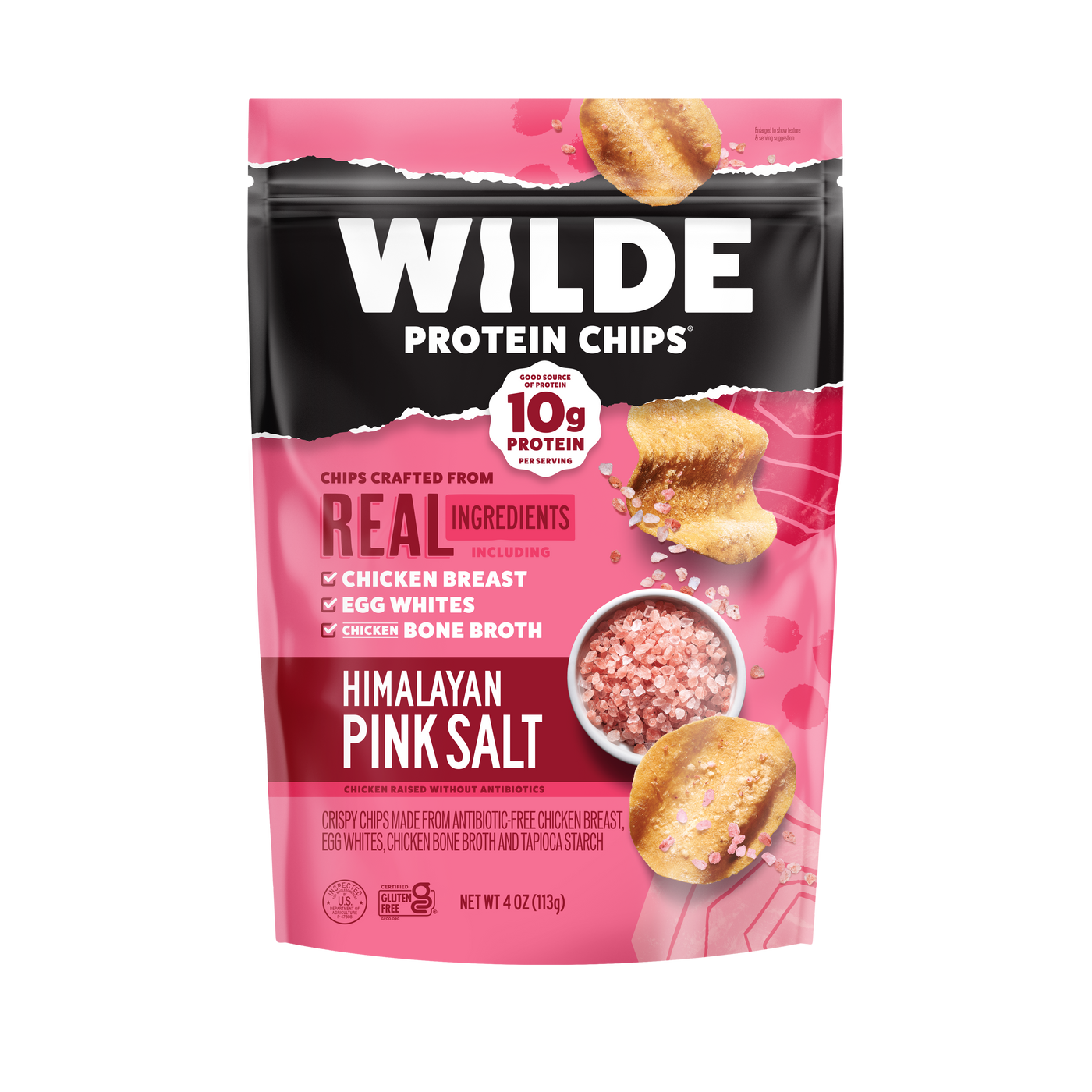 10g protein
Chicken & Himalayan Pink Salt Protein Chips
Amazon returns policy · secure checkout
People quit protein bars for three reasons, and none of them is that the bar failed to deliver protein. They quit because of what else comes with it. A Quest Chocolate Chip Cookie Dough bar carries 6g of sugar alcohols, which is the usual explanation for the bloating people describe after one. It runs 190 calories, which is a meal-sized dent for a snack. And it reads as candy at a moment when a lot of shoppers want something they recognize as food.
The problem with most lists of replacements is that they compare the bar against things that do a completely different job. A tub of Greek yogurt and a scoop of whey are both more protein-dense than any bar made, and neither one lives in a desk drawer, a glove box or the bottom of a gym bag. So every pick on this page had to pass the same test the bar passes: shelf-stable, no refrigeration, single-serve, ready to eat with no preparation. Then the picks were ranked against the bar on the measure that actually decides whether a swap is an upgrade — grams of protein per 100 calories.
Affiliate links — if you buy through them we earn a small commission at no extra cost to you. No brand paid for placement and no brand had a say in the ranking. Every figure below was read off the manufacturer’s own published Nutrition Facts panel on the date shown, not from a nutrition aggregator; where our reading disagreed with a third-party database, the manufacturer’s panel won.
Protein Bar Alternatives: Every Number Side by Side
All figures are per one labeled serving. The Quest bar sits in the middle of the table as the benchmark, not as a pick — it is the thing being replaced. Anything above that row delivers more protein per calorie than the bar; anything below it delivers less.
| Snack | Serving | Protein | Calories | Protein per 100 cal | Beats the bar? |
|---|---|---|---|---|---|
| StarKist Wild Caught Albacore White Tuna in Water | 1 pouch, 2.6 oz (74g) | 17g | 80 | 21.3g | Yes |
| StarKist Chicken Creations Chicken Salad | 1 pouch, 2.6 oz (74g) | 10g | 70 | 14.3g | Yes |
| Country Archer Grass-Fed Beef Jerky, Original | 1 oz (28g) | 9g | 70 | 12.9g | Yes |
| Quest Nacho Cheese Tortilla Style Protein Chips | 1 bag, 1.1 oz (32g) | 18g | 150 | 12.0g | Yes |
| Quest Chocolate Chip Cookie Dough Bar — the benchmark | 1 bar (60g) | 21g | 190 | 11.1g | — |
| Chomps Original Beef Stick | 1 stick, 1.15 oz (32g) | 10g | 100 | 10.0g | No |
| Whisps Parmesan Cheese Crisps | about 14 crisps, 1 oz (28g) | 13g | 160 | 8.1g | No |
| Biena Sea Salt Roasted Chickpeas | 1 oz (28g) | 6g | 120 | 5.0g | No |
Sources, product by product, all read October 25, 2026: the StarKist Albacore White Tuna in Water panel and the StarKist Chicken Creations Chicken Salad panel; the Country Archer Original Beef Jerky panel; the Quest Nacho Cheese Protein Chips panel and the Quest Chocolate Chip Cookie Dough bar panel; the Chomps Original Beef Stick product page; the Whisps Parmesan Cheese Crisps panel; and the Biena Sea Salt Roasted Chickpeas panel. Prices move daily and are not quoted here — each button shows what Amazon is charging right now.
Why protein per 100 calories is the number that sorts these, and grams of protein is not
Grams of protein on the front of a package tells you how big the serving is as much as it tells you how good the food is. A Quest bar’s 21g is the largest protein number in this entire table, and the bar still finishes fifth, because it spends 190 calories to get there. A tuna pouch spends 80 calories for 17g. If your reason for snacking on protein is appetite control, body composition, or hitting a daily protein target without adding calories you did not plan for, the ratio is the number that decides it — not the figure in the big font.
The arithmetic is simple enough to do in a store aisle: divide grams of protein by calories, then multiply by 100. A Quest bar is 21 ÷ 190 × 100 = 11.1. Anything that clears about 12 is a genuine upgrade on a bar. Anything in single digits is a snack you may well enjoy, but it is not buying you protein efficiently, whatever the front of the bag implies. We applied the same measure across every verified product on this site in our protein-to-calorie ratio ranking, which includes powders, shakes and refrigerated foods that are more protein-dense than anything here but cannot sit in a drawer.
The 7 Best Protein Bar Alternatives, Ranked by Protein Per 100 Calories
#1 StarKist Wild Caught Albacore White Tuna in Water — the most protein per calorie you can keep in a desk drawer

StarKist Wild Caught Albacore White Tuna in Water, 2.6 oz Pouch, 24-Pack
17g protein · 80 cal · 21.3g protein per 100 cal · 0g carbs · 0g sugar · 240mg sodium · 1.5g fat · no can opener, no draining
Check price on Amazon →Why it wins: 17g of protein for 80 calories is 21.3g of protein per 100 calories — the highest ratio of anything in this table and nearly double the bar it replaces. It gets there the boring way, by being a food made of one thing. The panel reads 0g total carbohydrate, 0g total sugars, 1.5g fat and 240mg of sodium, and the ingredient list is tuna, water and salt. There are no sugar alcohols to account for and no protein blend to read twice.
The pouch is also the format that makes this practical. It is flat, it needs no can opener and no draining, it survives a hot car, and it is the one shelf-stable protein here that eats like part of a meal rather than a snack — tipped onto crackers, into a salad at a desk, or straight from the pouch. Each one carries 210mg of potassium and 70 percent of the daily value for selenium alongside the protein.
The honest limitations: two. First, you need somewhere to open it and something to eat it with, which rules it out as a one-handed snack mid-commute. Second, albacore is a larger, longer-lived tuna and carries more mercury than skipjack, the fish in most “chunk light” products. The FDA places albacore in its “good choices” tier at one serving a week, while light tuna sits in “best choices” at two to three servings a week — so if you want this most days, alternate it with a chunk light pouch. Our guide to tuna and salmon pouches compares the rest of the category.
#2 StarKist Chicken Creations Chicken Salad — the lowest-calorie pouch, and the one that tastes like lunch

StarKist Chicken Creations Chicken Salad, 2.6 oz Pouch, 12-Pack
10g protein · 70 cal · 14.3g protein per 100 cal · 4g carbs · 1g sugar · 350mg sodium · 1.5g fat · ready-seasoned, no mixing
Check price on Amazon →Seventy calories is the smallest number in the table, and 10g of protein inside it works out to 14.3g per 100 calories — comfortably ahead of the bar. What this pouch really solves is the taste problem that makes people abandon plain shelf-stable protein after a week. It is already a chicken salad, with dill relish, celery and red peppers mixed in, so nothing has to be done to it to make it edible.
Where it fits: this is the swap for someone who finds a protein bar too sweet and a tuna pouch too austere, and for anyone who wants the lightest possible snack that still counts. At 70 calories it genuinely does not interfere with the next meal.
The honest limitations: 10g of protein is a modest absolute dose — good density, small serving — so if you are trying to land 20g or more in one sitting this takes two pouches, and two pouches means 700mg of sodium. The 350mg per pouch is the second highest sodium-per-calorie figure here, which is the normal trade-off for a ready-seasoned, shelf-stable food.
#3 Country Archer Grass-Fed Beef Jerky, Original — the best one-handed swap, with a sugar caveat

Country Archer Grass-Fed Beef Jerky, Original, 2.5 oz (Pack of 4)
9g protein · 70 cal · 12.9g protein per 100 cal · 6g carbs · 4g sugar · 420mg sodium · 0.5g fat · resealable bag, now sold under the Archer name
Check price on Amazon →Nine grams of protein in 70 calories is 12.9g per 100 calories, and it arrives with almost no fat — 0.5g per ounce, the leanest line in this table. That is what separates traditional sliced jerky from a meat stick: jerky is dried muscle, while a stick is ground meat with fat bound into it. The protein numbers look similar on the front of the pack; the calorie cost behind them is not.
It is also the most convenient format here by a distance. A resealable bag, no utensils, no opening ceremony, eats one-handed, and the portion is yours to decide rather than fixed by a wrapper.
The honest limitation, and it is the reason this is third rather than first: 4g of added sugar per ounce. The marinade on traditional jerky is sweet, and that sugar is most of the 6g of carbohydrate on the panel. If you left protein bars specifically to get away from sweeteners, read that line before you buy — zero-sugar jerky exists and is covered in our beef jerky protein ranking. Sodium is also the highest in the table at 420mg per ounce. Note too that the brand now packages this line simply as “Archer”; Amazon still lists it under Country Archer.
#4 Quest Nacho Cheese Tortilla Style Protein Chips — the swap that still feels like a snack

Quest Nutrition Nacho Cheese Tortilla Style Protein Chips, 1.1 oz (Pack of 12)
18g protein · 150 cal · 12.0g protein per 100 cal · 5g carbs · 1g fiber · 1g sugar · 0g sugar alcohols · 330mg sodium
Check price on Amazon →Eighteen grams of protein in a 150-calorie bag is 12.0g per 100 calories, which clears the bar — and it does it while being the only pick here that scratches the same itch a bar does, a wrapper you tear open and eat something crunchy out of.
The detail that makes this interesting: these chips are made by the same company as the benchmark bar, out of the same milk and whey protein isolate blend, and the panel reads 0g sugar alcohols where the bar reads 6g. If sugar alcohols are the reason you are reading this page, that one line is the whole argument. Carbohydrate is 5g for the bag against the bar’s 22g, of which 12g is fiber.
The honest limitations: this is the most processed thing on this list by a wide margin — a protein isolate blend, vegetable oil, corn starch, soluble corn fiber and cheese powders — so it is the wrong pick for anyone whose reason for leaving bars was ultra-processed food rather than sugar alcohols. A single bag is also a real portion decision at 150 calories. See our protein chip comparison for how the rest of the category measures up.
#5 Chomps Original Beef Stick — the most popular swap, and it does not beat the bar

Chomps Original Beef, Grass-Fed and Finished, 24-Count Protein Snack Sticks
10g protein · 100 cal · 10.0g protein per 100 cal · 0g carbs · 0g sugar · 380mg sodium · 7g fat · individually wrapped
Check price on Amazon →This is the swap recommended most often, and on protein per calorie it loses. Ten grams of protein in 100 calories is a clean 10.0g per 100 calories, which is below the Quest bar’s 11.1g. The reason is 7g of fat per stick: a meat stick is ground beef with its fat bound in, so you pay roughly 63 calories of fat for the 40 calories of protein you came for.
It is still on this list, and deliberately so, because protein density is not the only thing a snack is judged on and this one wins other arguments outright. The panel reads 0g total carbohydrate and 0g total sugar. The ingredient list is beef, sea salt, spices, celery juice and cherry powder — the shortest and plainest of anything here. It is individually wrapped, needs no fridge, and is the only pick that is genuinely one-handed and mess-free. If your reason for dropping bars was ultra-processed ingredients rather than calories, this is the honest best answer on the page.
The honest limitations: the 10.0g per 100 calories ratio, and 380mg of sodium per stick. Full panel and flavor-by-flavor numbers are in our Chomps nutrition facts breakdown, and the wider category is in our meat stick ranking.
#6 Whisps Parmesan Cheese Crisps — one ingredient, and a worse ratio than the bar

Whisps Parmesan Cheese Crisps, 2.12 oz, 4-Pack
13g protein · 160 cal · 8.1g protein per 100 cal · 0g carbs · 0g sugar · 350mg sodium · 12g fat · 350mg calcium · one ingredient
Check price on Amazon →The front of the bag says 13g of protein and the word “protein chips,” and both are true, but the ratio is 8.1g per 100 calories — well under the bar. Parmesan is roughly a third fat by weight, and the panel shows it: 12g of total fat and 7g of saturated fat per 28g serving, which is 35 percent of a day’s saturated fat in a handful of crisps. Note that several nutrition sites list these at 150 calories; the panel published by the manufacturer reads 160.
What it is genuinely good for: the ingredient list is one item long — parmesan cheese — and there is 0g of carbohydrate and 0g of sugar on the panel, plus 350mg of calcium, a quarter of a day’s worth. For a strict low-carb or keto eater, or anyone who wants a crunchy savory snack with nothing added to it, that combination is hard to find elsewhere, and the fat is the point rather than a defect.
The honest limitation: judged as a protein swap it is the second weakest here, and a 2.12 oz bag holds about two servings, which is easy to finish in one sitting at 310 calories. More of the category is in our high-protein cheese snack guide.
#7 Biena Sea Salt Roasted Chickpeas — the plant option, and the weakest protein swap on the page

Biena Chickpea Snacks, Sea Salt Crunchy Roasted Chickpeas, 5 oz, 4-Pack
6g protein · 120 cal · 5.0g protein per 100 cal · 15g carbs · 6g fiber · 0g added sugar · 190mg sodium · vegan, grain free
Check price on Amazon →Six grams of protein in 120 calories is 5.0g per 100 calories, less than half the bar’s figure, and that needs saying plainly because roasted chickpeas are marketed hard as a protein snack. As a replacement for the protein a bar was giving you, this does not work. You would need three bags to match one bar’s protein, at nearly twice the calories.
Why it is here anyway: it is the only vegan pick on the page, the only one with meaningful fiber at 6g per ounce, and it has the lowest sodium in the table at 190mg. If what you actually want is a crunchy snack that is not junk and happens to carry some protein, it is a good one. If you want the protein, buy it alongside something else rather than instead of something else. Our roasted chickpea snack guide compares the brands.
Why do people want an alternative to protein bars?
Three reasons, in roughly this order. Sugar alcohols: the benchmark bar here lists 6g, and erythritol and maltitol are poorly absorbed by design, which is what produces the bloating and gas people report. Calories: 190 to 220 for a snack is a third of a meal, which works against you if the bar is an addition rather than a replacement. And ingredient lists: a bar is an engineered food, and a growing number of shoppers want something they can recognize. Our guide to protein bar sweeteners explains which ones cause which problem, and which bars use erythritol lists them by name.
Are protein bars actually bad for you?
No, and this page is not an argument that they are. A Quest bar delivers 21g of complete protein and 12g of fiber for 190 calories and 1g of sugar, which is a genuinely good nutritional trade in a wrapper that survives a gym bag. Four of the seven swaps above beat it on protein per calorie; three do not. The honest case for replacing it is specific rather than general: you want fewer sugar alcohols, fewer calories per gram of protein, or a shorter ingredient list. If none of those three applies to you, there is no reason to switch, and our protein bar ranking covers the best of them.
Which protein bar alternative is cheapest?
Canned and pouched fish, by a wide margin, and it is not close. We ranked ten common protein sources by what they actually cost per gram of protein in our cost per gram of protein comparison: canned tuna came in around a nickel a gram while a Quest bar ran about twelve cents, roughly double. Jerky is the expensive outlier in this table — drying beef removes most of its weight, and you pay for the beef that evaporated. We do not quote live prices on this page because they move daily; the buttons above show what Amazon is charging right now.
How to make the swap actually stick
- Replace the moment, not the food. A bar gets eaten at a specific time — 3pm at a desk, after training, in the car at 6pm. Work out which moment yours belongs to and stock that exact place. A pouch in a kitchen cupboard does not replace a bar in a laptop bag.
- Keep two formats, not one. The highest-ratio picks here need a flat surface and 30 seconds; the one-handed picks are weaker on paper. Most people need one of each, and trying to run on a single swap is the usual reason the bars come back.
- Watch the sodium when the swap works. These foods are shelf-stable because they are salted. Three pouches or sticks in a day lands near 1,100mg of sodium before any meals, where three bars would be well under 700mg. It is a real trade and worth knowing you are making it.
Frequently Asked Questions
What is the best alternative to protein bars?
A StarKist Wild Caught Albacore White Tuna pouch, measured on protein per calorie. It delivers 17g of protein in 80 calories, which is 21.3g of protein per 100 calories against 11.1g for a Quest Chocolate Chip Cookie Dough bar, and it is shelf-stable, single-serve and ready to eat. If you want something that eats more like a snack than a meal, Quest Nacho Cheese Protein Chips are the best of the bar-like options at 18g of protein in a 150-calorie bag with no sugar alcohols.
Are meat sticks better than protein bars?
Not on protein per calorie. A Chomps Original Beef Stick carries 10g of protein in 100 calories, a ratio of 10.0g per 100 calories, which is below the 11.1g a Quest bar delivers, because 7g of the stick is fat. Meat sticks do win on two other measures that matter to a lot of people: a five ingredient label, and 0g of sugar and 0g of carbohydrate against the bar's 6g of sugar alcohols.
What snack has the same protein as a protein bar but fewer calories?
A 2.6 oz StarKist Albacore tuna pouch comes closest among shelf-stable foods: 17g of protein against a typical bar's 21g, for 80 calories instead of 190. Quest Nacho Cheese Protein Chips land 18g for 150 calories. Two tuna pouches give you 34g of protein for 160 calories, which is more protein than any single bar on the market at fewer calories than one.
Are protein bar alternatives cheaper than protein bars?
Usually yes. In our cost per gram of protein comparison, canned and pouched tuna worked out at roughly a nickel per gram of protein while a Quest bar ran about twelve cents per gram, so the pouch is close to half the price for the same protein. The exception in this guide is jerky, which is expensive per gram because drying beef removes most of its weight.
Do I still need protein bars if I eat these instead?
Only for the job a bar does uniquely well, which is surviving unopened in a bag for weeks and being eaten one-handed while moving. That is a real job and no pouch does it. Most people end up keeping a small number of bars for travel and training and moving the daily 3pm habit to something with a better ratio, rather than eliminating bars entirely.
Is canned tuna safe to eat every day?
Albacore, which is the highest-protein pouch here, is not a daily food. The FDA places albacore in its good choices tier at about one serving a week for adults, because it is a larger fish and carries more mercury, while light skipjack tuna sits in the best choices tier at two to three servings a week. The practical approach is to alternate an albacore pouch with a chunk light pouch and a chicken pouch rather than eating the same one every day.
Bottom line: rank a protein bar replacement on protein per 100 calories, not on the grams printed on the front, and apply the same shelf-stable, single-serve, no-preparation test the bar itself passes. On that measure a StarKist Albacore tuna pouch is the strongest swap at 21.3g of protein per 100 calories, a StarKist chicken salad pouch is the lightest at 70 calories, Country Archer jerky is the best one-handed option despite its 4g of added sugar, and Quest protein chips are the closest thing to a bar that still beats one. Chomps sticks, Whisps crisps and Biena chickpeas all fall below the bar on the ratio and earn their place on other grounds — a five ingredient label, one ingredient, and fiber respectively. Browse the full high-protein snack guide or the protein snacks directory for more verified options.
Shop our top protein chip picks
Editor-selected high-protein options related to this guide. As an Amazon Associate we may earn from qualifying purchases.
19g proteinOriginal Chips Variety Pack
Amazon returns policy · secure checkout
10g protein10g proteinChicken & Himalayan Pink Salt Protein Chips
Amazon returns policy · secure checkout
Tags
High Protein Snacks Pro Editorial Team
Independently researched and editorially reviewed. We compare real nutrition labels and never accept payment for coverage.
Get the best new protein snacks in your inbox
Weekly picks and honest reviews — no spam, unsubscribe anytime.
More from the journal
Lowest-Sodium Beef Jerky & Meat Sticks, Ranked (2026): Country Archer Beats Jack Link's by Nearly 3x
Country Archer Classic Original has the lowest sodium of any beef jerky we've verified — 260mg per ounce, less than a third of Jack Link's Original's ~770mg — while still delivering 12g of protein. Stryve Biltong Seasoned has the best protein-to-sodium trade-off in this ranking: 16g of protein for just ~430mg of sodium. We ranked 17 real jerky and meat-stick products by sodium per serving, using nutrition data already verified and published across our jerky and meat-stick reviews, with the honest catch that a few of the lowest-sodium picks also carry the least protein.
Read more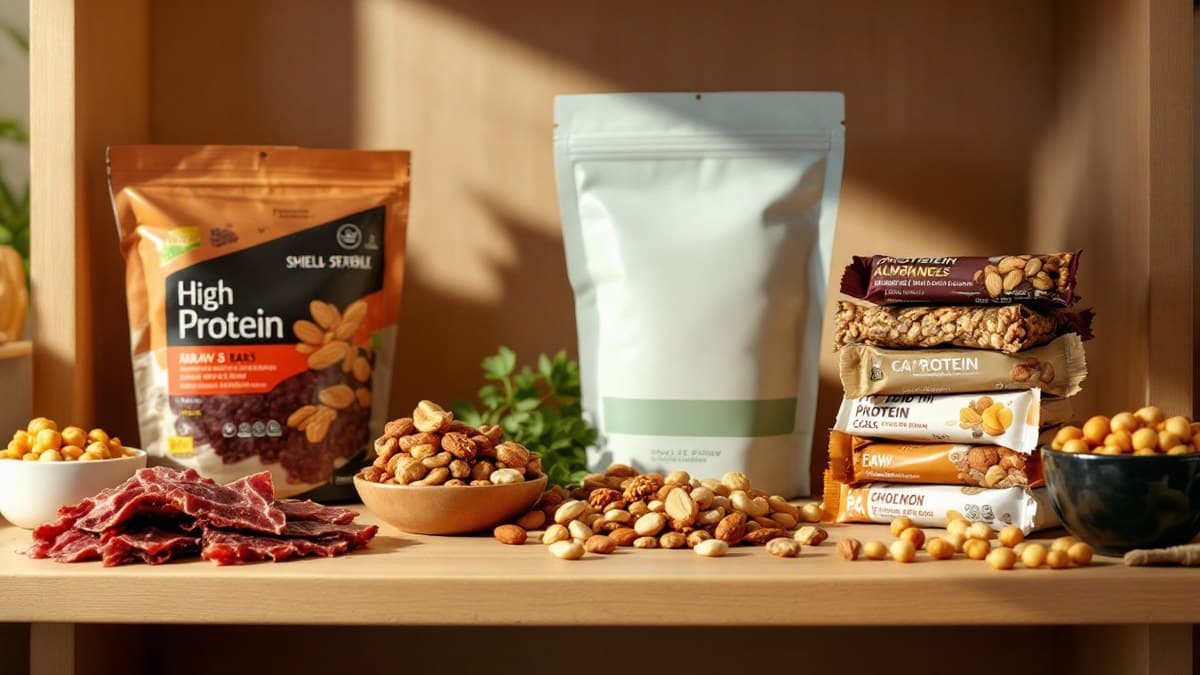
Best High-Protein Snacks Without Refrigeration (2026): 8 Shelf-Stable Picks With 10g+ Protein, Ranked
Country Archer Zero Sugar Beef Jerky delivers 12g of protein per oz at just 70 calories with 0g sugar and a shelf life of months — the best protein-to-calorie ratio of any shelf-stable snack on this list. For the absolute most protein in one package, a Bumble Bee tuna pouch gives you 17g at 80 calories with no cooking and no refrigeration required. Eight picks ranked by verified protein, calories, and real-world travel durability.
Read more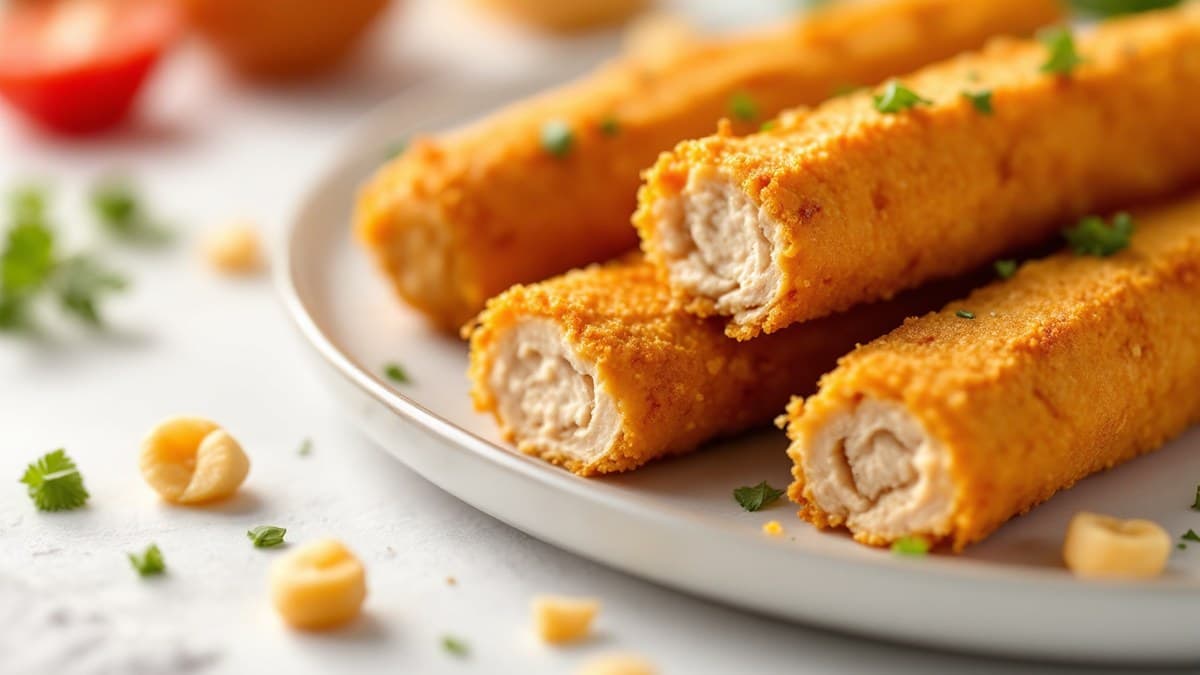
Chomps Turkey Sticks Nutrition Facts (2026): 9g Protein at 70 Calories — Compared to Beef Sticks
Chomps Original Turkey Steak Sticks deliver 9g of protein at 70 calories per stick — the same protein as the beef line but with 30% less fat. Verified 2026 nutrition facts for Turkey, Jalapeño Turkey, and Taco Turkey flavors, plus a side-by-side comparison with the Chomps beef line and Epic Bar Turkey Strips.
Read more