Quest Bar vs DAVID Protein Bar (2026): 21g vs 28g Protein — Which Bar Actually Wins?
Quest Chocolate Chip Cookie Dough delivers 21g of protein, 190 calories, and 12g of fiber per 60g bar. DAVID Gold Chocolate Chip Cookie Dough delivers 28g of protein, 150 calories, and roughly 1g of fiber per 62g bar. Verified 2026 head-to-head from each brand’s own published nutrition facts — the protein-to-calorie math, why Quest has no collagen while DAVID does, the erythritol-vs-maltitol sweetener gap, the EPG fat story, fiber and satiety, sodium, and who each bar actually fits.
The short answer
Our top protein bar picks
Editor-selected and ready to buy. As an Amazon Associate we may earn from qualifying purchases.
Buy the products in this guide: Chocolate Chip Cookie Dough Flavored Protein Bar · Chocolate Chip Cookie Dough Protein Bars · Oatmeal Chocolate Chip Protein Bars
 20g protein
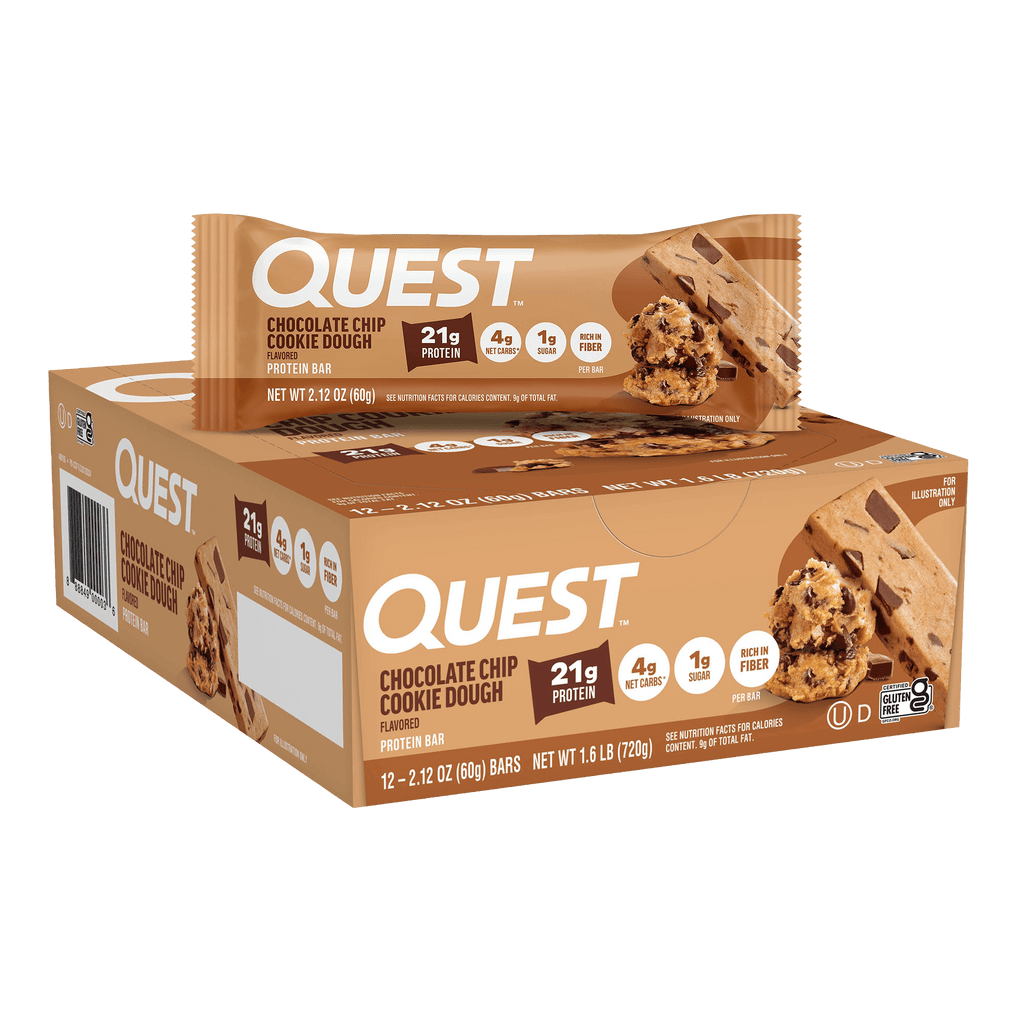
Chocolate Chip Cookie Dough Protein Bar
Amazon returns policy · secure checkout
 21g protein
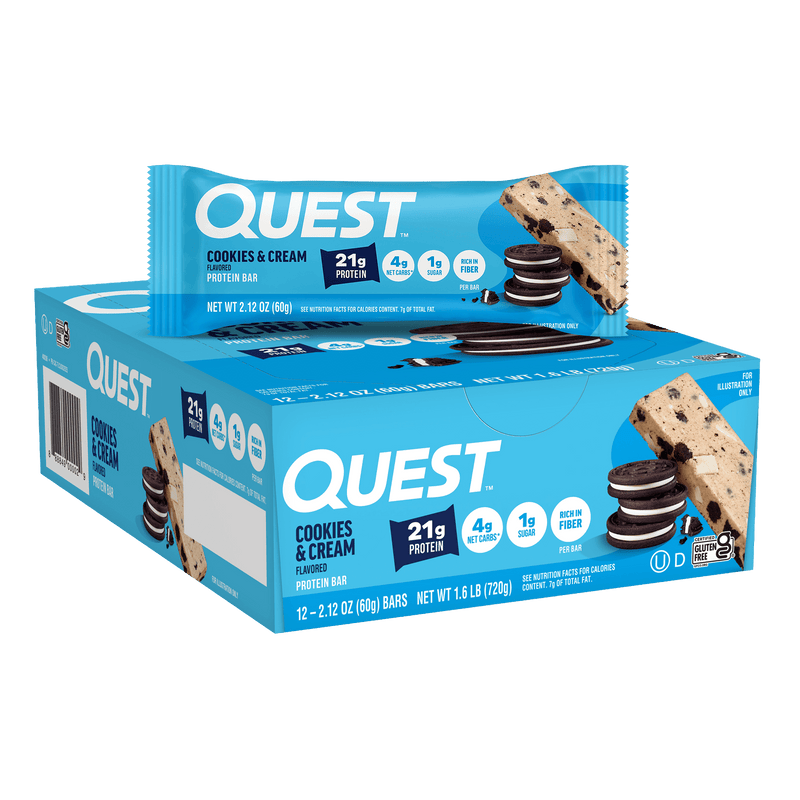
Cookies & Cream Protein Bars
Amazon returns policy · secure checkout
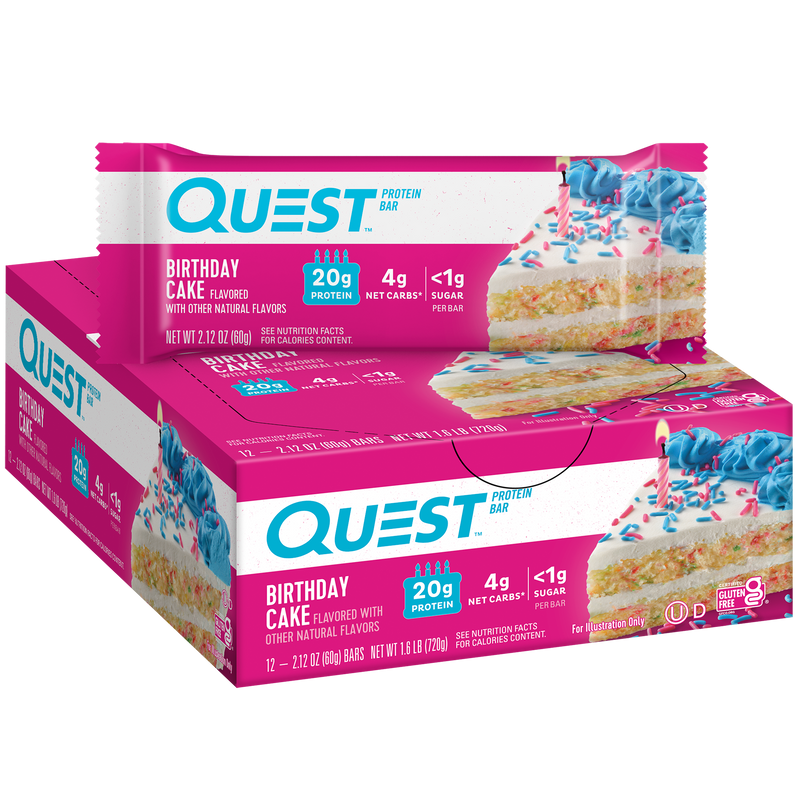 20g protein
Birthday Cake Protein Bars
Amazon returns policy · secure checkout
Affiliate links — if you buy through them we earn a small commission at no extra cost to you. The facts and picks below are our own.
Quest vs DAVID: The Quick Verdict
- Most protein per bar: DAVID Gold by a large margin — 28g vs Quest’s 21g, a 7g gap.
- Best protein-to-calorie ratio: DAVID Gold at 18.7g of protein per 100 calories, versus Quest’s 11.1g.
- Lowest calories per bar: DAVID at 150, versus Quest at 190 — a real 40-calorie gap despite similar bar weights.
- Lowest total sugar: DAVID at 0g versus Quest’s 1g — a wash for practical purposes; both are essentially zero-sugar bars.
- Most fiber: Quest wins decisively — 12g versus DAVID’s roughly 1g.
- Gentler sweetener on the gut: Quest — sweetened with erythritol and stevia (erythritol GI ~1, absorbed without fermentation in most people). DAVID uses maltitol (GI ~35–52, raises blood sugar and can cause bloating at higher doses), allulose, sucralose, and acesulfame potassium.
- Better fat ingredient: Quest — conventional fats with decades of safety data. DAVID uses EPG, a synthetic modified fat with GRAS self-affirmation by its manufacturer but limited long-term human safety data.
- No collagen in the protein blend: Quest — protein comes from milk protein isolate and whey protein isolate, both complete proteins. DAVID’s protein blend includes collagen, which is an incomplete protein lacking tryptophan.
- Cheaper per bar: Quest — typically $2.48–$2.79 each versus DAVID’s roughly $3.00–$3.50.
Side-by-Side Nutrition Facts
All figures below come from each brand’s own currently published nutrition facts, cross-checked against our brand-dedicated guides on this site. The comparison uses each brand’s Chocolate Chip Cookie Dough flavor, which makes for the fairest apples-to-apples read on bar size and formulation.
| Per bar | DAVID Gold Chocolate Chip Cookie Dough (62g) | Quest Chocolate Chip Cookie Dough (60g) |
|---|---|---|
| Calories | 150 | 190 |
| Protein | 28g | 21g |
| Protein / 100 cal | 18.7g | 11.1g |
| Total carbs | ~12g | ~26g |
| Fiber | ~1g | 12g |
| Net carbs | ~3g | ~10g |
| Total sugar | 0g | 1g |
| Sugar alcohols | ~8g (maltitol) | ~6g (erythritol) |
| Total fat | ~2g | ~8g |
| Sodium | ~160mg | ~220mg |
| Primary sweetener | Maltitol, allulose, sucralose, acesulfame potassium | Erythritol, stevia |
| Primary fat source | EPG (esterified propoxylated glycerol) | Conventional fats |
| Protein source | Milk protein isolate, collagen, whey protein concentrate, egg white | Milk protein isolate, whey protein isolate |
| Typical retail price | ~$3.00–$3.50 per bar | ~$2.48–$2.79 per bar |
Protein-to-Calorie Math, in Context
DAVID Gold’s 18.7g of protein per 100 calories is the highest ratio of any mainstream US protein bar — arithmetically possible only because EPG provides just 0.7 cal/g instead of the 9 cal/g of conventional fat. Quest’s 11.1g is itself a strong number, well above most bars, and it achieves it without any novel fat ingredient. Here is how both sit in the wider field, using each brand’s own verified figures:
| Bar (per bar) | Calories | Protein | Protein / 100 cal | Total Sugar | Fiber |
|---|---|---|---|---|---|
| DAVID Gold Choc. Chip Cookie Dough (62g) | 150 | 28g | 18.7g | 0g | ~1g |
| Quest Choc. Chip Cookie Dough (60g) | 190 | 21g | 11.1g | 1g | 12g |
| Kirkland Signature Brownie (60g) | 190 | 21g | 11.1g | 1g | 12g |
| Barebells Cookies & Cream (55g) | 200 | 20g | 10.0g | 1g | ~3g |
| ONE Bar Peanut Butter Pie (60g) | 220 | 20g | 9.1g | 1g | ~10g |
DAVID’s lead over Quest on protein-per-calorie is significant — nearly 8 full grams per 100 calories — while Quest and Kirkland are identical on that metric (11.1g). Quest’s calorie advantage over DAVID is real but not enormous in absolute terms (40 calories per bar), while DAVID’s protein advantage is substantial (7g per bar). See the full category ranking in our best protein bars of 2026 guide.
Protein Quality: Quest Has No Collagen, DAVID Does
Both bars advertise a protein number on the front, but the ingredient panel tells a more nuanced story. Quest’s protein comes from milk protein isolate and whey protein isolate — both complete, high-leucine proteins that stimulate muscle protein synthesis effectively. There is no collagen anywhere in Quest’s formula.
DAVID Gold’s 28g of protein comes from a four-source blend: milk protein isolate, collagen peptides, whey protein concentrate, and egg white. Milk protein isolate is listed first (greatest quantity by weight), which is a good sign — but collagen peptides appear second. Collagen is an incomplete protein: it lacks tryptophan entirely and is low in the branched-chain amino acids (leucine, isoleucine, valine) that drive muscle protein synthesis. No published study has shown collagen alone to effectively stimulate muscle repair the way whey or milk protein isolate does.
For everyday protein targets, weight management, and general health this distinction doesn’t change the math meaningfully — both bars work. For athletes specifically optimizing muscle protein synthesis around training, Quest’s complete-protein-only blend is the higher-quality vehicle per gram. See post-workout options in our best post-workout protein snacks guide.
Sweeteners: Erythritol vs Maltitol (and Why It Matters More Than the Label Shows)
Both bars carry a “1g or 0g total sugar” label, which makes them look equivalent. They are not equivalent in how those sweeteners behave in the body.
Quest uses erythritol as its primary sweetener (roughly 6g per bar), plus stevia. Erythritol has a glycemic index of approximately 1 — it is almost entirely absorbed in the small intestine before reaching the large intestine, which means it does not ferment and does not typically cause bloating or gas at normal serving sizes. It has virtually no effect on blood sugar.
DAVID Gold uses maltitol as its primary sugar alcohol (roughly 8g per bar), plus allulose, sucralose, and acesulfame potassium (Ace-K). Maltitol has a glycemic index of approximately 35–52 — meaningfully higher than erythritol — because a significant portion is digested and absorbed like real sugar. It does raise blood sugar, though more slowly than sucrose. Maltitol is also a FODMAP: at doses above roughly 10–20g per day it can cause bloating, gas, or a laxative effect. At 8g per bar, a single DAVID bar is under the threshold for most people, but two bars per day approaches it. For people with IBS, sensitive digestion, or strict blood-sugar management, maltitol is meaningfully worse than erythritol.
This sweetener gap is the clearest case where Quest wins on something the raw nutrition label does not show.
Fiber: Quest’s Biggest Advantage
Quest delivers 12g of fiber per bar. DAVID delivers roughly 1g. This is not a minor difference — it is the entire reason Quest bars are known as filling bars despite only 190 calories. Fiber slows gastric emptying, blunts the blood-sugar response, and keeps you fuller for longer. A 12g-fiber bar is a genuine meal-adjacent snack; a 1g-fiber bar is a protein hit, not a satiety tool.
If you want a bar that acts as a stand-alone snack that holds you for two to three hours, Quest’s 12g of fiber is the clear winner. If you are eating a bar as a quick protein boost alongside full meals, the low fiber does not matter much. See more filling options in our best high-protein snacks for weight loss guide.
One caveat: Quest’s fiber is largely soluble corn fiber — a FODMAP at high doses. Most adults tolerate one Quest bar fine. Adults with IBS sometimes report bloating from Quest; if that describes you, the practical fiber advantage narrows considerably.
EPG: DAVID’s Novel Fat, Explained
The reason DAVID can post 28g of protein at 150 calories is that its primary fat ingredient — EPG, or esterified propoxylated glycerol — contributes only approximately 0.7 calories per gram, versus 9 calories per gram for conventional fat. EPG is a synthetic modified fat engineered by Epogee LLC specifically for this purpose.
EPG has GRAS (Generally Recognized As Safe) status under a self-affirmation process by Epogee — determined safe based on Epogee’s own review, a legal pathway used by many food ingredients, but one involving less independent scrutiny than a full FDA GRAS review. Long-term human safety data for EPG is limited compared to conventional fats that have decades of population-scale consumption history. In January 2026 a class-action lawsuit alleged that DAVID’s nutrition label understated real calories from EPG; a US district court dismissed it in April 2026, finding the labeling FDA-compliant. The core ingredient novelty remains factual regardless of the legal outcome.
If you are comfortable with a novel, synthetically modified fat ingredient, EPG is what makes DAVID’s numbers possible. If you would rather stay with conventional, thoroughly-studied fat sources, Quest is the more familiar choice. Neither bar is unsafe — this is a risk-tolerance question, not a black-and-white safety call.
Sodium
DAVID Gold runs roughly 160mg of sodium per 62g bar. Quest Chocolate Chip Cookie Dough runs roughly 220mg per 60g bar. Neither is high by packaged food standards — most protein bars sit in the 150–300mg range — but the 60mg gap favors DAVID for anyone on a sodium-restricted diet. Two bars per day: Quest adds roughly 440mg of sodium vs DAVID’s 320mg, a difference worth tracking against a daily sodium ceiling.
Price and Value
Quest typically retails at roughly $2.48–$2.79 per bar in a 12-pack, working out to about $0.12–$0.13 per gram of protein. DAVID bars have typically carried a premium at roughly $3.00–$3.50 per bar, working out to about $0.11–$0.13 per gram of protein at DAVID’s 28g. Per gram of protein, the two bars are close at bulk pricing. Where Quest wins on value is total cost per bar; where DAVID wins is total protein per dollar when you run the per-gram math. See the per-gram framework in our cheapest high-protein snacks guide.
Which Bar Should You Buy?
Choose DAVID Gold if…
Your primary goal is maximum protein for minimum calories — you are in a caloric deficit, tracking macros tightly, or trying to hit a high daily protein target without spending many calories to get there. DAVID is also the stronger keto choice at roughly 3g of net carbs per bar versus Quest’s roughly 10g. You are comfortable with EPG as a fat ingredient and with a sweetener stack that includes maltitol, sucralose, and Ace-K.
Choose Quest if…
You want 12g of fiber to make the bar genuinely filling as a standalone snack. You prefer erythritol and stevia over maltitol, sucralose, and Ace-K — because of better GI tolerance or a preference to avoid artificial sweeteners. You want the most-studied fat ingredients. You want the protein to come entirely from complete proteins with no collagen dilution. And you want to spend roughly a dollar less per bar while still getting 11.1g of protein per 100 calories, near the top of the mainstream category. Quest is also more widely available — sold at gas stations, Target, Walmart, Costco, and most grocery chains.
Consider alternatives if neither fits…
The Kirkland Signature Protein Bar matches Quest exactly on protein (21g), calories (190), and fiber (12g) at roughly half the per-bar cost if you have a Costco membership. Built Bar is the no-artificial-sweetener option (17g protein, 140 cal, real sugar, no EPG). See the full category in our best protein bars of 2026 ranking.
Where to Buy
Both are available on Amazon. Quest is also sold at Walmart, Target, Costco, and most grocery chains. DAVID is also sold at davidprotein.com, Walmart, and Target.
Affiliate links — it costs you nothing extra and supports our independent guides.
Honest Caveats on Both
- DAVID’s EPG is still a relatively new ingredient. GRAS status was self-affirmed by the manufacturer, not independently reviewed by the FDA. Long-term human safety data is thinner than for conventional fats. The 2026 lawsuit over calorie accounting was dismissed, but the novelty of the ingredient is an ongoing fact, not a resolved one.
- DAVID’s collagen inclusion dilutes its complete-protein value. The 28g figure includes collagen, an incomplete protein. The effective complete-protein gap versus Quest’s 21g is real but smaller than the front-of-bag numbers suggest.
- Quest’s soluble corn fiber can cause GI distress in sensitive individuals. The 12g is largely a FODMAP at high doses. Most adults tolerate one bar fine; adults with IBS sometimes report bloating at even single-bar amounts.
- DAVID’s maltitol does raise blood sugar. Unlike erythritol, maltitol has a GI of roughly 35–52. For people managing diabetes or strict glycemic control, DAVID’s 0g total sugar label can be misleading — maltitol behaves more like sugar than erythritol does.
- Neither bar discloses its protein blend ratios. Both use multi-source blends and neither publishes the exact gram split, so the complete-protein quality question for DAVID cannot be precisely quantified from label data alone.
- Flavor availability rotates. Check each brand’s current lineup before ordering a full box.
Frequently Asked Questions
Which has more protein, Quest or DAVID?
DAVID Gold has more protein — 28g per 62g bar versus Quest’s 21g per 60g bar, a 7g gap. DAVID also wins on protein-to-calorie ratio (18.7g per 100 calories vs Quest’s 11.1g). Quest’s protein comes entirely from complete proteins (milk protein isolate, whey protein isolate); DAVID’s blend includes collagen, an incomplete protein.
Which has fewer calories, Quest or DAVID?
DAVID Gold — 150 per 62g bar versus Quest’s 190 per 60g bar, a consistent 40-calorie gap.
Does DAVID Bar have collagen?
Yes. DAVID Gold’s protein blend includes collagen peptides as the second-listed protein source (after milk protein isolate). Collagen is an incomplete protein — it lacks tryptophan and is low in leucine — and does not stimulate muscle protein synthesis as effectively as whey or milk protein isolate per gram. Quest does not include collagen.
Is DAVID Bar good for keto?
DAVID Gold is one of the strongest keto options in the mainstream bar market at roughly 3g of net carbs per 62g bar. Quest Chocolate Chip Cookie Dough runs roughly 10g of net carbs per bar — still low enough for many keto frameworks, but meaningfully higher than DAVID.
Does Quest Bar cause bloating?
Some people report bloating from Quest bars, typically attributed to the soluble corn fiber (12g per bar). Most adults with normal digestion tolerate Quest bars without issue. DAVID’s maltitol can also cause bloating at higher doses (two or more bars per day) and does raise blood sugar in a way erythritol does not.
Which is better for weight loss, Quest or DAVID?
Both work well in a caloric deficit. DAVID’s 150-calorie, 28g-protein profile makes it easier to hit a high protein target on a tight calorie budget. Quest’s 12g of fiber makes it more filling as a standalone snack. For pure “most protein for least calories” math, DAVID wins. For “most satisfying snack that holds me longest,” Quest wins. See more options in our best high-protein snacks for weight loss guide.
Which is cheaper per bar, Quest or DAVID?
Quest is typically cheaper per bar — roughly $2.48–$2.79 versus DAVID’s roughly $3.00–$3.50. Per gram of protein at bulk pricing, the two are comparable because DAVID delivers more protein per bar.
Bottom line: Quest and DAVID are the two most-compared protein bars of 2026, and both are genuinely good at what they do. DAVID Gold wins on every calorie-and-protein metric — 28g protein, 150 calories, ~3g net carbs, 18.7g protein per 100 calories — achieved with a novel modified fat (EPG) and a sweetener stack led by maltitol. Quest wins on fiber (12g vs ~1g), sweetener quality (erythritol vs maltitol), fat-ingredient familiarity, collagen-free complete protein, and per-bar price. For macro-trackers in a caloric deficit who want the maximum protein number and are comfortable with EPG and maltitol, DAVID is the stronger buy. For people who want a filling, GI-friendly bar with conventional ingredients that costs roughly a dollar less, Quest remains the category benchmark. Compare the full field in our best protein bars of 2026 guide, or browse the protein snacks directory for more options.
Shop our top protein bar picks
Editor-selected high-protein options related to this guide. As an Amazon Associate we may earn from qualifying purchases.
Buy the products in this guide: Chocolate Chip Cookie Dough Flavored Protein Bar · Chocolate Chip Cookie Dough Protein Bars · Oatmeal Chocolate Chip Protein Bars
20g proteinChocolate Chip Cookie Dough Protein Bar
Amazon returns policy · secure checkout
21g proteinCookies & Cream Protein Bars
Amazon returns policy · secure checkout
20g proteinBirthday Cake Protein Bars
Amazon returns policy · secure checkout
Tags
High Protein Snacks Pro Editorial Team
Independently researched and editorially reviewed. We compare real nutrition labels and never accept payment for coverage.
Get the best new protein snacks in your inbox
Weekly picks and honest reviews — no spam, unsubscribe anytime.
More from the journal
DAVID Protein Bar vs Built Bar (2026): 28g vs 17g Protein — Which Low-Calorie Bar Actually Wins?
DAVID Gold Chocolate Chip Cookie Dough delivers 28g of protein for 150 calories and 0g of sugar per 62g bar. Built Puff Brownie Batter delivers 17g of protein for 140 calories and 6g of real sugar per 40g bar. Verified 2026 head-to-head from each brand’s own published nutrition facts — the protein-to-calorie math, the collagen-in-both-blends story, the EPG-vs-palm-oil ingredient trade-off, and which bar actually fits your goals.
Read more
David Protein Bar Nutrition Facts: 28g Protein in 150 Calories — Gold vs Bronze, Every Flavor, EPG Explained
DAVID Gold bars deliver 28g of protein and 150 calories with 0g of sugar per 62g bar — the highest protein-to-calorie ratio of any mainstream US protein bar. Here are the verified nutrition facts for every Gold and Bronze flavor, what EPG is and why it matters, and how DAVID compares to Quest, Barebells, and Built Bar.
Read more
Clif Builder's Bar vs Quest Bar (2026): Same 20g Protein, Very Different Nutrition
Clif Builder's and Quest bars both deliver 20g of protein, but Quest does it at 190 calories with 1g of sugar — versus Clif Builder's 263 calories and 17g of sugar. Verified 2026 nutrition facts for all core flavors, a soy vs whey protein comparison, and a clear breakdown of who should buy each bar.
Read more