DAVID Protein Bar vs Built Bar (2026): 28g vs 17g Protein — Which Low-Calorie Bar Actually Wins?
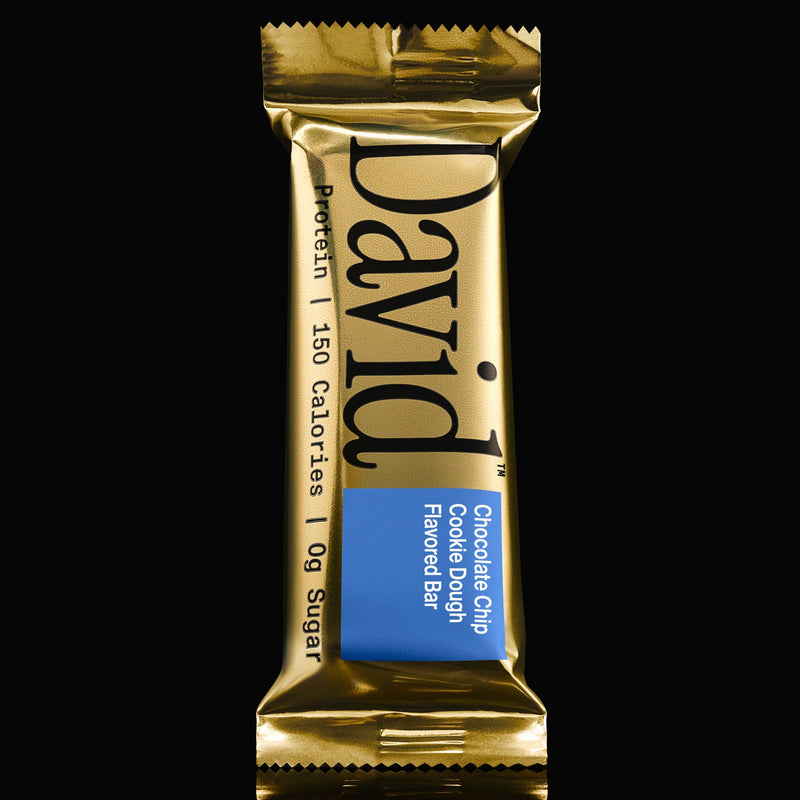
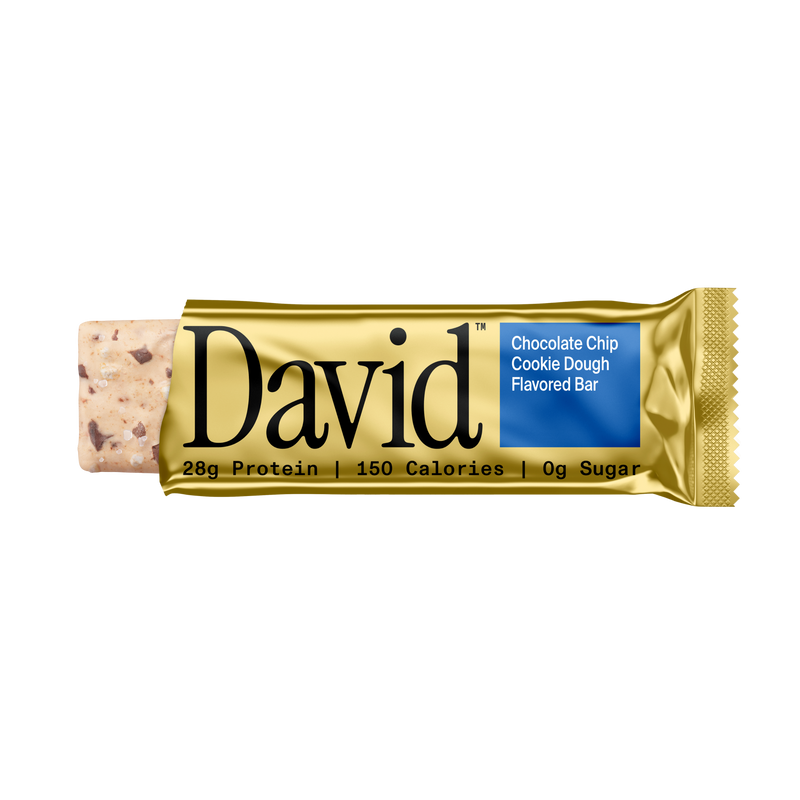
DAVID Gold Chocolate Chip Cookie Dough delivers 28g of protein for 150 calories and 0g of sugar per 62g bar. Built Puff Brownie Batter delivers 17g of protein for 140 calories and 6g of real sugar per 40g bar. Verified 2026 head-to-head from each brand’s own published nutrition facts — the protein-to-calorie math, the collagen-in-both-blends story, the EPG-vs-palm-oil ingredient trade-off, and which bar actually fits your goals.
The short answer
Our top protein bar picks
Editor-selected and ready to buy. As an Amazon Associate we may earn from qualifying purchases.
Buy the products in this guide: Blueberry Pie Carton · Blueberry Pie · Peanut Butter Chocolate Chunk
 28g protein
 28g protein
Chocolate Chip Cookie Dough
Amazon returns policy · secure checkout
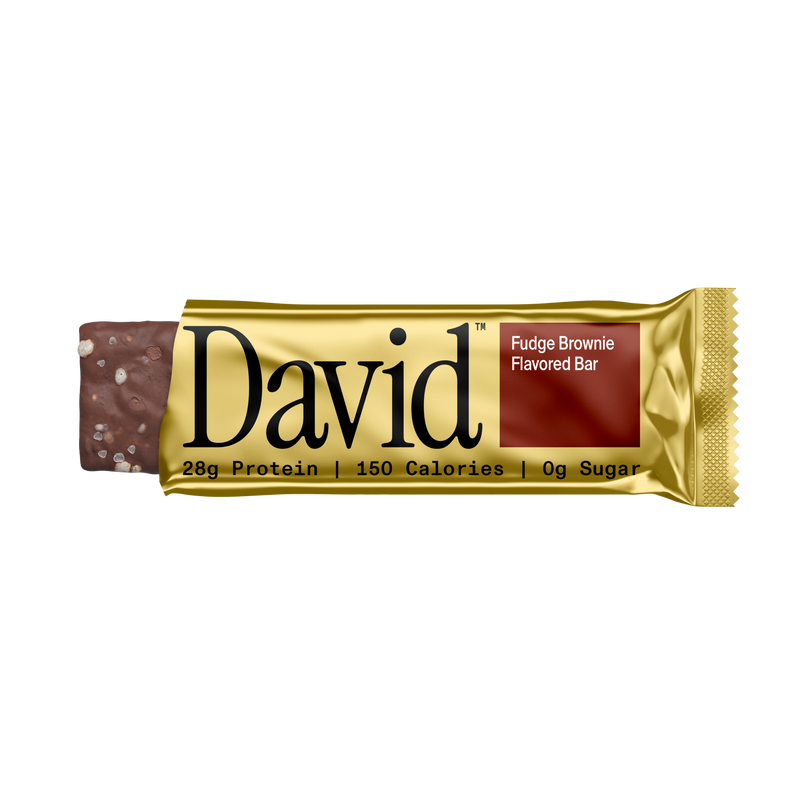 28g protein
Affiliate links — if you buy through them we earn a small commission at no extra cost to you. The facts and picks below are our own.
DAVID vs Built Bar: The Quick Verdict
- Most protein per bar: DAVID Gold by a wide margin — 28g vs Built’s 17g, an 11g gap.
- Best protein-to-calorie ratio: DAVID Gold at 18.7g of protein per 100 calories, versus Built’s 12.1g — still the better ratio in the category, though not as dominant a gap as the raw protein number suggests.
- Lowest sugar: DAVID Gold — 0g of total sugar, versus Built’s 6g of real sugar.
- No artificial sweeteners: Built — sweetened with real sugar only; DAVID uses maltitol, allulose, sucralose, and acesulfame potassium.
- Simpler, more conventional fat source: Built — palm and palm kernel oil; DAVID uses EPG, a synthetic modified fat with limited long-term human safety data.
- Fewer calories per bar: Built — 140 vs DAVID’s 150, though DAVID’s bar is also larger (62g vs 40g).
- Fiber: Neither is a fiber play — DAVID has ~1g, Built has <1g, both far below Quest’s 12g.
Side-by-Side Nutrition Facts
Figures below compare each brand’s flagship, most-directly-comparable flavor — DAVID Gold Chocolate Chip Cookie Dough and Built Puff Brownie Batter — verified from each brand’s own published nutrition facts and retail product listings.
| Per bar | DAVID Gold Chocolate Chip Cookie Dough (62g) | Built Puff Brownie Batter (40g / 1.41oz) |
|---|---|---|
| Calories | 150 | 140 |
| Protein | 28g | 17g |
| Protein / 100 cal | 18.7g | 12.1g |
| Total carbs | ~12g | 14g |
| Fiber | ~1g | <1g |
| Net carbs | ~3g | ~13g |
| Total sugar | 0g | 6g |
| Sugar alcohols | ~8g (maltitol) | 0g |
| Total fat | ~2g | 2.5g |
| Sodium | ~160mg | — |
| Sweeteners | Maltitol, allulose, sucralose, acesulfame potassium | Real sugar (no artificial sweeteners) |
| Primary fat source | EPG (esterified propoxylated glycerol) | Palm and palm kernel oil |
| Protein source | Milk protein isolate, collagen, whey protein concentrate, egg white | Whey protein isolate, collagen |
| Gluten-free | Yes | Yes |
Built’s sodium figure was not part of our existing verified coverage of the brand, so it is marked — rather than guessed. Every other row above is confirmed from each brand’s own nutrition facts panel.
The Protein-to-Calorie Math, in Context
DAVID Gold’s 18.7g of protein per 100 calories is the highest of any mainstream US protein bar, and Built’s 12.1g is itself near the top of the category — both beat Quest and Barebells on this metric. Here is how all five bars line up, using each brand’s own verified numbers from their dedicated guides on this site.
| Bar (per bar) | Calories | Protein | Protein / 100 cal | Total Sugar | Fiber | Net Carbs |
|---|---|---|---|---|---|---|
| DAVID Gold Choc. Chip Cookie Dough (62g) | 150 | 28g | 18.7g | 0g | ~1g | ~3g |
| Built Puff Brownie Batter (40g) | 140 | 17g | 12.1g | 6g | <1g | ~13g |
| Quest Choc. Chip Cookie Dough (60g) | 190 | 21g | 11.1g | 1g | 12g | ~10g |
| Barebells Cookies & Cream (55g) | 200 | 20g | 10.0g | 1g | ~3g | ~12g |
| RXBAR Chocolate Sea Salt (52g) | 210 | 12g | 5.7g | 13g | 5g | ~15g |
DAVID wins the protein-to-calorie contest outright, and Built is second, ahead of Quest and Barebells. But that ranking flips if what you actually need is fiber or a whole-food ingredient list: RXBAR and Quest both beat both DAVID and Built badly on fiber, and RXBAR’s protein comes from egg whites, almonds, and cashews rather than an isolate-and-collagen blend. Protein-per-calorie is one useful lens, not the only one. See the full field in our best protein bars of 2026 guide.
Both Bars Lean on Collagen — Here’s What That Means
The most overlooked similarity between these two bars is that neither uses pure whey isolate. DAVID Gold’s protein comes from a four-source blend — milk protein isolate, collagen, whey protein concentrate, and egg white — and Built Puff’s comes from a two-source blend of whey protein isolate and collagen peptides. Collagen is an incomplete protein: it lacks tryptophan entirely and is low in the branched-chain amino acids (leucine, isoleucine, valine) most associated with muscle protein synthesis. On its own, collagen is not an effective muscle-building protein.
Both brands list a complete protein first on the ingredient panel (milk protein isolate for DAVID, whey protein isolate for Built), which under FDA labeling rules means it is present in greater quantity by weight — so the complete protein is likely dominant in both blends. But neither brand discloses the exact ratio, so the true complete-protein gram count behind DAVID’s 28g or Built’s 17g cannot be calculated precisely from the label alone. Practically, this means both bars work well for everyday protein goals, weight management, and general health, but a pure-whey bar or a whole-food source (Greek yogurt, cottage cheese, egg whites) is a slightly higher-quality protein vehicle per gram for athletes specifically optimizing muscle protein synthesis around training. See whole-food options in our best post-workout protein snacks guide.
Sweetener Philosophy: Zero-Sugar Engineering vs Real Sugar
This is where the two bars diverge most sharply. DAVID Gold hits 0g of total sugar using a stack of maltitol (a sugar alcohol, ~2 cal/g), allulose, sucralose, and acesulfame potassium (Ace-K). Built Puff uses actual table sugar — 6g per bar — and lists no erythritol, sucralose, aspartame, Ace-K, stevia, or allulose anywhere on the ingredient panel.
Each approach has a real trade-off. DAVID’s near-zero sugar count is genuinely useful for strict keto or blood-sugar-conscious eaters, but maltitol can cause bloating or a laxative effect at higher doses in some people, and multiple artificial sweeteners in one bar is a dealbreaker for anyone avoiding them on principle. Built’s real sugar means no sugar-alcohol GI risk and a cleaner-reading ingredient list, but 6g of real sugar does hit the bloodstream in a way maltitol does not, which matters more for strict keto or diabetes management. Neither is objectively “healthier” — they are optimized for different priorities.
EPG vs Palm Oil: The Fat Source Story
DAVID Gold’s ~2g of fat comes almost entirely from EPG (esterified propoxylated glycerol), a synthetic modified fat engineered to provide only about 0.7 calories per gram — roughly 92% fewer calories than the 9 cal/g of conventional fat. That is the main reason DAVID can pack 28g of protein into 150 calories. EPG has GRAS (Generally Recognized As Safe) status via a self-affirmation process by its manufacturer, Epogee, rather than an independent FDA review, and long-term human safety data is limited compared to conventional fats. A 2025 class-action lawsuit alleging DAVID’s labeling understated real calories from EPG was dismissed by a US district court in April 2026, which found the labeling FDA-compliant.
Built Puff’s 2.5g of fat comes from palm and palm kernel oil — conventional, well-studied fat sources used across the packaged food industry for decades, with none of the novel-ingredient uncertainty attached to EPG. If you would rather avoid a synthetic, thinly-studied fat ingredient altogether, that is Built’s clearest advantage over DAVID.
Fiber and Satiety: Neither Bar Is the Filling Option
DAVID Gold has about 1g of fiber per bar; Built Puff has less than 1g. Compare that to Quest’s 12g or RXBAR’s 5g, and it is clear that neither DAVID nor Built is built for satiety the way a fiber-forward bar is. Both are better thought of as a fast, protein-dense hit rather than a bar that will keep you full for hours. If fiber and fullness matter more to you than the protein-per-calorie number, Quest or a whole-food snack like roasted chickpeas or edamame will serve you better — see our roasted chickpea snacks guide for fiber-forward options.
Price and Value
Built Puffs retail for roughly $2.50–$3.50 per bar individually, or $1.70–$2.30 per bar in a 12-count box — working out to about $0.10–$0.14 per gram of protein at bulk pricing. DAVID’s retail price was not part of the verified pricing data in our existing coverage of the brand, so check the current price on Amazon or davidprotein.com before buying, and run the same per-gram-of-protein math using the formula in our cheapest high-protein snacks guide. Anecdotally, DAVID bars have carried a premium price versus mainstream bars like Quest since launch, reflecting the novel-ingredient formulation and brand positioning.
Which Should You Buy?
Choose DAVID Gold if…
You want the maximum grams of protein for the fewest calories, you are comfortable with a novel fat ingredient (EPG) and multiple artificial sweeteners, and you are following a strict low-carb or keto plan where the ~3g net carbs matter. It is the strongest choice for hitting a high daily protein target without spending many calories to get there.
Choose Built Puff if…
You want a dessert-style protein snack with no artificial sweeteners and no novel fat ingredients, you tolerate real sugar better than sugar alcohols, and 17g of protein is enough for your snack. It is the more “conventional” ingredient list of the two, even though it still leans on a collagen-inclusive protein blend and is not a whole-food option.
Consider a third option if neither fits…
Quest delivers 21g of protein and 12g of fiber — the more filling, more thoroughly studied option, at the cost of more calories (190) and a chewier, more polarizing texture. RXBAR delivers only 12g of protein but is the only one of the four built from whole-food ingredients (egg whites, almonds, cashews, dates) rather than protein isolates and a modified fat. See both in our Quest protein nutrition guide and RXBAR nutrition facts guide.
Where to Buy
Both are sold on Amazon. DAVID is also sold at davidprotein.com, Walmart, and Target; Built is also sold at built.com, Walmart, Target, Costco, Kroger, Sprouts, and other major grocery chains.
Affiliate links — it costs you nothing extra and supports our independent guides.
Honest Caveats on Both
- Neither is a whole-food protein source. Both rely on protein isolates and collagen rather than intact food proteins. If ingredient minimalism matters to you, RXBAR is the more whole-food option in this category, though at only 12g of protein per bar.
- DAVID’s EPG is still a relatively new ingredient. GRAS status was self-affirmed by the manufacturer, not independently reviewed by the FDA, and long-term human safety data is thinner than for conventional fats. The 2026 lawsuit over its calorie accounting was dismissed, but the underlying novelty of the ingredient remains true.
- Built’s 6g of real sugar is not nothing. It is far less than a candy bar, but if you are tracking sugar strictly for blood-sugar reasons, DAVID’s 0g is the safer number.
- Both are low-fiber. Neither bar will keep you full the way a 12g-fiber Quest bar will. Treat both as a fast protein hit, not a meal replacement.
- Flavor lineups rotate. Check davidprotein.com and built.com for current flavor availability before ordering a full box.
Frequently Asked Questions
Which has more protein, DAVID or Built Bar?
DAVID Gold has significantly more protein — 28g per 62g bar versus Built Puff’s 17g per 40g bar, an 11g gap. DAVID also wins on protein-to-calorie ratio (18.7g per 100 calories vs Built’s 12.1g).
Which has less sugar, DAVID or Built?
DAVID Gold has 0g of total sugar, sweetened instead with maltitol, allulose, sucralose, and acesulfame potassium. Built Puff has 6g of real sugar and no artificial sweeteners at all.
Is DAVID or Built Bar better for keto?
DAVID Gold is the stronger keto fit — roughly 3g of net carbs per bar versus Built’s roughly 13g. Built’s carbs come from real, fully-digestible sugar and starches rather than sugar alcohols, so there is no subtraction math to do; the total carb count is close to the true net-carb impact.
Do DAVID or Built bars have artificial sweeteners?
DAVID Gold does — sucralose and acesulfame potassium, plus maltitol and allulose. Built Puff does not use any artificial sweeteners; its sweetness comes entirely from real sugar.
Are DAVID and Built bars both gluten-free?
Yes, both DAVID Gold and Built Puff bars are formulated without gluten-containing ingredients.
Which bar is more filling?
Neither is designed for fullness — DAVID has about 1g of fiber and Built has less than 1g, both far below Quest’s 12g. If satiety matters more to you than the protein-per-calorie number, a higher-fiber bar or a whole-food snack is a better fit. See our best high-protein snacks for weight loss guide for fuller options.
Bottom line: DAVID Gold and Built Puff both chase the same goal — a lot of protein for not many calories — but from opposite directions. DAVID gets there with a novel modified fat (EPG), sugar alcohols, and artificial sweeteners to post the highest protein-to-calorie ratio in the mainstream bar category (28g protein, 150 calories, 0g sugar). Built gets there by simply being a smaller bar with real sugar and no artificial sweeteners (17g protein, 140 calories, 6g sugar). Both quietly lean on a collagen-inclusive protein blend rather than pure whey, and both are low-fiber, fast-hit snacks rather than filling meals. Choose DAVID if you want the biggest protein number and strict keto carbs and are comfortable with EPG; choose Built if you want a cleaner-label sweetener system and don’t mind a smaller protein number. Compare the full field in our best protein bars of 2026 guide, or browse the protein snacks directory for more options.
Shop our top protein bar picks
Editor-selected high-protein options related to this guide. As an Amazon Associate we may earn from qualifying purchases.
Buy the products in this guide: Blueberry Pie Carton · Blueberry Pie · Peanut Butter Chocolate Chunk
28g protein28g proteinChocolate Chip Cookie Dough
Amazon returns policy · secure checkout
28g proteinTags
High Protein Snacks Pro Editorial Team
Independently researched and editorially reviewed. We compare real nutrition labels and never accept payment for coverage.
Get the best new protein snacks in your inbox
Weekly picks and honest reviews — no spam, unsubscribe anytime.
More from the journal
Quest Bar vs DAVID Protein Bar (2026): 21g vs 28g Protein — Which Bar Actually Wins?
Quest Chocolate Chip Cookie Dough delivers 21g of protein, 190 calories, and 12g of fiber per 60g bar. DAVID Gold Chocolate Chip Cookie Dough delivers 28g of protein, 150 calories, and roughly 1g of fiber per 62g bar. Verified 2026 head-to-head from each brand’s own published nutrition facts — the protein-to-calorie math, why Quest has no collagen while DAVID does, the erythritol-vs-maltitol sweetener gap, the EPG fat story, fiber and satiety, sodium, and who each bar actually fits.
Read more
David Protein Bar Nutrition Facts: 28g Protein in 150 Calories — Gold vs Bronze, Every Flavor, EPG Explained
DAVID Gold bars deliver 28g of protein and 150 calories with 0g of sugar per 62g bar — the highest protein-to-calorie ratio of any mainstream US protein bar. Here are the verified nutrition facts for every Gold and Bronze flavor, what EPG is and why it matters, and how DAVID compares to Quest, Barebells, and Built Bar.
Read more
Built Bar Nutrition Facts: 140 Cal, 17g Protein, 6g Real Sugar — Every Flavor (2026)
Built Puff bars: 140–160 calories and 15–17g protein per bar, verified for every flavor — plus how the whey + collagen blend compares to Quest and RXBar.
Read more