Oikos Triple Zero vs :ratio PROTEIN Yogurt (2026): 90 Calories vs 170 — Which High-Protein Cup Actually Wins?
Oikos Triple Zero delivers 15g of protein at 90 calories with stevia sweetener; :ratio PROTEIN delivers 25g at 170 calories with sucralose. Oikos wins on protein per calorie (16.7g vs 14.7g per 100 cal) and lowest net carbs (6g vs 9g); ratio wins on absolute protein per cup and cost per gram. Verified nutrition tables for every flavor of both brands, plus Chobani High Protein, Two Good, and FAGE — and which one actually wins for weight loss, maximum protein, sweetener avoidance, and budget.
The short answer
Our top Greek yogurt picks
Editor-selected and ready to buy. As an Amazon Associate we may earn from qualifying purchases.
 10g protein
 12g protein18g protein
Oikos Triple Zero or Ratio: which yogurt has more protein?
Best protein efficiency per calorie: Oikos Triple Zero — 15g protein for 90 calories (16.7g per 100 cal), stevia sweetened, 0g fat. Most absolute protein per cup: :ratio PROTEIN — 25g protein for 170 calories (14.7g per 100 cal), sucralose sweetened, 3.5g fat. Best for avoiding artificial sweeteners: Oikos Triple Zero (stevia only). Best for keto/low-sugar by total carbs: Oikos Triple Zero (6g carbs) edges ratio (9g carbs) despite ratio having slightly less total sugar. If you want 25g of protein in a single cup without cooking anything, ratio wins. If you want the lowest-calorie path to a meaningful protein hit, Oikos Triple Zero wins.
Oikos Triple Zero vs :ratio PROTEIN: Side-by-Side Nutrition (All Flavors)
All numbers below are per 5.3oz (150g) single-serve cup, sourced from each brand’s official product pages, major retailer nutrition panels (Walmart, Target), and nutrition databases. Both brands carry essentially the same macros across all their flavored cups — only Oikos Triple Zero Vanilla runs slightly higher on carbs.
Oikos Triple Zero (all 5.3oz cups)
| Flavor | Calories | Protein | Fat | Total Carbs | Total Sugar | Added Sugar | Fiber |
|---|---|---|---|---|---|---|---|
| Strawberry | 90 | 15g | 0g | 6g | 5g | 0g | 0g |
| Mixed Berry | 90 | 15g | 0g | 6g | 5g | 0g | 0g |
| Blueberry | 90 | 15g | 0g | 6g | 5g | 0g | 0g |
| Peach | 90 | 15g | 0g | 6g | 5g | 0g | 0g |
| Banana Creme | 90 | 15g | 0g | 6g | 5g | 0g | 0g |
| Vanilla | 90 | 15g | 0g | ~7g | ~6g | 0g | 0g |
| Plain | ~90 | 15g | 0g | ~6g | ~5g | 0g | 0g |
Sweetener: stevia leaf extract. No sucralose, aspartame, or Ace-K. The ~5g of total sugar in fruited flavors is entirely naturally occurring lactose and fruit sugar — not added sugar. Oikos Triple Zero is made from cultured nonfat (skim) milk by Danone.
:ratio PROTEIN (all 5.3oz cups)
| Flavor | Calories | Protein | Fat | Total Carbs | Total Sugar | Added Sugar | Fiber |
|---|---|---|---|---|---|---|---|
| Vanilla | 170 | 25g | ~3.5g | ~9g | 3g | 0g | 0g |
| Strawberry | 170 | 25g | ~3.5g | ~9g | 3g | 0g | 0g |
| Blueberry | 170 | 25g | ~3.5g | ~9g | 3g | 0g | 0g |
| Mixed Berry | 170 | 25g | ~3.5g | ~9g | 3g | 0g | 0g |
| Coconut | 170 | 25g | ~3.5g | ~9g | 3g | 0g | 0g |
| Key Lime | 170 | 25g | ~3.5g | ~9g | 3g | 0g | 0g |
Sweetener: sucralose. The 3g of total sugar is naturally occurring from the dairy base — 0g is added. :ratio PROTEIN is a “cultured dairy snack” (not legally classified as yogurt under FDA standards, because of the ultra-filtration process). Made by Lactalis USA (acquired from General Mills in June 2025). Protein source: ultra-filtered nonfat milk + whey protein concentrate.
The Core Trade-Off: Protein Efficiency vs. Absolute Protein
The single most important number to understand in this comparison is protein per 100 calories — the protein efficiency ratio. It reveals why these two cups are genuinely suited to different goals despite both showing 0g added sugar:
| Cup (5.3oz) | Protein | Calories | Protein / 100 cal | Total Carbs | Total Sugar | Fat | Sweetener |
|---|---|---|---|---|---|---|---|
| Oikos Triple Zero (fruited) | 15g | 90 | 16.7g | 6g | 5g | 0g | Stevia |
| :ratio PROTEIN | 25g | 170 | 14.7g | ~9g | 3g | ~3.5g | Sucralose |
| Two Good (Vanilla) | 12g | 80 | 15.0g | ~3g | 2g | ~2.5g | Stevia |
| Chobani High Protein (Vanilla) | 20g | ~140 | 14.3g | ~9g | ~7g | ~3g | None |
| FAGE Total 0% Plain (170g / 3/4 cup) | 18g | 90 | 20.0g | ~6g | ~5g | 0g | None |
| Chobani Plain Nonfat (5.3oz) | 15g | 90 | 16.7g | ~6g | ~5g | 0g | None |
Oikos Triple Zero is 14% more calorie-efficient than :ratio PROTEIN (16.7g vs 14.7g of protein per 100 calories). This means that to get the same absolute protein from Oikos Triple Zero as a single cup of :ratio (25g), you’d eat about 1.67 Oikos cups — 150 calories vs 170. The savings are small per meal but real. However, eating 1.67 cups is awkward, and many people simply want to hit 25g of protein in one container — which only :ratio delivers. The right comparison depends on whether you optimize for protein density (Oikos Triple Zero or FAGE Total 0%) or for maximum protein per container (ratio).
Sweetener Difference: Stevia vs. Sucralose
This is the clearest either/or in the comparison. Oikos Triple Zero uses only stevia leaf extract — a plant-derived non-caloric sweetener. :ratio PROTEIN uses sucralose — a synthetic non-caloric sweetener (the same one in Splenda and most diet protein products).
Both are FDA-approved and zero glycemic index. Neither is definitively “healthier” at the doses found in a single yogurt cup. The practical differences:
- Taste: Stevia has a distinctive plant-derived sweetness that some people detect as slightly bitter at the finish; sucralose is typically perceived as closer to table sugar with a clean sweetness. Both are subjective — taste test before committing to a case.
- If you specifically avoid artificial sweeteners: Oikos Triple Zero is the choice. Sucralose is synthetic; stevia is plant-derived. If your rule is “no artificial sweeteners,” only Oikos fits. For no sweeteners at all — artificial or plant-derived — plain FAGE Total 0% or plain Chobani Nonfat are the only mainstream options, but both are unflavored.
- If you want no stevia aftertaste: :ratio is the choice. Sucralose’s flavor profile is widely considered more neutral in dairy products.
See our guide on protein sweeteners explained for the full breakdown of stevia, sucralose, erythritol, and maltitol in context.
Fat Content: What the 3.5g Difference Actually Means
Oikos Triple Zero is made from cultured nonfat milk — 0g of fat per cup. :ratio PROTEIN is made from ultra-filtered nonfat milk blended with whey protein concentrate plus a small amount of sunflower oil — approximately 3.5g of fat per cup. Both have roughly the same amount of saturated fat as a result: 0g (Oikos) vs ~1.5g (ratio).
In a cup that’s 90 or 170 calories respectively, 3.5g of fat is a minor variable, not a defining one. For someone eating 2,000 calories/day, 3.5g of fat represents about 1.6% of daily total fat calories — well within the noise of a normal daily diet. The fat matters slightly if:
- You are on a strict no-fat regimen (Oikos Triple Zero is the cleaner pick)
- You are counting macros at a level of precision where 3.5g of fat matters (it usually doesn’t at one cup/day)
Net Carbs: Oikos Wins Despite Higher Total Sugar
One counterintuitive result: despite Oikos Triple Zero having higher total sugar (5g vs ratio’s 3g), Oikos has lower total carbohydrates (6g) than :ratio (9g). For anyone counting net carbs, Oikos Triple Zero is the better fit. Both have 0g of fiber, so total carbs = net carbs for each. A single ratio cup at 9g net carbs approaches what many keto dieters budget per meal; Oikos Triple Zero’s 6g is more permissive.
:ratio PROTEIN vs Oikos Triple Zero for Specific Goals
For weight loss / calorie-restricted diets: Oikos Triple Zero. You get 15g of protein for 90 calories, one of the best protein-per-calorie ratios in the flavored yogurt category. Two cups of Oikos (30g protein, 180 calories) still beats one cup of :ratio (25g protein, 170 calories) on absolute protein while using only 10 more calories — though the convenience of hitting 25g in one container is real. If satiety from a single container matters, ratio’s 25g-plus-3.5g-fat combination is the more filling option.
For maximum protein in one container: :ratio PROTEIN. No other mainstream yogurt cup in a 5.3oz format delivers 25g of protein. If your daily protein target is high (150g+) and you need to squeeze in as much as possible from a single portable snack, ratio is the clearest pick.
For avoiding artificial sweeteners: Oikos Triple Zero (stevia only). :ratio uses sucralose.
For lowest net carbs: Oikos Triple Zero (6g) over :ratio (9g). Both are low, but Oikos wins this comparison.
For post-workout recovery: Either works well. A 2023 meta-analysis found that protein intake post-exercise supports muscle protein synthesis, with no strong evidence for a specific source at these dose levels. Both provide complete dairy protein with all essential amino acids. If you want the most protein from a single snack, ratio’s 25g is the closer equivalent to a full scoop of whey (∼25–30g per serving). Oikos Triple Zero’s 15g is a solid mid-meal hit. See our best post-workout protein snacks guide for the full field comparison.
For kids and teens: Oikos Triple Zero is the more appropriate choice if parents prefer to avoid artificial sweeteners like sucralose for their children. That said, neither brand markets these products to children and there is no safety concern at typical serving doses for healthy teens. This is a personal dietary preference call, not a medical guidance. Consult your pediatrician for specific guidance on protein intake for your child.
Brand Background: Danone (Oikos) vs. Lactalis USA (:ratio)
Oikos Triple Zero is made by Danone North America, the US division of the French food company that also makes Two Good, Light & Fit, and the Oikos Pro line. The Oikos brand has been on shelves since 2010 and Triple Zero launched in 2015.
:ratio PROTEIN has a more recent and complex story. It was created and launched by General Mills as part of a bet on high-protein dairy. On June 30, 2025, Lactalis USA completed the acquisition of General Mills’ entire US yogurt portfolio — including Yoplait, Go-Gurt, Oui, Mountain High, and :ratio — in a deal representing approximately $1.2 billion in annual sales. So :ratio is now a Lactalis USA product, not a Danone or Nestlé product. The formula and nutrition profile are unchanged from the General Mills era.
In November 2025, Lactalis USA also launched a new line called :ratio Pro-Fiber — a different product positioned for GLP-1 medication users. It delivers 20g of protein plus 10g of dietary fiber per cup, uses stevia instead of sucralose, and comes in flavors like Vanilla, Blueberry, Lemon Meringue, and Piña Colada. It is sold alongside the original :ratio PROTEIN cups, not as a replacement. If you want 20g of protein with real fiber and prefer stevia over sucralose, :ratio Pro-Fiber is worth looking at specifically; it is a distinct product from the 25g/0g-fiber :ratio PROTEIN discussed throughout this article.
Where to Buy and What to Expect on Price
Both products are stocked at virtually all major US grocery retailers: Walmart, Target, Kroger, Safeway, Publix, H-E-B, and Whole Foods. Oikos Triple Zero variety packs are also sold at Costco. Typical single-cup retail price for both is $1.25–$1.75 per 5.3oz cup; in bulk packs at club stores, the per-cup price drops to $0.90–$1.25.
| Oikos Triple Zero | :ratio PROTEIN | |
|---|---|---|
| Cost per cup (typical) | $1.25–$1.65 | $1.35–$1.75 |
| Cost per gram of protein | ~$0.09–$0.11 | ~$0.05–$0.07 |
| Format | 5.3oz single-serve cups; 32oz quart tubs (Vanilla, Plain) | 5.3oz single-serve cups; 24oz resealable tubs |
| Costco availability | Yes (variety packs) | Check regional availability |
:ratio PROTEIN is cheaper per gram of protein by a consistent margin — roughly $0.05–$0.07 per gram versus Oikos Triple Zero’s $0.09–$0.11 per gram. This is because you get 25g per cup rather than 15g at a similar cup price. If you’re using yogurt cups as a primary protein source and optimizing for cost per gram of protein, ratio has the edge. If you want the best protein-per-calorie value at the lowest total caloric cost, Oikos wins on that specific metric.
What About the Other High-Protein Yogurt Cups?
Oikos Triple Zero and :ratio PROTEIN are not the only options at 15g+ of protein per 5.3oz cup:
- Chobani High Protein (formerly Chobani Complete): ~20g protein per cup at ~140 calories, with no artificial sweeteners — sweetened through extra-straining (no stevia, no sucralose). Slightly higher total sugar (~7g) than either compared product. Lactose-free. If avoiding all non-nutritive sweeteners is the priority, this is the best 20g+ option. See our Chobani nutrition facts guide for more detail.
- Two Good Vanilla: 12g protein per 5.3oz cup at 80 calories (15g protein per 100 cal). Stevia sweetened, 2g total sugar — the lowest total-sugar option of any flavored yogurt in this comparison. Not at 15g+ protein, but the best protein-to-calorie ratio among stevia-sweetened cups if you don’t specifically need 15g per cup. See our Two Good vs Oikos Triple Zero head-to-head.
- FAGE Total 0% Plain: 18g protein per 170g (3/4 cup) serving at 90 calories — the best protein-per-calorie ratio of any product in this comparison at 20g per 100 cal. 0g added sugar, no sweetener whatsoever, 0g fat. The trade-off is that it’s plain and unflavored; you add your own fruit or sweetener. See our FAGE Total 0% nutrition breakdown for the full review.
- Siggi’s 0% Plain Skyr: ~14g protein per 5.3oz serving, 8g added sugar, no artificial sweeteners. The cleanest naturally-sweetened option, but the sugar comes from agave nectar (added sugar), which distinguishes it from Oikos Triple Zero and ratio both showing 0g added sugar.
Frequently Asked Questions
Which has more protein, Oikos Triple Zero or :ratio PROTEIN?
:ratio PROTEIN has more absolute protein per cup — 25g versus Oikos Triple Zero’s 15g, both per 5.3oz cup. However, Oikos Triple Zero is more calorie-efficient: it delivers 16.7g of protein per 100 calories, versus ratio’s 14.7g per 100 calories. The right answer depends on whether you optimize for the most protein from one container (ratio wins) or the most protein per calorie consumed (Oikos wins).
Does Oikos Triple Zero use artificial sweeteners?
No. Oikos Triple Zero is sweetened with stevia leaf extract, a plant-derived non-caloric sweetener. It contains no sucralose, aspartame, saccharin, or acesulfame potassium (Ace-K). This is the “0 artificial sweeteners” part of the Triple Zero name. :ratio PROTEIN uses sucralose, which is a synthetic artificial sweetener. If you specifically avoid artificial sweeteners, Oikos Triple Zero is the appropriate choice between the two.
Which is better for weight loss, Oikos Triple Zero or :ratio?
Oikos Triple Zero wins on protein efficiency: 15g of protein for 90 calories is one of the best protein-per-calorie ratios in the flavored yogurt category. Two cups of Oikos give you 30g of protein for 180 calories, which beats one cup of :ratio’s 25g protein / 170 calories on both total protein and protein efficiency. That said, :ratio’s single-container convenience (one cup = 25g) may support adherence better if you are tracking macros and want clean totals. Both are genuinely good weight-loss-compatible snacks. See our best high-protein snacks for weight loss guide for the broader ranking.
Is :ratio PROTEIN made by Danone?
No. A common misconception — :ratio is not a Danone product. Oikos (Triple Zero, Pro, and all other Oikos cups) is made by Danone North America. :ratio was originally created and launched by General Mills; Lactalis USA acquired General Mills’ entire US yogurt portfolio in June 2025, so :ratio is now a Lactalis USA product. The Lactalis acquisition included Yoplait, Go-Gurt, Oui, Mountain High, and :ratio. The formula and nutrition profile are unchanged.
What is :ratio Pro-Fiber and how is it different from :ratio PROTEIN?
:ratio Pro-Fiber is a separate product line launched by Lactalis USA in November 2025, designed specifically for people taking GLP-1 medications (like Ozempic or Wegovy). It delivers 20g of protein plus 10g of dietary fiber per cup, and critically, it uses stevia instead of sucralose as its sweetener. If you want :ratio’s high-protein positioning but prefer stevia and want real fiber (the standard :ratio PROTEIN has 0g of fiber), :ratio Pro-Fiber is the product to seek out. It is sold alongside the original :ratio PROTEIN cups. Flavors include Vanilla, Blueberry, Lemon Meringue, and Piña Colada.
Is Oikos Triple Zero keto?
Oikos Triple Zero is low-carb at 6g of total carbohydrates per 5.3oz cup, but it is not designed as a keto product. 6g net carbs per serving is within what many moderate keto plans budget per snack (usually 5–10g per meal or snack). There is 0g of fat per cup, which is the opposite of the high-fat orientation of a ketogenic diet, so it is better described as low-carb than keto. :ratio PROTEIN has 9g total carbs per cup, slightly higher than Triple Zero, with 3.5g of fat — also not high-fat keto but more fat than Oikos. For a truly keto yogurt, look for full-fat options. See our best keto protein bars guide for products with higher fat ratios.
Bottom line: Oikos Triple Zero wins on protein per calorie (16.7g per 100 cal vs :ratio’s 14.7g), sweetener preference for those avoiding synthetic ingredients (stevia vs sucralose), and lowest net carbs (6g vs 9g). :ratio PROTEIN wins on absolute protein per cup (25g vs 15g), cost per gram of protein, and single-container convenience for high daily protein targets. Neither has added sugar, neither has fiber, and neither is a replacement for plain unsweetened Greek yogurt if avoiding all non-nutritive sweeteners is the goal — for that, plain FAGE Total 0% (18g protein, 0g sweetener) or Chobani High Protein (20g, no artificial sweeteners) are the stronger fits. See how both compare in our high-protein yogurt brands 2026 guide, or browse the full protein snacks directory.
Shop our top Greek yogurt picks
Editor-selected high-protein options related to this guide. As an Amazon Associate we may earn from qualifying purchases.
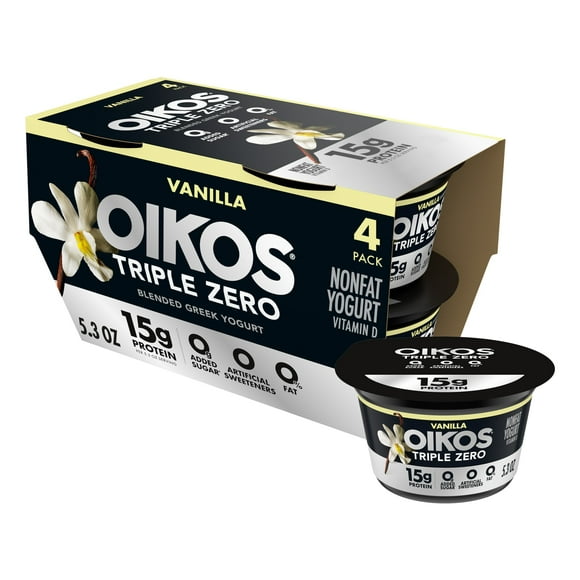 15g protein
Triple Zero Greek Yogurt - Vanilla
Amazon returns policy · secure checkout
10g protein12g proteinTags
High Protein Snacks Pro Editorial Team
Independently researched and editorially reviewed. We compare real nutrition labels and never accept payment for coverage.
Get the best new protein snacks in your inbox
Weekly picks and honest reviews — no spam, unsubscribe anytime.
More from the journal
Two Good vs Oikos Triple Zero (2026): 12g vs 15g Protein — Which Low-Sugar Greek Yogurt Wins?
Two Good and Oikos Triple Zero are Danone’s two flagship low-sugar Greek yogurts, and neither wins outright: Oikos Triple Zero has more protein per cup (15g vs 12g) but Two Good has less than half the sugar (2g vs 5g) — both are stevia-sweetened with 0g added sugar in the same 5.3oz cup. Here is the full verified head-to-head, built from our own nutrition-facts data on both brands, plus how each stacks up against Fage, siggi’s, Chobani Zero Sugar, and the higher-protein Oikos Pro.
Read more
Chobani Zero Sugar Nutrition Facts (2026): 11g Protein, 60 Calories, and Why the 0g Sugar Claim Is Real
Chobani Zero Sugar Greek yogurt delivers 11g of protein at 60 calories per 5.3oz cup with genuinely 0g of total sugar — not a rounding trick. It achieves zero sugar by substituting allulose (a rare sugar the FDA exempts from the sugar count) and stevia leaf extract for the natural milk sugars filtered out during ultra-filtration. Full 2026 nutrition label for all flavors, comparison against Two Good, Oikos Triple Zero, and regular Chobani, plus an honest breakdown of whether the carb count matters for low-carb or diabetic diets.
Read more
Oikos vs FAGE (2026): Which Greek Yogurt Wins on Protein, Sugar, Stevia, and Ingredients
Oikos wins raw protein per cup: Oikos Pro Vanilla packs 20g into a 130-calorie 5.3 oz cup by adding whey protein concentrate to ultra-filtered milk. FAGE wins protein per calorie and the ingredient list: FAGE Total 0% is skimmed milk and five live cultures, nothing else, at 16g of protein for 80 calories, the best ratio in this comparison. Every flavored Oikos cup is stevia-sweetened; no FAGE Total product is sweetened at all. Eight products compared on each brand's own September 2026 nutrition panel, with the protein-per-calorie math shown and an honest catch on every pick.
Read more