Chobani Zero Sugar Nutrition Facts (2026): 11g Protein, 60 Calories, and Why the 0g Sugar Claim Is Real
Chobani Zero Sugar Greek yogurt delivers 11g of protein at 60 calories per 5.3oz cup with genuinely 0g of total sugar — not a rounding trick. It achieves zero sugar by substituting allulose (a rare sugar the FDA exempts from the sugar count) and stevia leaf extract for the natural milk sugars filtered out during ultra-filtration. Full 2026 nutrition label for all flavors, comparison against Two Good, Oikos Triple Zero, and regular Chobani, plus an honest breakdown of whether the carb count matters for low-carb or diabetic diets.

Our top high-protein picks
Editor-selected and ready to buy. As an Amazon Associate we may earn from qualifying purchases.
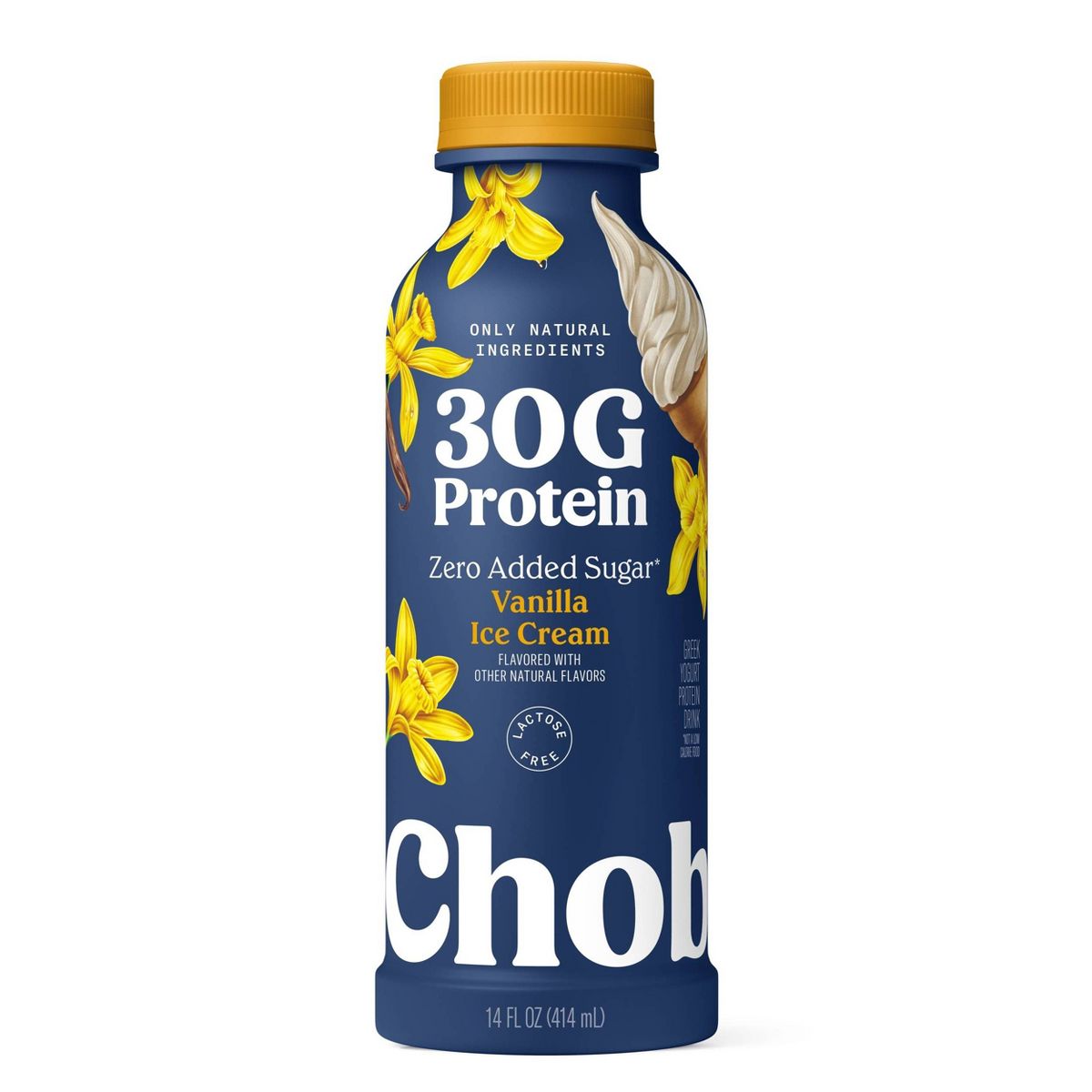 20g protein
Complete Protein Drink - Vanilla
Amazon returns policy · secure checkout
 10g protein
 12g protein
Quick Facts
Chobani Zero Sugar (5.3 oz / 150g cup, all flavors): 60 calories · 11g protein · 0g fat · 0g total sugar · 0g added sugar · ∼70mg sodium. Sweeteners: allulose + stevia leaf extract (Reb M) — no sucralose, no acesulfame K. Lactose-free. Figures from Chobani’s 2026 published nutrition labels at chobani.com.
Chobani Zero Sugar delivers 11g of protein at just 60 calories per 5.3oz cup with genuinely 0g of total sugar — not a rounding trick or a marketing exception, but a real outcome of replacing the milk sugars with allulose, a rare sugar the FDA does not count toward the total sugar line. At 11g of protein per 100 calories, the protein density sits above most flavored Greek yogurts and well above any comparable dessert-style snack. Every figure in this guide is from Chobani’s published 2026 nutrition labels at chobani.com; any number we could not verify from the label is shown as “—”.
Affiliate links — if you buy through them we earn a small commission at no extra cost to you. Nutrition figures from Chobani’s 2026 published labels.
Chobani Zero Sugar Nutrition Facts: Full Label
All values are per 5.3oz (150g) single-serve cup, the standard retail container. Chobani Zero Sugar is available in multiple flavors; the protein, fat, calorie, and sugar numbers are consistent across the line because the base formula is the same regardless of fruit flavoring.
| Nutrient | Per 5.3oz cup | Per 100g |
|---|---|---|
| Calories | 60 | 40 |
| Total Fat | 0g | 0g |
| Saturated Fat | 0g | 0g |
| Cholesterol | 10mg | 7mg |
| Sodium | ∼70mg | ∼47mg |
| Total Carbohydrates | ∼8g | ∼5g |
| Total Sugars | 0g | 0g |
| Added Sugars | 0g | 0g |
| Allulose (not in sugars) | ∼6–7g | ∼4–5g |
| Protein | 11g | 7g |
| Calcium | 15% DV | — |
| Protein per 100 cal | 18.3g | |
Core macros (calories, protein, fat, 0g sugar) are consistent across flavors per Chobani’s 2026 label. Sodium and exact carb values may vary by flavor by 5–10%. Allulose is listed separately on the label rather than in Total Sugars because the FDA exempts it — see the allulose section below. Total carbs include allulose.
Why the 0g Sugar Claim Is Real
Most “zero sugar” food labels achieve the claim either by keeping the serving size small enough to round down, or by replacing sugar with artificial sweeteners (sucralose, acesulfame K, aspartame) that don’t technically appear in the sugar count. Chobani Zero Sugar does neither — it uses allulose as the primary sweetener, with stevia leaf extract (Reb M) and monk fruit extract as secondary sweeteners.
What is allulose? Allulose is a monosaccharide that occurs naturally in small amounts in figs, raisins, and wheat. It tastes nearly identical to table sugar (roughly 70% as sweet), but the human body absorbs it without metabolizing it the way it metabolizes fructose or glucose. It passes through the small intestine into the bloodstream but is excreted in urine rather than broken down for energy — which is why it provides essentially zero net calories and has minimal impact on blood glucose or insulin. The FDA issued a specific guidance in 2019 exempting allulose from both “Total Sugars” and “Added Sugars” declarations, which is why Chobani can truthfully print 0g on the label. The allulose itself IS counted in Total Carbohydrates (which is why you see a carb count above 0 despite zero sugars), but its net metabolic impact is far lower than an equivalent amount of glucose or sucrose.
This is a meaningful distinction for people managing blood sugar or insulin levels. Studies on allulose have consistently shown little to no glycemic effect at food-scale doses, unlike the mixed evidence around some other non-nutritive sweeteners. It is not a controversial ingredient the way aspartame or acesulfame K has become — the mechanism by which it avoids being metabolized is well understood and has been confirmed in multiple independent trials.
Chobani Zero Sugar vs. Two Good, Oikos Triple Zero, and Regular Chobani
The low-sugar and zero-sugar Greek yogurt category has several options in 2026, each achieving the low-sugar number differently. Here is the comparison, per 5.3oz serving:
| Product (5.3oz) | Calories | Protein | Total Sugar | Added Sugar | Sweeteners |
|---|---|---|---|---|---|
| Chobani Zero Sugar | 60 | 11g | 0g | 0g | Allulose, stevia (Reb M), monk fruit |
| Two Good Greek Yogurt | 80 | 12g | 2g | 0g | Stevia (Reb M) |
| Oikos Triple Zero | 90 | 15g | 6g | 0g | Stevia, acesulfame K |
| Chobani Less Sugar | 120 | 12g | 9g | 0g | No artificial sweeteners |
| Regular Chobani Nonfat Vanilla | 120 | 12g | 15g | 9g | Cane sugar |
| Chobani Plain Nonfat (no flavor) | 90 | 16g | 6g | 0g | None (natural milk sugars) |
The key comparison: Chobani Zero Sugar wins on calories (60) and sugar (0g) but has lower protein than Oikos Triple Zero (15g) or plain nonfat Chobani (16g). Two Good is the closest competitor — 12g protein vs. 11g, 2g sugar vs. 0g, 80 vs. 60 calories. Oikos Triple Zero provides the most protein per cup (15g) but has 6g of natural sugar and uses acesulfame K. Plain nonfat Chobani has the most protein of any variety (16g per 5.3oz) with no artificial sweeteners, but 6g of natural milk sugar. If protein per cup is the primary goal, Oikos Triple Zero or plain Greek yogurt beats Chobani Zero Sugar. If the goal is the lowest sugar number or the fewest calories per gram of protein, Chobani Zero Sugar wins outright.
Is Chobani Zero Sugar Good for a Low-Carb or Diabetic Diet?
For most people managing blood sugar, yes — but the carb count deserves a note. The Total Carbohydrates on the label include allulose, which means the number appears higher than the net glycemic impact of the product. A 5.3oz cup shows approximately 8g total carbs but 0g total sugars. For people counting “net carbs” (total carbs minus fiber minus sugar alcohols), allulose is handled differently by different approaches: it is not a sugar alcohol, so strict net-carb math doesn’t automatically subtract it. However, its actual blood glucose impact is negligible in clinical studies, so many people tracking glycemic load do subtract it informally.
The protein content (11g per cup) combined with zero grams of sugar and 60 calories makes this yogurt a genuinely useful tool for a calorie-controlled or low-sugar diet. The protein is from ultra-filtered nonfat milk and is primarily casein and whey — complete proteins. The lactose is removed during ultrafiltration, so it is also appropriate for people with lactose intolerance. This is NOT medical advice — if you have diabetes or are actively managing blood sugar, confirm appropriateness with your healthcare provider and check how the product fits into your specific carb targets.
Frequently Asked Questions
How much protein is in Chobani Zero Sugar?
Chobani Zero Sugar contains 11g of protein per 5.3oz (150g) cup. This is consistent across all flavors: Vanilla, Strawberry, Mixed Berry, Peach, Blueberry, Black Cherry, and Strawberry Cheesecake. The protein comes from ultra-filtered nonfat milk and is a blend of casein and whey — both complete proteins. At 11g protein and 60 calories per cup, Chobani Zero Sugar provides 18.3g of protein per 100 calories, which is higher protein density than most flavored Greek yogurts and comparable to protein shakes.
Is Chobani Zero Sugar actually zero sugar?
Yes — the label shows 0g total sugars and 0g added sugars for all varieties, and this is accurate. The product uses allulose as its primary sweetener. Allulose is a monosaccharide found naturally in small amounts in certain fruits and grains; the FDA has determined it does not need to be declared under Total Sugars or Added Sugars because it is not metabolized the way conventional sugars are. It is not an artificial sweetener — it is a naturally-occurring sugar that the human body cannot break down. Secondary sweeteners are stevia leaf extract (Reb M) and monk fruit extract, both also excluded from the sugar count. There is no sucralose, aspartame, acesulfame K, or other synthetic sweetener.
How does Chobani Zero Sugar compare to Oikos Triple Zero?
Oikos Triple Zero delivers more protein (15g vs. 11g per 5.3oz cup) at slightly higher calories (90 vs. 60) with 6g of natural sugar. “Triple Zero” means zero added sugar, zero fat, and zero artificial sweeteners — not zero total sugar. Oikos Triple Zero uses stevia and acesulfame K as sweeteners. Chobani Zero Sugar uses allulose and stevia only — no acesulfame K. For the highest protein per cup, Oikos Triple Zero wins. For the absolute lowest sugar, fewest calories, and no acesulfame K, Chobani Zero Sugar wins.
Is Chobani Zero Sugar good for weight loss?
Yes, for most people. At 60 calories, 11g protein, 0g fat, and 0g sugar per 5.3oz cup, it delivers high satiety per calorie. The protein content supports lean muscle and helps sustain fullness longer than a comparable-calorie carbohydrate snack. The zero sugar means no spike-and-crash cycle from added sweeteners. For the general calorie-deficit goal of maximizing protein per calorie, Chobani Zero Sugar is one of the most efficient flavored yogurt options at any mainstream US retailer in 2026.
Is Chobani Zero Sugar lactose-free?
Yes — it uses ultra-filtered nonfat milk as its protein base. Ultrafiltration physically removes lactose as part of the process, the same mechanism Fairlife uses for its dairy milk and protein shakes. Unlike Lactaid, there is no lactase enzyme added; the lactose is simply not in the product. People with lactose intolerance can generally tolerate ultra-filtered dairy products without the digestive symptoms that regular milk causes.
Bottom line: Chobani Zero Sugar is the lowest-calorie (60 cal), lowest-sugar (0g) flavored Greek yogurt at mainstream US retail in 2026, with 11g of protein per 5.3oz cup and no artificial sweeteners. The zero-sugar claim is real — it comes from allulose, a naturally-occurring sugar that the body does not metabolize. The main tradeoff compared to Oikos Triple Zero or plain Greek yogurt is a lower protein count (11g vs. 15–16g per cup). If the goal is the lowest sugar combined with a meaningful protein hit in a dessert-flavored yogurt format, Chobani Zero Sugar is the straightforward pick. For higher protein at the cost of some natural milk sugar, see our Oikos Triple Zero nutrition facts, or compare the full low-sugar yogurt field in the Chobani Greek yogurt nutrition facts guide.
Shop our top high-protein picks
Editor-selected high-protein options related to this guide. As an Amazon Associate we may earn from qualifying purchases.
25g proteinComplete Advanced Nutrition - Vanilla
Amazon returns policy · secure checkout
20g proteinComplete Protein Drink - Vanilla
Amazon returns policy · secure checkout
10g proteinTags
High Protein Snacks Pro Editorial Team
Independently researched and editorially reviewed. We compare real nutrition labels and never accept payment for coverage.
Get the best new protein snacks in your inbox
Weekly picks and honest reviews — no spam, unsubscribe anytime.
More from the journal
FAGE vs Chobani Greek Yogurt (2026): Protein, Price, and Which Brand Actually Wins
At their standard plain nonfat servings, FAGE Total 0% delivers 18g of protein at 90 calories (20g per 100 cal) while Chobani Nonfat Plain gives 14g at 80 calories. Both use just milk and live cultures — no additives, no thickeners. FAGE wins on protein density; Chobani wins on price (typically $0.30–$0.50 cheaper per cup) and availability. 2026 full comparison across all three fat levels, ingredients, texture, and who should buy which.
Read more
Chobani Greek Yogurt Nutrition Facts 2026: 14g Protein per Cup — All Lines, Flip, and High Protein Drinks Compared
Chobani Nonfat Plain delivers 14g of protein and 80 calories per 5.3oz cup. The High Protein 20g line reaches 20g per 6.7oz cup; Zero Sugar drops to 60 calories with 11g protein. The Flip line is a treat-style snack (~11g protein, ~190 cal) — not a protein-first choice. Chobani also launched 20G and 30G High Protein Greek Yogurt Drink lines in 2025, both lactose-free with 0g added sugar. All 2026 nutrition data verified.
Read more
Oikos vs Chobani (2026): Which Greek Yogurt Wins on Protein, Sugar, Sweeteners and Lactose
Oikos wins on protein in every matchup: 18g vs 16g per 170g of plain, 15g vs 12g in a 150g vanilla cup, and 20g in a 5.3 oz Oikos Pro cup where Chobani needs 6.7 oz. Chobani wins on calories, sugar and lactose: Zero Sugar Vanilla is 60 calories with 0g sugar and lactose-free, and its plain nonfat comes in a one-ingredient single cup. Nine products compared on each brand’s own September 2026 labels, with every sweetener named and the honest catch on both.
Read more