Two Good vs Oikos Triple Zero (2026): 12g vs 15g Protein — Which Low-Sugar Greek Yogurt Wins?
Two Good and Oikos Triple Zero are Danone’s two flagship low-sugar Greek yogurts, and neither wins outright: Oikos Triple Zero has more protein per cup (15g vs 12g) but Two Good has less than half the sugar (2g vs 5g) — both are stevia-sweetened with 0g added sugar in the same 5.3oz cup. Here is the full verified head-to-head, built from our own nutrition-facts data on both brands, plus how each stacks up against Fage, siggi’s, Chobani Zero Sugar, and the higher-protein Oikos Pro.
The short answer
Our top Greek yogurt picks
Editor-selected and ready to buy. As an Amazon Associate we may earn from qualifying purchases.
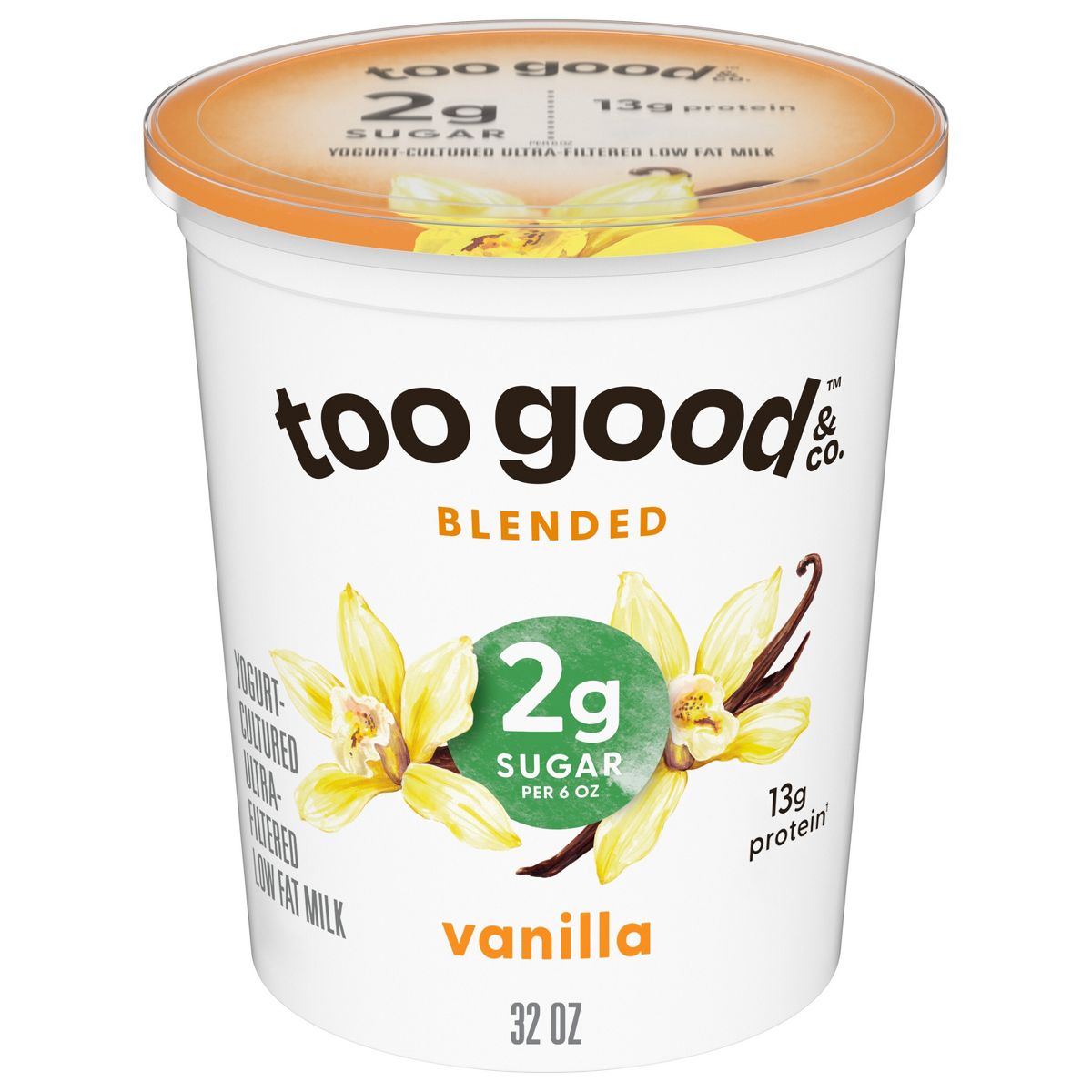 12g protein
Greek Yogurt - Vanilla
Amazon returns policy · secure checkout
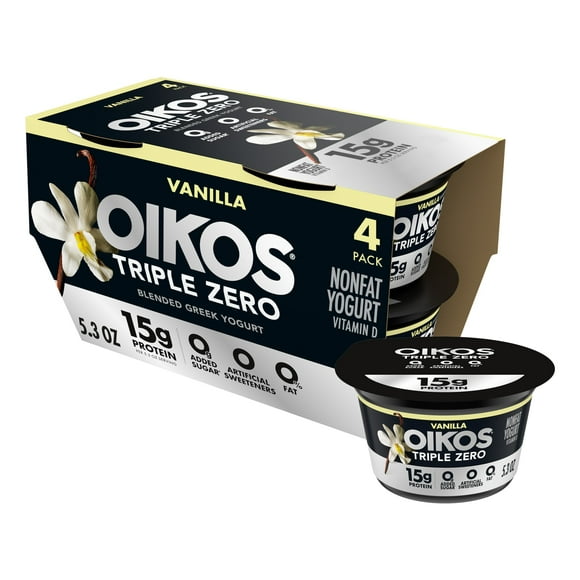 15g protein
Triple Zero Greek Yogurt - Vanilla
Amazon returns policy · secure checkout
 10g protein
The Quick Verdict
- Most protein per cup: Oikos Triple Zero — 15g vs Two Good’s 12g, same 5.3oz serving.
- Lowest sugar: Two Good — 2g total sugar vs Oikos Triple Zero’s 5g. Both are 0g added sugar.
- Best protein per calorie: Oikos Triple Zero — about 16.7g per 100 calories vs Two Good’s 15.0g.
- Fewest calories: Two Good — 80 calories vs Oikos Triple Zero’s 90.
- Sweetener: Tied. Both use stevia leaf extract only — no sucralose, no aspartame, in either brand’s standard cups.
- Most protein in the Danone family, any line: Oikos Pro — 20g per cup, using ultra-filtered milk. Neither Triple Zero nor Two Good reaches 20g.
- Widest availability: Roughly tied — both are Danone brands stocked at most major US grocery chains.
Side-by-Side: The Core Vanilla Cup
Both brands’ flagship flavor, in the same 5.3oz (150g) serving, is the fairest single comparison.
| Per 5.3oz cup (Vanilla) | Two Good | Oikos Triple Zero |
|---|---|---|
| Calories | 80 | 90 |
| Protein | 12g | 15g |
| Protein / 100 cal | 15.0g | 16.7g |
| Total sugar | 2g | 5g |
| Added sugar | 0g | 0g |
| Total carbs | 4g | 7g |
| Fat | 2g | 0g |
| Sweetener | Stevia leaf extract (reb M) | Stevia leaf extract |
| Maker | Danone | Danone |
The two brands are closer than the marketing suggests. Oikos Triple Zero’s extra 3g of protein comes with an extra 10 calories and 3g more total sugar — all naturally occurring lactose and fruit sugar, since neither cup has any added sugar. Two Good’s slow-straining process removes more of the natural milk sugar before flavoring, which is how it lands at just 2g total versus Oikos’s 5g. On fat, Two Good actually carries slightly more (2g vs Oikos’s 0g), since Oikos Triple Zero is made from fully nonfat (skim) milk and Two Good is a lowfat formulation.
Every Flavor, Both Brands
The headline numbers hold consistently across each brand’s core flavor lineup — neither brand varies much flavor to flavor because the fruit is added as concentrated puree and natural flavors rather than a sugary fruit-on-the-bottom layer.
| Flavor | Brand | Calories | Protein | Total Sugar |
|---|---|---|---|---|
| Vanilla | Two Good | 80 | 12g | 2g |
| Strawberry | Two Good | 80 | 12g | 2g |
| Mixed Berry | Two Good | 80 | 12g | 2g |
| Peach | Two Good | 80 | 12g | 2g |
| Vanilla | Oikos Triple Zero | 90 | 15g | 5g |
| Strawberry | Oikos Triple Zero | 90 | 15g | 5g |
| Mixed Berry | Oikos Triple Zero | 90 | 15g | 5g |
| Salted Caramel | Oikos Triple Zero | 90 | 15g | 5g |
Two Good also sells Blueberry and Strawberry Banana at the same 12g protein / 2g sugar numbers; Oikos Triple Zero’s lineup extends to Banana Crème, Cherry, and Peach at the same 15g protein / 0g added sugar. Both brands also sell larger 32oz tub formats at a bigger ¾-cup (170g) serving — Two Good’s tub lists roughly 90 calories and 13g protein per serving.
Sweeteners: Actually a Tie, Not a Trade-Off
It would be easy to assume one of these brands leans on an artificial sweetener and the other doesn’t — that’s not the case. Both Two Good and Oikos Triple Zero are sweetened exclusively with stevia leaf extract (Two Good specifically uses the reb M form). Neither brand’s standard cups contain sucralose, aspartame, allulose, or monk fruit. If you like or don’t mind the taste of stevia, this is a non-issue either way. If you dislike stevia’s aftertaste or want to avoid non-nutritive sweeteners altogether, neither brand is for you — a plain unsweetened cup like Fage Total 0% is the better fit.
How Both Stack Up Against the Rest of the Field
Two Good and Oikos Triple Zero don’t exist in a vacuum — here is how each compares to the other major low-sugar, high-protein yogurt options, using the same verified serving-size data from our individual brand guides.
| Yogurt | Serving | Calories | Protein | Total Sugar | Protein / 100 cal |
|---|---|---|---|---|---|
| Fage Total 0% (plain) | ¾ cup (170g) | 90 | 18g | 5g | 20.0g |
| Chobani Zero Sugar Vanilla | 5.3oz (150g) | 60 | 11g | 0g | 18.3g |
| Oikos Triple Zero Vanilla | 5.3oz (150g) | 90 | 15g | 5g | 16.7g |
| Two Good Vanilla | 5.3oz (150g) | 80 | 12g | 2g | 15.0g |
| siggi’s Vanilla (nonfat skyr) | 5.3oz (150g) | 110 | 16g | 9g | 14.5g |
Neither Two Good nor Oikos Triple Zero wins the whole field. Plain Fage Total 0% beats both on protein density (20g per 100 cal) but is unsweetened, so it’s not a like-for-like comparison against two flavored, sweetened cups. Chobani Zero Sugar is the only truly 0g-total-sugar option here, edging out Two Good on that front, though it carries less protein (11g). siggi’s delivers more absolute protein than either Two Good or Oikos Triple Zero (16g) but at the highest sugar count of the group (9g, from real cane sugar) and the highest calorie count (110). Full breakdown of the whole category is in our Greek yogurt brands ranked by protein guide and siggi’s vs Chobani head-to-head.
The Third Option: Oikos Pro (20g Protein)
If neither Two Good nor Oikos Triple Zero gives you enough protein, Danone also sells Oikos Pro — a separate line that uses ultra-filtered milk (the same process behind Fairlife Core Power) to reach 20g of protein in the same 5.3oz cup, at 140 calories and 0g added sugar. That’s 33% more protein than Triple Zero for about 56% more calories, and it works out to roughly 14.3g of protein per 100 calories — less efficient than Triple Zero’s 16.7g, but a genuinely higher absolute-protein option if you want more than either Two Good or Triple Zero delivers without leaving the Danone lineup. See the full Triple Zero vs Pro breakdown in our Oikos Triple Zero nutrition guide.
Which One Should You Buy?
- Want the most protein for the smallest calorie bump: Oikos Triple Zero — 15g for 90 calories, the better protein-per-calorie ratio of the two.
- Counting sugar grams closely, or blood-sugar-conscious: Two Good — 2g total sugar is less than half of Oikos Triple Zero’s 5g.
- Strict calorie budget, fewest calories per cup: Two Good — 80 calories vs 90.
- Want more protein than either delivers: Oikos Pro (20g, 140 cal) or plain Fage Total 0% (18g, 90 cal, unsweetened).
- Avoiding stevia specifically: Neither — both use stevia leaf extract as the only sweetener. Try an unsweetened plain cup instead.
- Keto or low-carb: Two Good has fewer total carbs per cup (4g vs Oikos Triple Zero’s 7g), a modest edge for a tight carb budget.
Who Should Skip Both
- Anyone avoiding all non-nutritive sweeteners. Both brands’ standard cups rely entirely on stevia. Choose a plain, unsweetened cup like Fage Total 0% or plain Chobani instead.
- Anyone chasing maximum absolute protein per cup. Both top out well under 20g. Oikos Pro (20g) or a plain strained Greek yogurt closer to 18g will get you further per container.
- Dairy allergy or vegan diets. Both are dairy-based. See our dairy-free protein options roundup for alternatives.
Frequently Asked Questions
Which has more protein, Two Good or Oikos Triple Zero?
Oikos Triple Zero, by 3g — 15g of protein per 5.3oz cup versus Two Good’s 12g. Oikos also wins on protein per calorie (16.7g per 100 cal vs Two Good’s 15.0g).
Which has less sugar, Two Good or Oikos Triple Zero?
Two Good, clearly — 2g of total sugar per cup versus Oikos Triple Zero’s 5g. Both have 0g of added sugar; the difference is how much naturally occurring lactose and fruit sugar survives each brand’s straining and flavoring process.
Do Two Good and Oikos Triple Zero use artificial sweeteners?
No. Both are sweetened exclusively with stevia leaf extract — Two Good specifically uses the reb M form. Neither contains sucralose, aspartame, allulose, or monk fruit in its standard cups.
Are Two Good and Oikos Triple Zero made by the same company?
Yes. Both are Danone brands, alongside Light & Fit and the rest of the Oikos range. Danone also makes Oikos Pro, a higher-protein (20g) ultra-filtered-milk line that sits above both Two Good and Triple Zero on absolute protein.
Which is better for weight loss, Two Good or Oikos Triple Zero?
Both are strong picks for a calorie deficit. Two Good has the lower calorie count (80 vs 90) and lower sugar, which suits a tight calorie budget. Oikos Triple Zero has more protein for slightly more calories, which can help satiety more per cup. Neither has any added sugar. See our best high-protein snacks for weight loss guide for the wider field.
Is Two Good or Oikos Triple Zero keto-friendly?
Both fit comfortably into most keto or low-carb budgets. Two Good has 4g of total carbs per cup; Oikos Triple Zero has about 6–7g. Neither is high-fat in the classic keto sense — both lean protein-forward with minimal fat.
What’s the difference in texture and taste?
Both are smooth, blended Greek yogurts rather than the thicker, denser style of a strained plain cup or Icelandic skyr. Taste-wise, both rely on stevia for sweetness, so the flavor profile is similar between the two — the main differences buyers notice are that Two Good tastes slightly less sweet overall (consistent with its lower sugar count) and Oikos Triple Zero’s slightly higher sugar and protein give it a marginally richer mouthfeel.
Bottom line: Oikos Triple Zero wins on protein (15g vs 12g) and protein-per-calorie efficiency (16.7g vs 15.0g per 100 cal); Two Good wins on sugar (2g vs 5g) and total calories (80 vs 90). Both are Danone brands sweetened only with stevia, both carry 0g added sugar, and neither is the highest-protein option in its own family — Oikos Pro (20g) and plain Fage Total 0% (18g) both beat them on absolute protein. Pick Two Good if sugar and calories are your priority; pick Oikos Triple Zero if you want more protein for a small calorie cost. Full individual breakdowns are in our Two Good nutrition guide and Oikos Triple Zero nutrition guide, and the full category standings are in our Greek yogurt brands ranked by protein guide. Browse more high-protein dairy options in the protein snacks directory.
Shop our top Greek yogurt picks
Editor-selected high-protein options related to this guide. As an Amazon Associate we may earn from qualifying purchases.
12g proteinGreek Yogurt - Vanilla
Amazon returns policy · secure checkout
15g proteinTriple Zero Greek Yogurt - Vanilla
Amazon returns policy · secure checkout
10g proteinTags
High Protein Snacks Pro Editorial Team
Independently researched and editorially reviewed. We compare real nutrition labels and never accept payment for coverage.
Get the best new protein snacks in your inbox
Weekly picks and honest reviews — no spam, unsubscribe anytime.
More from the journal
Oikos vs FAGE (2026): Which Greek Yogurt Wins on Protein, Sugar, Stevia, and Ingredients
Oikos wins raw protein per cup: Oikos Pro Vanilla packs 20g into a 130-calorie 5.3 oz cup by adding whey protein concentrate to ultra-filtered milk. FAGE wins protein per calorie and the ingredient list: FAGE Total 0% is skimmed milk and five live cultures, nothing else, at 16g of protein for 80 calories, the best ratio in this comparison. Every flavored Oikos cup is stevia-sweetened; no FAGE Total product is sweetened at all. Eight products compared on each brand's own September 2026 nutrition panel, with the protein-per-calorie math shown and an honest catch on every pick.
Read more
siggi's vs Oikos (2026): Skyr vs Greek Yogurt Head-to-Head on Protein, Sugar, Sweeteners, and Ingredients
Oikos wins raw protein per cup — Oikos Pro Vanilla packs 20g into a 130-calorie 5.3oz cup by adding whey protein concentrate to ultra-filtered milk — while siggi's wins the ingredient list: its Plain Nonfat skyr is cultured skim milk and five live cultures, nothing else, at 16g of protein for 90 calories. Plain against plain at the same 170g serving, siggi's edges Oikos Triple Zero 19g to 18g. The deciding factors are stevia (in every flavored Oikos cup and in siggi's Lower Sugar line), real cane sugar in siggi's flavored cups, and how each brand gets to its protein number. Every figure verified from each brand's own 2026 nutrition panel.
Read more
Oikos Triple Zero vs :ratio PROTEIN Yogurt (2026): 90 Calories vs 170 — Which High-Protein Cup Actually Wins?
Oikos Triple Zero delivers 15g of protein at 90 calories with stevia sweetener; :ratio PROTEIN delivers 25g at 170 calories with sucralose. Oikos wins on protein per calorie (16.7g vs 14.7g per 100 cal) and lowest net carbs (6g vs 9g); ratio wins on absolute protein per cup and cost per gram. Verified nutrition tables for every flavor of both brands, plus Chobani High Protein, Two Good, and FAGE — and which one actually wins for weight loss, maximum protein, sweetener avoidance, and budget.
Read more