Chobani Greek Yogurt Nutrition Facts 2026: 14g Protein per Cup — All Lines, Flip, and High Protein Drinks Compared
Chobani Nonfat Plain delivers 14g of protein and 80 calories per 5.3oz cup. The High Protein 20g line reaches 20g per 6.7oz cup; Zero Sugar drops to 60 calories with 11g protein. The Flip line is a treat-style snack (~11g protein, ~190 cal) — not a protein-first choice. Chobani also launched 20G and 30G High Protein Greek Yogurt Drink lines in 2025, both lactose-free with 0g added sugar. All 2026 nutrition data verified.
The short answer
Our top high-protein picks
Editor-selected and ready to buy. As an Amazon Associate we may earn from qualifying purchases.
 20g protein
Complete Protein Drink - Vanilla
Amazon returns policy · secure checkout
 10g protein
 12g protein
Chobani Greek Yogurt Nutrition Facts: All Lines at a Glance
Chobani sells several distinct Greek yogurt lines in the US. The core lines are the standard Nonfat (0%), the Zero Sugar, and the High Protein 20g. The Whole Milk line is sold primarily in 32oz tubs rather than individual single-serve cups. All per-cup figures below are cross-verified from multiple nutrition databases and grocery retailer product listings.
| Product | Serving | Calories | Protein | Total Sugar | Added Sugar | Fat | Sweetener |
|---|---|---|---|---|---|---|---|
| Nonfat Plain (0%) | 5.3oz (150g) | 80 | 14g | 5g | 0g | 0g | None |
| Nonfat Vanilla | 5.3oz (150g) | 110 | 12g | ~15g | ~13g | 0g | Cane sugar |
| Zero Sugar Vanilla | 5.3oz (150g) | 60 | 11g | 0g | 0g | 0g | Allulose, stevia, monk fruit |
| High Protein 20g Vanilla | 6.7oz (190g) | 140 | 20g | 0g added | 0g | 3g | None added |
| Whole Milk Plain | ¾ cup (170g) | 170 | 16g | ~6g | 0g | 9g | None |
The pattern across lines mirrors every other Greek yogurt brand: plain always carries the most protein per calorie; flavored varieties with real sugar cost more calories; zero-sugar lines cut calories by replacing sugar with non-nutritive sweeteners. The High Protein 20g line achieves its protein count partly through a larger cup (6.7oz vs. 5.3oz for the core line) and through ultra-filtered milk, which concentrates protein while removing lactose.
Chobani Nonfat Plain: The Core Product
The standard Nonfat Plain is Chobani’s flagship product and still the simplest, most protein-efficient option in the lineup. Per 5.3oz (150g) cup:
- Calories: 80
- Protein: 14g
- Total Fat: 0g
- Total Carbohydrates: 6g
- Total Sugars: 5g (0g added sugar — all naturally occurring lactose)
- Sodium: 55mg
At 17.5g of protein per 100 calories, the Nonfat Plain competes directly with siggi’s Nonfat Plain (17g protein, 100 cal) and beats Oikos Triple Zero (15g protein, 120 cal) on protein density. The ingredient list is deliberately short: cultured nonfat milk, and live active cultures. No thickeners, no added sweeteners, no gums in the plain variety.
Chobani Nonfat Flavored Varieties
The flavored nonfat cups (Vanilla, Strawberry, Mixed Berry, Blueberry, and others) use cane sugar as the primary sweetener. Per 5.3oz (150g) cup, Vanilla is the lightest flavored option:
- Vanilla: 110 calories, 12g protein, 0g fat, ~15g total sugar (~13g added cane sugar)
Fruit-flavored varieties (strawberry, blueberry, etc.) tend to run slightly higher in total sugar due to the addition of fruit and more sugar, typically in the 120–130 calorie range with 12g protein. Because protein drops from 14g (plain) to 12g in flavored cups, flavored Chobani nonfat is more calorie-dense relative to protein than plain — though still a reasonable snack at 110–130 calories per cup.
Chobani Zero Sugar Line
The Zero Sugar line is Chobani’s lowest-calorie yogurt and uses a blend of non-nutritive sweeteners to achieve 0g total sugar. Per 5.3oz (150g) cup:
- Calories: 60
- Protein: 11g
- Total Fat: 0g
- Total Carbohydrates: 5g
- Total Sugars: 0g (including 0g added sugar)
The sweetener system is allulose (a rare sugar that provides bulk and some sweetness without raising blood glucose in the way sucrose does), stevia leaf extract (reb M), and monk fruit extract. Allulose is classified by the FDA as generally recognized as safe (GRAS) and does not count toward total sugar on US nutrition labels because it is metabolized differently from sucrose. The net result: 60 calories and a sweetness level that most people find close to a normally-sweetened yogurt without the sugar spike.
The protein trade-off is real: 11g for 60 calories versus 14g for 80 calories in plain. If your goal is strictly maximum protein per calorie, plain still wins (17.5g per 100 cal vs. 18.3g per 100 cal for Zero Sugar, which is actually slightly better, but the absolute protein is 3g lower per cup).
Chobani High Protein 20g Line
The High Protein line is Chobani’s answer to the protein density arms race in the Greek yogurt category. It uses ultra-filtered milk (a process that concentrates protein by removing lactose) in a slightly larger cup. Per 6.7oz (190g) cup:
- Calories: 140
- Protein: 20g
- Total Fat: ~3g
- Total Carbohydrates: ~9g
- Added Sugar: 0g
- Lactose-free (the ultra-filtration process removes most lactose)
Available in Vanilla, Mango, Raspberry Lemon, and Cherry Berry flavors. All flavors hit 20g protein with 0g added sugar — sweetness in the flavored varieties comes from the fruit itself plus the naturally sweeter taste of ultra-filtered milk. At 140 calories for 20g protein, this line delivers the best absolute protein count of any Chobani yogurt, though it costs about 1.75× more calories per cup than the Zero Sugar line.
Chobani Whole Milk Plain
The Whole Milk Plain is sold primarily in 32oz tubs (not widely available in single-serve 5.3oz cups). Per ¾ cup (170g) from the large container:
- Calories: 170
- Protein: 16g
- Total Fat: 9g (5g saturated)
- Total Sugars: ~6g (0g added)
The higher fat content comes from using whole milk rather than skim milk. Protein is actually higher than the nonfat version at the same serving size (16g vs. 14g per 150g), which may seem counterintuitive — this reflects a different straining ratio and the natural protein concentration in whole-milk yogurt. Choose the whole milk version if you prefer a richer, creamier texture and don’t mind the additional calories from fat. It’s a good choice for people who are not restricting fat, find nonfat yogurt too thin or tart, or want a more filling post-workout snack.
Chobani Flip: The Treat-Style Line (Not the One for Protein Goals)
Chobani Flip is one of the brand’s best-known products — a low-fat Greek yogurt cup with a separate mix-in compartment filled with toppings such as cookie pieces, granola, or chocolate-covered almonds. It is designed as a dessert-style snack, not a protein delivery vehicle, and the nutrition reflects that clearly.
A Chobani Flip cup runs approximately 190 calories at around 11g of protein — well below the 17.5g of protein per 100 calories in Chobani Nonfat Plain. The smaller yogurt portion (shared cup space with the mix-in compartment) and calorie-dense toppings push the calorie count up without adding meaningful protein. The base is low-fat, not nonfat, which adds additional calories compared to the plain line.
| Product (per cup) | Calories | Protein | Protein / 100 cal | Best use |
|---|---|---|---|---|
| Chobani Flip (e.g. Cookies & Cream, ~4.5oz) | ~190 | ~11g | ~5.8g | Treat snack, dessert substitute |
| Chobani Nonfat Plain (5.3oz) | 80 | 14g | 17.5g | High-protein, low-calorie eating |
| Chobani High Protein 20g (6.7oz) | 140 | 20g | 14.3g | Maximum protein per cup |
Flip is a reasonable dessert substitute or casual snack — it beats a candy bar on protein and comes with live cultures. It is not competitive with protein bars, plain Greek yogurt, or the High Protein line for protein efficiency. If your reason for buying it is protein, any of the nonfat, Zero Sugar, or High Protein Chobani lines will deliver two to three times the protein-per-calorie value.
Chobani High Protein Drinks: 20G and 30G Lines (New in 2025)
In 2025, Chobani entered the ready-to-drink protein beverage market with two bottled Greek yogurt drink lines: the Chobani 20G High Protein Greek Yogurt Drink and the Chobani 30G High Protein Greek Yogurt Drink. Both are made from ultra-filtered Greek yogurt (no protein powder or concentrates added), both are lactose-free, and both carry 0g added sugar.
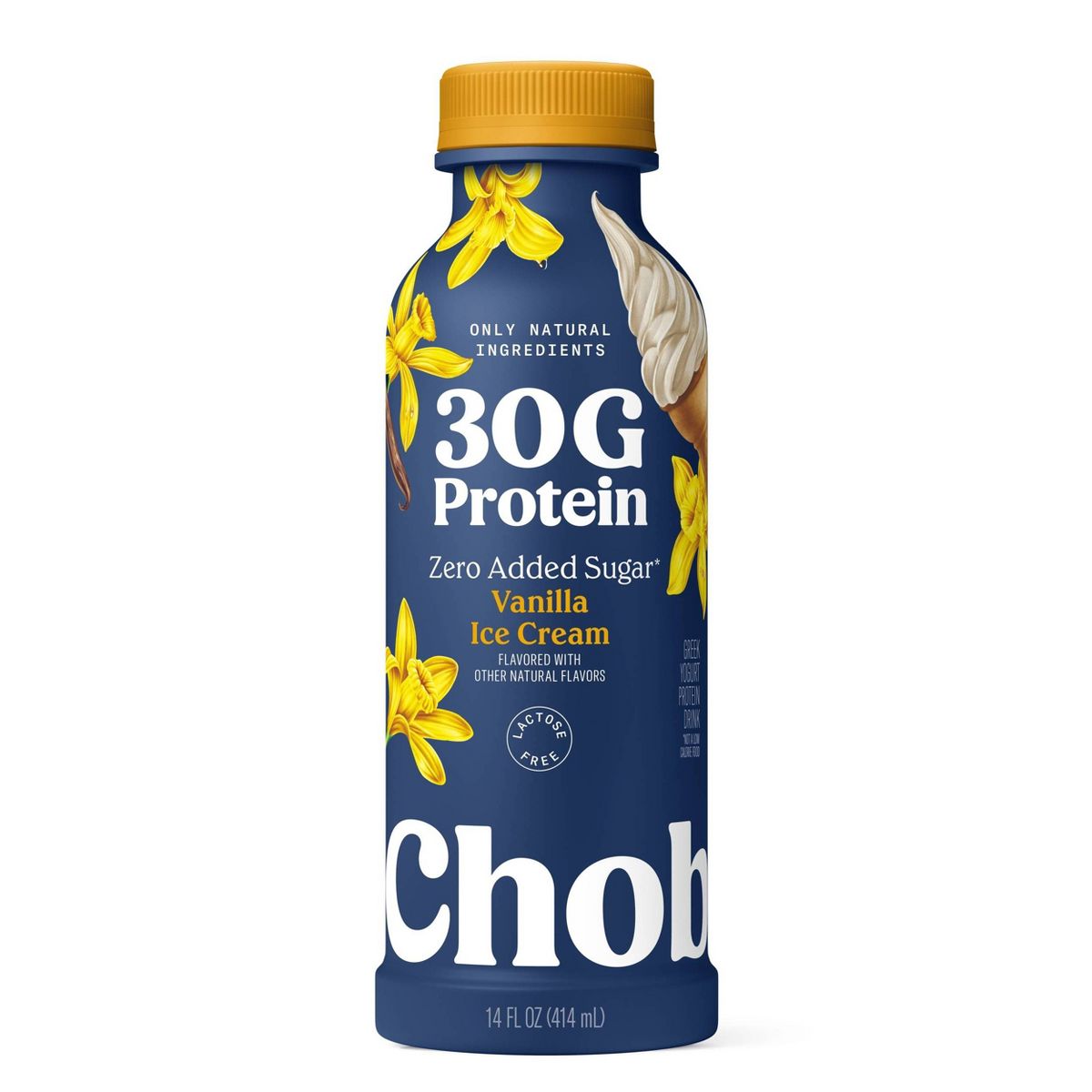
The 20G line delivers 20g of protein per bottle with 0g added sugar, available in flavors including Mixed Berry Vanilla, Strawberries & Cream, Peaches & Cream, Vanilla, and Cookies & Cream. The 30G line delivers 30g of protein in a 14 fl oz (414 mL) bottle — available in Strawberries & Cream, Vanilla Ice Cream, and Mango — putting it head-to-head with Fairlife Nutrition Plan (30g / 11.5 fl oz) and Premier Protein (30g / 11.5 fl oz) on protein count, while differentiating on the “real dairy, no added powder” positioning. For a full comparison of all major ready-to-drink protein shakes, see our protein snacks directory.
Chobani vs. FAGE, siggi’s, Oikos Triple Zero, and Two Good
Chobani’s core Nonfat Plain competes in the most crowded segment of the Greek yogurt market. Here is how it compares to the other major brands on protein, calories, sugar, and sweetener approach. Note that serving sizes differ by brand, so the per-100-calorie protein column is the fairest comparison.
| Brand / Product | Serving | Cal | Protein | Total Sugar | Added Sugar | Protein / 100 cal | Sweeteners |
|---|---|---|---|---|---|---|---|
| Chobani Nonfat Plain | 5.3oz (150g) | 80 | 14g | 5g | 0g | 17.5g | None |
| Chobani Zero Sugar Vanilla | 5.3oz (150g) | 60 | 11g | 0g | 0g | 18.3g | Allulose, stevia, monk fruit |
| Chobani High Protein 20g | 6.7oz (190g) | 140 | 20g | 0g added | 0g | 14.3g | None added |
| FAGE Total 0% Plain | ¾ cup (170g) | 90 | 18g | 6g | 0g | 20g | None |
| siggi’s Nonfat Plain | 5.3oz (150g) | 100 | 17g | 5g | 0g | 17g | None |
| Oikos Triple Zero Vanilla | 5.3oz (150g) | 120 | 15g | 6g | 0g | 12.5g | Stevia, sucralose |
| Two Good Vanilla | 5.3oz (150g) | 90 | 12g | 2g | 0g | 13.3g | Allulose, stevia |
A few takeaways from this comparison. FAGE Total 0% leads on pure protein density at 20g per 100 calories — see our FAGE Total 0% nutrition guide for full details. siggi’s Nonfat Plain is essentially tied with Chobani Nonfat Plain on protein density at similar calorie levels, with siggi’s 3g ahead in absolute protein per cup — full details in our siggi’s nutrition guide. Oikos Triple Zero uses stevia and sucralose to reach 0g added sugar while keeping protein at 15g, covered in our Oikos Triple Zero nutrition guide. Two Good has the lowest total sugar of the flavored options (2g per cup) via allulose and stevia, but protein (12g) is lower — full breakdown in our Two Good nutrition guide.
Where does Chobani fit? The Nonfat Plain is the most ubiquitous option — available at virtually every US grocery chain, competitively priced, and widely available in multipack formats. It does not lead the category on pure protein density, but it is the most accessible choice for most buyers. If you specifically want the highest protein per calorie, FAGE or siggi’s plain will edge it out. If you want 0g total sugar with 60 calories, Chobani Zero Sugar and Two Good are the options to compare.
Is Chobani Greek Yogurt Healthy?
For most goals, yes — with the usual caveats about which variety you choose. The Nonfat Plain at 80 calories and 14g protein is a nutritionally clean, high-protein choice with a short ingredient list. The main risk in the category is buying flavored cups and treating them like the plain version: a Nonfat Vanilla cup at 110 calories with ~13g of added cane sugar is closer to a light dessert than a lean protein snack.
- For weight loss or calorie control: Nonfat Plain or Zero Sugar are the cleanest options. The plain keeps added sugar at zero; the Zero Sugar cuts total calories to 60 per cup.
- For muscle building or post-workout recovery: The High Protein 20g line at 20g per cup is the strongest pick. Alternatively, a 32oz tub of Nonfat Plain lets you serve a larger portion (¾–1 cup) for 90–120 cal and up to 18–20g protein.
- For people with lactose intolerance: The High Protein 20g line is lactose-free due to the ultra-filtration process. Standard Chobani lines are not lactose-free, though Greek yogurt in general has lower lactose than regular yogurt due to the straining process.
- For blood sugar management: Zero Sugar is the obvious choice (0g total sugar), but note that allulose and stevia are the sweeteners — those with concerns about non-nutritive sweeteners should opt for plain instead.
Frequently Asked Questions
How much protein is in Chobani Greek yogurt?
It depends on the line. Chobani Nonfat Plain has 14g of protein per 5.3oz (150g) cup. The Zero Sugar line has 11g per 5.3oz cup. The High Protein 20g line delivers 20g per 6.7oz (190g) cup. Whole Milk Plain has approximately 16g per ¾ cup (170g) from the large tub. Flavored nonfat cups (vanilla, strawberry, blueberry) typically have 12g per 5.3oz cup.
How many calories are in Chobani Greek yogurt?
Nonfat Plain is 80 calories per 5.3oz cup. Zero Sugar is 60 calories per 5.3oz cup. Nonfat Vanilla is 110 calories. High Protein 20g is 140 calories per 6.7oz cup. Whole Milk Plain is 170 calories per ¾ cup (170g) from the large tub. Flavored nonfat cups vary from about 120–130 calories depending on flavor.
Does Chobani Greek yogurt have added sugar?
The plain varieties (Nonfat Plain, Whole Milk Plain) have 0g added sugar — all sugar is naturally occurring lactose. The Zero Sugar line also has 0g added sugar (sweetened with allulose, stevia, and monk fruit). The High Protein 20g line has 0g added sugar. The flavored nonfat varieties use cane sugar: Vanilla has approximately 13g of added sugar per 5.3oz cup, and fruit-flavored varieties run similarly.
Is Chobani better than FAGE or siggi’s for protein?
On pure protein density, FAGE Total 0% (18g per 170g/90 cal) and siggi’s Nonfat Plain (17g per 150g/100 cal) both edge out Chobani Nonfat Plain (14g per 150g/80 cal). However, all three are close in protein-per-calorie terms, and Chobani is significantly more widely available and often less expensive per cup. See our FAGE nutrition guide and siggi’s nutrition guide for detailed comparisons.
What sweeteners does Chobani use?
Chobani plain varieties use no sweeteners at all. Flavored nonfat varieties use cane sugar. The Zero Sugar line uses allulose (a low-calorie rare sugar that does not raise blood glucose like sucrose), stevia leaf extract (reb M), and monk fruit extract — all classified as GRAS by the FDA. The High Protein 20g line has 0g added sugar and uses no non-nutritive sweeteners, relying on the natural sweetness of ultra-filtered milk and fruit in flavored cups.
Is Chobani Flip good for protein?
No — Chobani Flip is not designed as a protein product. It delivers roughly 11g of protein at approximately 190 calories per cup, which works out to about 5 to 6g of protein per 100 calories — compared to 17.5g per 100 cal for Chobani Nonfat Plain. The smaller yogurt portion and calorie-dense mix-in toppings (cookie pieces, granola, chocolate-covered almonds) are what drive up the calories without adding meaningful protein. For protein goals, choose Chobani Nonfat Plain (14g / 80 cal), Zero Sugar (11g / 60 cal), or the High Protein 20g line (20g / 140 cal). Flip is best understood as a dessert-style snack that provides some yogurt protein on the side.
Bottom line: Chobani Nonfat Plain is the most accessible high-protein Greek yogurt in the US at 14g protein and 80 calories per 5.3oz cup. The Zero Sugar line is the lowest-calorie option (60 cal, 11g protein) using allulose and stevia, while the High Protein 20g line is the highest-protein option at 20g per cup. For maximum protein density in a plain yogurt, FAGE Total 0% or siggi’s Nonfat Plain edge Chobani plain on grams per cup, but Chobani’s broad availability and competitive pricing make it the default for most buyers. Explore more high-protein dairy options in the protein snacks directory.
Shop our top high-protein picks
Editor-selected high-protein options related to this guide. As an Amazon Associate we may earn from qualifying purchases.
25g proteinComplete Advanced Nutrition - Vanilla
Amazon returns policy · secure checkout
20g proteinComplete Protein Drink - Vanilla
Amazon returns policy · secure checkout
10g proteinTags
High Protein Snacks Pro Editorial Team
Independently researched and editorially reviewed. We compare real nutrition labels and never accept payment for coverage.
Get the best new protein snacks in your inbox
Weekly picks and honest reviews — no spam, unsubscribe anytime.
More from the journal
siggi's vs Chobani (2026): 17g vs 14g Protein Per Cup — Which High-Protein Yogurt Actually Wins?
siggi's plain nonfat skyr packs 17g of protein into 100 calories; Chobani's plain nonfat Greek yogurt packs 14g into just 80 calories — nearly identical protein density from two very different philosophies. Chobani offers far more range (a Zero Sugar line, a 20g High Protein line, and 20g/30g ready-to-drink protein shakes); siggi's stays narrower and never touches a non-nutritive sweetener in any product, plain or flavored. Here is the full verified head-to-head, built from our own nutrition-facts data on both brands.
Read more
Oikos vs Chobani (2026): Which Greek Yogurt Wins on Protein, Sugar, Sweeteners and Lactose
Oikos wins on protein in every matchup: 18g vs 16g per 170g of plain, 15g vs 12g in a 150g vanilla cup, and 20g in a 5.3 oz Oikos Pro cup where Chobani needs 6.7 oz. Chobani wins on calories, sugar and lactose: Zero Sugar Vanilla is 60 calories with 0g sugar and lactose-free, and its plain nonfat comes in a one-ingredient single cup. Nine products compared on each brand’s own September 2026 labels, with every sweetener named and the honest catch on both.
Read more
FAGE vs Chobani Greek Yogurt (2026): Protein, Price, and Which Brand Actually Wins
At their standard plain nonfat servings, FAGE Total 0% delivers 18g of protein at 90 calories (20g per 100 cal) while Chobani Nonfat Plain gives 14g at 80 calories. Both use just milk and live cultures — no additives, no thickeners. FAGE wins on protein density; Chobani wins on price (typically $0.30–$0.50 cheaper per cup) and availability. 2026 full comparison across all three fat levels, ingredients, texture, and who should buy which.
Read more