think! High Protein Bar Nutrition Facts: 20g Protein, No Artificial Sweeteners — All Flavors Compared
think! High Protein bars deliver 20g of protein at 230–240 calories with no sucralose, aspartame, or Ace-K — the sweetener is maltitol syrup, a real sugar alcohol. Verified 2026 nutrition facts for every core flavor, a full head-to-head against Quest, Barebells, ONE Bar, and KIND Protein Max, and an honest take on the maltitol question.
The short answer
Our top protein bar picks
Editor-selected and ready to buy. As an Amazon Associate we may earn from qualifying purchases.
Shopping for think!? High Protein Bar, Chunky Peanut Butter · High Protein Bar - Brownie Crunch · Crispy Squares Marshmallow Crunch
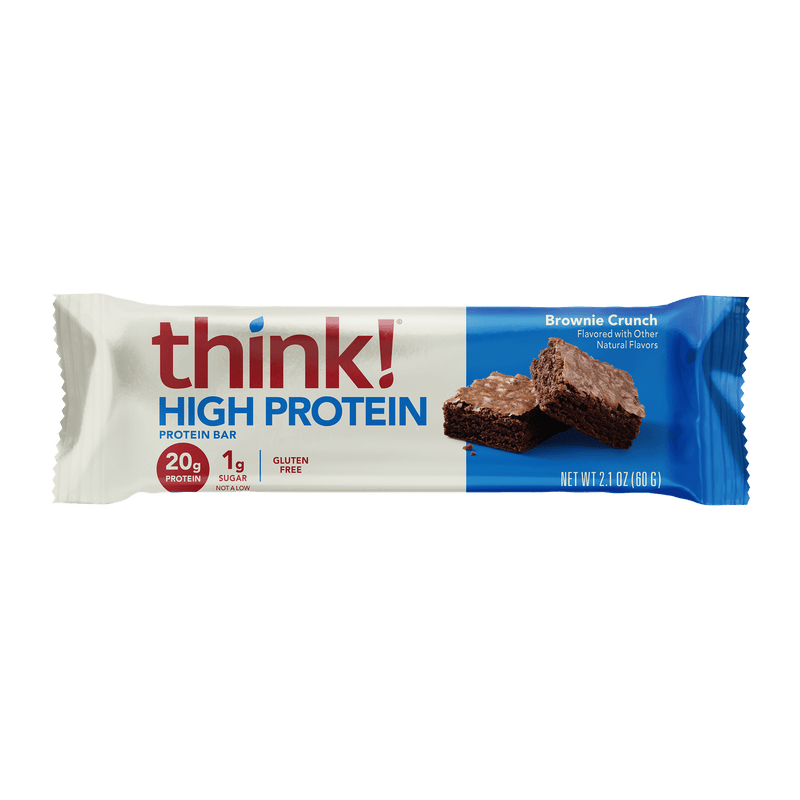 20g protein20g protein
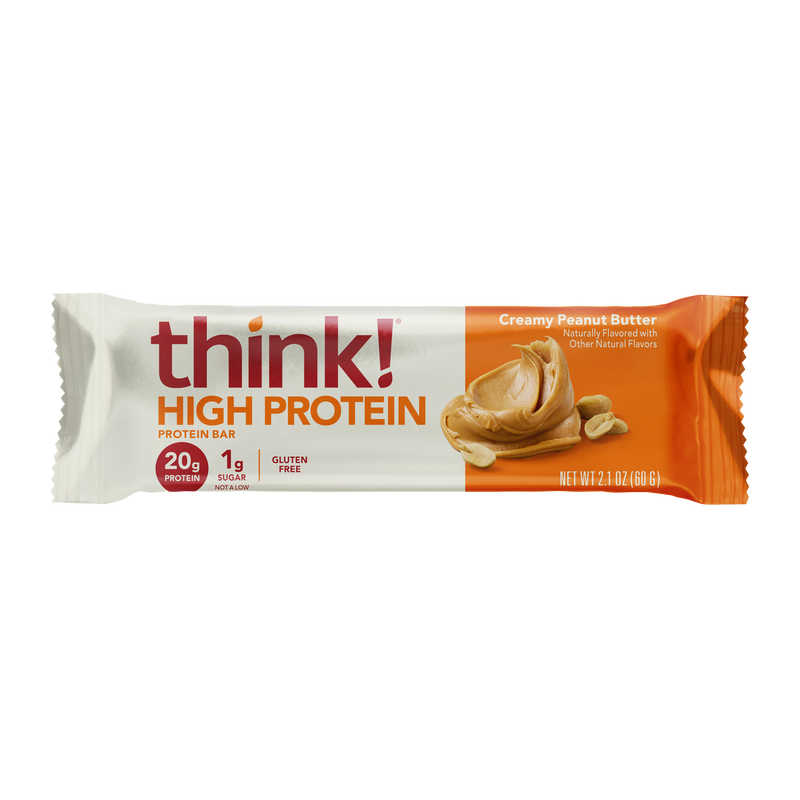 20g protein
High Protein Bar, Creamy Peanut Butter
Amazon returns policy · secure checkout
think! High Protein Bar Nutrition Facts: All Flavors (Per 60g Bar)
Every think! High Protein bar is a single 60g (2.1oz) serving. The figures below are cross-verified from think! product pages, major retailer nutrition panels, and calorie tracking databases. Numbers marked (~) are close approximations; confirm the label on your specific bar.
| Flavor (60g bar) | Calories | Protein | Total Carbs | Fiber | Total Sugar | Fat |
|---|---|---|---|---|---|---|
| Chocolate Fudge | 230 | 20g | 23g | 2g | 1g | 9g |
| Brownie Crunch | 230 | 20g | 23g | 2g | 1g | 9g |
| Creamy Peanut Butter | 230 | 20g | 22g | 1g | 1g | 9g |
| Chunky Peanut Butter | 240 | 20g | 23g | 1g | 0g | 10g |
| Lemon Delight | 230 | 20g | 24g | 1g | 0g | 9g |
| Cookies & Cream | 230 | 20g | 24g | 1g | 0g | 9g |
| White Chocolate | ~230 | 20g | ~23g | ~1g | ~1g | ~9g |
Key observations: all flavors hit exactly 20g of protein. The peanut butter flavors run slightly higher in fat (9–10g) due to peanut butter content, driving the 10-calorie bump in Chunky Peanut Butter. Sugar is remarkably low across the board (0–1g) because most of the sweetness comes from maltitol syrup, a sugar alcohol that is not counted as sugar on the Nutrition Facts label but does contribute carbohydrates and some caloric load. Fiber is modest at 1–2g per bar. The bars contain dairy and soy — not appropriate for people with either allergen. All figures above should be confirmed against the label for your specific lot and flavor.
The Maltitol Question: What “No Artificial Sweeteners” Actually Means for think! Bars
think! bars are marketed “no artificial sweeteners,” and the claim is accurate: no sucralose, no aspartame, no acesulfame potassium (Ace-K). The primary sweetener is maltitol syrup — a sugar alcohol derived from maltose. Here is what that distinction means in practice:
- Maltitol is not an artificial sweetener. It is a naturally-derived sugar alcohol (a polyol), classified separately from synthetic sweeteners like sucralose. The marketing claim is technically correct.
- Maltitol does affect blood sugar. Unlike erythritol (used in Quest bars), which has a glycemic index near zero and is almost entirely excreted without metabolizing, maltitol has a glycemic index of approximately 35–52 — roughly half that of table sugar (GI ~65). People managing blood glucose, including those with Type 2 diabetes or on a strict ketogenic diet, should not treat maltitol-sweetened foods as blood-sugar neutral. For a deep comparison of protein bars with minimal glycemic impact, see our best protein bars for diabetics guide.
- Maltitol at typical doses causes fewer GI issues than some alternatives. At 60g of maltitol or more, laxative effects are common. think! bars use maltitol syrup as the primary sweetener, but a single bar typically delivers far less than the threshold dose — most people tolerate one bar per day without GI complaints. At two or more bars daily, sensitivity varies.
- think! bars differ from Quest on sweetener philosophy. Quest uses erythritol (minimal glycemic impact) plus sucralose (trace amount, but synthetic). think! uses maltitol syrup (meaningful glycemic impact) with no synthetic sweetener at all. For people who want to avoid sucralose but can accept partial glycemic impact from a sugar alcohol, think! fits. For people managing blood glucose who also want to avoid sucralose, neither think! nor Quest is ideal — RXBAR (dates only) and KIND Protein Max (glucose syrup and honey, with known glycemic load) are the two mainstream options without synthetic sweeteners.
Protein Blend: Whey Isolate, Soy Isolate, Caseinate
The think! High Protein bar uses a three-source protein blend: whey protein isolate, soy protein isolate, and calcium caseinate. All three are complete proteins — each contains all nine essential amino acids, including tryptophan and the branched-chain amino acids (leucine, isoleucine, valine) needed for muscle protein synthesis. This is a meaningful advantage over bars that include hydrolyzed collagen in the blend (such as Barebells, Pure Protein, and Built Bar), where the collagen contributes to the gram count but not to complete amino acid delivery.
The soy protein isolate means think! High Protein bars are not appropriate for people with a soy allergy. They also contain milk-derived proteins (whey isolate and caseinate), so they are not vegan. The combination of fast-digesting whey isolate and slow-digesting casein in the same bar means amino acid delivery is sustained over a longer window than a pure whey bar, which some buyers prefer for extended satiety between meals. For people with both dairy and soy allergies, RXBAR (egg whites, dates, nuts — no soy, no dairy) is the only mainstream alternative that maintains a no-artificial-sweetener profile.
think! Bar vs Quest vs Barebells vs ONE Bar vs KIND Protein Max
Here is how think! High Protein bars compare with the other major no-artificial-sweetener-or-close-to-it protein bars on the metrics that matter most. All figures are per single bar as labeled.
| Bar (per bar) | Cal | Protein | Protein / 100 cal | Sugar | Fiber | Sweeteners |
|---|---|---|---|---|---|---|
| think! Chocolate Fudge (60g) | 230 | 20g | 8.7g | 1g | 2g | Maltitol syrup — no artificial |
| Quest Choc. Chip Cookie Dough (60g) | 190 | 21g | 11.1g | 1g | 12g | Erythritol, sucralose, stevia |
| Barebells Cookies & Cream (55g) | 200 | 20g | 10.0g | 1g | ~3g | Maltitol, sucralose, Ace-K |
| ONE Bar Birthday Cake (60g) | 220 | 20g | 9.1g | 1g | 9g | Maltitol, sucralose |
| KIND Protein Max Dark Choc. (60g) | 240 | 20g | 8.3g | 5g | 7g | Glucose syrup, honey — no artificial |
The most direct comparison is think! vs ONE Bar: both deliver 20g of protein in a 60g bar at a similar calorie count (230 vs. 220 cal) and use maltitol as the primary sugar alcohol. The key difference is that ONE Bar also contains sucralose alongside its maltitol, while think! does not add any synthetic sweetener. Both land at approximately the same protein-per-100-calorie ratio (8.7g vs. 9.1g). If avoiding sucralose specifically is the goal, think! is the cleaner choice over ONE Bar.
Against Quest, think! runs 40 calories higher per bar and delivers 11.4 fewer grams of fiber (2g vs. 12g), which translates to noticeably lower satiety. Quest’s erythritol sweetening also has less glycemic impact than think!’s maltitol. For pure protein efficiency and satiety per calorie, Quest leads by a clear margin — the cost is that it contains sucralose.
Against KIND Protein Max, think! has lower caloric density (230 vs. 240 cal) and higher protein efficiency (8.7g vs. 8.3g per 100 cal) while sharing a no-synthetic-sweetener claim. KIND Protein Max uses real glucose syrup and honey (known glycemic load from real sugar) rather than maltitol (partial but less predictable glycemic impact). For a deeper look at how KIND compares across the category, see our KIND Protein bar nutrition guide. For a broader overview, see our best protein bars of 2026 guide.
think! Delight Keto Bar: The Lower-Calorie Line
think! also makes a separate Delight keto line that is distinct from the High Protein bars above. The Delight bars are smaller (approximately 40g), deliver 10g of protein at 180 calories, and use erythritol plus stevia as sweeteners instead of maltitol — resulting in 2 to 4g of net carbs per bar. These are specifically designed for ketogenic diets where minimal glycemic impact is the priority.
If you are shopping for think! bars specifically for blood glucose management or a strict ketogenic diet, the Delight line is the more appropriate choice. The High Protein bars at 230–240 calories and 20g protein are better suited for general high-protein snacking where sweetener-type agnosticism is fine and the priority is maximizing protein per bar. This guide covers only the High Protein line; confirm the product name and nutrition panel before purchasing to ensure you have the right variant.
Who Should (and Should Not) Buy think! High Protein Bars
Best fit:
- People who want 20g of protein with no sucralose, aspartame, or Ace-K — think! is one of the few mainstream bars that delivers this without a synthetic sweetener, making it a go-to for people with strong synthetic-sweetener aversions who also want high protein
- Buyers who prioritize complete protein quality (no collagen in the blend) and can tolerate both dairy and soy
- Anyone who wants a high-protein bar at a moderate price — think! bars run $1.50–$1.80 per bar at Costco and $1.80–$2.00 on Amazon, making them more accessible than Quest or Barebells at most single-purchase points
- People who find Quest or Barebells too sweet but still want low actual sugar (0–1g per bar) — maltitol syrup has a less intensely sweet flavor profile than sucralose-boosted bars
Consider an alternative if:
- You have a soy allergy or avoid soy protein — think! bars use soy protein isolate as a primary source; Quest (whey isolate only) and Barebells (whey isolate, collagen) are the soy-free alternatives in the high-protein category
- You are diabetic or on strict keto and want the lowest possible glycemic impact from your sweetener — maltitol has a GI of ~35–52; see our best protein bars for diabetics guide
- You want maximum satiety per bar — at 1–2g of fiber, think! bars provide less satiety than Quest (12g fiber) at a similar protein count
- You are vegan — think! bars contain both dairy (whey, caseinate) and soy; Clif Builder's is the only mainstream 20g-protein bar built on a plant-only base
- Budget is the top priority — Pure Protein at $1.50–$2.00 per bar delivers 20g of protein at a comparable or slightly lower price point; see our Pure Protein review for a direct comparison
Frequently Asked Questions
How much protein is in a think! High Protein bar?
Every think! High Protein bar flavor delivers 20g of protein per 60g (2.1oz) bar. The protein comes from a blend of whey protein isolate, soy protein isolate, and calcium caseinate — all complete proteins containing all nine essential amino acids. Unlike some competitors (Barebells, Pure Protein, Built Bar), think! bars do not include hydrolyzed collagen, so all 20g of protein comes from complete protein sources.
Does think! protein bar have artificial sweeteners?
No — think! High Protein bars contain no sucralose, aspartame, or acesulfame potassium (Ace-K). The primary sweetener is maltitol syrup, a sugar alcohol derived from maltose. Maltitol is not classified as an artificial sweetener, but it does have partial glycemic impact (glycemic index ~35–52) unlike erythritol (GI near 0) used in Quest bars. If you need to minimize blood glucose response specifically, check our best protein bars for diabetics guide.
Is think! bar good for weight loss?
At 230 calories and 20g of protein, think! bars are a reasonable high-protein snack for a calorie deficit. The main limitation for weight loss is fiber: with only 1–2g of fiber per bar, they are less satiating per calorie than Quest (12g fiber, 190 cal). If satiety is your primary goal, Quest is more efficient. If you want to avoid sucralose entirely while still getting 20g of protein, think! is among the best available options. See our best high-protein snacks for weight loss guide for a full comparison.
What is the difference between think! bar and ONE Bar?
Both deliver 20g of protein in a 60g bar using maltitol as the primary sugar alcohol, with similar calorie counts (230 cal think! vs. 220 cal ONE Bar). The key difference: ONE Bar also adds sucralose alongside its maltitol, while think! uses only maltitol syrup with no synthetic sweetener. On protein efficiency (protein per 100 cal), ONE Bar edges ahead slightly (9.1g vs. 8.7g). For people specifically avoiding sucralose, think! is the cleaner choice. See our ONE Bar nutrition guide for a full comparison.
Does think! bar have soy?
Yes. Soy protein isolate is one of the three primary protein sources in think! High Protein bars (alongside whey protein isolate and calcium caseinate). People with a soy allergy or who avoid soy for dietary reasons should not use these bars. The bars also contain milk-derived proteins (whey and casein), so they are not appropriate for dairy-free diets either.
What is the think! Delight bar vs the High Protein bar?
think! makes two main lines: the High Protein bars (covered in this guide) deliver 20g of protein at 230–240 calories with maltitol syrup as the sweetener. The think! Delight keto bars are a smaller format (~40g) delivering 10g of protein at 180 calories with erythritol and stevia instead of maltitol, resulting in 2–4g of net carbs. If you are on a strict ketogenic diet or managing blood glucose carefully, the Delight line has a lower glycemic footprint. If you want to maximize protein per bar, the High Protein line is the right choice.
Bottom line: think! High Protein bars are one of the few mainstream 20g-protein bars that avoid synthetic sweeteners entirely, using maltitol syrup in place of sucralose or Ace-K. The three-source protein blend (whey isolate + soy isolate + caseinate) delivers complete amino acids with no collagen filler — a genuine differentiator from Barebells, Pure Protein, and Built Bar. The trade-offs are real: maltitol has more glycemic impact than erythritol, fiber is low (1–2g vs. Quest’s 12g), and the soy and dairy content excludes a significant portion of buyers. At $1.50–$2.00 per bar, they price competitively against the broader mainstream market. For people who want 20g of complete protein without synthetic sweeteners and can accept a sugar alcohol with partial glycemic impact, think! is a strong choice. For blood glucose management specifically, compare against Quest (sucralose, but erythritol-sweetened) in our best protein bars for diabetics guide, or browse the full protein snacks directory.
Shop our top protein bar picks
Editor-selected high-protein options related to this guide. As an Amazon Associate we may earn from qualifying purchases.
Shopping for think!? High Protein Bar, Chunky Peanut Butter · High Protein Bar - Brownie Crunch · Crispy Squares Marshmallow Crunch
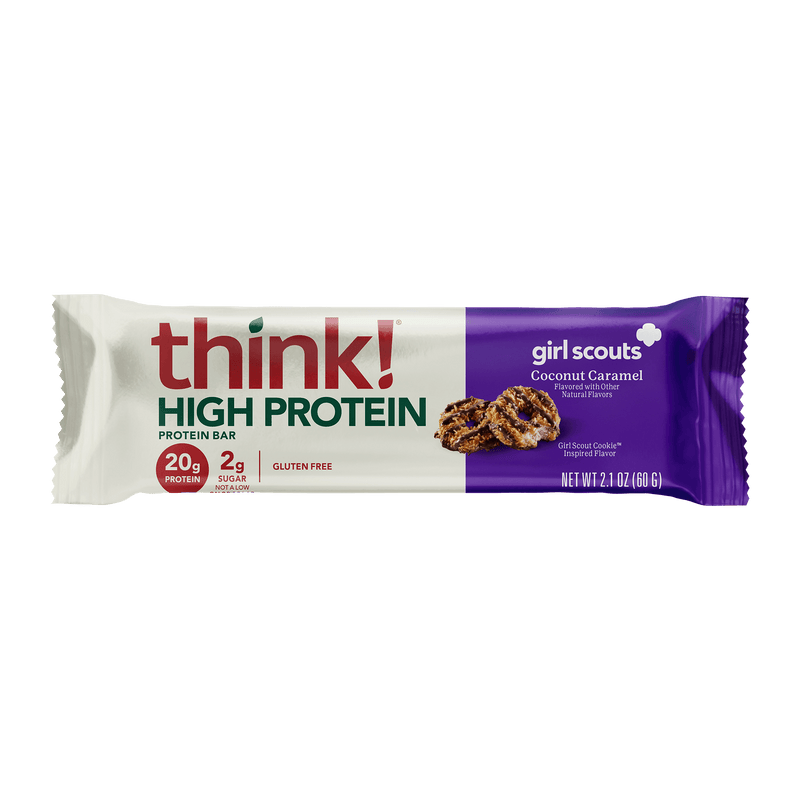 20g protein
High Protein Bar Girl Scout Coconut Caramel
Amazon returns policy · secure checkout
20g protein20g proteinTags
High Protein Snacks Pro Editorial Team
Independently researched and editorially reviewed. We compare real nutrition labels and never accept payment for coverage.
Get the best new protein snacks in your inbox
Weekly picks and honest reviews — no spam, unsubscribe anytime.
More from the journal
Premier Protein Bar Nutrition Facts (2026): 30g Protein Per Bar, All Flavors Compared and Bar vs Shake
Premier Protein’s 30g Protein Bars deliver the same 30g of protein as their RTD shake—but at 340 calories versus the shake’s 160 calories, with 40g of total carbohydrates versus 5g. Verified 2026 nutrition facts for the full 30g bar lineup, a bar-vs-shake macro comparison, sweetener breakdown (sucralose, not stevia), and a side-by-side against DAVID, Quest, and Kirkland at the same protein tier.
Read more
KIND Protein Bar vs RXBAR (2026): Whole Almonds vs Egg Whites and Dates — Which Clean-Label Bar Wins?
Both KIND Protein and RXBAR skip artificial sweeteners entirely, but they get there in opposite ways. KIND delivers 12g of protein at 200 calories from whole almonds plus soy and milk protein isolate, with 5–8g of sugar from glucose syrup and honey. RXBAR delivers the same 12g of protein at 180–210 calories from dried egg whites and dates, with 0g added sugar but 13–16g of total natural sugar. Full verified nutrition side by side, plus who each bar actually fits.
Read more
Which Protein Bar Has the Most Fiber? 19 Bars Ranked, From No Cow's 15g to Built Bar's Under 1g (2026)
No Cow delivers more fiber than any protein bar we've verified — 15g in a single ~60g bar — while Quest and Kirkland Signature tie for second at 12g. But the real story is what fiber reveals about the 20g-protein cluster from our grams ranking: DAVID Gold, Pure Protein, and Built Bar all carry 17g to 28g of protein yet come in at roughly 1g of fiber or less. We ranked all 19 verified bars by grams of fiber, sourced entirely from each bar's own published nutrition facts on this site.
Read more