Best Protein Drinks to Build Muscle (2026): 5 Ready-to-Drink Shakes Ranked by Protein, Leucine, and Calories
The best protein drink to build muscle in 2026 is fairlife Core Power Elite — 42g of complete ultra-filtered milk protein per 14 fl oz bottle at 230 calories, the most protein in a single ready-to-drink shake sold at US retail, and roughly 3.8 to 4.6g of leucine, comfortably above the 2.5 to 3g per serving that research shows is needed to maximally switch on muscle protein synthesis. fairlife Nutrition Plan wins on protein per calorie at 20.0g per 100 calories. Five real ready-to-drink shakes ranked on verified 2026 label data, with the leucine math shown, and an honest catch on every pick.
Our top protein drink picks
Editor-selected and ready to buy. As an Amazon Associate we may earn from qualifying purchases.
Buy the products in this guide: Nutrition Plan Shake - Chocolate · Premier Protein Ultimate Chocolate High Protein Shake · Ultimate Chocolate High Protein Shake
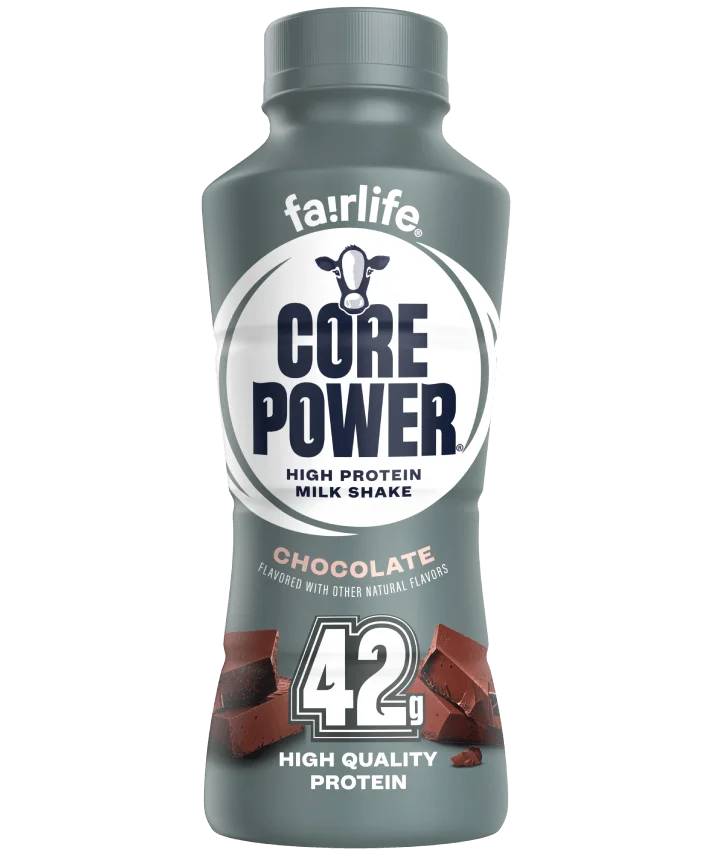 42g protein
Core Power Elite High Protein Shake
Amazon returns policy · secure checkout
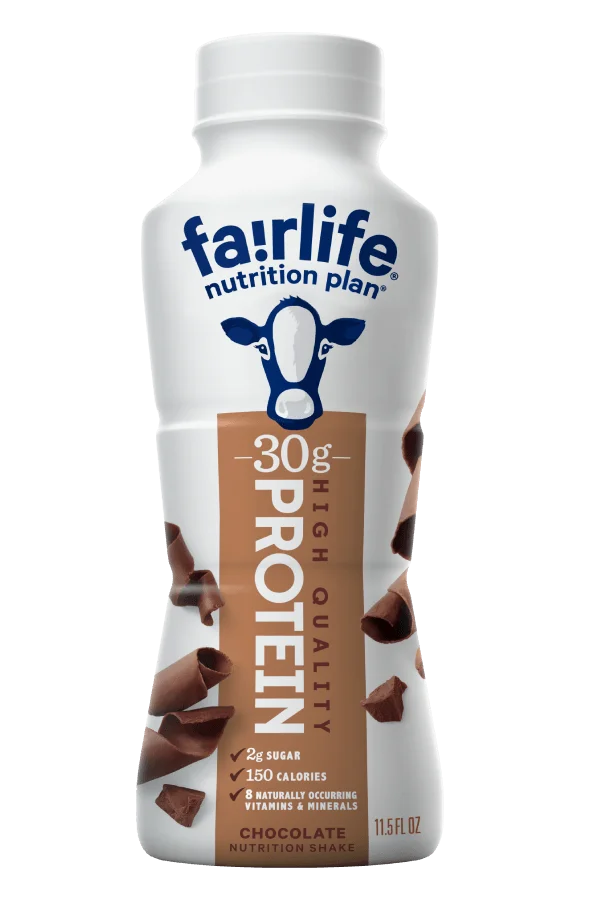 30g protein
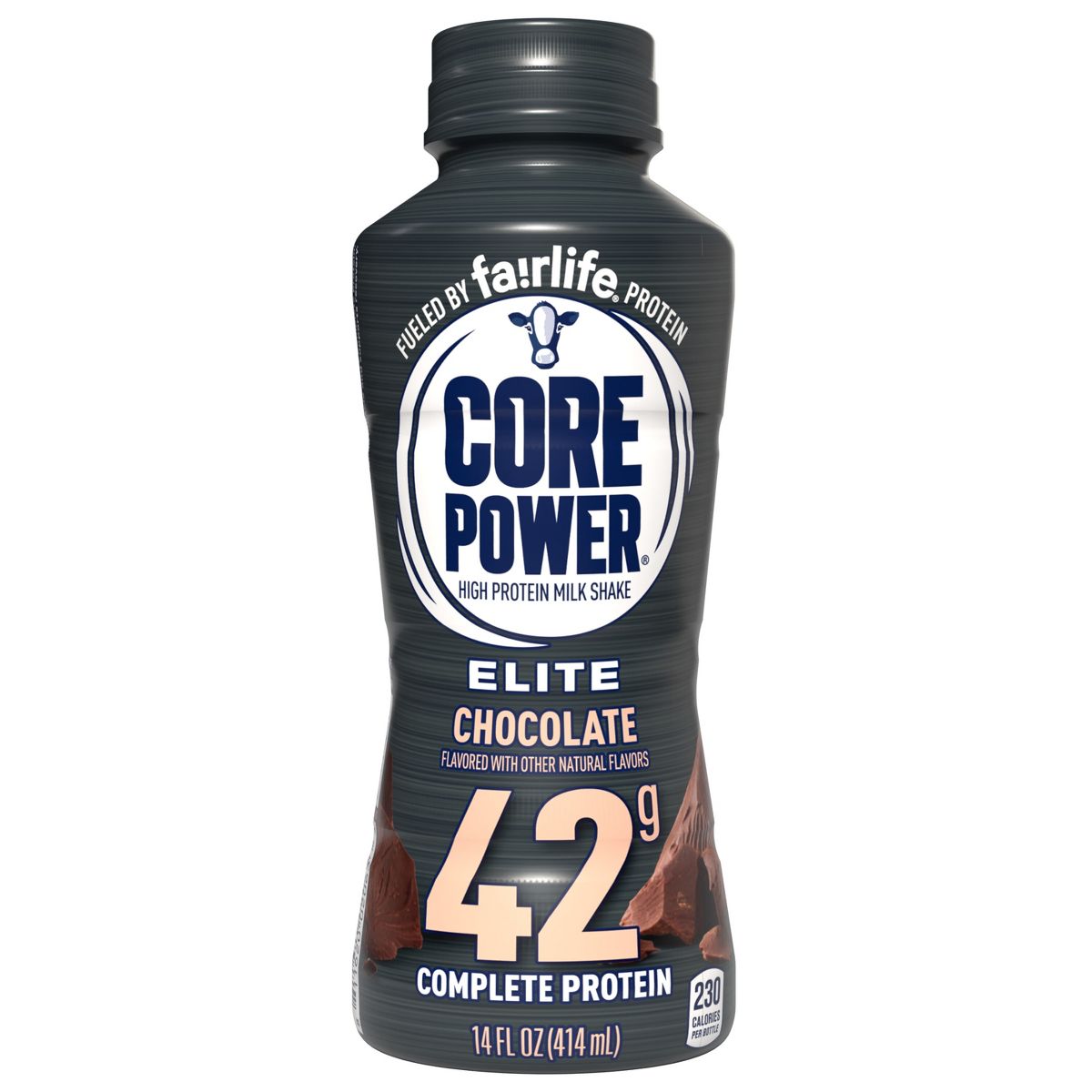 42g protein
Core Power Elite - Chocolate
Amazon returns policy · secure checkout
The 30-second answer
The best protein drink to build muscle in 2026 is fairlife Core Power Elite — 42g of complete protein from ultra-filtered milk in a 14 fl oz bottle at 230 calories, with 0g of added sugar. That 42g works out to roughly 3.8–4.6g of leucine, the amino acid that actually triggers muscle growth, which clears the 2.5–3g per-serving threshold with room to spare. If you want the most protein for the fewest calories instead, fairlife Nutrition Plan delivers 30g in only 150 calories — 20.0g of protein per 100 calories, the best ratio of any shake here.
A protein drink builds muscle only if it clears two bars: enough total protein for the day, and enough leucine in the single serving to actually switch muscle protein synthesis on. Most “best protein shake” lists rank on flavor and price and never mention the second bar, which is the one that separates a shake that does something from a shake that is just a drink. The 2018 meta-analysis by Morton and colleagues in the British Journal of Sports Medicine (52:376–384) pooled 49 studies and found protein supplementation meaningfully increases fat-free mass and strength alongside resistance training, with the dose-response curve flattening out around 1.62g of protein per kilogram of body weight per day. Separately, controlled feeding work has consistently put the leucine “threshold” for maximally stimulating muscle protein synthesis at roughly 2.5–3.0g per serving. Whey and milk protein are about 10–11% leucine by weight; pea protein is lower, which is why a plant shake needs a bigger dose to land in the same place. Every number below comes from each product’s own published 2026 nutrition panel; where a figure is not on the label it is shown as a dash rather than a guess.
Affiliate links — if you buy through them we earn a small commission at no extra cost to you. Prices on ready-to-drink shakes move week to week, so we do not quote them; the button shows today’s price.
Protein Drinks for Muscle Gain: 2026 Verified Nutrition
| # | Pick | Protein | Calories | Protein / 100 cal | Est. leucine | Sugar | Protein source |
|---|---|---|---|---|---|---|---|
| 1 | fairlife Core Power Elite | 42g | 230 | 18.3g | 3.8–4.6g | 7g (0g added) | Ultra-filtered milk |
| 2 | fairlife Nutrition Plan | 30g | 150 | 20.0g | 2.7–3.3g | 2g | Ultra-filtered milk |
| 3 | Premier Protein Shake | 30g | 160 | 18.8g | 2.7–3.3g | 1g (0g added) | Milk protein concentrate + calcium caseinate |
| 4 | OWYN Pro Elite | 32g | 200 | 16.0g | 2.2–2.6g | 0g | Pea + organic pumpkin seed |
| 5 | Orgain Organic Grass-Fed | 26g | 160 | 16.3g | 2.3–2.9g | 1g | Organic grass-fed milk protein + whey concentrate |
Protein / 100 cal = (protein ÷ calories) × 100. Estimated leucine is a calculation, not a label figure — no ready-to-drink brand prints leucine on the panel, so we multiplied the labeled protein by the published leucine fraction of that protein source (9–11% for milk and whey protein, 7–8% for pea protein). Treat it as a range, not a lab result. All figures are per one bottle as sold, chocolate flavor; other flavors vary by a few calories and grams of fat.
The 5 Best Protein Drinks to Build Muscle in 2026
#1 Best Overall for Muscle Gain — fairlife Core Power Elite (42g)
fairlife Core Power Elite — Chocolate
42g protein · 230 cal · 3.5g fat · 9g carbs · 2g fiber · 7g sugar (0g added) · 260mg sodium · 900mg calcium · lactose-free · 14 fl oz
Check price on Amazon →Core Power Elite carries more protein in one bottle than any other ready-to-drink shake stocked at ordinary US retail: 42g, from fairlife’s ultra-filtered milk rather than a powder blend. Ultra-filtration is the whole trick — the milk is passed through fine filters that concentrate the protein and strain out most of the sugar, so a single 14 fl oz bottle carries 42g of protein and 900mg of calcium (70% of the daily value) with 0g of added sugar. The 7g of sugar on the panel is naturally occurring lactose from the milk itself, and a lactase enzyme in the formula breaks it down, which is why the bottle is labeled lactose-free. Because it is whole milk protein it arrives as both whey and casein, so it gives you a fast amino-acid spike and a slower tail in the same drink. At an estimated 3.8–4.6g of leucine, this is the only shake here that clears the 2.5–3g threshold with real margin, which matters most for lifters over 40 and anyone training fasted. For the full label breakdown see our Core Power nutrition facts, and our Nutrition Plan vs Core Power comparison if you are deciding between fairlife’s two lines.
The honest catch: 230 calories is the highest on this list, so if you are in a calorie deficit this shake eats a real chunk of your day — it is a mini-meal, not a between-meals top-up. It is also the most expensive per bottle of the five by a wide margin, and the sweetener system is a stack of four (acesulfame potassium, sucralose, monk fruit, and stevia), which is more than any other pick here. It contains carrageenan, a thickener some readers deliberately avoid. And 42g in one sitting is more than most people need in a single feeding — the research on per-meal protein suggests the extra grams above roughly 40g mostly go toward general daily intake rather than an additional muscle-building signal. Buy this one when the job is maximum protein in one bottle, not when the job is efficiency.
#2 Best Protein per Calorie — fairlife Nutrition Plan (30g)
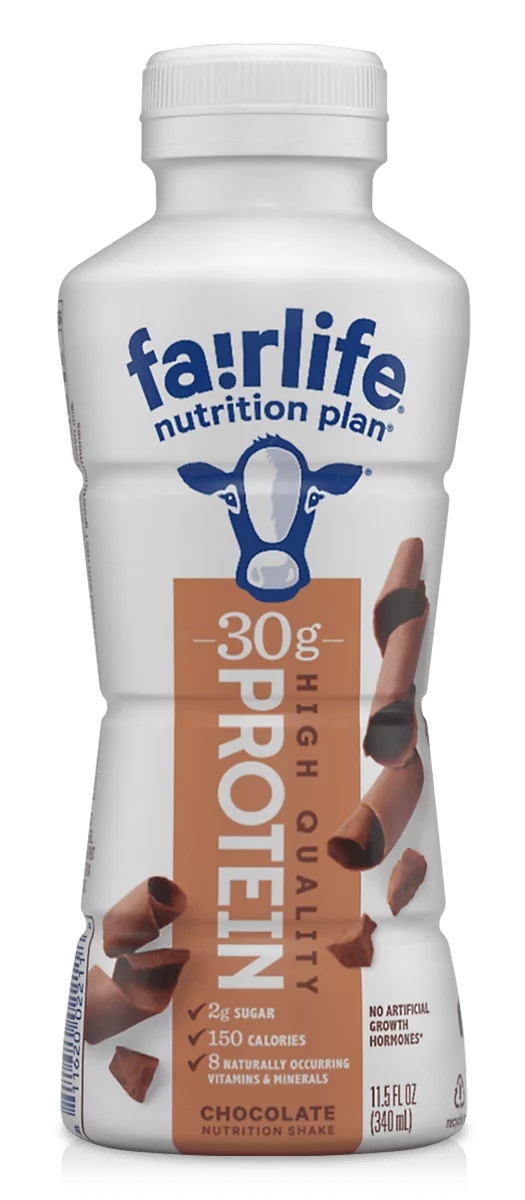
fairlife Nutrition Plan — Chocolate
30g protein · 150 cal · 2.5g fat · 4g carbs · 1g fiber · 2g sugar · 230mg sodium · 8 naturally occurring vitamins and minerals · lactose-free · 11.5 fl oz
Check price on Amazon →If you are trying to add muscle without adding fat — a lean bulk, or a cut where you still want to hold onto what you have built — protein per calorie is the number that matters, and Nutrition Plan wins it outright at 20.0g of protein per 100 calories. Nothing else here is close: Premier Protein is 18.8g, Core Power Elite is 18.3g, and both plant and organic options sit near 16g. It gets there the same way Core Power does, by ultra-filtering milk, but it stops at 30g of protein and 150 calories instead of pushing the dose. The estimated 2.7–3.3g of leucine still lands inside the threshold band, so you are not trading away the muscle-building signal to save 80 calories — you are only trading away the surplus. Same brand as our top pick, which is worth saying plainly: two of five picks here are fairlife products, and that is what the numbers said, not a sponsorship. See the Nutrition Plan nutrition facts for the full panel and Premier Protein vs fairlife Nutrition Plan for the head-to-head.
The honest catch: 30g in 150 calories is achieved by stripping out nearly all the fat and carbohydrate, so this shake is genuinely thin next to Core Power Elite — readers expecting a milkshake texture are usually disappointed on the first bottle. It carries only 8 naturally occurring vitamins and minerals rather than a fortified blend, so if you were treating a shake as a meal replacement it is doing less of that job than Premier Protein’s 24. Like the rest of the fairlife line it is sweetened with a combination that includes sucralose and acesulfame potassium. And the 18-pack that dominates warehouse shelves is a lot of shakes to commit to before you know whether you like the flavor.
#3 Best Everyday Shake — Premier Protein (30g)
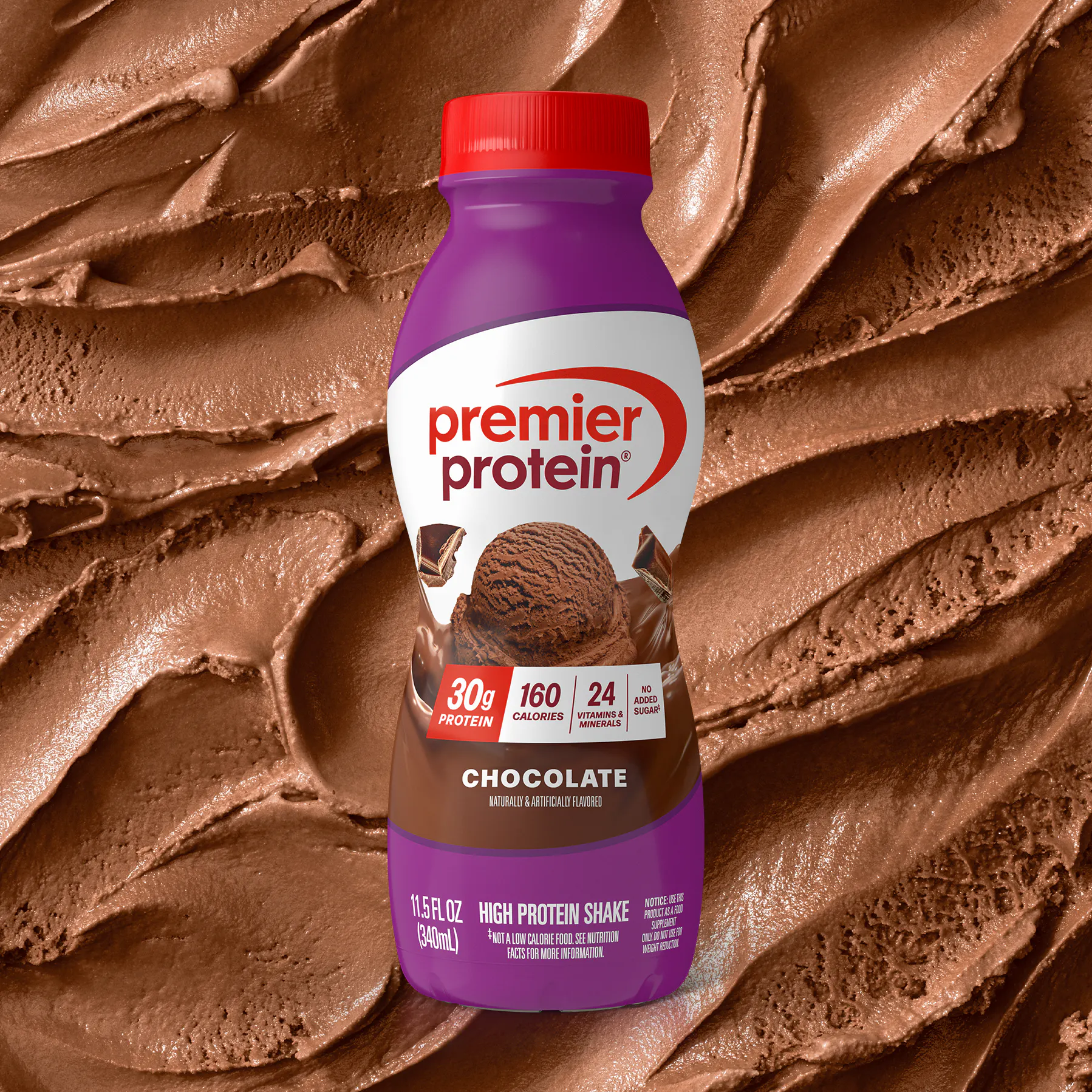
Premier Protein Shake — Chocolate
30g protein · 160 cal · 3g fat · 4g carbs · 2g fiber · 1g sugar (0g added) · 230mg sodium · 650mg calcium · 24 vitamins and minerals · 11.5 fl oz
Check price on Amazon →Premier Protein is the shake most people should actually buy, for an unglamorous reason: it is the one you can get anywhere, at the lowest typical cost per bottle of the five, at a protein dose that does the job. 30g of protein at 160 calories is 18.8g per 100 calories, second only to fairlife Nutrition Plan, and the protein is a milk protein concentrate and calcium caseinate blend — complete dairy protein, an estimated 2.7–3.3g of leucine, inside the threshold band. What separates it from the fairlife pair is the fortification: 24 vitamins and minerals per bottle plus 650mg of calcium, which makes it a defensible stand-in for a skipped breakfast rather than only a protein top-up. It is stocked in Costco, Sam’s Club, Walmart, Target, and most pharmacies, which matters more than it sounds — the shake you keep drinking is the one you can restock without planning. Full panel in our Premier Protein shake nutrition breakdown, and see Muscle Milk vs Premier Protein if you are weighing it against the other mass-market option.
The honest catch: calcium caseinate is a slower-digesting, acid-processed form of casein, so Premier Protein is a slightly worse choice than a whey-forward shake in the 30 to 60 minutes straight after a hard session — the amino acids arrive later. It is sweetened with sucralose and acesulfame potassium, and the chocolate is noticeably sweeter than either fairlife product, which some readers find cloying by the third bottle of the week. The 24 vitamins and minerals are a real feature only if you are actually replacing a meal; stacked on top of a normal diet and a multivitamin they do nothing for you. Prices move a lot on this one between warehouse clubs and grocery, so it is worth checking two places.
#4 Best Plant-Based — OWYN Pro Elite (32g)

OWYN Pro Elite — Chocolate
32g protein · 200 cal · 7g fat · 3g carbs · 3g fiber · 0g sugar · 350mg sodium · 10mg iron · dairy-free · 12 fl oz
Check price on Amazon →OWYN Pro Elite is the plant shake that solved the plant-shake problem, and the mechanism is worth understanding because it is the whole reason to pick it over a 20g vegan option. Pea protein carries less leucine per gram than milk protein does — roughly 7–8% against 10–11% — so a 20g plant shake lands somewhere near 1.4–1.6g of leucine and simply does not reach the threshold that switches muscle protein synthesis on. OWYN’s answer is dose: 32g of a pea and organic pumpkin seed blend puts the estimate at 2.2–2.6g, right at the bottom edge of the 2.5–3g band rather than well short of it. It is also the only pick here with 0g of total sugar and 3g of fiber, it is dairy-free, soy-free and nut-free, and it adds 10mg of iron (50% of the daily value) plus a spinach, kale and broccoli greens blend. For a dairy-free lifter this is the one shake on the list that is genuinely built for muscle rather than adapted to it. See the OWYN nutrition facts for the complete panel.
The honest catch: 2.2–2.6g of estimated leucine is a pass, not a comfortable pass — it sits at the edge of the threshold, so if you are training hard and over 40, when the muscle-building response to protein is measurably blunted, a milk-based shake still has a real advantage over this one and there is no plant version of that fact. At 7g of fat it is also the fattiest shake here and 200 calories for 32g is 16.0g per 100 calories, the weakest ratio on the list. The greens blend is a small dose, closer to a gesture than a serving of vegetables. And the pea-protein flavor base is polarizing: OWYN masks it better than most, but readers coming from a dairy shake usually notice it on the first bottle.
#5 Best Organic and Cleanest Label — Orgain Organic Grass-Fed (26g)

Orgain Organic Grass-Fed Protein Shake — Creamy Chocolate
26g protein · 160 cal · 1g sugar · fat — · carbs — · USDA Organic · non-GMO · no soy · gluten-free · carrageenan-free · 14 fl oz
Check price on Amazon →Orgain is the pick for the reader whose first question about a shake is what is in it rather than how much protein is in it. The protein is organic grass-fed milk protein concentrate plus organic whey protein concentrate — complete dairy protein, USDA Organic certified, non-GMO, no soy, gluten-free, and carrageenan-free, which is a specific point of difference from Core Power Elite. 26g at 160 calories puts the estimated leucine at 2.3–2.9g, straddling the bottom of the threshold band, and 1g of sugar is the second-lowest here. If you buy organic dairy at the grocery store, this is the shake that matches that standard without dropping to a token protein dose the way most organic ready-to-drink options do. Full breakdown in our Orgain protein shake nutrition facts.
The honest catch: 26g is the smallest dose on this list, and that is the thing to weigh — it is 16g less protein than Core Power Elite for the same 14 fl oz bottle, and its estimated leucine can fall below 2.5g at the low end of the range. Orgain does not publish the full fat, carbohydrate and sodium panel in a form we could verify from a primary source, so those cells are shown as dashes rather than filled in with numbers from a third-party database. “Grass-fed” and “organic” are real production standards with real animal-welfare and farming meaning, but neither changes the amino-acid profile of the protein or how well it builds muscle — buy this because you want the certification, not because you expect it to work better. It is also usually the priciest per gram of protein of the five.
How much protein do you actually need to build muscle?
About 1.6g of protein per kilogram of body weight per day, total, from all food and shakes combined. That figure comes from the 2018 British Journal of Sports Medicine meta-analysis by Morton and colleagues, which pooled 49 studies and found the benefit of extra protein flattening out at roughly 1.62g/kg/day — for a 175 lb (79 kg) lifter that is about 127g a day. Going higher is not harmful, and the study’s confidence interval stretches to around 2.2g/kg/day, but the pooled data did not show additional muscle for the extra grams.
Does one protein shake a day build muscle?
Only if it is closing a real gap in your daily total, and only alongside resistance training. A shake does not have special muscle-building properties that chicken or eggs lack — in the Morton analysis, protein supplementation worked because it raised total daily intake in people who were also lifting. If you already hit 1.6g/kg from food, adding a shake adds calories, not muscle. If you are 30–40g short most days, which is common, one 30g shake genuinely closes it.
Why does leucine decide whether a shake works?
Leucine is the amino acid that acts as the switch: muscle protein synthesis responds to how much leucine arrives in the blood at once, not just to total grams of protein. Controlled feeding studies put the amount needed to maximally flip that switch at roughly 2.5–3.0g per serving. This is why serving size beats source in practice — a 32g plant shake clears the bar that a 20g plant shake misses, and it is also why splitting one 40g shake across two halves of the day is worse than drinking it in one sitting.
When should you drink a protein shake to build muscle?
Within a couple of hours either side of training is fine, and the exact minute matters far less than people were told for twenty years. What holds up in the research is total daily protein and spreading it across roughly three to four feedings of 25–40g rather than one large one. A shake is most useful at the times whole food is inconvenient — straight after a session, or as the third feeding on a day where breakfast was coffee. If you want to eat rather than drink it, our post-workout protein snacks and protein snacks for muscle building guides cover the food side.
Frequently Asked Questions
What is the best protein drink to build muscle in 2026?
fairlife Core Power Elite is the best protein drink to build muscle in 2026 for most lifters: 42g of complete ultra-filtered milk protein per 14 fl oz bottle at 230 calories with 0g of added sugar, and an estimated 3.8–4.6g of leucine, the only shake on this list that clears the 2.5–3g muscle-protein-synthesis threshold with real margin. If protein per calorie matters more than the raw dose, fairlife Nutrition Plan delivers 30g in 150 calories (20.0g per 100 calories). If you need it dairy-free, OWYN Pro Elite delivers 32g of plant protein with 0g of sugar.
How much protein should a shake have to build muscle?
Aim for 25–40g per shake if it is dairy-based, and at least 30g if it is plant-based. The target is not the protein number itself but the leucine it carries: roughly 2.5–3.0g per serving is what maximally stimulates muscle protein synthesis. Milk and whey protein are about 10–11% leucine, so 25–30g gets there. Pea protein is roughly 7–8% leucine, so a plant shake needs a larger dose to land in the same place — which is exactly why a 20g vegan shake underperforms a 20g whey shake.
Are plant-based protein drinks as good for building muscle?
They can be, at a high enough dose. Gram for gram, pea and other plant proteins carry less leucine than milk protein, so a like-for-like swap comes up short. Research shows that when leucine levels are matched, the muscle protein synthesis response to plant protein is comparable to whey. Practically, that means choosing a plant shake in the 30g-plus range, like OWYN Pro Elite at 32g, rather than a standard 20g vegan shake.
Is a ready-to-drink shake as good as protein powder?
For building muscle, yes — the protein is the same protein, and your muscles cannot tell whether it was mixed in a factory or a shaker cup. Powder is cheaper per gram and lets you set your own dose; ready-to-drink wins on convenience, which is the reason most people actually stick with it. The one real difference is form: many ready-to-drink shakes use casein or milk protein concentrate, which digest more slowly than the whey isolate in most powders. See our best whey protein isolate guide for the powder side.
Can you build muscle with protein shakes without lifting weights?
No. Every study showing protein supplementation increases muscle mass paired it with resistance training — protein supplies the raw material, but mechanical tension from training is the signal that tells the body to build. Drinking shakes without training adds calories and, if you are in a surplus, body fat. The shake is the second half of the equation, never the first.
Should you drink a protein shake before or after a workout?
Either works. The old idea of a narrow 30-minute “anabolic window” has not held up; what matters far more is total daily protein and spacing it across three to four feedings. If you train fasted, a shake soon afterward is genuinely useful because you have gone many hours without amino acids. If you ate a protein-containing meal within a couple of hours of training, the timing of the shake is close to irrelevant.
Do protein drinks make you gain fat?
Only through calories, like any food. A 150-calorie shake that replaces a 400-calorie snack helps you lean out; a 230-calorie shake added on top of everything else you already eat is a surplus. This is why protein per calorie is on the table above — fairlife Nutrition Plan at 20.0g per 100 calories delivers the same muscle-building signal as heavier options for the fewest calories.
Are protein shakes safe to drink every day?
For most healthy adults, yes. A daily shake is milk or plant protein, the same protein found in food, and daily intakes up to about 2g per kilogram of body weight are well supported in healthy people who train. Two genuine exceptions: anyone with chronic kidney disease should discuss total protein intake with a physician first, and anyone with a cow’s milk protein allergy (which is not the same as lactose intolerance) needs a plant option such as OWYN rather than any of the dairy picks here.
Where can you buy these protein drinks?
Amazon carries all five in multipacks. Premier Protein is also stocked in Costco, Sam’s Club, Walmart, Target, and most pharmacies, and is usually the easiest to find on short notice. fairlife Core Power and Nutrition Plan are in most large grocery chains and warehouse clubs. OWYN and Orgain are strongest at Whole Foods, Sprouts, and direct from their own websites. Prices on ready-to-drink shakes move week to week, so it is worth comparing a warehouse club against Amazon before committing to a case.
Bottom line: buy fairlife Core Power Elite when the job is the biggest protein hit available in one bottle — 42g of complete milk protein and an estimated 3.8–4.6g of leucine, the only pick here with real margin above the threshold. Buy fairlife Nutrition Plan if you are adding muscle without adding fat: 30g in 150 calories is the best protein-per-calorie ratio on the list. Buy Premier Protein if you want the shake you can restock anywhere at the lowest typical price, with 24 vitamins and minerals behind it. Buy OWYN Pro Elite if you need dairy-free and want a dose big enough that the lower leucine of plant protein stops mattering. Buy Orgain if organic certification is the thing you are actually paying for. Browse the full high-protein snacks directory, see our best protein drinks of 2026 for the wider format comparison across coffees and clear waters, and best protein bars for muscle gain if you would rather chew than drink.
Shop our top protein drink picks
Editor-selected high-protein options related to this guide. As an Amazon Associate we may earn from qualifying purchases.
Buy the products in this guide: Nutrition Plan Shake - Chocolate · Premier Protein Ultimate Chocolate High Protein Shake · Ultimate Chocolate High Protein Shake
42g proteinCore Power Elite High Protein Shake
Amazon returns policy · secure checkout
30g protein42g proteinCore Power Elite - Chocolate
Amazon returns policy · secure checkout
Tags
High Protein Snacks Pro Editorial Team
Independently researched and editorially reviewed. We compare real nutrition labels and never accept payment for coverage.
Get the best new protein snacks in your inbox
Weekly picks and honest reviews — no spam, unsubscribe anytime.
More from the journal
Best Protein Shakes (2026): 10 Ready-to-Drink Picks Ranked by Protein per Calorie
Fairlife Core Power Elite is the best ready-to-drink protein shake (42g of real, lactose-free dairy protein), Premier Protein is the best value at 30g for 160 calories, and OWYN Pro Elite leads the dairy-free picks at 32g — 10 ready-to-drink shakes ranked by protein per calorie with real per-bottle numbers and tracked buy links.
Read more
Cheapest Protein Shakes 2026: Every Popular RTD Shake Ranked by Price Per Bottle and Per Gram of Protein
Kirkland Signature Protein Shake at Costco is the cheapest ready-to-drink protein shake in America — about $1.30–$1.45 per 11.5oz bottle (30g protein), or roughly $0.043–$0.048 per gram of protein. On Amazon without a Costco membership, Premier Protein Shake wins at ~$28–$32 for a 12-pack ($0.078–$0.089 per gram), and Fairlife Nutrition Plan is essentially tied at ~$32 per 12-pack. Every popular RTD shake ranked by real 2026-08-01 sticker prices.
Read more
Best Protein Coffee (2026): 6 Picks Ranked by Protein, Calories, and the Caffeine Nobody Puts on the Front of the Carton
The best protein coffee in 2026 is Premier Protein Cafe Latte — 30g of protein in an 11 fl oz carton at 160 calories, 1g of sugar, and 95mg of caffeine. The finding that changes how you shop this shelf: protein and caffeine move in opposite directions. Every 30g protein coffee we verified carries only 95 to 97mg of caffeine, about one 8 oz cup of brewed coffee, while the two drinks with real coffee-shop caffeine at 200mg carry just 10g of protein. Six real protein coffees ranked on verified 2026 label data, with both numbers side by side.
Read more