Premier Protein Shake Nutrition: 30g Protein, 160 Calories, 1g Sugar per Bottle
Premier Protein shakes deliver 30g protein, 160 calories, and 1g sugar per 11.5 fl oz bottle across every core flavor. The key variable is sodium: Caramel runs ~320mg per bottle while Strawberries and Cream runs ~170mg. Cafe Latte adds ~120mg of caffeine. Verified label for every flavor, protein source breakdown (milk protein concentrate plus calcium caseinate), and how it stacks up against Fairlife and Core Power.
Our top protein drink picks
Editor-selected and ready to buy. As an Amazon Associate we may earn from qualifying purchases.
Shopping for Premier Protein? Black Cherry Sparkling Protein Soda · Pineapple Orange Sparkling Protein Soda · Grapefruit Sparkling Protein Soda
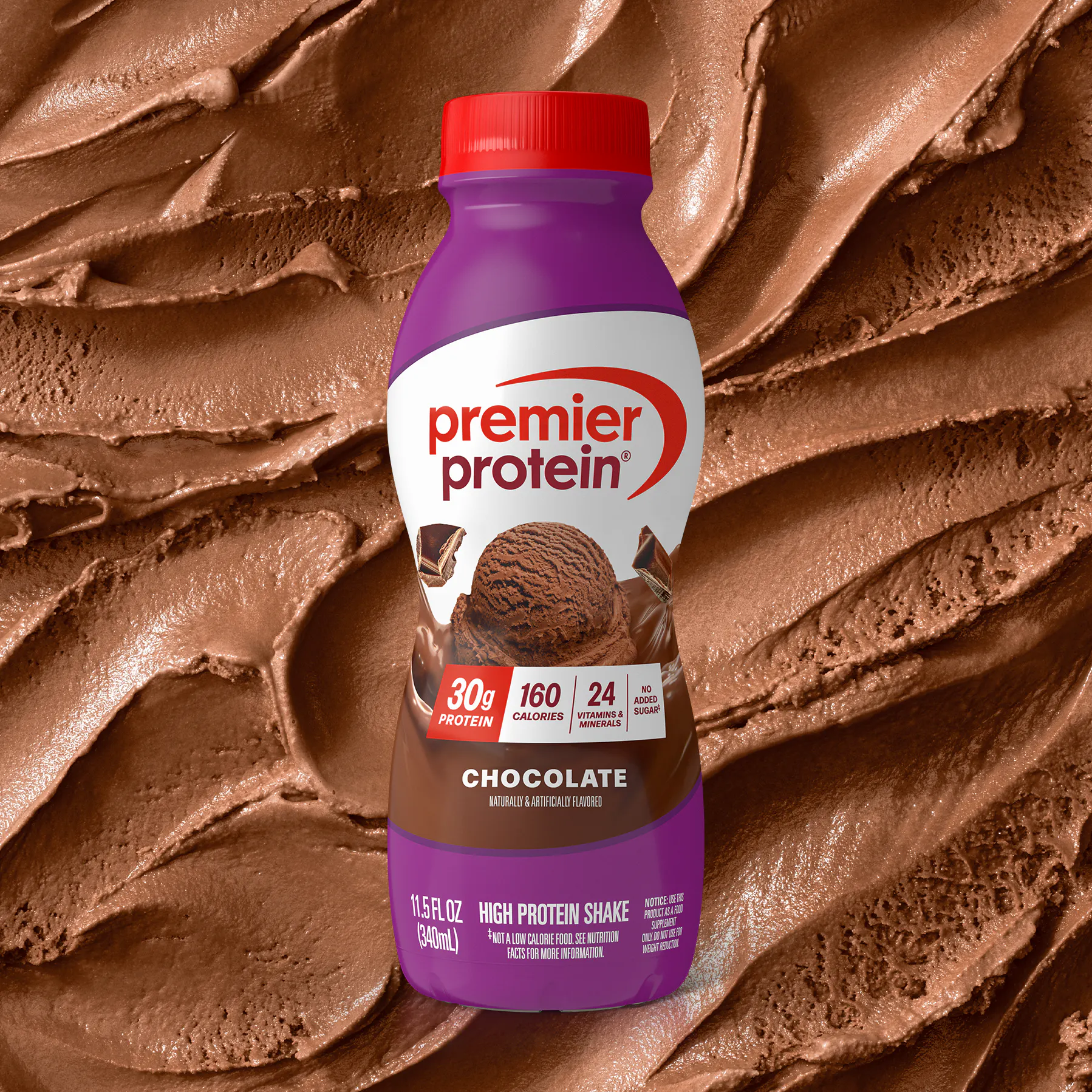 30g protein
Shake, Chocolate, 30g Protein, No Added Sugar, 24 Vitamins & Minerals to Support Immune Health, 11 fl oz, 12
Amazon returns policy · secure checkout
 30g protein
Shake, Chocolate, 30g Protein, No Added Sugar, 24 Vitamins & Minerals to Support Immune Health, Gluten-Free,1
Amazon returns policy · secure checkout
30g proteinProtein Shake - Chocolate
Amazon returns policy · secure checkout
How much protein is in a Premier Protein shake?
Per 11.5 fl oz bottle: 30g of protein, 160 calories, 1g of sugar (0g added), 3g of fat, and 24 vitamins & minerals — and the core formula is identical across every flavor. How the sugar stays at 1g: two artificial sweeteners, sucralose and acesulfame potassium (Ace-K). Know before you buy: every flavor contains milk and soy, and Café Latte carries about 95mg of caffeine — roughly a cup of coffee — so it is the one flavor to skip in the evening.
Premier Protein's ready-to-drink shakes are one of the most popular grab-and-go protein options in the U.S., and the appeal is simple: each 11.5 fl oz bottle packs 30g of protein, 160 calories, and just 1g of sugar, plus around 4-5g of carbs, 3g of fat, and 24 added vitamins and minerals. That macro profile, roughly 30g protein for 160 calories, is why the shakes get used as a quick breakfast, a post-workout drink, or a low-calorie way to hit a daily protein target. Below are the verified nutrition facts straight from the official Premier Protein nutrition panels, flavor by flavor, plus an honest look at whether these shakes are actually healthy. For more options, browse the full protein snacks directory.
Premier Protein Shake Nutrition Facts (Per 11.5 fl oz Bottle)
Every flavor shares the same core formula: 30g protein, 160 calories, 1g total sugar, 0g added sugar, and 24 vitamins & minerals. The only small differences between flavors are in total carbohydrates, and they are minor. Here is how the core flavors compare.
| Flavor (11.5 fl oz) | Calories | Protein | Total Carbs | Total Sugar | Fat | Sodium (approx.) |
|---|---|---|---|---|---|---|
| Chocolate | 160 | 30g | 4g | 1g | 3g | ~220mg |
| Vanilla | 160 | 30g | 3g | 1g | 3g | ~220mg |
| Caramel | 160 | 30g | 2g | 1g | 3g | ~320mg (notably higher) |
| Cookies & Cream | 160 | 30g | 4g | 1g | 3g | ~240mg |
| Strawberries & Cream | 160 | 30g | 4g | 1g | 3g | ~170mg (lowest) |
| Café Latte | 160 | 30g | 4g | 1g | 3g | ~220mg + 120mg caffeine |
Note: Sodium figures are approximate from published label data; Premier Protein does not publish a single authoritative flavor-by-flavor sodium table. Caramel runs notably higher (~320mg) and Strawberries & Cream runs lower (~170mg) — worth knowing if you watch daily sodium intake. Café Latte also contains about 120mg of caffeine per bottle, roughly a cup of coffee, so it is the one flavor to skip in the evening. All flavors contain milk and soy.
How Is the Sugar So Low? The Sweeteners Explained
This is the part most labels gloss over, so here it is plainly. Premier Protein keeps sugar at 1g and added sugar at 0g by using two artificial sweeteners: sucralose and acesulfame potassium (Ace-K). These are non-nutritive (zero-calorie) sweeteners, the same ones found in many diet sodas and protein products. That is how the shakes hit a dessert-like flavor without spiking the carb or sugar count. If you are specifically avoiding artificial sweeteners, this is the trade-off to know about up front: the low sugar number comes from sucralose and Ace-K, not from the drink being naturally low in sugar.
Is Premier Protein Healthy?
The honest answer: it depends on what you are comparing it to and what you want from it.
The case for it: 30g of complete protein for 160 calories is an excellent protein-to-calorie ratio, better than most protein bars and on par with a good scoop of whey. It has 0g added sugar, low fat, and 24 vitamins and minerals fortified in. As a replacement for a sugary coffee drink, a fast-food breakfast, or skipping a meal entirely, it is a clear upgrade.
The fair criticisms: It is a processed, fortified beverage, not whole food. The protein comes from milk protein concentrate and calcium caseinate, and the sweetness comes from artificial sweeteners (sucralose and Ace-K). Some people prefer to avoid those, and a shake does not provide the chewing, fiber, and satiety of an actual meal.
One factual note on the "30g" claim: In 2017 a class-action lawsuit alleged the shakes contained less protein than advertised; independent testing cited by the plaintiffs found roughly 26.9 to 28.3g per shake instead of 30g. Premier Nutrition Corporation settled for $9 million in 2018-2019 without admitting wrongdoing. Separately, in August 2022 there was a voluntary recall of certain shakes over potential microbial contamination; that recall is a past event, not an ongoing one. Worth knowing, but neither changes the current published nutrition panel.
Bottom line: Premier Protein is a convenient, genuinely high-protein, low-sugar drink that fits well into most diets, as long as you are comfortable with artificial sweeteners and treat it as a supplement to real food rather than a full nutrition plan.
Best Uses for Premier Protein Shakes
- Meal replacement (in a pinch): 30g protein and 160 calories make it a solid stand-in for a rushed breakfast. Pair it with a piece of fruit or some nuts to add fiber and stay full longer.
- Post-workout recovery: 30g of complete protein with all essential amino acids is right in the range research suggests for muscle protein synthesis, and it is far easier than blending a shake after the gym.
- Weight loss: High protein plus low calories is the ideal combination for staying full while in a deficit. At 160 calories for 30g protein, it is one of the more diet-friendly grab-and-go options out there.
- Daily protein top-off: If you are falling short of your protein target, one shake closes a big chunk of the gap without much added sugar or fat.
Want more options? See our roundup of the best high protein snacks for weight loss, compare it against another popular bottled shake in our Fairlife Core Power nutrition breakdown, or browse all high-protein products in our directory.
How Many Calories Are in a Premier Protein Shake?
160 calories per 11.5 fl oz bottle, and that holds across every core flavor — the flavors differ only in total carbohydrates, by a gram or two. The number worth comparing is protein per calorie: 30g of protein in 160 calories works out to 18.8g of protein per 100 calories. Here is how that lands against the other bottled shakes we have verified the same way.
| Shake | Bottle | Calories | Protein | Protein per 100 cal |
|---|---|---|---|---|
| Fairlife Nutrition Plan (Chocolate) | 11.5 fl oz | 150 | 30g | 20.0g |
| Premier Protein (Chocolate) | 11.5 fl oz | 160 | 30g | 18.8g |
| Fairlife Core Power Elite (Chocolate) | 14 fl oz | 230 | 42g | 18.3g |
| Muscle Milk Genuine (Chocolate) | 11 fl oz | ~160 | 26g | ~16g |
| Fairlife Core Power (Chocolate) | 14 fl oz | 170 | 26g | 15.3g |
Premier Protein sits near the top of that group on protein density and ties Fairlife Nutrition Plan for the most protein in an 11.5 fl oz bottle. Core Power Elite is the only one here with more protein per bottle (42g), but it costs you 230 calories to get it. For the full head-to-heads, see Premier Protein vs Core Power and Muscle Milk vs Premier Protein.
Premier Protein Shake vs Premier Protein Bar: Same 30g, Different Math
Premier Protein also sells a 30g Protein Bar, and the headline protein number is identical — but the macros around it are not close. The shake gives you 30g of protein for 160 calories and 4 to 5g of carbs. The 30g bar gives you the same 30g for 340 calories and about 40g of total carbohydrates, which is 8.8g of protein per 100 calories against the shake's 18.8g. If you are buying Premier Protein to hit a protein target on a calorie budget, the shake is more than twice as efficient. The bar wins only on being something you chew, which matters if a drink does not keep you full. Full per-flavor numbers are in our Premier Protein bar nutrition facts guide.
Frequently Asked Questions
How much protein is in a Premier Protein shake?
Each 11.5 fl oz bottle contains 30g of protein from milk protein concentrate and calcium caseinate, providing all nine essential amino acids.
How much sugar is in Premier Protein?
Just 1g of total sugar and 0g of added sugar per bottle. The sweet taste comes from the artificial sweeteners sucralose and acesulfame potassium, not from sugar.
Is Premier Protein keto-friendly?
With only about 2 to 4g of total carbs and 1g of sugar per bottle, the shakes are low enough in carbs to fit most keto and low-carb diets. Check the panel for your specific flavor.
Which Premier Protein flavor is best?
Nutritionally they are nearly identical (30g protein, 160 calories, 1g sugar across the board), so it comes down to taste. Chocolate and Caramel are the most popular; pick Café Latte only if you want the ~95mg caffeine boost.
Do Premier Protein shakes need to be refrigerated?
Not before opening. The 11.5 fl oz bottles are sold shelf-stable and sit unrefrigerated on the shelf, which is why they travel well in a gym bag, a desk drawer, or a lunch box. The label directs you to refrigerate after opening, and they taste best chilled. For more grab-and-go protein that needs no cooler, see our guide to high-protein snacks without refrigeration.
How much protein does Premier Protein have per 100 calories?
18.8g — 30g of protein in a 160-calorie bottle. That is denser than Fairlife Core Power (15.3g per 100 calories) and Muscle Milk Genuine (about 16g), and just behind Fairlife Nutrition Plan (20.0g per 100 calories).
Bottom line: Premier Protein delivers 30g of protein for 160 calories and 1g of sugar per bottle, fortified with 24 vitamins and minerals, with the low sugar coming from sucralose and Ace-K. It is a convenient, diet-friendly protein drink as long as artificial sweeteners are fine for you. Compare it against Fairlife and the rest in the protein snacks directory.
Shop our top protein drink picks
Editor-selected high-protein options related to this guide. As an Amazon Associate we may earn from qualifying purchases.
Shopping for Premier Protein? Black Cherry Sparkling Protein Soda · Pineapple Orange Sparkling Protein Soda · Grapefruit Sparkling Protein Soda
30g proteinHigh Protein Shake
Amazon returns policy · secure checkout
30g proteinShake, Chocolate, 30g Protein, No Added Sugar, 24 Vitamins & Minerals to Support Immune Health, 11 fl oz, 12
Amazon returns policy · secure checkout
30g proteinShake, Chocolate, 30g Protein, No Added Sugar, 24 Vitamins & Minerals to Support Immune Health, Gluten-Free,1
Amazon returns policy · secure checkout
Tags
High Protein Snacks Pro Editorial Team
Independently researched and editorially reviewed. We compare real nutrition labels and never accept payment for coverage.
Get the best new protein snacks in your inbox
Weekly picks and honest reviews — no spam, unsubscribe anytime.
More from the journal
Oikos Protein Shake vs Premier Protein (2026): Same 30g Protein — Which Shake Wins on Sweeteners, Fiber and Price?
The Oikos Protein Shake and Premier Protein tie on the headline numbers: 30g of protein and 1g of sugar in every flavor. Oikos is sweetened with stevia only and adds 5g to 6g of prebiotic fiber with no soy. Premier is 10 to 20 calories lighter, lower in saturated fat, fortified with 24 vitamins and minerals, and a few cents cheaper per shake in 4-packs. Every flavor compared on each brand’s own September 2026 labels.
Read more
Protein Bar vs Protein Shake (2026): Which Wins for Muscle, Fullness, and Cost
We pulled the Nutrition Facts panel for three best-selling protein bars and three best-selling ready-to-drink protein shakes straight from each brand's own product page, then did the arithmetic. Shakes carry more protein per calorie (17.7g per 100 calories on average versus 13.2g for the bars). Bars carry the fiber and the chewing, which is what actually keeps you full. Cost per gram of protein is a near-tie at roughly $0.12 to $0.13 either way.
Read more
Best High-Protein Snacks for Breastfeeding (2026): 6 Picks Ranked Against the 71g Daily Target
Breastfeeding raises the protein RDA from 46g a day to 71g a day, an extra 25g you have to find somewhere while holding a baby. The best high-protein snack for breastfeeding in 2026 is fairlife Core Power Elite: 42g of complete, lactose-free milk protein in one 14 fl oz bottle at 230 calories, which covers the entire 25g increase and then some, one-handed, in about a minute. Six real snacks ranked on verified label data, with the protein-per-calorie math shown, the FDA's tuna rule explained, and an honest catch on every pick.
Read more