Best Protein Coffee (2026): 6 Picks Ranked by Protein, Calories, and the Caffeine Nobody Puts on the Front of the Carton
The best protein coffee in 2026 is Premier Protein Cafe Latte — 30g of protein in an 11 fl oz carton at 160 calories, 1g of sugar, and 95mg of caffeine. The finding that changes how you shop this shelf: protein and caffeine move in opposite directions. Every 30g protein coffee we verified carries only 95 to 97mg of caffeine, about one 8 oz cup of brewed coffee, while the two drinks with real coffee-shop caffeine at 200mg carry just 10g of protein. Six real protein coffees ranked on verified 2026 label data, with both numbers side by side.
Our top protein drink picks
Editor-selected and ready to buy. As an Amazon Associate we may earn from qualifying purchases.
Buy the products in this guide: Premier Protein Shake, Chocolate, 30g Protein, No Added Sugar, 24 Vitamins & Minerals to Support Immune Health, 11 fl oz, 12 · High Protein Shake · Premier Protein Shake, Chocolate, 30g Protein, No Added Sugar, 24 Vitamins & Minerals to Support Immune Health, Gluten-Free,1
 42g protein42g protein
 30g protein
The 30-second answer
The best protein coffee in 2026 is Premier Protein Café Latte — 30g of protein in an 11 fl oz (325 mL) carton at 160 calories, 1g of sugar, 260mg of sodium, and 95mg of caffeine. Best protein per calorie: Super Coffee Protein+ Mocha Latte powder — 25g of protein in 130 calories (19.2g of protein per 100 calories). Most caffeine: Quest Iced Coffee Vanilla Latte and the Kitu Super Coffee ready-to-drink line, both at 200mg. The number nobody prints: protein and caffeine move in opposite directions on this shelf. Every 30g protein coffee we verified carries only 95–97mg of caffeine — roughly one 8 oz cup of brewed coffee — and the drinks that carry a real 200mg hit give you just 10g of protein. As of October 2026 there is no ready-to-drink protein coffee sold in the US that gives you 25g of protein and 200mg of caffeine in the same container.
A protein coffee is a coffee drink built to carry a meaningful dose of protein — and the category splits cleanly into two halves that are sold side by side and are not interchangeable. The first half is a protein shake that happens to be coffee-flavored: a milk-protein shake with coffee extract and a measured amount of added caffeine, which is why Premier Protein, Orgain, and Muscle Milk land at 20–30g of protein but only 95–120mg of caffeine. The second half is real coffee with protein added: Quest Iced Coffee and Kitu Super Coffee start from brewed or cold-brew coffee, so the caffeine is a genuine 200mg, but the protein is only 10g because there is a limit to how much milk protein you can dissolve in coffee before it turns chalky. Which half you want depends entirely on whether you are buying breakfast or buying a wake-up. Below are six real 2026 protein coffees, each with its verified label panel, a real product photo, and a tracked buy button.
Affiliate links — if you buy through them we earn a small commission at no extra cost to you. Every figure below was read off each brand's own current 2026 nutrition panel or its printed carton; the ranking and the opinions are our own.
Protein Coffee 2026: All 6 Picks Compared
Values are per single serving exactly as the label states it — one carton or bottle for the ready-to-drink picks, one scoop for the powder. The caffeine column is the number printed on the product's own label or published on the brand's own product page. Where a brand does not disclose caffeine anywhere on the panel or the product page, the cell reads “—” rather than a guess, because the caffeine in a cold-brew extract varies batch to batch and estimating it would be inventing a number.
| # | Product | Serving | Protein | Calories | Protein per 100 cal | Sugar | Caffeine | Best for |
|---|---|---|---|---|---|---|---|---|
| 1 | Premier Protein Café Latte | 11 fl oz (325 mL) | 30g | 160 | 18.8g | 1g | 95mg | Most protein for the fewest calories in a ready-to-drink carton |
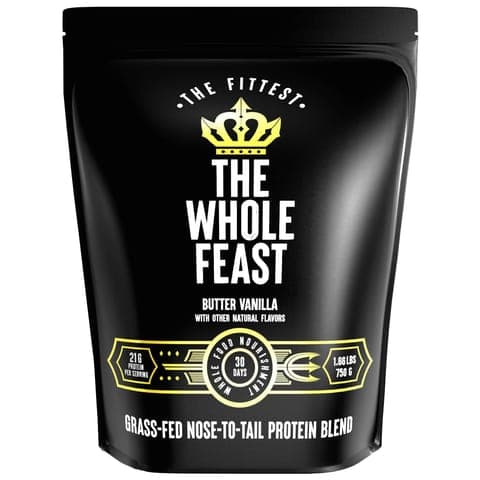
| 2 | Super Coffee Protein+ Mocha Latte (powder) | 1/3 cup (34.95g) | 25g | 130 | 19.2g | 3g | — | Highest protein per calorie; cheapest per gram of protein |
| 3 | Orgain 30g Protein Shake Café Latte | 11 fl oz (330 mL) | 30g | 170 | 17.6g | 1g | 97mg | Same 30g with no sucralose and no carrageenan |
| 4 | Muscle Milk Coffee House Café Latte | 11 fl oz (330 mL) | 20g | 130 | 15.4g | 0g | 120mg | The only pick at a true 0g of sugar |
| 5 | Quest Iced Coffee Vanilla Latte | 10 fl oz (296 mL) | 10g | 90 | 11.1g | 1g | 200mg | Real coffee-shop caffeine at 2g net carbs |
| 6 | OWYN Cold Brew Coffee | 12 fl oz (355 mL) | 20g | 180 | 11.1g | 4g | — | The only dairy-free, plant-protein pick |
Read the last two columns together and the shape of the whole category appears. The three picks built as shakes (Premier, Orgain, Muscle Milk) deliver 20–30g of protein and 95–120mg of caffeine. The one pick built as coffee (Quest) delivers 200mg of caffeine and 10g of protein. Nothing on this shelf does both, and the brands rarely put the two numbers next to each other, so it is easy to buy a 30g shake expecting it to replace your morning coffee and end up under-caffeinated by half.
How Much Caffeine Is in a Protein Coffee?
Between 95mg and 200mg per container among the picks here, and the amount tracks what the product is rather than what it is called. Premier Protein Café Latte is 95mg and Orgain's 30g Café Latte is 97mg — both deliberately set at about one 8 oz cup of brewed coffee. Muscle Milk Coffee House is 120mg. Quest Iced Coffee is 200mg, and Kitu's ready-to-drink Super Coffee line is also 200mg, which is closer to a 16 oz coffee-shop drink. For reference, the US Food and Drug Administration cites 400mg a day — about four or five cups of coffee — as the amount not generally associated with negative effects in healthy adults, so two Quest Iced Coffees use half a day's allowance before anything else you drink.
Is a Protein Coffee Better Than a Protein Shake Plus a Cup of Coffee?
Only on convenience, and you pay for it. A 30g protein coffee and a plain 30g shake are nutritionally near-identical — the coffee version just adds coffee extract and about 95mg of added caffeine, which is the same caffeine you would get from a cup of drip coffee that costs pennies to brew. Where protein coffee genuinely wins is the one-hand, one-container morning: you are not making coffee and shaking a bottle, you are opening one carton. Where it loses is flexibility, because the caffeine dose is fixed and you cannot top it up without opening a second carton. If you want 30g of protein and a real 200mg of caffeine, the honest answer is to buy the 30g shake and brew the coffee separately — see our best ready-to-drink protein shakes roundup for the shake half.
Can You Just Mix Protein Powder Into Hot Coffee?
You can, but the protein you choose decides whether it works. Whey protein concentrate and isolate start to denature and clump in liquid above roughly 160–170°F, which is below the 195–205°F of fresh-brewed coffee — that is why dumping a scoop of whey into a hot mug produces the curdled, grainy result most people get once and never repeat. Three things fix it: let the coffee cool for three or four minutes first, mix the powder into a small amount of cold liquid into a smooth slurry before adding the hot coffee, or use a powder built for the job. Super Coffee Protein+ is formulated hot or iced and uses micellar casein and beef protein rather than whey, both of which hold up better in heat. Collagen peptides also dissolve cleanly in hot coffee, but collagen is an incomplete protein and is not a substitute for a complete protein at breakfast.
The 6 Best Protein Coffees, Ranked
#1 Premier Protein Café Latte — most protein for the fewest calories

Premier Protein Café Latte High Protein Shake, 11 fl oz
30g protein · 160 cal · 1g sugar · 3g fat · 4g carbs · 260mg sodium · 95mg caffeine · 24 vitamins and minerals
Check price on Amazon →Premier Protein Café Latte is the most efficient ready-to-drink protein coffee on the mainstream shelf: 30g of protein for 160 calories works out to 18.8g of protein per 100 calories, and nothing else in carton form beats it. The protein is milk protein concentrate plus calcium caseinate, so it is a complete protein with a slow-digesting casein fraction — genuinely filling rather than a liquid that passes through in twenty minutes. Sugar is 1g with 0g added, and the carton carries 24 added vitamins and minerals including 650mg of calcium.
What earns it the top slot: availability plus the macro math. It is stocked at Costco, Walmart, Target, Sam's Club, and most grocery chains, which matters more than it sounds — the best protein coffee is the one you can actually restock on a Tuesday. At 30g of protein it is a real breakfast, not a snack, and at 160 calories it costs you less than a banana and a yogurt would.
The honest catches: the caffeine is 95mg, which the brand describes accurately as “the same caffeine as a cup of coffee” — if your actual habit is a 16 oz coffee-shop drink, this carton delivers under half of what you are used to. Sodium is 260mg, which is normal for the format but adds up if you drink two. And it is sweetened with sucralose and acesulfame potassium; if artificial sweeteners are a dealbreaker, pick #3 instead. Full panel in our Premier Protein shake nutrition breakdown.
#2 Super Coffee Protein+ Mocha Latte — highest protein per calorie, cheapest per gram

Super Coffee Protein+ Mocha Latte Enhanced Protein Coffee Powder, 11 servings
25g protein · 130 cal · 3g sugar (0g added) · 1g fat · 6g carbs · 348mg sodium · grass-fed beef protein + micellar casein · hot or iced
Check price on Amazon →Super Coffee Protein+ is the only pick here that is a powder rather than a drink, and it wins two columns because of it. At 25g of protein for 130 calories it is the densest option in this roundup (19.2g of protein per 100 calories), and because you are not paying to ship water, it is dramatically the cheapest per gram of protein — see the cost section below. It is also the only pick built to be made hot, which matters if your actual morning is a hot mug and not an iced bottle.
What earns it #2: it is the right answer for anyone who drinks protein coffee every single morning. One pouch replaces eleven cartons, it keeps in a cupboard, and you control the strength of the coffee it goes into. The protein blend is grass-fed beef protein plus micellar casein and non-fat dry milk, which is an unusual combination but a deliberate one: both hold together in hot liquid far better than whey does.
The honest catches: beef protein isolate is a complete protein, but it is not what most buyers expect to find in a coffee powder, and anyone avoiding red meat for any reason needs to read that ingredient line. It still contains milk, so it is not dairy-free. Sodium is 348mg a serving, the highest in this roundup. The brand does not publish a caffeine figure for the powder on its own product page, so we list it as “—” and you should treat the caffeine as unknown rather than assume it matches the ready-to-drink line. And it needs a blender bottle or a whisk — a spoon in a mug leaves lumps.
#3 Orgain 30g Protein Shake Café Latte — same 30g with no sucralose
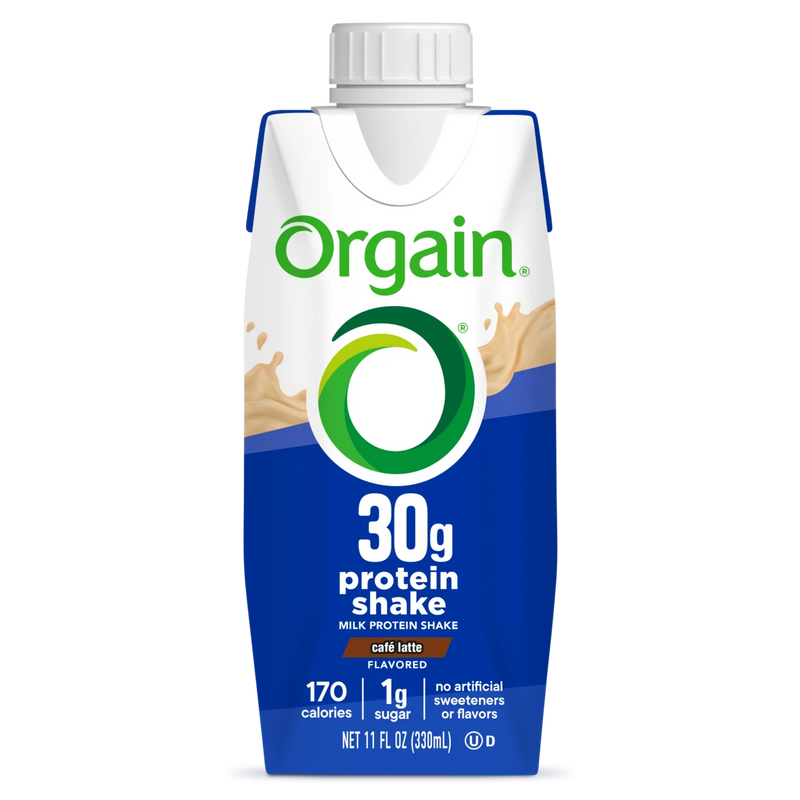
Orgain 30g Protein Shake, Café Latte, 11 fl oz
30g protein · 170 cal · 1g sugar · 3g fat · 6g carbs · 2g fiber · 340mg sodium · 97mg caffeine · milk protein isolate
Check price on Amazon →Orgain's 30g Café Latte is the cleaner-label version of the #1 pick, and the ten-calorie gap between them is the entire nutritional difference: 30g of protein from milk protein isolate, 170 calories, 1g of sugar, 97mg of caffeine. What you are actually buying is the ingredient deck. Orgain states no sucralose and no artificial sweeteners, no soy ingredients, and carrageenan free — carrageenan being the seaweed-derived thickener that shows up in most shelf-stable protein drinks and that a meaningful number of readers specifically avoid.
What earns the pick: it is the only 30g protein coffee here that clears the artificial-sweetener objection without giving up any protein. If you have tried Premier and bounced off the sucralose aftertaste, this is the direct swap, and the caffeine is effectively identical at 97mg versus 95mg.
The honest catches: sodium is 340mg, meaningfully above Premier's 260mg. Distribution is thinner — Orgain is reliable on Amazon and in Target and Costco in many regions, but it is not the wall-of-cartons presence Premier has. And at a manufacturer list price of $35.99 for a 12-pack it is the more expensive of the two 30g cartons.
#4 Muscle Milk Coffee House Café Latte — the only true 0g sugar
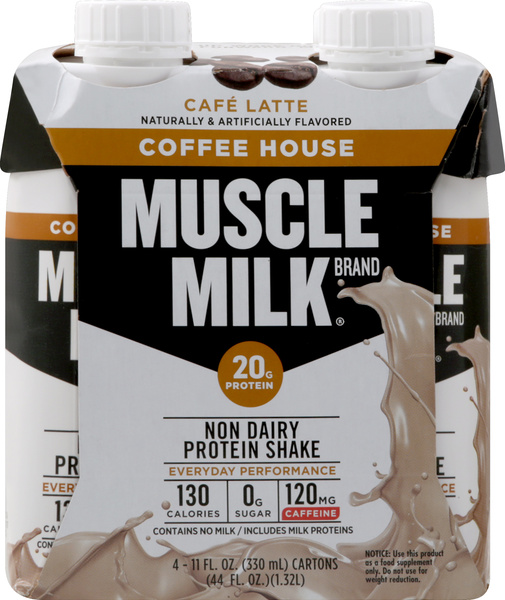
Muscle Milk Coffee House Café Latte Protein Shake, 11 fl oz
20g protein · 130 cal · 0g sugar · 4g fat · 6g carbs · 4g fiber · 120mg caffeine · milk protein isolate
Check price on Amazon →Muscle Milk Coffee House is the pick for anyone tracking sugar to zero. The carton states a flat 0g of sugar — not 1g, not “no added sugar” with a gram of lactose left over — alongside 20g of protein, 130 calories, and 4g of fiber from soluble vegetable fiber. Caffeine is 120mg, the midpoint of this roundup and the most honest match for a standard 12 oz drip coffee.
What earns the pick: the 0g sugar plus 120mg caffeine combination is unique here. It is also the cheapest-calorie way to get 20g of protein and real caffeine in one carton: at 130 calories it costs you 50 fewer calories than OWYN for the same 20g of protein, with 25% more caffeine disclosed.
The honest catches: read the carton carefully, because it is confusing by design. It is labeled a “non dairy protein shake” and states “contains no milk” while the ingredient line lists milk protein isolate, calcium caseinate, and sodium caseinate, and the carton itself clarifies “includes milk proteins.” In plain terms: this is not safe for a milk allergy and it is not vegan — the “non dairy” claim refers to the absence of fluid milk, not the absence of milk protein. If you need genuinely dairy-free, buy #6. It is also sweetened with sucralose and acesulfame potassium.
#5 Quest Iced Coffee Vanilla Latte — real coffee-shop caffeine at 2g net carbs
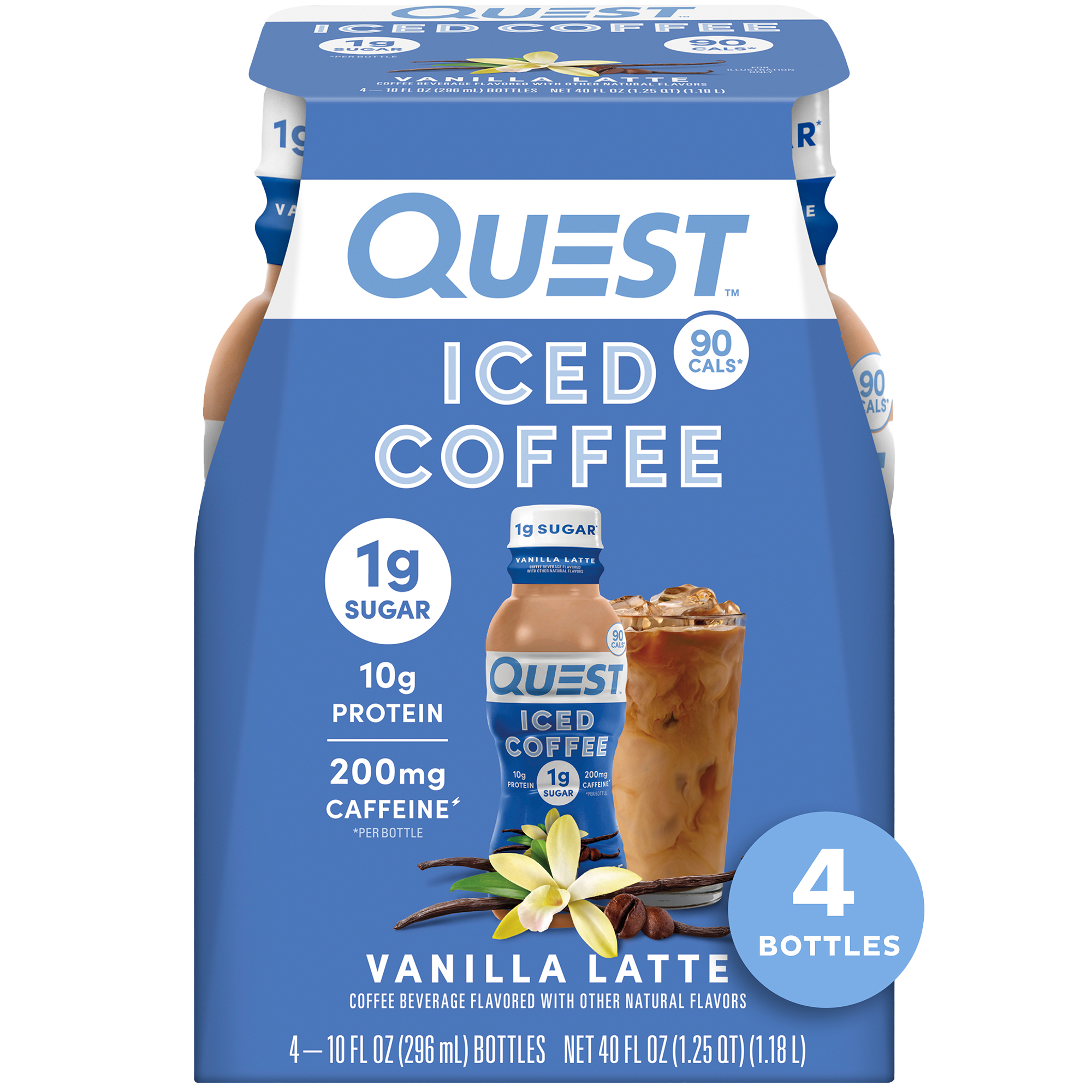
Quest Iced Coffee Vanilla Latte, 10 fl oz (296 mL)
10g protein · 90 cal · 1g sugar · 3g fat · 5g carbs with 3g fiber (2g net) · 230mg sodium · 200mg caffeine
Check price on Amazon →Quest Iced Coffee is the pick when the coffee is the point. Its first ingredient is coffee, not water, and the 200mg of caffeine is double what the 30g shakes carry — genuinely comparable to a large coffee-shop cold brew. At 90 calories and 2g of net carbs it is also the lowest-carb and lowest-calorie option in this roundup, which is why it fits a strict low-carb or keto day in a way a 170-calorie shake does not.
What earns the pick: nothing else here gives you a real caffeine dose at under 100 calories. If you currently buy a cold brew every morning and want to add a little protein to it without changing the drink, this is the closest swap on the shelf.
The honest catches: 10g of protein is a top-up, not a breakfast — it is a third of what Premier or Orgain give you, and 10g in one sitting is below the roughly 20–30g most research points to for meaningfully stimulating muscle protein synthesis. The bottle is also the smallest here at 10 fl oz, so you are getting 200mg of caffeine in a smaller volume, which hits faster. At a manufacturer list price of $13.49 for a 4-count box it is by far the most expensive pick per gram of protein. And two bottles is 400mg of caffeine — the FDA's whole-day figure for healthy adults, before any other coffee.
#6 OWYN Cold Brew Coffee — the only dairy-free pick
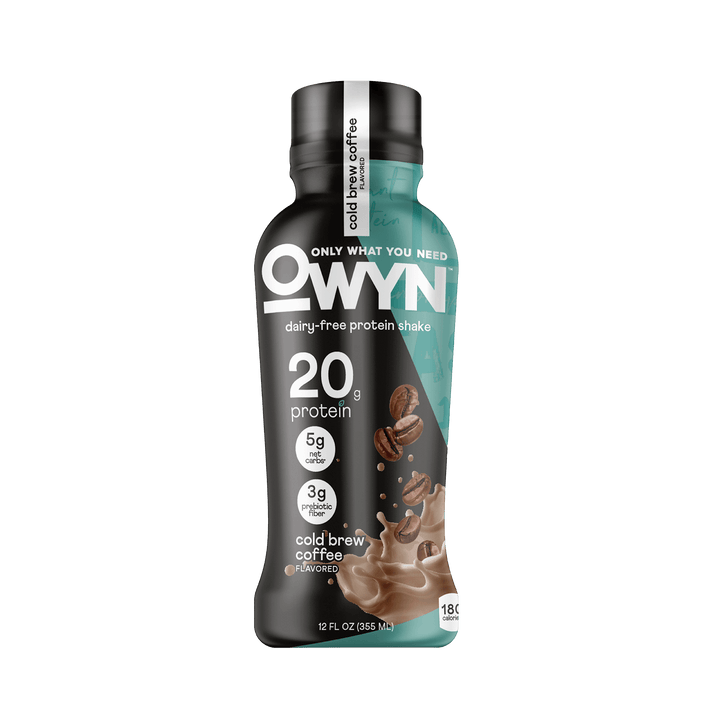
OWYN Cold Brew Coffee Plant-Based Protein Shake, 12 fl oz (355 mL)
20g protein · 180 cal · 4g sugar · 7g fat · 8g carbs · 3g fiber · 270mg sodium · pea + organic pumpkin seed protein
Check price on Amazon →OWYN Cold Brew Coffee is the only protein coffee in this roundup with no dairy in it at all. The protein is OWYN's blend of pea protein, organic pumpkin seed protein, and organic flax oil, at 20g per 12 fl oz bottle, built on real cold brew coffee extract and sweetened with organic cane sugar and monk fruit. It is also free of the top allergens, which makes it the practical choice for a milk allergy, a soy allergy, or a nut allergy — a place where every other pick on this list fails.
What earns the pick: there is almost no competition. Dairy-free ready-to-drink coffee protein is a thin shelf, and OWYN is the one widely stocked option that gets to 20g without resorting to collagen or a token 5g of protein. The 3g of fiber and the added greens blend (broccoli, spinach, kale) are a small genuine bonus.
The honest catches: it is the least efficient pick on calories — 180 calories for 20g of protein is 11.1g per 100 calories, the bottom of this table, because the flax oil brings 7g of fat. It carries 4g of sugar, all of it added cane sugar, the most of any pick here. And OWYN does not state a caffeine figure on the panel or on its own product page, so we list it as “—”; if you are managing caffeine carefully, that unknown is a real downside. Plant protein also eats more of your daily protein budget than milk protein does gram for gram, because pea protein is lower in the amino acid methionine — pairing it with pumpkin seed protein, as OWYN does, narrows that gap but does not close it.
What a Protein Coffee Actually Costs per Gram of Protein
This is the number that reorders the list, and almost nobody publishes it. Below are the three picks whose manufacturers publish a list price on their own product pages as of October 11, 2026 — the other three are sold mainly through retailers at prices that move week to week, so we list them as “—” rather than quote a number we cannot stand behind.
| Product | Manufacturer list price | Total protein in the pack | Cost per gram of protein |
|---|---|---|---|
| Super Coffee Protein+ Mocha Latte (powder, 11 servings) | $29.99 list, $19.99 on sale | 275g | $0.11 at list, $0.07 on sale |
| Orgain 30g Café Latte (12-pack) | $35.99 | 360g | $0.10 |
| Quest Iced Coffee Vanilla Latte (4-count) | $13.49 | 40g | $0.34 |
| Premier Protein Café Latte | — | — | — |
| Muscle Milk Coffee House Café Latte | — | — | — |
| OWYN Cold Brew Coffee | — | — | — |
The gap is enormous: Quest Iced Coffee costs roughly three times per gram of protein what Orgain's carton does, and roughly five times what the Super Coffee powder costs on sale. That is not a knock on Quest — you are buying 200mg of caffeine and a 90-calorie drink, and the protein is almost a side effect — but it does mean that if protein is what you are actually shopping for, a 10g coffee is the most expensive way to buy it. The same pattern holds across every liquid protein format; we found the identical two-to-one penalty when we costed out protein water versus the same whey sold as a powder.
Who Should Skip Protein Coffee Entirely
Anyone pregnant or breastfeeding should check the caffeine figure before anything else — the American College of Obstetricians and Gynecologists advises keeping caffeine under 200mg a day in pregnancy, which a single Quest Iced Coffee hits exactly. Anyone caffeine-sensitive, prone to afternoon reflux, or already taking a pre-workout should count the protein coffee's caffeine into the daily total rather than treating it as a protein shake that happens to be brown. Anyone with a milk allergy has exactly one option on this list and it is OWYN; the “non dairy” wording on the Muscle Milk carton does not mean milk-protein-free. And if you drink your coffee black because you like coffee, a protein coffee is not going to convert you — every one of these is a sweetened milk drink with coffee in it, not coffee with protein in it. In that case buy the protein separately: our best protein powders and best casein guides cover the powders that mix cleanly, and the Four Sigmatic protein coffee review covers the one instant coffee built around protein.
Frequently Asked Questions
What is the best protein coffee in 2026?
Premier Protein Café Latte, on the combination of protein, calories, and availability: 30g of protein in an 11 fl oz carton at 160 calories, 1g of sugar, and 95mg of caffeine. If you want the same 30g without sucralose or carrageenan, Orgain's 30g Café Latte is the direct swap at 170 calories and 97mg of caffeine. If you drink one every morning, the Super Coffee Protein+ powder is both the densest (25g of protein in 130 calories) and the cheapest per gram of protein.
Which protein coffee has the most caffeine?
Quest Iced Coffee Vanilla Latte and the Kitu Super Coffee ready-to-drink line, both at 200mg per container. That is roughly double the 95mg in Premier Protein Café Latte and the 97mg in Orgain's 30g Café Latte, and well above Muscle Milk Coffee House at 120mg. The trade is protein: both 200mg drinks carry only 10g of protein.
Which protein coffee has the most protein?
Premier Protein Café Latte and Orgain 30g Café Latte tie at 30g of protein per 11 fl oz carton. Premier does it in 160 calories and Orgain in 170. Among powders, Super Coffee Protein+ delivers 25g per 1/3-cup scoop at 130 calories, the highest protein-per-calorie ratio in this roundup at 19.2g per 100 calories.
Is protein coffee good for weight loss?
It can help, for one specific reason: it replaces a sweetened coffee-shop drink that carries 200 to 400 calories and little protein with one that carries 90 to 180 calories and 10 to 30g of protein, and protein is the most satiating of the three macronutrients. It is not a fat burner and nothing on this list makes that claim honestly. The mechanism is swapping calories out and protein in, which only works if the protein coffee genuinely replaces something rather than being added on top of it.
Can you drink protein coffee on an empty stomach?
Yes for most people — a protein coffee is food, so it is a gentler thing to put into an empty stomach than black coffee is. The caveat is caffeine on an empty stomach, which can worsen reflux or jitteriness in people prone to either; the milk protein and fat in the 20–30g picks slow that down more than the 90-calorie Quest bottle does.
Is protein coffee better before or after a workout?
After, if you have to choose one. The caffeine is useful before training and the protein is useful after, but a 20–30g dose of complete protein does more for recovery than the same drink does for performance, and drinking 300mL of milk protein immediately before a hard session is uncomfortable for a lot of people. A practical split: coffee before, protein coffee after. For what to pair with it, see our best protein drinks to build muscle guide.
The Bottom Line
Buy Premier Protein Café Latte if you want the most protein for the fewest calories in a carton you can find in any store. Buy Orgain 30g Café Latte if you want that same 30g with no sucralose and no carrageenan. Buy Super Coffee Protein+ powder if you drink one every morning and want to stop paying to ship water. Buy Muscle Milk Coffee House if you are tracking sugar to a true zero. Buy Quest Iced Coffee if the 200mg of caffeine is the actual point and 10g of protein is a bonus. Buy OWYN Cold Brew if you need dairy-free. And go in knowing the one thing the front of the carton will not tell you: a 30g protein coffee carries about one cup of coffee's worth of caffeine, not a coffee-shop cup's worth, so if caffeine is what you are buying, check the back before you build your morning around it. Browse the full protein snacks directory or compare the wider category in our best protein drinks roundup.
Shop our top protein drink picks
Editor-selected high-protein options related to this guide. As an Amazon Associate we may earn from qualifying purchases.
Buy the products in this guide: Premier Protein Shake, Chocolate, 30g Protein, No Added Sugar, 24 Vitamins & Minerals to Support Immune Health, 11 fl oz, 12 · High Protein Shake · Premier Protein Shake, Chocolate, 30g Protein, No Added Sugar, 24 Vitamins & Minerals to Support Immune Health, Gluten-Free,1
42g protein42g protein30g proteinTags
High Protein Snacks Pro Editorial Team
Independently researched and editorially reviewed. We compare real nutrition labels and never accept payment for coverage.
Get the best new protein snacks in your inbox
Weekly picks and honest reviews — no spam, unsubscribe anytime.
More from the journal
Best Protein Drinks to Build Muscle (2026): 5 Ready-to-Drink Shakes Ranked by Protein, Leucine, and Calories
The best protein drink to build muscle in 2026 is fairlife Core Power Elite — 42g of complete ultra-filtered milk protein per 14 fl oz bottle at 230 calories, the most protein in a single ready-to-drink shake sold at US retail, and roughly 3.8 to 4.6g of leucine, comfortably above the 2.5 to 3g per serving that research shows is needed to maximally switch on muscle protein synthesis. fairlife Nutrition Plan wins on protein per calorie at 20.0g per 100 calories. Five real ready-to-drink shakes ranked on verified 2026 label data, with the leucine math shown, and an honest catch on every pick.
Read more
Best High-Protein Snacks at Sam's Club 2026: 10 Bulk Picks Ranked by Real Protein, Price Per Serving, and Ingredients
The best high-protein snack at Sam's Club in 2026 is the Fairlife Nutrition Plan Chocolate Shake 18-pack — 30g of complete dairy protein for 150 calories per 11.5oz bottle, sold in the Sam's Club exclusive 18-count for roughly $32–$36 (about $1.80–$2.00 per bottle, the cheapest 30g dairy shake anywhere in club-store retail). For the absolute-highest per-bottle protein, the Fairlife Core Power Elite 42g 12-pack lands at 42g/230 cal, and Muscle Milk Pro Series 40g is the alternative at 40g per 14oz bottle. On the whole-food side, FAGE Total 5% Plain Greek Yogurt in the 35.3oz Sam's tub delivers 18g per cup on a two-ingredient label. Ten Sam's Club-carried bulk picks — shakes, bars, meat sticks, cottage cheese, and yogurt — compared on real 2026 nutrition labels and typical Sam's Club per-serving price.
Read more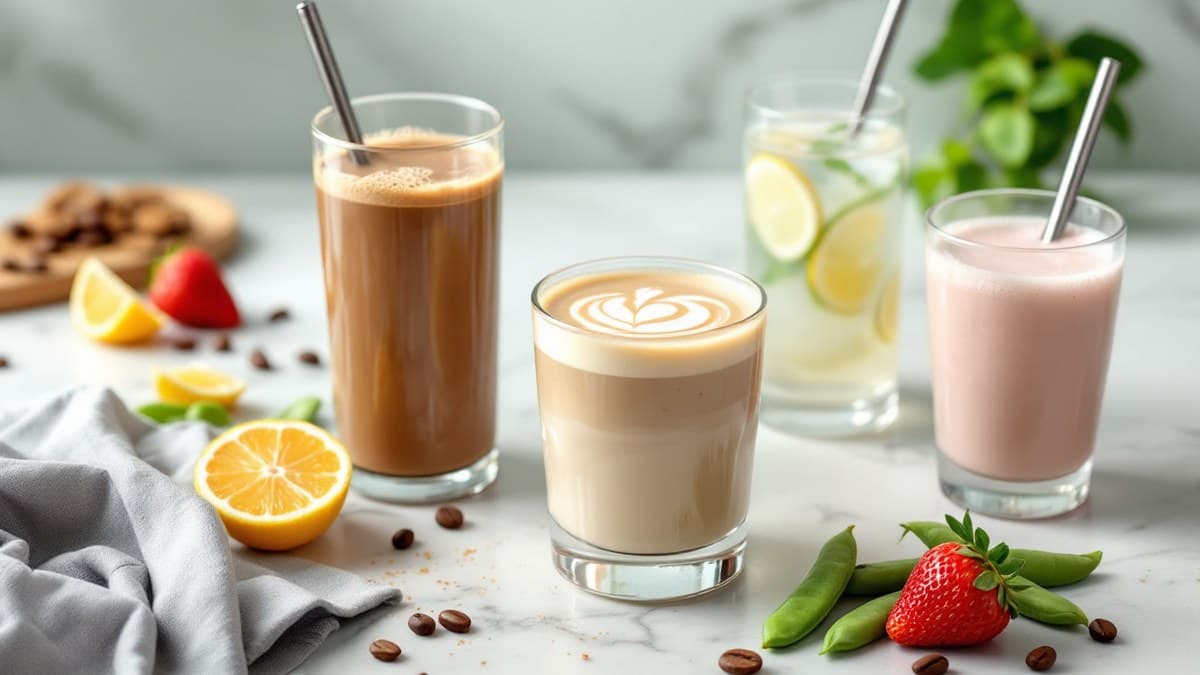
Best Protein Drinks 2026: 6 Ready-to-Drink Picks Compared Across Shakes, Coffee, Clear Water, and Plant-Based
Fairlife Nutrition Plan is the best everyday protein drink at 30g of protein for 150 calories — the leanest lactose-free bottled shake at scale. OWYN Pro Elite is the best plant-based pick at 32g of pea protein, 0g sugar, and free of the top 9 allergens. Isopure 32g Clear is the best clear/refreshing option at 130 calories with zero carbs. Kitu Super Coffee is the best protein-plus-caffeine combo at 10g of protein and 150mg of cold-brew caffeine. Six verified picks compared across protein per calorie, sweeteners, cost per gram, and format — plus the honest catches for each.
Read more