siggi's vs Oikos (2026): Skyr vs Greek Yogurt Head-to-Head on Protein, Sugar, Sweeteners, and Ingredients
Oikos wins raw protein per cup — Oikos Pro Vanilla packs 20g into a 130-calorie 5.3oz cup by adding whey protein concentrate to ultra-filtered milk — while siggi's wins the ingredient list: its Plain Nonfat skyr is cultured skim milk and five live cultures, nothing else, at 16g of protein for 90 calories. Plain against plain at the same 170g serving, siggi's edges Oikos Triple Zero 19g to 18g. The deciding factors are stevia (in every flavored Oikos cup and in siggi's Lower Sugar line), real cane sugar in siggi's flavored cups, and how each brand gets to its protein number. Every figure verified from each brand's own 2026 nutrition panel.
Our top Greek yogurt picks
Editor-selected and ready to buy. As an Amazon Associate we may earn from qualifying purchases.
 15g protein
Icelandic Skyr - Vanilla
Amazon returns policy · secure checkout
 15g protein
Triple Zero Greek Yogurt - Vanilla
Amazon returns policy · secure checkout
 10g protein
Direct Answer
Oikos wins on raw protein per cup: Oikos Pro Vanilla delivers 20g of protein in a 130-calorie 5.3oz cup, the most of any product either brand sells in that size — it gets there by adding whey protein concentrate to ultra-filtered milk and sweetening with stevia. siggi’s wins on ingredients: Plain Nonfat skyr is cultured skim milk plus five live cultures and nothing else, 16g of protein at 90 calories with no sweetener of any kind. Plain against plain at the same 170g serving, siggi’s edges Oikos Triple Zero 19g to 18g of protein. Buy Oikos Pro if the protein number is the whole point; buy siggi’s Plain if you want the shortest label; buy Oikos Triple Zero if you want the fewest calories (80 per Vanilla cup) and do not mind stevia.
This matchup is really a question about how a yogurt earns its protein. siggi’s is Icelandic skyr: skim milk cultured and strained so densely that the protein concentrates on its own, with a label that stays at one ingredient plus cultures. Oikos, Danone’s Greek-yogurt brand, now sells two very different products under one name. Oikos Triple Zero is a strained nonfat Greek yogurt with zero added sugar, zero fat, and zero artificial sweeteners — the flavored cups use stevia leaf extract. Oikos Pro is not technically Greek yogurt at all: its label reads “yogurt-cultured ultra-filtered milk,” and it reaches 20–25g of protein by filtering the milk and adding whey protein concentrate. Readers keep asking which to buy because both brands land on the same refrigerated shelf at nearly the same calorie count, and the differences that actually decide it — protein per calorie, protein per gram, sweetener, and ingredient count — are all on the label. Every number below was read from each brand’s own published nutrition panel on September 4, 2026. Anything a panel did not state is marked with a dash rather than estimated.
Affiliate links — if you buy through them we earn a small commission at no extra cost to you. Every nutrition figure below comes from the manufacturer’s own published 2026 nutrition panel.
The Quick Verdict: siggi’s vs Oikos Head-to-Head
| Round | siggi’s | Oikos | Winner |
|---|---|---|---|
| Most protein in a 5.3oz cup | 16g (Plain or Vanilla Nonfat) | 20g (Pro Vanilla) | Oikos |
| Protein per 100 calories, plain nonfat (170g serving) | 19.0g | 18.0g (Triple Zero Plain) | siggi’s |
| Protein per 100g of yogurt, plain nonfat (170g serving) | 11.2g | 10.6g (Triple Zero Plain) | siggi’s |
| Lowest-calorie flavored cup | 100 cal (Lower Sugar Vanilla) | 80 cal (Triple Zero Vanilla) | Oikos |
| Plain-cup ingredient list | Skim milk + 5 live cultures | Nonfat milk + 2 cultures (Triple Zero); adds whey protein concentrate + cream (Pro) | siggi’s |
| Stevia in the lineup | Lower Sugar line only | Every flavored Triple Zero and Pro cup | siggi’s |
| Added sugar in flavored cups | 5g cane sugar (Vanilla Nonfat); 0g (Lower Sugar) | 0g (stevia-sweetened) | Oikos |
| Texture | Denser, drier, spoon-stands-up skyr | Smoother, creamier Greek (Pro is creamiest) | Preference |
Which Has More Protein: siggi’s or Oikos?
Oikos, if you buy Oikos Pro; siggi’s, if you compare plain to plain. Oikos Pro Vanilla lists 20g of protein per 5.3oz (150g) cup at 130 calories, and the Pro Plain quart lists 25g per 170g serving at 160 calories — numbers no siggi’s cup reaches, because Oikos Pro adds whey protein concentrate to an already ultra-filtered milk base. Strip the added whey out of the comparison and it flips: siggi’s Plain Nonfat in the 24oz tub lists 19g of protein per 170g at 100 calories, against 18g at 100 calories for Oikos Triple Zero Plain at the identical serving. That works out to 19.0g versus 18.0g of protein per 100 calories and 11.2g versus 10.6g per 100g of yogurt — siggi’s wins both, narrowly, on straining alone. The single-serve 5.3oz cups tell the same story with different rounding: siggi’s Plain Nonfat 16g at 90 calories, Oikos Triple Zero Vanilla 15g at 80 calories.
siggi’s Skyr: The Simple-Ingredient Pick
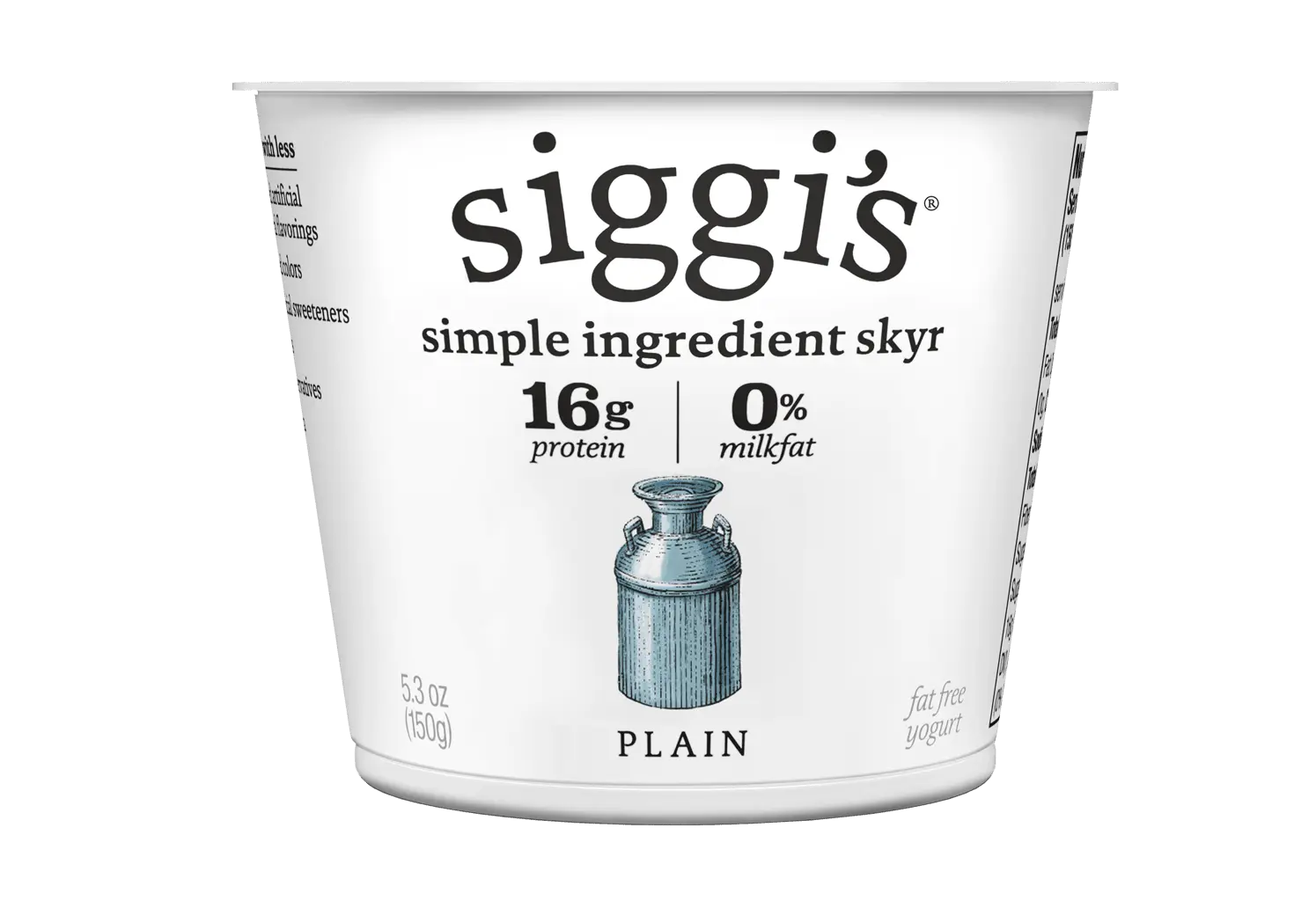
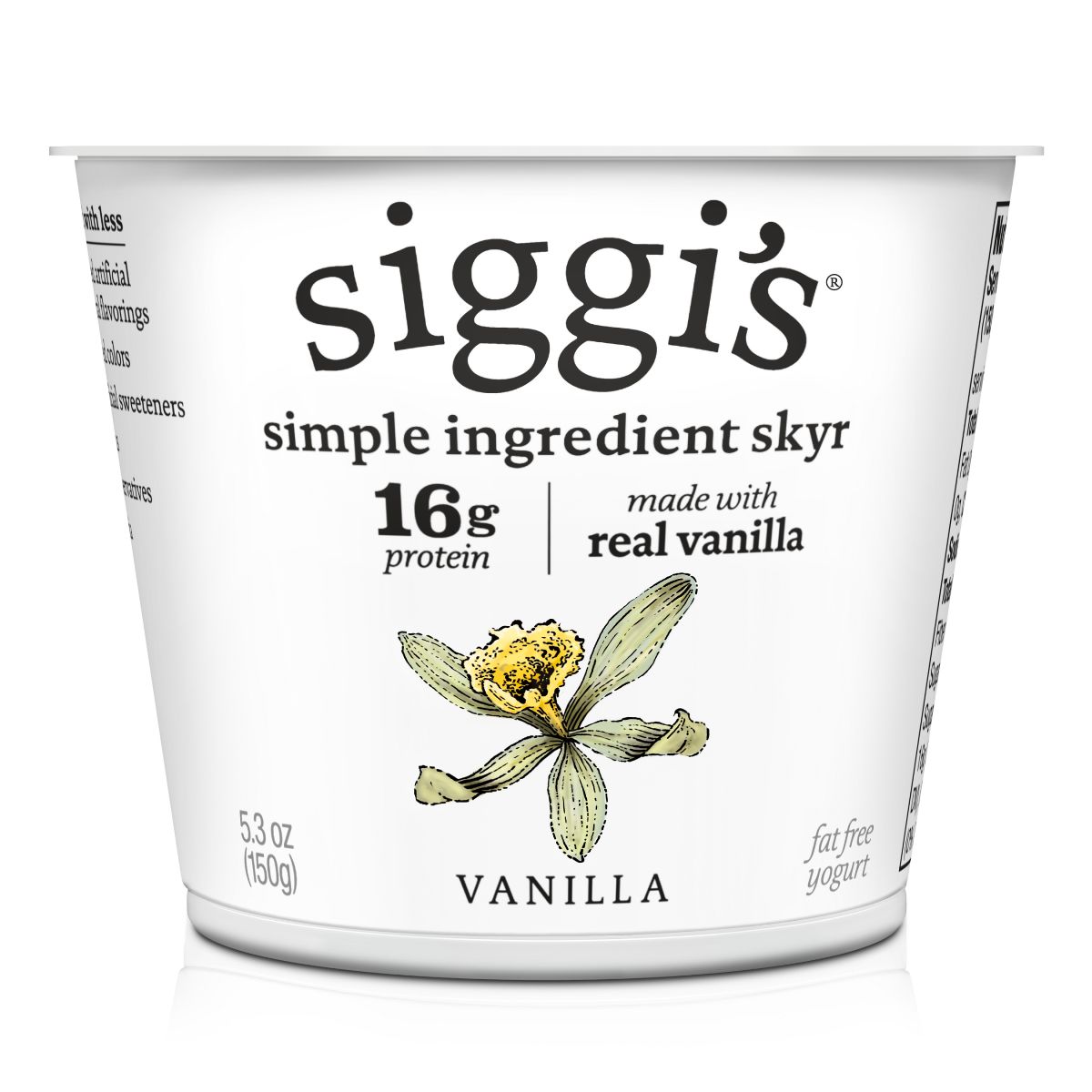
siggi’s Plain Nonfat Skyr (5.3oz)
16g protein · 90 cal per 150g cup · 4g sugar, 0g added · cultured skim milk + 5 live cultures, nothing else
Also in the refrigerated aisle of most major grocery chains. Affiliate link.
siggi’s Plain Nonfat is the shortest label on the high-protein yogurt shelf: cultured pasteurized skim milk and five named live cultures (S. thermophilus, L. bulgaricus, Bifidobacterium, L. acidophilus, L. paracasei). The 5.3oz cup lists 90 calories, 16g of protein, 6g of carbohydrate, 4g of naturally occurring milk sugar, 0g added sugar, 55mg of sodium, and 150mg of calcium. The 24oz tub, sold by the 170g serving, lists 100 calories and 19g of protein — the best plain-cup protein-per-calorie figure in this comparison. siggi’s flavored cups are sweetened with real cane sugar in disclosed amounts: Vanilla Nonfat runs 110 calories with 16g of protein and 9g of total sugar, 5g of it added. Its skyr texture is the densest of anything here — a spoon stands up in it — and its culture profile is milder and less sour than Greek-style yogurt. Full flavor-by-flavor panels in our siggi’s nutrition facts breakdown.
The honest trade-offs. siggi’s cannot match Oikos Pro on the raw protein number: 16g in a cup versus 20g. The Lower Sugar Vanilla line, siggi’s answer to zero-added-sugar competitors, is a meaningfully different product from the plain cup — it lists 100 calories, 14g of protein, 3g of fat, 2g of total sugar, and an ingredient list that adds milk protein concentrate, native corn starch, natural flavor, and Stevia Reb M. That is a clean label by aisle standards, but if you buy siggi’s specifically to avoid stevia, buy the Plain or the cane-sugar Vanilla, not the Lower Sugar cup. And the dense, dry skyr texture that fans love reads as chalky to people expecting creamy Greek yogurt.
Oikos Triple Zero: The Lowest-Calorie Pick
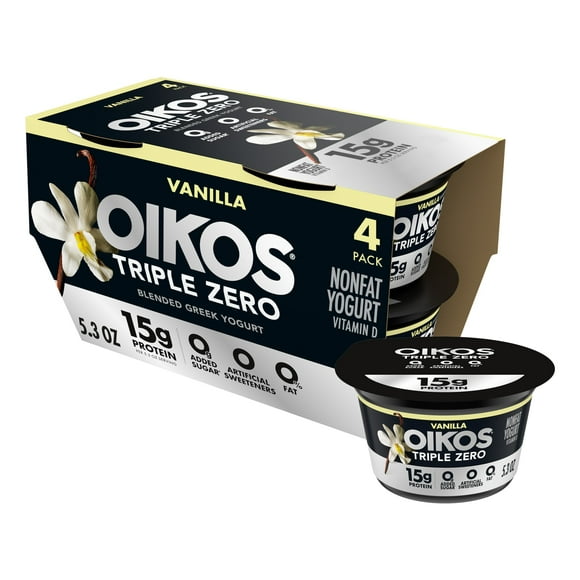
Oikos Triple Zero Vanilla (5.3oz)
15g protein · 80 cal per 150g cup · 5g sugar, 0g added · 0g fat · stevia leaf extract · vitamin D3 added
Sold in single cups, 4-packs, and 32oz quarts. Affiliate link.
Oikos Triple Zero is the calorie-counter’s cup. The Vanilla 5.3oz lists 80 calories, 15g of protein, 0g of fat, 6g of carbohydrate, 5g of total sugar with 0g added, 55mg of sodium, 150mg of calcium, and 2mcg of vitamin D — the lowest calorie count of any cup in this comparison and, at 18.8g of protein per 100 calories, the best protein-per-calorie ratio of any flavored cup on the table. Strawberry lists 90 calories and the same 15g. The plain quart, sold by the 170g serving, lists 100 calories and 18g of protein with an ingredient list of cultured nonfat milk and two yogurt cultures, no sweetener at all. The “triple zero” is 0g added sugar, 0g fat, and 0 artificial sweeteners — the flavored cups are sweetened with stevia leaf extract, which is plant-derived rather than artificial but is still a non-nutritive sweetener with a distinct aftertaste. Full panel in our Oikos Triple Zero nutrition guide.
The honest trade-offs. The flavored cups get their sweetness from stevia leaf extract, and the ingredient list adds water, tapioca starch, natural flavors, and lemon juice concentrate — a longer list than either brand’s plain cup, and the stevia aftertaste is the most common complaint against the line. The 15g protein is the lowest number in this comparison, 1g under siggi’s cup and 5g under Oikos Pro. And the plain quart carries 7g of total sugar per 170g versus 5g in siggi’s plain at the same serving — all of it naturally occurring lactose, but a real difference for anyone tracking total sugar.
Oikos Pro: The Highest-Protein Pick
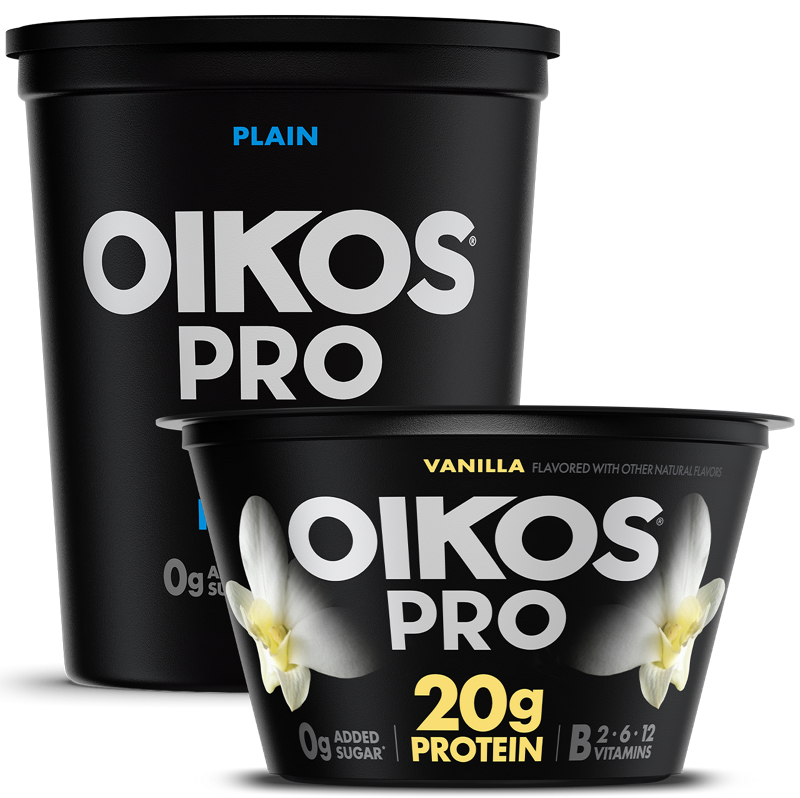
Oikos Pro Vanilla (5.3oz)
20g protein · 130 cal per 150g cup · 3g sugar, 0g added · 3g fat · ultra-filtered milk + whey protein concentrate · stevia extract
Cups, 4-packs, quarts, drinks, and shots. Affiliate link.
Oikos Pro is the protein-number cup. Vanilla lists 130 calories, 20g of protein, 3g of fat (2.5g saturated), 6g of carbohydrate, 3g of total sugar with 0g added, 45mg of sodium, and 220mg of calcium per 5.3oz cup. The Plain quart, by the 170g serving, lists 160 calories, 25g of protein, 3.5g of fat, 4g of sugar, and 270mg of calcium plus a labeled 1.5mcg of vitamin B12. The protein comes from two places the label spells out: cultured ultra-filtered nonfat milk (filtering removes water and lactose, concentrating the milk protein) and added whey protein concentrate. That is how a 150g cup reaches 20g when siggi’s straining alone tops out at 16g. It is also why Oikos Pro is the creamiest cup here — cream is the fourth ingredient — and why it eats more like a dessert than a plain skyr. Full lineup in our Oikos Pro nutrition facts guide.
The honest trade-offs. Oikos Pro is not Greek yogurt by its own label — the product name is “yogurt-cultured ultra-filtered milk,” a distinction that matters if you want strained yogurt rather than a fortified dairy protein product. Per calorie it is the least efficient cup in this comparison: 15.4g of protein per 100 calories against 17.8g for siggi’s Plain and 18.8g for Triple Zero Vanilla, because the cream and the extra calories come along with the whey. The Vanilla cup lists stevia extract, potassium sorbate (a preservative to maintain freshness), added vitamins D3, B6, and B2, and tapioca starch — the longest ingredient list of the three picks. And 2.5g of saturated fat per cup is small, but it is 2.5g more than either nonfat option.
Full Lineup Comparison
| Product | Serving | Calories | Protein | Fat | Total Sugar | Added Sugar | Sweetener | Protein / 100 cal |
|---|---|---|---|---|---|---|---|---|
| siggi’s Plain Nonfat (cup) | 150g (5.3oz) | 90 | 16g | 0g | 4g | 0g | None | 17.8g |
| siggi’s Plain Nonfat (24oz tub) | 170g (3/4 cup) | 100 | 19g | 0g | 5g | 0g | None | 19.0g |
| siggi’s Vanilla Nonfat | 150g (5.3oz) | 110 | 16g | 0g | 9g | 5g | Cane sugar | 14.5g |
| siggi’s Lower Sugar Vanilla | 150g (5.3oz) | 100 | 14g | 3g | 2g | 0g | Stevia Reb M | 14.0g |
| Oikos Triple Zero Vanilla | 150g (5.3oz) | 80 | 15g | 0g | 5g | 0g | Stevia leaf extract | 18.8g |
| Oikos Triple Zero Strawberry | 150g (5.3oz) | 90 | 15g | 0g | 5g | 0g | Stevia leaf extract | 16.7g |
| Oikos Triple Zero Plain (quart) | 170g (3/4 cup) | 100 | 18g | 0g | 7g | 0g | None | 18.0g |
| Oikos Pro Vanilla | 150g (5.3oz) | 130 | 20g | 3g | 3g | 0g | Stevia extract | 15.4g |
| Oikos Pro Plain (quart) | 170g (3/4 cup) | 160 | 25g | 3.5g | 4g | 0g | None | 15.6g |
Every number above was read from the brand’s own published nutrition panel on September 4, 2026. Protein per 100 calories is protein grams divided by calories, times 100. siggi’s whole-milk and plant-based lines and Oikos Remix, Fusion, and drinks are omitted rather than estimated.
Does siggi’s or Oikos Have Artificial Sweeteners?
Neither brand uses sucralose, aspartame, acesulfame potassium, or sugar alcohols. The sweetener that separates them is stevia, a plant-derived non-nutritive sweetener. Oikos uses it in every flavored cup: Triple Zero Vanilla and Strawberry list stevia leaf extract, and Oikos Pro Vanilla lists stevia extract. Only the Oikos plain quarts are sweetener-free. siggi’s takes the opposite approach on its main line — Plain has no sweetener and Vanilla Nonfat uses 5g of real cane sugar — but its Lower Sugar Vanilla cup does list Stevia Reb M. So the practical rule: if you want no stevia, buy any siggi’s cup except Lower Sugar, or an Oikos plain quart. If you want zero added sugar in a flavored cup and do not mind stevia, Oikos Triple Zero is the lighter choice at 80 calories and Oikos Pro the higher-protein one at 130.
Is siggi’s or Oikos Healthier?
Plain against plain, siggi’s has the shorter label (skim milk plus five cultures versus nonfat milk plus two), slightly more protein per calorie (19.0g versus 18.0g per 100 calories at the 170g serving), and less total sugar (5g versus 7g). Oikos Triple Zero Plain answers with more calcium per serving (190mg versus 170mg). Flavored against flavored, the trade is stevia versus cane sugar: Oikos Triple Zero Vanilla gives you 80 calories and 0g added sugar with stevia; siggi’s Vanilla Nonfat gives you 110 calories and 5g of real added sugar with no non-nutritive sweetener. Oikos Pro is the outlier — more protein, more calories, added cream, whey protein concentrate, added vitamins, and a preservative. It is the right cup when the goal is hitting a protein target, and the wrong one when the goal is the shortest ingredient list. For how these two stack up against the rest of the shelf, see our Greek yogurt brands ranked by protein and the high-protein yogurt brands roundup.
Where Each Brand Wins
Buy siggi’s if: you want the shortest ingredient list on the shelf; you want the most protein per calorie from straining alone (19g at 100 calories in the tub); you prefer real cane sugar in modest, disclosed amounts over stevia in your flavored cup; you find Greek yogurt too sour, since skyr is noticeably milder; or you want the densest, slowest-eating spoonful.
Buy Oikos Triple Zero if: you are counting calories and want the lightest cup (80 calories, 15g protein in Vanilla); you want 0g added sugar in a flavored yogurt; you want added vitamin D; or you prefer a smoother, more classically Greek texture over dense skyr. The plain quart is also the sweetener-free way to get Oikos.
Buy Oikos Pro if: the protein number is the whole point — 20g per cup or 25g per 170g serving, the highest of anything either brand sells; you want a creamier, richer cup and accept 3g of fat for it; or you want added B vitamins and calcium (220–270mg per serving) alongside the protein. See our Oikos Triple Zero vs Ratio comparison if the goal is the most protein per cup on the entire shelf.
Frequently Asked Questions
Is Oikos Pro real Greek yogurt?
Not by its own label. Oikos Pro is named “yogurt-cultured ultra-filtered milk” and reaches 20g of protein per cup by adding whey protein concentrate and cream to ultra-filtered nonfat milk. Oikos Triple Zero is the brand’s strained nonfat Greek yogurt. siggi’s is Icelandic skyr, which is strained even more densely than Greek yogurt and reaches its protein by straining alone.
Which has more protein, siggi’s or Oikos?
Oikos Pro has the most: 20g per 5.3oz cup and 25g per 170g serving of the plain quart. Compared plain to plain at the same 170g serving, siggi’s Plain Nonfat lists 19g at 100 calories against 18g at 100 calories for Oikos Triple Zero Plain, so siggi’s wins on protein per calorie and per gram when no whey is added.
Does siggi’s or Oikos have stevia?
Both, in different places. Every flavored Oikos cup (Triple Zero Vanilla, Strawberry, and Oikos Pro Vanilla) lists stevia leaf extract or stevia extract; only the Oikos plain quarts are sweetener-free. siggi’s Plain and cane-sugar Vanilla cups contain no stevia, but its Lower Sugar Vanilla line lists Stevia Reb M.
Which has less sugar, siggi’s or Oikos?
For added sugar, Oikos: every Triple Zero and Pro cup lists 0g added. For total sugar in a plain cup, siggi’s: 4g per 5.3oz cup and 5g per 170g serving versus 7g per 170g for Oikos Triple Zero Plain, all of it naturally occurring milk sugar. siggi’s Vanilla Nonfat is the only cup in this comparison with added sugar — 5g of cane sugar.
Which is better for weight loss goals, siggi’s or Oikos?
On the label math, Oikos Triple Zero Vanilla is the lightest cup at 80 calories with 15g of protein (18.8g of protein per 100 calories), and siggi’s Plain Nonfat in the tub is the most protein-efficient plain option at 19g per 100 calories. Oikos Pro delivers the most total protein per cup but at 130 calories, the least protein per calorie of the three picks. Choose by whichever number your plan tracks.
Which has more live cultures?
siggi’s lists five live active cultures on every cup: S. thermophilus, L. bulgaricus, Bifidobacterium, L. acidophilus, and L. paracasei. Oikos Triple Zero and Oikos Pro list two yogurt cultures, S. thermophilus and L. bulgaricus. Neither brand publishes a colony count, so the labels support only the strain comparison, not a potency claim.
Bottom line: siggi’s vs Oikos is a choice between how a cup earns its protein. siggi’s earns it by straining, keeps the label at skim milk plus cultures, edges Oikos plain-for-plain at 19g versus 18g per 100 calories, and sweetens its flavored cups with real cane sugar. Oikos earns the bigger headline numbers two ways — Triple Zero by cutting calories to 80 with stevia, Pro by adding whey protein concentrate to reach 20–25g — and asks you to accept stevia in every flavored cup. Decide by what you are optimizing: shortest label, siggi’s Plain; fewest calories, Oikos Triple Zero; most protein, Oikos Pro.
Keep comparing: FAGE vs siggi’s and siggi’s vs Chobani put skyr against the two biggest Greek names; Two Good vs Oikos Triple Zero covers the low-sugar Danone matchup; the best Greek yogurt brands ranking places every brand in the wider field. To browse ingredient panels and current prices, visit the protein snacks directory.
Shop our top Greek yogurt picks
Editor-selected high-protein options related to this guide. As an Amazon Associate we may earn from qualifying purchases.
15g proteinIcelandic Skyr - Vanilla
Amazon returns policy · secure checkout
15g proteinTriple Zero Greek Yogurt - Vanilla
Amazon returns policy · secure checkout
10g proteinTags
High Protein Snacks Pro Editorial Team
Independently researched and editorially reviewed. We compare real nutrition labels and never accept payment for coverage.
Get the best new protein snacks in your inbox
Weekly picks and honest reviews — no spam, unsubscribe anytime.
More from the journal
Oikos vs FAGE (2026): Which Greek Yogurt Wins on Protein, Sugar, Stevia, and Ingredients
Oikos wins raw protein per cup: Oikos Pro Vanilla packs 20g into a 130-calorie 5.3 oz cup by adding whey protein concentrate to ultra-filtered milk. FAGE wins protein per calorie and the ingredient list: FAGE Total 0% is skimmed milk and five live cultures, nothing else, at 16g of protein for 80 calories, the best ratio in this comparison. Every flavored Oikos cup is stevia-sweetened; no FAGE Total product is sweetened at all. Eight products compared on each brand's own September 2026 nutrition panel, with the protein-per-calorie math shown and an honest catch on every pick.
Read more
FAGE vs siggi's (2026): 18g vs 17g Protein Per Cup — Which Strained Yogurt Actually Wins?
FAGE wins on protein per calorie — Total 0% Plain delivers 18g of protein in a 90-calorie serving, the best ratio in the mainstream yogurt aisle — while siggi's wins on protein per spoonful, packing 17g into a smaller, denser 5.3oz skyr cup. Neither brand puts an artificial sweetener in any cup, which makes this the cleanest head-to-head in the category. The real difference is texture, tang, and what the flavored lineups do with sugar. Every number verified from each brand's own nutrition panel.
Read more
Oikos vs Chobani (2026): Which Greek Yogurt Wins on Protein, Sugar, Sweeteners and Lactose
Oikos wins on protein in every matchup: 18g vs 16g per 170g of plain, 15g vs 12g in a 150g vanilla cup, and 20g in a 5.3 oz Oikos Pro cup where Chobani needs 6.7 oz. Chobani wins on calories, sugar and lactose: Zero Sugar Vanilla is 60 calories with 0g sugar and lactose-free, and its plain nonfat comes in a one-ingredient single cup. Nine products compared on each brand’s own September 2026 labels, with every sweetener named and the honest catch on both.
Read more