Oikos vs Chobani (2026): Which Greek Yogurt Wins on Protein, Sugar, Sweeteners and Lactose
Oikos wins on protein in every matchup: 18g vs 16g per 170g of plain, 15g vs 12g in a 150g vanilla cup, and 20g in a 5.3 oz Oikos Pro cup where Chobani needs 6.7 oz. Chobani wins on calories, sugar and lactose: Zero Sugar Vanilla is 60 calories with 0g sugar and lactose-free, and its plain nonfat comes in a one-ingredient single cup. Nine products compared on each brand’s own September 2026 labels, with every sweetener named and the honest catch on both.
Our top high-protein picks
Editor-selected and ready to buy. As an Amazon Associate we may earn from qualifying purchases.
 15g protein
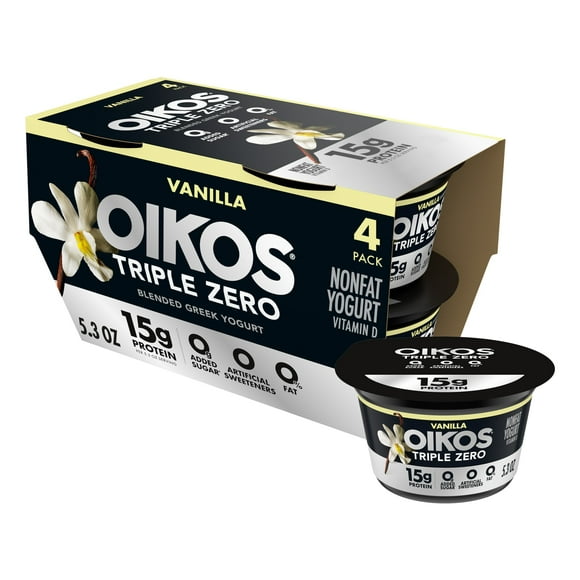
Triple Zero Greek Yogurt - Vanilla
Amazon returns policy · secure checkout
 25g protein
Complete Advanced Nutrition - Vanilla
Amazon returns policy · secure checkout
20g proteinComplete Protein Drink - Vanilla
Amazon returns policy · secure checkout
Direct Answer
Oikos wins on protein per cup: Oikos Triple Zero Vanilla has 15g of protein in a 150g cup against 12g in Chobani Zero Sugar Vanilla, and Oikos Pro Vanilla fits 20g into a 5.3 oz cup where Chobani needs a 6.7 oz cup to reach the same 20g. Chobani wins on calories, sugar and lactose: Chobani Zero Sugar Vanilla is 60 calories with 0g of total sugar and is labeled lactose-free, and Chobani sells plain nonfat Greek yogurt in a single 5.3 oz cup (80 calories, 14g protein, one ingredient), while oikos.com lists plain Triple Zero and plain Oikos Pro only as 32 oz quarts. Every figure below was read from each brand’s own published nutrition panel on September 11, 2026.
Oikos and Chobani are two of the most familiar names in the American Greek yogurt aisle, and in 2026 they have converged on almost the same three products: a plain nonfat Greek yogurt, a low-sugar flavored cup, and a 20g high-protein cup. The labels look similar at a glance. They are not. Oikos packs more protein into every cup it makes. Chobani goes lower on calories and sugar, removes the lactose from two of its lines, and names six live cultures to Oikos’s two. Which one is better depends on which of those numbers you actually care about, and the panels below make that a one-minute decision.
Affiliate links — if you buy through them we earn a small commission at no extra cost to you. Every nutrition figure below comes from the manufacturer’s own published 2026 nutrition panel, read on chobani.com and oikos.com on September 11, 2026, per the serving size each brand prints.
The Quick Verdict: Oikos vs Chobani, Matchup by Matchup
The fair way to compare these two brands is product against its direct rival, because both companies now make the same three kinds of cup. Here are the three matchups, with the winner on each line in bold.
| Matchup | Chobani | Oikos | Winner on protein | Winner on calories and sugar |
|---|---|---|---|---|
| Plain nonfat, per 3/4 cup (170g) | Nonfat Plain: 90 cal, 16g protein, 6g sugar | Triple Zero Plain: 100 cal, 18g protein, 7g sugar | Oikos (+2g) | Chobani (−10 cal, −1g sugar) |
| Low-sugar vanilla cup, per 150g | Zero Sugar Vanilla: 60 cal, 12g protein, 0g sugar | Triple Zero Vanilla: 80 cal, 15g protein, 5g sugar | Oikos (+3g) | Chobani (−20 cal, −5g sugar) |
| 20g high-protein vanilla cup | High Protein Vanilla: 6.7 oz cup, 140 cal, 20g protein, 7g sugar | Oikos Pro Vanilla: 5.3 oz cup, 130 cal, 20g protein, 3g sugar | Tie on grams; Oikos in a smaller cup | Oikos (−10 cal, −4g sugar) |
Read down the columns and the pattern is consistent. Oikos puts more protein into each gram of yogurt in every matchup. Chobani wins on calories and sugar in the two lighter matchups, then loses both to Oikos Pro in the high-protein one, where the Chobani cup is 1.4 oz bigger to carry the same 20g. Every product in both tables lists 0g added sugar; the sugar figures above are the milk’s own lactose.
Which Has More Protein: Oikos or Chobani?
Oikos has more protein in every matchup: 18g vs 16g per 170g of plain, 15g vs 12g in a 150g vanilla cup, and 20g in a 150g Oikos Pro cup against 20g in Chobani’s larger 6.7 oz cup. Measured as protein per 100g of yogurt, which is the fairest way to compare cups of different sizes, Oikos Pro Vanilla carries 13.3g, Oikos Triple Zero Plain 10.6g, Oikos Triple Zero Vanilla 10.0g, Chobani High Protein Vanilla about 10.5g, Chobani Nonfat Plain 9.3g to 9.4g and Chobani Zero Sugar Vanilla 8.0g. Measured as protein per 100 calories, the order flips at the top: Chobani Zero Sugar Vanilla leads at 20.0g, because it is only 60 calories.
Plain Nonfat: Chobani Sells the Single Cup, Oikos Sells the Quart
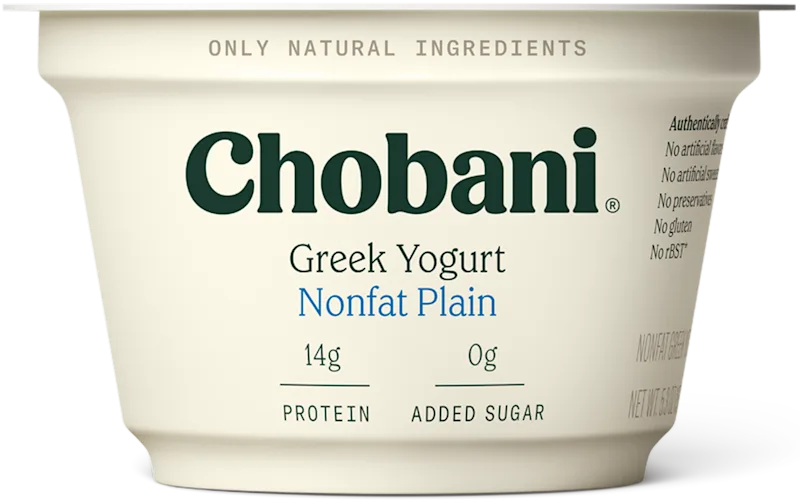
Chobani Nonfat Plain Greek Yogurt
14g protein · 80 cal · 0g fat · 5g sugar (0g added) · 1 ingredient · 6 live cultures · 5.3 oz cup (16g protein, 90 cal per 170g from the tub)
Check price on Amazon →Chobani Nonfat Plain is the simplest product on this page. Its ingredient list is one line, “cultured nonfat milk,” and the label names six live and active cultures: S. thermophilus, L. bulgaricus, L. acidophilus, Bifidus, L. casei and L. rhamnosus. The 5.3 oz cup lists 80 calories, 14g of protein, 0g of fat, 10mg of cholesterol, 55mg of sodium, 6g of carbohydrate and 5g of sugar with 0g added, plus 10% of the daily value for calcium and 40% for vitamin B12. From the 32 oz tub, a 3/4 cup (170g) serving lists 90 calories, 16g of protein, 6g of sugar and 15% of the daily value for calcium.
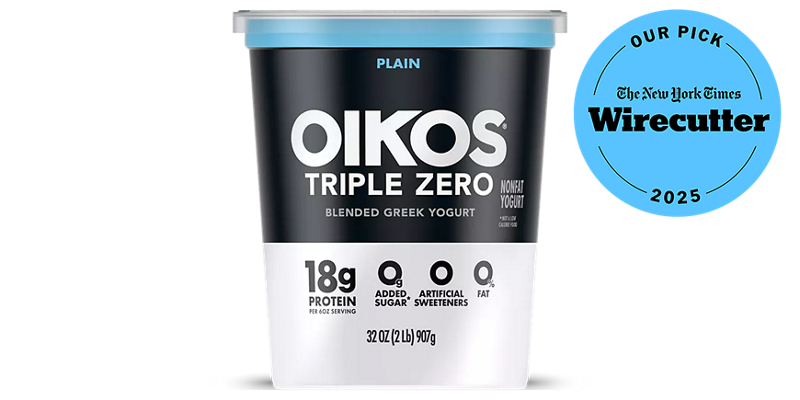
Oikos Triple Zero Plain Greek Yogurt (32 oz quart)
18g protein · 100 cal · 0g fat · 7g sugar (0g added) · no sweetener · 190mg calcium (15% DV) · per 3/4 cup (170g)
Check price on Amazon →Oikos Triple Zero Plain is just as clean on paper: cultured nonfat milk and two cultures, S. thermophilus and L. bulgaricus, with no sweetener, starch or flavoring. Per 170g it lists 100 calories, 18g of protein, 0g of fat, 10mg of cholesterol, 60mg of sodium, 7g of sugar with 0g added, and 190mg of calcium. Against the Chobani tub serving, that is 2g more protein for 10 more calories, and the protein-per-calorie ratio is effectively a tie: 18.0g per 100 calories for Oikos, 17.8g for Chobani.
The honest catch: on oikos.com, plain Triple Zero and plain Oikos Pro are listed only as 32 oz quarts. If you want a grab-and-go plain cup with nothing in it but milk and cultures, that is a Chobani product, not an Oikos one. The flip side is the culture count: Chobani names six strains and Oikos names two. Neither brand prints a colony count, so six versus two is a measure of variety, not of how many live bacteria reach you.
Low-Sugar Vanilla: Chobani Zero Sugar vs Oikos Triple Zero
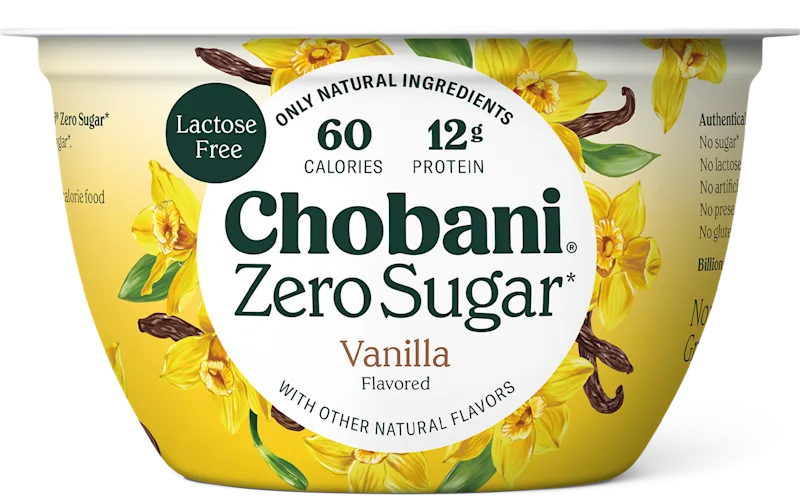
Chobani Zero Sugar Vanilla
12g protein · 60 cal · 0g fat · 0g total sugar · allulose, stevia Reb M and monk fruit · lactose-free · 6 live cultures · 150g cup
Check price on Amazon →Chobani Zero Sugar Vanilla is the lightest cup either brand makes. The 150g cup lists 60 calories, 12g of protein, 0g of fat, 10mg of cholesterol, 65mg of sodium, 5g of carbohydrate, 0g of total sugar and 0g of added sugar, with 10% of the daily value for calcium and 50% for vitamin B12. Chobani labels it lactose-free and names the same six cultures as its plain cup. It gets to 0g of sugar with a different base: the first ingredient is ultra-filtered nonfat milk, followed by water, skim milk and allulose, then less than 2% of vanilla extract, natural flavors, tapioca flour, citrus fiber, guar gum, sea salt, stevia leaf extract (Reb M), monk fruit extract and cultures.
The honest catch: “zero sugar” here involves three sweeteners, not none. Allulose is a rare sugar, and under current FDA labeling guidance a brand may leave allulose out of the Total Sugars and Added Sugars lines and count it at 0.4 calories per gram. Chobani’s own footnote says 4g of the cup’s 5g of carbohydrate is allulose. That is legal and clearly disclosed, but it means the 0g sugar line and the 60 calories both depend on how allulose is counted. The cup also carries the “not a low calorie food” footnote, and it has the least protein of any cup in this comparison.
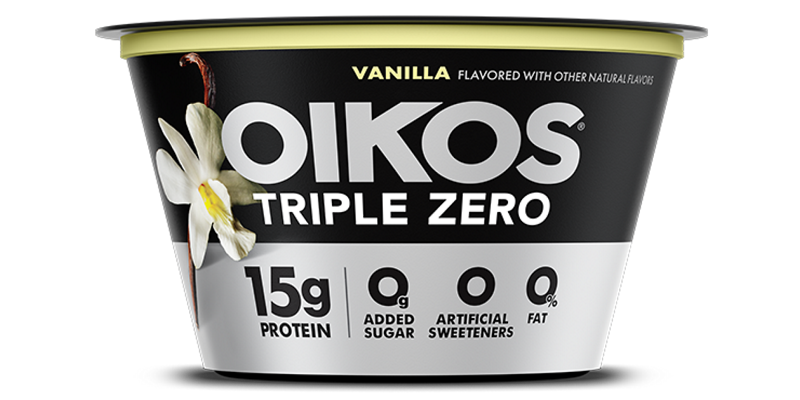
Oikos Triple Zero Vanilla
15g protein · 80 cal · 0g fat · 5g sugar (0g added) · stevia leaf extract · 150mg calcium (10% DV) · vitamin D 10% DV · 150g cup
Check price on Amazon →Oikos Triple Zero Vanilla lists 80 calories, 15g of protein, 0g of fat, 10mg of cholesterol, 55mg of sodium, 6g of carbohydrate, 0g of fiber and 5g of total sugar with 0g added, plus 150mg of calcium and 2mcg of vitamin D (10% of the daily value). The ingredient list is cultured Grade A nonfat milk and water, then less than 1% of natural flavors, tapioca starch, stevia leaf extract, lemon juice concentrate, sea salt and vitamin D3, with two cultures. One sweetener, and it is the only one of the two vanilla cups that is fortified with vitamin D; every Chobani panel we read lists 0% for vitamin D.
The honest catch: Oikos labels Triple Zero a “blended” Greek yogurt, and tapioca starch is on the list as a thickener. Its 5g of sugar is lactose, and Oikos does not label it lactose-free, so if lactose is the reason you are shopping low-sugar, the Chobani cup is the one that addresses it on the label. Head to head, the trade is simple: Oikos gives you 3g more protein and vitamin D for 20 more calories and 5g more milk sugar. Full panel: Oikos Triple Zero nutrition facts.
The 20g Cups: Chobani High Protein vs Oikos Pro
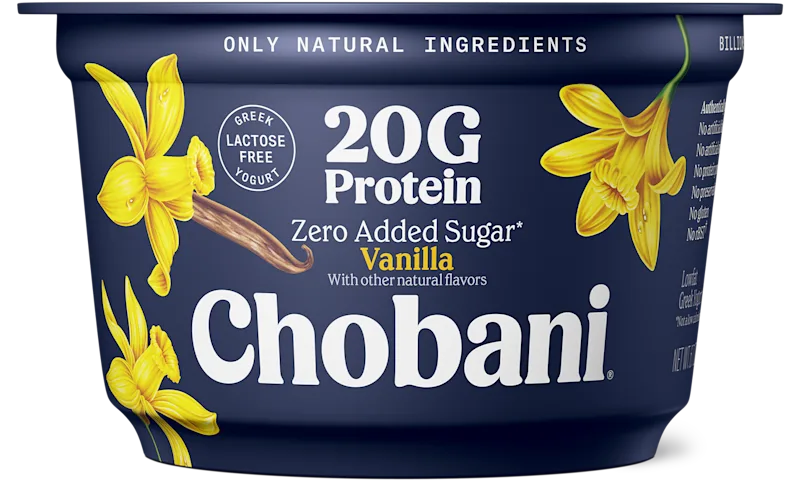
Chobani High Protein Greek Yogurt, Vanilla (20g)
20g protein · 140 cal · 3g fat (2g saturated) · 7g sugar (0g added) · 2g fiber · stevia extract · lactose-free · vitamin B12 70% DV · 6.7 oz cup
Check price on Amazon →Chobani’s answer to Oikos Pro is a lowfat Greek yogurt in a larger 6.7 oz cup. It lists 140 calories, 20g of protein, 3g of fat (2g saturated), 20mg of cholesterol, 100mg of sodium, 9g of carbohydrate, 2g of fiber and 7g of sugar with 0g added, plus 15% of the daily value for calcium and 70% for vitamin B12, the highest B12 figure on this page. It is labeled lactose-free. The ingredient list is cultured lowfat milk and water, then less than 2% of vanilla extract, chicory root fiber, natural flavors, lactase, fruit pectin, sea salt, stevia extract, guar gum, lemon juice concentrate and locust bean gum. The protein comes from the yogurt itself; there is no added whey or milk protein concentrate on the list.
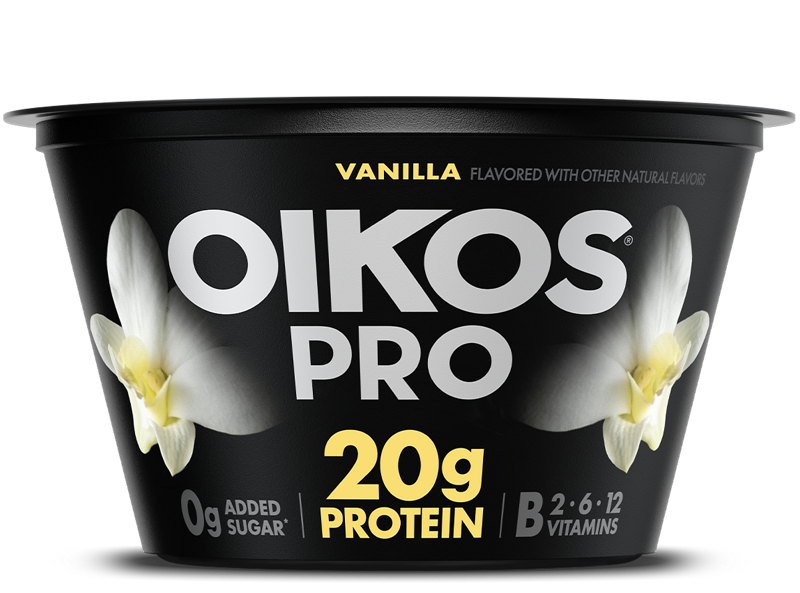
Oikos Pro Vanilla
20g protein · 130 cal · 3g fat (2.5g saturated) · 3g sugar (0g added) · stevia extract · 220mg calcium (15% DV) · vitamin D 10% DV · vitamin B12 50% DV · 5.3 oz cup
Check price on Amazon →Oikos Pro Vanilla reaches the same 20g in a 150g (5.3 oz) cup, for 130 calories, 3g of fat (2.5g saturated), 25mg of cholesterol, 45mg of sodium, 6g of carbohydrate and 3g of sugar with 0g added. It adds 220mg of calcium, 2mcg of vitamin D, and B vitamins at 20% of the daily value for riboflavin and B6 and 50% for B12. It gets there by fortifying: the list is cultured Grade A ultra-filtered nonfat milk, water, whey protein concentrate and cream, then less than 1% of tapioca starch, natural flavors, lemon juice concentrate, stevia extract, potassium sorbate (to maintain freshness), vitamin D3, vitamin B6, riboflavin and two cultures. Oikos labels Pro a “cultured ultra-filtered milk” product rather than a Greek yogurt. The Plain quart goes further, at 25g of protein and 270mg of calcium per 170g for 160 calories. Full panel: Oikos Pro nutrition facts.
The honest catch, on both: the Chobani cup is 1.4 oz bigger, has 4g more sugar and 55mg more sodium, and its 2g of fiber comes from chicory root, a fermentable fiber; if chicory-fiber bars bother your stomach, this cup has the same ingredient. The Oikos cup is denser and lighter on sugar, but it uses added whey protein, a preservative and 25mg of cholesterol, and it is not labeled lactose-free. If you want 20g of protein in the smallest, lowest-sugar cup, that is Oikos Pro. If you want 20g with no lactose and no added protein powder, that is Chobani.
Full Lineup Comparison
Every product we compared, on the serving size each brand prints. Protein per 100 calories is our arithmetic from the label figures; the Chobani 20g cup is sold as 6.7 oz, which is about 190g.
| Product | Serving | Calories | Protein | Protein / 100 cal | Fat | Total sugar | Added sugar | Sweetener | Lactose-free on label |
|---|---|---|---|---|---|---|---|---|---|
| Chobani Nonfat Plain (cup) | 5.3 oz | 80 | 14g | 17.5g | 0g | 5g | 0g | None | No (under 5% lactose) |
| Chobani Nonfat Plain (tub) | 170g | 90 | 16g | 17.8g | 0g | 6g | 0g | None | No (under 5% lactose) |
| Oikos Triple Zero Plain (quart) | 170g | 100 | 18g | 18.0g | 0g | 7g | 0g | None | No |
| Chobani Zero Sugar Vanilla | 150g | 60 | 12g | 20.0g | 0g | 0g | 0g | Allulose, stevia Reb M, monk fruit | Yes |
| Oikos Triple Zero Vanilla | 150g | 80 | 15g | 18.8g | 0g | 5g | 0g | Stevia leaf extract | No |
| Chobani High Protein Vanilla | 6.7 oz | 140 | 20g | 14.3g | 3g | 7g | 0g | Stevia extract | Yes |
| Oikos Pro Vanilla | 150g | 130 | 20g | 15.4g | 3g | 3g | 0g | Stevia extract | No |
| Oikos Pro Plain (quart) | 170g | 160 | 25g | 15.6g | 3.5g | 4g | 0g | None | No |
| Chobani Vanilla (regular Greek cup) | 5.3 oz | 110 | 12g | 10.9g | 0g | 14g | 9g | Cane sugar | No (under 5% lactose) |
That last row matters if you shop by the Chobani name alone. Chobani’s regular flavored Greek cups are sweetened with cane sugar: the Vanilla cup lists 9g of added sugar, 18% of the daily value, and only 12g of protein for 110 calories. The zero-added-sugar numbers in this comparison belong to Chobani Zero Sugar and Chobani High Protein specifically, so check the name on the lid. Every Oikos Triple Zero and Oikos Pro product we read lists 0g added sugar.
Is Oikos or Chobani Healthier?
For the most protein and added vitamin D per cup, Oikos is the healthier pick; for the fewest calories, no lactose, the shortest plain ingredient list and the most live cultures, Chobani is. Both brands list 0g added sugar across their low-sugar and high-protein lines, and neither uses sucralose, acesulfame potassium or aspartame in any product we read. Two numbers to know before you decide: Oikos Pro carries 25mg to 30mg of cholesterol per serving against 5mg to 20mg for every Chobani cup here, and Chobani lists 0% of the daily value for vitamin D on every panel we read, where the flavored Oikos cups are fortified to 10%.
Which Is Better for Weight Loss, Oikos or Chobani?
Chobani Zero Sugar Vanilla has the fewest calories and the best protein-per-calorie ratio of any flavored cup here, at 60 calories for 12g of protein; Oikos Triple Zero Vanilla gives you 3g more protein for 80 calories. Both are reasonable choices, and the difference is 20 calories a cup. If the most protein in the cup is what you are buying, that favors Triple Zero or Oikos Pro. If you are counting every calorie, Zero Sugar is the lightest thing either brand sells. The cup to avoid on a calorie budget is not either of these, it is a regular sweetened Chobani flavor at 110 calories with 9g of added sugar.
Which Is Better for Breakfast?
Breakfast is where the 20g cups earn their place, because one cup covers a meaningful share of a morning’s protein. Oikos Pro Vanilla gives you 20g in 130 calories from a 5.3 oz cup; Chobani High Protein Vanilla gives you 20g in 140 calories from a 6.7 oz cup, plus 2g of fiber and a lactose-free label. For a base to build on with fruit or granola, the plain options are better value on the label: Oikos Triple Zero Plain at 18g per 170g, or Chobani Nonfat Plain at 16g per 170g with six cultures and one ingredient.
Where Each Brand Wins
- Most protein per cup: Oikos Pro Vanilla, 20g in a 5.3 oz cup. Per 170g, Oikos Pro Plain at 25g.
- Most protein in the plain matchup: Oikos Triple Zero Plain, 18g per 170g to Chobani’s 16g.
- Fewest calories: Chobani Zero Sugar Vanilla, 60 per cup.
- Best protein per calorie: Chobani Zero Sugar Vanilla, 20.0g per 100 calories.
- Lowest sugar: Chobani Zero Sugar Vanilla at 0g; among cups sweetened only with stevia, Oikos Pro Vanilla at 3g.
- Lactose-free: Chobani, on both Zero Sugar and High Protein. No Oikos panel we read makes that claim.
- Most live cultures named: Chobani, six strains to Oikos’s two.
- Plain nonfat in a single cup: Chobani. Oikos sells plain only in quarts.
- Vitamin D: Oikos, 10% of the daily value in its flavored cups; Chobani lists 0%.
- Vitamin B12: Chobani High Protein, 70% of the daily value.
- Fewest sweeteners in a zero-added-sugar flavored cup: a tie between Oikos Triple Zero, Oikos Pro and Chobani High Protein, one each (stevia). Chobani Zero Sugar uses three.
If you are still deciding between brands, our Oikos vs FAGE, FAGE vs Chobani, siggi’s vs Chobani and siggi’s vs Oikos comparisons use the same label-first method, and the best Greek yogurt brands roundup ranks the whole shelf. For every Chobani line on one page, see Chobani nutrition facts.
How we compared
We read the Nutrition Facts panel and the ingredient statement for each product from the brand’s own product pages on September 11, 2026: chobani.com for Chobani Nonfat Plain (cup and tub), Zero Sugar Vanilla, High Protein Vanilla and Vanilla, and oikos.com for Oikos Triple Zero Vanilla, Triple Zero Plain, Oikos Pro Vanilla and Oikos Pro Plain. Every figure is printed exactly as each brand lists it, on the brand’s own serving size. Protein per 100 calories and protein per 100g are our division of the label figures; the 6.7 oz Chobani cup was converted at 28.35g per ounce. Chobani lists calcium as a percent of the daily value without a milligram figure, so we have not invented one. We did not use retailer summaries or third-party nutrition databases for any number. Prices move weekly and vary by store, so we do not print them; the buttons above go to the current Amazon listings. Both brands note that formulations can change, so check the cup in your hand if a number matters to you.
Frequently Asked Questions
Which has more protein, Oikos or Chobani?
Oikos, in every matchup. Oikos Triple Zero Plain has 18g per 170g against 16g for Chobani Nonfat Plain, Oikos Triple Zero Vanilla has 15g per 150g cup against 12g for Chobani Zero Sugar Vanilla, and Oikos Pro Vanilla fits 20g into a 5.3 oz cup where Chobani High Protein Vanilla needs a 6.7 oz cup to reach 20g.
Is Chobani or Oikos healthier?
It depends on the goal. Oikos has more protein per cup and adds vitamin D to its flavored cups. Chobani has the lowest-calorie cup (Zero Sugar Vanilla, 60 calories), two lactose-free lines, a one-ingredient plain cup and six named live cultures to Oikos’s two. Both list 0g added sugar across their low-sugar and high-protein lines.
Is Chobani Zero Sugar or Oikos Triple Zero better?
Chobani Zero Sugar Vanilla has 60 calories, 12g of protein and 0g of total sugar and is lactose-free, sweetened with allulose, stevia Reb M and monk fruit. Oikos Triple Zero Vanilla has 80 calories, 15g of protein and 5g of milk sugar, sweetened with stevia alone, and adds vitamin D. Pick Chobani for fewer calories and no lactose, Oikos for more protein and one sweetener.
Is Oikos Pro or Chobani High Protein better?
Both have 20g of protein. Oikos Pro Vanilla does it in a smaller 5.3 oz cup with 130 calories and 3g of sugar, using added whey protein concentrate. Chobani High Protein Vanilla uses a 6.7 oz cup with 140 calories, 7g of sugar and 2g of fiber, is labeled lactose-free, and has no added protein ingredient.
Is Oikos or Chobani lactose-free?
Chobani labels its Zero Sugar and High Protein lines lactose-free, and says its regular Greek cups contain less than 5% lactose. None of the Oikos Triple Zero or Oikos Pro panels we read make a lactose-free claim.
Does Chobani or Oikos use artificial sweeteners?
Neither lists sucralose, acesulfame potassium or aspartame in any product we read. Oikos Triple Zero and Oikos Pro are sweetened with stevia. Chobani High Protein uses stevia, Chobani Zero Sugar uses allulose, stevia Reb M and monk fruit, and Chobani’s regular flavored Greek cups use cane sugar.
Which is better for weight loss, Oikos or Chobani?
Chobani Zero Sugar Vanilla is the lowest-calorie option at 60 calories with 12g of protein, the best protein-per-calorie ratio of the flavored cups here. Oikos Triple Zero Vanilla has 3g more protein for 80 calories. Avoid the regular sweetened Chobani flavors if you are counting: the Vanilla cup is 110 calories with 9g of added sugar.
Does Oikos sell plain Greek yogurt in single cups?
Not in the Triple Zero or Oikos Pro lines on oikos.com, where plain is listed only as a 32 oz quart. Chobani sells Nonfat Plain in a single 5.3 oz cup with 80 calories, 14g of protein and one ingredient, cultured nonfat milk.
Shop our top high-protein picks
Editor-selected high-protein options related to this guide. As an Amazon Associate we may earn from qualifying purchases.
15g proteinTriple Zero Greek Yogurt - Vanilla
Amazon returns policy · secure checkout
25g proteinComplete Advanced Nutrition - Vanilla
Amazon returns policy · secure checkout
20g proteinComplete Protein Drink - Vanilla
Amazon returns policy · secure checkout
Tags
High Protein Snacks Pro Editorial Team
Independently researched and editorially reviewed. We compare real nutrition labels and never accept payment for coverage.
Get the best new protein snacks in your inbox
Weekly picks and honest reviews — no spam, unsubscribe anytime.
More from the journal
Oikos vs FAGE (2026): Which Greek Yogurt Wins on Protein, Sugar, Stevia, and Ingredients
Oikos wins raw protein per cup: Oikos Pro Vanilla packs 20g into a 130-calorie 5.3 oz cup by adding whey protein concentrate to ultra-filtered milk. FAGE wins protein per calorie and the ingredient list: FAGE Total 0% is skimmed milk and five live cultures, nothing else, at 16g of protein for 80 calories, the best ratio in this comparison. Every flavored Oikos cup is stevia-sweetened; no FAGE Total product is sweetened at all. Eight products compared on each brand's own September 2026 nutrition panel, with the protein-per-calorie math shown and an honest catch on every pick.
Read more
siggi's vs Oikos (2026): Skyr vs Greek Yogurt Head-to-Head on Protein, Sugar, Sweeteners, and Ingredients
Oikos wins raw protein per cup — Oikos Pro Vanilla packs 20g into a 130-calorie 5.3oz cup by adding whey protein concentrate to ultra-filtered milk — while siggi's wins the ingredient list: its Plain Nonfat skyr is cultured skim milk and five live cultures, nothing else, at 16g of protein for 90 calories. Plain against plain at the same 170g serving, siggi's edges Oikos Triple Zero 19g to 18g. The deciding factors are stevia (in every flavored Oikos cup and in siggi's Lower Sugar line), real cane sugar in siggi's flavored cups, and how each brand gets to its protein number. Every figure verified from each brand's own 2026 nutrition panel.
Read more
FAGE vs siggi's (2026): 18g vs 17g Protein Per Cup — Which Strained Yogurt Actually Wins?
FAGE wins on protein per calorie — Total 0% Plain delivers 18g of protein in a 90-calorie serving, the best ratio in the mainstream yogurt aisle — while siggi's wins on protein per spoonful, packing 17g into a smaller, denser 5.3oz skyr cup. Neither brand puts an artificial sweetener in any cup, which makes this the cleanest head-to-head in the category. The real difference is texture, tang, and what the flavored lineups do with sugar. Every number verified from each brand's own nutrition panel.
Read more