siggi's Yogurt Nutrition Facts: 17g Protein and No Artificial Sweeteners (All Lines Compared)
Every siggi's nonfat plain skyr delivers 17g of protein and 100 calories per 5.3oz cup — more protein than Oikos Triple Zero, Two Good, or Chobani Zero Sugar — with no artificial sweeteners in any product line. Verified nutrition for every siggi's line compared side by side.
The short answer
Our top Greek yogurt picks
Editor-selected and ready to buy. As an Amazon Associate we may earn from qualifying purchases.
 10g protein
 12g protein18g protein
siggi’s Nutrition Facts: All Lines Compared
siggi’s sells four main dairy product lines in the US: the original nonfat skyr, the lower sugar line, the 2% milkfat line, and a plant-based line (covered separately). All figures below are for single-serve 5.3oz (150g) cups unless noted and are cross-verified from multiple nutrition databases.
| Product | Calories | Protein | Total Sugar | Added Sugar | Fat | Sweetener |
|---|---|---|---|---|---|---|
| Nonfat Plain | 100 | 17g | 5g | 0g | 0g | None |
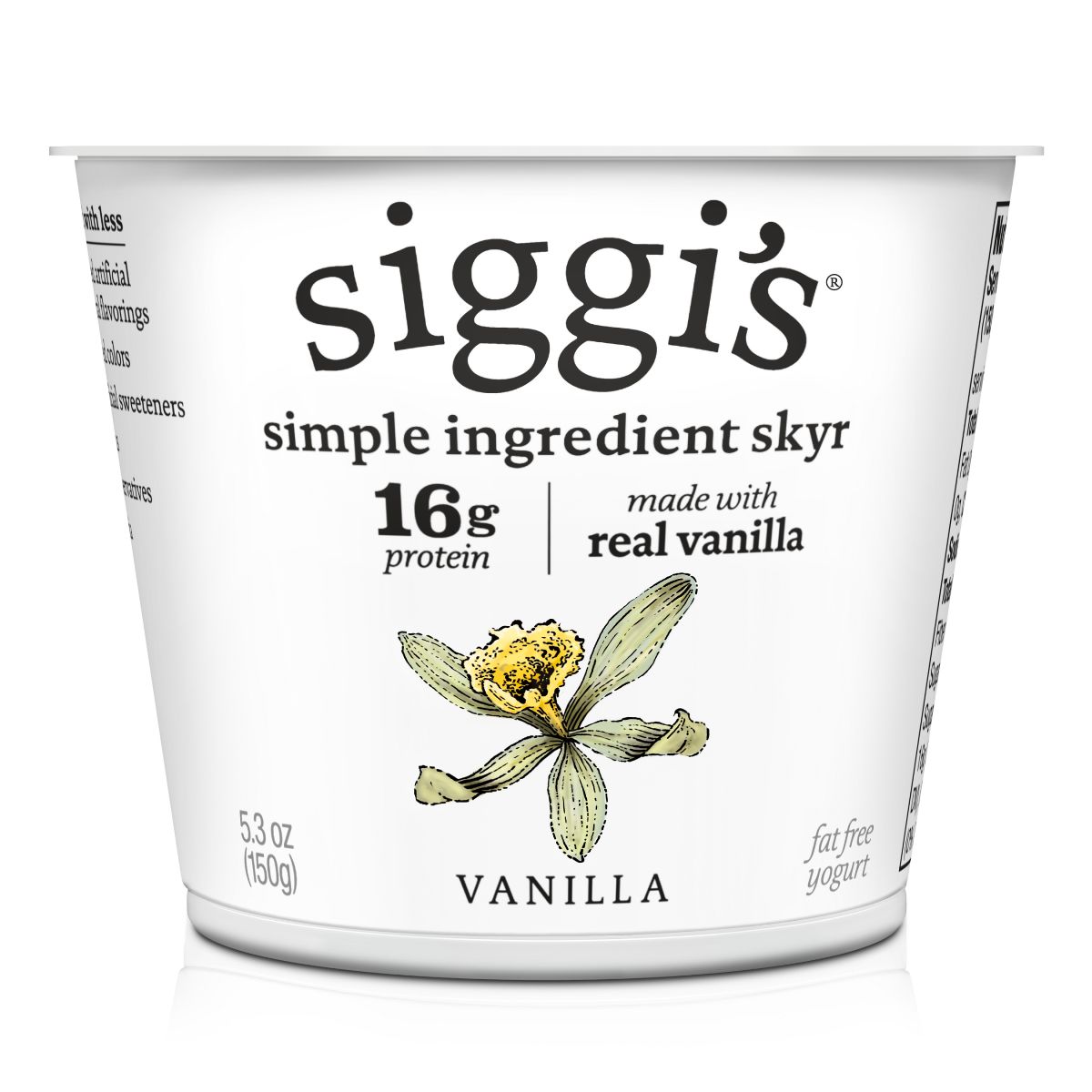
| Nonfat Vanilla | 110 | 16g | 9g | ~7g | 0g | Cane sugar |
| Nonfat Strawberry / Peach / Mixed Berry | 120 | 15g | 11g | ~9g | 0g | Cane sugar |
| Lower Sugar Vanilla | 80 | 14g | ~4g | 2g | 0g | Organic agave nectar |
| 2% Milkfat Strawberry | 140 | 13g | 10g | ~8g | 2g | Cane sugar |
A few patterns worth noting. Plain always has the most protein and fewest calories — this is true across every Greek yogurt and skyr brand, not just siggi’s. The sweet spot for most buyers is the nonfat flavored line: 15–16g of protein for 110–120 calories and about 9–11g of total sugar, which is competitive with the lowest-sugar options in the category. The lower sugar line cuts added sugar to 2g per cup (using a small amount of organic agave nectar) but also trims protein to 14g — still strong, but not the standout that plain is. The 2% line trades protein for richer texture at the cost of roughly 2–4g less protein per cup.
siggi’s Nonfat Skyr: The Standard Line in Detail
The standard nonfat line is what made siggi’s reputation. The skyr-making process strains out roughly two-thirds of the liquid whey, concentrating protein and producing the thick, dense texture that distinguishes siggi’s from conventional yogurt. Per 5.3oz cup:
- Plain: 100 calories, 17g protein, 5g total sugar (0g added), 0g fat. The protein is primarily casein, which digests slowly and supports longer satiety than whey-dominant products.
- Vanilla: 110 calories, 16g protein, 9g total sugar (~7g added cane sugar), 0g fat.
- Strawberry, Peach, Mixed Berry, Raspberry: 120 calories, 15g protein, 11g total sugar (~9g added), 0g fat.
The flavored varieties use real fruit pieces or fruit purée rather than artificial flavoring. The ingredient list for siggi’s Strawberry is genuinely short: cultured skim milk, strawberries, sugar, fruit pectin. That simplicity is part of what differentiates the brand from lower-cost competitors.
siggi’s Lower Sugar Line
The lower sugar cups cut added sugar to 2g per serving by using a small amount of organic agave nectar instead of cane sugar. The trade-off is a modest protein reduction: 14g instead of 15–17g. Per 5.3oz cup:
- Lower Sugar Vanilla: 80 calories, 14g protein, ~4g total sugar (2g added), 0g fat.
- Lower Sugar Peach and Strawberry: similar profile, ~80–90 calories, 14g protein.
This line makes sense for people specifically watching added sugar who find the standard flavored cups too sweet. At 80 calories and 14g protein, the protein-to-calorie ratio is the best in the lineup — 17.5g protein per 100 calories. The slightly lower protein versus plain likely reflects a different straining ratio or formulation for this sub-line.
siggi’s 2% Milkfat Line
The 2% line uses partially skimmed milk rather than fully skimmed milk, adding a richer texture and more fat per serving. Per 5.3oz cup:
- 2% Strawberry: 140 calories, 13g protein, 10g total sugar, 2g fat. The higher fat is where the extra 20–40 calories come from relative to the nonfat line, and protein drops approximately 2–4g versus nonfat equivalents.
Choose this line if texture matters more than maximum protein efficiency. The richer mouthfeel from the milkfat is noticeable, and many people find it more satisfying as a standalone snack than the very firm, dense nonfat version.
siggi’s vs. Oikos, Two Good, and Chobani Zero Sugar
The low-added-sugar yogurt segment has several major players. Here is how siggi’s measures up on the numbers that matter most: protein, total sugar, calories, and sweeteners used.
| Brand / Product | Calories | Protein | Total Sugar | Added Sugar | Sweeteners Used |
|---|---|---|---|---|---|
| siggi’s Nonfat Plain (5.3oz) | 100 | 17g | 5g | 0g | None |
| siggi’s Nonfat Vanilla (5.3oz) | 110 | 16g | 9g | ~7g | Cane sugar only |
| Oikos Triple Zero Vanilla (5.3oz) | 120 | 15g | 6g | 0g | Stevia, sucralose |
| Two Good Vanilla (5.3oz) | 90 | 12g | 2g | 0g | Allulose, stevia |
| Chobani Zero Sugar Vanilla (5.3oz) | 60 | 11g | 0g | 0g | Allulose, stevia, monk fruit |
The pattern is clear. Brands that reach zero or near-zero added sugar do so with non-nutritive sweeteners — stevia, sucralose, allulose. siggi’s is the only mainstream brand that sweetens only with cane sugar (flavored lines) or uses no sweetener at all (plain). This means siggi’s flavored cups carry real added sugar (~7–9g per cup), which puts them in a different category from Oikos Triple Zero or Two Good on the sugar column. But the protein advantage is real: siggi’s plain at 17g beats every comparable product at a similar calorie level, and flavored siggi’s (15–16g) beats Two Good (12g) and Chobani Zero Sugar (11g) by a meaningful margin.
The right choice depends on your priority. If maximum protein and no artificial sweeteners is the goal, siggi’s plain is unmatched. If you want a sweet flavored cup with near-zero sugar and don’t mind stevia or sucralose, Oikos Triple Zero or Two Good are the better fit. If you want flavored yogurt with no artificial sweeteners, siggi’s flavored is the only mainstream option.
Does siggi’s Use Artificial Sweeteners?
No — and this is worth stating explicitly because it is a genuine differentiator in a category where most low-sugar products rely on non-nutritive sweeteners. siggi’s uses no artificial sweeteners and no non-nutritive sweeteners — no stevia, no sucralose, no erythritol, no allulose, no monk fruit, no aspartame — in any dairy product. Plain cups use zero added sweetener. Flavored cups use cane sugar (standard line) or organic agave nectar (lower sugar line) as the only sweeteners. This is verifiable on every label and confirmed by the brand’s publicly stated formulation philosophy.
This matters for several reasons. Some people notice a metallic aftertaste or bitterness from stevia and sucralose; siggi’s eliminates that. There is ongoing research into whether high-dose non-nutritive sweeteners affect gut microbiome composition; siggi’s sidesteps that concern entirely. And the brand’s commitment to short ingredient lists was part of its founding philosophy: the founder specifically objected to the artificial-sweetener-heavy US yogurt market when he created siggi’s in 2004, modeled on Icelandic skyr tradition.
Frequently Asked Questions
How much protein is in siggi’s yogurt?
siggi’s nonfat plain skyr has 17g of protein per 5.3oz cup. Nonfat flavored varieties (vanilla, strawberry, peach) have 15–16g per cup. The lower sugar line has 14g per cup, and the 2% milkfat line has approximately 13g. Plain siggi’s delivers more protein per serving than Oikos Triple Zero (15g), Two Good (12g), or Chobani Zero Sugar (11g).
Is siggi’s yogurt healthy?
For most goals, yes. Plain siggi’s is 100 calories, 17g protein, 0g fat, and 5g of naturally occurring milk sugar with no added sweeteners — a nutritionally clean, high-protein choice. The flavored lines add 7–9g of cane sugar per cup, which is moderate for a flavored dairy product. The main trade-off for flavored cups versus zero-sugar competitors is that real cane sugar adds calories and carbohydrates that non-nutritive sweeteners do not.
Is siggi’s better than Greek yogurt?
siggi’s is technically skyr (an Icelandic cultured dairy product), not Greek yogurt, though the manufacturing process is similar — both are strained to concentrate protein. In practice, siggi’s nonfat plain tends to run higher protein (17g) than most conventional Greek yogurt brands at an equivalent calorie level. The texture is firmer and denser than most Greek yogurts of the same serving size.
Does siggi’s use stevia or other sweeteners?
No. siggi’s uses no artificial sweeteners, stevia, sucralose, allulose, erythritol, or monk fruit in any dairy product. Plain cups use no sweetener. Flavored cups use cane sugar (standard line) or organic agave nectar (lower sugar line) only. This sets siggi’s apart from competitors like Oikos Triple Zero, Two Good, and Chobani Zero Sugar, which all use stevia and/or allulose to reach near-zero sugar.
How does siggi’s compare to Chobani?
siggi’s plain nonfat has more protein (17g vs ~14g for Chobani plain nonfat) and fewer calories (100 vs ~120 for Chobani plain nonfat). For flavored cups, siggi’s standard line uses only cane sugar while many Chobani flavored products use added sweeteners or fruit syrups. Chobani Zero Sugar (11g protein, 0g total sugar) is the low-sugar Chobani option but uses stevia and allulose, which siggi’s does not use in any product.
Bottom line: siggi’s plain nonfat skyr is one of the most protein-dense yogurt options available — 17g for 100 calories — with no artificial sweeteners in any line. The flavored versions carry real cane sugar (not a dealbreaker, but worth knowing). If you want maximum protein without sweetener trade-offs and can work with a mildly tart, dense texture, siggi’s plain is the strongest choice in the category. Browse more high-protein dairy options in the protein snacks directory.
Shop our top Greek yogurt picks
Editor-selected high-protein options related to this guide. As an Amazon Associate we may earn from qualifying purchases.
 15g protein
Icelandic Skyr - Vanilla
Amazon returns policy · secure checkout
10g protein12g proteinTags
High Protein Snacks Pro Editorial Team
Independently researched and editorially reviewed. We compare real nutrition labels and never accept payment for coverage.
Get the best new protein snacks in your inbox
Weekly picks and honest reviews — no spam, unsubscribe anytime.
More from the journal
FAGE vs siggi's (2026): 18g vs 17g Protein Per Cup — Which Strained Yogurt Actually Wins?
FAGE wins on protein per calorie — Total 0% Plain delivers 18g of protein in a 90-calorie serving, the best ratio in the mainstream yogurt aisle — while siggi's wins on protein per spoonful, packing 17g into a smaller, denser 5.3oz skyr cup. Neither brand puts an artificial sweetener in any cup, which makes this the cleanest head-to-head in the category. The real difference is texture, tang, and what the flavored lineups do with sugar. Every number verified from each brand's own nutrition panel.
Read more
siggi's vs Chobani (2026): 17g vs 14g Protein Per Cup — Which High-Protein Yogurt Actually Wins?
siggi's plain nonfat skyr packs 17g of protein into 100 calories; Chobani's plain nonfat Greek yogurt packs 14g into just 80 calories — nearly identical protein density from two very different philosophies. Chobani offers far more range (a Zero Sugar line, a 20g High Protein line, and 20g/30g ready-to-drink protein shakes); siggi's stays narrower and never touches a non-nutritive sweetener in any product, plain or flavored. Here is the full verified head-to-head, built from our own nutrition-facts data on both brands.
Read more
siggi's vs Oikos (2026): Skyr vs Greek Yogurt Head-to-Head on Protein, Sugar, Sweeteners, and Ingredients
Oikos wins raw protein per cup — Oikos Pro Vanilla packs 20g into a 130-calorie 5.3oz cup by adding whey protein concentrate to ultra-filtered milk — while siggi's wins the ingredient list: its Plain Nonfat skyr is cultured skim milk and five live cultures, nothing else, at 16g of protein for 90 calories. Plain against plain at the same 170g serving, siggi's edges Oikos Triple Zero 19g to 18g. The deciding factors are stevia (in every flavored Oikos cup and in siggi's Lower Sugar line), real cane sugar in siggi's flavored cups, and how each brand gets to its protein number. Every figure verified from each brand's own 2026 nutrition panel.
Read more