FAGE vs siggi's (2026): 18g vs 17g Protein Per Cup — Which Strained Yogurt Actually Wins?
FAGE wins on protein per calorie — Total 0% Plain delivers 18g of protein in a 90-calorie serving, the best ratio in the mainstream yogurt aisle — while siggi's wins on protein per spoonful, packing 17g into a smaller, denser 5.3oz skyr cup. Neither brand puts an artificial sweetener in any cup, which makes this the cleanest head-to-head in the category. The real difference is texture, tang, and what the flavored lineups do with sugar. Every number verified from each brand's own nutrition panel.
Our top Greek yogurt picks
Editor-selected and ready to buy. As an Amazon Associate we may earn from qualifying purchases.
Buy the products in this guide: Lactose Free · Total 5% Greek Yogurt · Total 0% Greek Yogurt - Plain
 10g protein
 12g protein18g protein
Direct Answer
FAGE wins on protein per calorie: Total 0% Plain delivers 18g of protein at 90 calories per 170g serving — 20g of protein per 100 calories, the best ratio in the mainstream yogurt aisle. siggi’s wins on protein density per gram: 17g in a smaller 150g cup (11.3g per 100g of yogurt versus FAGE’s 10.6g), with a thicker Icelandic skyr texture and less tang. Neither brand uses an artificial sweetener in any cup. If you eat yogurt plain and count calories, buy FAGE; if you want the densest spoonful and gentler flavor, buy siggi’s.
This is the cleanest head-to-head in the yogurt aisle. FAGE (say “fa-yeh”) is the Greek-style benchmark: strained yogurt whose plain cups contain milk, cream, and live cultures — nothing else. siggi’s is the Icelandic answer: skyr, strained even more densely, from a brand whose stated philosophy is “simple ingredients, not a lot of sugar.” Both refuse artificial sweeteners across their entire lineups, which is exactly why readers keep asking how they compare: this is a choice between two right answers, and the differences that decide it — protein math, texture, tang, and what each brand’s flavored cups do with sugar — are all measurable. Every number below comes from each brand’s own nutrition panel, as documented in our siggi’s nutrition facts breakdown and our FAGE vs Chobani comparison.
The Quick Verdict: FAGE vs siggi’s Head-to-Head
| Round | FAGE | siggi’s | Winner |
|---|---|---|---|
| Protein per 100 calories (plain, nonfat) | 20.0g | 17.0g | FAGE |
| Protein per 100g of yogurt (plain, nonfat) | 10.6g | 11.3g | siggi’s |
| Artificial sweeteners anywhere in the lineup | None | None | Tie |
| Added sugar in flavored cups | Varies by cup — check the label | ~2–9g (cane sugar or agave) | siggi’s (disclosed low range) |
| Texture | Thick, creamy, glossy | Denser, drier, spoon-stands-up | Preference |
| Tang | Sharper, classic Greek sour | Milder, less sour | Preference |
Which Has More Protein: FAGE or siggi’s?
Both — depending on how you measure, which is why this question keeps both brands ranking. Per serving as sold, FAGE Total 0% Plain delivers 18g of protein in its 170g three-quarter-cup serving at 90 calories; siggi’s Nonfat Plain delivers 17g in its 150g cup at 100 calories. Do the division and the two brands split the crown: FAGE carries 20g of protein per 100 calories against siggi’s 17g — the calorie-counter’s win — while siggi’s packs 11.3g of protein into every 100g of yogurt against FAGE’s 10.6g, meaning each spoonful of skyr is literally denser with protein. There is no wrong answer here; there is only which number your goal cares about.
FAGE Total: The Calorie-Efficiency Pick
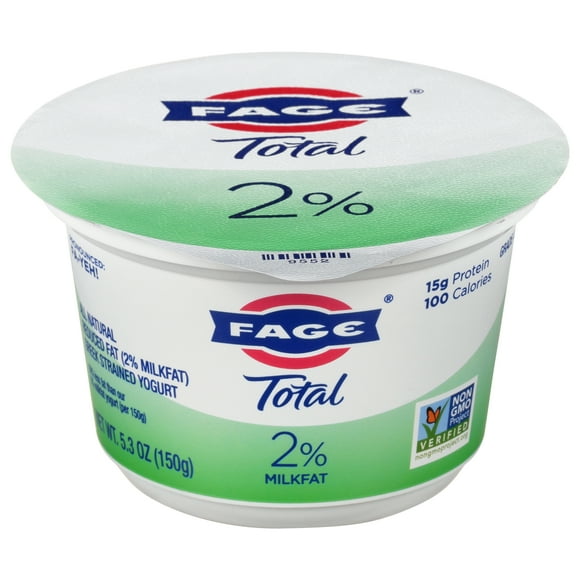
FAGE Total Plain (0% / 2% / 5%)
18g protein at 90 cal (0%, per 170g) · 0g added sugar · milk, cream + live cultures only
Also in the refrigerated aisle of every major grocery chain. Affiliate link.
FAGE Total is one label sold at three milkfat levels, and the plain cups are as simple as commercial yogurt gets — pasteurized milk, cream (in the 2% and 5%), and live active cultures. The 0% is the protein-per-calorie champion: 18g at 90 calories per 170g serving. The 2% (15g protein, 120 calories per 150g cup) adds 3.5g of fat that makes it eat like a richer food, and the 5% (13g protein, 150 calories per 150g cup) is the dessert-adjacent one. All three carry roughly 5–6g of naturally occurring milk sugar (lactose) and 0g added.
The honest trade-offs. FAGE’s tang is real — it is the sharpest-tasting mainstream strained yogurt, which plain-yogurt people love and everyone else cuts with fruit or honey. And while FAGE’s plain cups are exemplary, its flavored split-cup line is a different product with meaningfully more sugar — if you buy FAGE flavored, read that label rather than assuming the plain cup’s numbers carry over.
siggi’s Skyr: The Density-and-Simplicity Pick
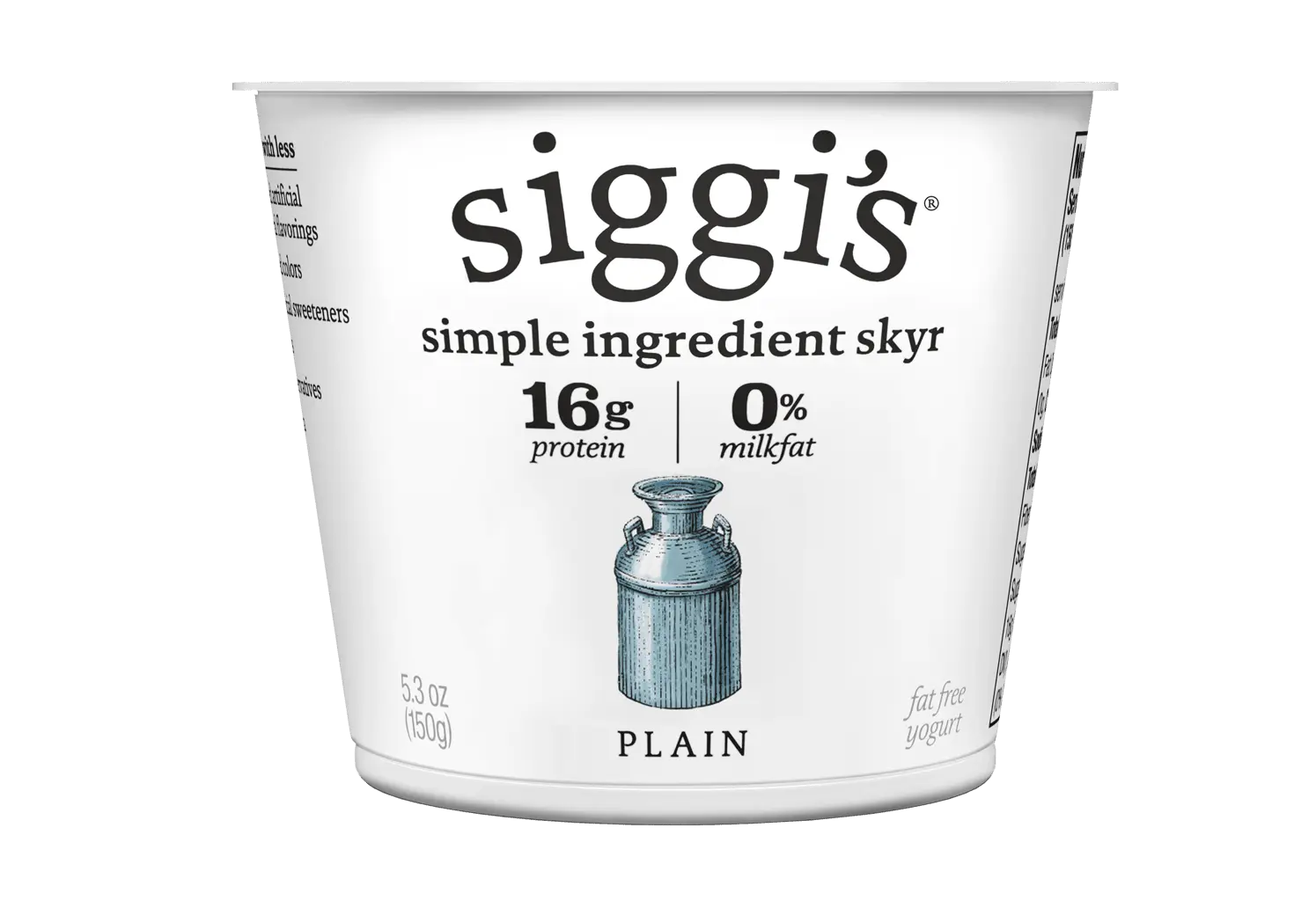
siggi’s Nonfat Plain Skyr
17g protein · 100 cal per 150g cup · 0g added sugar · no sweeteners of any kind
Icelandic skyr — strained more densely than Greek. Affiliate link.
siggi’s Nonfat Plain is skyr: milk cultured and strained in the Icelandic style, which removes more whey than Greek straining and leaves a noticeably denser, almost cheese-like spoonful — 17g of protein per 150g cup at 100 calories, with the same clean no-sweetener label as FAGE. It is also milder: skyr’s culture profile produces less sourness than Greek yogurt, which is why siggi’s is the plain cup people who “don’t like plain yogurt” most often finish. Where siggi’s pulls clearly ahead is its flavored line: Nonfat Vanilla runs 110 calories with about 7g of added cane sugar, and the Lower Sugar line cuts that to roughly 2g of added agave — real-sugar flavoring at doses most flavored competitors double or triple. See the full flavor-by-flavor table in our siggi’s nutrition breakdown.
The honest trade-offs. Per 100 calories, plain siggi’s carries 17g of protein to FAGE 0%’s 20g — the calorie-counter’s math favors FAGE. The dense texture that fans love reads as “dry” or “chalky” to people expecting creamy Greek. And siggi’s cups are 150g against FAGE’s 170g serving, so the per-cup protein numbers look closer than the per-gram math actually is.
Full Lineup Comparison
| Product | Serving | Calories | Protein | Total Sugar | Added Sugar | Sweetener |
|---|---|---|---|---|---|---|
| FAGE Total 0% Plain | 170g (3/4 cup) | 90 | 18g | 6g | 0g | None |
| FAGE Total 2% Plain | 150g (5.3oz) | 120 | 15g | 5g | 0g | None |
| FAGE Total 5% Plain | 150g (5.3oz) | 150 | 13g | 5g | 0g | None |
| siggi’s Nonfat Plain | 150g (5.3oz) | 100 | 17g | 5g | 0g | None |
| siggi’s Nonfat Vanilla | 150g (5.3oz) | 110 | 16g | 9g | ~7g | Cane sugar |
| siggi’s Lower Sugar Vanilla | 150g (5.3oz) | 80 | 14g | ~4g | 2g | Organic agave nectar |
| siggi’s Nonfat Fruit Flavors | 150g (5.3oz) | 120 | 15g | 11g | ~9g | Cane sugar |
Every number above comes from the brand’s own nutrition panel as documented in our dedicated breakdowns. FAGE’s flavored split-cup line is omitted rather than estimated — check the label on those.
Is FAGE or siggi’s Healthier?
On the plain cups, it is honestly a tie on ingredients — both are strained cultured milk with live cultures, no added sugar, no sweeteners, no thickeners. The health question only separates them when flavor enters: siggi’s flavored cups are sweetened with modest, disclosed amounts of real cane sugar or agave (about 2–9g added), and the brand publishes a Lower Sugar line specifically to keep that number near 2g. So the practical answer: plain vs plain, buy on texture and taste; flavored vs flavored, siggi’s low-and-disclosed added sugar makes it the easier label to trust without reading fine print — though reading the label is still the right habit. Neither brand asks you to accept sucralose, stevia, or sugar alcohols anywhere, which cannot be said of most of the high-protein yogurt shelf — see our high-protein yogurt brands roundup for how the rest of the aisle compares.
Where Each Brand Wins
Buy FAGE if: you track calories or macros and want the most protein per calorie in the aisle (20g per 100 cal in the 0%); you love classic Greek tang; you cook with yogurt — FAGE’s creamier body works better in tzatziki, marinades, and as a sour-cream stand-in; or you want a richer 2% or 5% option under the same two-or-three-ingredient label.
Buy siggi’s if: you want the densest, most protein-packed spoonful per gram; you find Greek yogurt too sour — skyr is noticeably milder; you eat flavored yogurt and want real-sugar flavoring at 2–7g added instead of an artificial-sweetener workaround; or a thicker, slower-eating cup keeps you fuller between meals.
Frequently Asked Questions
Is siggi’s Greek yogurt?
No — siggi’s is Icelandic skyr, a cultured dairy product strained even more densely than Greek yogurt. It lives on the same shelf and does the same nutritional job, with slightly more protein per gram of yogurt (11.3g per 100g versus FAGE 0%’s 10.6g) and a milder, less sour flavor. FAGE is authentic Greek-style strained yogurt.
Which is better for weight loss goals: FAGE or siggi’s?
The math favors FAGE Total 0% Plain: 18g of protein at 90 calories is 20g of protein per 100 calories, the best ratio of any mainstream yogurt cup, so it delivers the most appetite-managing protein for the fewest calories. siggi’s Nonfat Plain is close at 17g per 100 calories, and its denser texture eats slower — some readers find that matters more than the 3g difference.
Does FAGE or siggi’s have artificial sweeteners?
Neither. Across both full lineups there is no sucralose, no stevia, no monk fruit, and no sugar alcohols. siggi’s flavored cups use cane sugar or agave nectar in disclosed 2–9g amounts; FAGE’s plain cups contain no sweetener at all. That makes this pairing the two cleanest-label choices on the mainstream yogurt shelf.
Which tastes less sour: FAGE or siggi’s?
siggi’s. Skyr’s culture profile produces a milder, less tangy flavor than Greek-style yogurt, and FAGE is on the sharper end even among Greek yogurts. If plain FAGE has been too sour for you, plain siggi’s is the one to try before giving up on unsweetened yogurt entirely.
Is FAGE or siggi’s better for cooking?
FAGE — its creamier, glossier body incorporates into sauces, marinades, and dips the way recipes expect, and the 5% Total behaves close to sour cream. siggi’s density makes it better eaten from the cup than stirred into a sauce, where it can stay grainy.
Bottom line: FAGE vs siggi’s is a choice between two of the cleanest labels in the dairy aisle. FAGE Total 0% wins the numbers game with 18g of protein at 90 calories — the aisle’s best protein-per-calorie — and the classic Greek texture and tang. siggi’s wins the spoonful: denser protein per gram, a milder flavor, and flavored cups that stay at 2–9g of real added sugar with a Lower Sugar line near 2g. Neither will make you accept an artificial sweetener. Decide by measure — per calorie, FAGE; per bite, siggi’s.
Keep comparing: FAGE vs Chobani and siggi’s vs Chobani cover each brand against the aisle’s biggest name; the best Greek yogurt brands ranking places both in the wider field; and the siggi’s nutrition facts breakdown has every flavor’s full panel. To browse ingredient panels and current prices, visit the protein snacks directory.
Shop our top Greek yogurt picks
Editor-selected high-protein options related to this guide. As an Amazon Associate we may earn from qualifying purchases.
Buy the products in this guide: Lactose Free · Total 5% Greek Yogurt · Total 0% Greek Yogurt - Plain
10g protein12g protein18g proteinTags
High Protein Snacks Pro Editorial Team
Independently researched and editorially reviewed. We compare real nutrition labels and never accept payment for coverage.
Get the best new protein snacks in your inbox
Weekly picks and honest reviews — no spam, unsubscribe anytime.
More from the journal
siggi's vs Oikos (2026): Skyr vs Greek Yogurt Head-to-Head on Protein, Sugar, Sweeteners, and Ingredients
Oikos wins raw protein per cup — Oikos Pro Vanilla packs 20g into a 130-calorie 5.3oz cup by adding whey protein concentrate to ultra-filtered milk — while siggi's wins the ingredient list: its Plain Nonfat skyr is cultured skim milk and five live cultures, nothing else, at 16g of protein for 90 calories. Plain against plain at the same 170g serving, siggi's edges Oikos Triple Zero 19g to 18g. The deciding factors are stevia (in every flavored Oikos cup and in siggi's Lower Sugar line), real cane sugar in siggi's flavored cups, and how each brand gets to its protein number. Every figure verified from each brand's own 2026 nutrition panel.
Read more
siggi's vs Chobani (2026): 17g vs 14g Protein Per Cup — Which High-Protein Yogurt Actually Wins?
siggi's plain nonfat skyr packs 17g of protein into 100 calories; Chobani's plain nonfat Greek yogurt packs 14g into just 80 calories — nearly identical protein density from two very different philosophies. Chobani offers far more range (a Zero Sugar line, a 20g High Protein line, and 20g/30g ready-to-drink protein shakes); siggi's stays narrower and never touches a non-nutritive sweetener in any product, plain or flavored. Here is the full verified head-to-head, built from our own nutrition-facts data on both brands.
Read more
Oikos vs FAGE (2026): Which Greek Yogurt Wins on Protein, Sugar, Stevia, and Ingredients
Oikos wins raw protein per cup: Oikos Pro Vanilla packs 20g into a 130-calorie 5.3 oz cup by adding whey protein concentrate to ultra-filtered milk. FAGE wins protein per calorie and the ingredient list: FAGE Total 0% is skimmed milk and five live cultures, nothing else, at 16g of protein for 80 calories, the best ratio in this comparison. Every flavored Oikos cup is stevia-sweetened; no FAGE Total product is sweetened at all. Eight products compared on each brand's own September 2026 nutrition panel, with the protein-per-calorie math shown and an honest catch on every pick.
Read more