Oikos Pro Nutrition Facts (2026): 20g Protein Per Cup, All Flavors Verified, and How It Compares to Oikos Triple Zero
A single 5.3oz cup of Oikos Pro delivers 20g of protein and 0g of added sugar at 140 calories — 33% more protein than Oikos Triple Zero in the same serving. Verified per-cup nutrition facts for every Oikos Pro flavor, what ultra-filtered milk actually does to the label, and a head-to-head comparison with Oikos Triple Zero, Ratio PROTEIN, and Two Good to help you pick the right cup.
The short answer
Our top Greek yogurt picks
Editor-selected and ready to buy. As an Amazon Associate we may earn from qualifying purchases.
 10g protein
 12g protein18g protein
Oikos Pro Nutrition Facts Per 5.3oz Cup — All Flavors
All figures are per one 5.3oz (150g) single-serve cup. Verified from Danone product pages, Walmart listings, and independent nutrition databases. Minor variation (±5 calories, ±0.5g macros) can occur between production lots; always confirm the label on your cup.
| Flavor | Calories | Protein | Total Fat | Sat. Fat | Total Carbs | Total Sugar | Added Sugar | Sodium |
|---|---|---|---|---|---|---|---|---|
| Vanilla | 140 | 20g | 3g | 1.5g | 8g | 4g | 0g | 50mg |
| Strawberry | 140 | 20g | 3g | 1.5g | 8g | 4g | 0g | 50mg |
| Mixed Berry | 140 | 20g | 3g | 1.5g | 8g | 4g | 0g | 50mg |
| Plain (5.3oz) | ∼130 | 20g | 3g | 1.5g | ∼6g | ∼4g | 0g | ∼50mg |
Every flavor delivers exactly 20g of protein. The three flavored varieties land at 140 calories each; plain runs slightly lower because it has no fruit puree addition. The 4g of total sugar you see on the label is naturally occurring from the ultra-filtered milk — no cane sugar, honey, agave, or other sweeteners are added to any Oikos Pro cup. Sodium sits at just 50mg per cup, which is lower than virtually every protein bar on the market. Oikos Pro also provides roughly 15% of the Daily Value for calcium and 10% for Vitamin D per cup.
What Is Ultra-Filtered Milk and Why Does It Change the Nutrition Label?
Oikos Pro is made from ultra-filtered milk, which is different from traditional strained Greek yogurt. Standard Greek yogurt strains whey through mesh or cloth after the milk has been cultured, which removes liquid whey and concentrates the protein that remains. Ultra-filtration works at a pre-culturing stage: fresh liquid milk is pushed through a membrane that physically separates water and small molecules — including most of the lactose (milk sugar) — from larger molecules like casein and whey proteins and fat. The filtrate is the liquid that passes through (water, minerals, lactose); what stays behind is a protein- and fat-rich milk base that then gets cultured and thickened into yogurt.
In practical terms for the label, this process:
- Raises protein significantly without adding protein powder — the protein already in the milk is concentrated rather than supplemented.
- Reduces carbohydrates and lactose compared to conventional whole or low-fat yogurt, since much of the lactose passes through the membrane as part of the removed liquid.
- Preserves fat when a 2% milkfat base is used (as in Oikos Pro), since fat molecules are too large to pass through the filtration membrane.
The result is a yogurt that reads higher in protein and lower in sugar than you would expect from a 140-calorie cup — not because anything was removed from the final product, but because the starting ingredient was already concentrated. People with mild lactose intolerance often tolerate ultra-filtered milk products better than conventional dairy, though Oikos Pro is not lactose-free and is not appropriate for people with strict lactose intolerance.
Oikos Pro vs. Oikos Triple Zero vs. Ratio PROTEIN vs. Two Good: Head-to-Head Comparison
All figures are per 5.3oz (150g) vanilla flavor. Ratio PROTEIN fat content is approximate (∼6g) based on calorie-protein-carb arithmetic from the verified label; all other figures are verified from product labels and existing nutrition guides.
| Product | Calories | Protein | Fat | Total Carbs | Total Sugar | Added Sugar | Best For |
|---|---|---|---|---|---|---|---|
| Oikos Pro Vanilla | 140 | 20g | 3g | 8g | 4g | 0g | Best all-around balance of protein and texture |
| Oikos Triple Zero Vanilla | 90 | 15g | 0g | 6g | 5g | 0g | Best calorie-to-protein ratio, 0% fat |
| Ratio PROTEIN Vanilla | 170 | 25g | ∼6g | ∼4g | 3g | 0g | Highest protein, sweetened with sucralose |
| Two Good Vanilla | 80 | 12g | 0g | 3g | 2g | 0g | Lowest calories and sugar, lowest protein |
The calorie-per-gram-of-protein efficiency across these four:
- Two Good: 6.7 cal/g protein (most efficient, lowest absolute protein)
- Oikos Triple Zero: 6.0 cal/g protein (most efficient among the 15g+ options)
- Ratio PROTEIN: 6.8 cal/g protein
- Oikos Pro: 7.0 cal/g protein (slightly less efficient than Triple Zero)
The efficiency numbers favor Triple Zero slightly over Pro — you get more protein per calorie from Triple Zero. What Triple Zero cannot replicate is the texture and satiety from 2% milkfat. Oikos Pro is a meaningfully better eating experience for many people, which matters for dietary compliance over weeks and months. Ratio PROTEIN wins on absolute protein (25g) and on a very different texture profile, but it uses sucralose as a sweetener rather than the naturally occurring milk sugar that Pro relies on; if you prefer no artificial sweeteners, Pro and Triple Zero are both clean.
Oikos Pro Flavors: What to Expect
All four single-serve flavors (vanilla, strawberry, mixed berry, and plain in the 5.3oz size) share the identical nutrition base. The flavored versions get their fruit from real fruit puree rather than added sugar, which is why total sugar is 4g (naturally occurring) rather than 0g despite zero added sugar. Here is what distinguishes each:
- Vanilla: the most neutral, versatile flavor. Works as a standalone snack or as a base for adding berries or granola. The vanilla flavor comes from natural vanilla flavoring rather than vanilla bean, but it is mild and pleasant.
- Strawberry: noticeably sweeter than vanilla due to the strawberry fruit puree. Works well as a standalone snack. Slightly more identifiable berry flavor than mixed berry.
- Mixed Berry: similar sweetness and calorie level to strawberry, with a combination of berry fruits. A good middle-ground if you want fruit flavor without a strongly sweet profile.
- Plain (quart): Oikos Pro plain is primarily sold in a quart (32oz) container rather than individual 5.3oz cups, making it the most cost-effective format if you eat yogurt daily. The plain version has no fruit puree and is the lowest-sugar variety. Ideal for savory applications (dips, dressings) or for topping with your own fruit.
Where to Buy Oikos Pro and What It Costs
Oikos Pro is widely available at national grocery retailers including Walmart, Target, Kroger, Publix, Safeway, and most major grocery chains. The 5.3oz single-serve cups are typically sold in 4-packs or as individual cups. Pricing from Walmart as of mid-2026:
- 4-pack (4 × 5.3oz): approximately $5.97 (∼$1.49 per cup)
- Individual cups: approximately $1.49–1.69 depending on retailer
- Multipack (12-count): where available, typically lower cost per cup
For comparison, Oikos Triple Zero 4-packs run approximately $4.83 (∼$1.21 per cup) at Walmart — about $0.28 less per cup than Pro. If you are choosing on protein cost, that $0.28 premium buys you 5 extra grams of protein, or roughly $0.056 per gram of protein premium. Whether that is worth it depends on whether you value the texture upgrade and the extra protein.
Is Oikos Pro Healthy?
Honest assessment: Oikos Pro is a genuinely strong high-protein yogurt with a clean ingredient list and no gimmicks. Here is what it does well and where it has limits:
- What it does well: 20g of protein from a single dairy food is meaningful — that is roughly 40% of what most adults need in a full day of eating for active muscle maintenance. The 0g added sugar means the 4g of total sugar on the label is all naturally occurring from the milk itself. No artificial sweeteners, no protein powder fillers, no added thickeners beyond what the ultra-filtration already produces. At 140 calories, it is a compact protein source that fits almost any calorie budget. The 2% milkfat contributes to satiety in a way that nonfat yogurts often do not.
- The limits: it is not an ultra-low-calorie food — Triple Zero at 90 calories is a better fit if you are counting every calorie carefully. The 50mg of sodium per cup is low by processed food standards but worth tracking if you consume multiple cups. Plain Greek yogurt styles (FAGE, Siggi’s) with full-fat cultures often have a richer texture at similar or lower protein counts. And at $1.49 per cup, daily use adds up quickly compared to buying a large container of plain Greek yogurt at a lower per-ounce cost.
Who Should Buy Oikos Pro
- People targeting 20g+ of protein at snack time in a format that actually tastes good: the 2% milkfat texture difference from Triple Zero is real and appreciated by most people who try both. If you have struggled to consistently eat Triple Zero due to the slightly watery texture, Pro is worth the extra $0.28 per cup.
- Anyone avoiding artificial sweeteners: unlike Ratio PROTEIN (sucralose) and Two Good (stevia), Oikos Pro has no artificial or non-nutritive sweeteners. The natural fruit flavor and milk sweetness are the only sweetening agents.
- Meal preppers and fitness-focused snackers: a 20g protein cup that requires no prep, refrigerates for weeks, and can be eaten in two minutes is a strong addition to any high-protein routine. For more options, see our best protein snacks for muscle building guide.
- Mild lactose-sensitive people: the ultra-filtration process removes a significant portion of the lactose. Oikos Pro is not lactose-free, but many people who find conventional dairy difficult tolerate it well.
Who Should Skip Oikos Pro
- Strict calorie counters who need a sub-100-calorie protein source: Oikos Triple Zero at 90 cal/15g protein is the better fit. See our full Oikos Triple Zero nutrition guide for a complete breakdown.
- People wanting the highest protein count: Ratio PROTEIN at 25g/170 cal wins on raw protein. See our Ratio PROTEIN nutrition facts guide if that is the priority.
- Strict lactose-intolerant or dairy-free individuals: Oikos Pro is a dairy product. Low lactose ≠ lactose-free.
- Budget-primary buyers: if cost per gram of protein is the overriding factor, Triple Zero or large containers of plain FAGE deliver better protein economics.
Frequently Asked Questions
How many grams of protein are in Oikos Pro?
Every 5.3oz (150g) single-serve cup of Oikos Pro — vanilla, strawberry, mixed berry, or plain — delivers exactly 20g of protein. The protein is derived entirely from the ultra-filtered milk base; no protein powder, whey concentrate, or protein isolate is added. The plain quart-size container also provides 20g of protein per 5.3oz serving.
Is Oikos Pro better than Oikos Triple Zero?
It depends on your goal. Oikos Pro has 33% more protein (20g vs. 15g) but 56% more calories (140 vs. 90) per cup. Triple Zero has a better calorie-to-protein ratio (6.0 vs. 7.0 calories per gram of protein). Oikos Pro has noticeably better texture due to 2% milkfat versus 0% fat. If pure calorie efficiency matters most, Triple Zero wins. If you want more protein per sitting and a better eating experience, Pro wins. Both have 0g added sugar and no artificial sweeteners.
Does Oikos Pro have added sugar?
No. Every Oikos Pro cup contains 0g of added sugar. The 4g of total sugar you see on the nutrition label is naturally occurring lactose and fruit sugars from the ultra-filtered milk and fruit puree (in the flavored varieties). There is no cane sugar, agave, honey, or other sweetener added at any stage.
How does Oikos Pro compare to regular Greek yogurt on protein?
A standard 5.3oz cup of conventional plain Greek yogurt delivers roughly 12–15g of protein depending on the brand and fat content. Oikos Pro delivers 20g in the same size cup — approximately 33–67% more protein, depending on the comparison brand — through ultra-filtration that concentrates the milk protein before culturing rather than straining whey after. Full-fat Greek yogurt in the same size cup typically has 8–10g of protein and 130–170 calories; Pro beats it significantly on protein at a similar or lower calorie level.
Is Oikos Pro good for weight loss?
Yes, for most weight-loss approaches. At 140 calories and 20g of protein, it is a compact, satisfying snack that hits the protein level shown in research to support satiety and reduce overall calorie intake across the day. The 2% milkfat also slows digestion somewhat compared to nonfat options, adding to the satiety effect. If you are on a very strict calorie budget (under 1,500 calories per day), you may prefer Triple Zero at 90 calories. For most people maintaining a 200–500 calorie daily deficit, 140 calories for 20g of protein is an excellent trade. This is a food, not a medical recommendation — individual results depend on total diet, activity level, and personal metabolism.
Shop our top Greek yogurt picks
Editor-selected high-protein options related to this guide. As an Amazon Associate we may earn from qualifying purchases.
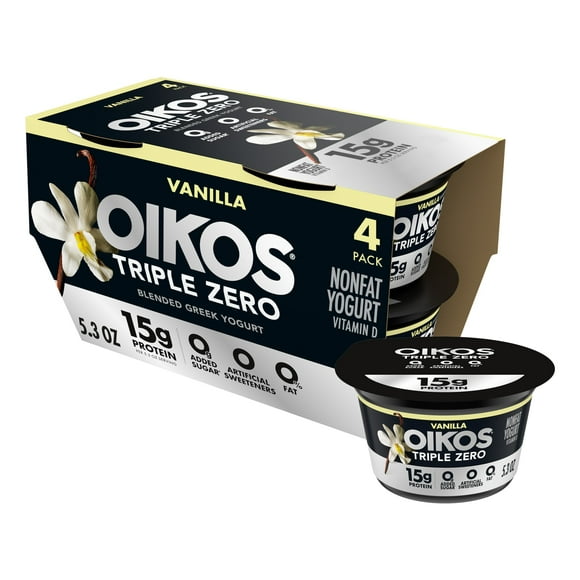 15g protein
Triple Zero Greek Yogurt - Vanilla
Amazon returns policy · secure checkout
10g protein12g proteinTags
High Protein Snacks Pro Editorial Team
Independently researched and editorially reviewed. We compare real nutrition labels and never accept payment for coverage.
Get the best new protein snacks in your inbox
Weekly picks and honest reviews — no spam, unsubscribe anytime.
More from the journal

:ratio PROTEIN Yogurt Nutrition Facts (2026): 25g Protein, 170 Calories, Zero Added Sugar — All Flavors Verified
:ratio PROTEIN yogurt packs 25 grams of protein into a 5.3 oz cup for 170 calories and just 3 grams of naturally-occurring sugar — no added sugar, sweetened only with sucralose. It achieves that protein density by combining ultra-filtered nonfat milk with whey protein concentrate, producing roughly 4× the protein of a traditional yogurt cup. Here is the complete verified label, a flavor-by-flavor breakdown, and a head-to-head against Oikos Triple Zero, Two Good, and Siggi’s.
Read more
Oikos vs Chobani (2026): Which Greek Yogurt Wins on Protein, Sugar, Sweeteners and Lactose
Oikos wins on protein in every matchup: 18g vs 16g per 170g of plain, 15g vs 12g in a 150g vanilla cup, and 20g in a 5.3 oz Oikos Pro cup where Chobani needs 6.7 oz. Chobani wins on calories, sugar and lactose: Zero Sugar Vanilla is 60 calories with 0g sugar and lactose-free, and its plain nonfat comes in a one-ingredient single cup. Nine products compared on each brand’s own September 2026 labels, with every sweetener named and the honest catch on both.
Read more
Oikos vs FAGE (2026): Which Greek Yogurt Wins on Protein, Sugar, Stevia, and Ingredients
Oikos wins raw protein per cup: Oikos Pro Vanilla packs 20g into a 130-calorie 5.3 oz cup by adding whey protein concentrate to ultra-filtered milk. FAGE wins protein per calorie and the ingredient list: FAGE Total 0% is skimmed milk and five live cultures, nothing else, at 16g of protein for 80 calories, the best ratio in this comparison. Every flavored Oikos cup is stevia-sweetened; no FAGE Total product is sweetened at all. Eight products compared on each brand's own September 2026 nutrition panel, with the protein-per-calorie math shown and an honest catch on every pick.
Read more