Best Vegan Protein Snacks (2026): No Cow Bar, Dry Edamame, and 5 More — Ranked by Protein Per Calorie With Verified Data
No Cow Protein Bar leads at 20g of plant protein for 190 calories — the best protein-per-calorie in a packaged vegan bar. Seapoint Farms Dry Roasted Edamame matches it whole-food style at 14g per ounce and 130 calories. ALOHA is the cleanest organic option at 14g with no sugar alcohols and no stevia. Seven verified vegan protein snacks ranked by protein per 100 calories, with honest trade-offs on each.
The short answer
Our top protein bar picks
Editor-selected and ready to buy. As an Amazon Associate we may earn from qualifying purchases.
Buy the products in this guide: Chunky Peanut Butter Protein Bar · Peanut Butter Cup Protein Bar · Upgraded - Peanut Butter Cup Protein Bar
 20g protein
Upgraded - Birthday Cake Protein Bar
Amazon returns policy · secure checkout
20g protein20g proteinWhat are the best vegan protein snacks?
Best absolute protein (bar): No Cow Protein Bar (20g, 190 cal, pea + rice, 1g sugar). Best shelf-stable whole food: Seapoint Farms Dry Roasted Edamame (14g per oz, 130 cal per oz, 2 ingredients). Best organic bar, no sugar alcohols: ALOHA Organic Protein Bar (14g, 240 cal, coconut sugar). Best budget legume: Lupini beans (~13g per ½ cup, ~115 cal). Best light drink: Sunwarrior Clear Protein Refresher (10g / ~50 cal, best protein-to-calorie ratio). What to skip for protein goals: GoMacro MacroBar (only 11g at ~290 calories — great ingredients, low protein density).
Vegan Protein Snack Comparison: 2026 Verified Nutrition Data
All figures are per serving as described. Protein per 100 calories is calculated as (protein ÷ calories) × 100 — the most honest way to compare snacks of very different formats and sizes.
| Product | Protein | Calories | Protein/100 cal | Sugar | Sweetener | Format |
|---|---|---|---|---|---|---|
| Sunwarrior Clear Protein Refresher (1 serving) | 10g | ≈50 | ≈20.0g | 0g | Stevia, monk fruit | Water-mix drink |
| Lupini beans (½ cup, brined) | ≈13g | ≈115 | ≈11.3g | 0g | None | Whole legume |
| Seapoint Farms Dry Roasted Edamame (1 oz) | 14g | 130 | 10.8g | 1g | None (sea salt only) | Crunchy shelf-stable snack |
| No Cow Protein Bar (1 bar) | 20g | 190 | 10.5g | 1g | Erythritol, stevia, monk fruit | Chewy bar |
| ALOHA Organic Protein Bar (1 bar) | 14g | 240 | 5.8g | 5g | Coconut sugar + monk fruit | Chewy organic bar |
| GoMacro MacroBar (1 bar) | ≈11g | ≈290 | ≈3.8g | ≈12g | Brown rice syrup, cane sugar | Chewy whole-food bar |
| Lenny & Larry’s Complete Cookie (half) | 8g | ≈220 | ≈3.6g | ≈11g | Cane sugar only | Soft-baked cookie |
The biggest insight from the table: dry roasted edamame and lupini beans match or beat most packaged protein bars on protein-to-calorie ratio, with two-to-four ingredient lists. Sunwarrior Clear Protein Refresher has the best ratio of all (~20g per 100 cal) but only 10g total protein per serving — a light top-up, not a meal-level protein source. No Cow is the best packaged bar on protein efficiency. GoMacro and Lenny & Larry’s serve different goals than protein density.
The 7 Best Vegan Protein Snacks
1. Seapoint Farms Dry Roasted Edamame — Best Shelf-Stable Whole Food
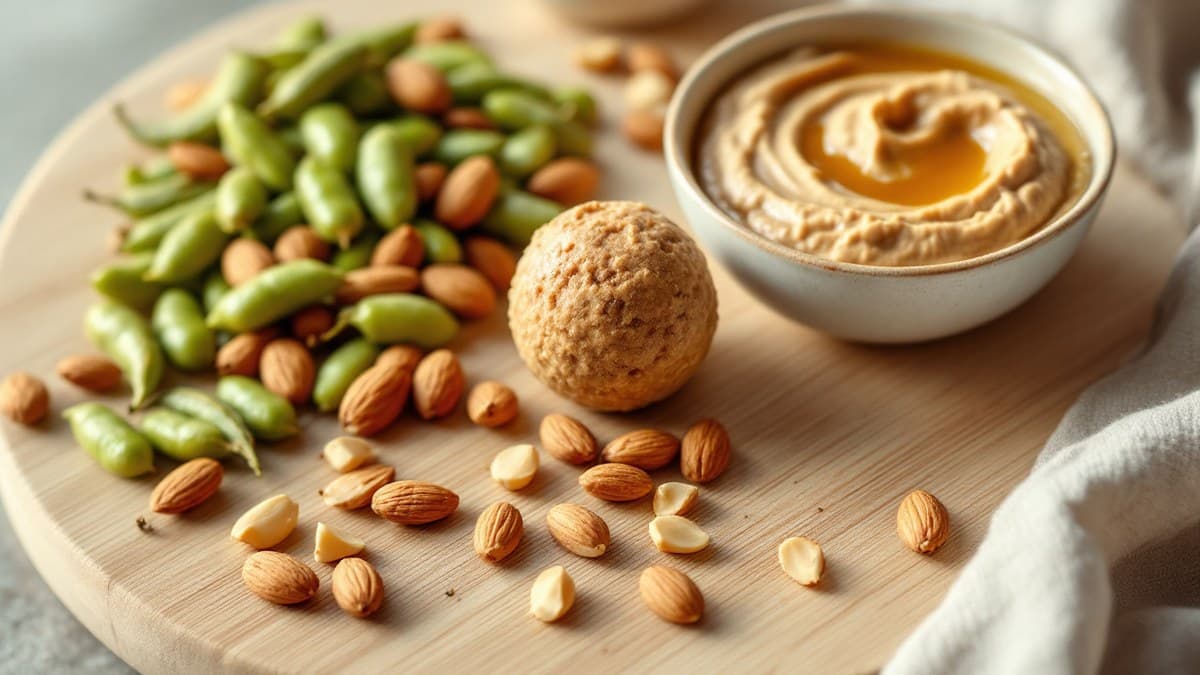
Seapoint Farms Dry Roasted Edamame delivers 14g of complete protein per ounce (1/3 cup) from whole soybeans, with just 130 calories, 1g of natural sugar, and approximately 150mg of sodium. The ingredient list is two items: edamame and sea salt. No protein isolate, no sweeteners, no fiber gums required — the edamame is the food.
At 10.8g of protein per 100 calories, the ratio beats most packaged bars. The soy-based protein contains all essential amino acids, making it a rare complete plant protein. Shelf-stable in a jar or individual pouches, it travels as easily as a protein bar without the sweeteners or engineered texture. Widely available at Target, Whole Foods, and Amazon.
The honest catch: soy is a top allergen — not appropriate for anyone with a soy allergy. The crunchy texture and sea-salt flavor can get monotonous as your only daily snack; rotate with lupini beans or a bar for variety.
2. No Cow Protein Bar — Best Absolute Protein in a Vegan Bar
No Cow is the bar that delivers serious protein without dairy. At 20g of plant-based protein (pea + brown rice) per bar for 190 calories, it leads the packaged vegan bar category on protein density (10.5g per 100 cal). The sweetener blend — erythritol, stevia Reb M, and monk fruit — keeps total sugar at 1g. The 15g of chicory root fiber drops net carbs to approximately 11g per bar. Vegan, dairy-free, gluten-free, soy-free.
The Chocolate Brownie and Peanut Butter Chip flavors are the most widely stocked. Full nutrition breakdown including all flavors: No Cow nutrition guide.
The honest catch: erythritol can cause GI discomfort at full-bar doses in sensitive individuals, and the 15g of chicory root inulin fiber compounds that risk for people with IBS or sensitive digestion. Test with half a bar first if you are new to No Cow.
3. Lupini Beans — Best Budget Legume for Protein
Lupini beans (lupin beans) deliver approximately 13g of protein per ½-cup serving at about 115 calories — 11.3g of protein per 100 calories. Roland and DeLallo are the most widely stocked brands in the US, sold brined in jars. Naturally vegan, dairy-free, gluten-free, soy-free, and low in net carbohydrates relative to protein content. No sweeteners, no fiber gums, no additives.
Unlike dry edamame, lupini are typically eaten at home or the office (brined in liquid, less portable). The mildly bitter, firm texture mellows in brine and pairs well with olive oil and herbs. Very affordable on a per-gram-of-protein basis versus packaged bars.
The honest catch: lupini beans are in the legume family (related to peanuts and soy); verify tolerance before eating if you have legume allergies. Nutritional figures are approximate based on USDA data for cooked lupin beans — confirm on the label for your specific brand.
4. ALOHA Organic Protein Bar — Best Organic Bar With No Sugar Alcohols
ALOHA fills a specific and real gap: a vegan bar that is USDA Certified Organic, carries no sugar alcohols, no stevia, and no artificial sweeteners, while delivering 14g of plant-based protein (organic brown rice + pumpkin seed protein) per bar at 240 calories, 5g of added sugar (coconut sugar + monk fruit), and 10g of dietary fiber. Gluten-free, dairy-free, soy-free.
For vegan buyers who have experienced GI discomfort from erythritol-sweetened bars (No Cow, Quest) or who prioritize certified-organic ingredients throughout, ALOHA is the cleanest-label vegan bar widely available at Whole Foods, Target, and Amazon. Peanut Butter Chocolate Chip is the most popular and widely stocked flavor.
The honest catch: at 5.8g of protein per 100 calories, ALOHA is the least protein-efficient bar in this comparison. If your primary goal is maximizing protein per calorie, No Cow is the better pick. ALOHA’s strength is organic certification and clean sweeteners, not protein density, and it carries a premium price for a 14g bar.
5. Lenny & Larry’s Complete Cookie (half) — Best for Real-Sugar Vegan Indulgence
Lenny & Larry’s The Complete Cookie delivers 16g of plant protein per whole 4oz cookie (~440 cal) from vital wheat gluten, pea protein, and rice protein — no soy, no dairy, no artificial sweeteners, no sugar alcohols, sweetened only with real cane sugar. It is the only mainstream protein cookie that is vegan, dairy-free, and free of all artificial sweeteners and sugar alcohols.
The practical weight-conscious serving is half a cookie per sitting: approximately 220 calories and 8g of plant protein, with ~11g of added sugar. At 3.6g of protein per 100 calories the ratio is low — but the cookie tastes like bakery food and satisfies sweet cravings more completely than any sweetener-based bar. Full data in our Lenny & Larry’s nutrition guide and our protein cookies guide.
The honest catch: contains gluten (vital wheat gluten is the primary protein source) — not appropriate for gluten-free buyers. A whole cookie is ~440 calories; always eat as half if calorie control matters. The label shows per-half-cookie figures on the back but advertises per-whole-cookie protein on the front, which confuses most shoppers.
6. GoMacro MacroBar — Best Organic Whole-Food Ingredients (Not Protein Density)
GoMacro MacroBars are certified USDA Organic, vegan, gluten-free, soy-free, and built from sprouted brown rice, pea protein, and real whole-food ingredients like peanut butter, almonds, and banana. They deliver approximately 11g of protein per 290-calorie bar, sweetened primarily with organic brown rice syrup and organic cane sugar (~12g natural sugar per bar).
At 3.8g of protein per 100 calories, GoMacro is not a choice you make to maximize protein. It is a choice you make when USDA Organic certification, whole-food ingredients, and natural sweeteners matter more than protein efficiency, or when you want something that genuinely tastes like real food without engineered sweeteners. GoMacro is the most widely available certified-organic vegan bar in natural grocery stores and airport outlets.
The honest catch: anyone buying GoMacro specifically to hit a protein target will be much better served by No Cow or dry edamame. GoMacro shines on ingredient quality and real-food taste, not macro performance.
7. Sunwarrior Clear Protein Refresher — Best Protein-to-Calorie Ratio (Light Drink)
Sunwarrior’s Clear Protein Refresher mixes to a thin, clear drink delivering 10g of protein from barley and rice at about 50 calories per serving — approximately 20g of protein per 100 calories, the best ratio of any option in this comparison. Zero added sugar, 2g of carbs, sweetened with stevia and monk fruit, in ~30-serving tubs. Full review: Sunwarrior Clear Protein Refresher. For the broader vegan protein powder comparison (Orgain vs Garden of Life vs Vega vs Sunwarrior), see our vegan protein powder comparison.
The honest catch: 10g of protein is modest on its own — you need two servings to match a standard 20g bar. Best as a light post-cardio top-up or a low-calorie hot-weather drink, not as your primary protein source.
Are Vegan Protein Snacks as Good as Whey-Based Ones?
For muscle protein synthesis, whey isolate’s higher leucine content and faster absorption rate give it a slight edge per gram in head-to-head research. The practical gap between a 20g vegan bar and a 25g whey bar is small enough that it rarely matters for non-competitive athletes — what matters more is whether you actually eat the snack consistently. Dry roasted edamame has roughly the same protein-to-calorie ratio as many whey-based bars, without engineered ingredients. See our whey vs. plant-based protein comparison for the full recovery data.
Frequently Asked Questions
What vegan protein snack has the most protein per serving?
No Cow Protein Bar leads at 20g of plant-based protein per 190-calorie bar (pea + brown rice protein). Among whole foods, dry roasted edamame delivers 14g per ounce and lupini beans deliver ~13g per ½ cup. No Cow is the best packaged vegan bar on absolute protein per serving.
Is dry roasted edamame high in protein?
Yes. Seapoint Farms Dry Roasted Edamame delivers 14g of complete protein per ounce (1/3 cup) at 130 calories — 10.8g per 100 calories, comparable to most protein bars. It is one of the highest-protein-per-calorie shelf-stable vegan snacks available, with just two ingredients. The protein is complete (all essential amino acids) because soybeans are a rare complete plant protein.
Which vegan protein snacks have no sugar alcohols?
ALOHA Organic Protein Bar (coconut sugar + monk fruit only), Lenny & Larry’s Complete Cookie (cane sugar only), GoMacro MacroBar (brown rice syrup + organic cane sugar), Seapoint Farms Dry Roasted Edamame (no sweeteners), and lupini beans (no sweeteners). No Cow uses erythritol alongside stevia and monk fruit. The Sunwarrior Clear Protein Refresher uses stevia and monk fruit with no erythritol.
Are vegan protein snacks good for weight loss?
Yes, when the protein count is meaningful and calories fit your budget. No Cow (20g / 190 cal, 1g sugar) and dry edamame (14g / 130 cal per oz) both perform well on protein-per-calorie and suppress appetite effectively. A whole GoMacro bar (~290 cal) or a whole Lenny & Larry’s cookie (~440 cal) are calorie-heavy for their protein return and harder to fit in a caloric deficit.
What is the best vegan protein snack with no sweeteners at all?
Seapoint Farms Dry Roasted Edamame (two ingredients: edamame + sea salt) and lupini beans (zero sweeteners, zero additives) both deliver excellent protein-to-calorie ratios from whole-food sources. No engineered sweetener footprint, no gums, no fiber additives.
Bottom line: for maximum protein per serving in a packaged vegan bar, No Cow (20g / 190 cal) is the clear pick. For whole-food protein with the best ratio of any portable snack, Seapoint Farms Dry Roasted Edamame (14g per oz, 130 cal per oz) wins. If organic certification and zero sugar alcohols matter more than protein density, ALOHA is the cleanest-label option at 14g. Looking for vegan protein powders to mix into shakes? Orgain, Garden of Life, Vega, and Sunwarrior are a different category — see our vegan protein powder comparison guide. Or browse the full protein snacks directory to filter by vegan and find more options.
Shop our top protein bar picks
Editor-selected high-protein options related to this guide. As an Amazon Associate we may earn from qualifying purchases.
Buy the products in this guide: Chunky Peanut Butter Protein Bar · Peanut Butter Cup Protein Bar · Upgraded - Peanut Butter Cup Protein Bar
20g proteinUpgraded - Birthday Cake Protein Bar
Amazon returns policy · secure checkout
20g protein20g proteinTags
High Protein Snacks Pro Editorial Team
Independently researched and editorially reviewed. We compare real nutrition labels and never accept payment for coverage.
Get the best new protein snacks in your inbox
Weekly picks and honest reviews — no spam, unsubscribe anytime.
More from the journal

Best Dry Roasted Edamame Snacks (2026): Seapoint Farms Leads at 13g Protein Per Oz
Seapoint Farms Dry Roasted Edamame delivers 13g of protein and 0g of sugar per 1-oz serving at approximately 130 calories — more protein per ounce than almonds, cashews, or pumpkin seeds, and the most protein-dense shelf-stable plant snack at mainstream retail. Here are the best dry roasted and frozen edamame options ranked by protein density, how they compare to nuts, and what to watch on the label.
Read more
ALOHA vs GoMacro vs TruBar (2026): Which Plant-Based Protein Bar Wins on Protein, Sugar and Price?
ALOHA has the most protein of the three standard bars: 14g in every flavor, for 220 to 260 calories and 3g to 4g of added sugar. TruBar is the lightest at 190 calories with 12g of protein and up to 14g of fiber, and TruBar PRO tops everything at 18g. GoMacro trails at 11g to 12g for 260 to 290 calories, but it is the only one without added fiber. Fourteen bars compared flavor by flavor on each brand’s own September 2026 labels.
Read more
ALOHA Protein Bar Nutrition Facts 2026: Full Label Breakdown for Every Flavor
ALOHA protein bars deliver 14g of organic plant protein per bar from a pea-and-brown-rice blend, with 230–260 calories, 5–9g of sugar from organic coconut sugar, and 8–11g of fiber. Every flavor is USDA Organic, vegan, gluten-free, and soy-free. Here is a full nutrition-label breakdown for the six flagship US flavors, who ALOHA is actually best for, and how the plant-based protein compares to whey.
Read more