ALOHA vs GoMacro vs TruBar (2026): Which Plant-Based Protein Bar Wins on Protein, Sugar and Price?
ALOHA has the most protein of the three standard bars: 14g in every flavor, for 220 to 260 calories and 3g to 4g of added sugar. TruBar is the lightest at 190 calories with 12g of protein and up to 14g of fiber, and TruBar PRO tops everything at 18g. GoMacro trails at 11g to 12g for 260 to 290 calories, but it is the only one without added fiber. Fourteen bars compared flavor by flavor on each brand’s own September 2026 labels.
Our top protein bar picks
Editor-selected and ready to buy. As an Amazon Associate we may earn from qualifying purchases.
Buy the products in this guide: Coconut Chocolate Almond - Protein Bars · Chocolate Cherry Protein Bars · Oatmeal Chocolate Chip Protein Bars
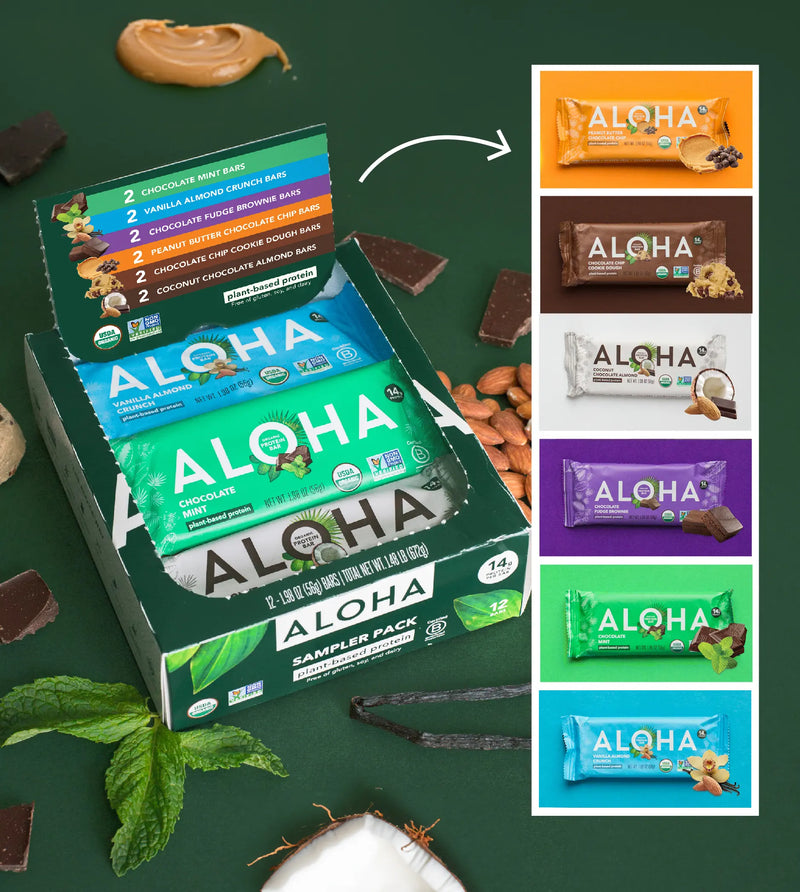 14g protein
Protein Bar Sampler - Variety Pack
Amazon returns policy · secure checkout
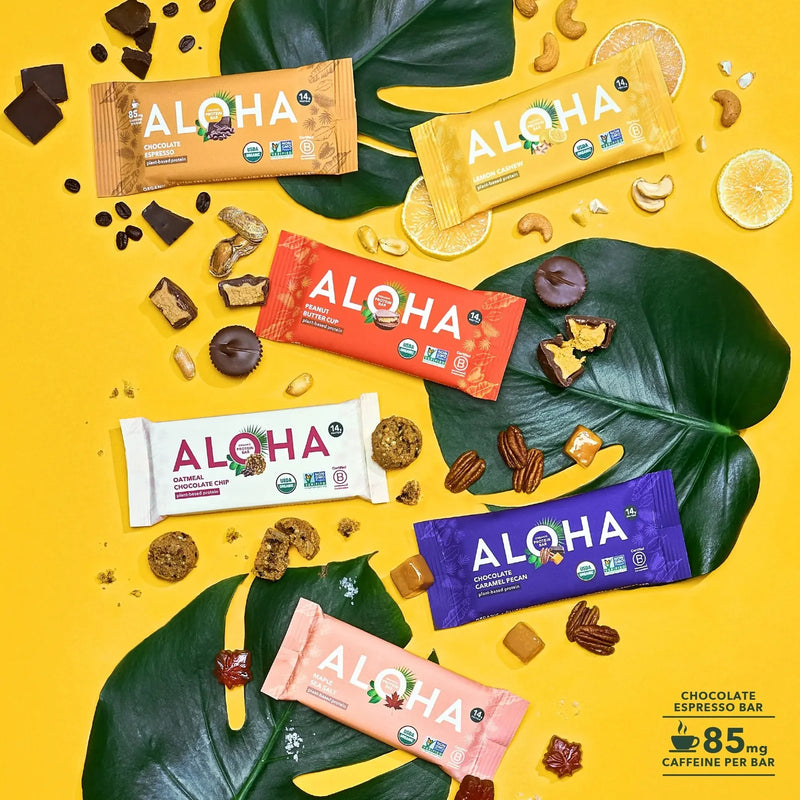 14g protein
Protein Bar Sampler #2 - Variety Pack
Amazon returns policy · secure checkout
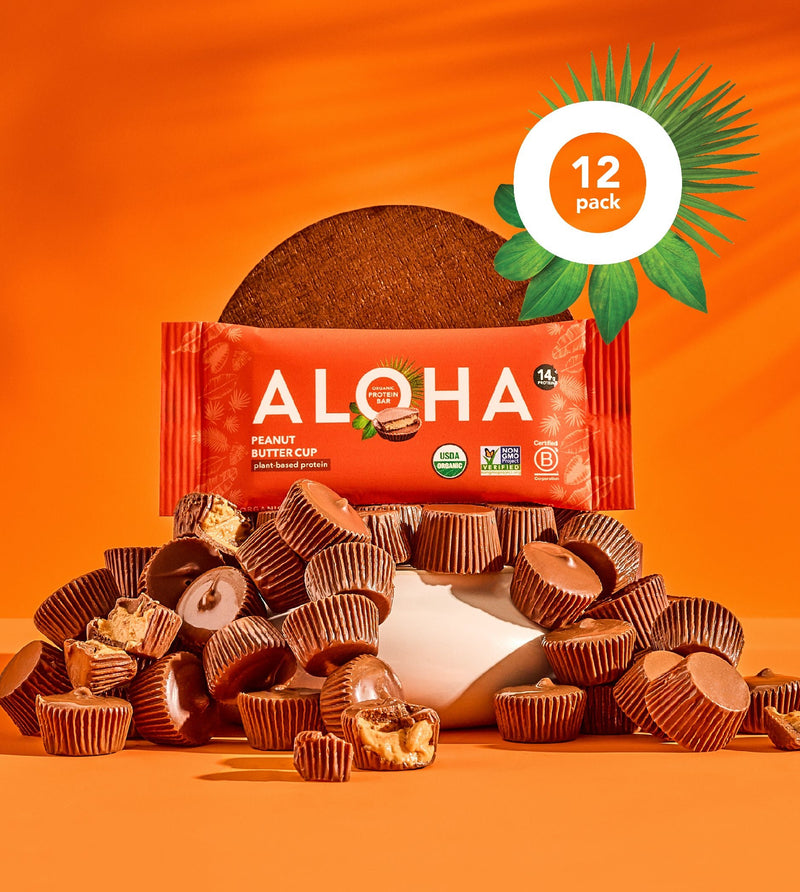 14g protein
Peanut Butter Cup Protein Bars
Amazon returns policy · secure checkout
Direct Answer
ALOHA has the most protein of the three brands’ standard bars: 14g in every flavor we read, for 220 to 260 calories and only 3g to 4g of added sugar. A standard TruBar has 12g of protein for 190 calories, the fewest calories of the three, and the higher-protein TruBar PRO beats everything here at 18g for 230 calories. GoMacro trails on protein at 11g to 12g for 260 to 290 calories, with 7g to 9g of added sugar, but it is the only one of the three with almost no added fiber, and its product pages list the bars as low FODMAP. Every figure below was read from each brand’s own nutrition panel on September 12, 2026.
ALOHA, GoMacro and TruBar are the three plant-based protein bars people compare most often, and on the shelf they look interchangeable: all three are vegan, gluten-free, free of sugar alcohols and built on brown rice protein. The labels are not interchangeable. ALOHA fits 14g of protein into a 56g bar. TruBar fits 12g into a smaller 50g bar with more fiber than either rival. GoMacro’s MacroBar is the biggest bar of the three at 65g to 69g, the most calories, and the least protein. We put 14 bars side by side, flavor against flavor, so you can see exactly where each brand wins and what each one trades away to get there.
Affiliate links — if you buy through them we earn a small commission at no extra cost to you. Every nutrition figure below comes from the manufacturer’s own published nutrition panel, read on aloha.com, gomacro.com and trubar.com on September 12, 2026, per the serving size each brand prints.
The Quick Verdict: ALOHA vs GoMacro vs TruBar at a Glance
This is each brand’s standard bar, using the ranges across the flavors we read. The winner on each line is in bold.
| Per bar | ALOHA | GoMacro MacroBar | TruBar |
|---|---|---|---|
| Protein | 14g | 11g–12g | 12g (18g in TruBar PRO) |
| Calories | 220–260 | 260–290 | 190 |
| Bar size | 56g | 65g–69g | 50g |
| Protein per 100 calories | 5.4g–6.4g | 3.8g–4.6g | 6.3g |
| Added sugar | 3g–4g | 7g–9g | 5g–7g |
| Fiber | 6g–10g | 2g–3g | 11g–14g |
| Protein source | Brown rice + pumpkin seed | Sprouted brown rice + pea | Brown rice + pea |
| Main sweeteners | Tapioca syrup, cane sugar, monk fruit | Brown rice syrup, coconut sugar | Organic cane sugar |
| Organic | Yes (USDA Organic) | Yes (USDA Organic) | No |
| Brand-store price, 12 bars | $34.99 ($2.92 a bar) | $38.49 ($3.21 a bar) | $31.99 ($2.67 a bar) |
Read across the rows and the three brands sort cleanly. ALOHA leads on protein and has the least added sugar. TruBar leads on calories, fiber and price. GoMacro leads on none of the numbers, and it is still the right bar for one kind of buyer, which we explain below.
Which Has the Most Protein: ALOHA, GoMacro or TruBar?
Among the standard bars, ALOHA has the most protein at 14g per bar, ahead of TruBar at 12g and GoMacro at 11g to 12g; the TruBar PRO line tops all three at 18g. Measured as protein per 100 calories, the fairest way to compare bars of different sizes, TruBar PRO carries 7.8g, TruBar and ALOHA both land between 5.4g and 6.4g, and GoMacro lands between 3.8g and 4.6g. Put simply, a GoMacro MacroBar gives you about a third less protein for every calorie you eat than either rival.
ALOHA vs GoMacro: The Same Flavor, Head to Head
Both brands make a Peanut Butter Chocolate Chip bar, and it is GoMacro’s original flavor, so it is the cleanest comparison between the two.

ALOHA Peanut Butter Chocolate Chip Protein Bar
14g protein · 240 cal · 12g fat (3g saturated) · 10g fiber · 5g sugar (3g added) · 90mg sodium · 56g bar · USDA Organic
Check price on Amazon →ALOHA’s bar lists 240 calories, 14g of protein, 12g of fat (3g saturated), 90mg of sodium, 24g of carbohydrate, 10g of fiber and 5g of sugar with 3g added. The ingredient list starts with peanuts, then tapioca fiber, then the protein blend of brown rice and pumpkin seed protein, followed by chocolate chips, tapioca syrup, vegetable glycerin, roasted pumpkin seeds, sea salt and monk fruit, all organic except the salt. ALOHA’s page describes its bars as free from soy, dairy, gluten, stevia and sugar alcohols.

GoMacro MacroBar Peanut Butter Chocolate Chip
11g protein · 290 cal · 10g fat (2g saturated) · 2g fiber · 8g sugar (7g added) · 15mg sodium · 69g bar · USDA Organic
Check price on Amazon →The MacroBar lists 290 calories, 11g of protein, 10g of fat (2g saturated), 15mg of sodium, 39g of carbohydrate, 2g of fiber and 8g of sugar with 7g added. It is also a bigger bar: 69g against ALOHA’s 56g. The ingredient list is short and entirely organic: brown rice syrup, peanut butter, a protein blend of sprouted brown rice and pea protein, puffed brown rice, chocolate chips made with coconut sugar, and peanuts.
The honest catch, on both: the first ingredient in the GoMacro bar is brown rice syrup, which is where most of its 7g of added sugar comes from, and it delivers 3g less protein for 50 more calories. ALOHA gets its lower sugar and higher fiber partly from tapioca fiber, an added, isolated fiber that sits second on the list, and from monk fruit. If you want a bar built from ingredients you would recognize in a kitchen, GoMacro’s list is the more straightforward one. If you want the most protein for the fewest calories and the least added sugar, ALOHA wins this matchup clearly.
ALOHA vs TruBar: Cookie Dough Against Cookie Dough
ALOHA and TruBar both sell a cookie dough bar, and it is the flavor that shows the biggest difference in how the two brands are built.

ALOHA Chocolate Chip Cookie Dough Protein Bar
14g protein · 240 cal · 11g fat (2.5g saturated) · 10g fiber · 5g sugar (4g added) · 105mg sodium · 56g bar · no peanut or tree-nut ingredients
Check price on Amazon →ALOHA’s Chocolate Chip Cookie Dough bar lists 240 calories, 14g of protein, 11g of fat (2.5g saturated), 105mg of sodium, 25g of carbohydrate, 10g of fiber and 5g of sugar with 4g added, plus 6mg of iron, 35% of the daily value. Its base is sunflower seed butter rather than nuts: the list is the brown rice and pumpkin seed protein blend, sunflower seed butter, tapioca fiber, tapioca syrup, chocolate chips, vegetable glycerin, brown sugar, cocoa nibs, brown rice crisps, natural flavor, vanilla extract, sea salt and sunflower lecithin. No peanut or tree nut is an ingredient, although ALOHA notes the bar is made in a facility that also processes peanuts and tree nuts.

TruBar Oh Oh Cookie Dough
12g protein · 190 cal · 8g fat (4g saturated) · 13g fiber · 8g sugar (7g added) · 75mg sodium · 50g bar · contains cashews
Check price on Amazon →TruBar’s Oh Oh Cookie Dough is a smaller bar with fewer calories: 190 calories, 12g of protein, 8g of fat (4g saturated), 75mg of sodium, 24g of carbohydrate, 13g of fiber and 8g of sugar with 7g added. The list is a tapioca blend (tapioca fiber and cassava root flour), a protein blend of brown rice and organic pea protein, cashews, organic cane sugar, palm oil, cocoa powder, unsweetened chocolate, cocoa butter, medium chain triglycerides, natural flavors, sea salt, sunflower lecithin and vanilla bean specks. TruBar’s page describes it as free of gluten, dairy, soy, sugar alcohols and seed oils.
The honest catch, on both: TruBar saves 50 calories, but it does it partly by being 6g smaller, and it carries 3g more added sugar and 2g less protein than ALOHA. It is also not an organic bar, and it uses palm oil, which TruBar labels as sustainably sourced. ALOHA’s bar is organic with less sugar, but at 240 calories it is the heavier snack. If you are avoiding nuts, ALOHA is the one to look at, since TruBar’s cookie dough contains cashews. If you are counting calories, TruBar is the lighter bar.
The Mint Matchup: All Three Brands, One Flavor
Mint is the one flavor all three brands make, which makes it the fairest three-way test.
| Bar | Size | Calories | Protein | Protein / 100 cal | Fat (sat.) | Fiber | Sugar (added) | Sodium |
|---|---|---|---|---|---|---|---|---|
| ALOHA Chocolate Mint | 56g | 220 | 14g | 6.4g | 9g (3g) | 10g | 5g (4g) | 35mg |
| GoMacro Mint Chocolate Chip | 65g | 280 | 11g | 3.9g | 11g (2.5g) | 2g | 8g (7g) | 45mg |
| TruBar It’s Mint to Be Chip | 50g | 190 | 12g | 6.3g | 8g (3.5g) | 11g | 8g (7g) | 55mg |
ALOHA wins the mint matchup on protein, added sugar and sodium. TruBar wins on calories and fiber. GoMacro’s mint bar is sweetened with brown rice syrup, coconut sugar and maple sugar, and uses cashew and sunflower seed butter; ALOHA’s uses cashew and sunflower butter with monk fruit; TruBar’s uses almonds and organic cane sugar with peppermint oil.
The Coconut Matchup: Where ALOHA Loses Its Edge

ALOHA Coconut Chocolate Almond Protein Bar
14g protein · 260 cal · 13g fat (7g saturated) · 6g fiber · 4g sugar (3g added) · 70mg sodium · 56g bar · USDA Organic
Check price on Amazon →
GoMacro MacroBar Coconut + Almond Butter + Chocolate Chips
11g protein · 270 cal · 10g fat (3g saturated) · 3g fiber · 7g sugar (7g added) · 15mg sodium · 65g bar · USDA Organic
Check price on Amazon →
TruBar Cocoa for Coconuts
12g protein · 190 cal · 9g fat (3.5g saturated) · 14g fiber · 6g sugar (5g added) · 140mg sodium · 50g bar · contains almonds
Check price on Amazon →ALOHA still has the most protein here, 14g, but its Coconut Chocolate Almond bar is the heaviest ALOHA we read at 260 calories, with 7g of saturated fat (35% of the daily value) from the coconut and chocolate, and only 6g of fiber. GoMacro’s coconut bar lists 270 calories, 11g of protein, 3g of saturated fat and 7g of added sugar, and has the lowest sodium of the three at 15mg. TruBar’s Cocoa for Coconuts has the fewest calories at 190, the most fiber of any bar in this comparison at 14g, and 5g of added sugar, but also the most sodium at 140mg.
The honest catch: if saturated fat is the number you watch, this is the one ALOHA flavor to skip, because its 7g is twice the TruBar coconut bar’s 3.5g and more than twice the GoMacro bar’s 3g. Every other ALOHA bar we read lists 2.5g to 3g.
The Peanut Butter Matchup, With TruBar Added

TruBar Smother Fudger Peanut Butter
12g protein · 190 cal · 9g fat (3.5g saturated) · 13g fiber · 7g sugar (6g added) · 75mg sodium · 50g bar · contains peanuts
Check price on Amazon →TruBar does not make a peanut butter chocolate chip bar, so its closest match is Smother Fudger Peanut Butter: 190 calories, 12g of protein, 9g of fat (3.5g saturated), 75mg of sodium, 23g of carbohydrate, 13g of fiber and 7g of sugar with 6g added. Against the ALOHA and GoMacro peanut butter bars above, it is the lightest of the three by 50 to 100 calories, sits between them on protein, and sits between them on added sugar. ALOHA also makes a Peanut Butter Cup bar at 230 calories and 14g of protein with 4g of added sugar.
Is TruBar PRO the Highest-Protein Plant Bar of the Three?
Yes: TruBar PRO has 18g of protein in a 60g bar for 230 calories, which is 4g more than any ALOHA bar and 6g to 7g more than any GoMacro MacroBar we read. It also has only 3g of added sugar, tied with ALOHA’s lowest. The trade is that it is a newer, narrower line, with three flavors listed on trubar.com.

TruBar PRO Chocolate Pea-nut Job
18g protein · 230 cal · 10g fat (3g saturated) · 13g fiber · 6g sugar (3g added) · 95mg sodium · 60g bar · contains peanuts
Check price on Amazon →The PRO bar lists 230 calories, 18g of protein, 10g of fat (3g saturated), 95mg of sodium, 25g of carbohydrate, 13g of fiber and 6g of sugar with 3g added, plus 3.4mg of iron. The ingredient list is tapioca fiber, brown rice protein, peanuts, palm oil, cane sugar, pea protein, rice syrup, grape juice, cocoa powder, sunflower lecithin, monk fruit, sea salt and vanilla extract. At 7.8g of protein per 100 calories it is the most protein-dense bar in this comparison, and at $34.99 for 12 on trubar.com it is also the cheapest protein here per gram. Like the standard TruBar, it is not organic and uses palm oil.
Full Lineup Comparison
Every bar we compared, on the serving each brand prints. Protein per 100 calories is our arithmetic from the label figures.
| Bar | Size | Calories | Protein | Protein / 100 cal | Fat | Sat. fat | Fiber | Total sugar | Added sugar | Sodium |
|---|---|---|---|---|---|---|---|---|---|---|
| ALOHA Peanut Butter Chocolate Chip | 56g | 240 | 14g | 5.8g | 12g | 3g | 10g | 5g | 3g | 90mg |
| ALOHA Peanut Butter Cup | 56g | 230 | 14g | 6.1g | 10g | 3g | 10g | 5g | 4g | 135mg |
| ALOHA Chocolate Chip Cookie Dough | 56g | 240 | 14g | 5.8g | 11g | 2.5g | 10g | 5g | 4g | 105mg |
| ALOHA Chocolate Mint | 56g | 220 | 14g | 6.4g | 9g | 3g | 10g | 5g | 4g | 35mg |
| ALOHA Coconut Chocolate Almond | 56g | 260 | 14g | 5.4g | 13g | 7g | 6g | 4g | 3g | 70mg |
| GoMacro Peanut Butter Chocolate Chip | 69g | 290 | 11g | 3.8g | 10g | 2g | 2g | 8g | 7g | 15mg |
| GoMacro Mint Chocolate Chip | 65g | 280 | 11g | 3.9g | 11g | 2.5g | 2g | 8g | 7g | 45mg |
| GoMacro Coconut + Almond Butter + Chocolate Chips | 65g | 270 | 11g | 4.1g | 10g | 3g | 3g | 7g | 7g | 15mg |
| GoMacro Oatmeal Chocolate Chip | 65g | 260 | 12g | 4.6g | 8g | 1.5g | 3g | 9g | 9g | 65mg |
| TruBar Oh Oh Cookie Dough | 50g | 190 | 12g | 6.3g | 8g | 4g | 13g | 8g | 7g | 75mg |
| TruBar It’s Mint to Be Chip | 50g | 190 | 12g | 6.3g | 8g | 3.5g | 11g | 8g | 7g | 55mg |
| TruBar Cocoa for Coconuts | 50g | 190 | 12g | 6.3g | 9g | 3.5g | 14g | 6g | 5g | 140mg |
| TruBar Smother Fudger Peanut Butter | 50g | 190 | 12g | 6.3g | 9g | 3.5g | 13g | 7g | 6g | 75mg |
| TruBar PRO Chocolate Pea-nut Job | 60g | 230 | 18g | 7.8g | 10g | 3g | 13g | 6g | 3g | 95mg |
Is ALOHA, GoMacro or TruBar the Healthiest?
On the label, ALOHA is the most balanced of the three: the most protein of the standard bars, 3g to 4g of added sugar, and USDA Organic ingredients. TruBar is the lightest, with 190 calories and 11g to 14g of fiber, but it is not organic, uses palm oil, and carries 5g to 7g of added sugar. GoMacro is organic and built from the most familiar ingredients, with almost no added fiber, but it has the most calories, the most added sugar and the least protein per calorie. None of the three uses sugar alcohols, sucralose or stevia in any bar we read.
One number matters more than it looks. ALOHA and TruBar reach their 10g to 14g of fiber mostly with added tapioca fiber, which is listed near the top of both ingredient lists. That fiber is what keeps their sugar and calories down, but a large serving of added fiber can cause gas or bloating in people who are not used to it. GoMacro’s bars carry only 2g to 3g of fiber, and GoMacro’s product pages list each of the four bars we read as low FODMAP, the category of foods often recommended for sensitive stomachs. If added fiber has bothered you before, that is the reason to choose GoMacro despite its weaker numbers. For more on how bar sweeteners and fibers compare, see our protein bar sweeteners guide.
Which Is Best for Weight Loss: ALOHA, GoMacro or TruBar?
TruBar is the best fit for a calorie budget: every standard TruBar is 190 calories with 12g of protein and 11g to 14g of fiber, and TruBar PRO adds 18g of protein for 230 calories. ALOHA’s Chocolate Mint, at 220 calories and 14g of protein, is the closest ALOHA option. GoMacro is the hardest to fit into a deficit, because a MacroBar costs 260 to 290 calories for 11g to 12g of protein, closer to a small meal than a snack.
Which Is the Best Value?
On each brand’s own store on September 12, 2026, a 12-bar box listed at $31.99 for TruBar, $34.99 for ALOHA, $34.99 for TruBar PRO and $38.49 for GoMacro, before shipping or subscription discounts. Worked out per 10g of protein, that is about $1.62 for TruBar PRO, $2.08 for ALOHA, $2.22 for standard TruBar and $2.92 for GoMacro. Amazon prices move daily and are often lower than the brand stores; the buttons above go to the current listings.
Where Each Brand Wins
- Most protein in a standard bar: ALOHA, 14g in every flavor we read.
- Most protein overall: TruBar PRO, 18g for 230 calories.
- Fewest calories: TruBar, 190 in every standard flavor.
- Least added sugar: ALOHA Peanut Butter Chocolate Chip, ALOHA Coconut Chocolate Almond and TruBar PRO, 3g each.
- Most fiber: TruBar Cocoa for Coconuts, 14g.
- Least added fiber, and labeled low FODMAP: GoMacro.
- Organic: ALOHA and GoMacro. TruBar is not.
- Lowest sodium: GoMacro Peanut Butter Chocolate Chip and Coconut, 15mg each.
- No peanut or tree-nut ingredients: ALOHA Chocolate Chip Cookie Dough (made in a facility that also handles nuts).
- Lowest price per gram of protein: TruBar PRO.
If you want the whole plant-based shelf ranked rather than three brands head to head, our best vegan protein bars roundup covers it, and the whey vs plant-based protein bars guide explains what a plant protein blend does and does not do after a workout. For organic options beyond ALOHA and GoMacro, see the best organic protein bars, and for the fiber leaders, the highest-fiber protein bars.
How we compared
We read the Nutrition Facts panel and the ingredient statement for each bar from the brand’s own product pages on September 12, 2026: aloha.com for the five ALOHA bars, gomacro.com for the four GoMacro MacroBars, and trubar.com for the five TruBar bars. ALOHA and TruBar publish their panels as images, which we read directly; GoMacro prints its panel as text and lists only “1 bar” as the serving, so the GoMacro bar weights come from the net weight printed on each wrapper. Protein per 100 calories and price per 10g of protein are our division of the label and store figures. We did not use retailer summaries or third-party nutrition databases for any number, and we have not printed customer ratings. Brands reformulate, so check the wrapper in your hand if a number matters to you.
Frequently Asked Questions
Is ALOHA or GoMacro better?
On the label, ALOHA. Its Peanut Butter Chocolate Chip bar has 14g of protein, 240 calories and 3g of added sugar, while GoMacro’s has 11g of protein, 290 calories and 7g of added sugar. GoMacro is the better choice if added fiber upsets your stomach: it has 2g to 3g of fiber and its pages list the bars as low FODMAP, where ALOHA uses added tapioca fiber to reach 10g.
Is TruBar healthier than ALOHA?
TruBar has fewer calories (190 vs 220 to 260) and more fiber (11g to 14g vs 6g to 10g). ALOHA has more protein (14g vs 12g), less added sugar (3g to 4g vs 5g to 7g) and is USDA Organic, which TruBar is not. For most people choosing on protein and sugar, ALOHA comes out ahead; for the lowest-calorie snack, TruBar does.
Which has the most protein: ALOHA, GoMacro or TruBar?
ALOHA has the most protein among the standard bars at 14g. TruBar’s standard bars have 12g and the GoMacro MacroBars we read have 11g to 12g. TruBar PRO beats all of them at 18g for 230 calories.
Are ALOHA, GoMacro and TruBar all vegan?
Yes. Every bar we read is plant-based, with no dairy, egg or other animal ingredient, and all three brands call their bars vegan. The protein is brown rice protein blended with pumpkin seed protein (ALOHA) or pea protein (GoMacro and TruBar). All three label their bars gluten-free, and none of the bars we read lists soy or a sugar alcohol.
Which is best for weight loss?
TruBar, because every standard bar is 190 calories with 12g of protein and 11g to 14g of fiber. TruBar PRO gives 18g of protein for 230 calories. GoMacro MacroBars are the least suited, at 260 to 290 calories for 11g to 12g of protein.
Why does GoMacro have so much less fiber than ALOHA and TruBar?
ALOHA and TruBar add tapioca fiber, which is listed near the top of their ingredient lists and brings them to 6g to 14g of fiber. GoMacro does not add an isolated fiber, so its bars carry 2g to 3g from whole ingredients like brown rice and nuts. That is also why GoMacro’s bars are higher in sugar and calories.
Is TruBar organic?
No. Some TruBar ingredients are organic, such as the pea protein and cane sugar, but the bars are not labeled organic, and they use palm oil that TruBar describes as sustainably sourced. ALOHA and GoMacro are both USDA Organic.
Which is the cheapest per gram of protein?
On the brand stores on September 12, 2026, TruBar PRO worked out to about $1.62 per 10g of protein, ALOHA to $2.08, standard TruBar to $2.22 and GoMacro to $2.92, based on each brand’s 12-bar box price before shipping or discounts.
Shop our top protein bar picks
Editor-selected high-protein options related to this guide. As an Amazon Associate we may earn from qualifying purchases.
Buy the products in this guide: Coconut Chocolate Almond - Protein Bars · Chocolate Cherry Protein Bars · Oatmeal Chocolate Chip Protein Bars
14g proteinProtein Bar Sampler - Variety Pack
Amazon returns policy · secure checkout
14g proteinProtein Bar Sampler #2 - Variety Pack
Amazon returns policy · secure checkout
14g proteinPeanut Butter Cup Protein Bars
Amazon returns policy · secure checkout
Tags
High Protein Snacks Pro Editorial Team
Independently researched and editorially reviewed. We compare real nutrition labels and never accept payment for coverage.
Get the best new protein snacks in your inbox
Weekly picks and honest reviews — no spam, unsubscribe anytime.
More from the journal
ALOHA Protein Bar Nutrition Facts 2026: Full Label Breakdown for Every Flavor
ALOHA protein bars deliver 14g of organic plant protein per bar from a pea-and-brown-rice blend, with 230–260 calories, 5–9g of sugar from organic coconut sugar, and 8–11g of fiber. Every flavor is USDA Organic, vegan, gluten-free, and soy-free. Here is a full nutrition-label breakdown for the six flagship US flavors, who ALOHA is actually best for, and how the plant-based protein compares to whey.
Read more
Best Breakfast Protein Bars 2026: 5 Real Whole-Food Picks Ranked by Ingredients, Protein, and Morning Staying Power
The best breakfast protein bar in 2026 is KIND Breakfast Protein Almond Butter — literally built and branded for breakfast, with 8g of protein, 6g of fiber, and a whole-nut and grain base sweetened with honey. For a whole-food refrigerated pick, Perfect Bar Peanut Butter delivers 15g of protein and roughly 20 organic superfoods at meal-replacement scale. Five real breakfast protein bars ranked strictly by ingredient quality, protein, and morning staying power — every macro number verified from each brand's own 2026 nutrition panel.
Read more
Best Vegan Protein Bars 2026: 4 Plant-Based Picks Ranked by Protein, Ingredients, and Value
The best vegan protein bar in 2026 is No Cow — 20g of plant-based protein from a pea and brown rice blend at 190–200 calories per bar, with no dairy, no soy, and no sucralose or Ace-K. For certified organic with no sugar alcohols, ALOHA Organic delivers 14g of protein from sprouted brown rice and pea protein. Four vegan protein bars ranked by protein density, ingredient honesty, and real-world availability — every nutrition figure verified from each brand's 2026 label.
Read more