Lenny & Larry's Complete Cookie Nutrition Facts (2026): 16g Plant Protein, All 8 Flavors, and the Serving Size Trap Explained
Lenny & Larry's The Complete Cookie delivers 16g of plant-based protein from wheat gluten, pea, and rice protein per 4oz cookie — but the label shows nutrition for half a cookie. Verified 2026 nutrition facts for all eight major flavors, a breakdown of the plant protein blend, and a direct comparison to the Quest Protein Cookie.
The short answer
Our top protein cookie picks
Editor-selected and ready to buy. As an Amazon Associate we may earn from qualifying purchases.
Shopping for Lenny & Larry's? Protein Fitzels™ Beastly Buffalo · Fitzels™ · The Complete Crunchy Cookie® - Chocolate Chip
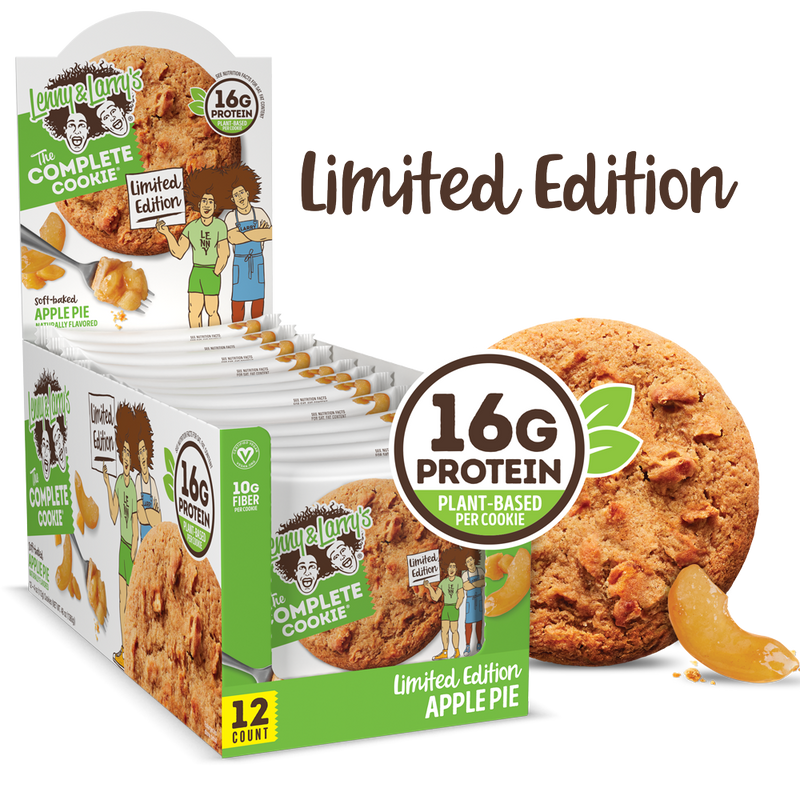 16g protein
Protein Cookie - Apple Pie
Amazon returns policy · secure checkout
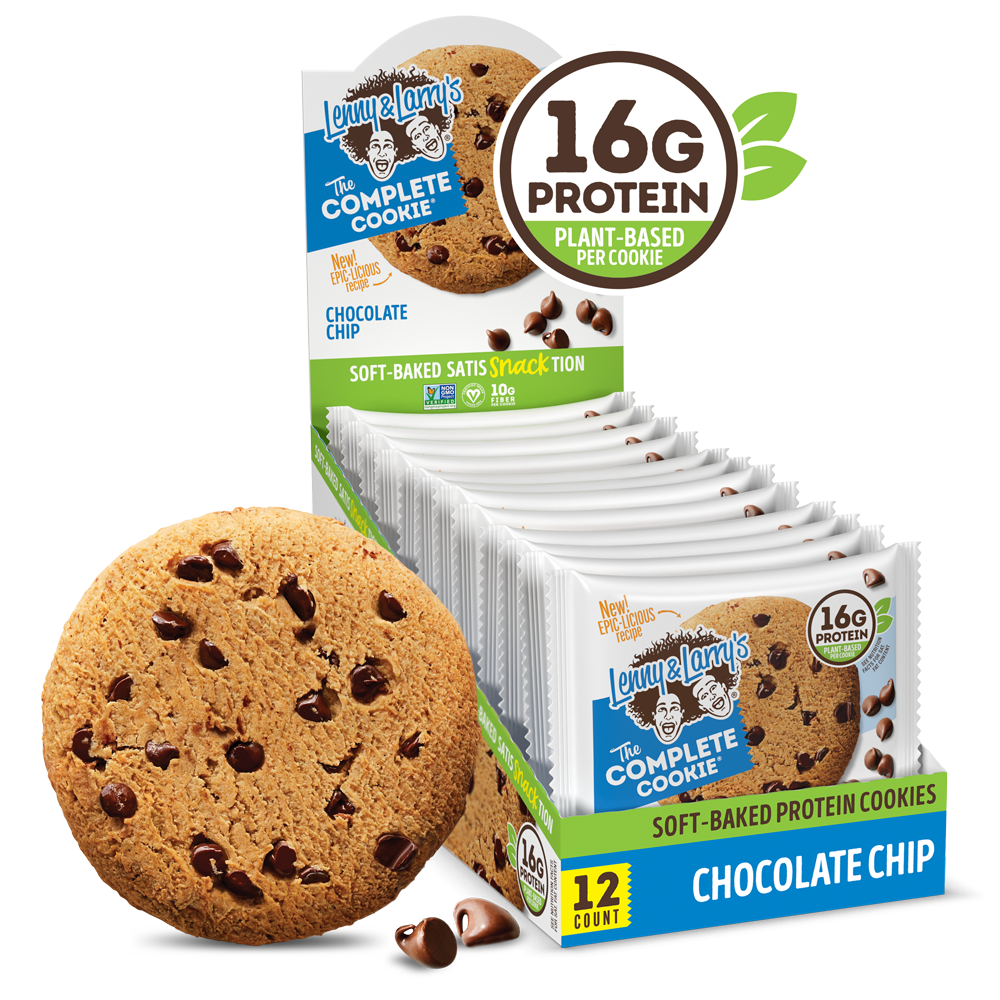 16g protein
Complete Cookie - Chocolate Chip
Amazon returns policy · secure checkout
 20g protein
Complete Cookie Nutrition Facts: All Flavors (per whole 4oz cookie)
All figures below are per whole cookie (one full 4oz package, 113g). Lenny & Larry’s labels nutrition for half a cookie (1 serving = 56g). All whole-cookie figures are cross-verified from multiple retail databases and brand listings. Numbers marked (~) are approximations from retailer nutrition panels; confirm the label on your specific lot as formulations can change by flavor and production batch.
| Flavor | Cal (whole) | Protein | Total Carbs | Fiber | Added Sugar | Total Fat |
|---|---|---|---|---|---|---|
| Chocolate Chip | ~440 | 16g | ~70g | 10g | ~22g | ~13g |
| Birthday Cake | 420 | 16g | 70g | 10g | 20g | 10g |
| Double Chocolate | ~440 | 16g | ~68g | 10g | ~18g | ~14g |
| Peanut Butter | ~460 | 16g | ~64g | 10g | ~18g | ~18g |
| Peanut Butter Chocolate Chip | ~460 | 16g | ~66g | 10g | ~20g | ~16g |
| Snickerdoodle | ~460 | 16g | ~72g | 10g | ~26g | ~13g |
| Oatmeal Raisin | ~440 | 16g | ~72g | 10g | ~22g | ~12g |
| White Chocolate Macadamia | ~460 | 16g | ~68g | 10g | ~22g | ~18g |
The pattern is consistent: every flavor delivers 16g of protein and 10g of fiber per whole cookie. Calories range from approximately 420 (Birthday Cake, the lightest) to 460 (Peanut Butter, Snickerdoodle, White Chocolate Macadamia), with total carbohydrates in the 64–72g range. The Birthday Cake figures above are the most precisely verified across multiple sources (420 cal, 70g carbs, 10g fat, 20g added sugar, 16g protein, 10g fiber). Peanut-based flavors trend slightly higher in fat and calories due to peanut butter content. Total sugars are primarily from cane sugar and invert sugar (no added fiber-masked sugar alcohols — see the sweetener section below). Inulin (chicory root fiber) is the primary fiber source and accounts for most of the 10g fiber per cookie.
The Serving Size Problem: What You Actually Eat per Package
Lenny & Larry’s lists “1/2 cookie (56g)” as a serving size and prints “about 2 servings per container.” This is technically accurate but creates a labeling optics issue that trips up many buyers:
- The front of the package advertises “16g protein” and “10g fiber.” These are per-whole-cookie figures, not per-serving figures. Lenny & Larry’s puts the per-cookie totals on the front to highlight the full nutritional yield of eating the whole product.
- The nutrition facts panel on the back lists per-serving (per-half-cookie) numbers. Per half cookie: approximately 200–230 calories, 8g protein, 5g fiber, 10–13g added sugar.
- Most people eat the whole cookie. The product is sold as a single package, costs $3–4 per cookie, and is designed as a snack. The label technically shows two servings, but the practical reality is that most buyers eat the whole thing in one sitting.
The practical impact: if you eat one whole Complete Cookie and log it as “one serving,” you are logging half the actual calories and carbs. The correct approach is to multiply every per-serving figure by 2 — which is what the table above does. This is not a unique issue to Lenny & Larry’s; it is a US food label convention issue. But it matters especially for this product because the front panel and the back panel seem to contradict each other. They do not: the front shows whole-cookie totals; the back shows half-cookie servings. At approximately 440 calories per whole cookie, the Complete Cookie is a meal-sized snack, not a light protein bite.
What the Protein Blend Actually Means: Wheat Gluten, Pea, and Rice
The Complete Cookie gets its 16g of plant protein from a three-source blend: vital wheat gluten, pea protein, and rice protein. No soy (the product is certified soy-free and dairy-free). Understanding what these sources contribute matters if you are buying primarily for protein quality:
- Vital wheat gluten is the first protein listed in the ingredient “Protein Blend.” It is extracted from wheat flour (leaving most of the starch behind) and is one of the highest-percentage protein foods in the plant world by weight. Its limiting amino acid is lysine: wheat gluten protein is low in lysine, which means it is not a complete protein on its own. It does provide high levels of glutamine, glycine, and proline, which are useful for gut lining and connective tissue but do not cover all essential amino acid needs.
- Pea protein (from yellow split peas) fills some of the gaps that wheat gluten leaves, particularly providing methionine as a partial complement. Pea protein is high in branched-chain amino acids (leucine, isoleucine, valine) that are important for muscle protein synthesis. Still not complete alone.
- Rice protein is high in cysteine and methionine, complementing pea protein’s relative deficiency in those. The pea protein + rice protein combination is recognized as a functional complete amino acid profile for muscle protein synthesis, and clinical research has validated pea + rice blends at producing similar muscle gains to whey protein in resistance training studies.
The practical outcome: the three-source blend in the Complete Cookie covers all nine essential amino acids, but the leucine content — the primary driver of muscle protein synthesis signaling — is lower than in an equal-weight whey serving. At 16g total protein per cookie, the absolute leucine dose is moderate. For someone relying on the Complete Cookie as their primary post-workout protein source, the dose is workable but less optimal than 16g of whey or egg protein. As a supplement to daily protein intake or a between-meal snack for vegan buyers, it contributes meaningfully to overall protein goals without any of the digestive issues some people have with dairy-based whey.
Sweetener: Real Sugar, No Sugar Alcohols, No Artificial Sweeteners
The Complete Cookie uses cane sugar and invert sugar as its sweeteners. There are no sugar alcohols (no maltitol, no erythritol, no sorbitol, no xylitol) and no artificial sweeteners (no sucralose, no aspartame, no acesulfame-K). This gives it a clean label that appeals to buyers who want to avoid synthetic sweeteners entirely, but it also means the cookie carries a meaningful real-sugar load: approximately 20–26g of added sugar per whole cookie depending on flavor.
The glycemic impact: real cane sugar has a glycemic index of approximately 65. At 20–26g of added sugar per whole cookie, the Complete Cookie will raise blood glucose in a pattern typical of a moderate-sugar baked good. The 10g of inulin fiber (chicory root) provides some buffering by slowing gastric emptying, but inulin is a fermentable prebiotic fiber rather than a glucose buffer in the same way as soluble fiber from oats. People managing blood glucose or following a low-sugar diet should treat the Complete Cookie as a high-carb snack with real sugar, not a “low sugar” protein option. For a list of protein snacks with minimal blood sugar impact, see our best protein bars for diabetics guide.
The advantage of the real-sugar approach: no GI side effects. The most common complaint about mainstream protein bars and cookies is GI distress — bloating and cramping from maltitol (high GI sugar alcohol) or erythritol at high doses. The Complete Cookie sidesteps this entirely. Buyers who have had bad experiences with protein bars causing GI issues consistently cite the Complete Cookie as one of the friendliest options in this product category.
Complete Cookie vs Quest Protein Cookie: Head-to-Head
The most common comparison shoppers make is between the Complete Cookie and the Quest Protein Cookie. These are structurally different products (different formats and sizes), so the comparison requires care. The table below compares both at their standard serving size (one package as purchased), and then adjusts for equal weight.
| Product | Package size | Calories | Protein | Total Carbs | Fiber | Net Carbs | Added Sugar | Sweetener | Vegan |
|---|---|---|---|---|---|---|---|---|---|
| Complete Cookie (Choc Chip, whole) | 4oz / 113g | ~440 | 16g | ~70g | 10g | ~60g | ~22g | Cane sugar | Yes |
| Quest Protein Cookie (Choc Chip) | 2oz / 58g | 210 | 15g | 22g | 11g | ~4g | 0g | Erythritol + sucralose | No |
| Complete Cookie (half, one serving) | 2oz / 56g | ~220 | 8g | ~35g | 5g | ~30g | ~11g | Cane sugar | Yes |
At equal package weight (2oz / 56g), the Quest Protein Cookie dramatically outperforms the Complete Cookie on every low-carb metric: 15g protein vs 8g, 4g net carbs vs 30g, 0g added sugar vs 11g, and 210 calories vs 220 calories. Quest uses erythritol (near-zero glycemic index) and sucralose for sweetness, which is why it can deliver high protein and very low net carbs in a compact 58g format. The trade-offs: Quest is dairy-based (not vegan), it uses artificial sweeteners, and some buyers find erythritol-based products cause GI discomfort at higher doses.
The Complete Cookie wins on: vegan certification (the only plant-based option of the two), clean label (no artificial sweeteners, no sugar alcohols), GI tolerance (real sugar creates the same GI-complaint pattern as a regular cookie, which is well-understood and generally better-tolerated than sugar alcohol effects for most people), and cookie texture (the Complete Cookie tastes closer to a real bakery cookie than any protein-engineered Quest product). The full 4oz cookie is also a substantially more filling meal-sized snack than a 2oz Quest cookie — though at ~440 calories, that is a meaningful calorie commitment for a snack.
For buyers focused on protein density and minimal carbs, Quest is the superior product by a wide margin. For buyers who are vegan, avoid artificial sweeteners, or want a large soft-baked cookie experience without GI side effects, the Complete Cookie is the better choice. These products serve genuinely different buyer needs; the right pick depends on your primary constraint. See our Quest protein nutrition guide for the full Quest bar and cookie data.
Who Should (and Should Not) Buy Lenny & Larry’s Complete Cookie
Best fit:
- Vegan buyers who want a protein snack with no animal products — the Complete Cookie is certified vegan, soy-free, and dairy-free; unlike most high-protein cookies and bars, it uses only plant protein (wheat gluten + pea + rice) and contains no whey, casein, milk, or eggs
- Buyers who want to avoid all sugar alcohols and artificial sweeteners — the clean label (cane sugar + invert sugar only, no erythritol or sucralose) is the primary differentiator for buyers who have had bad experiences with sweetener-related GI symptoms from other protein products
- Buyers who want a dessert-sized cookie that tastes like real food — the Complete Cookie’s soft, bakery-style texture is genuinely different from a protein bar or a compressed Quest cookie; if the eating experience matters and you want something that reads as a real indulgent cookie, the Complete Cookie delivers that
- People using the cookie split over two sittings — eating half now and half later limits the per-sitting calorie count to 200–230 calories and gets you 8g of plant protein per half, which is a reasonable snack-level contribution
Consider an alternative if:
- You want maximum protein per calorie — at 16g of protein for ~440 calories (3.6g per 100 cal), the Complete Cookie is one of the lowest protein-efficiency options in the protein snack category; the Quest Protein Cookie delivers 15g of protein at 210 calories (7.1g per 100 cal), and Quest protein bars deliver 21g at 190 calories (11.1g per 100 cal)
- You are managing blood glucose or following a low-carb diet — at 60g of net carbs per whole cookie and 22g of added sugar from real cane sugar, the Complete Cookie is not appropriate for keto, low-carb, or tight blood-glucose management; it reads nutritionally more like a moderate-protein dessert than a blood-sugar-friendly snack
- You want a portable single-serve snack bar — the Complete Cookie is a large soft cookie that does not travel well in a gym bag without a wrapper; protein bars and smaller cookies are better for portable situations
- You are calorie-restricted and need to hit protein targets without spending many calories — 440 calories for 16g of plant protein is a poor calorie-to-protein return for weight loss; a 100-calorie container of plain Greek yogurt delivers more protein at far fewer calories
Frequently Asked Questions
How much protein is in a Lenny & Larry’s Complete Cookie?
One whole Complete Cookie (4oz / 113g) delivers 16g of plant-based protein from a blend of vital wheat gluten, pea protein, and rice protein. This is a soy-free and dairy-free protein blend that provides all nine essential amino acids when the pea and rice proteins are combined. The nutrition facts label on the back of the package lists 8g of protein “per serving,” which is per half cookie — multiply by 2 for the whole-cookie total. The protein content is consistent across all eight major flavors.
Is the Lenny & Larry’s Complete Cookie vegan?
Yes. The Complete Cookie is Non-GMO Project Verified, certified vegan, kosher, and free from soy, dairy, and eggs. The protein comes from plant sources (vital wheat gluten, pea protein, rice protein). No animal-derived ingredients are used. This makes it one of the few mainstream protein cookies that is genuinely vegan rather than simply “plant-based adjacent.” Note that the cookie does contain wheat and is not appropriate for people with celiac disease or gluten intolerance — vital wheat gluten is a primary ingredient.
Does the Lenny & Larry’s Complete Cookie have sugar alcohols?
No. The Complete Cookie contains zero sugar alcohols — no maltitol, no erythritol, no sorbitol, no xylitol. Sweetness comes from cane sugar and invert sugar. No artificial sweeteners (sucralose, aspartame, acesulfame-K, or stevia) are used either. The cookie is sweetened entirely with real cane-derived sugars, which is why it tastes closer to a traditional bakery cookie than most protein products and has a different GI-discomfort profile than erythritol- or maltitol-sweetened alternatives.
How many calories is a whole Lenny & Larry’s Complete Cookie?
Approximately 420–460 calories for one whole 4oz cookie, depending on flavor. Birthday Cake is the lowest-calorie flavor at approximately 420 calories per whole cookie. Peanut-based flavors (Peanut Butter, Peanut Butter Chocolate Chip) and Snickerdoodle tend to be the highest at approximately 460 calories. The nutrition label shows about 200–230 calories per serving, and one package contains two servings — so doubling the label figure gives the whole-cookie total. All verified figures in the flavor table above are per whole cookie.
Is the Lenny & Larry’s Complete Cookie good for weight loss?
It depends heavily on portion control and what you are comparing it against. At 420–460 calories per whole cookie, the Complete Cookie is not a calorie-efficient protein snack for weight loss — you are spending many calories to get 16g of protein that you could get from a Greek yogurt cup (100 calories, 17g protein) or a Quest protein bar (190 calories, 21g protein). Where the Complete Cookie is useful for weight loss is as a sweet-craving replacement: if you would otherwise eat a 500-calorie bakery cookie or a bag of candy, the Complete Cookie delivers a similar eating experience at slightly fewer calories and with 16g of protein that improves satiety. Eating half the cookie (200–230 calories, 8g protein) is a better calorie strategy for weight loss than eating the whole thing. See our best protein cookies for weight loss guide for a full comparison with Quest, HighKey, and homemade options.
Bottom line: Lenny & Larry’s The Complete Cookie is the most popular vegan protein cookie in the US market for good reason: it tastes like a real cookie, avoids every synthetic sweetener and sugar alcohol, and delivers 16g of plant protein per package. The critical caveats are calorie density (~440 cal/cookie), high net carbs (~60g/cookie from real cane sugar), and modest protein efficiency (3.6g protein per 100 cal vs 7+ for most protein bars). It is an excellent choice for vegan buyers who want a clean-label protein snack and are willing to eat only half at a time or factor the full-cookie calories into their day. It is not a good choice for anyone managing blood glucose tightly or optimizing protein intake during a caloric deficit. For the full protein cookie category comparison, see our best protein cookies for weight loss guide or browse the protein snacks directory.
Shop our top protein cookie picks
Editor-selected high-protein options related to this guide. As an Amazon Associate we may earn from qualifying purchases.
Shopping for Lenny & Larry's? Protein Fitzels™ Beastly Buffalo · Fitzels™ · The Complete Crunchy Cookie® - Chocolate Chip
 16g protein16g protein
Protein Cookie - Apple Pie
Amazon returns policy · secure checkout
16g proteinComplete Cookie - Chocolate Chip
Amazon returns policy · secure checkout
Tags
High Protein Snacks Pro Editorial Team
Independently researched and editorially reviewed. We compare real nutrition labels and never accept payment for coverage.
Get the best new protein snacks in your inbox
Weekly picks and honest reviews — no spam, unsubscribe anytime.
More from the journal

Best Protein Cookies for Weight Loss (2026): Quest, Lenny & Larry's, and HighKey — Real Data Compared
Quest Protein Cookie delivers 15g of protein at 210 calories and ~4g net carbs — the highest protein-per-calorie in the category. Lenny & Larry's Complete Cookie hits 16g of plant protein but requires eating the whole 440-calorie package. HighKey drops to 5g per pack. Verified 2026 data and a goal-by-goal pick for each.
Read more
Premier Protein Bar Nutrition Facts (2026): 30g Protein Per Bar, All Flavors Compared and Bar vs Shake
Premier Protein’s 30g Protein Bars deliver the same 30g of protein as their RTD shake—but at 340 calories versus the shake’s 160 calories, with 40g of total carbohydrates versus 5g. Verified 2026 nutrition facts for the full 30g bar lineup, a bar-vs-shake macro comparison, sweetener breakdown (sucralose, not stevia), and a side-by-side against DAVID, Quest, and Kirkland at the same protein tier.
Read more
OWYN Protein Shake Nutrition Facts (2026): 32g Plant Protein, 200 Calories, 0g Sugar — Pro Elite Verified
OWYN Pro Elite delivers 32g of plant protein per 11.15 fl oz bottle at 200 calories with 0g sugar and 3g fiber — the highest-protein mainstream vegan ready-to-drink shake we’ve verified, and free of the top 9 allergens. Verified 2026 nutrition facts, the pea-protein-plus-pumpkin-seed blend that makes it a complete protein, and an honest comparison against Fairlife Nutrition Plan, Premier Protein, and Isopure Clear.
Read more