Best Protein Bars for Men (2026): 7 Picks Ranked by Protein Density, Bulk Value, and Real Taste
The best protein bar for men in 2026 is the DAVID Gold — 28g of protein at 150 calories per bar, the highest protein-to-calorie ratio of any mainstream bar. For the best bulk value, Kirkland Signature delivers 21g of protein for around $1 a bar at Costco. Seven bars ranked by what matters most for men: protein density, calorie efficiency, bulk value, and taste for long-term consistency.
The short answer
Our top protein bar picks
Editor-selected and ready to buy. As an Amazon Associate we may earn from qualifying purchases.
Buy the products in this guide: Blueberry Pie Carton · Blueberry Pie · Peanut Butter Chocolate Chunk
 28g protein
 28g protein
Chocolate Chip Cookie Dough
Amazon returns policy · secure checkout
 28g protein
What are the best protein bars for men?
Best overall (protein density): DAVID Gold — 28g protein, 150 cal, 0g sugar, ~$2.85–$3.50/bar. Best all-rounder (complete protein + fiber): Quest — 21g complete protein, 190–200 cal, 12–14g fiber, ~$1.75–$2.40/bar. Best bulk value (Costco): Kirkland Signature — 21g complete protein, 190 cal, 12g fiber, ~$1.00–$1.25/bar. Best taste and adherence: Barebells — 20g protein, 200 cal, real milk chocolate, ~$2.65–$3.10/bar. Best flavor variety, no collagen: ONE Bar — 20g complete protein, 220 cal, 9g prebiotic fiber, 25+ flavors, ~$1.85–$2.40/bar. Best no sucralose or Ace-K: think! High Protein — 20g complete protein, 230 cal, maltitol only, ~$2.00–$2.50/bar. Best budget: Pure Protein — 20g protein, 190 cal, ~$1.50–$2.25/bar at Walmart and Amazon.
Affiliate links — if you buy through them we earn a small commission at no extra cost to you. Every nutrition figure below comes from each brand’s own published 2026 label; anything we could not confirm is marked with an em dash rather than a guess.
What Should Men Look for in a Protein Bar?
The four things that determine whether a protein bar is genuinely useful for men:
- Daily protein target in context. An active man weighing 170–190 pounds and lifting three or more days per week typically needs 119–190g of protein per day (0.7–1.0g per pound of body weight). One protein bar covers 20–28g of that target — a meaningful portion. Men who eat two bars per day are covering 40–56g from bars alone, so the cost per gram of protein and whether the bar uses complete protein sources compound significantly across a week of training.
- Complete protein, not padded totals. Collagen is an incomplete protein — no tryptophan, very low leucine. Bars like Barebells include hydrolyzed collagen alongside whey, so the true complete-protein content is 3–5g lower than the label total. Not disqualifying, but worth knowing when tracking daily protein. Quest, Kirkland, think!, ONE Bar, and DAVID Gold (most flavors) use collagen-free protein blends exclusively.
- Calorie room for men. An active 180-pound man maintaining weight burns 2,700–3,200 calories per day. A 200-calorie protein bar is 6–7% of his daily budget — far less constraining than for a woman on 1,800 calories. This means calorie efficiency, while still relevant for cutting phases, is not the limiting factor it is for women. Protein density and bulk value tend to matter more for men’s daily decision-making.
- Taste and adherence. Men who dislike the taste of protein bars skip them entirely rather than forcing through it. Barebells specifically addresses this: real milk-chocolate coating and caramel filling convert protein-bar skeptics into daily users. A bar you eat consistently beats a nutritionally superior bar that sits in the cabinet.
How Much Protein Do Men Need Per Day?
The evidence-based ranges by activity level:
- Sedentary (little to no structured exercise): 0.36g/lb — roughly 62g per day for a 170-pound man. This is the RDA minimum to prevent deficiency, not an athletic target.
- Recreationally active (3–4 days per week, gym or sports): 0.7–0.85g/lb. At 170 pounds, 119–145g per day. At 190 pounds, 133–162g per day.
- Actively building muscle (lifting 4+ days per week, calorie surplus): 0.8–1.0g/lb. At 180 pounds, 144–180g per day.
The practical gap: most men eating three standard American meals get 80–110g of protein per day. An active man needing 150g still has a 40–70g gap to close, which is exactly where protein bars earn their place in the routine. Two bars per day (40–56g combined) plus a protein-forward dinner closes most of that gap without significant effort.
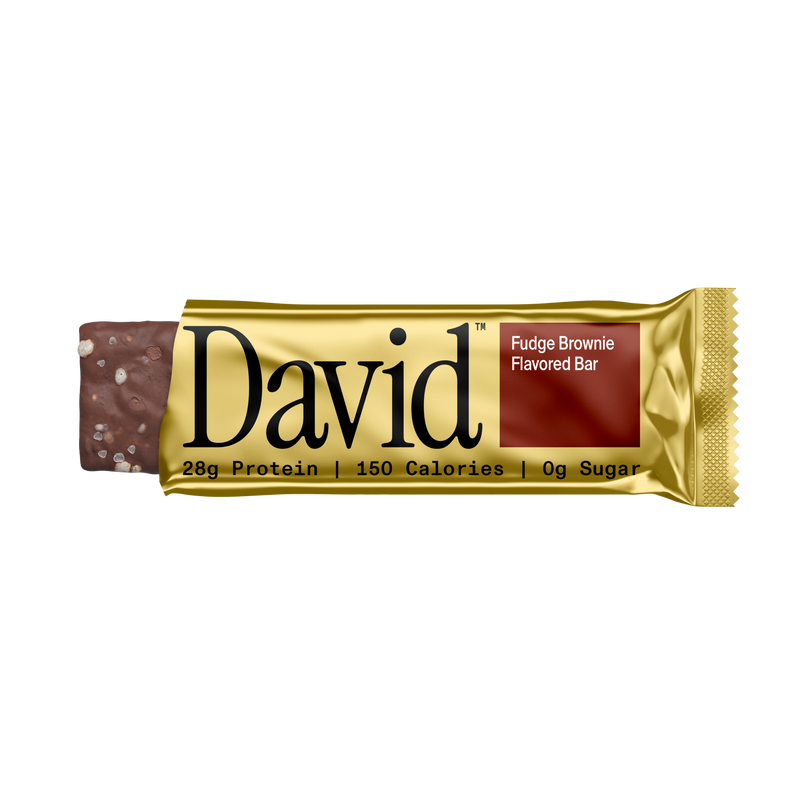
#1 Best Overall — DAVID Gold Protein Bar
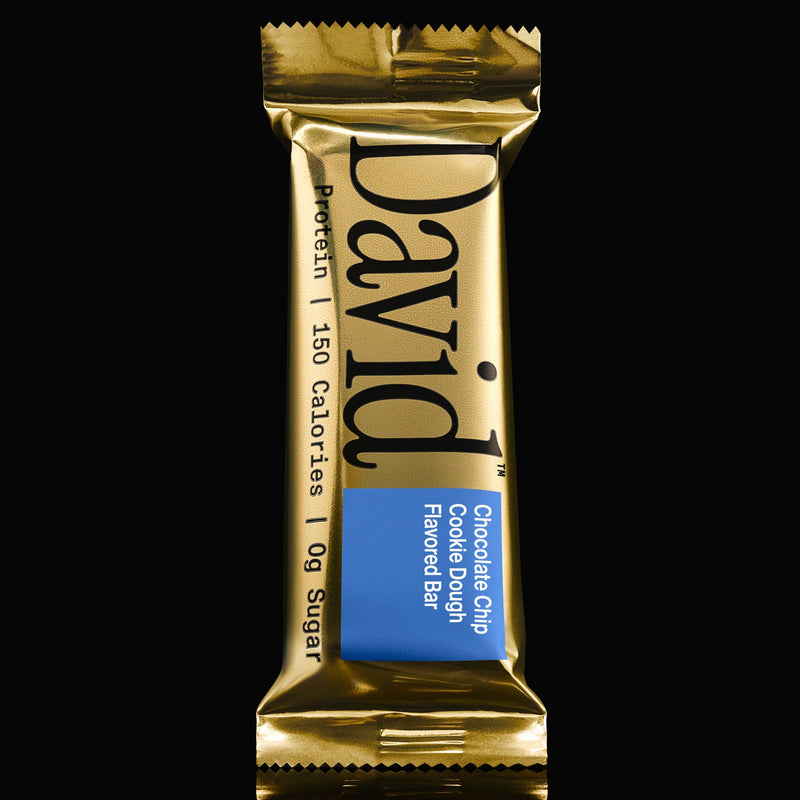
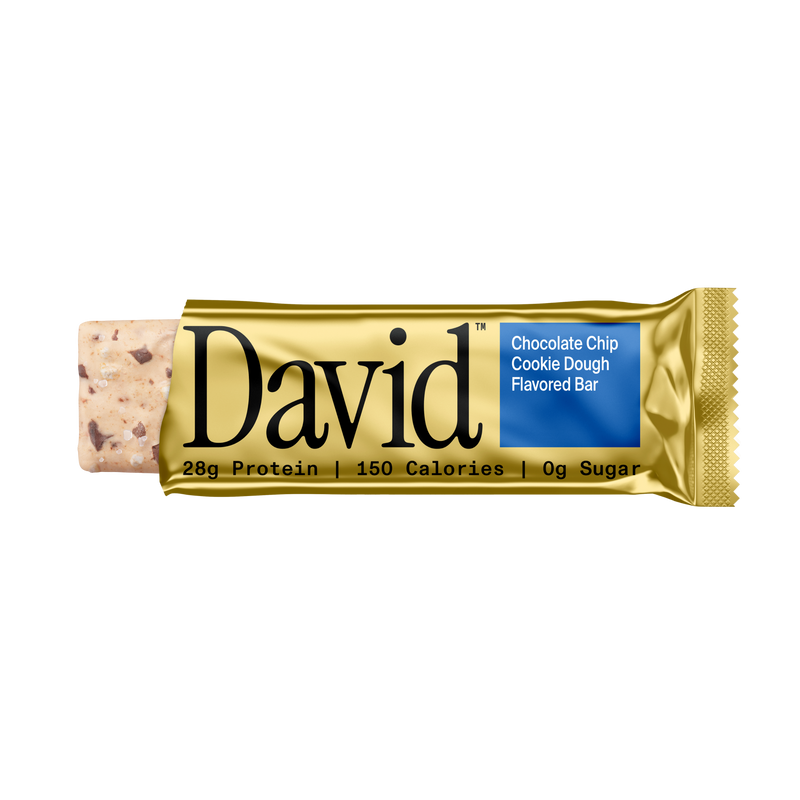
DAVID Gold Protein Bar (Chocolate Chip Cookie Dough, 62g)
28g protein · 150 cal · 0g sugar · ~1g fiber · whey isolate + milk protein isolate · EPG modified fat · sucralose + Ace-K
Check price on Amazon →DAVID Gold delivers the most protein per calorie of any mainstream bar — 28g for just 150 calories, or 18.7g of protein per 100 calories. For men tracking macros on a lean bulk or a cut, that math is hard to beat: a 190-pound man can get nearly 20% of his daily protein target from one bar at only 150 calories. The protein comes primarily from whey protein isolate and milk protein isolate, both complete proteins with strong leucine profiles. A single bar exceeds the leucine threshold for muscle-protein synthesis — meaningful for any man who uses his post-workout window strategically. For the full nutrition breakdown, see our DAVID protein bar nutrition guide.
Why it’s the pick: on a lean bulk at 2,900 calories and 190g of protein, two DAVID bars contribute 56g of protein at 300 calories, leaving 2,600 calories for food. No other mainstream bar gives you that room. The calorie gap vs. a Quest bar (40 fewer calories for 7 more grams of protein) adds up to a meaningful difference over a 12-week training block.
The honest catch: DAVID achieves its low calorie count via EPG (esterified propoxylated glycerol), a synthetic modified fat that delivers approximately 0.7 cal/g instead of the standard 9 cal/g. EPG is FDA-classified as GRAS; a class-action lawsuit challenging the calorie count was dismissed by a US district court in April 2026. Some flavors include a small amount of collagen alongside the whey and milk isolate — check your specific flavor’s ingredient list. Fiber is essentially zero, so the satiety window is shorter than a Quest or Kirkland bar. Sweeteners are sucralose and Ace-K. At $2.85–$3.50 per bar, it is the most expensive option on this list.
#2 Best All-Rounder — Quest Protein Bar
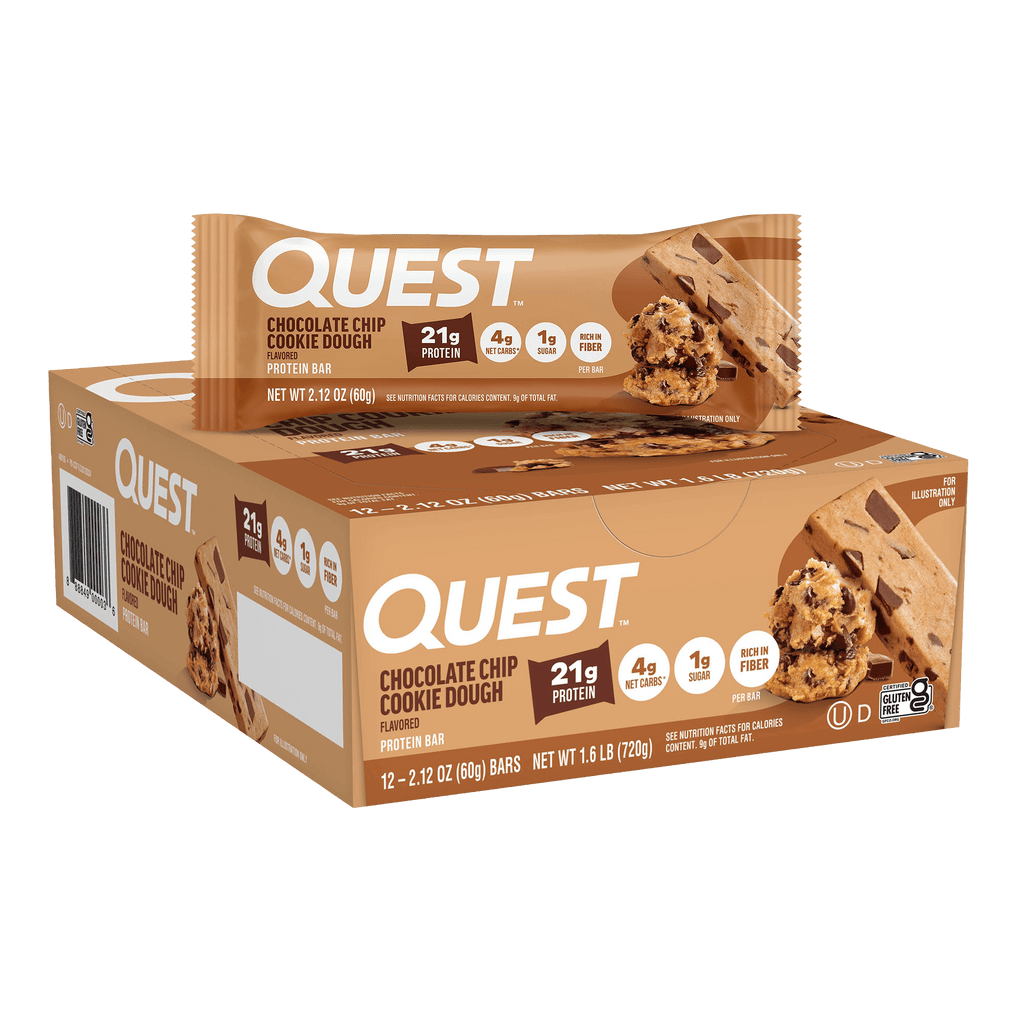
Quest Protein Bar (Chocolate Chip Cookie Dough, 60g)
21g protein · 190–200 cal · 1g sugar · 12–14g fiber · whey isolate + milk protein isolate (no collagen) · erythritol + stevia + sucralose
Check price on Amazon →Quest is the most universally available high-protein bar in America and the consistent best-in-class for the combination of complete protein plus fiber. The 21g of protein comes entirely from whey protein isolate and milk protein isolate — no collagen. The 12–14g of fiber extends the satiety window significantly past what a low-fiber 190-calorie bar provides, which matters for men trying to stay full between meals during a cut. Quest is sold at Walmart, Target, Costco, CVS, and Amazon in volume. For full per-flavor data, see our Quest protein nutrition guide.
Why it’s the pick: Quest is the right everyday bar for the active man who does not want to think hard about his protein bar choice. It is widely available, priced competitively, and hits the protein + fiber combination that keeps you full until the next meal. At Costco, the 20-count variety box typically runs $17–$22, or about $0.85–$1.10 per bar — competitive with Kirkland when bought in volume at Costco without a Costco membership requirement (Costco.com ships).
The honest catch: the sweetener blend is erythritol plus stevia plus sucralose — three sweeteners together. For men specifically avoiding sucralose, think! High Protein is the cleaner pick below. The soluble corn fiber (12–14g) can cause GI discomfort in larger amounts; men eating two Quest bars per day occasionally report digestive issues. Flavor variety is solid (Cookie Dough, Chocolate Peanut Butter, Birthday Cake, Cookies & Cream), which helps sustain a daily habit.
#3 Best Bulk Value — Kirkland Signature Protein Bar (Costco)
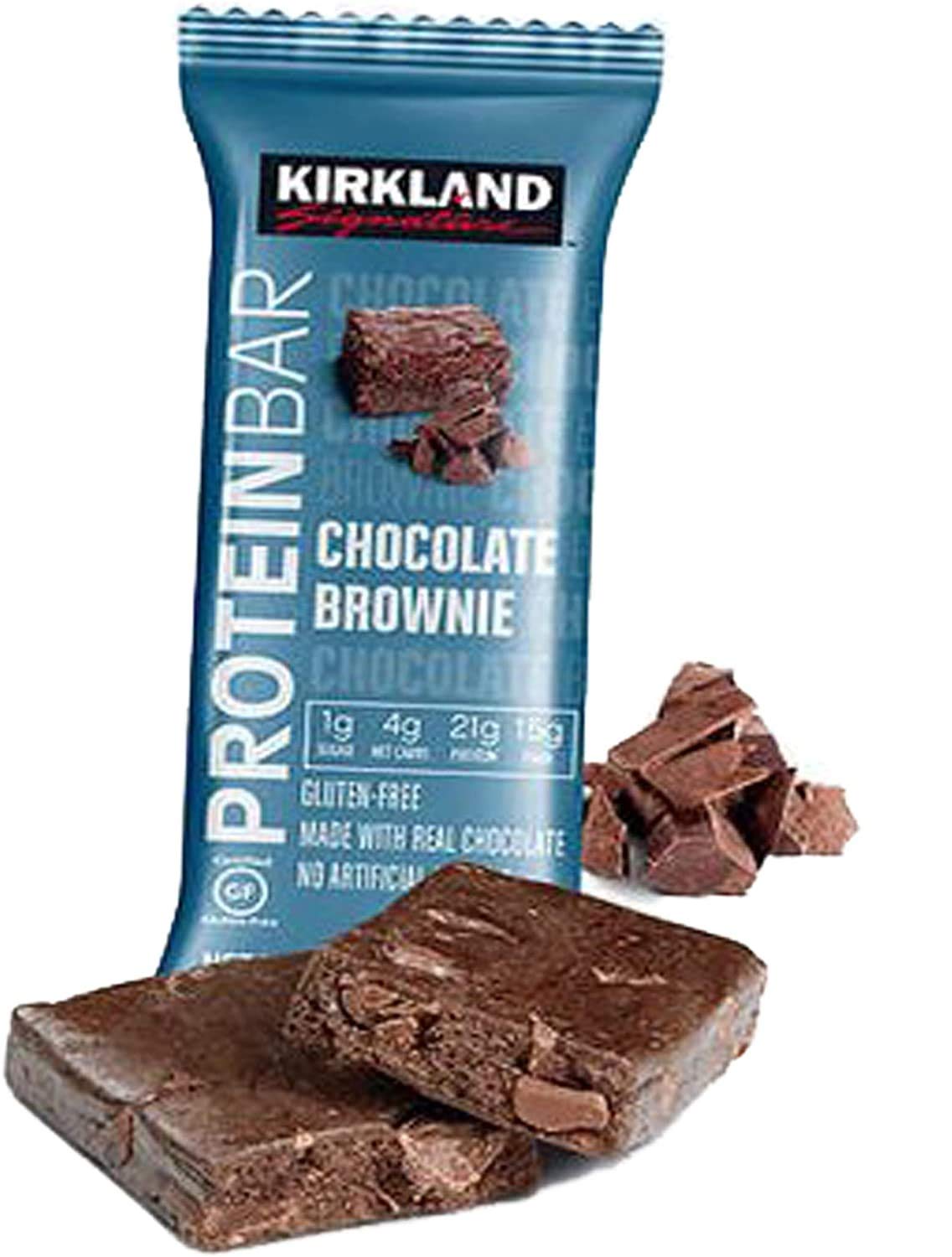
Kirkland Signature Protein Bar (Chocolate Brownie, 60g)
21g protein · 190 cal · 1g sugar · 12g fiber · whey isolate + milk protein isolate (no collagen) · erythritol + stevia · Costco-exclusive 20-count box
Check price on Amazon →Kirkland Signature matches Quest on every important nutritional metric — 21g of complete protein from whey and milk isolate, 12g of fiber, 190 calories, 1g of sugar, no collagen — at roughly half the cost of a name-brand bar at a grocery store. The 20-count Costco box runs $19.99–$24.99, which works out to $1.00–$1.25 per bar ($0.048–$0.060 per gram of protein). That is the lowest cost-per-gram-of-protein of any mainstream bar in the United States. The sweetener is also slightly cleaner than Quest: erythritol plus stevia only, no sucralose. Full breakdown in our Kirkland protein bar nutrition guide.
Why it’s the pick for men: men who eat two protein bars per day — one mid-morning, one post-workout — go through 14 bars per week or roughly 60 per month. At $1.00–$1.25 per bar, that is $60–$75 per month. At $2.25 per bar (Quest at a grocery store), that is $135 per month. Kirkland is the pick for any man who has Costco access and treats protein bars as a daily staple rather than an occasional supplement.
The honest catch: Kirkland Signature is Costco-exclusive. Amazon third-party resellers exist at substantially higher prices that erase the value advantage entirely. Flavor variety is narrower than Quest: the standard variety box runs chocolate brownie and chocolate peanut butter chunk — if you dislike both, this bar is not for you. The 20-count commitment means a 1–2 week supply for a heavy bar consumer.
#4 Best Taste and Adherence — Barebells Protein Bar
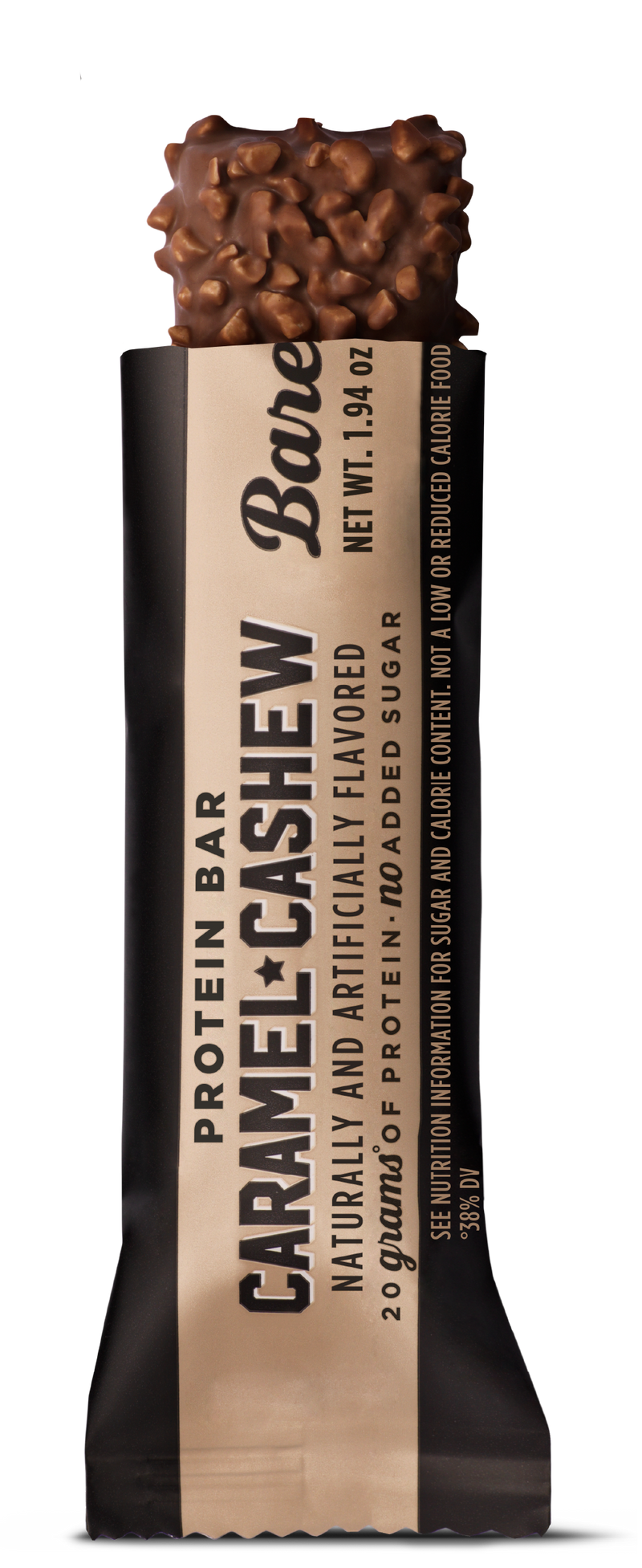
Barebells Protein Bar (Caramel Cashew, 55g)
20g protein (includes collagen — ~15–17g complete) · 200 cal · 1g sugar · ~2–3g fiber · milk protein + collagen blend · real milk-chocolate coating · maltitol + sucralose + Ace-K
Check price on Amazon →Barebells wins consistently in blind taste tests against every other protein bar category. The real milk-chocolate coating and caramel or nougat interior create a bar that reads as a candy bar — which matters because men who “hate protein bars” typically hate the chalky, overly sweet, chemical-tasting bars that dominate the category. Barebells converts them. The Caramel Cashew and Cookies & Cream flavors are particular standouts. At 20g of protein and 200 calories, the macros are solid for a daily protein contribution. For the full flavor ranking, see our Barebells protein bar nutrition guide.
Why it’s the pick: for the man who has tried Quest bars, found them too sweet or chemically flavored, and given up on the category — Barebells is almost always the answer. Consistency matters more than optimized macros; 15–17g of complete protein eaten daily beats 21g of theoretically superior protein eaten twice a week because you dread the taste.
The honest catch (important): Barebells’ 20g protein label includes hydrolyzed bovine collagen. Collagen is an incomplete protein — essentially no tryptophan, very low leucine. The complete-protein share is approximately 15–17g, not 20g, for muscle-protein-synthesis purposes. When counting daily protein toward a training goal, count Barebells as ~16g of effective complete protein per bar. The sweetener stack includes maltitol, sucralose, and Ace-K. Two Barebells in a day regularly causes digestive discomfort in most buyers. At $2.65–$3.10 per bar, it is not the value leader.
#5 Best Flavor Variety, No Collagen — ONE Protein Bar
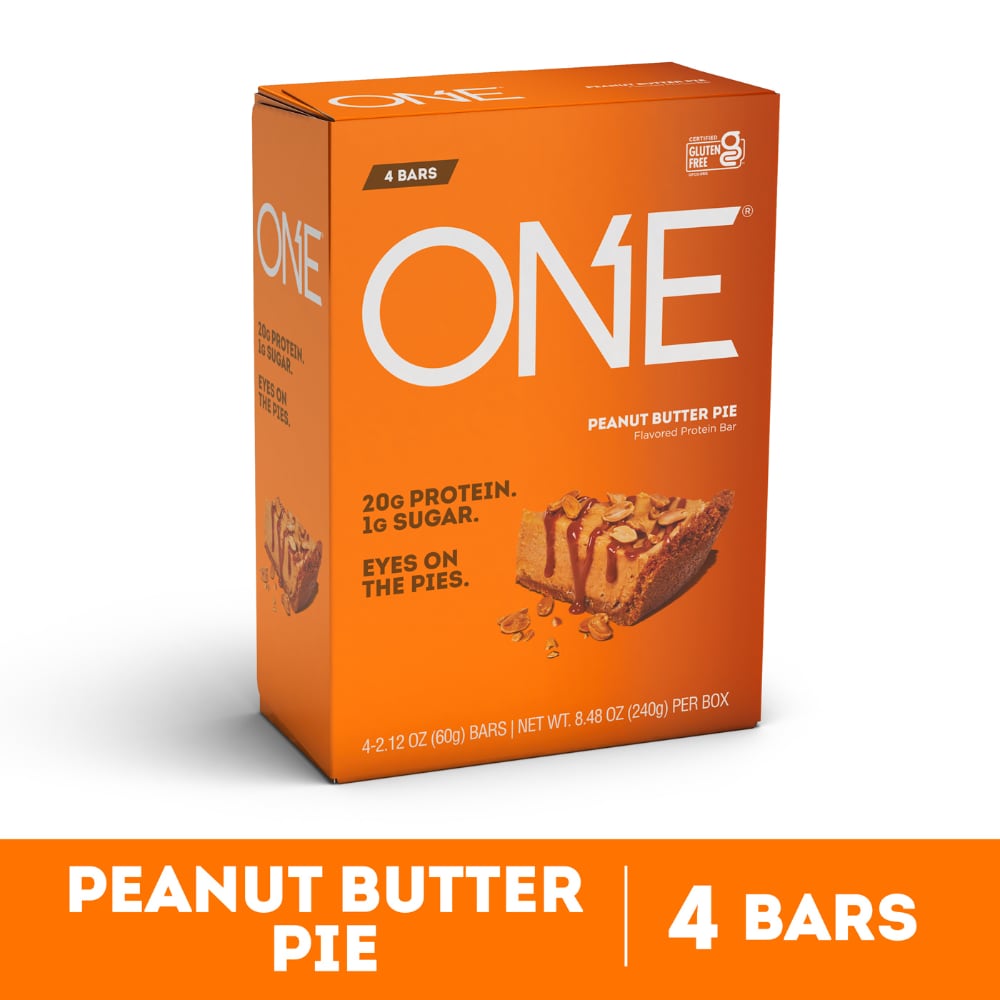
ONE Protein Bar (Peanut Butter Pie, 60g)
20g protein · 220 cal · 1g sugar · 9g prebiotic fiber · milk protein isolate + whey isolate (no collagen) · maltitol + sucralose + stevia · 25+ flavors
Check price on Amazon →ONE Bar delivers 20g of complete protein (milk protein isolate plus whey protein isolate — no collagen) with 9g of prebiotic fiber at 220 calories and 1g of sugar. The standout is the flavor catalog: over 25 varieties including Birthday Cake, Maple Glazed Doughnut, Cinnamon Roll, Almond Bliss, and Strawberry Shortcake alongside the standard chocolate and peanut butter options. For men eating bars every day, flavor rotation is the difference between sticking with the habit for six months and quitting after two. At $1.85–$2.40 per bar, ONE Bar is competitively priced for 20g of collagen-free complete protein. Full breakdown in our ONE Bar nutrition guide.
Why it’s the pick: ONE Bar is the answer for the man who has gotten bored eating the same chocolate-flavored protein bar for three months and stopped buying them. The 25+ flavor lineup solves the monotony problem directly. The 9g of prebiotic fiber also adds a meaningful satiety advantage over lower-fiber bars at the same protein count.
The honest catch: at 220 calories for 20g of protein, ONE Bar runs 30 calories higher than Quest for the same protein number. The sweetener slate includes maltitol and sucralose; maltitol in quantity can cause digestive discomfort, and two ONE Bars per day regularly causes issues in sensitive buyers. Not quite as universally available in single-serve as Quest — ordering a 12-count box on Amazon ($19.99–$27) is the most reliable way to stay stocked.
#6 Best No Artificial Sweeteners — think! High Protein Bar

think! High Protein Bar (Brownie Crunch, ~53g)
20g protein · 230 cal · 1g sugar · <1g fiber · whey isolate + soy isolate + calcium caseinate (no collagen) · maltitol (no sucralose, no Ace-K)
Check price on Amazon →think! High Protein is the pick for men who specifically want to avoid sucralose and acesulfame potassium. The protein blend — whey protein isolate, soy protein isolate, and calcium caseinate — is collagen-free and covers all nine essential amino acids across three complete-protein sources. Soy isolate has a full amino-acid profile; calcium caseinate digests slowly for a longer post-meal protein delivery window; whey isolate peaks quickly post-workout. The sweetener is maltitol alone, a sugar alcohol derived from barley starch, avoiding the synthetic-sweetener stack that defines most other bars in this category. Available at Target, Walmart, Kroger, and Amazon.
Why it’s the pick: most bars delivering 20g of complete protein per bar use sucralose, Ace-K, or both to hit calorie targets. think! is one of the very few mainstream exceptions. For men who have read the science on synthetic sweeteners and have a preference-based reason to avoid them, think! is the direct answer at 20g of complete protein per bar.
The honest catch: at 230 calories for 20g of protein, think! runs 30–40 calories higher than Quest for the same protein number — a real trade-off for men on a strict cut. Maltitol has a higher glycemic index than erythritol (GI ~35–52 vs. near zero) and can cause digestive discomfort in larger daily amounts. Fiber content is very low (<1g per bar), so satiety is shorter than Quest or Kirkland. Check your specific flavor’s label, as sweetener and calorie counts can vary across the think! lineup.
#7 Best Budget Pick — Pure Protein Bar
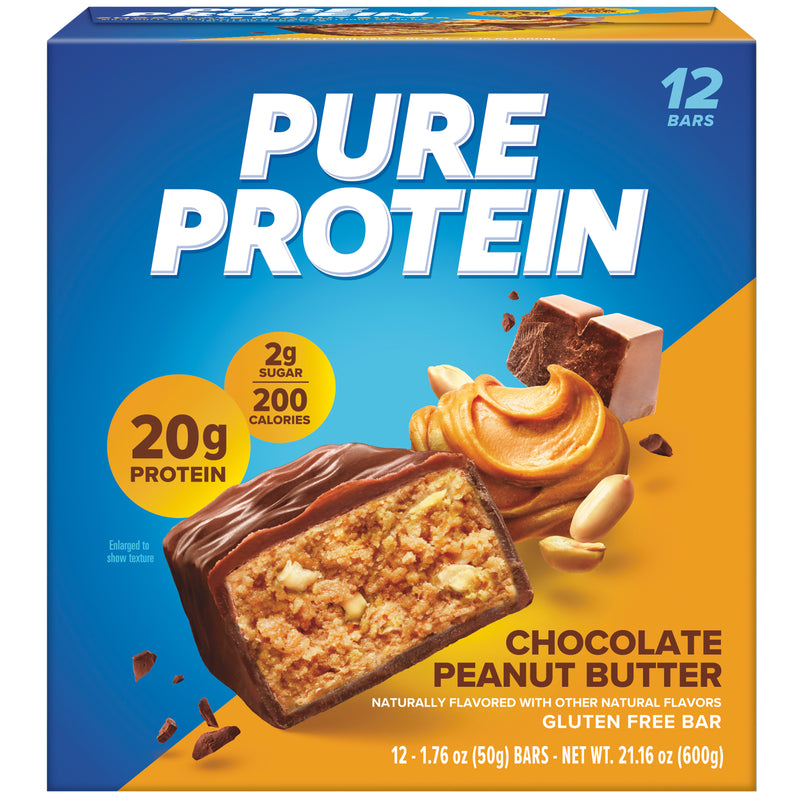
Pure Protein Bar (Chocolate Deluxe, 50g)
20g protein · 190 cal · 2–4g sugar · ~1–2g fiber · whey protein blend · sucralose + stevia · widely available at Walmart, Target, and Amazon
Check price on Amazon →Pure Protein is the most widely available budget protein bar in the US. The Chocolate Deluxe flavor delivers 20g of protein at 190 calories for roughly $1.50–$2.25 per bar at Walmart, Target, and Amazon — meaningfully cheaper than Quest or Barebells while matching them on protein content. Pure Protein bars are available individually at most gas stations, pharmacies, and convenience stores, making them a practical fallback when you need protein on the road and cannot access a grocery store. The taste is functional rather than exceptional: a standard chocolate-coated bar with a dense interior, similar in texture to most mainstream protein bars.
Why it’s the pick: for men who eat protein bars primarily as a protein delivery mechanism and do not want to pay the premium for taste engineering, Pure Protein is hard to beat on pure value. At $1.50–$2.25 per bar vs. $2.65–$3.10 for Barebells, eating two bars per day for a month saves $60–$90 — a meaningful number across a training year.
The honest catch: Pure Protein uses a whey protein blend rather than whey protein isolate, which means slightly more fat and carbohydrates per bar than a pure-isolate product at the same protein count. The fiber content is low (1–2g), so the satiety window is shorter than Quest or Kirkland. Available in a fairly narrow flavor range compared to Quest or ONE Bar. If you are eating bars daily, taste variety will be a limiting factor on long-term adherence with Pure Protein.
7 Best Protein Bars for Men: Side-by-Side Comparison
| Bar (serving) | Protein | Calories | Fiber | Collagen? | Sweetener | ~Price/bar |
|---|---|---|---|---|---|---|
| DAVID Gold Choc. Chip Cookie Dough (62g) | 28g | 150 | ~1g | Small amount (some flavors) | Sucralose, Ace-K | $2.85–$3.50 |
| Quest Chocolate Chip Cookie Dough (60g) | 21g | 190–200 | 12–14g | No | Erythritol, sucralose, stevia | $1.75–$2.40 |
| Kirkland Signature Chocolate Brownie (60g) | 21g | 190 | 12g | No | Erythritol, stevia | $1.00–$1.25 |
| Barebells Caramel Cashew (55g) | 20g* | 200 | ~2–3g | Yes (~3–5g) | Maltitol, sucralose, Ace-K | $2.65–$3.10 |
| ONE Bar Peanut Butter Pie (60g) | 20g | 220 | 9g | No | Maltitol, sucralose, stevia | $1.85–$2.40 |
| think! High Protein Brownie Crunch (~53g) | 20g | 230 | <1g | No | Maltitol only | $2.00–$2.50 |
| Pure Protein Chocolate Deluxe (50g) | 20g | 190 | ~1–2g | No | Sucralose, stevia | $1.50–$2.25 |
*Barebells 20g protein label includes hydrolyzed collagen — count approximately 15–17g of complete protein (from whey and milk isolate) for muscle-protein-synthesis purposes. Kirkland Signature is Costco-exclusive; the per-bar price reflects the Costco 20-count box. All other prices reflect typical Amazon single-box pricing in August 2026 before coupons or Subscribe & Save discounts.
Where to Buy Protein Bars for Men
Best per-bar pricing by brand for men buying in volume:
- DAVID Gold: Amazon (~$2.85–$3.50/bar in a 12-count box) and select Costco warehouses (~$2.25–$2.75 when stocked). Subscribe & Save on Amazon saves 5–15%.
- Quest: widest retail presence — every grocery, drug store, Target, Walmart, Amazon, and Costco. The Costco 20-count variety box ($17–$22 on promo) is the best per-bar price at $0.85–$1.10.
- Kirkland Signature: Costco warehouses and Costco.com only. Amazon third-party resellers exist but at prices that erase the value advantage — only buy direct from Costco.
- Barebells: Target, Walmart, Amazon, select Costco warehouses. The Costco 12-count variety box ($19.99–$24.99) is the best per-bar price at $1.67–$2.08.
- ONE Bar: Target, Walmart, Costco (rotating), and Amazon. 12-count variety boxes on Amazon at $19.99–$27.
- think! High Protein: Target, Walmart, Kroger, Sprouts, and Amazon. 12-count boxes typically $22–$28.
- Pure Protein: Walmart, Target, gas stations, pharmacies, and Amazon. The most widely available single-serve bar in America; also available in 12-count Amazon boxes at $19–$23.
Affiliate links — if you buy through our links we earn a small commission at no extra cost to you. Prices verified August 2026 and subject to change with retailer promotions.
Frequently Asked Questions
What is the best protein bar for men?
The best overall protein bar for men in 2026 is DAVID Gold at 28g of protein for 150 calories — the highest protein-to-calorie ratio of any mainstream bar. For the best value and the combination of complete protein plus fiber, Quest and Kirkland Signature both deliver 21g of complete protein and 12g of fiber at 190 calories, with Kirkland at $1.00–$1.25 per bar from Costco being the best value in America. For taste and daily adherence, Barebells is the consistent pick for men who find other protein bars unpalatable.
How much protein should men eat per day?
Active men lifting three or more days per week typically need 0.7–1.0g of protein per pound of body weight per day. At 170 pounds, that is 119–170g. At 190 pounds, 133–190g. Most men get 80–110g from three standard meals and use protein bars to close the remaining 30–60g gap. Two bars per day (40–56g combined from the bars on this list) covers most of that gap without significant meal restructuring.
Which protein bar has the most protein?
DAVID Gold has the most protein of any mainstream bar — 28g of protein per 62g bar, at just 150 calories. That is 18.7g of protein per 100 calories, the highest protein-to-calorie ratio in the US market. Quest and Kirkland Signature are the next highest at 21g of protein each, but at 190 calories per bar (12.3g of protein per 100 calories). The DAVID Gold gap of 7g of protein at 40 fewer calories compounds meaningfully for men tracking daily macros.
What are the best protein bars for men at Costco?
Costco carries three protein bars consistently: Kirkland Signature ($1.00–$1.25/bar, 21g protein, 190 cal — the best value in the US), Quest (20-count variety box at $17–$22 on promo, or $0.85–$1.10/bar), and Barebells (12-count variety box at $19.99–$24.99, or $1.67–$2.08/bar). DAVID Gold appears in select Costco warehouses at $2.25–$2.75 per bar when stocked. For bulk buyers, Kirkland Signature is the strongest Costco-specific pick.
Are protein bars with collagen still good for men?
Collagen protein contributes to joint and connective tissue health but does not trigger muscle-protein synthesis the way whey, milk, or egg protein does — it lacks tryptophan and has very low leucine. If you are eating Barebells (which includes collagen in its 20g blend), count approximately 15–17g of effective complete protein per bar rather than the full 20g on the label. This does not make Barebells a bad choice for men — the taste advantage and daily adherence benefit are real — but track your complete-protein intake from it honestly rather than counting the collagen toward your daily target.
Can protein bars replace meals for men?
Protein bars can replace a protein-focused snack or a light meal in a pinch, but they are not nutritionally complete meal replacements. Most bars on this list are low in dietary fat, low in micronutrients, and either low in fiber (DAVID, Pure Protein, think!) or high in fiber from supplemental sources (Quest, Kirkland, ONE Bar) rather than whole-food vegetables and legumes. A protein bar works well as a between-meal protein hit, a post-workout snack, or a meal complement — not as a primary calorie source. For a 190-pound active man eating 2,800 calories daily, two protein bars contribute 300–380 calories and 40–56g of protein: a useful supplement to three whole-food meals, not a replacement for them.
Bottom Line
For men who track macros strictly, DAVID Gold is the best protein bar in 2026 — 28g of protein at 150 calories per bar, with no other mainstream bar coming close to that protein density. For the best everyday bar with complete protein and high fiber at the lowest price, Kirkland Signature from Costco is the strongest value in the US market at $1.00–$1.25 per bar. Quest is the right choice for men who do not have Costco access and need the same protein-plus-fiber formula from any grocery store. Barebells is the answer for men who have abandoned protein bars because of taste — the real milk-chocolate format consistently converts skeptics into daily users. ONE Bar handles flavor fatigue with 25+ varieties and no collagen. think! High Protein is the only mainstream 20g bar without sucralose or Ace-K. Pure Protein is the cheapest accessible bar at mainstream retail.
The most important rule: the best protein bar for you is the one you actually eat consistently. A bar you dread and skip four days out of seven produces worse results than a slightly less optimal bar you eat every day without thinking.
Shop our top protein bar picks
Editor-selected high-protein options related to this guide. As an Amazon Associate we may earn from qualifying purchases.
Buy the products in this guide: Blueberry Pie Carton · Blueberry Pie · Peanut Butter Chocolate Chunk
28g protein28g proteinChocolate Chip Cookie Dough
Amazon returns policy · secure checkout
28g proteinTags
High Protein Snacks Pro Editorial Team
Independently researched and editorially reviewed. We compare real nutrition labels and never accept payment for coverage.
Get the best new protein snacks in your inbox
Weekly picks and honest reviews — no spam, unsubscribe anytime.
More from the journal
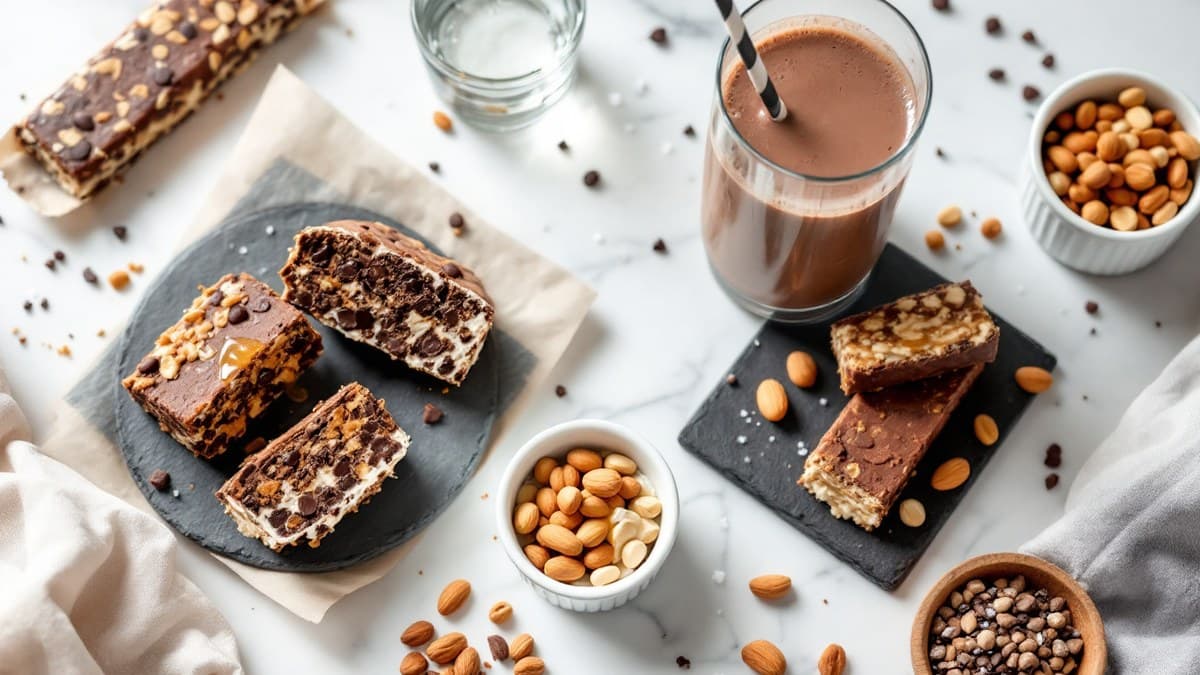
Best Protein Bars for Muscle Gain 2026: 7 Picks Ranked by Complete Protein, Leucine Quality, and Calorie Efficiency
The best protein bar for muscle gain in 2026 is the DAVID Gold — 28g of protein at 150 calories per bar, the highest protein-to-calorie ratio of any mainstream bar. Quest and Kirkland Signature are the cleanest complete-protein picks without collagen at 21g each. Seven bars ranked on what drives muscle growth: complete protein per bar, leucine quality, calorie efficiency, and ingredient honesty.
Read more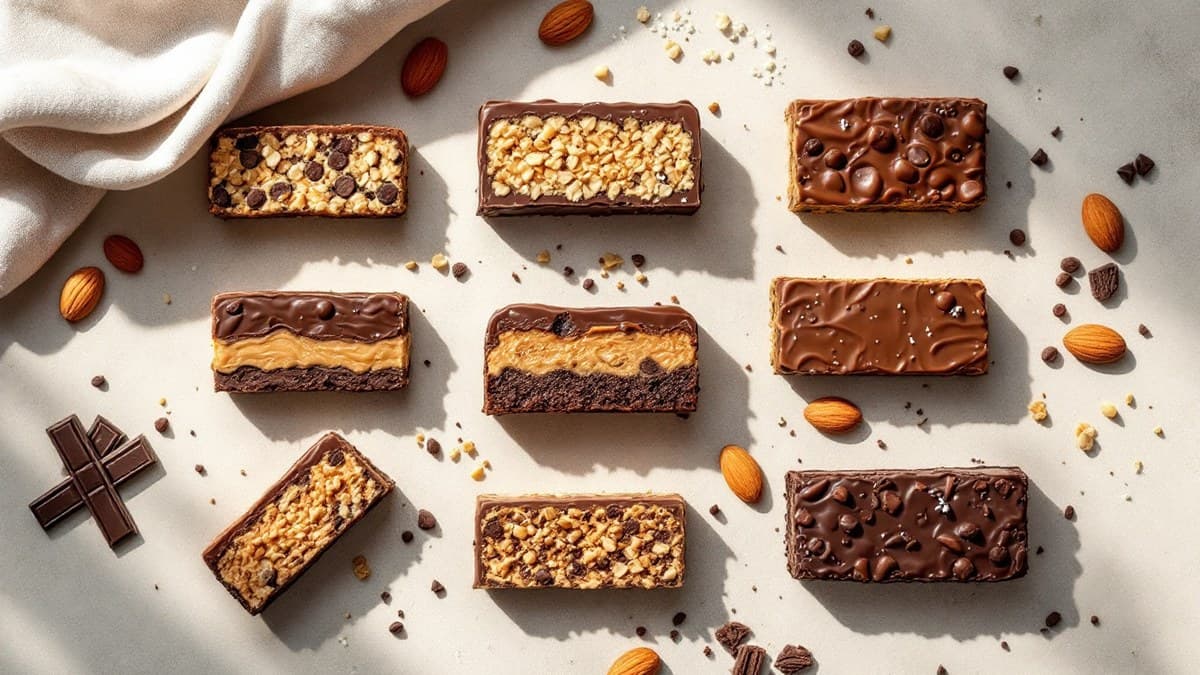
Best Protein Bars at Costco 2026: 8 Bulk Bar Picks Ranked by Protein, Fiber, and Cost Per Gram
The best protein bar at Costco in 2026 is the Kirkland Signature Protein Bar — 21g of complete protein, 190 calories, 12g of fiber, and roughly $1.00–$1.25 per bar in a 20-count box, which works out to about $0.048–$0.060 per gram of protein: the lowest cost per gram in the mainstream US bar market. Quest Bar Variety Pack 20-count is the brand-name backup at the same 21g protein and 12g fiber. Barebells 12-count is the taste-first pick, DAVID 12-count is the highest protein density at 28g, and Built Puff 18-count is the calorie-efficient option. Eight verified Costco protein bar picks with real per-bar costs, honest ingredient trade-offs, and buy links.
Read more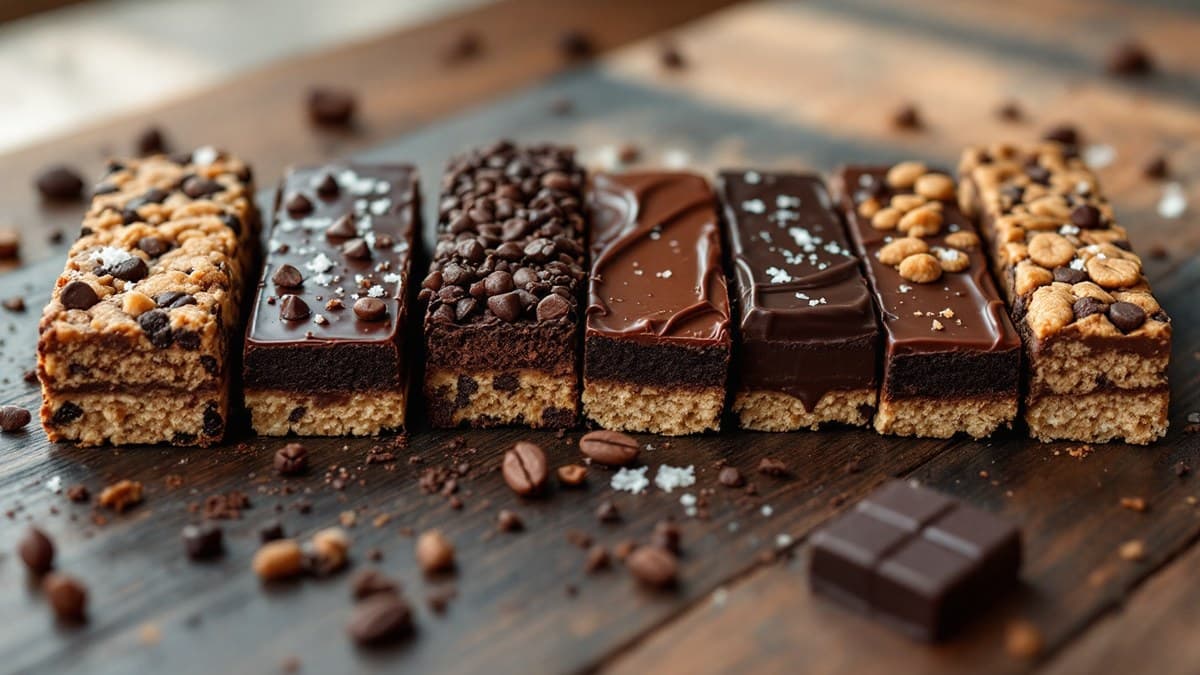
Best Chocolate Protein Bars 2026: 10 Top Picks Ranked by Protein, Sugar, and Real Cocoa Flavor
The best chocolate protein bar in 2026 is DAVID Chocolate Chip Cookie Dough — 28g of protein for 150 calories and 0g sugar, the highest protein-per-calorie ratio in the mainstream chocolate lineup. For a candy-bar experience, Barebells Chocolate Dough delivers 20g protein and 1g sugar in a real-chocolate coating. For satiety, Quest Chocolate Chip Cookie Dough wins with 21g protein and 14g fiber. Ten verified chocolate-flavored picks — from whey isolate to vegan pea to whole-food date bars — ranked on protein density, sweetener honesty, and real cocoa content, with tracked buy buttons and the honest catches for each.
Read more