think! Protein Bar vs Quest Bar (2026): Full Macro Breakdown and Best Use Case
think! and Quest both land at 20g of protein per bar, but they use completely different formulas. Quest is lower in calories and higher in fiber; think! skips artificial sweeteners entirely. Here is the full macro breakdown and when each one wins.
The short answer
Our top protein bar picks
Editor-selected and ready to buy. As an Amazon Associate we may earn from qualifying purchases.
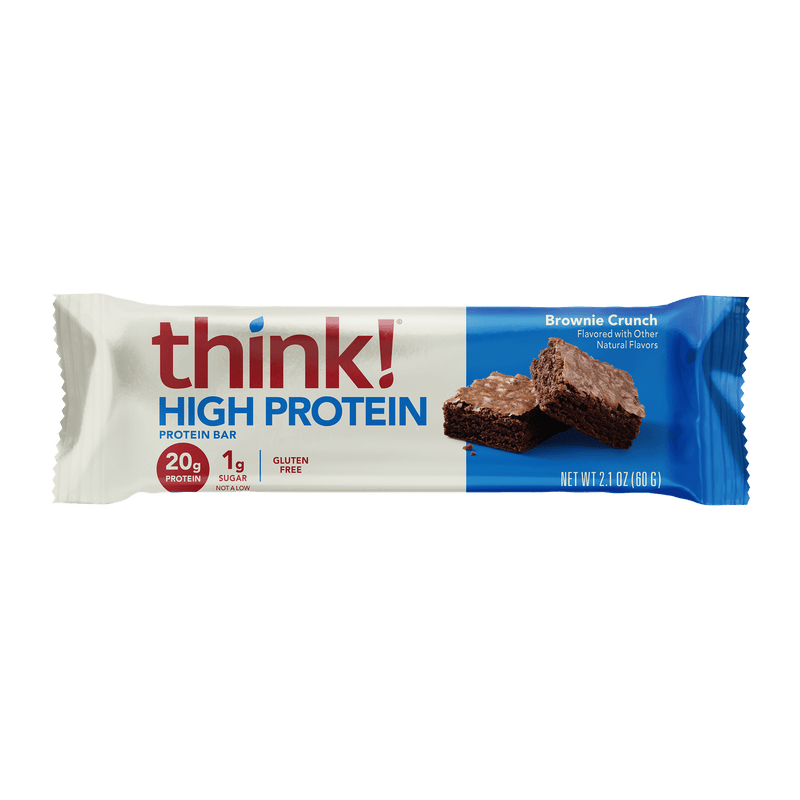
Buy the products in this guide: High Protein Bar, Creamy Peanut Butter · High Protein Bar, Chunky Peanut Butter · High Protein Bar - Brownie Crunch
 20g protein
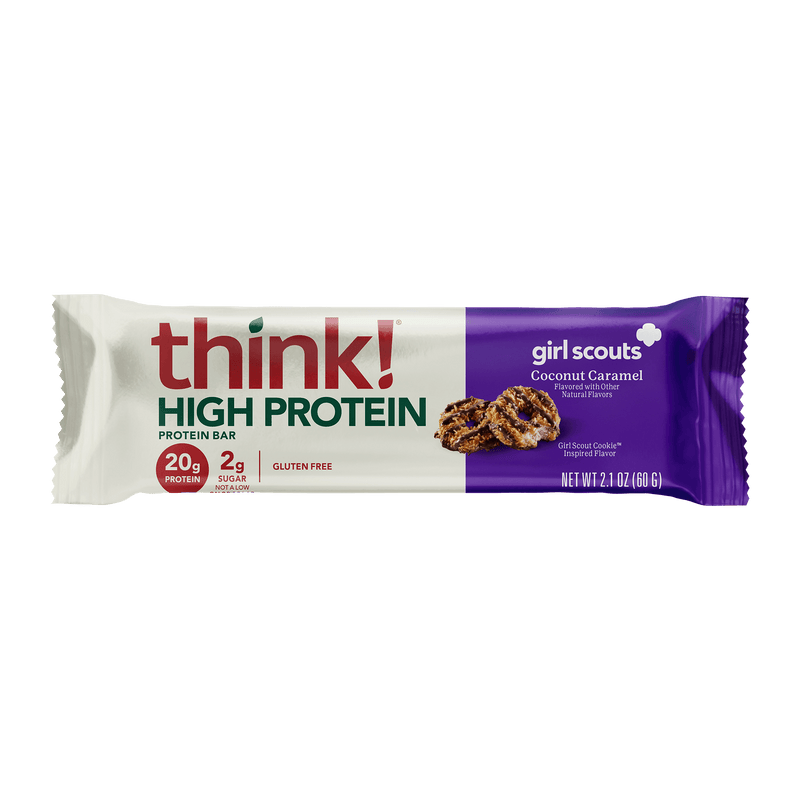
High Protein Bar Girl Scout Coconut Caramel
Amazon returns policy · secure checkout
 20g protein20g protein
think! vs Quest: Head-to-Head Macro Comparison
All figures are per one bar (60g) from verified brand nutrition panels as of 2026.
| Metric | think! High Protein Bar | Quest Bar | Winner |
|---|---|---|---|
| Calories | 230 | 190 | Quest (40 cal less) |
| Protein | 20g | 20g | Tie |
| Total Carbs | 24g | 21–25g | Comparable |
| Fiber | 1g | 12–14g | Quest (10x more) |
| Net Carbs | ~23g | ~9–12g | Quest (low-carb friendly) |
| Sugar | 0g | 1g | Tie |
| Fat | 8g | 7–9g | Comparable |
| Protein per 100 cal | 8.7g | 10.5g | Quest |
| Sweetener | Maltitol only | Erythritol + sucralose | think! (no artificial) |
| Protein blend | Whey isolate, soy isolate, caseinate | Milk protein isolate, whey isolate | Comparable |
| Bar weight | 60g | 60g | Tie |
| Price per bar (retail) | $2.00–$2.40 | $1.75–$2.50 | Comparable |
think! High Protein Bar: What You Get
Each think! High Protein Bar delivers 20g of protein at 230 calories. The protein blend is whey protein isolate, soy protein isolate, and calcium caseinate — a fast-acting/slow-release combination that covers both immediate muscle protein synthesis and sustained amino acid delivery. The only sweetener is maltitol, a sugar alcohol derived from maltose. Maltitol has a glycemic index of about 35 (lower than sucrose at 65, but not negligible the way erythritol is), so it does raise blood sugar slightly — this matters if you are managing blood glucose. Some people experience bloating or GI discomfort from maltitol at full-bar doses, similar to the GI issues that erythritol causes for a subset of Quest eaters.
Where think! clearly wins: taste. Without erythritol's characteristic cooling sensation or sucralose's bitter aftertaste, think! bars taste closer to a candy bar. Chocolate Fudge, Salted Caramel, and Birthday Cake are consistently rated as better-tasting than their Quest equivalents in informal taste comparisons. The 230-calorie count is the real trade-off — 40 more calories per bar than Quest, which adds up to 280 extra calories per week for someone eating one daily.
Quest Bar: What You Get
Each Quest Bar delivers 20g of protein at 190 calories, with 12–14g of fiber reducing the net carb count to 9–12g depending on flavor. That fiber load (primarily from soluble corn fiber) is Quest's defining characteristic: it is what keeps the calorie count at 190 despite 21–25g of total carbohydrates, and it is what makes Quest bars keto-compatible in a way that think! bars are not. The protein blend is milk protein isolate and whey protein isolate, heavily skewed toward milk protein isolate, which is a 4:1 blend of casein to whey. That ratio makes Quest bars digested somewhat more slowly than a whey-dominant bar.
The sweetener combination — erythritol plus sucralose — is the most common source of complaints about Quest bars. Erythritol (also a sugar alcohol) causes GI distress in roughly 15–20% of people who eat it regularly, and sucralose has a strong artificial aftertaste that intensifies in baked or heated preparations. Quest's newer Peanut Butter and Caramel Chocolate Chunk flavors have improved the sweetness balance compared to earlier formulations, but the aftertaste remains a real issue for some buyers.
Sweetener Comparison: Maltitol vs Erythritol + Sucralose
This is the most important differentiator for many buyers.
- Maltitol (think!): a sugar alcohol with moderate GI impact (~35), 2.1 kcal/g (about half the calories of sucrose), and a taste closer to real sugar. Causes GI distress (bloating, gas, loose stools) in a subset of people, especially at the 20–25g dose found in a single think! bar. Does not count toward net carbs in the same way as sugar, but is not metabolically inert the way erythritol is.
- Erythritol + sucralose (Quest): erythritol has a near-zero GI impact and 0.24 kcal/g (essentially zero caloric contribution), but causes osmotic GI distress in roughly 15–20% of regular consumers, particularly at the 10–15g doses in Quest bars. Sucralose is stable at most temperatures and calorie-free, but has a distinct artificial aftertaste that worsens in heat. The erythritol + sucralose combination is what keeps Quest bars at 190 calories — it is doing real caloric work that maltitol cannot match as efficiently.
Bottom line on sweeteners: if you have no GI sensitivity to either sugar alcohol and do not mind artificial sweeteners, Quest's formula is the more calorie-efficient choice. If you have reacted badly to sucralose or erythritol before, or simply want a bar that tastes less like diet food, think! is the correct pick regardless of the 40-calorie difference.
Protein Source Comparison: Which Bar's Protein Absorbs Better?
Both bars deliver complete protein with all essential amino acids.
- think! blend: whey protein isolate (fast-digesting, highest leucine content per gram), soy protein isolate (fast-digesting, complete amino acid profile), calcium caseinate (slow-digesting, sustained release). This is a well-designed tri-phasic blend useful for either pre- or post-workout consumption or as a meal replacement.
- Quest blend: milk protein isolate (approximately 80% casein, 20% whey by default) + whey protein isolate. The heavier casein weighting means Quest bars absorb slightly more slowly than think! bars on net, which can extend satiety but reduces the immediate post-workout anabolic spike compared to a pure whey product. Both remain significantly faster-absorbing than whole food protein sources.
In practical terms: neither blend gives one bar a clear performance advantage over the other for most non-elite athletes. Both deliver 20g of complete protein per bar. Use the rest of the comparison — calories, net carbs, sweeteners — to make the call.
When to Choose think!
- You hate artificial sweeteners or the Quest aftertaste. Maltitol tastes like real sugar; sucralose does not. For daily compliance, taste wins.
- You are not on a low-carb or keto diet. At 23g net carbs, think! fits a moderate-carb diet fine. The 40-calorie premium over Quest is the only real cost.
- You have reacted to erythritol before. If any erythritol-sweetened product has caused GI distress, think! eliminates that variable entirely.
- You want a bar that doubles as a dessert. think! Birthday Cake and Salted Caramel are widely regarded as the most candy-like high-protein bars in the mainstream market.
When to Choose Quest
- You are tracking calories carefully. Forty fewer calories per bar is 280 calories per week. Over a year of daily bar eating, that is roughly 14,500 calories — four pounds of body fat worth of margin.
- You are on a keto or low-carb diet. Quest's 9–12g net carbs per bar versus think!'s 23g is the difference between staying in ketosis and not. Quest is the market standard for keto-compatible protein bars.
- You want the best protein-per-calorie ratio. Quest delivers 10.5g of protein per 100 calories; think! delivers 8.7g. See our best protein bars for weight loss guide for how Quest compares to other high-efficiency bars.
- You have no GI sensitivity to erythritol or sucralose. If Quest bars have never bothered you, there is no reason to pay the calorie premium for think!.
Price and Where to Buy
Both bars are widely available at Walmart, Target, CVS, and Amazon. Prices as of mid-2026:
| Format | think! (per bar) | Quest (per bar) |
|---|---|---|
| Single bar (convenience store) | $2.49–$2.79 | $2.29–$2.79 |
| 12-pack box (Walmart/Target) | $20.99–$23.99 (~$1.80/bar) | $19.99–$22.99 (~$1.75/bar) |
| Amazon Subscribe & Save (12-pack) | $18.99–$21.99 (~$1.65/bar) | $17.99–$20.99 (~$1.58/bar) |
At scale, both bars cost roughly the same. Quest tends to run $0.10–$0.20 cheaper per bar at Walmart and Amazon, but the gap narrows during promotional periods. Both are regularly on sale at buy-2-get-1 pricing at Target.
Frequently Asked Questions
Does think! have less sugar than Quest?
Both bars deliver effectively 0–1g of sugar per bar. think! uses maltitol as its sole sweetener, which counts as a sugar alcohol (not sugar) on the label. Quest uses erythritol (another sugar alcohol) plus sucralose. Neither bar has meaningful added sugar. If you are concerned about blood glucose impact, Quest's erythritol has near-zero glycemic index, while think!'s maltitol has a moderate glycemic index of approximately 35 — a real but small difference compared to regular sugar at 65.
Is think! better for keto than Quest?
No. Quest is significantly more keto-friendly at 9–12g net carbs per bar versus think!'s ~23g. The difference is fiber: Quest bars contain 12–14g of fiber that subtracts from total carbs; think! bars contain only 1g. For strict keto (under 20–25g net carbs per day), think! bars consume most of the day's carb budget in a single snack. Quest is the standard choice for keto dieters in the mainstream protein bar market.
Which bar is better for muscle building?
Both bars deliver 20g of complete protein per bar, which is sufficient to maximally stimulate muscle protein synthesis in a single dose. Neither has a meaningful advantage for muscle building. The practical choice is whichever bar you will actually eat consistently — taste compliance matters more than any marginal difference in protein blend between these two options. See our protein bars for muscle gain guide for a broader comparison including David, Barebells, and Premier Protein.
Can you bake with Quest bars but not think! bars?
Quest bars are marketed as bakeable (the brand actively promotes the “Quest cookie” hack of microwaving or baking a bar). think! bars can also be warmed, but maltitol does not hold its shape as well under heat as erythritol does, so Quest's texture holds better in baked applications. For eating bars cold or at room temperature as intended, there is no meaningful texture difference between the two brands.
Which has fewer artificial ingredients?
think! bars contain no artificial sweeteners — only maltitol, a sugar alcohol derived from natural starches. Quest bars contain sucralose, an artificial sweetener, in addition to erythritol. If avoiding artificial sweeteners is a priority, think! is the cleaner pick by that specific standard. Both bars contain soy lecithin and other common processed food additives; neither is a whole-food product.
Bottom line: choose Quest if you are cutting calories, following a low-carb or keto diet, or prioritizing protein-per-calorie efficiency — it delivers 10.5g of protein per 100 calories at 190 calories per bar with 9–12g net carbs. Choose think! if artificial sweeteners affect how you feel or taste, or if you eat a protein bar primarily for satisfaction and compliance — maltitol delivers a taste closer to real sugar at the cost of 40 more calories and higher net carbs. Browse the full best protein bars 2026 guide or the protein snacks directory to compare both against every other major bar on the market.
Shop our top protein bar picks
Editor-selected high-protein options related to this guide. As an Amazon Associate we may earn from qualifying purchases.
Buy the products in this guide: High Protein Bar, Creamy Peanut Butter · High Protein Bar, Chunky Peanut Butter · High Protein Bar - Brownie Crunch
20g proteinHigh Protein Bar Girl Scout Coconut Caramel
Amazon returns policy · secure checkout
20g protein20g proteinTags
High Protein Snacks Pro Editorial Team
Independently researched and editorially reviewed. We compare real nutrition labels and never accept payment for coverage.
Get the best new protein snacks in your inbox
Weekly picks and honest reviews — no spam, unsubscribe anytime.
More from the journal
Clif Builder's Bar vs Quest Bar (2026): Same 20g Protein, Very Different Nutrition
Clif Builder's and Quest bars both deliver 20g of protein, but Quest does it at 190 calories with 1g of sugar — versus Clif Builder's 263 calories and 17g of sugar. Verified 2026 nutrition facts for all core flavors, a soy vs whey protein comparison, and a clear breakdown of who should buy each bar.
Read more
Quest Bar vs ONE Bar (2026): Sweetener, Fiber, and Blood Sugar — Full Comparison
Quest uses erythritol (GI ≈1); ONE Bar uses maltitol (GI ≈35–52). Despite identical "1g sugar" labels, their effective blood sugar impact differs by roughly 3×. Full 2026 nutrition comparison: protein, fiber quality, saturated fat, sodium, sweeteners, price, and who should buy which.
Read more
Fulfil Vitamin Protein Bar Review (2026): 20g Protein and 9 Vitamins Per Bar — Nutrition Facts and Honest Comparison
Fulfil Vitamin Protein Bar delivers 20g of protein and 9 vitamins (B1, B2, B3, B6, B12, C, D, folate, biotin) in a 40g bar at approximately 190–200 calories. Sweetened with maltitol and sucralose. Full 2026 nutrition facts for every flavor, a direct comparison with Quest, ONE Bar, and Barebells, and an honest look at who this vitamin-fortified bar is actually built for.
Read more