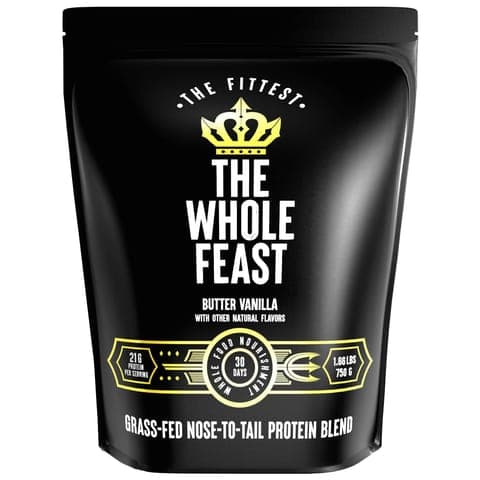
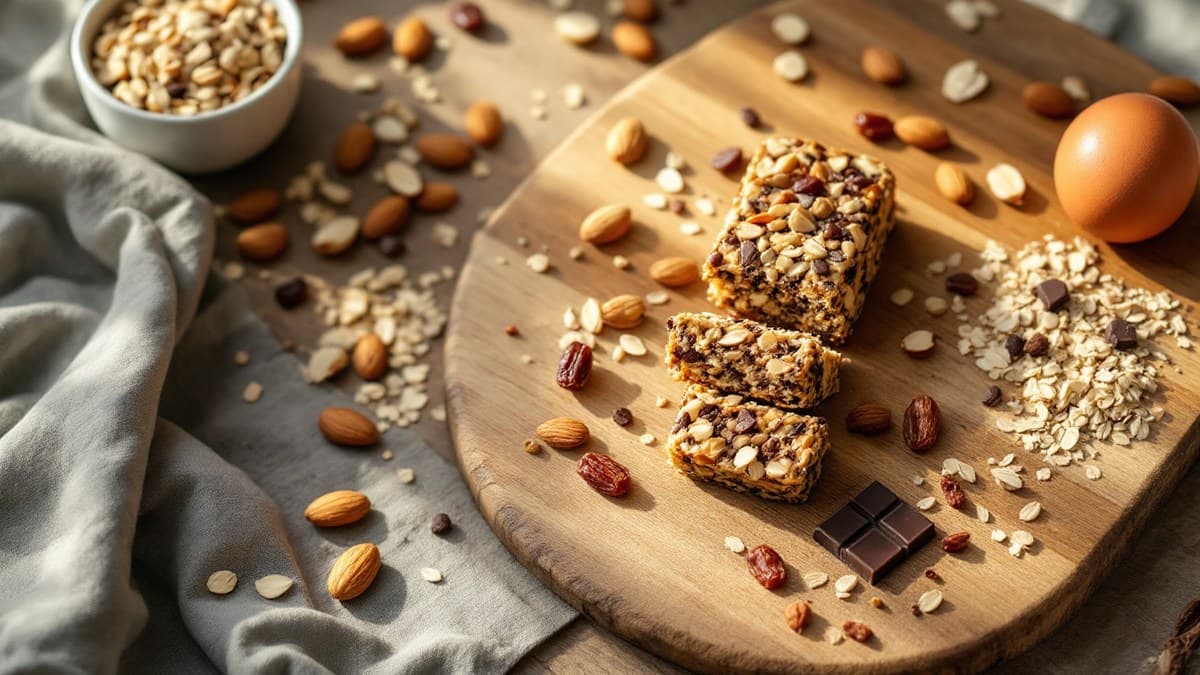
Healthiest Protein Bars 2026: 10 Bars Ranked by Ingredient Quality (Not Marketing)
RXBAR Chocolate Sea Salt is the healthiest protein bar in 2026 — four whole-food ingredients (egg whites, dates, almonds, cashews), zero added sweeteners, zero isolates, zero sugar alcohols. These 10 protein bars are ranked strictly by ingredient quality against a 5-part rubric: complete protein source (no collagen filler), sweetener transparency (no sucralose, aspartame, or Ace-K), whole-food ingredients, sugar source, and additive load. A bar with 20g of protein and sucralose is not healthier than a bar with 12g of protein and real dates — and this ranking is honest about that trade-off.
Our top protein bar picks
Editor-selected and ready to buy. As an Amazon Associate we may earn from qualifying purchases.
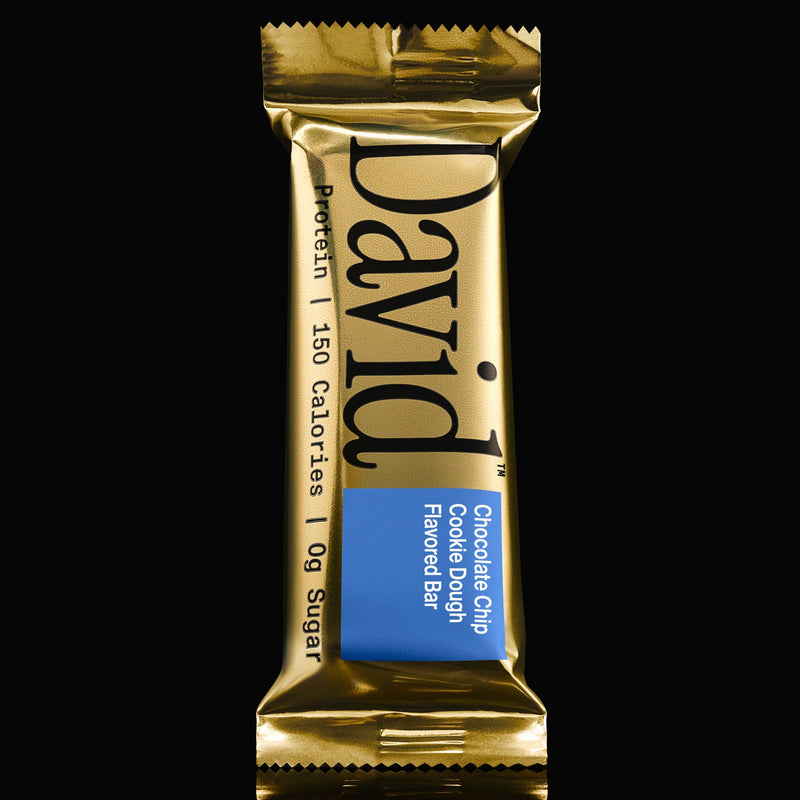 28g protein
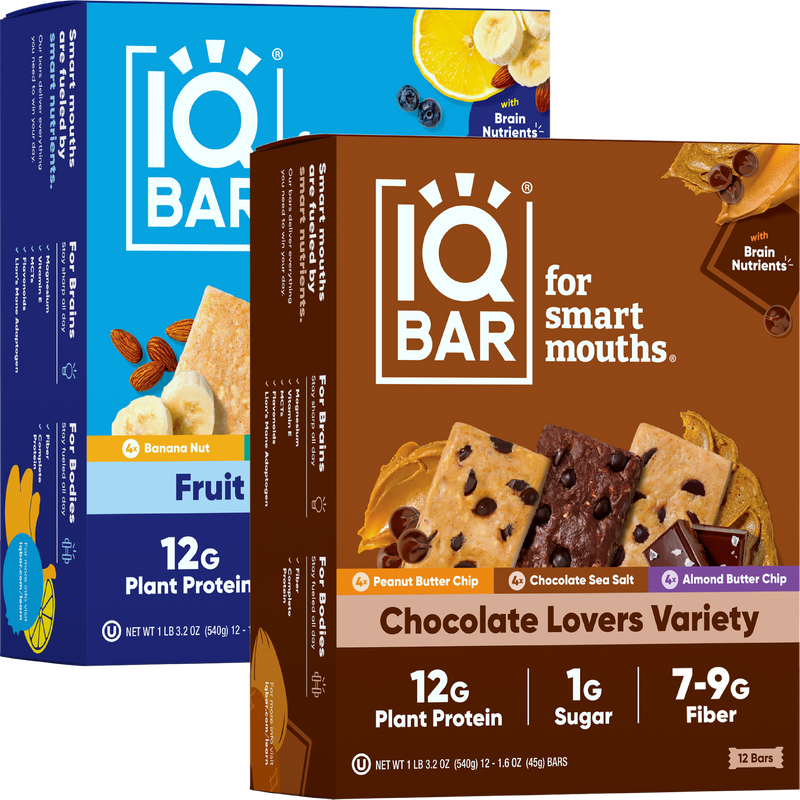 12g protein
Chocolate Lovers & Fruit Lovers (24 Bars)
Amazon returns policy · secure checkout
 12g protein
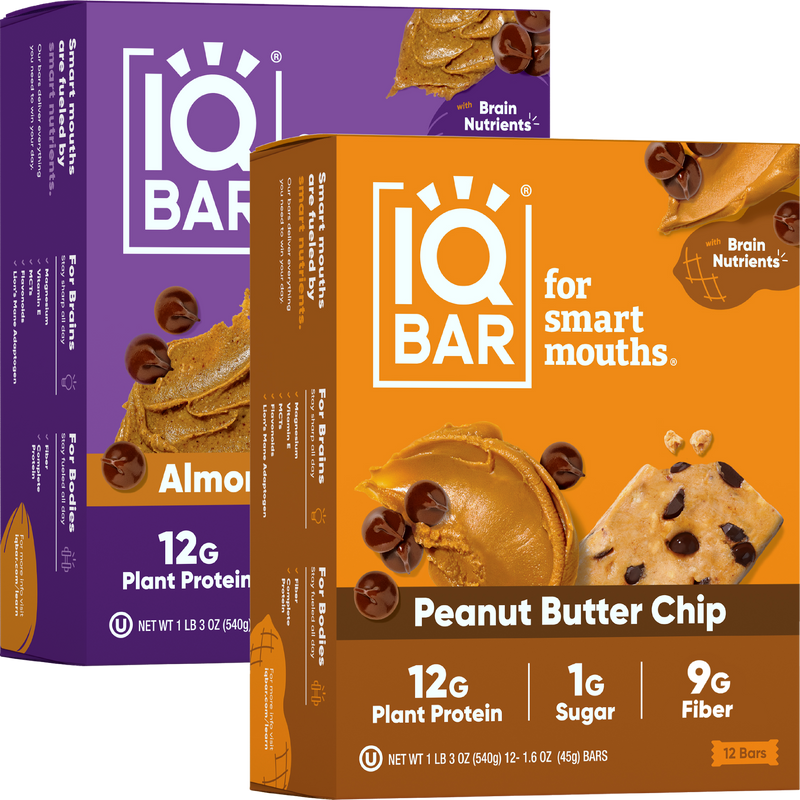
Almond Butter Chip & Peanut Butter Chip (24 Bars)
Amazon returns policy · secure checkout
Direct Answer
The healthiest protein bar in 2026 is RXBAR Chocolate Sea Salt — four whole-food ingredients (egg whites, dates, almonds, cashews) plus cocoa and sea salt, 12g of complete protein per bar, zero added sweeteners, zero protein isolates, zero sugar alcohols. For a refrigerated whole-food alternative, Perfect Bar Peanut Butter uses only honey to sweeten 15g of protein blended with organic peanut butter and 20 organic superfoods. For a certified organic vegan pick, GoMacro MacroBar Peanut Butter Chocolate Chip is the cleanest plant-based bar on the mainstream US shelf.
Most “best protein bar” rankings score the label first: grams of protein, calories, fiber, price. The result is the same top-of-list finish for whichever bar hits the biggest headline number — usually a bar built on whey isolate, sucralose, and soluble corn fiber. That is a legitimate way to rank a protein snack, but it is not the same question as which bar is healthiest. The healthiest ranking has to weigh the actual ingredient list: is the protein complete or is a chunk of it collagen; is the sweetener a plant extract or a synthetic; are the carbs whole-food or processed fillers. Below are the 10 healthiest protein bars in 2026, ranked strictly by ingredient quality against a five-part rubric. For a straight best-of ranking that also considers macros and taste, see our 2026 best protein bars roundup; for a strict protein-per-calorie ranking, see our best low-calorie protein bars guide; for the cheapest bars, see the cheapest protein bars guide.
How We Ranked: The 5-Part Ingredient-Quality Rubric
Every pick here is scored against the same five criteria — not against calories or price. The reasoning behind each weight is written into the rubric so a reader who disagrees with a criterion can adjust the weighting themselves.
- Protein source quality (30% of the score). Is the labeled protein complete? Whey isolate, milk protein isolate, egg whites, and blended plant proteins (rice + pea) are complete — every one contains all nine essential amino acids including tryptophan. Hydrolyzed bovine collagen is not: it lacks tryptophan, so a bar that lists collagen alongside whey delivers less complete protein than the label gram count implies. A bar earning full points uses only complete sources; a bar losing points here is built on collagen or heavily on isolate blends without whole-food protein.
- Sweetener transparency (25%). Sucralose, aspartame, and acesulfame potassium (Ace-K) are synthetic non-nutritive sweeteners — they are FDA-approved, but a real body of research suggests they alter gut microbiome composition and may attenuate insulin response over time. Erythritol, monk fruit, stevia, and allulose are plant-derived or naturally-occurring alternatives with less mechanistic concern. Sugar alcohols (maltitol, sorbitol, xylitol) are technically natural but carry real GI side effects at moderate doses and, in maltitol’s case, a partial glycemic impact. Full points go to bars that avoid sucralose, aspartame, and Ace-K; partial points for bars using stevia or erythritol; deduction for bars leading with maltitol.
- Whole-food ingredient content (20%). A short ingredient list of recognizable whole foods (dates, oats, nuts, egg whites, honey) is a signal that the bar is a compressed snack rather than a lab-formulated one. Full points for bars where the top five ingredients are recognizable foods; deductions for bars that lead with isolates, syrups, and gums.
- Sugar source (15%). Total sugar grams are less important than where the sugar comes from. Sugar from dates, honey, or dried fruit arrives with fiber, minerals, and slower digestion. Refined added sugar and high-fructose corn syrup arrive naked. A bar with 13g of sugar from dates (RXBAR) scores meaningfully better on this line than a bar with 6g of added cane sugar. A bar with 0g of sugar but built on sucralose earns zero points here (the sweetener line already handled it).
- Additive load (10%). Synthetic dyes (Red 40, Yellow 5, Yellow 6), industrial seed oils (canola, soybean, cottonseed) as top-five ingredients, and gum thickeners (carrageenan, cellulose gum, xanthan) all get deducted here. This is the smallest weight because most mainstream bars are broadly similar on additives — but the deduction still matters, and the top picks distinguish themselves by using palm-family oils, minimal gums, and no synthetic colors.
Every ingredient and macro figure in this guide is verified from each brand’s current nutrition facts panel and ingredient list. Prices are typical Amazon US pack pricing at time of writing and move; the buy buttons take you to the current live listing.
The 10 Healthiest Protein Bars: Full Ranking
| # | Bar | Protein | Calories | Sweetener system | Protein source | Ingredient count |
|---|---|---|---|---|---|---|
| 1 | RXBAR Chocolate Sea Salt | 12g | 210 | None — dates only | Egg whites (complete, whole-food) | ~6 whole foods |
| 2 | Perfect Bar Peanut Butter | 15g | 340 | Honey only | Peanut butter + whey + dry milk + rice protein | ~20 organic superfoods |
| 3 | GoMacro Peanut Butter Chocolate Chip | 12g | 270 | Organic brown rice syrup | Brown rice + pea protein (complete) | ~10 organic |
| 4 | ALOHA Peanut Butter Cup | 14g | 220 | Organic tapioca syrup + small cane sugar | Brown rice + pea protein (complete) | ~15 organic |
| 5 | KIND Breakfast Protein Almond Butter | 8g | 260 | Honey + palm sugar + molasses | Almonds + soy protein isolate | ~12 whole foods |
| 6 | Built Bar Coconut | 17g | 130 | Real cane sugar + tapioca syrup | Whey isolate + collagen | ~15 processed |
| 7 | think! High Protein Brownie Crunch | 20g | 240 | Maltitol (no sucralose or Ace-K) | Whey isolate + soy isolate + caseinate (complete, no collagen) | ~25 |
| 8 | No Cow Peanut Butter Chocolate Chip | 20g | 200 | Stevia + monk fruit only | Brown rice + pea protein (complete) | ~20 processed |
| 9 | Quest Chocolate Chip Cookie Dough | 20g | 200 | Erythritol + sucralose + stevia | Whey isolate + milk protein isolate (complete, no collagen) | ~25 processed |
| 10 | Barebells Caramel Cashew | 20g | 200 | Maltitol + sucralose + Ace-K | Whey concentrate + caseinate + collagen | ~30 processed |
The ranking reflects a genuine trade-off that the “protein per calorie” rankings hide: to hit 20g of protein at 200 calories with 0g of sugar, a bar has to either use sucralose (Quest, Barebells) or synthesize its way there with modified fats and isolate stacks. The bars at positions 1–5 in this ranking accept a lower headline protein count in exchange for a cleaner ingredient list. Whether that trade-off is right for you depends on why you eat protein bars. If a bar is your protein backstop for muscle protein synthesis after training, 20g of complete protein matters and Quest at position 9 or think! at position 7 are the right picks. If a bar is a portable whole-food snack that also delivers protein, RXBAR at position 1 or Perfect Bar at position 2 are the honest answers.
#1. RXBAR Chocolate Sea Salt — The Cleanest Label on the Mainstream Shelf
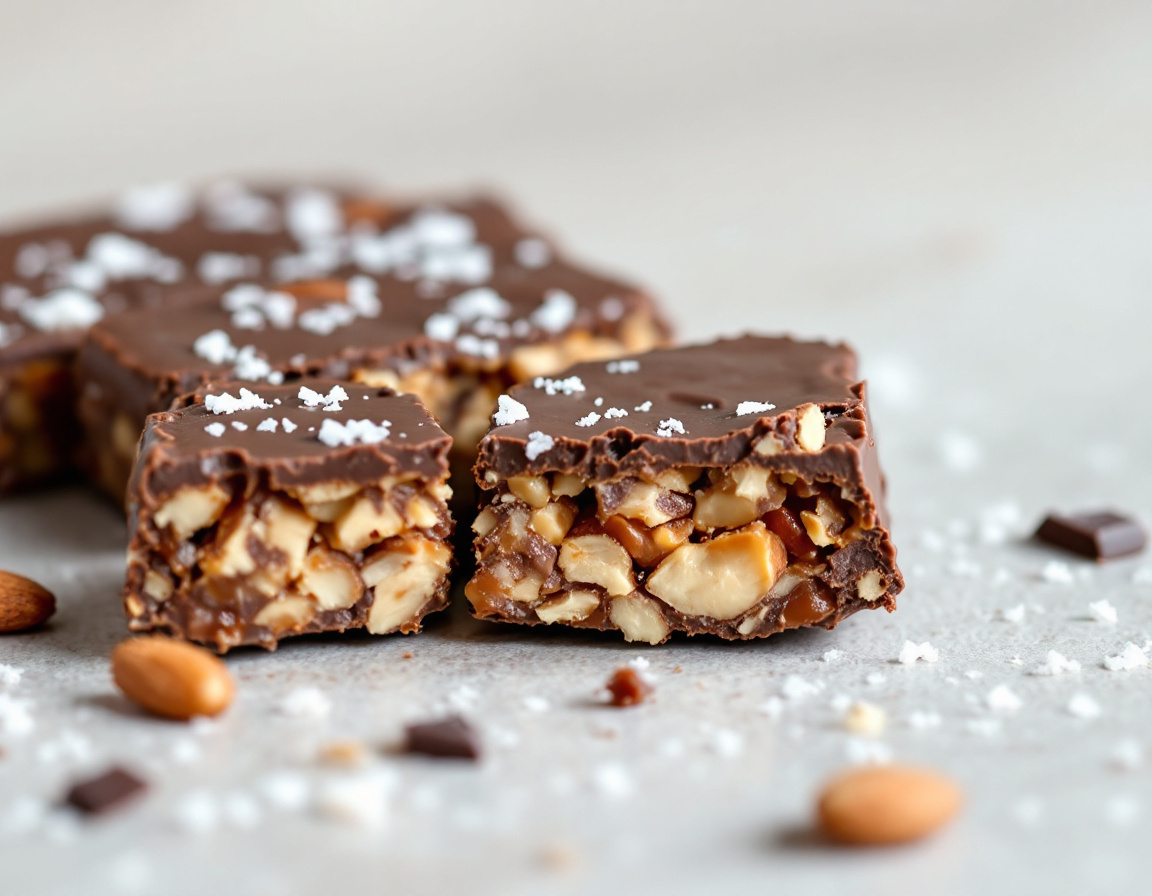
RXBAR Chocolate Sea Salt
12g protein · 210 cal · 13g sugar (dates only) · 5g fiber · ~6 whole-food ingredients
Affiliate link — if you buy through it we earn a small commission at no extra cost to you.
RXBAR earns the top of a healthiest-bars ranking for the same reason it feels almost jarring on a shelf full of chocolate-coated protein candy: the ingredient list is short enough to read in one breath and every word on it is a food. Chocolate Sea Salt is egg whites, dates, almonds, cashews, cocoa, natural chocolate flavor, sea salt. That is it. No whey isolate, no sucralose, no maltitol, no erythritol, no soluble corn fiber, no palm oil, no soy lecithin, no cellulose gum. The 12g of complete protein comes from egg whites (a whole-food source with a Digestible Indispensable Amino Acid Score of 1.0, the highest possible), and the 13g of total sugar is from Medjool dates — the same dates a nutritionist would tell you to eat as a whole snack, just chopped and pressed into a bar.
Where the honesty matters: RXBAR is not a low-calorie or low-sugar bar. At 210 calories with 13g of naturally-occurring sugar and only 12g of protein, it does not compete with Quest or David on macro efficiency. It competes on what you are actually eating. If a shopper walks into a store looking for the healthiest protein bar and comes home with a Quest bar, they have a bar with 20g of complete protein, 14g of fiber, and sucralose. That is a legitimate choice, but it is not the same product as RXBAR. RXBAR is a whole-food snack that happens to hit 12g of protein; Quest is a formulated protein delivery vehicle that hits 20g and 200 calories through engineering.
Who this is right for: anyone whose primary filter is ingredient quality; anyone avoiding sugar alcohols and non-nutritive sweeteners; anyone on a Whole30-adjacent, real-food-first eating pattern who still wants a portable protein snack. Who should skip: shoppers who need 20g+ of protein per bar or who are strictly limiting carbs (13g of naturally-occurring sugar is 13g of carbs, regardless of source). The Chocolate Sea Salt flavor is our pick over the other RXBAR SKUs because the ingredient list is shorter than the flavored variants and the cocoa doubles as antioxidant polyphenols.
Why it’s #1: The only mainstream protein bar built entirely on recognizable whole foods, with zero added sweeteners of any kind. Every other bar in this ranking makes a trade-off; RXBAR does not.
#2. Perfect Bar Peanut Butter — Best Refrigerated Whole-Food Option

Perfect Bar Peanut Butter
15g protein · 340 cal · 17g sugar (honey) · 2g fiber · ~20 organic superfoods
Note: refrigerated bar; ships in a cold pack. Affiliate link.
Perfect Bar is the outlier on this list — it lives in the refrigerated section, not the shelf-stable aisle — and that alone is a partial explanation for the ingredient quality. A bar that has to stay cold cannot use the same shelf-stable formulation tricks (heavy sugar alcohols, high sodium, extended-preservative isolates) that a Quest or Barebells relies on. Peanut Butter Perfect Bar is built on organic peanut butter, organic honey, and organic dry whole milk, with a whey and rice protein blend and roughly 20 organic superfoods (organic dried alfalfa, kale, spinach, orange, apple, papaya, celery, beet, and more) blended in. The sweetener is honey and only honey — no sucralose, no maltitol, no stevia. Total sugar is 17g per bar, all from honey.
The honest trade-offs: Perfect Bar is calorie-dense at 340 calories per bar, meaningfully higher than the shelf-stable competition. It is also higher in sugar than any other bar in this ranking (17g), all from honey but still 17g of carbs the body reads as sugar. Fiber is low at 2g. And the refrigerated format means less convenience — you cannot toss one in a gym bag for a week. Peanut Butter Perfect Bar is best treated as a compact whole-food snack that replaces a small meal (a sandwich, a smoothie) rather than a between-meals top-up.
Who this is right for: shoppers who prioritize organic and non-GMO sourcing, want a bar sweetened only with honey (not synthetic sweeteners, not sugar alcohols), and can eat one at home or from a fridge at work. Who should skip: anyone in a strict calorie deficit or on a low-sugar plan — 340 calories and 17g of sugar per bar rules out both use cases.
Why it ranks: The only mainstream refrigerated protein bar built on a whole-food peanut-butter-and-honey base with 20+ organic superfoods and no synthetic sweeteners of any kind.
#3. GoMacro MacroBar Peanut Butter Chocolate Chip — Best Certified-Organic Vegan Whole-Food Bar

GoMacro MacroBar Peanut Butter Chocolate Chip
12g protein · 270 cal · 8g sugar (brown rice syrup) · 2g fiber · USDA Organic · vegan
Affiliate link. USDA Organic and Non-GMO Project verified.
GoMacro is a small family-owned bar-maker from rural Wisconsin, and its MacroBar line is the clearest “organic plant-based whole-food” option in the mainstream US market. The Peanut Butter Chocolate Chip flavor is built on organic brown rice syrup, organic peanut butter, organic sprouted brown rice protein, organic chocolate chips, and organic pea protein — every ingredient certified organic and non-GMO verified. The protein blend of brown rice + pea is nutritionally complete (all nine essential amino acids), the sweetener is a whole-food-adjacent brown rice syrup, and the ingredient list is short enough to fit on the back of the wrapper without shrinking the font.
The honest trade-offs: brown rice syrup is a legitimate sweetener — it is a slow-digesting complex carbohydrate rather than a refined sugar — but it does still contribute 8g of sugar per bar and about 26g of total carbohydrate. At 270 calories per 2.4oz bar, GoMacro is calorie-dense for a snack, and the fiber content (2g) is modest compared to Quest or No Cow. The 12g of protein is complete but on the lower end of the modern protein-bar tier.
Who this is right for: vegan shoppers, shoppers avoiding dairy, shoppers who prioritize certified organic sourcing, and anyone whose eating pattern already includes whole-grain and legume protein and just wants a portable version. Who should skip: anyone strictly limiting carbohydrates or optimizing for the lowest-calorie, highest-protein macros. Compare against other plant-based protein options if a vegan bar is the requirement.
Why it ranks: The cleanest USDA Organic + Non-GMO vegan protein bar on the mainstream shelf — every ingredient organic, complete plant protein blend, no synthetic sweeteners.
#4. ALOHA Peanut Butter Cup — Best Organic Plant, No Sugar Alcohols
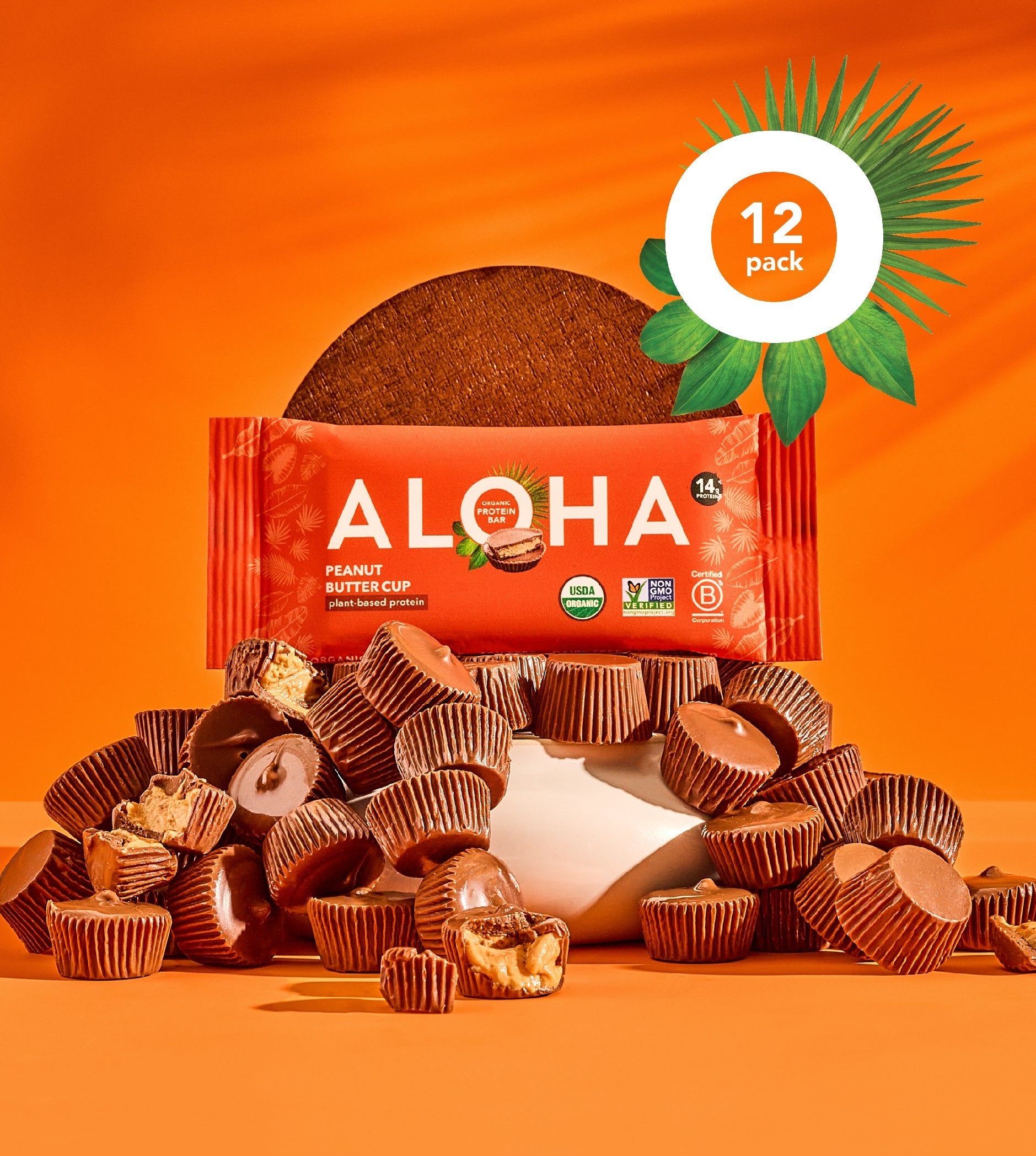
ALOHA Peanut Butter Cup
14g protein · 220 cal · 5g sugar · 5g fiber · USDA Organic · no sugar alcohols · no stevia
Affiliate link. USDA Organic and Non-GMO Project verified.
ALOHA is a plant-based competitor to GoMacro with a slightly different sweetener choice that earns it a distinct spot on the healthiest ranking. Peanut Butter Cup is USDA Organic and Non-GMO Project verified with 14g of complete plant protein (organic brown rice + organic pea), 220 calories, 5g of sugar, and 5g of fiber — and, critically, no stevia, no monk fruit, no erythritol, no sugar alcohols, and no sucralose. The sweetness comes from a small amount of organic cane sugar and organic tapioca syrup. For shoppers who dislike the aftertaste of stevia (a very real palate objection for many people) or who avoid sugar alcohols for GI reasons, ALOHA is one of the very few 14g+ protein bars on the mainstream shelf that qualifies.
The honest trade-offs: using cane sugar plus tapioca syrup means real added sugar (5g per bar), which some low-sugar shoppers will flag. Total carbs run about 24g per bar. And the plant-protein texture is slightly denser than a dairy-protein bar — a preference issue more than a nutrition one. On the plus side, ALOHA carries some of the highest average reviews in the plant-bar category (its variety pack averages 4.9 stars across hundreds of reviews).
Who this is right for: shoppers who want a plant-based, organic bar with no stevia, no sucralose, and no sugar alcohols, and are fine with a small amount of real added sugar. Who should skip: strict low-sugar or keto shoppers.
Why it ranks: The only 14g-protein organic plant bar with zero stevia, zero sugar alcohols, and zero sucralose — a real dietary-fit niche.
#5. KIND Breakfast Protein Almond Butter — Best Nut-Forward Whole-Food Bar

KIND Breakfast Protein Almond Butter
8g protein · 260 cal · 6g sugar (honey + palm sugar) · 6g fiber · nut-forward whole food
Affiliate link. Serving = 2 bars per pouch.
KIND Breakfast Protein bars use a nut-and-grain base you can actually see through the wrapper — whole almonds, oats, chia, flax, quinoa — sweetened with honey, palm sugar, and molasses, with soy protein isolate added to hit 8g of protein per two-bar pouch. The ingredient list is longer than RXBAR’s but the bulk of it reads as whole foods, and the sweetener stack is entirely non-synthetic. The 6g of fiber per serving comes from the whole oats and nuts rather than from added prebiotic fibers or soluble corn fiber, which puts KIND in a genuinely different category from most 20g-protein bars.
The honest trade-offs: 8g of protein per serving is on the low end of what you would want from a “protein bar” and puts KIND Breakfast Protein closer to a snack bar with added protein than a training-focused protein delivery vehicle. Total sugar is 6g and total carbs are 27g per serving — not a low-carb pick. The bar contains soy protein isolate, which is a source most whole-food purists prefer to avoid (though it is a complete protein).
Who this is right for: anyone eating a bar as a whole-food breakfast substitute (the intended use case) or as a mid-morning snack, with protein as a bonus rather than the primary goal. Who should skip: anyone whose protein target requires 15g+ per bar — the KIND Breakfast Protein 8g is a real limitation for that use case, and the standard KIND Protein bar (12g) or one of the higher-protein picks below is the better fit. See more nut-based options in our nut butter high-protein snacks guide.
Why it ranks: A visibly whole-food nut-and-grain bar with honey and palm sugar as the only sweeteners — the closest a mainstream protein-labeled bar comes to a granola bar.
#6. Built Bar Coconut — Best Real-Sugar, No-Synthetic-Sweetener Bar
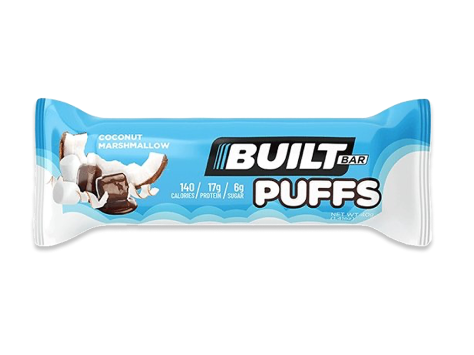
Built Bar Coconut
17g protein · 130 cal · 5g sugar (real cane sugar) · 5g fiber · no sugar alcohols · no artificial sweeteners
Affiliate link. Built Bars are primarily sold direct-to-consumer at builtbar.com and select retail.
Built Bar sits on this ranking for a specific and slightly unusual reason: it is one of the only sub-150-calorie protein bars in the mainstream US market sweetened with real cane sugar and tapioca syrup rather than sugar alcohols, sucralose, or stevia. At 5g of real cane sugar per bar, Built Bar Coconut takes the honest position that a small amount of real sugar is preferable to a synthetic non-nutritive alternative — a genuinely different philosophy from Quest or Barebells. The 17g of protein comes from a whey isolate and collagen blend, with the collagen bringing the protein quality down a notch below a pure-isolate bar (collagen is missing tryptophan, so the muscle-building fraction of the 17g label figure is lower than a pure-whey bar would deliver). The bar has 5g of fiber from soluble tapioca fiber and a thin chocolate coating.
The honest trade-offs: the collagen in the protein blend is the biggest catch — if the primary purpose of the bar is meeting a training-day protein target, a bar with 20g of complete whey isolate (No Cow, Quest, think!) is a better tool. The ingredient list is longer than RXBAR’s or GoMacro’s (around 15 processed components), and palm kernel oil sits in the coating. But the sweetener philosophy is genuinely rare, and for shoppers with strong aversions to sucralose or sugar alcohols who still want a lean protein-forward bar, Built Bar is one of the very few honest choices.
Who this is right for: shoppers who want a lean, chocolate-coated bar and prefer 5g of real cane sugar to any synthetic sweetener or sugar alcohol. Who should skip: shoppers hitting a training-day complete-protein target (collagen dilutes the 17g), and shoppers strictly avoiding added sugar.
Why it ranks: One of the only lean, chocolate-coated protein bars sweetened with real cane sugar and tapioca syrup rather than sugar alcohols or synthetic sweeteners.
#7. think! High Protein Brownie Crunch — Best 20g Sucralose-Free Bar

think! High Protein Brownie Crunch
20g protein · 240 cal · 0g sugar · 3g fiber · no sucralose, aspartame, or Ace-K · complete protein (no collagen)
Affiliate link. Marketed by the brand as “Nutrition Bars without Artificial Sweeteners.”
think! High Protein is the go-to pick for shoppers who want the full 20g of complete protein at a real macro efficiency AND want to avoid synthetic non-nutritive sweeteners. The Brownie Crunch flavor delivers 20g of protein at 240 calories with 0g of sugar — a macro profile that matches Quest and Barebells almost exactly — but the sweetener stack is maltitol syrup and stevia, with no sucralose, no aspartame, and no acesulfame potassium. The protein blend is whey isolate, soy protein isolate, and calcium caseinate — three complete protein sources with all nine essential amino acids and no collagen filler. For a training-day protein target where the bar has to hit 20g and the shopper is avoiding sucralose specifically, think! is one of the very few honest matches on the mainstream shelf.
The honest trade-offs: the “no artificial sweeteners” claim rests on maltitol not being classified as artificial (it is a sugar alcohol), but maltitol has a glycemic index of roughly 35–53 — a real partial glycemic impact, higher than erythritol (near zero) or allulose (near zero). Larger doses can also cause GI discomfort. So “no synthetic sweetener” is honest but “no glycemic impact” is not. Fiber is modest at 3g per bar (much lower than Quest at 14g), and the bar contains both dairy and soy protein.
Who this is right for: shoppers hitting a 20g protein target who specifically avoid sucralose, aspartame, and Ace-K and can accept maltitol as the primary sweetener. Who should skip: anyone GI-sensitive to sugar alcohols in bar-sized doses, and strict keto counters who count maltitol against net carbs.
Why it ranks: The strongest 20g complete-protein pick that avoids sucralose, aspartame, and Ace-K — a distinct niche think! owns on the mainstream shelf.
#8. No Cow Peanut Butter Chocolate Chip — Best Plant-Based 20g Bar

No Cow Peanut Butter Chocolate Chip
20g protein · 200 cal · 3g sugar · 10g fiber · stevia + monk fruit only · vegan · complete plant blend
Affiliate link. Vegan, dairy-free, non-GMO.
No Cow’s Peanut Butter Chocolate Chip bar solves the exact problem that Quest and Barebells create for anyone avoiding both dairy protein and artificial sweeteners: 20g of complete plant protein at 200 calories with only stevia and monk fruit as the non-nutritive sweeteners. No sucralose, no aspartame, no acesulfame potassium, no sugar alcohols listed on the label. The protein blend is brown rice and pea, which together deliver all nine essential amino acids. Total sugar is 3g, fiber is a robust 10g (from soluble corn fiber and chicory root), and the bar is dairy-free, soy-free, gluten-free, and vegan.
The honest trade-offs: the sweetness from stevia and monk fruit has a distinctive aftertaste that some readers dislike — a legitimate palate objection that is not solved by any pea-protein bar sweetened this way. The plant-protein texture is denser and chewier than a whey-based bar, which is a preference call rather than a nutrition one. And soluble corn fiber, while technically fiber, causes bloating in some readers at higher doses — start with one bar and see how you respond.
Who this is right for: vegans hitting a 20g protein target; anyone dairy-free avoiding both sucralose and sugar alcohols; readers who tolerate stevia. Who should skip: anyone who dislikes the stevia aftertaste or who has flagged soluble corn fiber for GI issues in the past. Compare against the rest of the vegan field in our best vegan protein snacks guide.
Why it ranks: The cleanest 20g complete-plant-protein bar with no artificial sweeteners and no sugar alcohols — a specific dietary-fit slot no dairy bar can fill.
#9. Quest Chocolate Chip Cookie Dough — Best Macros, But Uses Sucralose
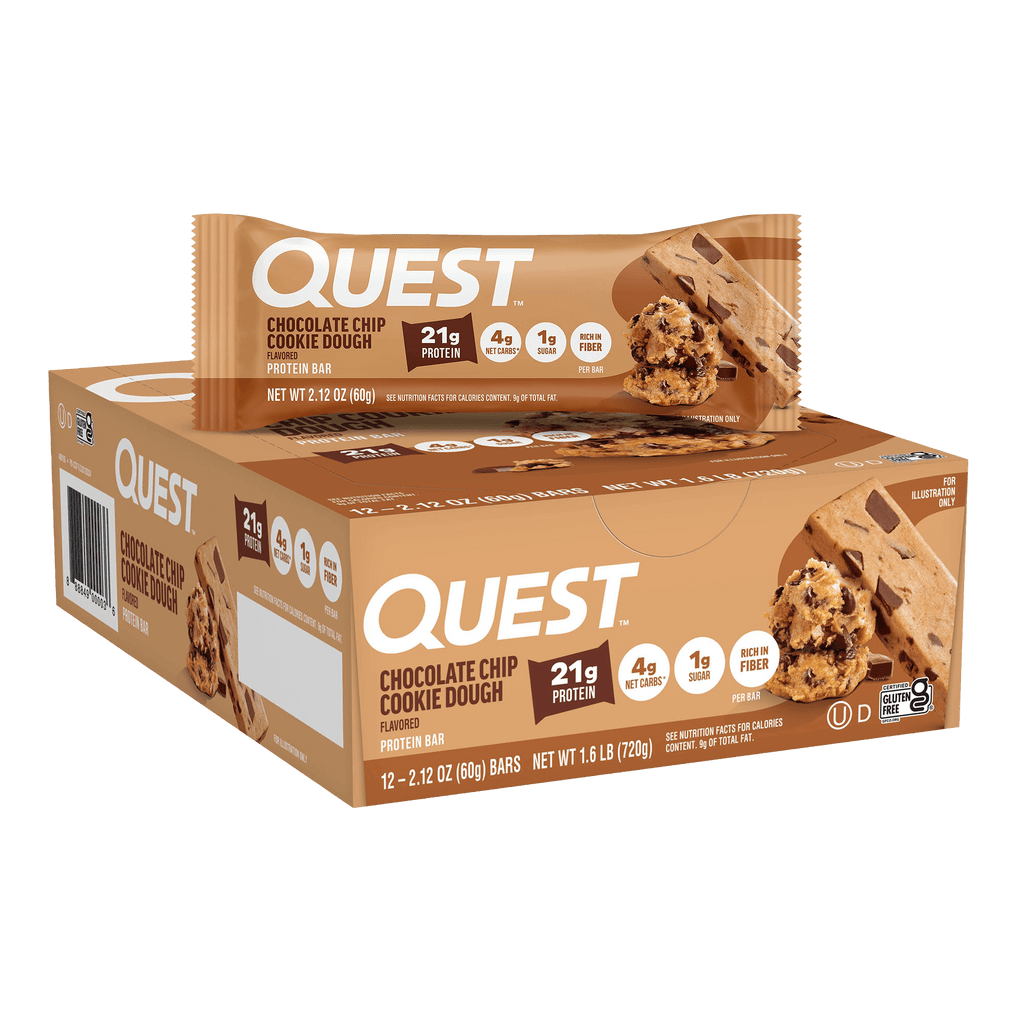
Quest Chocolate Chip Cookie Dough
20g protein · 200 cal · 1g sugar · 14g fiber · complete protein (no collagen) · contains sucralose
Affiliate link. Complete-protein blend with the highest fiber in this ranking.
Quest lands mid-pack on a healthiest ranking specifically because of the sweetener line item, and it is worth explaining why the rest of its profile is strong enough to still make this list. On protein quality, Quest is a genuine top-tier pick: 20g from whey isolate and milk protein isolate, no collagen, all nine essential amino acids. On fiber, Quest is the highest in this ranking at 14g per bar (from soluble corn fiber and chicory root, both prebiotic and satiety-boosting). On sugar, only 1g per bar. Macros are among the best on the market: 20g of complete protein at 200 calories.
Where the deduction lands: Quest uses sucralose as one of its sweeteners (alongside erythritol and stevia). Sucralose is FDA-approved and widely consumed, but for the specific rubric this ranking uses — ingredient quality and sweetener transparency — a synthetic non-nutritive sweetener earns a real deduction. The Quest ingredient list is also long (roughly 25 processed components), a mix of isolates, fibers, cocoa, natural flavors, and sweeteners. This is the archetypal “engineered protein delivery bar,” and if that engineering is what you value (great macros, high fiber, low sugar, filling), Quest is a legitimate pick that just happens to score lower on ingredient quality than a whole-food bar.
Who this is right for: shoppers hitting a strict 20g protein and high-fiber daily target who prioritize macros and fullness over sweetener source. Who should skip: anyone avoiding sucralose (see think! at #7 or No Cow at #8 for 20g-protein alternatives that skip sucralose).
Why it’s here at all: the highest-fiber complete-protein macro profile in the ranking, offset by the sucralose deduction that keeps it out of the top half.
#10. Barebells Caramel Cashew — Best-Tasting, But Uses Collagen and Sucralose
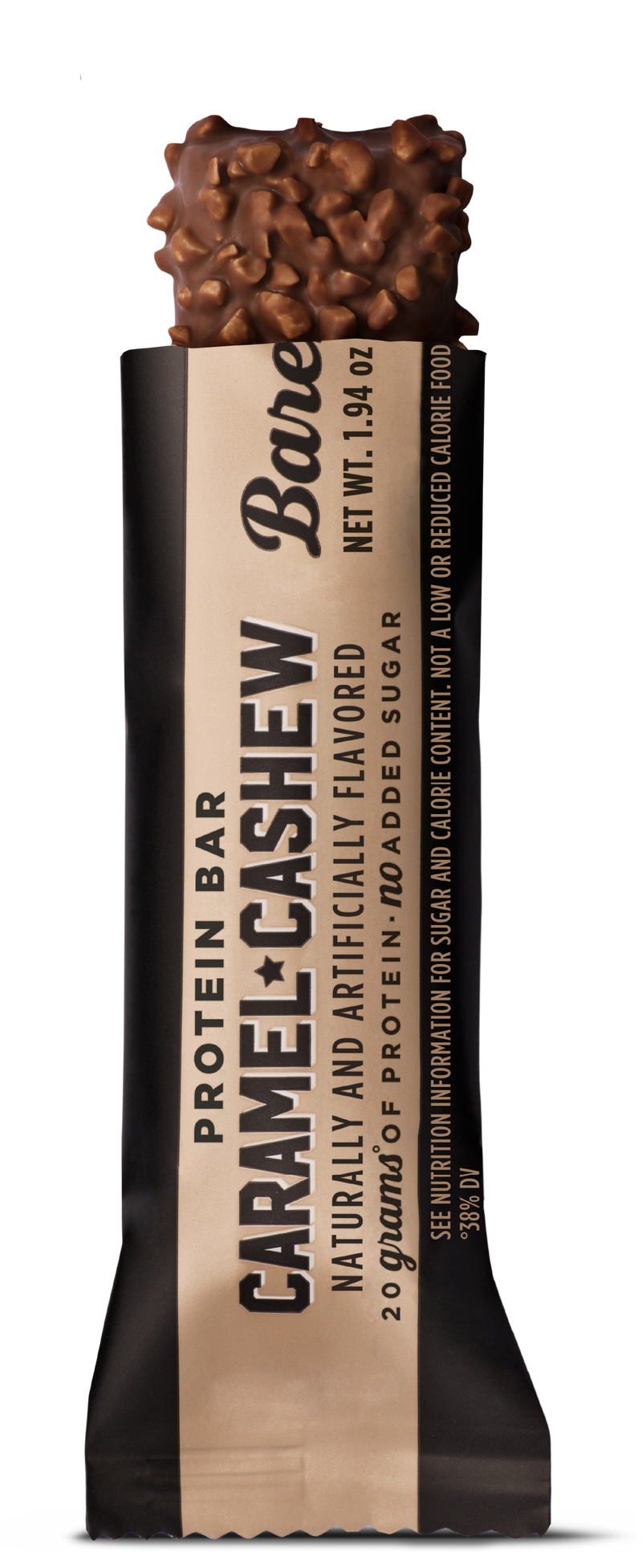
Barebells Caramel Cashew
20g protein · 200 cal · 2g sugar · 3g fiber · contains collagen + sucralose + Ace-K
Affiliate link. Included in this ranking for context, not endorsement on the healthiest axis.
Barebells earns the last spot on this ranking not because it is a bad protein bar — it is one of the most-reviewed and best-tasting bars in the category, with 4,500+ Amazon reviews averaging 4.7 stars — but because a genuinely honest “healthiest” ranking cannot skip the trade-offs the marketing skips. Caramel Cashew delivers 20g of protein at 200 calories with 2g of sugar, similar-looking macros to Quest. But the protein blend is whey concentrate, caseinate, and hydrolyzed collagen — the collagen dilutes the complete-protein fraction of the 20g label figure, since collagen is missing tryptophan and cannot fully support muscle protein synthesis. The sweetener stack is maltitol plus sucralose plus acesulfame potassium (Ace-K) — the two synthetic non-nutritive sweeteners this ranking specifically deducts for, plus a sugar alcohol with real glycemic and GI impact.
Where Barebells still wins: the eating experience. The Caramel Cashew flavor closes the gap on a real candy bar closer than almost any other protein bar on the market — that is a legitimate reason to reach for it, and the reviews confirm it. Fiber is low (3g) and the ingredient list is long (roughly 30 processed components), so it is not a satiety-driven bar.
Who this is right for: shoppers whose primary blocker with protein bars is that they taste like protein bars, who already hit their complete-protein target from other food, and who eat one bar at a time so the sweetener load is manageable. Who should skip: anyone specifically avoiding collagen fillers, sucralose, or Ace-K — move up the list to think! at #7 or No Cow at #8, which are the direct fixes.
Why it’s on the list: included for honest context. If a “healthiest protein bars” ranking omits the most popular bar in the category without explaining why, the reader gets a worse picture — not a cleaner one.
Which Sweeteners Are OK in a Protein Bar?
Short version: the answer depends on the goal. For maximum ingredient purity, avoid non-nutritive sweeteners entirely and pick a bar sweetened only with dates (RXBAR), honey (Perfect Bar, KIND Breakfast Protein), or brown rice syrup (GoMacro). If you want the 20g protein macros without the sucralose specifically, pick a bar sweetened with maltitol + stevia (think!) or stevia + monk fruit (No Cow). If macros are the priority and you accept sucralose, Quest is efficient and No Cow is the dairy-free version. The three sweeteners this ranking specifically deducts for — sucralose, aspartame, and acesulfame potassium — are FDA-approved and consumed at scale, but the research on their long-term microbiome and metabolic effects is still evolving, and a shopper choosing between two otherwise-similar bars has an honest reason to skip them.
Are “Healthy” Protein Bars Actually Better for You Than Regular Ones?
Yes and no. On the specific axis this ranking measures — ingredient quality — a whole-food bar like RXBAR or Perfect Bar is meaningfully different from an engineered isolate bar like Quest or Barebells. The dates, egg whites, and nuts in RXBAR arrive with fiber, micronutrients, and slower digestion; the whey isolate, soluble corn fiber, and sucralose in Quest do not. But whole-food bars are calorie-dense — RXBAR is 210 calories, Perfect Bar is 340 — and their sugar counts are higher, so they are not automatically the “better” choice for a shopper in a calorie deficit or on a strict blood-sugar plan. The right question is not “which bar is healthiest in the abstract” but “which bar is the honest fit for what I am trying to do.” A calorie-deficit shopper managing hunger is well served by Quest’s 20g/200cal/14g-fiber profile. A whole-food-first shopper is well served by RXBAR. Neither pick is wrong — they answer different questions.
Which Healthy Protein Bar Should You Actually Buy?
Three-way split, decided by what you value most.
- If ingredient quality is the top filter, no other consideration: RXBAR Chocolate Sea Salt. Nothing else on the mainstream shelf is built entirely on recognizable whole foods.
- If you want a 20g complete-protein bar and specifically avoid sucralose: think! High Protein Brownie Crunch (dairy + soy blend, maltitol sweetener) or No Cow Peanut Butter Chocolate Chip (vegan, stevia + monk fruit).
- If you want a certified organic vegan bar with a whole-food sweetener: GoMacro Peanut Butter Chocolate Chip (brown rice syrup) or ALOHA Peanut Butter Cup (organic tapioca syrup + small cane sugar, no stevia).
If you eat protein bars several days a week and want to hedge across dietary risk, rotate between an RXBAR (whole-food snack), a Quest (high-fiber macro pick), and one of the vegan picks (No Cow or ALOHA). Rotating spreads the sweetener load, avoids GI issues from too much of any one fiber source, and keeps the diet more diverse than any single-brand strategy.
Frequently Asked Questions
What is the healthiest protein bar you can buy?
RXBAR Chocolate Sea Salt is the healthiest protein bar on the mainstream US shelf when the definition of “healthiest” is ingredient quality. It is built on four whole-food ingredients (egg whites, dates, almonds, cashews) plus cocoa and sea salt, with no added sweeteners, no protein isolates, no sugar alcohols, and no synthetic additives. The 12g of protein comes from egg whites (a whole-food complete protein), and the 13g of naturally-occurring sugar is from dates — a whole-food source that arrives with fiber and micronutrients rather than as refined sugar.
Are protein bars with sucralose bad for you?
Not in a well-established sense — sucralose is FDA-approved and consumed at scale — but the research on its long-term effects on the gut microbiome and metabolic health is still evolving. Multiple studies show it can alter gut bacterial composition and may attenuate the insulin response in some individuals. If you eat one bar a week, the effect is likely negligible; if you rely on sucralose-sweetened bars daily, rotating in a whole-food alternative like RXBAR or a stevia-sweetened alternative like No Cow is a reasonable hedge.
What is collagen doing in a protein bar and why does it matter?
Hydrolyzed collagen is a cheap protein source that boosts the label protein count, but it is an incomplete protein — it lacks tryptophan, one of the nine essential amino acids the body cannot synthesize. A bar that lists collagen alongside whey (Barebells, Built Bar, some Pure Protein and DAVID flavors) delivers less complete protein than the label gram count implies, which matters if the bar is your primary post-training protein source for muscle protein synthesis. If the bar is a snack that adds some protein to your day, the collagen is a smaller deal.
Is a bar with 12g of whole-food protein healthier than a bar with 20g of isolate?
Depends on the goal. For muscle protein synthesis after training, 20g of complete isolate protein (whey, milk, blended plant) is a genuinely more effective dose than 12g of complete protein from egg whites and nuts. For overall dietary quality — ingredient list, sweetener source, fiber and micronutrient content — a 12g whole-food bar can be the better pick because the rest of the ingredients are food rather than formulation. Most people eat protein bars for both reasons at different moments; that is why this ranking includes both types and explains the trade-off for each.
What are the worst ingredients to see on a protein bar label?
The top five deductions in this ranking’s rubric are: hydrolyzed collagen (incomplete protein diluting the label gram count), sucralose or aspartame or acesulfame potassium (synthetic non-nutritive sweeteners), maltitol as the primary sweetener (partial glycemic impact and real GI potential at dose), industrial seed oils (canola, soybean, cottonseed) in the top five ingredients, and synthetic dyes (Red 40, Yellow 5, Yellow 6). A bar that avoids all five is a legitimately clean product. A bar that has three of five is common on the mainstream shelf and still functional as a portable protein snack, but does not qualify as “healthy” in a strict ingredient sense.
Are Perfect Bars healthy given how much sugar they have?
Yes, in context. Perfect Bar Peanut Butter contains 17g of total sugar, all from organic honey, in a 340-calorie bar with 15g of protein and roughly 20 organic superfoods. Honey is a whole-food sweetener that carries small amounts of antioxidants and antimicrobial compounds; the sugar itself is metabolized similarly to refined sugar but arrives alongside protein, fat, and fiber from the peanut butter base, which slows digestion. The honest read: Perfect Bar is a whole-food snack with real sugar, not a low-sugar diet bar — if you are on a low-sugar or calorie-restricted plan, it is not the right pick, but the ingredient list is genuinely clean.
What is the healthiest vegan protein bar?
GoMacro MacroBar Peanut Butter Chocolate Chip is the healthiest vegan protein bar in this ranking — USDA Organic, Non-GMO Project verified, complete plant protein blend (organic brown rice + pea), sweetened with organic brown rice syrup, no synthetic sweeteners of any kind. ALOHA Peanut Butter Cup is the honest runner-up if you specifically want a plant bar with no stevia (a common palate objection). No Cow Peanut Butter Chocolate Chip is the pick if you want the 20g-protein macros in a vegan bar and are comfortable with stevia and monk fruit. Compare the wider plant field in our best vegan protein snacks guide.
Which protein bar has the shortest ingredient list?
RXBAR Chocolate Sea Salt at roughly six recognizable whole-food ingredients (egg whites, dates, almonds, cashews, cocoa, sea salt, plus natural chocolate flavor). No other mainstream protein bar comes close on ingredient count — most modern protein bars run 20–30 ingredients once isolates, fibers, sweeteners, coatings, and flavors are counted.
Are these bars gluten-free?
RXBAR, GoMacro, ALOHA, No Cow, Quest, and Barebells are all labeled gluten-free in current US formulations. Perfect Bar, KIND Breakfast Protein, Built Bar, and think! do not carry gluten-free labels as of this writing — check each brand’s current label if celiac disease or serious gluten sensitivity is a concern.
Bottom line: the healthiest protein bar on the mainstream US shelf in 2026 is RXBAR Chocolate Sea Salt — the only bar built entirely on recognizable whole foods with zero added sweeteners of any kind. For a refrigerated organic whole-food alternative, Perfect Bar Peanut Butter is the honest pick. For a certified organic vegan bar with a whole-food sweetener, GoMacro Peanut Butter Chocolate Chip wins. For a 20g complete-protein bar that specifically skips sucralose and Ace-K, think! High Protein Brownie Crunch (dairy) or No Cow Peanut Butter Chocolate Chip (vegan) are the correct fits. And for the honest “great macros, imperfect label” pick, Quest Chocolate Chip Cookie Dough still earns its spot — just at position #9, not #1. Every bar in this ranking is available on Amazon at time of writing; the buy buttons take you to the current live listing.
For companion rankings, see our general 2026 best protein bars roundup, the best low-calorie protein bars, the cheapest protein bars, and the best vegan protein snacks. To browse the full ingredient panel and current price for any product mentioned, visit the protein snacks directory.
Shop our top protein bar picks
Editor-selected high-protein options related to this guide. As an Amazon Associate we may earn from qualifying purchases.
28g protein12g proteinChocolate Lovers & Fruit Lovers (24 Bars)
Amazon returns policy · secure checkout
12g proteinAlmond Butter Chip & Peanut Butter Chip (24 Bars)
Amazon returns policy · secure checkout
Tags
High Protein Snacks Pro Editorial Team
Independently researched and editorially reviewed. We compare real nutrition labels and never accept payment for coverage.
Get the best new protein snacks in your inbox
Weekly picks and honest reviews — no spam, unsubscribe anytime.
More from the journal
Best Breakfast Protein Bars 2026: 5 Real Whole-Food Picks Ranked by Ingredients, Protein, and Morning Staying Power
The best breakfast protein bar in 2026 is KIND Breakfast Protein Almond Butter — literally built and branded for breakfast, with 8g of protein, 6g of fiber, and a whole-nut and grain base sweetened with honey. For a whole-food refrigerated pick, Perfect Bar Peanut Butter delivers 15g of protein and roughly 20 organic superfoods at meal-replacement scale. Five real breakfast protein bars ranked strictly by ingredient quality, protein, and morning staying power — every macro number verified from each brand's own 2026 nutrition panel.
Read more
Best Low Calorie Protein Bars 2026: 10 Bars Ranked by Protein Per Calorie
The DAVID Protein Bar (Chocolate Chip Cookie Dough) is the strongest low-calorie protein bar in 2026 — 28g of protein at 150 calories, 18.7g of protein per 100 calories, the highest ratio of any widely-available bar. These 10 low-calorie protein bars are ranked strictly by protein per 100 calories with verified nutrition data, so you can compare bars fairly regardless of serving size.
Read more
FitCrunch Protein Bar Nutrition Facts 2026: 30g Whey Protein, 6-Layer Baked Bar — Every Flavor Compared
FitCrunch full-size bars deliver 30g of whey protein at 380 calories with 6g of total sugar — the only mainstream 6-layer baked protein bar in the US, created by Food Network chef Robert Irvine. Snack-size bars deliver 16g of protein at 190 calories and 3g of sugar. Every flavor compared by calories, protein, fat, fiber, sugar, and sodium, with verified 2026 nutrition label data.
Read more