Fairlife Milk Nutrition Facts 2026: 13g Protein per Cup, Lactose-Free — Full Label Breakdown
Fairlife ultra-filtered whole milk delivers 13g of protein and 6g of sugar per 8 fl oz cup — 62% more protein and 50% less sugar than regular whole milk, with zero lactose. Complete 2026 nutrition label breakdown for whole, 2%, and fat-free varieties, with honest price and taste comparison to regular milk.
Our top protein drink picks
Editor-selected and ready to buy. As an Amazon Associate we may earn from qualifying purchases.
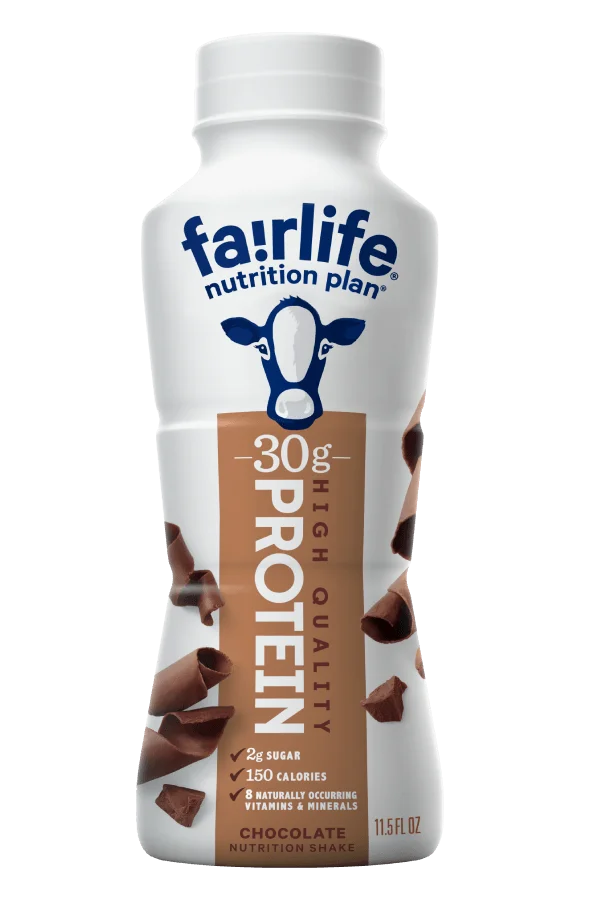 30g protein
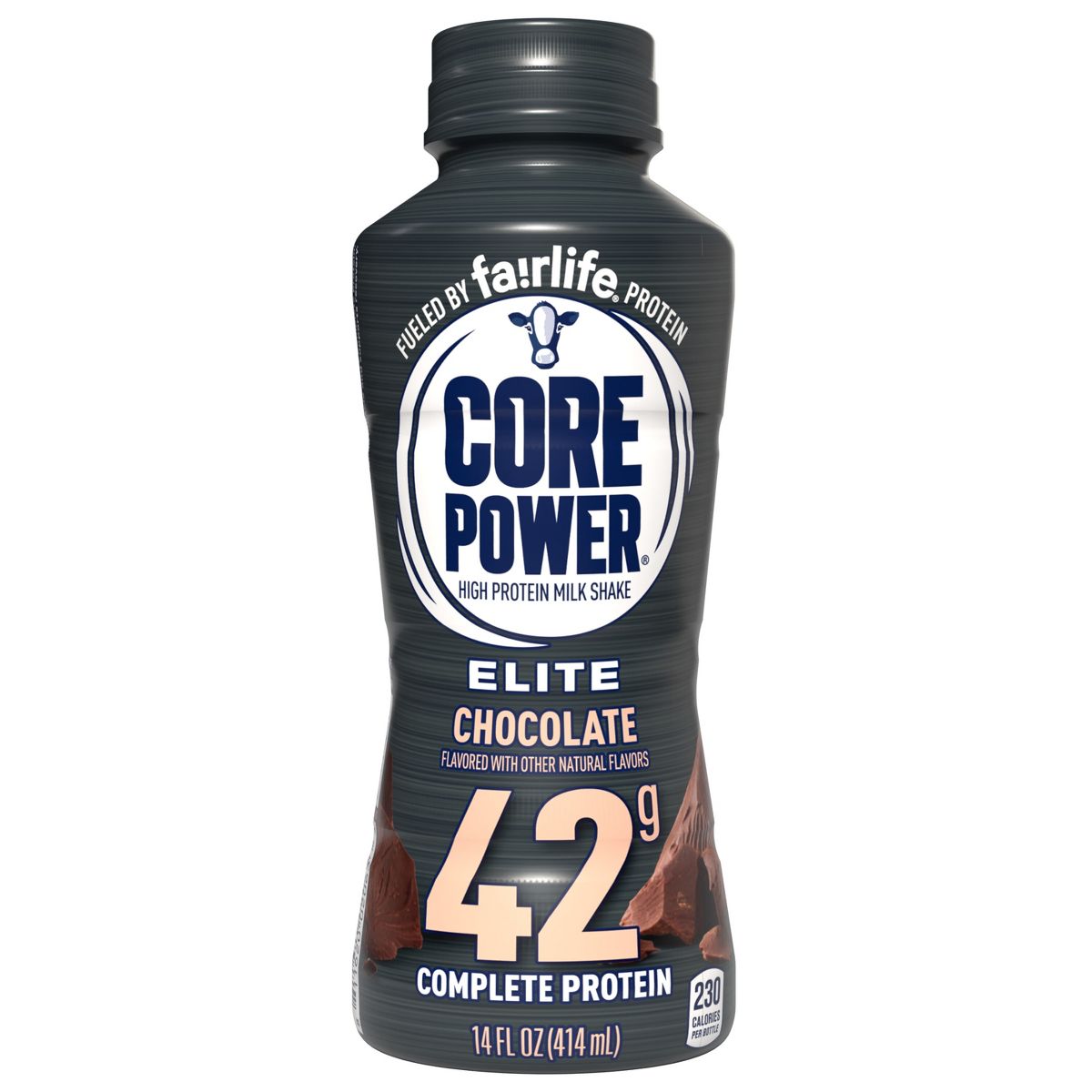 42g protein
Core Power Elite - Chocolate
Amazon returns policy · secure checkout
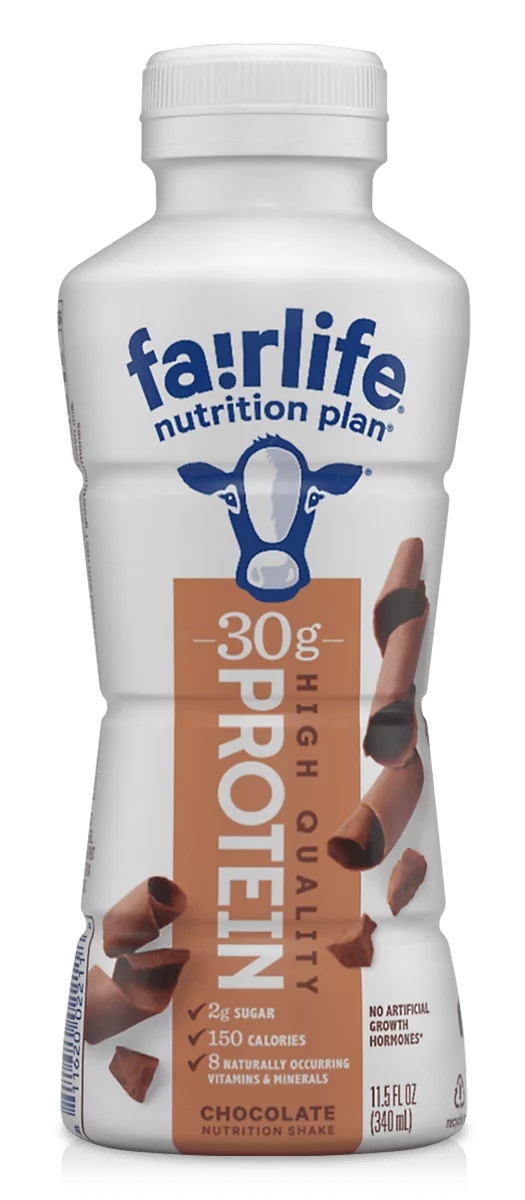 30g protein
Nutrition Plan Shake - Chocolate
Amazon returns policy · secure checkout
Quick Facts
Fairlife Whole Milk (8 fl oz / 240mL): 150 calories · 13g protein · 8g fat · 6g total carbs · 6g sugar · 0g lactose. 2% Milk: 120 cal · 13g protein · 4.5g fat. Fat-Free: 80 cal · 13g protein · 0g fat. All varieties: lactose-free, 25–30% more calcium than regular milk. Figures from Fairlife’s 2026 published label at fairlife.com.
Fairlife ultra-filtered milk has more protein per cup than any other mainstream dairy milk in the US — 13g of protein per 8 fl oz serving compared to 8g in regular whole milk, with zero lactose and about half the sugar. The higher protein comes from Fairlife’s cold ultrafiltration process, which concentrates the milk proteins while removing lactose and reducing natural sugars. All figures below are from Fairlife’s own 2026 published nutrition label at fairlife.com (checked September 2026); any figure not confirmed is shown as “—” rather than a guess.
Affiliate links — if you buy through them we earn a small commission at no extra cost to you. Nutrition figures from Fairlife’s 2026 published labels at fairlife.com.
Fairlife Milk Nutrition Facts: Full Label by Variety
All values are per 8 fl oz (240mL) serving, the standard serving size printed on the Fairlife label. Fairlife sells four main milk varieties at most US retailers in 2026.
| Nutrient | Whole (3.25%) | 2% Reduced Fat | Fat-Free | Chocolate 2% |
|---|---|---|---|---|
| Calories | 150 | 120 | 80 | 180 |
| Protein | 13g | 13g | 13g | 13g |
| Total Fat | 8g | 4.5g | 0g | 5g |
| Saturated Fat | 5g | 3g | 0g | 3g |
| Total Carbohydrates | 6g | 6g | 6g | 18g |
| Total Sugars | 6g | 6g | 6g | 17g |
| Added Sugars | 0g | 0g | 0g | 11g |
| Dietary Fiber | 0g | 0g | 0g | 0g |
| Cholesterol | 35mg | 20mg | 5mg | 20mg |
| Sodium | 115mg | 115mg | 115mg | 150mg |
| Calcium | 390mg (30% DV) | 390mg (30% DV) | 390mg (30% DV) | 390mg (30% DV) |
| Lactose | 0g | 0g | 0g | 0g |
| Protein per 100 cal | 8.7g | 10.8g | 16.3g | 7.2g |
Values from Fairlife’s 2026 published label at fairlife.com, per 8 fl oz serving. Chocolate variety adds 11g of sugar from cocoa and added cane sugar. All varieties are lactose-free (the filtration process removes lactose entirely). Vitamin D is added to the whole and 2% varieties but not fat-free.
Fairlife vs Regular Milk: Protein, Sugar, and Calories Side by Side
The clearest way to see what ultrafiltration does to dairy nutrition is a direct comparison. Regular whole milk figures are from USDA FoodData Central (FDC ID: 171265).
| Nutrient (per 8 fl oz) | Fairlife Whole | Regular Whole Milk | Fairlife 2% | Regular 2% Milk | Fairlife Fat-Free | Regular Skim Milk |
|---|---|---|---|---|---|---|
| Calories | 150 | 149 | 120 | 122 | 80 | 83 |
| Protein | 13g | 8g | 13g | 8g | 13g | 8g |
| Fat | 8g | 8g | 4.5g | 5g | 0g | 0g |
| Total Sugars | 6g | 12g | 6g | 12g | 6g | 12g |
| Lactose | 0g | ~12g | 0g | ~12g | 0g | ~12g |
| Calcium | 390mg | ~276mg | 390mg | ~293mg | 390mg | ~299mg |
Fairlife delivers 62% more protein per cup (13g vs 8g), 50% less sugar (6g vs 12g), and zero lactose compared to conventional dairy milk — at essentially the same calorie count for the whole-milk variety. The protein increase comes entirely from concentration, not from additives: Fairlife contains no protein isolate or powder, just more of the native milk proteins (whey and casein) per cup after filtration.
What is Fairlife Milk and How is it Made?
Fairlife uses a patented cold ultrafiltration process that separates whole milk into its component streams — water, fat, protein, lactose, vitamins, and minerals — then recombines them in different proportions. For the standard retail milk line, this means concentrating the protein and calcium, removing the lactose entirely, and reducing the natural milk sugars. The result is a milk that is compositionally very different from conventional milk even though it comes from the same cows on the same farms. Fairlife is owned by Coca-Cola and sources its milk from family farms in the US through a sustainability program called “Calder Dairy.” It is available at essentially every major US grocery, drug, and mass retailer.
Key technical details about the process:
- Lactose removal: Complete — lactase enzyme is not added (as in Lactaid), instead lactose is physically removed during filtration. Both methods produce lactose-free milk; Fairlife’s filtration approach also concentrates protein as a side effect.
- Sugar reduction: The 50% reduction in sugar is a direct result of removing most of the lactose (milk’s natural sugar). No sweetener is added back; the 6g of sugar per cup comes from trace remaining natural milk sugars.
- Protein increase: The protein concentration is a side effect of ultrafiltration, not an intentional additive. A cup of Fairlife milk contains the protein equivalent of roughly 1.6 cups of conventional milk.
- Ultra-pasteurized (UHT): Fairlife milk is ultra-pasteurized for longer shelf life. An unopened carton is shelf-stable for up to 90 days before opening, and refrigerates for up to 14 days once opened. Regular pasteurized milk lasts 5–7 days after opening.
Fairlife Milk Protein Sources
All protein in Fairlife milk is native dairy protein — a blend of whey (approximately 20%) and casein (approximately 80%), exactly as found in conventional cow’s milk, just in greater concentration per cup. Both are complete proteins containing all nine essential amino acids. Casein is slow-digesting (it forms a gel in the stomach and releases amino acids over several hours), making Fairlife milk a useful bedtime protein source for people trying to preserve muscle overnight. Whey is fast-digesting and is absorbed quickly for post-workout recovery. At 13g of protein per cup, a glass of Fairlife milk before bed provides as much casein protein as a dedicated casein protein supplement serving at a fraction of the cost — and with the micronutrients of a real food.
Who Should Drink Fairlife Milk?
Drink Fairlife if: you are lactose intolerant (100% lactose-free without the enzyme aftertaste of Lactaid); you want significantly more protein from everyday meals without eating more (swapping regular milk for Fairlife adds 5g of protein per cup with no change in calories for whole or 2%); you are managing blood sugar or following a low-carb diet and want dairy with lower natural sugar; you need a longer shelf-life milk for meal prep or infrequent grocery shopping (UHT stays fresh up to 90 days unopened); or you want more calcium per cup than conventional milk provides.
Skip Fairlife if: price is a concern — at $4.50–$5.50 per 52 oz bottle vs $3–$4 per half-gallon (64 oz) for conventional milk, Fairlife costs roughly 2.5× more per ounce; you want organic milk (Fairlife is not organic); or you prefer locally sourced or small-farm dairy products. Fairlife is not a functional food for athletes in the way that protein shakes are — 13g per cup is meaningful but still requires 3–4 cups to reach a 30–40g post-workout protein target. For that use case, a protein shake is more efficient. Fairlife milk is best understood as a nutritional upgrade to an everyday food you already consume, not a protein supplement.
Where to Buy Fairlife Milk and What to Pay
Fairlife is available at virtually every major US retailer in 2026:
- Walmart and Target: 52 oz bottles, typically $4.48–$5.49 depending on variety. Whole milk and chocolate variants are stocked more reliably than fat-free. Some Target locations stock the 32 oz “Extra Protein” DHA line.
- Costco: 3×52 oz multipacks, approximately $15–$17 per pack (≈$5.33–$5.67 per bottle). The best per-ounce value if you consume Fairlife regularly.
- Amazon: 6-pack of 52 oz bottles via Subscribe & Save, typically $34–$40 ($5.67–$6.67 per bottle). Convenient for regular users who do not have Costco access.
- Grocery stores (Kroger, Safeway, Publix, Whole Foods): 52 oz bottles, $4.99–$6.49 depending on chain and region. Whole Foods typically prices it at the higher end.
For regular Fairlife drinkers, Costco offers the best per-bottle price. Amazon Subscribe & Save is the next-best option for those without a warehouse membership. At a per-protein-gram cost of roughly $0.36/g (assuming $5/bottle, 13g protein per cup, 6.5 cups per bottle = 84.5g protein per bottle), Fairlife milk is significantly more expensive than protein shakes ($0.10–$0.15/g) but cheaper than most protein bars ($0.10–$0.20/g) and competitive with premium Greek yogurt when protein per serving is compared.
Frequently Asked Questions
How much protein does Fairlife milk have?
Fairlife milk contains 13g of protein per 8 fl oz (240mL) cup, across all fat varieties (whole, 2%, and fat-free). This is 62% more protein than conventional dairy milk, which provides 8g per cup. The chocolate variety also provides 13g of protein per cup, though with more total sugar (17g vs 6g in the white milk lines). All protein is native dairy protein — a blend of whey and casein — with no protein powder or isolate added.
Is Fairlife milk good for weight loss?
Fairlife fat-free milk (80 calories, 13g protein, 0g fat, 6g sugar per cup) is one of the best dairy options for a calorie deficit. At 16.3g of protein per 100 calories, it provides more protein density than almost any other mainstream dairy product. The zero-lactose formulation also reduces bloating for the approximately 68% of adults who have some level of lactose sensitivity. Swapping conventional skim milk for Fairlife fat-free adds 5g of protein per cup at the same calorie count — a meaningful nutritional upgrade with no increase in caloric cost.
Is Fairlife milk lactose-free?
Yes — all Fairlife milk varieties are completely lactose-free. Unlike Lactaid, which adds lactase enzyme to break down lactose after the fact, Fairlife physically removes the lactose through its ultrafiltration process. Both are effective for lactose intolerance; Fairlife’s method does not produce the slightly sweeter taste that lactase-treated milk sometimes has, and has the side benefit of concentrating protein and calcium per cup.
Is Fairlife milk real milk?
Yes — Fairlife is 100% cow’s milk that has been processed through ultrafiltration. It is not a dairy alternative, imitation milk, or blended product. The processing changes the ratio of components (more protein, less lactose, less sugar) but the milk itself comes from real cows. The FDA classifies it as “ultra-filtered milk” because the filtration process removes enough lactose that it no longer meets the standard of identity for regular milk in terms of carbohydrate content.
How does Fairlife milk compare to regular milk on calcium?
Fairlife provides 390mg of calcium per cup (30% of the Daily Value), compared to approximately 276–299mg in conventional dairy milk (21–23% DV). The calcium increase is a direct result of the same ultrafiltration concentration that increases protein — calcium is retained with the protein fraction. For people who drink milk primarily as a calcium source, Fairlife delivers meaningfully more per cup at comparable or lower calorie costs.
Bottom line: Fairlife ultra-filtered milk is the highest-protein conventional dairy milk available at mainstream US retail in 2026 — 13g of protein per cup compared to 8g in regular milk, with zero lactose, 50% less natural sugar, and more calcium, at essentially the same calorie count. The price premium (roughly 2.5× more per ounce than conventional milk) is the only meaningful drawback. For lactose-intolerant dairy drinkers, people trying to increase daily protein without eating more, and anyone on a low-sugar diet who still wants real milk, Fairlife is the straightforward upgrade. For the protein shake applications, see our Fairlife Core Power nutrition guide and our Fairlife Nutrition Plan nutrition facts for the high-protein RTD shake versions of the Fairlife lineup.
Shop our top protein drink picks
Editor-selected high-protein options related to this guide. As an Amazon Associate we may earn from qualifying purchases.
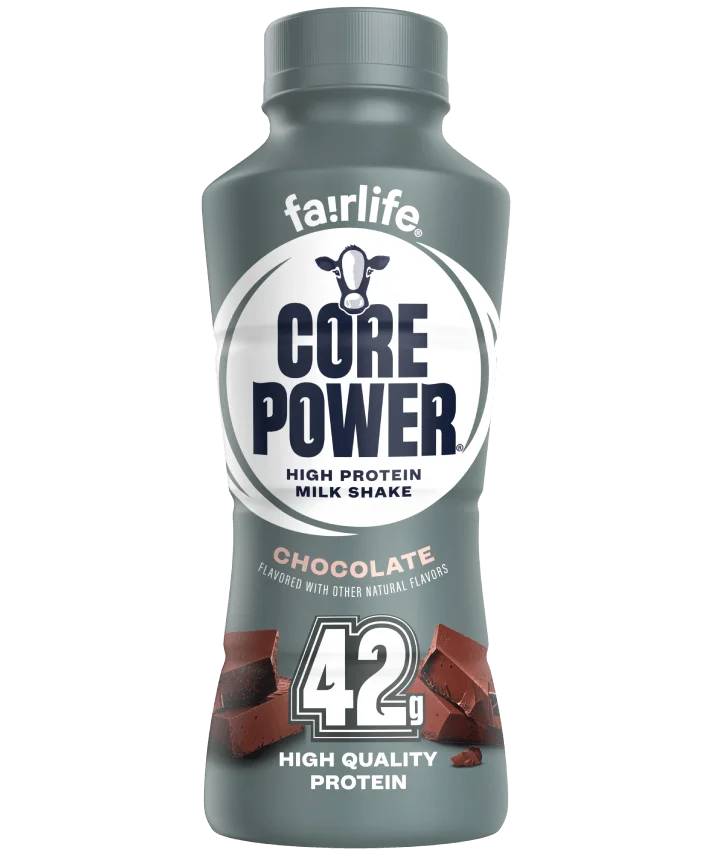 42g protein
Core Power Elite High Protein Shake
Amazon returns policy · secure checkout
30g protein42g proteinCore Power Elite - Chocolate
Amazon returns policy · secure checkout
Tags
High Protein Snacks Pro Editorial Team
Independently researched and editorially reviewed. We compare real nutrition labels and never accept payment for coverage.
Get the best new protein snacks in your inbox
Weekly picks and honest reviews — no spam, unsubscribe anytime.
More from the journal
Premier Protein vs Fairlife Nutrition Plan (2026): 30g Protein Shake Head-to-Head
Both Premier Protein and Fairlife Nutrition Plan deliver 30g of protein per 11.5 fl oz bottle at 0g of added sugar. Premier costs roughly $1.50–1.80 per bottle and is shelf-stable; Fairlife runs $2.25–2.75, needs refrigeration, has 10 fewer calories (150 vs 160), 60% DV calcium vs ~30%, and sources protein from ultra-filtered milk instead of isolates. Buy Premier for budget and convenience; buy Fairlife for protein source quality, calcium, and taste.
Read more
FAGE vs Chobani Greek Yogurt (2026): Protein, Price, and Which Brand Actually Wins
At their standard plain nonfat servings, FAGE Total 0% delivers 18g of protein at 90 calories (20g per 100 cal) while Chobani Nonfat Plain gives 14g at 80 calories. Both use just milk and live cultures — no additives, no thickeners. FAGE wins on protein density; Chobani wins on price (typically $0.30–$0.50 cheaper per cup) and availability. 2026 full comparison across all three fat levels, ingredients, texture, and who should buy which.
Read more
Ensure Max Protein Nutrition Facts (2026): 30g Protein, 150 Calories — Full Label Review
Ensure Max Protein shake (11 fl oz) delivers 30g of complete dairy protein at 150 calories, 1g of sugar, and 4g of fiber. Sweetened with sucralose and acesulfame potassium. Here is the complete 2026 nutrition label, ingredient breakdown, and honest comparison with Premier Protein and Fairlife Core Power.
Read more