Best Vegan Protein Bars 2026: 4 Plant-Based Picks Ranked by Protein, Ingredients, and Value
The best vegan protein bar in 2026 is No Cow — 20g of plant-based protein from a pea and brown rice blend at 190–200 calories per bar, with no dairy, no soy, and no sucralose or Ace-K. For certified organic with no sugar alcohols, ALOHA Organic delivers 14g of protein from sprouted brown rice and pea protein. Four vegan protein bars ranked by protein density, ingredient honesty, and real-world availability — every nutrition figure verified from each brand's 2026 label.
The short answer
Our top protein bar picks
Editor-selected and ready to buy. As an Amazon Associate we may earn from qualifying purchases.
Buy the products in this guide: Chunky Peanut Butter Protein Bar · Upgraded - Peanut Butter Cup Protein Bar · Chocolate Peanut Butter Cup Protein Bar
 20g protein
Upgraded - Birthday Cake Protein Bar
Amazon returns policy · secure checkout
20g protein20g proteinWhat are the best vegan protein bars?
Best overall (highest protein, soy-free): No Cow — 20g plant protein, 190–200 cal, no sucralose or Ace-K, ~$2.75–$3.30/bar. Best certified organic, no sugar alcohols: ALOHA Organic — 14g protein, 230–240 cal, USDA Organic, gluten-free, ~$2.80–$3.30/bar. Best for broad availability (soy-based): Clif Builder’s — 20g soy protein, 270–290 cal, real sugar only, available at every major retailer, ~$1.30–$1.75/bar. Best budget organic, lowest calorie: Orgain Organic — 10g protein, 150 cal, USDA Organic, no sugar alcohols, ~$1.90–$2.40/bar.
Affiliate links — if you buy through them we earn a small commission at no extra cost to you. Every nutrition figure below comes from each brand’s own published 2026 label; anything we could not confirm is marked with an em dash rather than a guess.
What Makes a Protein Bar Truly Vegan?
Most mainstream protein bars are not vegan. The common disqualifiers:
- Dairy: whey protein isolate, milk protein isolate, casein, and lactose appear in Quest, DAVID Gold, Barebells, ONE Bar, think! High Protein, Built Puff, and Kirkland Signature. All are off-limits for vegans.
- Eggs: egg whites are the protein source in RXBAR, which is otherwise a minimal-ingredient bar — but egg whites are an animal product.
- Honey: some bars and certain RXBAR flavors use honey as a binder or sweetener. Vegans avoid honey as an animal byproduct.
- Gelatin: used in some bar coatings and as a binding agent. Derived from animal collagen.
“Plant-based” is a looser term than “vegan” — plant-based bars sometimes contain eggs or honey alongside plant ingredients. If you are shopping for vegan compliance, check the label for “certified vegan” or verify the ingredient list directly rather than relying solely on “plant-based” front-of-pack claims. The four bars on this list are all made without dairy, eggs, honey, or gelatin.
How Much Protein Do Vegan Protein Bars Have — and Does the Source Matter?
Vegan protein bars range from 10g to 20g of protein per bar in mainstream retail. The top end — No Cow and Clif Builder’s at 20g — matches what most dairy-based protein bars deliver.
The protein source matters because plant proteins have a different amino acid profile from whey:
- Pea protein alone is lower in methionine, one of the essential amino acids. Most bars compensate by pairing pea with rice protein, which is higher in methionine. The pea + brown rice combination together covers all nine essential amino acids at adequate levels.
- Soy protein isolate (used by Clif Builder’s) is a naturally complete plant protein containing all essential amino acids, including adequate methionine and leucine. In amino acid quality, soy protein isolate is the plant protein closest to whey.
- Leucine and muscle-protein synthesis: pea + rice protein provides about 7–8% of its weight as leucine versus 10–11% for whey isolate. A 20g No Cow bar delivers roughly 1.5–1.6g of leucine — close to but slightly below the typical 2g minimum threshold for maximizing muscle-protein synthesis. Pairing it with any additional protein source easily clears the threshold. For general fitness use, the difference is small enough to ignore in daily practice.
For the full evidence-based comparison, see our whey vs. plant-based protein bars recovery guide.
#1 Best Overall — No Cow Protein Bar
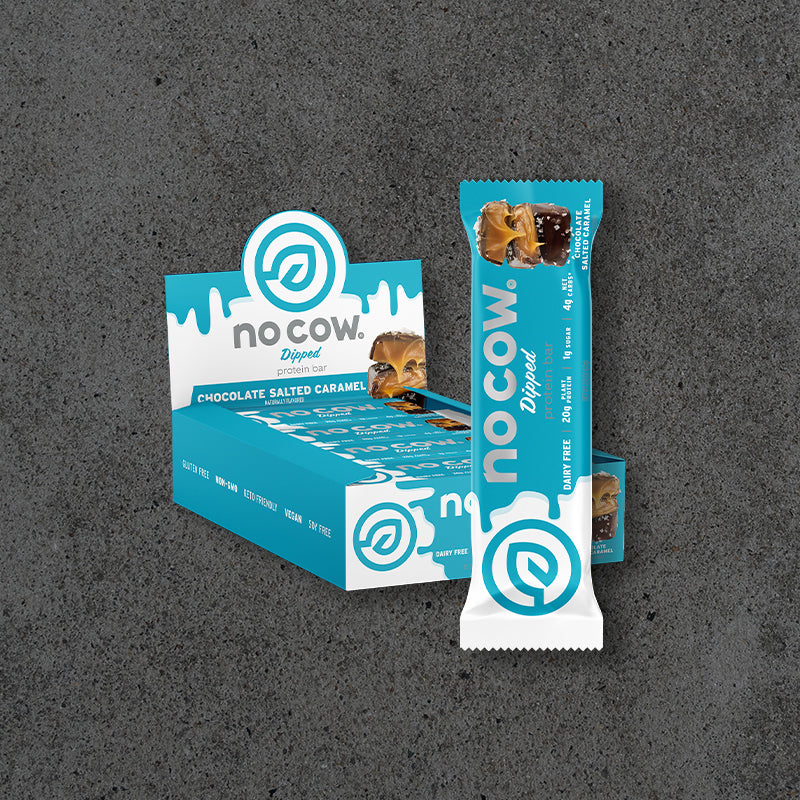
No Cow Chocolate Salted Caramel Protein Bar (60g)
20g plant protein · 200 cal · 3g sugar · 7g fiber · pea + brown rice protein · allulose + monk fruit + stevia · dairy-free · soy-free · gluten-free
Check price on Amazon →No Cow leads the vegan protein bar category on protein density: 20g of plant-based protein from a pea and brown rice blend at 200 calories (Chocolate Salted Caramel), with just 3g of sugar, 7g of fiber, and a sweetener slate of allulose, monk fruit, and stevia — no sucralose, no maltitol, no Ace-K. It is dairy-free, soy-free, and gluten-free, making it the protein bar most broadly usable across vegan, dairy-free, and soy-free dietary constraints. Other flavors run slightly lighter at 190 calories and 1g of sugar; all share the 20g protein count. Full per-flavor breakdown in our No Cow protein bar nutrition guide.
Why it’s the top pick: no other mainstream vegan bar without soy delivers 20g of protein per bar at under 200 calories. Quest delivers the same protein from whey; No Cow is the vegan equivalent on protein density. At 10.0g of protein per 100 calories, No Cow sits in the same efficiency range as ONE Bar and Pure Protein on a pure macro comparison — while being fully vegan and soy-free.
The honest catches: at $2.75–$3.30 per bar, No Cow is priced with premium dairy bars. Allulose can leave a mild cooling aftertaste in some flavors. The chicory root fiber in certain flavors can cause GI discomfort in buyers sensitive to inulin-type fibers; start with half a bar if you are new to the brand. No Cow is primarily available through Amazon, natural grocery stores (Whole Foods, Sprouts), and nocow.com — not consistently at Walmart or most drug stores.
#2 Best Certified Organic — ALOHA Organic Protein Bar

ALOHA Chocolate Cherry Organic Plant-Based Protein Bar (60g)
14g plant protein · 230 cal · 5g sugar · 10g fiber · sprouted brown rice + pea protein · organic tapioca syrup + dates (no sugar alcohols) · USDA Organic · vegan · gluten-free
Check price on Amazon →ALOHA fills the specific gap of certified-organic vegan protein bar with zero sugar alcohols. The Chocolate Cherry flavor delivers 14g of plant-based protein from a sprouted brown rice and pea protein blend at 230 calories, with 5g of sugar from organic tapioca syrup and dates, 10g of fiber, and no erythritol, maltitol, or sucralose. Certified USDA Organic, certified vegan, gluten-free, soy-free, and non-GMO Project Verified. The Peanut Butter Chocolate Chip flavor uses organic brown rice and pumpkin seed protein (rather than pea protein), running 240 calories and 5g of added sugar — similar macros, different protein source.
Why it’s the organic pick: ALOHA stands out because most bars delivering 14+ grams of protein use erythritol, maltitol, sucralose, or stevia to hit low sugar numbers. ALOHA achieves 5g of sugar from whole-food sources (dates, coconut sugar, organic tapioca) without any sugar alcohol. The 10g of dietary fiber is the highest in this comparison and adds a meaningful satiety advantage. If certified organic, no sugar alcohols, and no artificial anything matter most to you, ALOHA is the only mainstream bar that delivers all three at meaningful protein levels.
The honest catches: at 14g of protein per bar, ALOHA delivers 6g less than No Cow or Clif Builder’s for roughly the same price ($2.80–$3.30/bar). If maximizing protein per bar is the primary goal, No Cow is the stronger pick. The 5g of sugar from dates and tapioca has a real glycemic impact even though it comes from natural sources — ALOHA is not a sugar-free bar.
#3 Best for Broad Availability — Clif Builder’s Protein Bar

Clif Builder’s Protein Bar (Chocolate, 68g)
20g protein · 270–290 cal · 17g sugar (organic cane sugar + brown rice syrup) · 3g fiber · soy protein isolate blend · no artificial sweeteners · vegan
Check price on Amazon →Clif Builder’s is the most widely available vegan protein bar in America — sold at Walmart, Target, Kroger, CVS, Walgreens, Costco (18-count variety packs), and virtually every grocery chain. The 68g bar delivers 20g of protein from a soy protein isolate blend at 270–290 calories, sweetened with 17g of organic cane sugar and organic brown rice syrup — real sugar, no artificial sweeteners, no sugar alcohols. Soy protein isolate is a complete plant protein with all essential amino acids and a leucine content higher than pea+rice, making it nutritionally the closest plant protein to whey. Full details in our Clif Builder’s nutrition guide.
Why it’s the availability pick: No Cow is a better bar on paper — lower calories, comparable protein, better sweetener profile — but it is not sold everywhere. Clif Builder’s is the vegan 20g protein bar you can buy at the airport, the gas station, or Costco in an 18-count box at roughly $1.30–$1.55 per bar. For vegans who travel, commute, or cannot shop at natural grocery stores, availability is the real decision factor — and Clif Builder’s wins on that without question.
The honest catches: at 17g of sugar per bar, Clif Builder’s has the highest sugar content on this list by a wide margin — more than three times the sugar of No Cow. The 270–290 calories per bar is the highest here; if calorie control matters, this bar requires fitting into your day rather than simply adding to it. Clif Builder’s is soy-based, which rules it out for anyone with a soy allergy or preference to avoid soy.
#4 Best Budget Organic — Orgain Organic Protein Bar
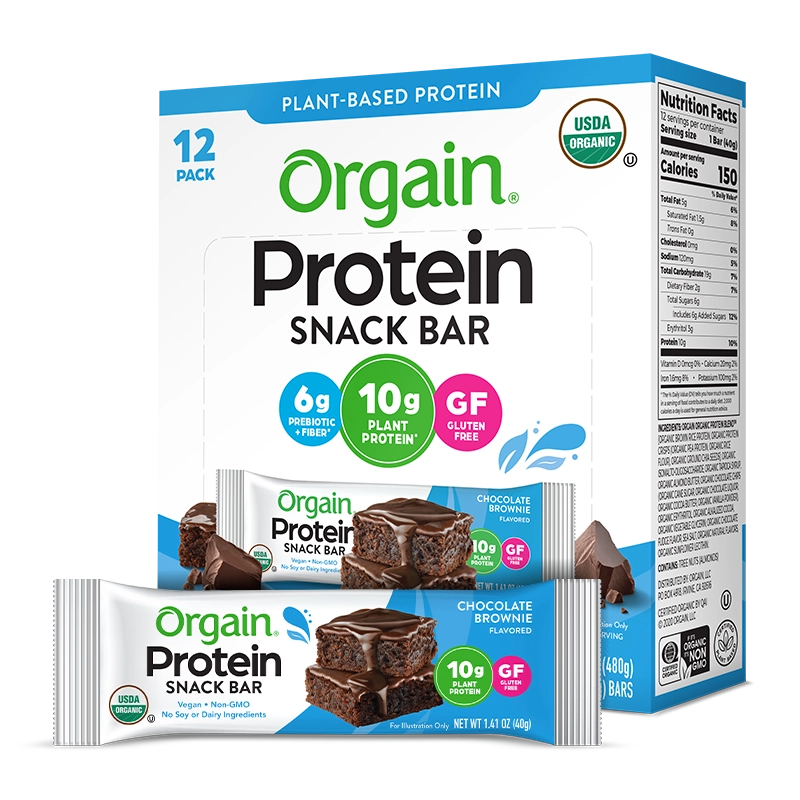
Orgain Organic Chocolate Brownie Protein Bar (60g)
10g plant protein · 150 cal · 10g sugar (organic cane sugar) · 6g fiber · pea + brown rice + chia blend · organic cane sugar + monk fruit · USDA Organic · vegan
Check price on Amazon →Orgain Organic Protein Bar is the lowest-calorie certified-organic option on this list: 10g of plant-based protein from a pea, brown rice, and chia seed blend at 150 calories, with zero sugar alcohols, no artificial sweeteners, and USDA Organic certification. The sweetener is organic cane sugar and monk fruit extract — no erythritol, no maltitol, no sucralose. At 10g of protein per bar, Orgain sits in the protein-enriched snack bar category rather than the high-protein bar category — it works as a between-meal snack, not as a standalone post-workout protein hit. At $1.90–$2.40 per bar in a 12-count Amazon box, it is the most affordable option on this list.
Why it’s the budget organic pick: for vegans who want USDA Certified Organic on the label, zero sugar alcohols, and a bar under 200 calories, Orgain is the most accessible and affordable option. A 12-count Orgain box on Amazon regularly runs $21–$25 with coupon ($1.90–$2.08 per bar) — meaningfully lower than ALOHA or No Cow at comparable calorie counts. If you want organic certification, no sugar alcohols, and sub-200-calorie bars on a budget, Orgain fills that space cleanly.
The honest catches: 10g of protein per bar is less than half what No Cow or Clif Builder’s deliver. If you need 20g of protein per snack for workout recovery, two Orgain bars (20g protein, 300 calories, 20g sugar) is a worse proposition than one No Cow bar (20g protein, 200 calories, 3g sugar). The 10g of organic cane sugar per bar is the highest sugar density on this list. Check your specific Orgain label if avoiding soy, as some flavors contain soy.
Vegan Protein Bars: Side-by-Side Comparison
| Bar (serving) | Protein | Calories | Sugar | Fiber | Soy-free? | Organic? | ~Price/bar |
|---|---|---|---|---|---|---|---|
| No Cow Chocolate Salted Caramel (60g) | 20g | 200 | 3g | 7g | Yes | No | $2.75–$3.30 |
| Clif Builder’s Chocolate (68g) | 20g | 270–290 | 17g | 3g | No (soy) | No | $1.30–$1.75 |
| ALOHA Chocolate Cherry (60g) | 14g | 230 | 5g | 10g | Yes | Yes | $2.80–$3.30 |
| GoMacro MacroBar (~65g) | ≈11g | ≈290 | ≈12g | ≈4g | Yes | Yes | $2.00–$2.75 |
| Orgain Organic Chocolate Brownie (60g) | 10g | 150 | 10g | 6g | Check label | Yes | $1.90–$2.40 |
GoMacro MacroBar figures are approximate averages across flavors; exact specs vary by flavor. Clif Builder’s per-bar price reflects the Costco 18-count pack (~$1.30–$1.55/bar) and retail single-bar pricing (~$1.50–$1.75). All prices reflect typical August 2026 Amazon pricing before coupons or Subscribe & Save discounts. All five bars are made without dairy, eggs, honey, or gelatin.
Where to Buy Vegan Protein Bars
- No Cow: Amazon (best selection — search “No Cow Protein Bar” for the full flavor lineup), nocow.com, Whole Foods, Sprouts, Natural Grocers, and select Target locations. Not consistently at Walmart or most drug stores.
- ALOHA Organic: Target (strong availability, both Peanut Butter Chocolate Chip and Chocolate Cherry), Whole Foods, Amazon, and aloha.com. Also carried at select Costco warehouses in variety packs.
- Clif Builder’s: everywhere — Walmart, Target, Kroger, Safeway, CVS, Walgreens, gas stations, Costco (18-count variety packs at $23–$28), and Amazon. The Costco 18-count is the lowest per-bar cost for a 20g vegan bar anywhere in retail.
- Orgain Organic: Amazon (12-count boxes, best price with coupon), Costco (bulk packaging), Target, Whole Foods, and most natural grocery stores.
- GoMacro MacroBar: Whole Foods (most consistent stock), natural grocery stores nationwide, Amazon, Target (select locations), and gomacro.com.
Affiliate links — if you buy through our links we earn a small commission at no extra cost to you. Prices verified August 2026 and subject to change with retailer promotions.
Are Vegan Protein Bars as Effective as Whey Bars for Building Muscle?
Yes, with one nuance about protein quality. The research shows pea protein and soy protein can support muscle-protein synthesis comparably to whey when total daily protein intake is equated. A 2019 study in the Journal of the International Society of Sports Nutrition found pea protein produced equivalent gains in muscle thickness to whey in a resistance training program. The practical difference between a 20g pea+rice bar and a 20g whey bar is modest for general fitness goals.
The nuance: pea + rice protein has a lower leucine content per gram than whey (≈7–8% vs. ≈10–11%). A 20g No Cow bar delivers roughly 1.5–1.6g of leucine, slightly below the typical 2g threshold for maximal muscle-protein synthesis. Eating any additional protein source alongside the bar — a handful of edamame, a glass of plant-based milk, or extra dinner protein — easily clears the threshold. Clif Builder’s at 20g of soy protein sits closer to the threshold given soy’s better leucine profile (~7.8% leucine). For competitive bodybuilders maximizing hypertrophy, whey has a verified per-gram edge. For everyone else, consistent daily protein intake from quality sources matters far more than the per-meal leucine differential.
Frequently Asked Questions
What is the best vegan protein bar?
The best vegan protein bar in 2026 is No Cow — 20g of plant-based protein from a pea and brown rice blend at 190–200 calories, with no dairy, no soy, and a clean sweetener profile (allulose, monk fruit, stevia). For certified-organic bars with no sugar alcohols, ALOHA Organic at 14g of protein is the top pick. For the widest availability at the lowest cost, Clif Builder’s at 20g of soy protein is the practical choice available at every major American retailer.
Are Clif Builder’s protein bars vegan?
Yes. Clif Builder’s bars are made with soy protein isolate and contain no dairy, eggs, honey, or gelatin. CLIF Bar & Company markets them as vegan. They may be produced on equipment shared with dairy-containing products depending on the facility — buyers with severe dairy allergies (rather than vegan ethics) should verify the current label. All Clif Builder’s chocolate and peanut butter flavors are free of animal-derived ingredients in their formulas.
Is No Cow protein bar soy-free?
Yes. No Cow protein bars use pea protein and brown rice protein as their protein sources — no soy of any kind. They are also dairy-free and gluten-free, making them one of the few 20g-protein bars suitable for people who must avoid soy, dairy, and gluten simultaneously. Verify the current label if you have a severe allergy, as formulations can change.
Do vegan protein bars have complete protein?
The pea + brown rice combination used by No Cow and ALOHA together cover all nine essential amino acids at adequate ratios, making the combination nutritionally complete for practical purposes. Soy protein isolate (used by Clif Builder’s) is a naturally complete plant protein containing all essential amino acids at sufficient levels on its own. The leucine content per gram is lower than whey, meaning a slightly higher intake may be needed to maximize muscle-protein synthesis, but both pea+rice and soy qualify as complete protein sources for everyday fitness use.
What vegan protein bars are at Whole Foods?
Whole Foods consistently stocks No Cow, ALOHA Organic, GoMacro MacroBar, and Orgain Organic bars. ALOHA is one of the most reliably and widely stocked brands at Whole Foods locations across the US. Clif Builder’s may be available at some Whole Foods locations but is more consistently found at conventional grocery stores, Target, Walmart, and Costco.
Bottom Line
For maximum plant-based protein without soy, No Cow is the best vegan protein bar in 2026 — 20g of pea+rice protein at 190–200 calories, no dairy, no soy, no sucralose, no Ace-K. For certified organic with zero sugar alcohols, ALOHA delivers 14g of clean plant protein with a minimal-ingredient sweetener slate. For the cheapest and most widely available 20g vegan protein bar in America, Clif Builder’s is the practical choice — real sugar sweetened, broadly stocked, and available in Costco 18-count packs at roughly $1.30–$1.55 per bar. For the lowest-calorie certified-organic option on a budget, Orgain Organic at 10g protein and 150 calories fills the gap cleanly.
The broader takeaway: vegan protein bars have improved substantially. No Cow’s 20g of plant protein matches what most dairy-based bars deliver, with a sweetener profile that betters many of them. The gap between the best vegan bars and the best whey bars is narrower than it was three years ago — and for everyday protein supplementation, it barely matters at all. For the full category of vegan snacks beyond bars, see our best vegan protein snacks guide.
Shop our top protein bar picks
Editor-selected high-protein options related to this guide. As an Amazon Associate we may earn from qualifying purchases.
Buy the products in this guide: Chunky Peanut Butter Protein Bar · Upgraded - Peanut Butter Cup Protein Bar · Chocolate Peanut Butter Cup Protein Bar
20g proteinUpgraded - Birthday Cake Protein Bar
Amazon returns policy · secure checkout
20g protein20g proteinTags
High Protein Snacks Pro Editorial Team
Independently researched and editorially reviewed. We compare real nutrition labels and never accept payment for coverage.
Get the best new protein snacks in your inbox
Weekly picks and honest reviews — no spam, unsubscribe anytime.
More from the journal
Best Chocolate Protein Bars 2026: 10 Top Picks Ranked by Protein, Sugar, and Real Cocoa Flavor
The best chocolate protein bar in 2026 is DAVID Chocolate Chip Cookie Dough — 28g of protein for 150 calories and 0g sugar, the highest protein-per-calorie ratio in the mainstream chocolate lineup. For a candy-bar experience, Barebells Chocolate Dough delivers 20g protein and 1g sugar in a real-chocolate coating. For satiety, Quest Chocolate Chip Cookie Dough wins with 21g protein and 14g fiber. Ten verified chocolate-flavored picks — from whey isolate to vegan pea to whole-food date bars — ranked on protein density, sweetener honesty, and real cocoa content, with tracked buy buttons and the honest catches for each.
Read more
ALOHA vs GoMacro vs TruBar (2026): Which Plant-Based Protein Bar Wins on Protein, Sugar and Price?
ALOHA has the most protein of the three standard bars: 14g in every flavor, for 220 to 260 calories and 3g to 4g of added sugar. TruBar is the lightest at 190 calories with 12g of protein and up to 14g of fiber, and TruBar PRO tops everything at 18g. GoMacro trails at 11g to 12g for 260 to 290 calories, but it is the only one without added fiber. Fourteen bars compared flavor by flavor on each brand’s own September 2026 labels.
Read more
Best Organic Protein Bars (2026): 5 USDA-Certified Picks Ranked by Protein, Ingredient Quality, and Real Sugar Content
The best organic protein bar in 2026 is ALOHA Chocolate Chip Cookie Dough — 14g of complete plant protein at 240 calories with just 5g total sugar, USDA Organic certified, 10g of fiber, and one of the cleanest labels in the certified-organic category. For the shortest ingredient list on any organic bar in retail, Skout Organic Peanut Butter runs on three whole-food ingredients (dates, peanut flour, peanut butter) with zero added sugar. Five USDA Organic picks ranked by protein density, ingredient quality, and honest sugar content — every number verified from each brand's own published 2026 label.
Read more