Best Protein Powder for Seniors (2026): 5 Picks Ranked by Published Leucine Per Serving
The best protein powder for seniors is Optimum Nutrition Gold Standard 100% Whey, Vanilla Ice Cream — 2.64g of leucine per 29.4g serving, inside the 2.5 to 2.8g of leucine per meal the PROT-AGE expert group says an older adult needs to switch muscle-building on. Leucine is the amino acid that flips that switch, and after about 65 it takes more of it than it used to. Here is the problem: of the five powders in this guide, only two publish a leucine number at all. This guide ranks on the figure each brand actually prints, shows a dash where no figure exists, and explains what to do about the three that stay quiet.
Our top protein powder picks
Editor-selected and ready to buy. As an Amazon Associate we may earn from qualifying purchases.
 25g protein
ISO100 Hydrolyzed Protein - Chocolate
Amazon returns policy · secure checkout
 22g protein
 25g protein
Protein Powder - Vanilla Milkshake
Amazon returns policy · secure checkout
Almost every “best protein powder for seniors” list ranks on grams of protein. Grams of protein is the wrong number. After about 65, muscle stops responding to a dose of protein the way it did at 35 — the same shake that builds muscle in a young body produces a weaker response in an older one. What restores that response is not simply more protein. It is enough of one particular amino acid, leucine, arriving in a single sitting.
The expert consensus puts a number on it. The PROT-AGE Study Group, convened by the European Union Geriatric Medicine Society, states that “the per-meal anabolic threshold of dietary protein/amino acid intake is higher in older individuals (ie, 25 to 30 g protein per meal, containing about 2.5 to 2.8 g leucine) in comparison with young adults” (Bauer et al., Journal of the American Medical Directors Association, 2013;14(8):542–559). “Anabolic” simply means muscle-building; the threshold is the dose below which a meal does not properly switch muscle growth on.
So this guide ranks on the leucine figure each brand actually prints, not on the protein number on the front of the tub. Where a brand does not publish leucine, the table shows a dash rather than an estimate — and a brand staying quiet about its leucine is itself useful information when the whole point of the purchase is holding on to muscle.
Affiliate links — if you buy through them we earn a small commission at no extra cost to you. No brand paid for placement, no brand was given a say in the ranking, and every number below was read from a published Nutrition or Supplement Facts panel, a brand’s own amino acid disclosure, or the National Institutes of Health Dietary Supplement Label Database.
Protein Powder for Seniors: Every Number Side by Side
All figures are per labeled serving, as published by the brand or recorded on the product’s registered label. “Leucine” is the amount the brand itself discloses; a dash means no figure is published for that product.
| Product | Protein | Calories | Published leucine | Protein source | Serving | Clears 2.5g leucine? |
|---|---|---|---|---|---|---|
| Optimum Nutrition Gold Standard 100% Whey, Vanilla Ice Cream | 24g | 120 | 2.64g | Whey blend | 29.4g (1 scoop) | Yes |
| Dymatize ISO100, Gourmet Vanilla | 25g | 110 | 2.6g | Hydrolyzed whey isolate | 30g (1 scoop) | Yes |
| Premier Protein 100% Whey, Vanilla Milkshake | 30g | 150 | — | Whey isolate + concentrate | 39g (2 scoops) | Not published |
| Isopure Zero Carb Whey Isolate, Unflavored | 25g | 100 | — | Whey protein isolate | 29g (1 scoop) | Not published |
| Orgain Organic Vegan Protein, Creamy Chocolate Fudge | 21g | 150 | — | Pea, brown rice, chia (plant) | 2 scoops | Not published |
Sources, product by product: Optimum Nutrition’s own published amino acid profile for Gold Standard 100% Whey; the Dymatize ISO100 Gourmet Vanilla product page; the Premier Protein Vanilla Milkshake powder nutrition panel; the NIH Dietary Supplement Label Database entry for Isopure Whey Protein Isolate Unflavored; and the Orgain Creamy Chocolate Fudge retailer listing panel, checked October 24, 2026. Prices move daily and are not quoted here — each button shows what Amazon is charging right now.
Why leucine, and not grams of protein, is the number that matters after 65
Leucine is one of the nine essential amino acids, and it does a job the others do not: it acts as the signal that tells muscle tissue to start building. Below a certain amount of leucine in one sitting, the signal is too weak to fire properly, and the protein in that meal is largely used for fuel instead of repair.
That threshold rises with age. PROT-AGE puts the older-adult figure at about 2.5 to 2.8g of leucine inside a 25 to 30g dose of protein, where a younger adult gets the same effect from less. This is why spreading a modest protein intake thinly across the day — a little toast at breakfast, soup at lunch — can leave an older person technically “meeting” a daily protein target while never once crossing the threshold that actually triggers muscle growth. One shake that clears 2.5g of leucine does more than three small servings that each fall short.
It is also why the leucine figure separates these five powders in a way the protein figure does not. Premier Protein puts the largest protein dose in a single serving (30g) and does not print a leucine number. Optimum Nutrition puts 24g of protein in a serving and tells you exactly how much of it is leucine. For this particular job, the second disclosure is worth more than the extra 6g.
The 5 Best Protein Powders for Seniors, Ranked by Published Leucine
#1 Optimum Nutrition Gold Standard 100% Whey, Vanilla Ice Cream — the highest published leucine, and the easiest to keep buying
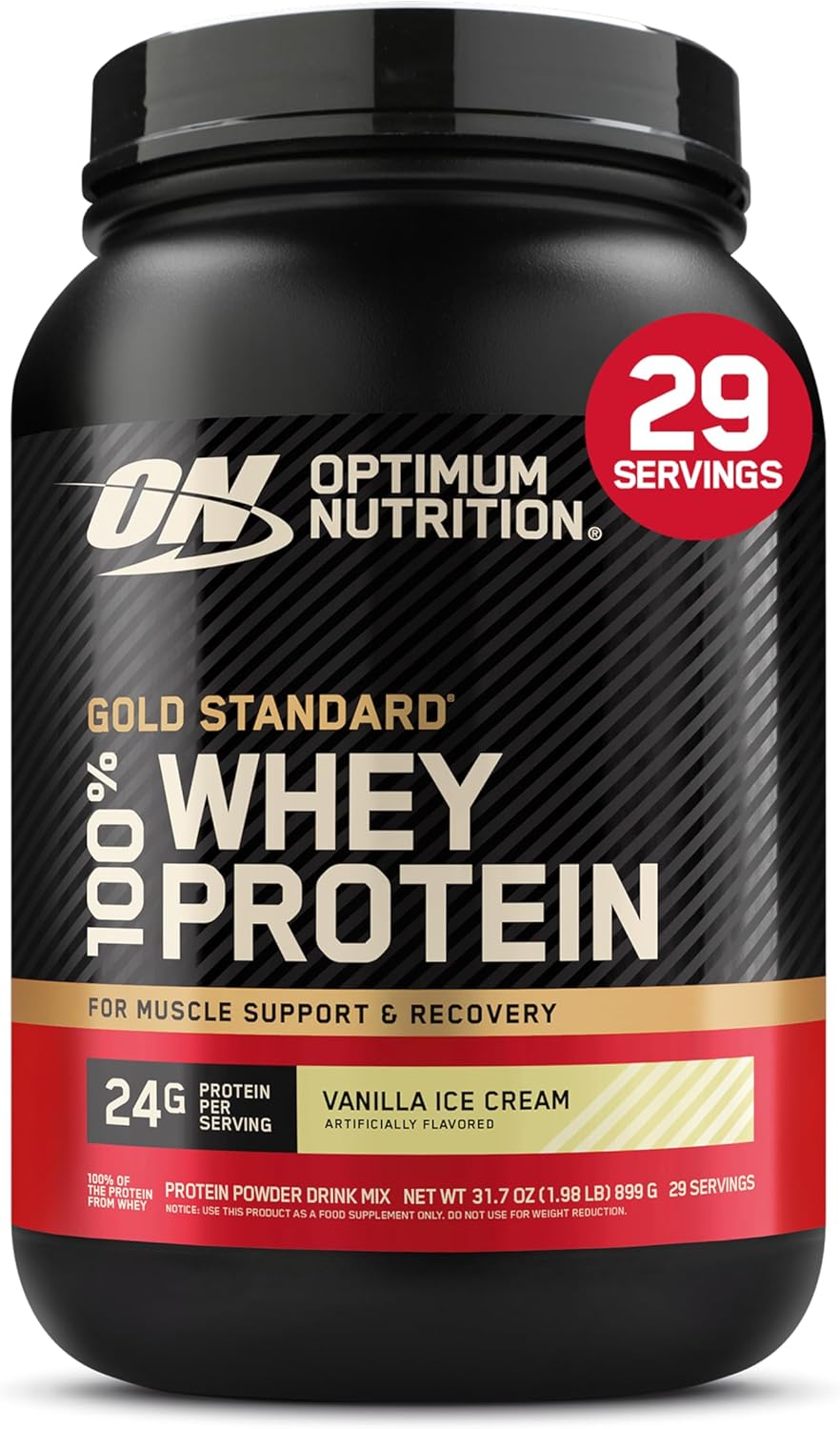
Optimum Nutrition Gold Standard 100% Whey, Vanilla Ice Cream, 2 lb
24g protein · 120 cal · 2.64g leucine per 29.4g serving · whey blend · vanilla · sold in tubs from 1 lb upward
Check price on Amazon →Why it wins: Optimum Nutrition publishes the full amino acid breakdown for this powder, and the leucine line reads 2.64g per 29.4g serving. That is the single highest published leucine figure of any powder in this guide, and it lands inside the 2.5 to 2.8g window PROT-AGE names. You are not estimating, not trusting a “5.5g BCAAs” blend claim, and not taking a marketing promise on faith — the number is printed by the manufacturer. The rest of the essential amino acid profile is published alongside it: 2.38g lysine, 1.75g threonine, 1.68g isoleucine, 0.56g tryptophan.
The practical case is just as strong. This is the most widely stocked protein powder in America, which matters more than it sounds when the tub needs reordering every few weeks for years. Vanilla Ice Cream mixes into water, milk, coffee or oatmeal without fighting what is already in there, and one scoop is a manageable amount of powder to stir — a real consideration if grip strength or shoulders are not what they were.
The honest limitation: Gold Standard is a whey blend, not a pure isolate, so it carries slightly more lactose than the ISO100 below it. If dairy sits badly with you, take the next pick instead. Our full Gold Standard whey nutrition breakdown has the complete panel.
#2 Dymatize ISO100, Gourmet Vanilla — practically the same leucine, far less lactose

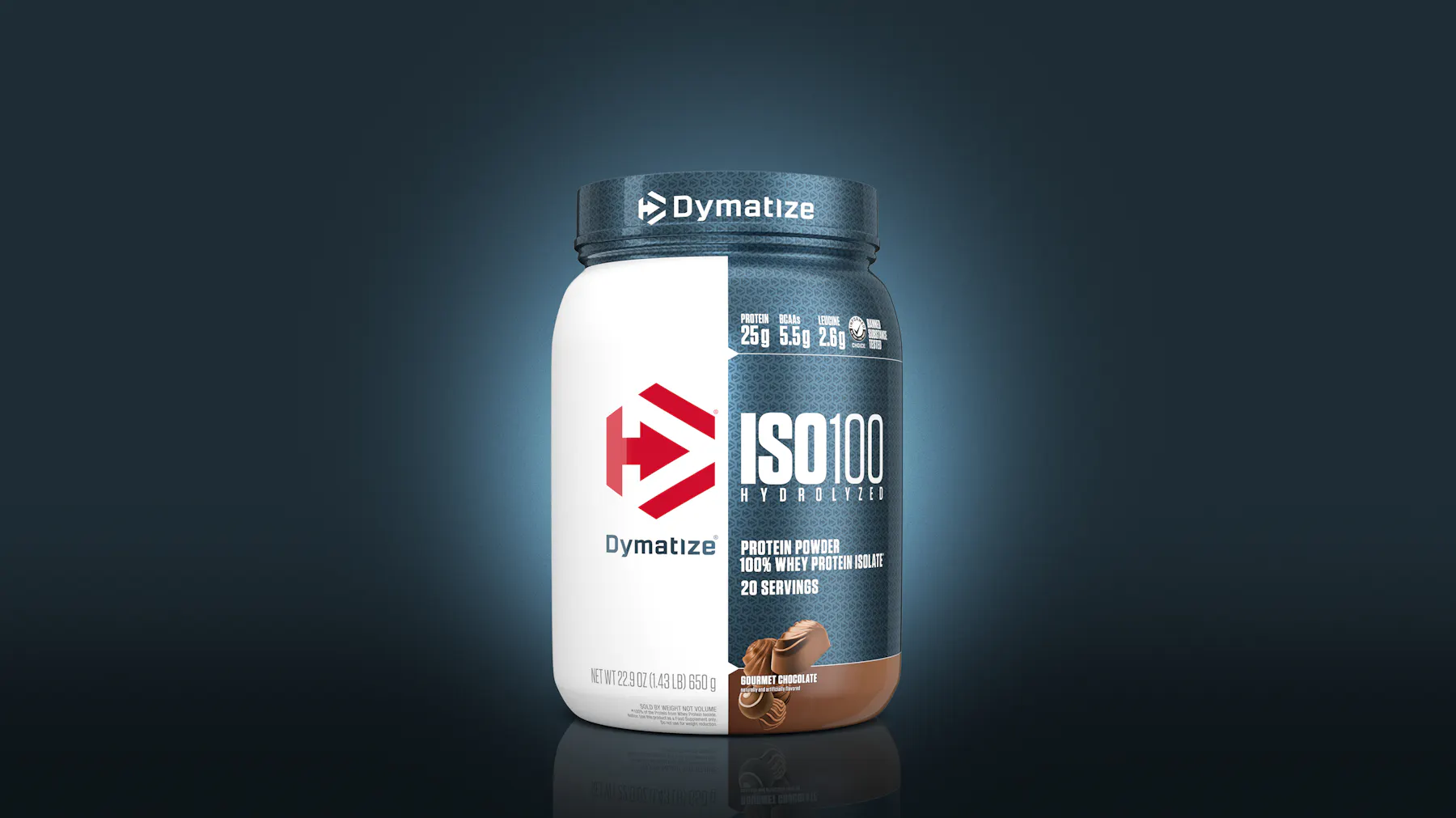
Dymatize ISO100 Hydrolyzed Whey Protein Isolate, Gourmet Vanilla
25g protein · 110 cal · 2.6g leucine · 5.5g BCAAs · 2g carbs · 1g sugar · hydrolyzed whey isolate · 30g scoop
Check price on Amazon →Dymatize publishes 2.6g of leucine and 5.5g of total branched-chain amino acids per 30g scoop on the ISO100 product page — four hundredths of a gram behind the Gold Standard, which is a rounding difference, not a meaningful one. It clears the threshold.
Why it is the better buy for a lot of older adults: ISO100 is a hydrolyzed whey isolate. “Isolate” means the milk sugar and most of the fat have been filtered out; “hydrolyzed” means the protein has been partly broken down before it reaches you. The result is a shake that sits lighter and carries very little lactose. Lactose tolerance commonly declines with age, and a powder that causes bloating is a powder that ends up at the back of the cupboard — which is the real reason most protein supplements fail, not their amino acid profile.
The honest limitation: hydrolyzing whey costs money, and ISO100 is usually the pricier of the two per gram of protein. Buy it if dairy is a problem or if you have tried a standard whey and disliked how it felt; otherwise the pick above does the same job. See our full ISO100 nutrition facts and our whey protein isolate guide.
#3 Premier Protein 100% Whey, Vanilla Milkshake — the biggest single dose, no leucine figure published

Premier Protein 30g High Protein Powder, 100% Whey, Vanilla, 17 Servings
30g protein · 150 cal · leucine not published · 3g carbs · 1g sugar · 0g added sugar · 2g fat · 160mg calcium · 39g serving (2 scoops) · 17 servings
Check price on Amazon →Thirty grams of whey protein in one serving is the largest dose here, and it lands at the top of the 25 to 30g per-meal band PROT-AGE describes. It is also the cheapest of these powders per gram of protein most weeks, which matters on a fixed income, and it carries 0g of added sugar and 160mg of calcium per serving.
The honest gap: Premier does not publish a leucine figure for this powder, so the table shows a dash. We are not going to calculate one for you and print it as though it were a measurement. What can be said plainly is that the protein is whey isolate and whey concentrate — the same family of protein as the two picks above, which do disclose leucine in the 2.6g range at a smaller dose. That is a reasonable basis for confidence and not a substitute for a published number.
One thing to notice on the label: this powder is sweetened with acesulfame potassium and sucralose. That is not a safety problem at these amounts, but some people find the aftertaste sharp, and anyone avoiding artificial sweeteners should take the Isopure below instead.
#4 Isopure Zero Carb Whey Isolate, Unflavored — for a small appetite, and for stirring into food

Isopure Zero Carb Whey Isolate Protein Powder, Unflavored, 2.55 lb
25g protein · 100 cal · leucine not published · 0g carbs · 0g fat · 230mg sodium · 29g scoop · unflavored
Check price on Amazon →This is the pick for the problem nobody writes about: appetite. A lot of people eat noticeably less after 75, and a 300-calorie sweet shake can replace a meal rather than add to one. Twenty-five grams of protein in 100 calories is the leanest ratio in this guide, and because it is unflavored and carries zero carbohydrate, it disappears into food that is already being eaten — stirred into oatmeal, mashed potato, soup, coffee, or a bowl of yogurt. Nobody has to drink anything.
The registered label on file with the National Institutes of Health Dietary Supplement Label Database confirms the panel: 29g scoop, 25g protein, 100 calories, 0g total carbohydrate, 0g fat, 230mg sodium.
The honest gaps: two of them. Isopure publishes no leucine figure for the unflavored tub, so it gets a dash like the others. And unflavored whey has a faint savory edge in plain water — this is a powder to put into something, not to drink on its own. Our Isopure nutrition facts breakdown covers the flavored versions, several of which carry an added vitamin and mineral panel the unflavored tub does not.
#5 Orgain Organic Vegan Protein, Creamy Chocolate Fudge — the dairy-free option, with the trade-offs stated

Orgain Organic Vegan 21g Protein Powder, Creamy Chocolate Fudge, 2.03 lb
21g protein · 150 cal per 2-scoop serving · leucine not published · pea, brown rice and chia protein · dairy-free · gluten-free · vegan
Check price on Amazon →If dairy is off the table — a milk allergy, a vegan diet, or whey that simply does not agree with you — this is the most widely available plant powder of the group and the one most older adults will actually find in a store. Twenty-one grams of protein per 2-scoop serving, dairy-free, gluten-free.
Be clear-eyed about what you are trading. Plant protein isolates are not interchangeable with whey gram for gram on the measure that matters here. In the largest published comparison of commercial protein isolates, essential amino acid content ran to 43% for whey and 39% for milk, against 21% for oat, 21% for lupin and 22% for wheat, and leucine content across plant isolates swung from 5.1% in hemp up to 13.5% in corn (Gorissen et al., Amino Acids, 2018;50(12):1685–1695). The practical meaning: a plant scoop and a whey scoop printing the same protein number can deliver very different amounts of the amino acid that triggers muscle growth, and no plant powder in common use publishes its leucine content.
The reasonable way to use it: treat a plant powder as needing a larger serving to do the same job, and get your essential amino acids from more than one plant source — which this blend of pea, brown rice and chia already does, and which the same paper identifies as the sensible fix. More on the category in our vegan protein powder comparison.
How much protein does a senior actually need in a day?
More than the standard adult guideline. PROT-AGE recommends that “older people should consume an average daily intake in the range of 1.0 to 1.2 g/kg BW/d” — grams of protein per kilogram of body weight per day — and notes that most older adults with an acute or chronic illness need more still, in the range of 1.2 to 1.5 g/kg/d.
In pounds: a 160-pound person weighs about 73 kilograms, so that is roughly 73 to 87 grams of protein a day, rising to about 87 to 109 grams during illness or recovery. One shake covers a quarter to a third of it. The rest comes from food, and our guides to high-protein snacks for seniors and protein bars for seniors cover the easiest ways to close the gap.
Is protein powder safe for older kidneys?
For a healthy older adult, the evidence behind these amounts is reassuring. The PROT-AGE authors state directly that “a recommendation of protein intake at 1.0 to 1.2 g/kg BW/d is expected to help maintain nitrogen balance without affecting renal function” — “renal” means kidney. That is the whole basis of the recommendation they make for people over 65.
Diagnosed kidney disease is a different conversation entirely. People with reduced kidney function are often placed on a deliberately restricted protein intake, and in that situation a protein shake can genuinely work against the treatment plan. If you have chronic kidney disease, or you are not sure whether you do, ask your doctor what your protein target should be before adding a powder. This page is a shopping guide, not medical advice.
Does a powder labeled “50+” or “for seniors” work better?
Not on its own. There is no protein that behaves differently in a 70-year-old’s muscle than in a 30-year-old’s — what changes is the dose needed to get a response, which is a question of how much leucine lands in one sitting, not of how the tub is labeled. An age-targeted powder earns its price only if the panel backs it up.
So judge an age-targeted tub by exactly one test: does it publish a leucine figure, and does that figure reach 2.5g per serving? Added vitamins, collagen, or a calmer-colored label do not answer that question. Several of the powders marketed hardest at this age group are plant-based and contain 20g of protein per serving, which is a smaller protein dose than the four whey picks above deliver, from a source with a lower leucine density. The same logic applies to tubs marketed by sex rather than age — see our protein powder for women guide.
Is collagen a good protein powder for seniors?
Not for muscle. Collagen is heavily marketed to people over 60 for joints, skin and nails, and it is a real protein — but it is an incomplete one, missing tryptophan and low in the essential amino acids that drive muscle building, leucine among them. A 20g scoop of collagen and a 20g scoop of whey are not the same purchase.
If you want collagen for joint or skin reasons, that is a separate decision and a reasonable one — take it in addition to a complete protein, not instead of one. Our collagen protein powder guide covers that category honestly, including which products pad their protein number with it.
How to actually use it: three rules that matter more than the brand
- One full dose, not two half ones. Half a scoop twice may not cross the per-meal threshold either time. One complete serving does. This is the single most common mistake with a tub of protein powder.
- Put it where the protein gap is, which is usually breakfast. Most people eat the bulk of their protein at dinner and almost none in the morning, leaving the longest stretch of the day below the threshold. A shake with breakfast fixes that in one move.
- Pair it with something resistive, even light. Protein supplies the material; muscle contraction supplies the demand. Walking, resistance bands, sit-to-stands from a kitchen chair — the powder works considerably harder when something is asking the muscle to exist.
Frequently Asked Questions
What is the best protein powder for seniors?
Optimum Nutrition Gold Standard 100% Whey in Vanilla Ice Cream, on the basis of published leucine. It discloses 2.64g of leucine per 29.4g serving, the highest figure of the five powders compared here, and it sits inside the 2.5 to 2.8g per-meal leucine range PROT-AGE identifies for older adults. Dymatize ISO100 is effectively tied at 2.6g and is the better choice if dairy causes bloating, because it is a hydrolyzed isolate with very little lactose.
How much leucine does an older adult need per meal?
About 2.5 to 2.8 grams, inside a 25 to 30 gram dose of protein, according to the PROT-AGE Study Group position paper published in the Journal of the American Medical Directors Association in 2013. Below that amount, a meal is less able to fully switch on muscle protein synthesis in an older body, even though the same meal would be sufficient for a younger one. This is why the leucine figure, not the protein figure, is the useful number when choosing a powder after 65.
Is whey or plant protein better for seniors?
Whey, for this specific purpose, unless dairy is genuinely off the table. Whey isolates carry a much denser essential amino acid profile than most plant isolates — 43% versus 21 to 22% for oat, lupin and wheat in the Gorissen comparison — and the two powders in this guide that publish a leucine figure at or above 2.6 grams are both whey. If you need a dairy-free powder, use a blend of several plant sources rather than a single one, and expect to need a larger serving to reach the same leucine dose.
Can a protein shake replace a meal for an older adult?
It should not, in most cases. A shake supplies protein but very little fiber, and typically few of the vitamins and minerals a meal provides, so using one to replace food tends to shrink total nutrition rather than improve it. The exception worth discussing with a doctor or dietitian is a genuinely poor appetite, where a shake added between meals — or an unflavored powder stirred into food that is already being eaten — raises intake without demanding that anyone eat more volume.
When is the best time of day for a senior to drink a protein shake?
Breakfast, for most people. Protein intake typically skews heavily toward the evening meal, which leaves the morning well below the per-meal threshold that triggers muscle building, so adding the shake where the gap already is produces the biggest change. If you are also doing any resistance exercise, having it within a couple of hours of that session is a reasonable second choice. Consistency matters far more than exact timing.
Do protein powders expire or lose potency?
They carry a best-by date, usually one to two years from manufacture, and the protein itself does not vanish after it. What does degrade is taste and mixability, and whey stored somewhere warm or humid can clump and develop an off smell — a sign to throw the tub out. Keep it sealed, in a cool dry cupboard rather than above the stove, and buy a tub size you can finish in two or three months.
Bottom line: rank protein powders for an older adult on published leucine, not on the protein number on the front. Optimum Nutrition Gold Standard 100% Whey discloses 2.64g of leucine per serving and Dymatize ISO100 discloses 2.6g — both inside the 2.5 to 2.8g per-meal range PROT-AGE identifies for people over 65, and both backed by a figure the manufacturer actually prints. Premier Protein delivers the biggest protein dose, Isopure the leanest calories and the easiest way to get protein into someone with a small appetite, and Orgain the dairy-free route with its trade-offs stated openly. The powder is one part of the job; the daily target of 1.0 to 1.2 grams of protein per kilogram of body weight, and something that asks the muscle to work, are the other two. Browse the full protein powder guide or the protein snacks directory for more verified options.
Shop our top protein powder picks
Editor-selected high-protein options related to this guide. As an Amazon Associate we may earn from qualifying purchases.
25g proteinISO100 Hydrolyzed Protein - Chocolate
Amazon returns policy · secure checkout
22g protein25g proteinProtein Powder - Vanilla Milkshake
Amazon returns policy · secure checkout
Tags
High Protein Snacks Pro Editorial Team
Independently researched and editorially reviewed. We compare real nutrition labels and never accept payment for coverage.
Get the best new protein snacks in your inbox
Weekly picks and honest reviews — no spam, unsubscribe anytime.
More from the journal
Best Protein Powder for Women (2026): 5 Picks That Tested Non-Detect for Heavy Metals
The best protein powder for women in 2026 is Isopure Zero Carb Whey Isolate, Unflavored — 25g of protein in 100 calories, the highest protein-per-calorie ratio here, and one of only 16 powders out of 160 that tested non-detect for lead, cadmium, mercury and arsenic in Clean Label Project's testing. There is no physiological reason a protein powder should be sold "for women," but two things genuinely differ: a smaller calorie budget, and contamination risk — and the organic, plant-based, chocolate powders the women's aisle is full of are the dirtiest category in that testing. Every pick here is screened on purity first, then ranked on protein per 100 calories.
Read more
Best Protein Powder (2026): 12 Whey & Plant Picks Ranked by Protein per Calorie
Optimum Nutrition Gold Standard is the best protein powder for most people (24g for 120 calories, mixes clean, stocked everywhere). Dymatize ISO100 is the best whey isolate for cutting or lactose-sensitivity, Orgain and Garden of Life Sport lead for vegans, and Klean Isolate is the best unflavored mix-in — 12 whey and plant powders ranked by protein per calorie with real per-serving numbers and tracked buy links.
Read more
Best Whey Protein Alternatives (2026): 6 Powders Ranked by the One Amino Acid That Decides Them
The best whey protein alternative in 2026 is NOW Sports Egg White Protein — 20g of protein in 100 calories with 1,839mg of leucine printed on its own panel, Informed Sport tested, and made without dairy or soy. The thing almost no roundup tells you: whey is about 11 percent leucine while pea is 7.6 percent and rice is 7.4 percent, so a like-for-like scoop gives you a third less of the amino acid that actually triggers muscle growth. Six non-whey powders ranked on published leucine, protein per calorie and digestibility score — plus why collagen, at a protein quality score of 2 out of 100, is not an alternative at all.
Read more