Best Collagen Protein Powder (2026): 6 Picks Ranked by Cost Per 10g of Collagen
The best collagen protein powder in 2026 is Orgain Collagen Peptides at $0.43 per 10 grams of collagen — 20g of grass-fed type I and III peptides, 18g protein and 70 calories per serving, the cheapest verified cost per gram of six best-selling unflavored tubs. Vital Proteins sells the identical 20g serving for 63% more per gram, Momentous is the only pick carrying NSF Certified for Sport, and every label here is attached to the same commodity ingredient. Ranked on published Supplement Facts panels, with the published evidence on dose and on why collagen is not a complete protein.
Our top protein powder picks
Editor-selected and ready to buy. As an Amazon Associate we may earn from qualifying purchases.
 25g protein
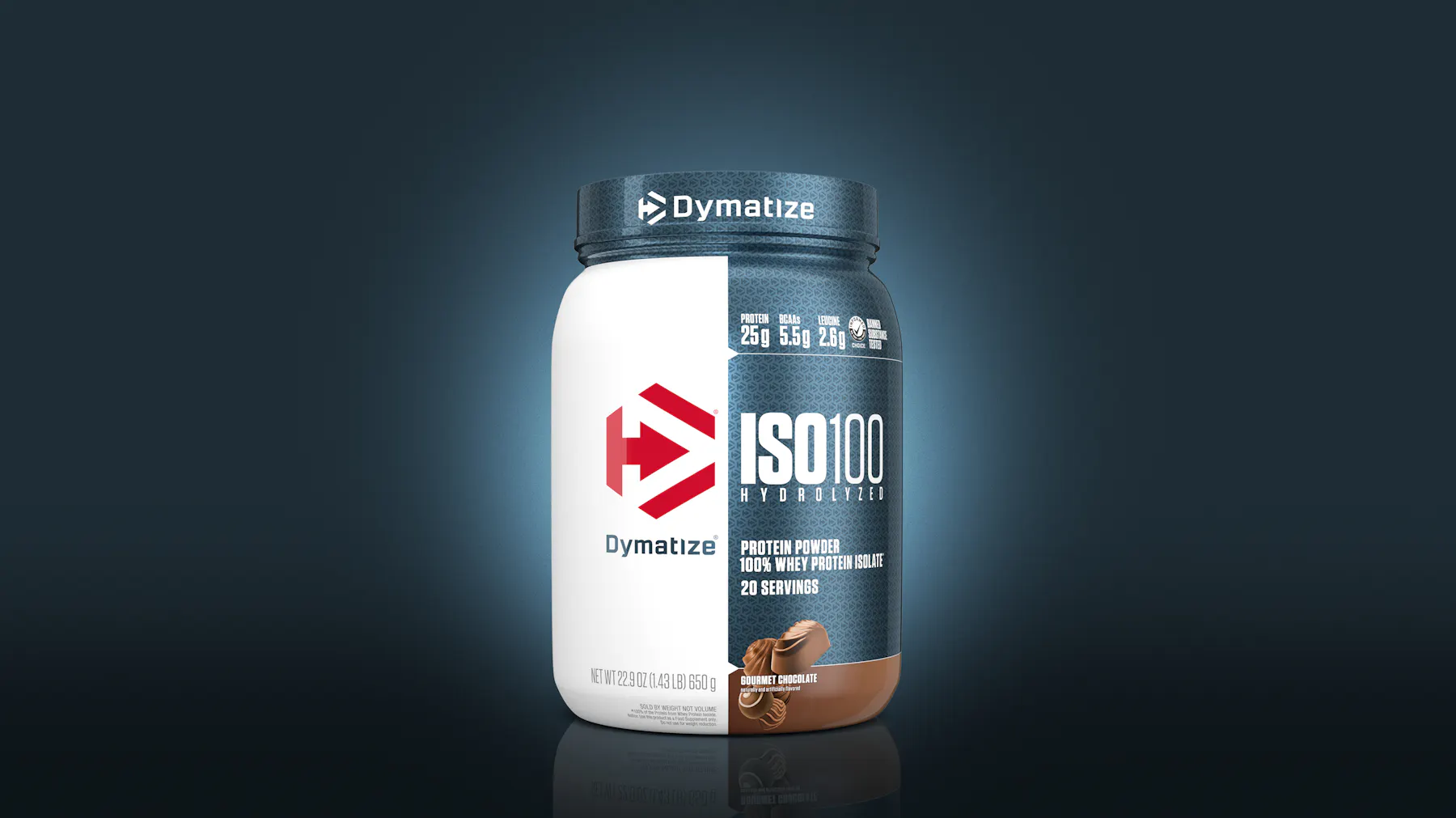
ISO100 Hydrolyzed Protein - Chocolate
Amazon returns policy · secure checkout
 22g protein
 25g protein
Protein Powder - Vanilla Milkshake
Amazon returns policy · secure checkout
Collagen is the rare supplement where the $19 tub and the $52 tub hold essentially the same powder. Hydrolyzed bovine collagen peptides are a commodity ingredient. A handful of suppliers make the raw material, brands buy it, print a label on a tub and charge whatever their marketing supports. Six of the best-selling unflavored tubs on Amazon right now range from 43 cents to $1.43 per 10 grams of collagen — for a powder whose amino acid profile barely differs between them.
So this guide does the one thing most collagen roundups skip: it reads the actual Supplement Facts panel on each tub, converts every price into the same unit (cost per 10 grams of collagen), and says out loud what the biggest brand in the category already prints on its own package — “Collagen is not a complete protein. Do not use to replace dietary protein.” That sentence is on the side of the Vital Proteins tub. It is the most useful thing on the label, and almost nobody repeats it.
Affiliate links — if you buy through them we earn a small commission at no extra cost to you. No brand paid for placement, every number below was read from a published Supplement Facts panel, and the ranking is ours.
Collagen Powder Comparison: Every Number Side by Side
| Product | Collagen / serving | Protein | Servings | Price | Cost per 10g |
|---|---|---|---|---|---|
| Orgain Collagen Peptides, 1 lb | 20g | 18g | About 22 | $19.05 | $0.43 |
| Nutricost Collagen Peptides, 16.2 oz | 11g | 10g | 41 | $22.95 | $0.51 |
| Vital Proteins Collagen Peptides Advanced, 20 oz | 20g | 18g | About 28 | $38.99 | $0.70 |
| Sports Research Collagen Peptides, 16 oz | 11g | 10g | 41 | $32.95 | $0.73 |
| Momentous Collagen Peptides, 1.12 lb | 16.8g (11.6g plus 5.2g FORTIGEL) | 15g | 30 | $51.99 | $1.03 |
| Vital Proteins Marine Collagen, 7.8 oz | 12g (from cod) | 11g | About 18 | $30.81 | $1.43 |
Collagen, protein and serving figures read from each product’s own published Supplement Facts panel; calories per serving are 70, 40, 70, 40, 60 and 45 in the order listed. Amazon prices checked October 9, 2026, and they move — recheck before you buy. Cost per 10g is the listed price divided by the total grams of collagen in the tub (servings multiplied by collagen per serving). At the 5-gram daily dose used in the joint trials cited below, that works out to 22 cents a day for the Orgain tub and 71 cents for the marine one.
Read the last two columns and the category gives itself away. Orgain and Vital Proteins sell the identical 20-gram serving of bovine type I and III peptides, and Vital Proteins costs 63 percent more per gram. Nutricost and Sports Research sell the identical 11-gram scoop, and Sports Research costs 43 percent more. None of those gaps is explained by anything on the label. They are brand premiums, and in a category where the active ingredient is a commodity, a brand premium buys you packaging.
Is collagen a complete protein?
No. Collagen lacks tryptophan, one of the nine amino acids the body cannot make, which is why the standard protein-quality scoring method classifies it as an incomplete protein source. A 2019 review in Nutrients states it plainly: under PDCAAS scoring, “collagen protein lacks one indispensable amino acid (tryptophan) and is therefore categorized as an incomplete protein source” (Paul, Leser and Oesser, 2019). The same paper calculates that collagen can safely make up as much as 36 percent of daily protein intake without breaking the amino acid balance of a normal Western diet — so it is a fine addition, just not a substitute.
That is why the 18 grams of “protein” on an Orgain or Vital Proteins label should not be counted the way you would count 18 grams from whey, eggs or Greek yogurt. If you are tracking protein for muscle, count collagen separately, or do not count it at all. Two of the authors of that review are affiliated with collagen manufacturer GELITA AG and the Collagen Research Institute, which makes the admission more notable, not less.
Does collagen build muscle?
Not meaningfully, and there is a direct head-to-head on it. In a randomized crossover trial published in Medicine & Science in Sports & Exercise, endurance-trained adults took either alpha-lactalbumin (a whey fraction high in leucine and tryptophan) or an equal-nitrogen dose of collagen peptides — 20g after exercise and 40g before sleep — through three days of hard interval training. Muscle protein synthesis rose 13 percent more on the whey fraction than on collagen (Oikawa et al., 2020). The paper’s title is the summary: “Lactalbumin, Not Collagen, Augments Muscle Protein Synthesis with Aerobic Exercise.”
The practical read: collagen is a joint, skin and connective-tissue supplement that happens to contain nitrogen. If your goal is muscle, a tub of collagen is not competing with a tub of whey — see our whey protein isolate picks or the broader best protein powders guide for that job. Plenty of people reasonably take both.
How much collagen should you actually take per day?
The doses that show up in the published trials are far smaller than the scoop on the tub. The 2019 Nutrients review puts the effective range reported in the literature at 2.5 to 15 grams per day. The joint trials are at the low end: in a 12-week randomized controlled trial of 180 physically active adults aged 18 to 30 with exercise-related knee pain, 5 grams per day of specific bioactive collagen peptides reduced activity-related knee pain more than placebo (−21.9mm versus −15.6mm on a visual analog scale, p = 0.024) (Zdzieblik et al., 2021). That trial was run with peptides supplied by a collagen manufacturer and co-authored by its research institute, which is worth knowing when you read the result.
This changes the money math more than any brand choice does. At 5 grams a day, the $19.05 Orgain tub lasts about 88 days — roughly 22 cents a day. At the 20-gram serving the label suggests, the same tub is gone in 22 days. If you are taking collagen for joints or skin rather than to pad a protein total, the smaller dose is the one the evidence actually supports, and it makes the cheap tub cheaper still.
The 6 Best Collagen Protein Powders, Ranked by Cost Per 10 Grams
#1 Orgain Collagen Peptides, 1 lb — the cheapest verified grams of collagen on the shelf

Orgain Collagen Peptides Powder, Unflavored, 1 lb (454g)
20g collagen · 18g protein · 70 cal · 100mg sodium · about 22 servings · grass-fed, pasture-raised type I and III · $19.05
Check price on Amazon →Twenty grams of grass-fed, pasture-raised type I and III collagen peptides for 43 cents per 10 grams. Nothing else in this comparison delivers the same serving for less, and the Supplement Facts panel is as plain as it gets: 70 calories, 100mg sodium, 18g protein, zero sugar, one ingredient. It dissolves clear in hot coffee and is genuinely tasteless in anything with flavor of its own; in plain cold water it has the faint savory note every unflavored bovine collagen has.
The honest limitation is the same one that applies to every tub here except Momentous: Orgain publishes no third-party sport certification for this product that we could verify, so if you are a drug-tested athlete this is not your pick. For everyone else, paying more than this for hydrolyzed bovine collagen is paying for a nicer tub.
#2 Nutricost Collagen Peptides, 16.2 oz — the best small-scoop tub, and the lowest sodium

Nutricost Collagen Peptides Powder, Unflavored, 16.2 oz (454g)
11g collagen · 10g protein · 40 cal · 35mg sodium · 41 servings · grass-fed bovine hydrolysate · $22.95
Check price on Amazon →Same 454-gram tub as the Orgain, portioned into 41 single-scoop servings of 11 grams instead of 22 double-scoop servings of 20. At 51 cents per 10 grams it is the second-cheapest here, and its 35mg of sodium per serving is the lowest of any product on this page — a third of what the Vital Proteins serving carries. If you want to take the 5-gram evidence-based dose rather than a full scoop, a smaller scoop makes that easier to measure.
Nutricost is a value brand and the packaging shows it; what it does not do is overclaim. The label says grass-fed collagen hydrolysate, 11 grams, 41 servings, and the panel backs all three up.
#3 Vital Proteins Collagen Peptides Advanced, 20 oz — the default everyone buys, at a 63 percent premium

Vital Proteins Collagen Peptides Advanced, Unflavored, 20 oz (567g)
20g collagen · 18g protein · 70 cal · 110mg sodium · about 28 servings · plus hyaluronic acid and vitamin C · $38.99
Check price on Amazon →This is the tub with 215,000 Amazon ratings and the one most people picture when they hear “collagen powder.” The serving is the same 20 grams of bovine peptides and 18 grams of protein as the Orgain, with hyaluronic acid and vitamin C added and a price 63 percent higher per gram. The vitamin C is not window dressing — it is a cofactor your body uses in collagen synthesis — but it is also roughly a penny’s worth of ingredient.
Credit where it is due: Vital Proteins prints the most honest sentence in the category on the side of its own tub. Right above the net weight it reads, “Collagen is not a complete protein. Do not use to replace dietary protein.” Buy it if you want the brand and the added hyaluronic acid. Do not buy it believing the collagen inside is different.
#4 Sports Research Collagen Peptides, 16 oz — the most-reviewed single-scoop tub

Sports Research Collagen Peptides Powder, Unflavored, 16 oz (454g)
11g collagen · 10g protein · 40 cal · 41 servings · hydrolyzed type I and III, non-GMO, gluten-free · $32.95
Check price on Amazon →Spec for spec this is the Nutricost tub — 454 grams, 41 servings, 11 grams of hydrolyzed type I and III collagen, 10 grams of protein, 40 calories — with 130,000 ratings behind it and a $10 higher price. It mixes well and the brand has a long track record, which is worth something if a no-name label makes you uneasy.
It is still 43 percent more per gram than the identical spec from Nutricost. We could not verify a published third-party sport certification for this specific tub, so that column stays a dash rather than an assumption.
#5 Momentous Collagen Peptides, 1.12 lb — the only NSF Certified for Sport pick, and the clinically studied peptide

Momentous Grass-Fed Collagen Peptides with FORTIGEL and Vitamin C, 30 servings (507g)
16.8g collagen (11.6g peptides plus 5.2g FORTIGEL) · 15g protein · 60 cal · 60mg sodium · 50mg vitamin C · NSF Certified for Sport · $51.99
Check price on Amazon →The most expensive bovine tub here at $1.03 per 10 grams, and the only one with two things the others do not have. First, it carries NSF Certified for Sport, the certification that matters if you are subject to drug testing — a batch is screened for banned substances and label accuracy. Second, 5.2 grams of its serving is FORTIGEL, the specific bioactive collagen peptide used in the knee-pain trial cited above, at essentially the 5-gram dose that trial used.
That is the clearest reason on this page to pay a premium: you are buying a tested batch and a studied ingredient rather than a nicer label. If neither of those applies to you, the extra 60 cents per 10 grams buys nothing you will feel.
#6 Vital Proteins Marine Collagen, 7.8 oz — the pick if you do not eat beef

Vital Proteins Marine Collagen Peptides, Unflavored, 7.8 oz (221g)
12g collagen from wild-caught cod · 11g protein · 45 cal · about 18 servings · pescatarian, non-bovine · $30.81
Check price on Amazon →Marine collagen is made from fish skin rather than cowhide, which makes it the option for pescatarians and for anyone avoiding bovine ingredients for religious or personal reasons. It is also, by a distance, the most expensive thing on this page: $1.43 per 10 grams, more than three times the Orgain, because the raw material is scarcer and the tub is small.
Buy it for the reason it exists. If beef is not an issue for you, there is no evidence here that cod collagen does anything bovine collagen does not, and you would be paying a 233 percent premium to find out. Note that it is a fish product, so it is not appropriate for anyone with a fish allergy.
Who should skip collagen powder entirely
If you are short on protein overall, collagen is the wrong purchase. Twenty grams of collagen will not do what 20 grams of whey, dairy or egg protein does, and spending the supplement budget on it can leave the actual gap unfilled. Fix total protein first with food or a complete powder, then add collagen if you want it for joints or skin.
It is also not a good fit for anyone who wants an all-plant supplement — there is no such thing as plant collagen. Products labeled “vegan collagen builder” contain vitamin C and amino acids intended to support your own collagen synthesis, not collagen itself. If plant-based is the requirement, a vegan protein powder is the honest alternative. And if the real goal is simply more protein per dollar, our cheapest protein powder comparison answers that question directly.
How we ranked these
Picks were ordered by cost per 10 grams of collagen, calculated from the listed Amazon price divided by the total collagen in the tub, using each product’s own published Supplement Facts panel for grams per serving and servings per container. Where two products carry the same spec, the cheaper one ranks higher — because for a commodity ingredient, that is the only difference a buyer can act on. Certification and collagen source are treated as reasons to deliberately pay more, which is why Momentous and the marine tub sit where they do rather than at the bottom on price alone.
What we could not verify is recorded as a dash rather than guessed: we found a published third-party sport certification for Momentous only, and no independent lab analysis of heavy metals for any of the six. Prices are a snapshot from October 9, 2026, and collagen listings reprice often.
Frequently Asked Questions
Which collagen powder is the best value in 2026?
Orgain Collagen Peptides, at $0.43 per 10 grams of collagen, is the cheapest verified cost per gram among the six best-selling unflavored tubs compared here. It delivers the same 20g serving of grass-fed type I and III bovine peptides as the Vital Proteins tub that costs 63 percent more per gram.
Is there any real difference between cheap and expensive collagen powder?
For plain hydrolyzed bovine peptides, almost none on the label: the six tubs here share the same ingredient, and protein and calorie figures differ only in proportion to serving size. The differences worth paying for are third-party certification such as NSF Certified for Sport, a specific studied peptide such as FORTIGEL, and a non-bovine source such as marine collagen.
How many grams of collagen should I take a day?
Published trials report effects in the 2.5 to 15 gram range, and the knee-comfort trials used 5 grams a day. Most tubs suggest a 20-gram serving, which is well above the dose the research used, so a smaller daily scoop is both defensible and much cheaper.
Does collagen count toward my daily protein goal?
Not on equal terms. Collagen lacks tryptophan and is classified as an incomplete protein, and in a head-to-head trial it raised muscle protein synthesis 13 percent less than an equal-nitrogen dose of a whey fraction. Count it separately from complete protein sources, or leave it out of the total.
Marine or bovine collagen — which is better?
There is no label evidence here that one outperforms the other; both supply hydrolyzed type I collagen peptides. Marine collagen exists for people who avoid beef, and in this comparison it costs $1.43 per 10 grams versus $0.43 for the cheapest bovine tub.
Does collagen powder dissolve in coffee?
Unflavored hydrolyzed collagen peptides are designed to dissolve in hot liquid and all six products here are sold as unflavored powders for exactly that use. In plain cold water most people notice a faint savory taste; in coffee, oatmeal or a smoothie it is effectively undetectable.
The Bottom Line
Buy the Orgain tub, take 5 to 10 grams a day, and keep your protein coming from food and a complete powder. That is the whole answer for most people, and it costs about 22 cents a day. Pay the premium for Momentous only if you are drug-tested or specifically want the studied FORTIGEL peptide, and buy marine collagen only if you are avoiding beef. Everything else in this category is the same powder in a prettier tub.
Shop our top protein powder picks
Editor-selected high-protein options related to this guide. As an Amazon Associate we may earn from qualifying purchases.
25g proteinISO100 Hydrolyzed Protein - Chocolate
Amazon returns policy · secure checkout
22g protein25g proteinProtein Powder - Vanilla Milkshake
Amazon returns policy · secure checkout
Tags
High Protein Snacks Pro Editorial Team
Independently researched and editorially reviewed. We compare real nutrition labels and never accept payment for coverage.
Get the best new protein snacks in your inbox
Weekly picks and honest reviews — no spam, unsubscribe anytime.
More from the journal
Isopure Nutrition Facts (2026): Zero Carb Whey Protein Isolate & Isopure Clear, Every Number Verified
Isopure Zero Carb 100% Whey Protein Isolate delivers 25g of protein at 110 calories with 0g sugar, 0g carbs, and 0g fat per scoop — 22.7g of protein per 100 calories. The Isopure Clear ready-to-drink bottle delivers 32g of protein at 130 calories, the highest protein-per-calorie ratio of any mainstream shake we've verified. Full 2026 label numbers for both formats and an honest comparison against Dymatize ISO100, Optimum Nutrition Gold Standard, Fairlife Nutrition Plan, and Premier Protein.
Read more
Best Protein Powder (2026): 12 Whey & Plant Picks Ranked by Protein per Calorie
Optimum Nutrition Gold Standard is the best protein powder for most people (24g for 120 calories, mixes clean, stocked everywhere). Dymatize ISO100 is the best whey isolate for cutting or lactose-sensitivity, Orgain and Garden of Life Sport lead for vegans, and Klean Isolate is the best unflavored mix-in — 12 whey and plant powders ranked by protein per calorie with real per-serving numbers and tracked buy links.
Read more
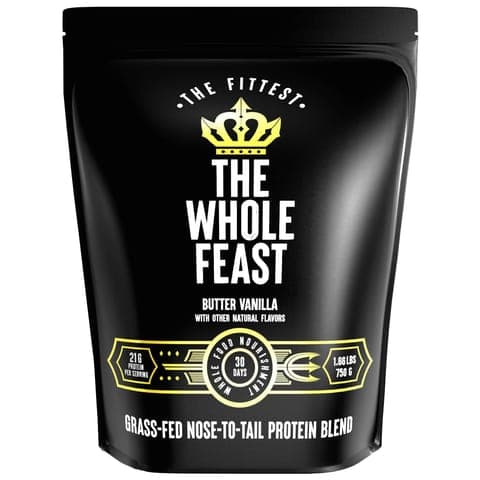
The Fittest Whole Feast Beef Protein Review: What 21g Protein (14g Collagen) Really Means
The Fittest Whole Feast is a grass-fed, animal-based protein with liver, colostrum, and bone — but of its 21g of protein, 14g is collagen, so the muscle-building protein is closer to 7g. The verified facts, who it is really for, and the honest trade-offs before you spend $64.
Read more