Best Protein Powder for Women (2026): 5 Picks That Tested Non-Detect for Heavy Metals
The best protein powder for women in 2026 is Isopure Zero Carb Whey Isolate, Unflavored — 25g of protein in 100 calories, the highest protein-per-calorie ratio here, and one of only 16 powders out of 160 that tested non-detect for lead, cadmium, mercury and arsenic in Clean Label Project's testing. There is no physiological reason a protein powder should be sold "for women," but two things genuinely differ: a smaller calorie budget, and contamination risk — and the organic, plant-based, chocolate powders the women's aisle is full of are the dirtiest category in that testing. Every pick here is screened on purity first, then ranked on protein per 100 calories.
Our top protein powder picks
Editor-selected and ready to buy. As an Amazon Associate we may earn from qualifying purchases.
 25g protein
ISO100 Hydrolyzed Protein - Chocolate
Amazon returns policy · secure checkout
 22g protein
 25g protein
Protein Powder - Vanilla Milkshake
Amazon returns policy · secure checkout
There is no ingredient in a protein powder that works differently in a woman’s body than in a man’s. Whey is whey. Pea protein is pea protein. When a tub is sold “for women,” what you are usually buying is a smaller scoop, a pastel label, a handful of added vitamins, and sometimes collagen padding out the protein number. None of that is a reason to pay more.
Two things, though, really are different, and almost no “best protein powder for women” roundup mentions the second one. The first is calories: if you are eating less, every calorie that is not protein is a calorie working against you, so protein per calorie is the number that matters, not grams per scoop. The second is what else is in the tub. In the largest independent testing of this category, 47 percent of the top-selling protein powders exceeded at least one federal or state safety threshold for heavy metals — and the sub-categories that failed worst are exactly the ones the women’s wellness aisle is built on: organic, plant-based and chocolate.
So this guide screens on purity first and ranks on calories second. Every pick below appears on Clean Label Project’s Clean Sixteen — the 16 powders out of 160 that tested non-detect for all four heavy metals — and every nutrition figure comes from the product’s own published label.
Affiliate links — if you buy through them we earn a small commission at no extra cost to you. No brand paid for placement, no brand was given a say in the ranking, and every number below was read from a published Nutrition or Supplement Facts panel.
Protein Powder Comparison: Every Number Side by Side
| Product | Protein | Calories | Protein per 100 cal | Servings | Price | Cost per 30g protein |
|---|---|---|---|---|---|---|
| Isopure Zero Carb Whey Isolate, Unflavored | 25g | 100 | 25.0g | About 40 | $90.89 | $2.72 |
| Dymatize ISO100, Gourmet Vanilla | 25g | 110 | 22.7g | 20 | $42.48 | $2.55 |
| Premier Protein 100% Whey, Vanilla Milkshake | 30g | 150 | 20.0g | 17 | $29.12 | $1.71 |
| Optimum Nutrition Gold Standard 100% Whey, Vanilla Ice Cream | 24g | 120 | 20.0g | 29 | $53.32 | $2.30 |
| Ritual Essential Protein, Pregnancy & Postpartum | 20g | — | — | 15 | $48.99 | $4.91 |
Protein, calorie and serving figures are from each product’s own published Nutrition Facts panel as recorded in the USDA FoodData Central branded-foods database, cross-checked against the packaging. Ritual does not publish a calorie figure we could read off its panel, so that cell is a dash rather than a guess. Amazon prices were checked on October 10, 2026, for the tub size named in each entry below, and they move — recheck before you buy. Cost per 30g of protein is the listed price divided by the total protein in the tub.
Is protein powder for women any different from protein powder for men?
No. Protein is not sexed, and no powder on the market contains a protein that behaves differently in a woman’s muscle than in a man’s. The label differences on a “women’s” tub are a smaller serving, added vitamins and minerals you may already get from food, and in some cases collagen used to inflate the protein number.
What changes is the context, not the protein. A smaller body eating fewer calories gets more out of a powder that packs more protein into each calorie, which is why this page ranks on protein per 100 calories instead of grams per scoop. The best “women’s” protein powder is usually just a clean, calorie-efficient whey isolate without the pink tax.
Does protein powder contain lead?
Often, yes. Clean Label Project tested 160 protein powders from 70 of the top-selling brands — about 83 percent of the market — through an independent analytical chemistry lab, gathering 35,862 data points. It found that 47 percent of products exceeded at least one federal or state regulatory threshold for safety, including California’s Proposition 65, and 21 percent were over twice the Prop 65 level for lead (Clean Label Project protein powder study, published January 9, 2025). Proposition 65 is the California law requiring warnings about significant exposures to chemicals known to cause cancer, birth defects or other reproductive harm.
The pattern inside that data is the part worth acting on, because it runs directly against how this category is marketed:
- Organic powders tested worse, not better. 79 percent of certified organic powders came in over the Prop 65 lead level and 41 percent were over twice it; organic products averaged three times the lead of non-organic ones.
- Plant-based powders were the dirtiest protein source. 77 percent were over the lead threshold, and plant-based powders carried five times more cadmium than whey-based ones.
- Whey was the cleanest. 28 percent of whey powders were over the lead threshold — still not nothing, but roughly a third of the plant-based rate.
- Chocolate is the single worst flavor choice. 65 percent of chocolate powders were over the lead threshold, and chocolate powders held 110 times more cadmium than vanilla ones.
The gap between the best and worst is not marginal. Compared with the Clean Sixteen, the five dirtiest powders in the study contained 45.9 times more cadmium, 38.4 times more lead, 31.5 times more arsenic and twice the mercury per serving. That is why purity is the screen on this page rather than a footnote: a tub that is 2 grams of protein better per scoop is not worth 38 times the lead.
The practical version: an unflavored or vanilla whey is the lowest-risk shape of this product, and “organic” on a protein tub is not a purity claim. If you want a plant protein anyway — and there are good reasons to — our vegan protein powder comparison covers that category on its own terms.
How much protein do women actually need a day?
More than the government minimum if you lift, run or are trying to lose fat without losing muscle. The International Society of Sports Nutrition’s position stand on protein and exercise states plainly that “the current RDA for protein is 0.8 g/kg/day with multiple lines of evidence indicating this value is not an appropriate amount for a training athlete,” and puts 1.4 to 2.0 grams per kilogram of body weight per day as a minimum recommended range for exercising people, with more potentially needed by anyone restricting calories while trying to hold on to lean mass (Jäger et al., Journal of the International Society of Sports Nutrition, 2017).
For a 140-pound woman, that is roughly 89 to 127 grams a day. The same paper puts the per-serving target to maximize muscle protein synthesis at 20 to 40 grams, or about 0.25 grams per kilogram — which is exactly the range one scoop of every powder on this page lands in. One shake does not fix a protein gap on its own, but it closes 20 to 30 grams of it for about a dollar seventy.
Do women need a protein powder with iron in it?
Women do need far more iron than men — but a protein powder is a poor way to get it. The National Institutes of Health Office of Dietary Supplements puts the recommended intake at 18 mg a day for women aged 19 to 50 versus 8 mg for men the same age, dropping to 8 mg for everyone 51 and older and rising to 27 mg during pregnancy (NIH Office of Dietary Supplements, Iron).
That gap is real, and it is why so many tubs aimed at women print an iron claim on the front. But look at the panel: the Premier Protein powder here carries about 0.3 mg of iron per serving, roughly 2 percent of a premenopausal woman’s daily target, and the whey isolates carry none at all. A powder marketed as the iron fix is making a claim its own label does not support. Iron belongs in food or in an actual iron supplement your doctor picked — buy a protein powder for protein.
The 5 Best Protein Powders for Women, Screened on Purity and Ranked by Protein Per Calorie
#1 Isopure Zero Carb Whey Isolate, Unflavored — the most protein per calorie on the shelf

Isopure Zero Carb Whey Protein Isolate, Unflavored, 2.5 lb
25g protein · 100 cal · 0g carbs · 0g sugar · 0g fat · 160mg sodium · about 40 servings · non-detect for lead, cadmium, mercury and arsenic · $90.89
Check price on Amazon →Twenty-five grams of protein in one hundred calories is as close to pure protein as a powder gets: 25 grams of the 29-gram scoop is protein, and the rest is essentially nothing. No carbohydrate, no sugar, no fat. If you are eating 1,500 calories a day and want a third of your protein from a shake, this is the tub that costs you the least of your day to do it.
Being unflavored is the point, not a compromise. It means no chocolate, which is the flavor that carried 110 times the cadmium in the testing above, and it mixes into oatmeal, coffee or a smoothie without fighting whatever is already in there. In plain water it has the faint savory edge every unflavored whey isolate has.
The honest limitation is price. At the price Amazon showed on this listing the day we checked, this is the most expensive protein on the page per gram — $2.72 per 30 grams, against $1.71 for the Premier tub. This listing also carries several tub sizes and the price moves with the size and the seller, so check what is actually in the cart before you buy. It is ranked first on protein density, which is what the ranking measures. It is not the value pick.
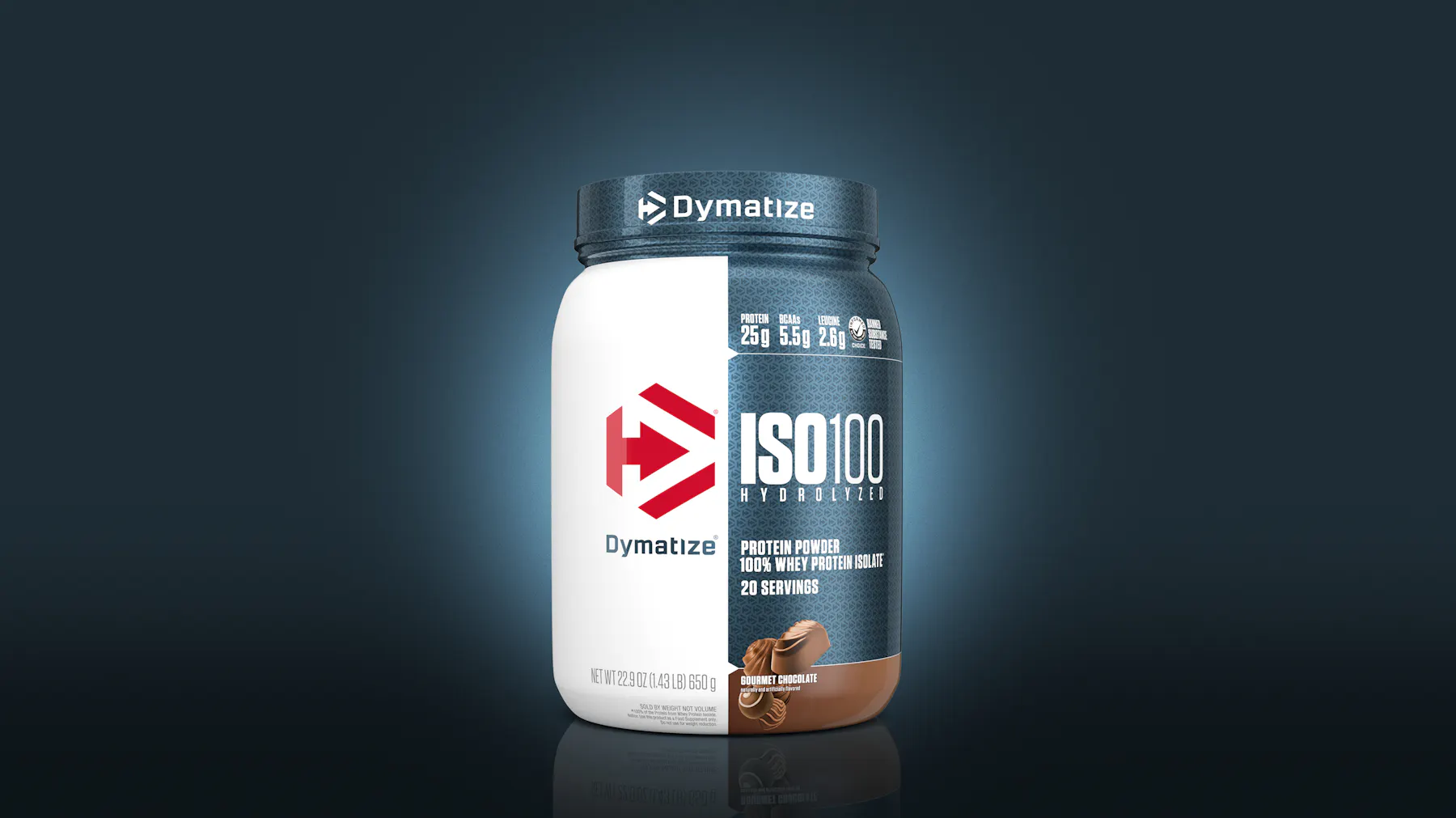
#2 Dymatize ISO100, Gourmet Vanilla — the best-tasting way to get nearly the same ratio

Dymatize ISO100 Hydrolyzed Whey Protein Isolate, Gourmet Vanilla, 1.34 lb
25g protein · 110 cal · 1g carbs · 1g sugar · 100mg sodium · 5.5g BCAAs · 20 servings · non-detect for lead, cadmium, mercury and arsenic · $42.48
Check price on Amazon →Ten calories more than the Isopure for the same 25 grams of protein, and those ten calories buy you a vanilla that people actually want to drink in water. That matters more than it sounds: the best powder is the one still being used in week six, and an unflavored tub is the one most likely to end up at the back of the cupboard.
ISO100 is hydrolyzed, meaning the whey has been partially broken down before it reaches you. The marketing claim is faster absorption; the practical benefit for a lot of people is that it sits lighter, with very little lactose. The Gourmet Vanilla version is the exact flavor that appears on the Clean Sixteen, which is the version linked here.
The catch is tub size. Twenty servings in a 1.34-pound tub goes quickly at one shake a day, and at $2.55 per 30 grams it sits in the middle of this page on cost. Our whey protein isolate guide has more on when the hydrolyzed premium is worth paying.
#3 Premier Protein 100% Whey, Vanilla Milkshake — the value winner, and the biggest single dose

Premier Protein 100% Whey Protein Powder, Vanilla Milkshake, 23.3 oz
30g protein · 150 cal · 2g carbs · 1g sugar · 2g fat · 170mg sodium · 160mg calcium · 17 servings · non-detect for lead, cadmium, mercury and arsenic · $29.12
Check price on Amazon →This is the one most people should actually buy. At $1.71 per 30 grams of protein it costs 37 percent less per gram than the Isopure and 33 percent less than the ISO100, and it is the same purity result: the Vanilla Milkshake flavor is on the Clean Sixteen, non-detect for all four heavy metals. Thirty grams in a serving also lands at the top of the 20-to-40-gram range the sports nutrition position stand identifies for maximizing muscle protein synthesis, so one shake can genuinely do the job of a meal’s worth of protein.
The trade-off is honest and visible in the table: 150 calories instead of 100, because the serving is two scoops rather than one and carries a little more fat and carbohydrate. At 20 grams of protein per 100 calories it is still an efficient powder — it is just not the leanest. If you are counting calories tightly, take a single scoop and you have 15 grams of protein for 75 calories.
Note the flavor specifically. Premier sells this powder in chocolate as well, and chocolate was the single worst-performing flavor category for cadmium in the testing. Buy the vanilla.
#4 Optimum Nutrition Gold Standard 100% Whey, Vanilla Ice Cream — the default, and it earns it
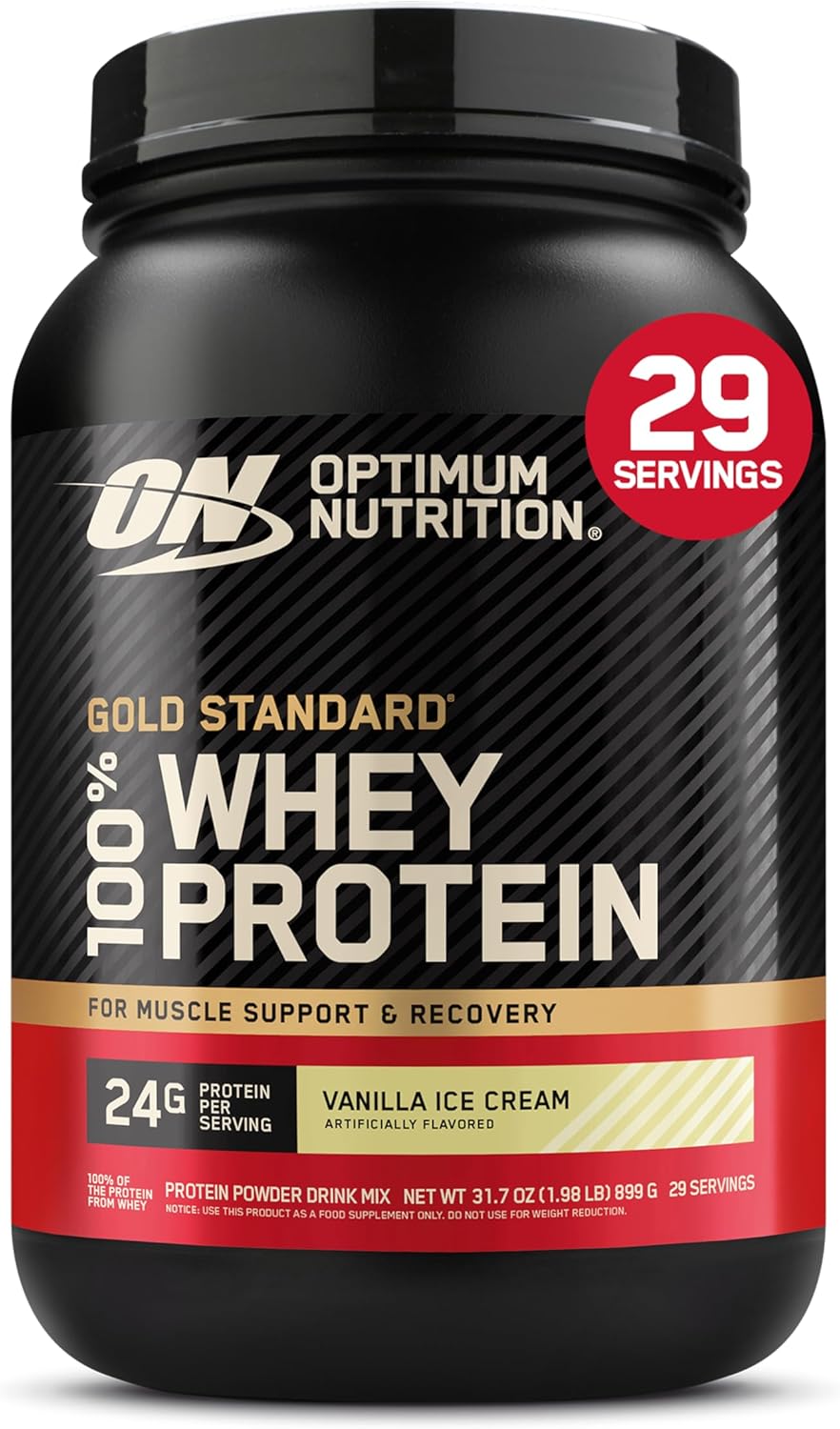
Optimum Nutrition Gold Standard 100% Whey, Vanilla Ice Cream, 1.98 lb
24g protein · 120 cal · 4g carbs · 1g sugar · 1g fat · 105mg sodium · 130mg calcium · 29 servings · non-detect for lead, cadmium, mercury and arsenic · $53.32
Check price on Amazon →The tub everyone has seen, with the Amazon rating count to match, and the Vanilla Ice Cream flavor is the exact one that came back non-detect across all four metals. Twenty-four grams of protein in 120 calories is the same 20 grams per 100 calories as the Premier powder, in a smaller single-scoop serving that is easier to use twice a day.
Its real advantage here is tub life: 29 servings against Premier’s 17 and ISO100’s 20, so you reorder less often. At $2.30 per 30 grams of protein it is more expensive per gram than Premier and cheaper than both isolates, which is a fair description of where it sits overall — nothing here is a reason to avoid it, and nothing here is a reason to pay extra for it either.
One thing to be clear about: Gold Standard is a whey blend, not a pure isolate, so it carries slightly more carbohydrate and lactose than the two picks above it. If dairy sits badly with you, the ISO100 or the Isopure is the better choice. We cover the wider field in our best protein powders guide.
#5 Ritual Essential Protein Daily Shake, Pregnancy & Postpartum — the pick built for pregnancy and nursing

Ritual Essential Protein Daily Shake for Pregnancy & Postpartum, Vanilla, 1 lb
20g plant-based protein · 250mg choline · 0g sugar · calories — · 31g serving · 15 servings · Clean Label Project Certified and Purity Award on pack · $48.99
Check price on Amazon →This is the exception that proves the rule at the top of the page. Almost every “for women” protein powder is a label; this one is a genuinely different product, because pregnancy and nursing are the one case where both the protein target and the contamination stakes actually change. It is the only pregnancy-and-postpartum protein on the Clean Sixteen, and the pouch itself carries Clean Label Project Certified and Purity Award marks — which is the rare case of a purity claim you can check rather than take on faith.
The 250mg of choline is the real differentiator, not the protein. Choline is an essential nutrient most prenatal vitamins skip, and the brand positions this product around it. Twenty grams of pea protein per 31-gram serving is a respectable dose for a plant powder, and it is sugar-free.
Two honest caveats. It is far and away the most expensive protein here at $4.91 per 30 grams — nearly three times the Premier tub — and Ritual does not publish a calorie figure we could read off its panel, so we have left that cell as a dash rather than estimate it. Also note the naming: the Clean Sixteen lists this as “Ritual Essential Protein Pregnancy & Postpartum,” which is the name Ritual uses on its own site, while Amazon lists the same pouch as “Ritual Prenatal Vegan Protein Powder.” We matched them by brand, pack and purpose, not by lot number. And pregnancy nutrition is a conversation to have with your own doctor or midwife, not with a website — see also our protein bars for pregnancy guide.
Is protein powder safe during pregnancy?
A plain whey or plant protein powder is food, and the protein itself is not the concern. What changes in pregnancy is the margin for error on everything else in the tub: lead and cadmium are the exact class of contaminant California’s Prop 65 warnings exist for, which covers chemicals known to cause birth defects or other reproductive harm, and there is no safe level to aim at other than as little as possible.
That makes the purity screen on this page more important in pregnancy, not less, and it is why the plant-based and organic categories deserve a harder look here than the marketing suggests. Run any supplement past your own doctor or midwife first — this page is a shopping guide, not medical advice.
Who should skip these
Anyone shopping for collagen. Collagen is the most common “women’s protein” on the shelf and it is not a complete protein: it lacks tryptophan, which is why protein-quality scoring classifies it as an incomplete source (Paul, Leser and Oesser, 2019). It is a fine supplement for joints and skin and a poor one for hitting a protein target. If that is what you want, our collagen protein powder guide ranks that category on its own terms.
Anyone who is dairy-free or vegan. Four of the five picks here are whey, because whey tested cleanest. If dairy is off the table, read the vegan protein powder comparison with the cadmium finding above in mind, and favor vanilla over chocolate.
Anyone whose actual problem is total daily protein, not powder choice. If you are 40 grams short every day, no tub fixes that by itself. Food does more of the work than a shake does — our high-protein snacks for weight loss and protein bars for women guides cover the rest of the day.
How we ranked these
Purity was a screen, not a tiebreaker: a powder had to appear on Clean Label Project’s Clean Sixteen — non-detect for lead, cadmium, mercury and arsenic across 160 products tested — to be eligible at all, and the specific flavor named in that list is the specific flavor linked here. Everything that cleared the screen was then ordered by protein per 100 calories, calculated from each product’s own published Nutrition Facts panel, because a smaller calorie budget is the one thing that genuinely changes this purchase for many women. Where two products tied at 20.0 grams per 100 calories, the cheaper one per gram of protein ranked higher.
What we could not verify is recorded as a dash rather than guessed: Ritual publishes no calorie figure we could read off its panel, so it sits outside the per-calorie ranking as the pregnancy and postpartum pick rather than being slotted in on an estimate. Prices are a snapshot taken October 10, 2026, from the Amazon listing for the tub size named in each entry, and protein powder listings reprice and swap sizes constantly. Nothing on this page is a lab result of our own — the contamination findings are Clean Label Project’s, published and linked, and we have not tested anything ourselves.
Frequently Asked Questions
What is the best protein powder for women in 2026?
Isopure Zero Carb Whey Isolate, Unflavored, on the measure that matters most on a smaller calorie budget: 25 grams of protein in 100 calories, the most protein per calorie of any powder compared here, and non-detect for lead, cadmium, mercury and arsenic in Clean Label Project testing. For most buyers the better overall purchase is Premier Protein 100% Whey in Vanilla Milkshake, which has the same purity result and costs $1.71 per 30 grams of protein against Isopure’s $2.72.
Is there really a difference between men’s and women’s protein powder?
Not in the protein. A “women’s” tub typically differs by serving size, added vitamins and minerals, and sometimes collagen padding the protein number — none of which changes how the protein works. What genuinely differs is the context: a smaller calorie budget makes protein per calorie the number to compare, and a higher iron requirement is better met by food or an actual iron supplement than by a protein powder.
Which protein powders are lowest in heavy metals?
Clean Label Project named 16 powders out of 160 tested that were non-detect for lead, cadmium, mercury and arsenic, and all five picks on this page come from that list. The broader pattern is more useful than any single brand: whey tested cleanest at 28 percent over the Prop 65 lead threshold, plant-based worst at 77 percent, organic powders averaged three times the lead of non-organic, and chocolate powders carried 110 times more cadmium than vanilla.
Should I buy an organic protein powder?
Not for purity reasons. In Clean Label Project’s testing, 79 percent of certified organic protein powders exceeded the Prop 65 lead level and 41 percent exceeded twice it, and organic products averaged three times the lead of non-organic ones — largely because the organic end of the category skews plant-based. Organic is a farming standard, not a contaminant test.
How much protein powder should a woman take a day?
One to two servings, as a way of closing the gap between what you eat and what you need. The International Society of Sports Nutrition puts the daily target at 1.4 to 2.0 grams per kilogram of body weight for exercising people, and 20 to 40 grams per serving to maximize muscle protein synthesis — a range every powder on this page falls inside with a single scoop.
Is whey or plant protein better for women?
On the evidence here, whey, for two reasons: it is a complete protein with a stronger muscle-building track record, and it tested far cleaner for heavy metals, with 28 percent of whey powders over the Prop 65 lead threshold versus 77 percent of plant-based ones and five times less cadmium. Plant protein remains the right answer for anyone avoiding dairy — just favor vanilla over chocolate and look for published third-party testing.
The Bottom Line
Buy the Premier Protein 100% Whey in Vanilla Milkshake unless you have a specific reason not to. It is the cheapest protein on this page by a third, it delivers 30 grams in one serving, and it cleared the same purity screen as everything else here. Step up to Isopure or ISO100 if you are counting calories tightly and want the leanest possible 25 grams, and buy Ritual if you are pregnant or nursing and want the choline alongside the protein.
And ignore the word “women’s” on the front of the tub. The only two things on the label that should change your mind are how much protein you get per calorie and whether anyone independent has checked what else is in there.
Shop our top protein powder picks
Editor-selected high-protein options related to this guide. As an Amazon Associate we may earn from qualifying purchases.
25g proteinISO100 Hydrolyzed Protein - Chocolate
Amazon returns policy · secure checkout
22g protein25g proteinProtein Powder - Vanilla Milkshake
Amazon returns policy · secure checkout
Tags
High Protein Snacks Pro Editorial Team
Independently researched and editorially reviewed. We compare real nutrition labels and never accept payment for coverage.
Get the best new protein snacks in your inbox
Weekly picks and honest reviews — no spam, unsubscribe anytime.
More from the journal
Best Protein Powder (2026): 12 Whey & Plant Picks Ranked by Protein per Calorie
Optimum Nutrition Gold Standard is the best protein powder for most people (24g for 120 calories, mixes clean, stocked everywhere). Dymatize ISO100 is the best whey isolate for cutting or lactose-sensitivity, Orgain and Garden of Life Sport lead for vegans, and Klean Isolate is the best unflavored mix-in — 12 whey and plant powders ranked by protein per calorie with real per-serving numbers and tracked buy links.
Read more
Best Protein Powders 2026: Whey Blend vs Isolate vs Plant-Based Compared — Gold Standard, ISO-100, and Sunwarrior Ranked
Dymatize ISO-100 has the tightest protein density of any major powder (up to 22.7g protein per 100 calories), Optimum Nutrition Gold Standard Whey delivers 24g for 120 calories at a lower price per scoop, and Sunwarrior Clear Protein Refresher offers 10g of plant-based protein for just 50 calories with zero artificial sweeteners. Verified nutrition facts for all three, ranked by protein density, with the honest trade-offs on sweeteners, lactose, and price.
Read more
Best Collagen Protein Powder (2026): 6 Picks Ranked by Cost Per 10g of Collagen
The best collagen protein powder in 2026 is Orgain Collagen Peptides at $0.43 per 10 grams of collagen — 20g of grass-fed type I and III peptides, 18g protein and 70 calories per serving, the cheapest verified cost per gram of six best-selling unflavored tubs. Vital Proteins sells the identical 20g serving for 63% more per gram, Momentous is the only pick carrying NSF Certified for Sport, and every label here is attached to the same commodity ingredient. Ranked on published Supplement Facts panels, with the published evidence on dose and on why collagen is not a complete protein.
Read more