Celiac-Friendly Protein Bars (2026): 6 Certified GF Picks Ranked by Verified Nutrition
Quest Chocolate Chip Cookie Dough leads the certified gluten-free field — 21g of complete protein at 200 calories, 1g sugar, and third-party GFCO certification. RXBAR Chocolate Sea Salt is the cleanest whole-food option at 12g of protein and a five-ingredient label. Six real 2026 picks, each with verified nutrition, a real product photo, and a tracked buy button, plus how to actually verify a bar is gluten-free rather than just reading the front of the wrapper.
The short answer
Our top protein bar picks
Editor-selected and ready to buy. As an Amazon Associate we may earn from qualifying purchases.
Buy the products in this guide: Chocolate Chip Cookie Dough Flavored Protein Bar · Chocolate Chip Cookie Dough Protein Bars · Oatmeal Chocolate Chip Protein Bars
 20g protein
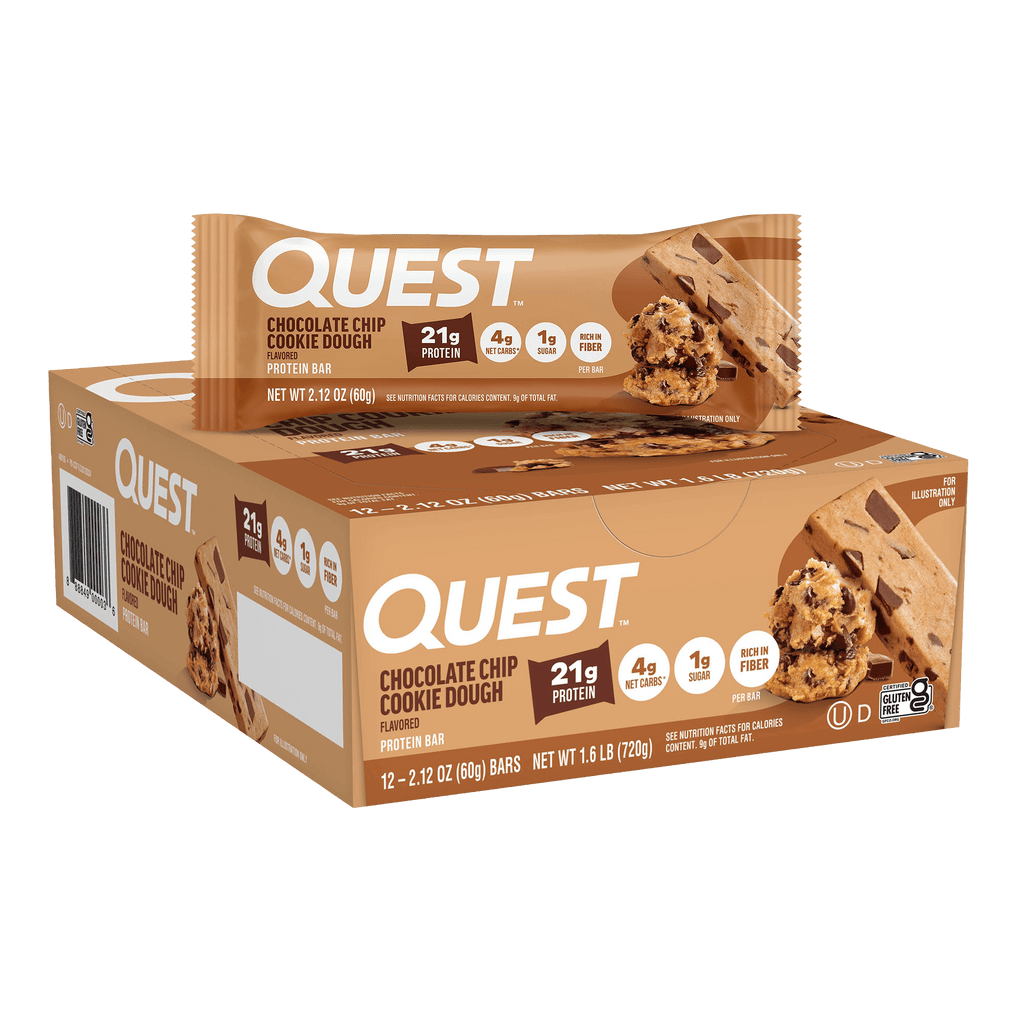
Chocolate Chip Cookie Dough Protein Bar
Amazon returns policy · secure checkout
 21g protein
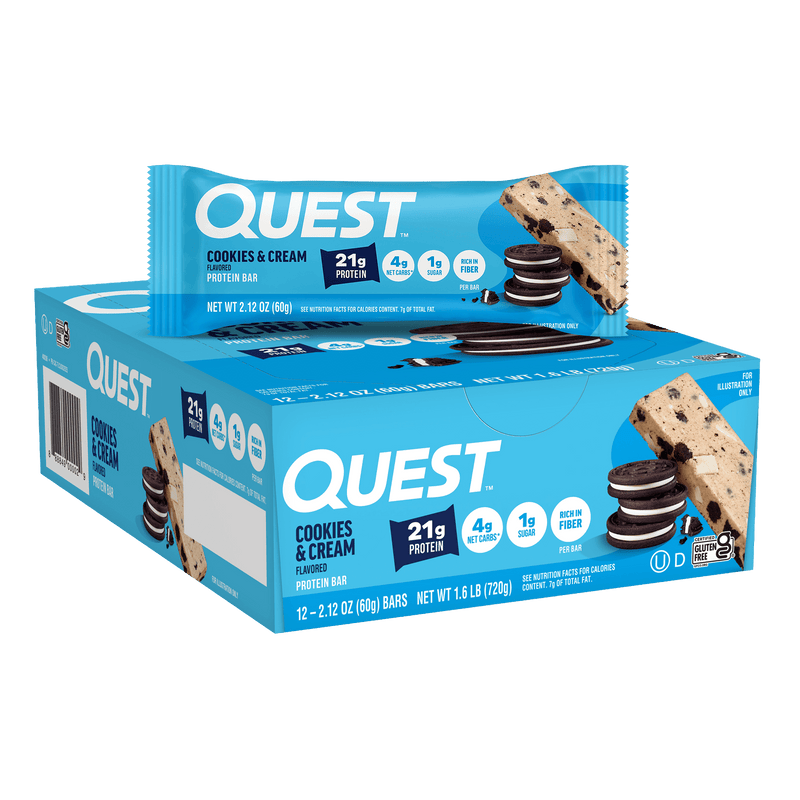
Cookies & Cream Protein Bars
Amazon returns policy · secure checkout
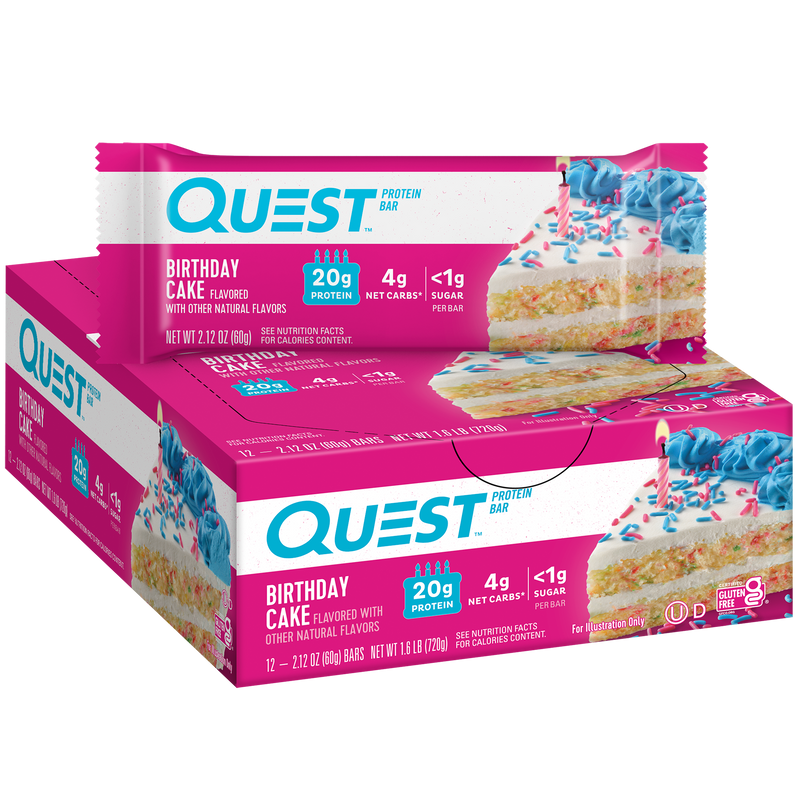 20g protein
Birthday Cake Protein Bars
Amazon returns policy · secure checkout
The 30-second answer
Best overall gluten-free protein bar: Quest Chocolate Chip Cookie Dough — 21g protein, 200 cal, 1g sugar, 14g fiber, GFCO-certified. Cleanest whole-food label: RXBAR Chocolate Sea Salt — 12g protein, 210 cal, 5-ingredient list, no sweeteners, no sugar alcohols. Best-tasting: Barebells Caramel Cashew — 20g protein, 200 cal, 1g sugar, real milk chocolate coating, gluten-free. Best plant-based & USDA Organic: ALOHA Chocolate Cherry — 14g plant protein, 230 cal, 5g sugar, 10g fiber, certified organic + gluten-free, no sugar alcohols. Best budget gluten-free bar: Pure Protein Chocolate Deluxe — 20g protein, 190 cal, roughly $1.50–$2.25 per bar at Walmart, Target, and Amazon.
Affiliate links — if you buy through them we earn a small commission at no extra cost to you. Every nutrition figure below comes from each brand’s own current 2026 label and ingredient list; anything unconfirmed is shown as an em dash rather than a guess. Gluten-free status is confirmed against each brand’s published certifications and label as of 2026-08-21.
Celiac-Friendly Protein Bars 2026: All 6 Picks Compared
Every bar below carries a documented gluten-free designation — either a third-party certification (GFCO, NSF), the manufacturer’s own published gluten-free claim, or both. Numbers are per single bar as labeled on the wrapper. None of these bars contain wheat, barley, rye, or conventional oats.
| Bar | Bar size | Protein | Calories | Sugar | Fiber | GF certification |
|---|---|---|---|---|---|---|
| Quest Chocolate Chip Cookie Dough | 60g | 21g | 200 | 1g | 14g | GFCO third-party certified |
| RXBAR Chocolate Sea Salt | 52g | 12g | 210 | 13g (from dates) | 5g | Certified gluten-free (Kellogg’s program) |
| Barebells Caramel Cashew | 55g | 20g | 200 | 1g | 3g | Manufacturer labeled gluten-free |
| ONE Bar Peanut Butter Pie | 60g | 20g | 220 | 1g | 9g | Manufacturer labeled gluten-free |
| ALOHA Chocolate Cherry (organic, plant-based) | 60g | 14g | 230 | 5g | 10g | Certified gluten-free + USDA Organic |
| Pure Protein Chocolate Deluxe | 50g | 20g | 190 | 3g | ~2g | Manufacturer labeled gluten-free |
The pattern that jumps out: Quest wins on protein-per-calorie (10.5g protein per 100 cal) plus by far the highest fiber (14g). RXBAR wins on ingredient simplicity — five whole-food items you can pronounce. Barebells wins on candy-bar-like taste with a real milk chocolate coating. ONE Bar sits between Quest and RXBAR — higher protein per bar than RXBAR, more indulgent flavor than Quest. ALOHA is the only certified-organic, plant-based, sugar-alcohol-free option that also meets the 10g+ protein threshold. Pure Protein is the cheapest way to get 20g of gluten-free protein per bar at a mainstream grocery store.
What Actually Makes a Protein Bar “Gluten-Free”?
In the United States, the FDA lets a food carry the “gluten-free” claim on its label only if it contains fewer than 20 parts per million (ppm) of gluten. That is the same threshold major celiac organizations consider safe for people with celiac disease. But the FDA does not verify the claim — it is enforced only by inspection and complaint. Third-party certifications go further: the Gluten-Free Certification Organization (GFCO) requires under 10 ppm and audits each facility annually. Quest bars carry GFCO certification, which is the most conservative bar on this list. Most other “gluten-free” bars rely on the manufacturer’s own testing and labeling — still legitimate under FDA rules, but a step below third-party audit. If you have celiac disease or a severe wheat allergy, prefer bars that carry a third-party certification mark (GFCO, NSF, or the Celiac Support Association seal) over bars that only claim “gluten-free” on the front of the wrapper.
Are Oats in a Protein Bar Gluten-Free?
Not automatically. Pure oats are inherently gluten-free, but most conventional oats in the American food supply are grown, harvested, and processed on equipment shared with wheat, barley, and rye. Cross-contamination pushes ordinary oats above the 20 ppm gluten threshold. Only oats explicitly labeled “certified gluten-free” (grown and processed in dedicated gluten-free facilities) are safe for celiac buyers. Among the six picks above, Quest, RXBAR, Barebells, ONE Bar, and Pure Protein do not use oats. ALOHA uses certified gluten-free oats in some flavors and does not use oats in others — each ALOHA flavor prints its full ingredient list with the certification status. Clif Builder’s, KIND (non-Protein), and most Nature Valley protein bars use ordinary oats and are NOT safe for celiac buyers even when marketed as “no wheat.”
The 6 Best Celiac-Friendly Protein Bars, Ranked
#1 Quest Chocolate Chip Cookie Dough — best overall gluten-free protein bar
Quest Chocolate Chip Cookie Dough Protein Bar (60g)
21g protein · 200 cal · 1g sugar · 14g fiber · whey isolate + milk isolate · GFCO third-party certified gluten-free
Check price on Amazon →Quest Chocolate Chip Cookie Dough is the strongest all-around gluten-free protein bar on the mainstream shelf and the only one in this roundup with third-party GFCO certification — the strictest gluten-free audit standard, requiring under 10 ppm gluten and annual facility inspection. Each 60g bar delivers 21g of complete protein from a whey isolate and milk protein isolate blend, at 200 calories with 1g of sugar and 14g of fiber. Sweeteners are erythritol, stevia, and sucralose. The fiber comes primarily from soluble corn fiber, which contributes to fullness without spiking blood sugar.
Why it earns the top slot: nothing else in the gluten-free bar category matches Quest on the combination of protein density (21g), low sugar (1g), high fiber (14g), and third-party certification. If you have celiac disease and want the most conservative gluten-free choice at the highest protein-per-calorie ratio, Quest is the pick. Available at every major grocery store (Walmart, Target, Kroger, Publix, Costco, Whole Foods), most drug stores, and Amazon.
The honest catches: Quest uses three artificial and non-caloric sweeteners (erythritol, sucralose, stevia). If your reason for avoiding gluten is a preference-based clean-label diet rather than celiac disease, RXBAR or ALOHA below fit a stricter no-artificial-anything philosophy. Some readers find Quest’s texture chewy-to-dry; the Cookies & Cream and Peanut Butter Cups flavors are softer for the same macros. Full sweetener discussion in our protein bars with erythritol guide.
#2 RXBAR Chocolate Sea Salt — cleanest whole-food label
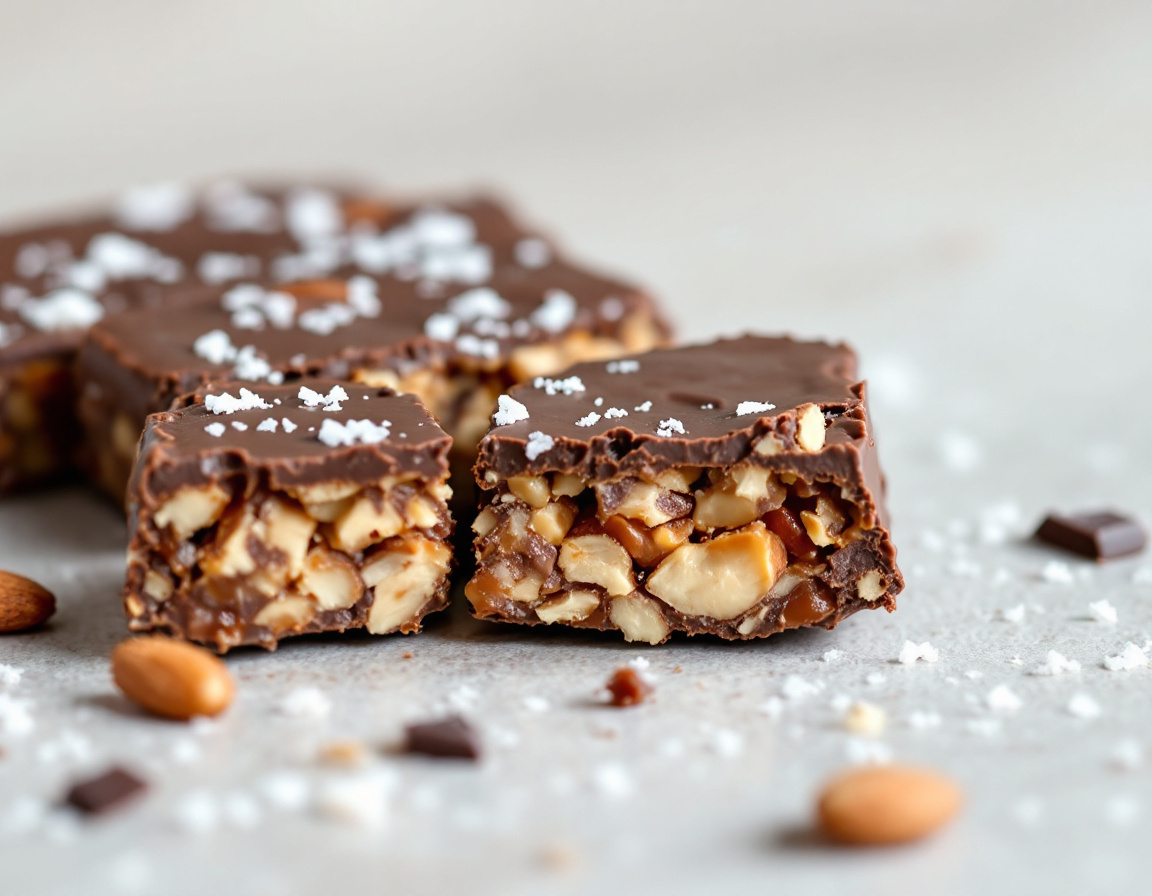
RXBAR Chocolate Sea Salt Protein Bar (52g)
12g protein · 210 cal · 13g sugar (from dates) · 5g fiber · egg whites + dates + almonds + cashews · no sweeteners · no sugar alcohols · certified gluten-free
Check price on Amazon →RXBAR Chocolate Sea Salt is the cleanest-label gluten-free protein bar on the mainstream shelf. The full ingredient list is five whole foods: egg whites, dates, almonds, cashews, and cocoa (plus a pinch of natural chocolate flavor and sea salt). No sweeteners, no sugar alcohols, no protein isolates, no fillers, no gums, no synthetic ingredients of any kind. Each 52g bar delivers 12g of complete protein from egg whites at 210 calories, with 13g of sugar (all naturally occurring from dates), 24g of carbs, 5g of fiber, and 9g of fat from the tree nuts.
Why it earns #2: if you avoid gluten as part of a broader clean-label eating pattern (celiac, autoimmune, real-food philosophy), RXBAR is the honest answer. It carries a certified-gluten-free designation under Kellogg’s in-house program, and the ingredient list is short enough to read to a doctor or defend on any elimination diet. The date-based sweetness has a real glycemic response — but 13g of sugar from whole dates is a genuinely different food than 13g of added table sugar, both in the fiber it delivers and the mineral profile.
The honest catches: at 12g of protein per bar, RXBAR delivers 9g less than Quest and 8g less than Barebells for a similar price. If maximizing protein per bar is the goal, RXBAR is not the strongest option — it is the strongest simple, whole-food option. Also worth noting: RXBAR contains tree nuts (almonds and cashews) and eggs, so it is not appropriate for tree-nut or egg allergies. The Coconut Chocolate and Chocolate Sea Salt flavors are the most reliably in stock at Amazon and grocery stores.
#3 Barebells Caramel Cashew — best-tasting gluten-free protein bar
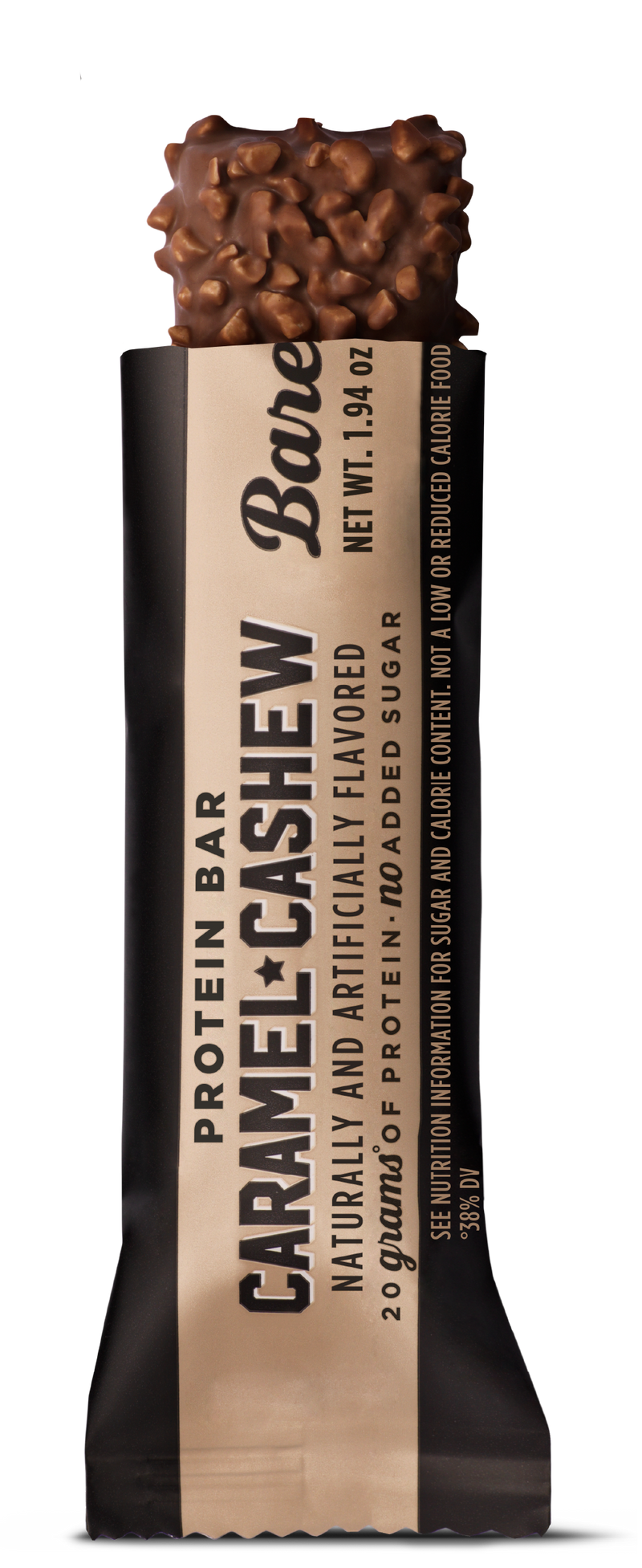
Barebells Caramel Cashew Protein Bar (55g)
20g protein · 200 cal · 1g sugar · 3g fiber · whey and milk protein · real milk chocolate coating · manufacturer labeled gluten-free
Check price on Amazon →Barebells Caramel Cashew is the closest a gluten-free protein bar comes to eating a candy bar. Each 55g bar delivers 20g of complete protein from a whey and milk protein blend at 200 calories, 1g of sugar, and 3g of fiber. The exterior is real milk chocolate — not a chocolatey compound coating — over a caramel and cashew nougat interior. Sweeteners are maltitol, sucralose, and acesulfame potassium. Every Barebells flavor carries an explicit “gluten-free” claim on the wrapper and the brand’s published allergen matrix.
Why it earns the taste pick: Barebells solved the “protein bars taste like protein bars” problem better than nearly any competitor at the same macros. Caramel Cashew is one of the two best-selling flavors (with Cookies & Cream), and the milk-chocolate coating is a genuine competitive advantage against the compound-coating bars that dominate the category. If long-term adherence to a gluten-free bar habit is the real goal, taste is the single most important variable — and Barebells wins it.
The honest catches: maltitol is a sugar alcohol that can cause GI discomfort at daily servings above one to two bars per day for some readers. Barebells uses three sweeteners (maltitol + sucralose + Ace-K) — more than Quest and dramatically more than RXBAR. At $2.65–$3.10 per bar it is priced with the premium tier. The bar carries a “gluten-free” label but is not third-party certified, which is a slightly weaker claim than Quest for readers with celiac disease.
#4 ONE Bar Peanut Butter Pie — best indulgent flavor with high fiber
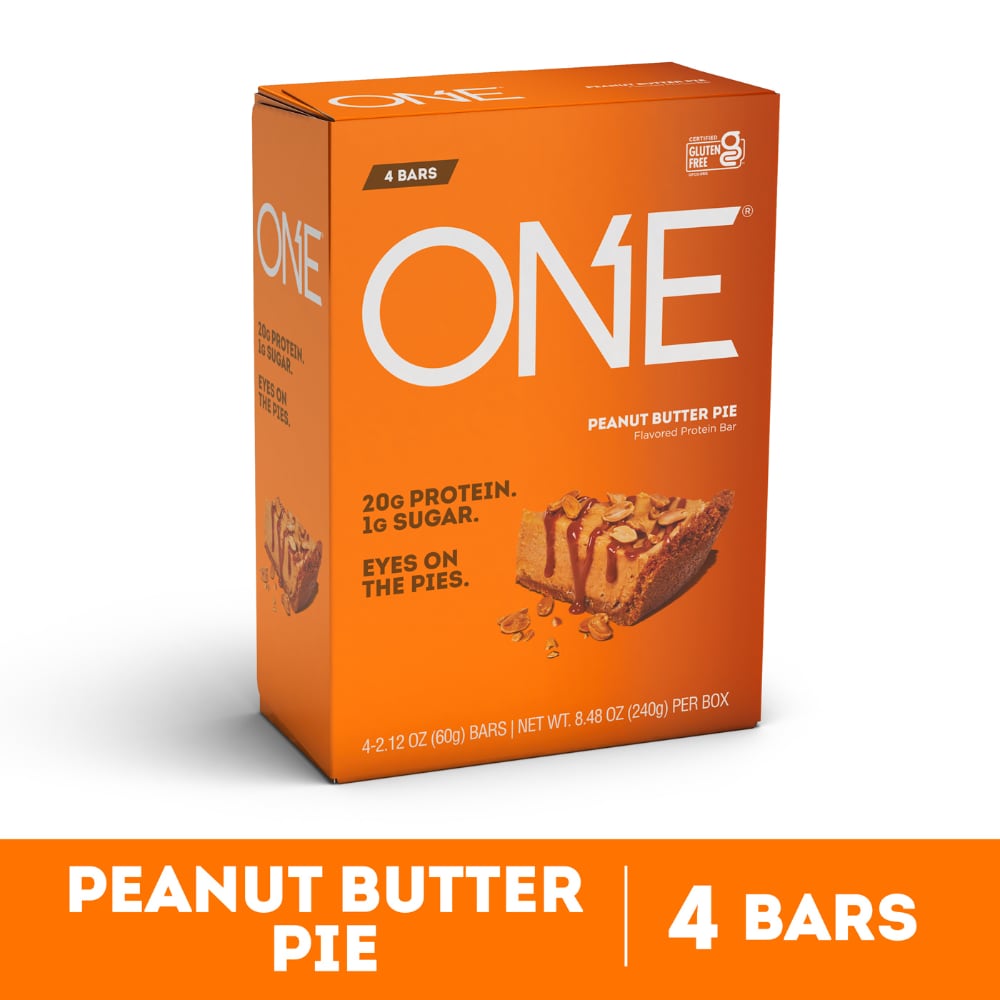
ONE Bar Peanut Butter Pie Protein Bar (60g)
20g protein · 220 cal · 1g sugar · 9g fiber · whey and milk protein blend · prebiotic fiber (IMO) · manufacturer labeled gluten-free
Check price on Amazon →ONE Bar Peanut Butter Pie sits between Quest and Barebells in the gluten-free lineup — it matches Barebells on protein (20g) and beats it on fiber (9g vs. 3g), and it matches Quest on sweeteners while landing 20 calories higher. The flavor profile is the pull: a genuinely peanut-butter-forward interior with a chocolate coating that reads more like a candy bar than a supplement. The fiber is largely isomalto-oligosaccharide (IMO), a prebiotic fiber that supports satiety and gut health, though a small fraction of buyers find it slightly less filling than the soluble corn fiber Quest uses. Every ONE flavor carries an explicit gluten-free label.
Why it earns the pick: flavor variety. ONE has 15+ flavors in wide rotation (Birthday Cake, Cinnamon Roll, Almond Bliss, Blueberry Cobbler, Marshmallow Hot Cocoa, Strawberry Frosted Donut), which matters if you eat protein bars daily and need to avoid flavor fatigue. Peanut Butter Pie and Chocolate Chip Cookie Dough are the two most-stocked flavors at Walmart, Target, and Kroger. For a full comparison to the rest of the ONE line, see our best chocolate protein bars 2026 roundup.
The honest catches: the sweetener stack is sucralose plus maltitol, similar to Barebells. Fiber is 9g mostly from IMO, which the FDA no longer counts as a dietary fiber under the updated label rules — the number on the wrapper is real, but the metabolic benefit is smaller than an equivalent 9g of oat fiber or beta-glucan. ONE Bars are labeled gluten-free but not third-party certified.
#5 ALOHA Chocolate Cherry — best plant-based, USDA Organic gluten-free bar

ALOHA Chocolate Cherry Organic Plant-Based Protein Bar (60g)
14g plant protein · 230 cal · 5g sugar · 10g fiber · sprouted brown rice + pea protein · no sugar alcohols · USDA Organic · certified gluten-free · vegan
Check price on Amazon →ALOHA Chocolate Cherry fills a very specific gap: a certified-organic, vegan, gluten-free protein bar with zero sugar alcohols. Each 60g bar delivers 14g of plant protein from a sprouted brown rice and pea protein blend, at 230 calories with 5g of sugar (from organic tapioca syrup and dates), 10g of fiber, and no erythritol, maltitol, sucralose, or Ace-K. It is USDA Certified Organic, certified gluten-free, certified vegan, and Non-GMO Project Verified. The Peanut Butter Chocolate Chip flavor is similarly structured with brown rice and pumpkin seed protein.
Why it earns the organic pick: ALOHA is the only mainstream bar in this comparison that hits three of the strictest labels at once — certified gluten-free, USDA Organic, and no sugar alcohols — while still delivering 14g of protein. Most bars that avoid sugar alcohols either use dates and honey (RXBAR) or real cane sugar; ALOHA is the only one that stays under 6g of added sugar while doing so, thanks to a heavy 10g fiber load that also boosts satiety. If “certified organic” is a hard requirement, ALOHA is functionally the only option at real protein levels.
The honest catches: at 14g of protein per bar, ALOHA delivers 6g less than Quest or Barebells for a similar price ($2.80–$3.30 per bar). If maximizing protein is the goal, Quest is the stronger pick. The 5g of sugar comes from whole-food sources but is still a real carbohydrate load; ALOHA is not a low-carb bar. The pea + brown rice protein blend has a slightly incomplete amino acid profile compared to whey, though the combination together covers all nine essential amino acids at adequate levels — more detail in our whey vs. plant-based protein bars comparison.
#6 Pure Protein Chocolate Deluxe — cheapest gluten-free protein bar
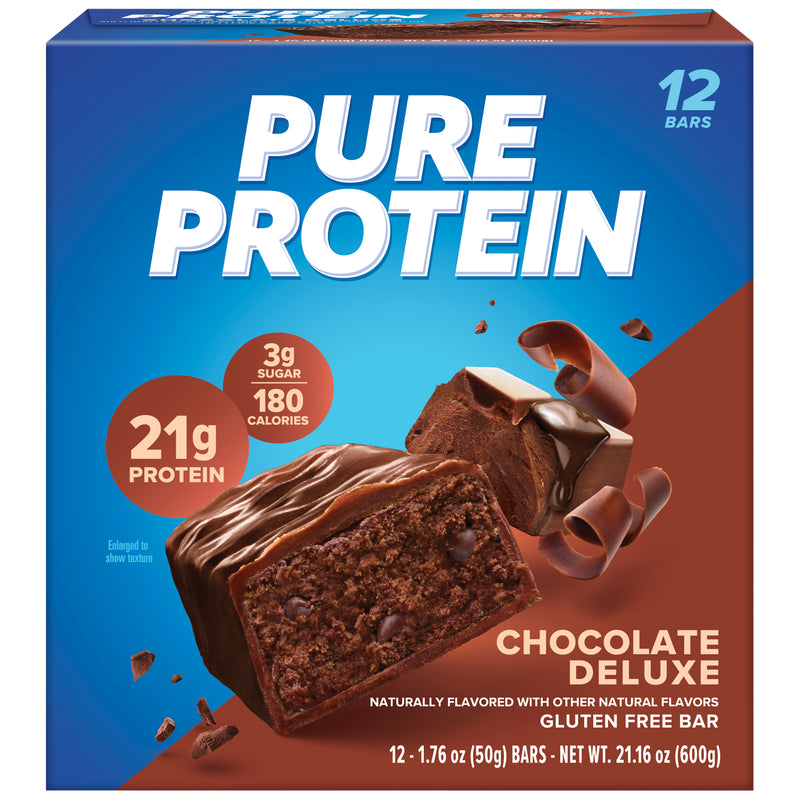
Pure Protein Chocolate Deluxe Protein Bar (50g)
20g protein · 190 cal · 3g sugar · ~2g fiber · whey protein blend · maltitol + sucralose · manufacturer labeled gluten-free · widely stocked
Check price on Amazon →Pure Protein Chocolate Deluxe is the cheapest way to eat 20g of gluten-free protein per bar in the United States. At $1.50–$2.25 per bar at Walmart, Target, and Amazon, it is roughly half the price of Barebells or ONE Bar for a similar protein number. Each 50g bar delivers 20g of protein from a whey protein blend at 190 calories, 3g of sugar, and roughly 2g of fiber. Sweeteners are maltitol and sucralose. Pure Protein bars carry a gluten-free label on every flavor in their current 2026 lineup.
Why it earns the budget pick: for readers who eat gluten-free protein bars as a functional protein delivery mechanism rather than a taste event, Pure Protein is the price champion. Eating one bar per day for a month with Pure Protein instead of Barebells saves roughly $30–$40 — enough to matter across a training year. Availability is genuinely wide: Walmart, Target, Kroger, Publix, Meijer, most drug stores, and Amazon all consistently stock the Chocolate Deluxe and Chocolate Peanut Butter flavors.
The honest catches: Pure Protein uses a whey concentrate blend rather than pure whey isolate, which means slightly higher fat and carbs per bar than Quest at the same protein number. Fiber is low (~2g), so satiety is shorter than Quest or ONE Bar. The taste is functional — a standard chocolate-coated dense bar — and lags Barebells noticeably on adherence for readers who eat protein bars daily. Pure Protein is labeled gluten-free but not third-party certified.
Which Celiac-Friendly Protein Bar Should You Buy?
A quick decision tree if the top pick does not fit your reason for shopping this category:
- Celiac disease, want the strictest certification: Quest Chocolate Chip Cookie Dough (GFCO third-party certified, under 10 ppm).
- Cleanest whole-food label, no sweeteners of any kind: RXBAR Chocolate Sea Salt (5 ingredients, no sugar alcohols, no artificial sweeteners).
- Best taste for long-term adherence: Barebells Caramel Cashew (real milk chocolate coating, 20g protein).
- Indulgent flavor + high fiber: ONE Bar Peanut Butter Pie (9g fiber, 20g protein, PB-forward).
- Certified organic, vegan, no sugar alcohols: ALOHA Chocolate Cherry (USDA Organic + GF + plant-based, 14g protein, 10g fiber).
- Cheapest per bar at 20g protein: Pure Protein Chocolate Deluxe ($1.50–$2.25/bar, widely stocked).
- You have celiac AND avoid sugar alcohols: RXBAR (whole-food) or ALOHA (organic + plant-based) — no other bar in this roundup satisfies both.
Where to Buy
Quest is stocked at every major grocery store, most drug stores, Costco, and Amazon. RXBAR is at Whole Foods, Sprouts, Target, Kroger, Costco, and Amazon. Barebells is at Target, Walmart, most convenience stores, and Amazon. ONE Bar is at Walmart, Target, Kroger, most drug stores, and Amazon. ALOHA is at Whole Foods, Sprouts, Target, Amazon, and aloha.com. Pure Protein is the most-widely-stocked bar in this roundup — available at essentially every major US grocery, pharmacy, and convenience store.
Affiliate links — it costs you nothing extra and supports our independent guides.
Frequently Asked Questions
What is the best gluten-free protein bar in 2026?
Quest Chocolate Chip Cookie Dough is the strongest all-around gluten-free protein bar in 2026 — 21g of complete whey-based protein at 200 calories, 1g of sugar, 14g of fiber, and third-party certification from the Gluten-Free Certification Organization (GFCO), which requires under 10 ppm gluten and annual facility audits. For the cleanest whole-food ingredient list, RXBAR Chocolate Sea Salt (12g protein, five whole-food ingredients, no sweeteners) is the pick. For best taste with high protein, Barebells Caramel Cashew (20g protein, real milk chocolate coating) leads.
Are Quest bars really gluten-free?
Yes. Quest bars carry third-party certification from the Gluten-Free Certification Organization (GFCO), which is one of the strictest gluten-free standards in the world — requiring under 10 ppm of gluten (half the FDA’s 20 ppm threshold) and annual on-site facility audits. Every Quest flavor in the current 2026 lineup is GFCO-certified. This is the most conservative gluten-free option for readers with celiac disease and is significantly stronger than an unaudited “gluten-free” label claim.
Are RXBARs gluten-free?
Yes. Every RXBAR flavor carries a certified gluten-free designation under the Kellogg’s in-house program (RXBAR was acquired by Kellanova, formerly Kellogg’s, in 2017). The ingredient list is also naturally gluten-free by design — egg whites, dates, almonds, cashews, cocoa, natural chocolate flavor, and sea salt for Chocolate Sea Salt. No wheat, barley, rye, or oats are used in any RXBAR product. RXBAR is safe for celiac buyers.
Are Barebells gluten-free?
Yes. Every Barebells protein bar flavor carries an explicit gluten-free claim on the wrapper and the brand’s published allergen matrix. Barebells does not carry a third-party gluten-free certification (like GFCO), so the label relies on the manufacturer’s own testing. For most gluten-free eaters this is sufficient; for readers with severe celiac disease who prefer third-party audited bars, Quest is the more conservative choice.
Which gluten-free protein bar has the most protein?
Among the six picks in this roundup, Quest Chocolate Chip Cookie Dough has the most protein per bar at 21g in a 60g bar (a protein-per-calorie ratio of 10.5g per 100 cal — the highest in this comparison). Barebells, ONE Bar, and Pure Protein all deliver 20g per bar at slightly higher or lower calorie counts. For gluten-free bars outside this roundup, DAVID Bar (28g protein at 150 calories, gluten-free) delivers more protein per calorie but at a slightly less broadly certified gluten-free level.
Are protein bars with oats gluten-free?
Only if the oats are explicitly labeled “certified gluten-free.” Oats are naturally gluten-free but are grown, harvested, and processed on shared equipment with wheat, barley, and rye in most of the American food supply, which pushes ordinary oats above the 20 ppm gluten threshold set by the FDA. Look for “certified gluten-free oats” on the ingredient panel — that phrase means the oats were grown and processed in a dedicated gluten-free facility. Among the six picks above, Quest, RXBAR, Barebells, ONE Bar, and Pure Protein do not use oats at all. Bars like Clif Builder’s, KIND (non-Protein line), and most Nature Valley protein bars use ordinary oats and are NOT safe for celiac buyers.
Are gluten-free protein bars good for weight loss?
Yes, when the picks are lean. Quest at 200 calories and 21g of protein per bar is one of the most protein-efficient bars in any category (10.5g protein per 100 cal). Pure Protein at 190 calories and 20g of protein is similar. The catch is portion size — because low-sugar protein bars are dense and satisfying, it is easy to eat two per day, which multiplies calories quickly. Stick to one bar per day as a snack replacement and confirm the total on your daily plan. See our best protein bars for weight loss guide for more calorie-efficient options across the full category.
Do gluten-free protein bars have more sugar than regular protein bars?
No — and often less. The six gluten-free bars in this roundup range from 1g of sugar (Quest, Barebells, ONE Bar) up to 13g (RXBAR — all from whole dates, not added sugar). That is broadly the same range as non-gluten-free protein bars. A common misconception is that gluten-free bars compensate with more sugar; the opposite is often true, because gluten-free bars tend to use whey isolate, sugar alcohols, and stevia rather than wheat-based fillers or oat syrup. If added sugar is your primary concern, RXBAR is the only bar here with meaningful naturally-occurring sugar (from dates), while every other pick keeps added sugar under 5g per bar.
What is the cleanest ingredient gluten-free protein bar?
RXBAR Chocolate Sea Salt has the shortest ingredient list among mainstream gluten-free protein bars: five whole foods (egg whites, dates, almonds, cashews, cocoa) plus a pinch of natural chocolate flavor and sea salt. There are no protein isolates, no sugar alcohols, no artificial sweeteners, no gums, and no synthetic ingredients of any kind. For a certified-organic clean-label alternative, ALOHA Chocolate Cherry (USDA Organic, plant-based, no sugar alcohols) is the strongest option at real protein levels (14g per bar).
Where can I buy gluten-free protein bars in stores?
Quest is stocked at Walmart, Target, Kroger, Publix, Costco, Whole Foods, and Amazon. RXBAR is at Whole Foods, Sprouts, Target, Kroger, Costco, and Amazon. Barebells is at Target, Walmart, most convenience stores, and Amazon. ONE Bar is at Walmart, Target, Kroger, most drug stores, and Amazon. ALOHA is at Whole Foods, Sprouts, Target, Amazon, and aloha.com. Pure Protein has the widest availability of any bar in this roundup — essentially every US grocery store, pharmacy, and convenience store stocks Pure Protein Chocolate Deluxe.
Bottom line: Quest Chocolate Chip Cookie Dough is the strongest all-around gluten-free protein bar in 2026 — 21g of complete whey-based protein at 200 calories, 1g of sugar, 14g of fiber, and third-party GFCO certification (the strictest gluten-free standard). RXBAR Chocolate Sea Salt is the cleanest whole-food option at 12g of protein from a five-ingredient label (egg whites, dates, almonds, cashews, cocoa) with zero sweeteners of any kind. Barebells Caramel Cashew wins on taste with a real milk chocolate coating at 20g of protein. ONE Bar Peanut Butter Pie adds 9g of prebiotic fiber to the same 20g protein target. ALOHA Chocolate Cherry is the only certified-organic, plant-based, sugar-alcohol-free option with real protein content (14g). Pure Protein Chocolate Deluxe is the cheapest way to get 20g of gluten-free protein per bar, widely stocked at every major American grocery store. If you have celiac disease and want the most conservative pick, choose bars carrying third-party certification (GFCO, NSF) rather than manufacturer-only labels — and confirm every flavor’s current label before buying, as formulations occasionally change. Compare price-first picks in our cheapest protein bars 2026 guide, the wider snack universe in best gluten-free protein snacks, or the general roundup in best protein bars 2026. Or browse the full protein snacks directory for more options.
Shop our top protein bar picks
Editor-selected high-protein options related to this guide. As an Amazon Associate we may earn from qualifying purchases.
Buy the products in this guide: Chocolate Chip Cookie Dough Flavored Protein Bar · Chocolate Chip Cookie Dough Protein Bars · Oatmeal Chocolate Chip Protein Bars
20g proteinChocolate Chip Cookie Dough Protein Bar
Amazon returns policy · secure checkout
21g proteinCookies & Cream Protein Bars
Amazon returns policy · secure checkout
20g proteinBirthday Cake Protein Bars
Amazon returns policy · secure checkout
Tags
High Protein Snacks Pro Editorial Team
Independently researched and editorially reviewed. We compare real nutrition labels and never accept payment for coverage.
Get the best new protein snacks in your inbox
Weekly picks and honest reviews — no spam, unsubscribe anytime.
More from the journal
Best Chocolate Protein Bars 2026: 10 Top Picks Ranked by Protein, Sugar, and Real Cocoa Flavor
The best chocolate protein bar in 2026 is DAVID Chocolate Chip Cookie Dough — 28g of protein for 150 calories and 0g sugar, the highest protein-per-calorie ratio in the mainstream chocolate lineup. For a candy-bar experience, Barebells Chocolate Dough delivers 20g protein and 1g sugar in a real-chocolate coating. For satiety, Quest Chocolate Chip Cookie Dough wins with 21g protein and 14g fiber. Ten verified chocolate-flavored picks — from whey isolate to vegan pea to whole-food date bars — ranked on protein density, sweetener honesty, and real cocoa content, with tracked buy buttons and the honest catches for each.
Read more
Best Protein Bars at Target 2026: 7 Picks Ranked by Real Protein, Ingredients, and Per-Bar Cost
The best protein bar at Target in 2026 is the Quest Chocolate Chip Cookie Dough Bar — 21g of complete protein (no collagen), 14g of fiber, 1g of sugar, and 190 calories per bar, typically $2.19–$2.49 per bar in the 12-count box (before RedCard 5%). Premier Protein 30g Chocolate Peanut Butter is the highest absolute protein at 30g per bar. Barebells Cookies & Cream is Target's taste-first pick. Seven verified Target protein-bar picks with real 2026 label data, honest ingredient trade-offs, typical Target shelf pricing (with RedCard math), and a section on the bars Target stocks that Walmart does not — Perfect Bar, DAVID, Aloha, and reformulated think!.
Read more
Best Protein Bars at Walmart 2026: 7 Picks Ranked by Protein, Fiber, and Cost Per Gram
The best protein bar at Walmart in 2026 is the Quest Chocolate Chip Cookie Dough Bar — 21g of complete protein (no collagen), 14g of fiber, 1g of sugar, and 190 calories per bar. Pure Protein Chocolate Deluxe is the cheapest per gram of protein on the shelf at roughly $0.038 per gram in the 12-count box. Premier Protein 30g is the highest absolute protein per bar. Seven verified Walmart protein bar picks with 2026 label data, honest ingredient trade-offs, and typical Walmart shelf pricing.
Read more