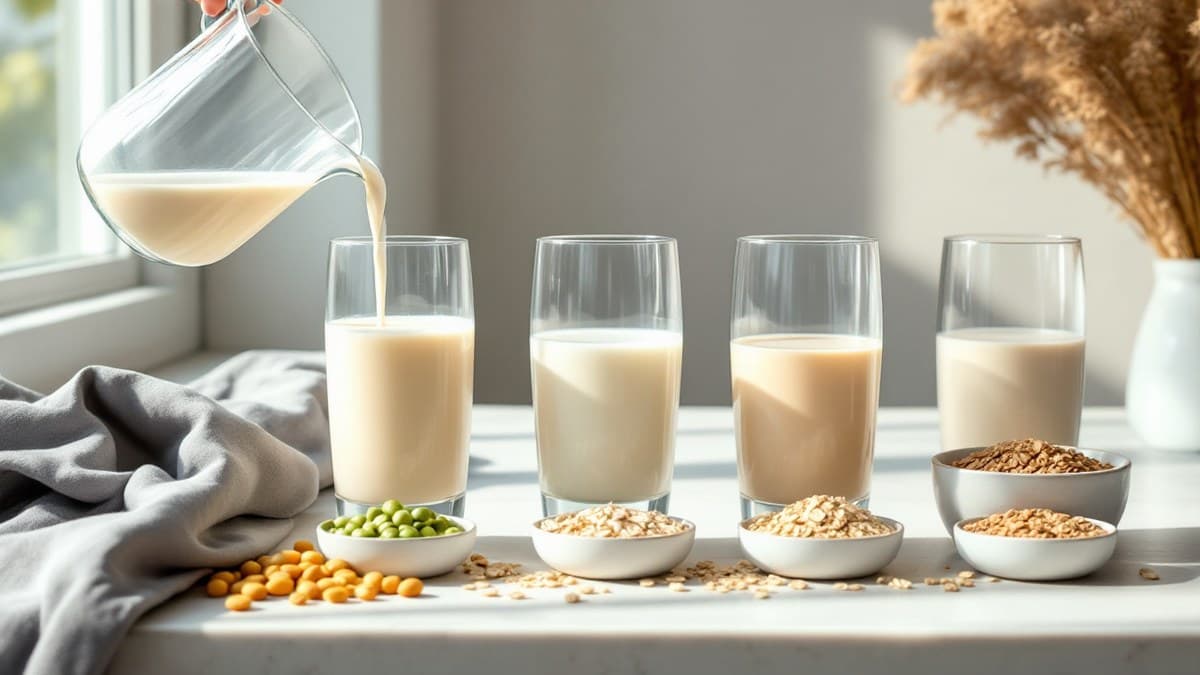
Best High-Protein Plant Milks (2026): 6 Verified Picks, Ranked by Protein Per Cup
Silk Protein Original is the highest-protein plant milk in a US grocery store at 13g per cup, and its own label counts all 13 grams as 26% of the Daily Value, with no quality discount applied. The number on the front of the carton is not the whole story: Orgain's almond milk prints 10g, but its panel declares that as 13% of the Daily Value, which works out to roughly 6.5g of usable protein, less than a plain 7g soymilk delivers. Every figure here came off a published Nutrition Facts panel, checked November 1, 2026.
Our top protein drink picks
Editor-selected and ready to buy. As an Amazon Associate we may earn from qualifying purchases.
 30g protein
 16g protein
Organic Nutrition Shake - Creamy Chocolate Fudge
Amazon returns policy · secure checkout
 10g protein
Protein Soda Classic Cola
Amazon returns policy · secure checkout
Which plant milk has the most protein?
Silk Protein Original is the highest-protein plant milk on a US grocery shelf at 13g of protein per 1-cup serving, for 130 calories, with 3g of fiber and 470mg of calcium. Its label counts all 13 grams as 26% of the Daily Value — exactly 13 of the 50g Daily Value, so none of it is discounted for protein quality. The catch is that a bigger number on the front does not always mean more usable protein: Orgain’s Almondmilk + Protein prints 10g, but its own panel declares that as 13% of the Daily Value, which is about 6.5g after the federal quality correction — less than the 7g an ordinary unsweetened soymilk delivers.
The plant milk case has quietly split in two. On one side sit the milks almost everyone actually buys — almond, oat, coconut — which carry somewhere between 0 and 2 grams of protein per cup. Ripple’s own carton cites USDA data putting regular almond milk at 1g. On the other side sits a small group of soy, pea and protein-fortified milks that match or beat the 8g in a cup of dairy milk.
From three feet away, in the same chilled case, those two groups look identical. Both come in the same cartons, both say the same friendly things about plants, and only one of them is a protein source at all.
So we read the Nutrition Facts panel on every widely-sold higher-protein plant milk we could verify and ranked them on the number that decides whether this carton is doing anything for you: protein in one cup, as that product’s own label defines a cup. Every figure below came from a published panel or a brand’s own product page, checked on November 1, 2026. Anything a brand does not publish is shown as a dash rather than estimated.
Three findings came out of the data, and each one changes what belongs in the cart. The highest-protein plant milk in America is new this year. The biggest protein number in the aisle is not the most usable protein. And the two cleanest ingredient lists here have given up almost all of their calcium to get that short.
High-Protein Plant Milks Compared (Verified Labels, November 2026)
| Product | Protein per cup | Protein %DV on label | Calories | Protein per 100 cal | Sodium | Total sugars (added) | Calcium | Protein source |
|---|---|---|---|---|---|---|---|---|
| Silk Protein Original | 13g | 26% | 130 | 10.0g | 200mg | 4g (3g) | 470mg | Soymilk + soy protein isolate |
| Orgain Organic Almondmilk + Protein, Unsweetened Vanilla | 10g | 13% | 80 | 12.5g | 220mg | 0g (0g) | 250mg | Almondmilk + added plant protein |
| West Life (WestSoy) Organic Unsweetened Soymilk | 9g | — | 100 | 9.0g | 25mg | 3g (0g) | 30mg | Whole organic soybeans |
| Ripple Unsweetened Original | 8g | — | 70 | 11.4g | 120mg | 0g (0g) | 440mg | Pea protein |
| Califia Farms Organic Unsweetened Soymilk | 8g | — | 80 | 10.0g | 50mg | 1g (0g) | 20mg | Whole organic soybeans |
| Silk Organic Unsweet Soymilk (shelf-stable) | 7g | 14% | 80 | 8.8g | 80mg | 1g (0g) | 280mg | Whole organic soybeans |
| Dairy milk, for reference | 8g | — | — | — | — | — | 293mg | Milk protein |
| Regular almond milk, for reference | 1g | — | — | — | — | — | — | Almonds |
All figures are per 1 cup (240ml), the serving every one of these products uses. Protein per 100 calories is calculated from each product’s own panel. A dash means the figure is not published on the panel we read, so we have not estimated it — brands are only required to print a protein %DV when the package makes a protein claim, which is why three rows are blank in that column. The dairy milk and almond milk reference rows are the USDA figures cited on Ripple’s own label footnote.
The 6 Best High-Protein Plant Milks, Ranked by Protein Per Cup
#1 Silk Protein Original — the most protein in a cup of plant milk, full stop

Silk Protein Complete Plant Milk, Original, 48 fl oz
13g protein · 26% DV protein · 130 cal · 10.0g protein per 100 cal · 3g fiber · 4g sugars (3g added) · 200mg sodium · 470mg calcium · 3mcg vitamin D
Check price on Amazon →Why it wins: nothing else in the refrigerated case comes close. Thirteen grams in one cup is 63% more protein than a cup of dairy milk and thirteen times a cup of regular almond milk, and Silk gets there by starting with real soymilk and adding soy protein isolate rather than dusting a nut milk with a protein blend. It also arrives with 3g of fiber, 470mg of calcium and 3mcg of vitamin D, which is more calcium than dairy milk and more than any other milk in this comparison. The product is new — Danone rolled it out nationwide in January 2026 and described it then as the highest-protein refrigerated plant-based milk on shelves, which, nine months later, still matches what we found on the labels.
The number that proves the point: the panel lists those 13 grams as 26% of the Daily Value. The protein Daily Value is 50g, so 26% is exactly 13g — the federal quality correction took nothing off, because soy protein is a complete protein with all nine essential amino acids. Keep that figure in mind for the next pick.
The honest limitations: two worth knowing. This is not an unsweetened product — it carries 3g of added cane sugar per cup, and the chocolate version carries considerably more. And at 130 calories it is the most calorie-dense milk here; if you drink three cups a day, that is 390 calories from the milk alone. It is also a refrigerated bottle, not a pantry carton, so it is a grocery-run product rather than something to stock up on.
#2 Orgain Organic Almondmilk + Protein — the biggest number with the biggest asterisk

Orgain Organic Almondmilk + Protein, Unsweetened Vanilla, 32 fl oz (6 pack)
10g protein · 13% DV protein · 80 cal · 12.5g protein per 100 cal · 1g fiber · 0g sugars · 220mg sodium · 250mg calcium · shelf-stable · USDA Organic
Check price on Amazon →Why it ranks here: on raw grams it is second only to Silk Protein, and on raw grams per calorie it leads the entire comparison at 12.5g per 100 calories — 10g of protein for 80 calories, zero sugar, organic, shelf-stable and soy-free. For anyone who wants protein in a pantry carton that keeps unopened at room temperature, nothing else here does all of that at once. The 6-pack format is the practical way to buy it.
The honest limitation, and it is the reason this guide exists: Orgain’s own Nutrition Facts panel lists those 10 grams as 13% of the Daily Value. Ten grams of complete protein would be 20% of the 50g Daily Value. The brand is not making a mistake and it is not hiding anything — federal rules require the printed percentage to be corrected for protein quality while the gram count is not corrected at all, so a plant-protein blend of almond and rice protein gets marked down. Thirteen percent of 50g is about 6.5g of usable protein. That is less than the 7g in a plain unsweetened soymilk that makes no protein claim at all, and less than the 8g in a cup of dairy milk. The grams are real; they are simply not worth what the same grams from soy or dairy are worth.
Second limitation: at 220mg of sodium per cup this is the saltiest milk in the comparison, roughly nine times the West Life soymilk and more than twice a cup of dairy milk.
#3 West Life Organic Unsweetened Soymilk — two ingredients, 9 grams

WestSoy / West Life Organic Unsweetened Plain Soymilk, 32 fl oz (12 pack)
9g protein · 100 cal · 9.0g protein per 100 cal · 1g fiber · 3g sugars (0g added) · 25mg sodium · 30mg calcium · two ingredients · USDA Organic · shelf-stable
Check price on Amazon →Why it ranks here: the ingredient list is filtered water and organic soybeans, and that is the whole list. No oils, no gums, no isolate, no added sugar, nothing to look up. It still delivers 9g of protein per cup, the most of any milk here that is made only from the bean, and it does it at 25mg of sodium — nine times less than Orgain and a quarter of what a cup of dairy milk carries. The 3g of total sugars on the panel are sugars from the soybeans themselves, with 0g added. It is also shelf-stable, so a twelve-carton case lives in a cupboard. (The brand is mid-rename: cartons now read West Life, and the older WestSoy name is still on plenty of shelves. Same product.)
The honest limitation, and read this one if you are replacing dairy milk: it is not fortified. The Whole Foods panel for this product lists 30mg of calcium per cup against the 293mg in dairy milk and the 440 to 470mg in the fortified milks above. There is no added vitamin D either. That is the price of a two-ingredient label: swapping dairy milk for this one cup-for-cup costs you roughly 90% of the calcium you were getting, which matters most for the people most often told to drink milk. If the calcium is the point, buy a fortified soymilk instead; if the clean label is the point, this is the best protein-per-ingredient trade on the shelf.
#4 Ripple Unsweetened Original — the most protein per calorie, and the allergen-friendly one

Ripple Pea Milk, Original, Unsweetened, 48 fl oz
8g protein · 70 cal · 11.4g protein per 100 cal · 0g total carbs · 0g sugars · 120mg sodium · 440mg calcium · soy-free, nut-free, gluten-free
Check price on Amazon →Why it ranks here: once you correct for protein quality, this is the most efficient milk in the comparison. Eight grams for 70 calories is 11.4g of protein per 100 calories, and the panel reads 0g total carbohydrate and 0g sugar — the only milk here where the protein arrives with no carbohydrate attached at all. It is also the one pick that is simultaneously soy-free, nut-free and gluten-free, which in a household with a real allergy is not a feature, it is the entire decision. At 440mg of calcium per cup it is fortified to 50% more than dairy milk.
The honest limitations: this is a formulated milk, not a milk pressed from a bean. The ingredient list runs to water, pea protein, sunflower or safflower oil, four added vitamins, two phosphates, sea salt and three gums. Nothing there is alarming, but a shopper choosing plant milk specifically to shorten an ingredient list will not get that here. Pea protein is also complete but comparatively low in methionine, so it is a slightly weaker per-gram muscle-building protein than soy or dairy — a difference that disappears entirely if the rest of your day has varied protein in it. For the gym-focused version of that question, see our guide to the best whey protein alternatives.
#5 Califia Farms Organic Unsweetened Soymilk — three ingredients, no oils, no gums

Califia Farms Organic Soy Milk, 32 oz (6 pack)
8g protein · 80 cal · 10.0g protein per 100 cal · 3g fiber · 1g sugars (0g added) · 50mg sodium · 20mg calcium · three ingredients · USDA Organic
Check price on Amazon →Why it ranks here: soybeans, water and sea salt — no oils, no gums, no added sweetener — and it still matches a cup of dairy milk gram for gram at 8g of protein for 80 calories. It also carries 3g of fiber per cup, the joint-highest in this comparison, which no other three-ingredient milk here manages, and 50mg of sodium. Of the two minimalist soymilks on this list, this is the one with the fiber; West Life is the one with the extra gram of protein.
The honest limitation: the same trade as West Life, and more extreme. The panel lists 20mg of calcium and 0mcg of vitamin D — both 0% of the Daily Value. This is a protein drink and a cooking milk, not a replacement for fortified milk in a diet that was relying on milk for bone nutrients. If a child or an older adult in the house drinks plant milk for the calcium, this is the wrong carton; cottage cheese or a fortified soymilk fills that gap far better.
#6 Silk Organic Unsweet Soymilk — the fortified pantry carton
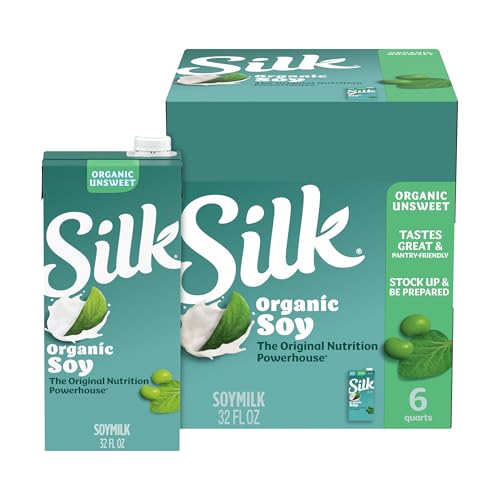
Silk Shelf-Stable Organic Soy Milk, Unsweetened, 32 fl oz (6 pack)
7g protein · 14% DV protein · 80 cal · 8.8g protein per 100 cal · 2g fiber · 1g sugars (0g added) · 80mg sodium · 280mg calcium · 3mcg vitamin D · shelf-stable
Check price on Amazon →Why it ranks here: it has the lowest protein number on this list and it is still the most sensible everyday carton for a lot of households. Seven grams for 80 calories, zero added sugar, 280mg of calcium and 3mcg of vitamin D — close to dairy milk on the bone nutrients, unlike the two minimalist soymilks above — and it keeps unopened in a cupboard, so a case of six solves the milk question for a month.
Why it is worth more than its ranking: Silk declares those 7 grams as 14% of the Daily Value, which is exactly 7g of the 50g Daily Value with no correction taken. Hold that against pick #2: an unsweetened soymilk with 7g on the front delivers more federally-recognized protein than an almond milk with 10g on the front. That is the single most useful thing on this page.
The honest limitation: it is the lowest protein per calorie here at 8.8g per 100 calories, and the ingredient list, while short, is not the two-line list West Life offers — it includes the vitamin and mineral blend, sea salt, gellan gum and ascorbic acid. That is the fortification doing its job, and it is the reason to buy this one.
Why does a 10-gram almond milk count as only 13% of your daily protein?
Because the percentage is corrected for protein quality and the gram count is not. Under federal labeling rules (21 CFR 101.9), the protein %DV printed on a panel is the actual grams multiplied by the protein digestibility-corrected amino acid score — a 0 to 1 measure of how completely the body can use that protein — and that percentage must be declared whenever a package makes a protein claim. The grams themselves get no such adjustment.
That single rule explains the whole table. Every soy product here that declares a percentage declares the arithmetic figure: Silk Protein’s 13g shows as 26%, Silk Organic Unsweet’s 7g shows as 14%, and 26% and 14% of 50g are 13g and 7g exactly. Soy is a complete protein, so nothing is taken off. Orgain’s 10g shows as 13%, which is 6.5g — a correction of about a third, which is what an almond-and-rice protein blend earns.
The practical rule for the aisle: if a carton prints a protein %DV, double it to read the real grams (because the Daily Value is 50g). If that doubled number is smaller than the number on the front, the difference is the quality discount. If no percentage is printed at all, the package is making no protein claim, and plain soy is still the safest bet in the case.
Is plant milk as good as dairy milk for protein?
Soy milk is. Almost nothing else is, unless protein has been added to it. A cup of dairy milk carries 8g of protein and 293mg of calcium, according to the USDA figures cited on Ripple’s own label. Plain soy milk lands in the same place by nature: 7 to 9g per cup across every soymilk we verified, from a complete protein with all nine essential amino acids.
Almond, oat and coconut milks are a different product wearing the same carton. Ripple’s label cites USDA data putting regular almond milk at 1g of protein per cup. Planet Oat’s Original oatmilk lists 2g per 90-calorie cup and its Unsweetened Original lists 1g per 40-calorie cup. Those are fine drinks. They are not protein.
Where plant milk now beats dairy is at the top of the range: Silk Protein Original’s 13g per cup is more protein than any cup of ordinary dairy milk, and more calcium too. Five years ago no plant milk in a US grocery store could say that.
Which high-protein plant milks have no calcium?
The short-ingredient soy milks — and it is the most commonly missed trade-off in this aisle. Califia Farms Organic Unsweetened Soymilk lists 20mg of calcium and 0mcg of vitamin D per cup. The West Life organic unsweetened soymilk panel lists 30mg. Both figures are 0 to 2% of the Daily Value. Neither brand is doing anything wrong; a milk made from nothing but beans, water and salt has no mechanism to contain added calcium.
The fortified milks on this list carry 250 to 470mg per cup, with Silk Protein (470mg) and Ripple (440mg) both ahead of dairy milk’s 293mg. If the household is drinking plant milk instead of dairy milk rather than alongside it, that gap is worth more attention than two grams of protein either way. The simplest fix is to buy a fortified carton for drinking and keep the minimalist one for cooking, where the calcium was never the point.
What about flax milk, oat milk and the rest of the case?
Good Karma’s Unsweetened Flaxmilk + Protein is the most interesting near-miss: its product page lists 5g of pea protein for 45 calories, which is a strong protein-per-calorie ratio and the only option here that is free of dairy, soy, nuts and gluten at once. We have left it out of the ranking because 5g per cup is below what we will call a high-protein milk, but for a household avoiding soy and nuts, it belongs on the short list beside Ripple.
Everything else in the case is a beverage rather than a protein source. Oat milk runs 1 to 2g per cup. Coconut and cashew milks are typically under 1g. Almond milk is 1g unless protein has been explicitly added to it, which is exactly what Orgain does and why Orgain is on this page while regular almond milk is not. The word on the front of the carton that matters is not plant, it is protein — and then the panel on the back decides how much of it counts.
Where to buy these
Five of the six are easy to buy online as multipacks; Silk Protein Original is a refrigerated bottle that is also stocked widely in grocery dairy cases nationwide since its January 2026 launch. All six Amazon listings above were confirmed in stock on November 1, 2026.
We earn a commission if you buy through these links, at no extra cost to you. It does not change which products we rank or what we say about them.
Frequently Asked Questions
Which plant milk has the most protein?
Silk Protein Original, at 13g of protein per 1-cup serving. It is made from soymilk plus soy protein isolate, costs 130 calories per cup, and its label declares the full 13g as 26% of the Daily Value. The next highest is Orgain Organic Almondmilk + Protein at 10g per cup, though its panel declares that as 13% of the Daily Value, which works out to about 6.5g after the federal quality correction.
Does soy milk have as much protein as cow's milk?
Yes, essentially. Every unsweetened soymilk we verified lands between 7g and 9g per cup against the 8g in a cup of dairy milk, and soy protein is complete, so its grams are not discounted on the label. West Life Organic Unsweetened leads the plain soymilks at 9g per cup for 100 calories, Califia Farms Organic Unsweetened sits at 8g for 80 calories, and Silk Organic Unsweet at 7g for 80 calories.
Which plant milk is best for building muscle?
Silk Protein Original, on grams alone — 13g per cup, complete protein, no quality discount on the label. Ripple Unsweetened is the pick if calories are tight, at 8g for 70 calories with no carbohydrate at all, though pea protein is slightly lower in methionine than soy per gram. Either way, a cup of milk is a contribution rather than a strategy: 8 to 13g is roughly a tenth of a 100g daily protein target. Our guide to the best protein drinks of 2026 covers the ready-to-drink shakes that carry 20g to 42g in a bottle.
Is almond milk a good source of protein?
No. Regular almond milk carries about 1g of protein per cup, per the USDA figures cited on Ripple’s own label. The only almond milks worth buying for protein are the ones with protein explicitly added, such as Orgain Organic Almondmilk + Protein at 10g per cup — and even there, the label’s own 13% Daily Value says about 6.5g of that is usable.
Is there a high-protein plant milk without soy?
Ripple Unsweetened Original is the strongest soy-free option at 8g of pea protein per 70-calorie cup, and it is nut-free and gluten-free as well. Orgain Organic Almondmilk + Protein reaches 10g on the front of the carton without soy, but it contains almond and its usable protein after the label’s quality correction is roughly 6.5g, so Ripple delivers more real protein despite the smaller number.
Do high-protein plant milks have added sugar?
Most of the ones here do not. Orgain, Ripple, Califia, West Life and Silk Organic Unsweet all list 0g of added sugar; the sugars that do appear on the West Life and Califia panels occur naturally in soybeans. The exception is the top pick: Silk Protein Original carries 3g of added cane sugar per cup in the Original flavor, and the Chocolate version carries considerably more.
The bottom line
Buy Silk Protein Original if you want the most protein a cup of plant milk can give you, and accept 130 calories and 3g of added sugar for it. Buy Ripple Unsweetened if you want the most protein per calorie, or if soy and nuts are off the table. Buy West Life or Califia organic unsweetened soymilk if a two or three-ingredient label is the point — just know you are giving up almost all of the calcium. Buy Silk Organic Unsweet shelf-stable if you want one carton that does everything adequately and lives in a cupboard.
And carry one habit out of this aisle into every other one: the grams on the front of a package and the percentage on the back are answering different questions, and only the percentage has been corrected for whether your body can use it. For the rest of the dairy-free shelf, see our guides to dairy-free Greek yogurt, lactose-free protein shakes and vegan protein powders.
Verified November 1, 2026. Label data came from each product’s published Nutrition Facts panel: the Silk Protein Original panel published by Silk, the Silk Organic Unsweet Soymilk listing at H-E-B and the same product’s panel at Wegmans, the Orgain Organic Protein Almondmilk panel at Whole Foods Market, the West Life organic unsweetened soymilk panel at Whole Foods Market, the Ripple Unsweetened Original panel at Giant Food, the Califia Farms Organic Unsweetened Soymilk panel at Stop & Shop, and the Good Karma Unsweetened Flaxmilk + Protein product page. Launch details from Danone’s January 2026 announcement of Silk Protein; the protein figures were cross-checked against the Center for Science in the Public Interest’s February 2026 review of plant-based milks. Labeling rules quoted from 21 CFR 101.9. We earn a commission if you buy through the links above, at no extra cost to you; it does not change which products we rank or what we say about them.
Shop our top protein drink picks
Editor-selected high-protein options related to this guide. As an Amazon Associate we may earn from qualifying purchases.
30g protein16g proteinOrganic Nutrition Shake - Creamy Chocolate Fudge
Amazon returns policy · secure checkout
10g proteinProtein Soda Classic Cola
Amazon returns policy · secure checkout
Tags
High Protein Snacks Pro Editorial Team
Independently researched and editorially reviewed. We compare real nutrition labels and never accept payment for coverage.
Get the best new protein snacks in your inbox
Weekly picks and honest reviews — no spam, unsubscribe anytime.
More from the journal
OWYN Protein Shake Nutrition Facts (2026): 32g Plant Protein, 200 Calories, 0g Sugar — Pro Elite Verified
OWYN Pro Elite delivers 32g of plant protein per 11.15 fl oz bottle at 200 calories with 0g sugar and 3g fiber — the highest-protein mainstream vegan ready-to-drink shake we’ve verified, and free of the top 9 allergens. Verified 2026 nutrition facts, the pea-protein-plus-pumpkin-seed blend that makes it a complete protein, and an honest comparison against Fairlife Nutrition Plan, Premier Protein, and Isopure Clear.
Read more
Best Bone Broth Protein Powder (2026): 6 Picks Ranked by the Protein Their Own Labels Count
Ancient Nutrition Bone Broth Protein Pure is the best bone broth protein powder on the shelf right now at 20g of protein per 22.3g scoop for 90 calories, and it is the only one here whose own Supplement Facts panel counts most of that as usable protein: 18% of the Daily Value, which works out to about 9 grams. The rest of the shelf declares far less than the front of the bag implies. Paleovalley prints 15g of protein and declares it as 3% of the Daily Value; Dr. Kellyann prints 16g and declares 1%. Every figure here came off a published label, checked November 3, 2026.
Read more
Best High-Protein Yogurt 2026: 6 Brands Ranked, Up to 25g Protein per Cup
Six high-protein yogurts ranked head-to-head by total protein and protein density. Ratio Protein leads on total protein (25g per 5.3 oz cup at 170 calories); FAGE Total 0% leads on density (20g of protein per 100 calories at just 90 calories per serving). Every number from the manufacturer's own 2026 Nutrition Facts panel, cross-checked at three or more retailer nutrition databases.
Read more