ALOHA Protein Bar Nutrition Facts 2026: Full Label Breakdown for Every Flavor
ALOHA protein bars deliver 14g of organic plant protein per bar from a pea-and-brown-rice blend, with 230–260 calories, 5–9g of sugar from organic coconut sugar, and 8–11g of fiber. Every flavor is USDA Organic, vegan, gluten-free, and soy-free. Here is a full nutrition-label breakdown for the six flagship US flavors, who ALOHA is actually best for, and how the plant-based protein compares to whey.
Our top protein bar picks
Editor-selected and ready to buy. As an Amazon Associate we may earn from qualifying purchases.
Shopping for ALOHA? Chocolate Cherry Protein Bars · Oatmeal Chocolate Chip Protein Bars · Pumpkin Spice Protein Bars
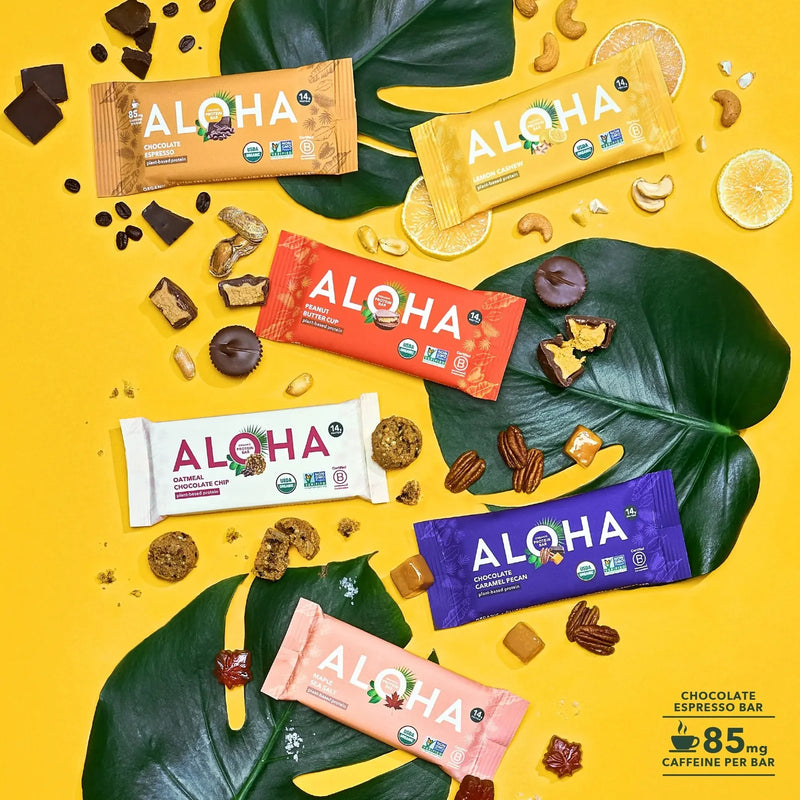 14g protein
Protein Bar Sampler #2 - Variety Pack
Amazon returns policy · secure checkout
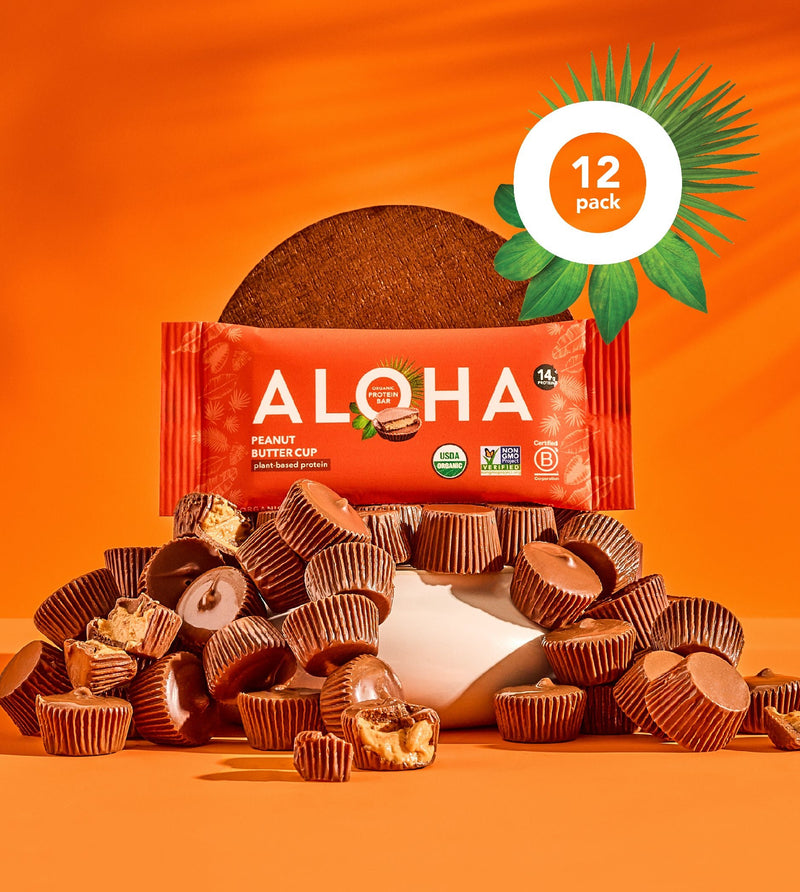 14g protein
Peanut Butter Cup Protein Bars
Amazon returns policy · secure checkout
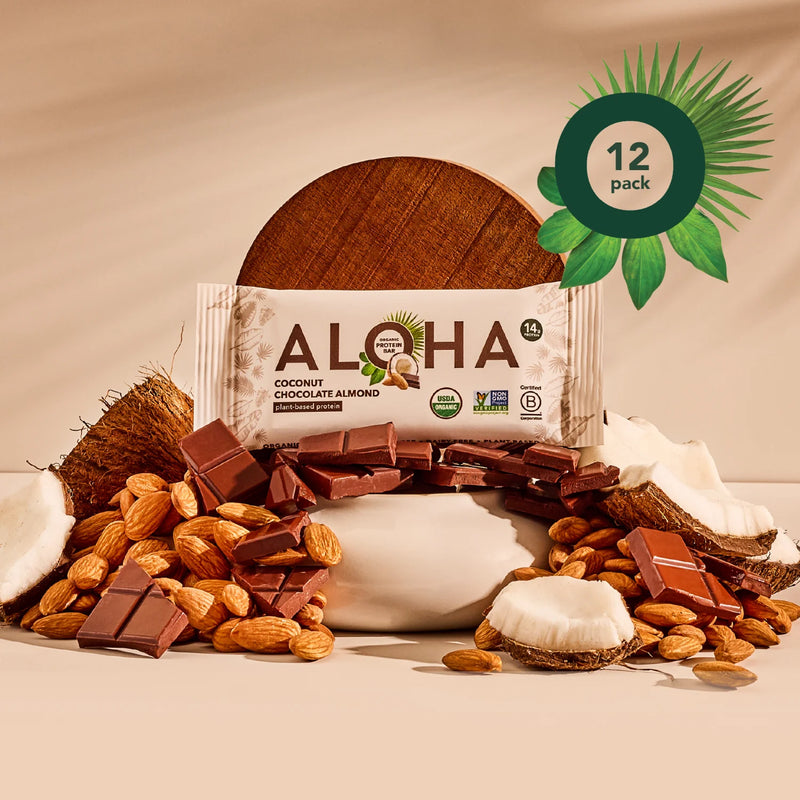 14g protein
The 30-second answer
Every ALOHA bar contains 14g of plant protein from organic pea and brown rice, 230–260 calories, 5–9g of real sugar from organic coconut sugar and organic tapioca syrup, and 8–11g of fiber. The bars are USDA Organic, Non-GMO Project Verified, vegan, soy-free, and gluten-free. The flagship Peanut Butter Cup delivers 14g of protein and 10g of fiber for 250 calories — the highest fiber-per-calorie ratio of any mainstream protein bar at this size. The tradeoff vs. whey bars: 14g is lower than the 20g+ you get from Quest or ONE Bar, and the amino acid score (PDCAAS) of the pea-plus-brown-rice blend is estimated at 0.86 vs. 1.0 for whey, meaning each gram is slightly less bioavailable. For a genuinely organic, whole-food-aligned snack with no artificial sweeteners and real fiber, ALOHA is the strongest option in the category.
ALOHA launched in 2013 as a meal-replacement shake brand and pivoted in the early 2020s to plant-based protein bars when the bar segment outgrew the shake segment. The bars are now sold at Whole Foods, Target, Sprouts, Amazon, and the brand’s own website across roughly a dozen US flavors. Every bar in the lineup carries a USDA Organic seal, Non-GMO Project Verification, and a Certified B Corporation certification — a combination no competitor at the same price point matches. The nutrition figures in this guide come from ALOHA’s published 2026 nutrition panels.
Affiliate disclosure: if you buy through our links, we earn a small commission at no extra cost to you. Nutrition figures come from ALOHA’s own published labels.
What Is in an ALOHA Bar? Protein Source Explained
ALOHA uses a two-protein blend: organic pea protein isolate and organic brown rice protein. Each is a complete protein when combined — pea protein is high in branched-chain amino acids (BCAAs) but lower in methionine; brown rice protein fills that methionine gap. The blended amino acid score (estimated PDCAAS ~0.86–0.93) is meaningfully lower than whey protein isolate (PDCAAS 1.0), but meaningfully higher than a single plant protein source or collagen. In practice, 14g of this blend delivers approximately 11–12g of “effective” amino acid contribution equivalent to a 1.0-PDCAAS protein — still a real and useful snack dose, particularly for people who eat protein at multiple meals throughout the day.
The second thing to understand about ALOHA’s formula is its sweetener choice. Every ALOHA bar uses organic coconut sugar and organic tapioca syrup as its primary sweeteners — real, minimally refined sugars, not erythritol, sucralose, or stevia. This means two things: the 5–9g of sugar on the label is real sugar (not a sugar-alcohol artifact); and there is no artificial-sweetener aftertaste. Organic coconut sugar has a lower glycemic index than cane sugar (roughly 35 vs 65) because of its inulin content, though the glycemic difference at 5–9g total is not clinically meaningful for most adults. ALOHA does not use maltitol (which causes GI distress in many people), sucralose, or acesulfame potassium.
ALOHA Peanut Butter Cup: Full 2026 Nutrition Label
The Peanut Butter Cup is ALOHA’s flagship flavor and the most widely available. The following figures are from ALOHA’s published 2026 nutrition panel for the 60g bar.
| Nutrient | Amount (per 60g bar) |
|---|---|
| Calories | 250 |
| Total fat | 14g |
| Saturated fat | 4.5g |
| Sodium | 130mg |
| Total carbohydrates | 26g |
| Dietary fiber | 10g |
| Total sugars | 5g |
| Added sugars | 4g |
| Protein | 14g |
| Calcium | 100mg (8% DV) |
| Iron | 3.1mg (15% DV) |
Key metrics: 5.6g protein per 100 calories (lower than Quest at 9.5g or ONE Bar at 9.0g, but higher than a Kind bar at 3.0g). Net carbs: 16g. Protein-to-sugar ratio: 2.8:1 (strong for an organics brand). The 10g of fiber in the Peanut Butter Cup is the highest dietary fiber figure of any mainstream single-serve protein bar that is not a fiber-supplement product. ALOHA achieves this through chicory root fiber (inulin), which is a prebiotic fiber, not the bulking soluble corn fiber used by some competitors.
Full Flavor Lineup: Nutrition Comparison Table
All figures are per bar, from ALOHA’s published 2026 nutrition panels. Bar weights vary slightly by flavor (58–60g). Any flavor whose exact figure was not confirmed from ALOHA’s published label is marked with —.
| Flavor | Calories | Protein | Fiber | Sugar | Fat |
|---|---|---|---|---|---|
| Peanut Butter Cup | 250 | 14g | 10g | 5g | 14g |
| Chocolate Chip Cookie Dough | 250 | 14g | 11g | 9g | 12g |
| Chocolate Fudge Brownie | 240 | 14g | 8g | 4g | 10g |
| Caramel Sea Salt | 230 | 14g | 9g | 5g | 9g |
| Vanilla Almond Crunch | 240 | 14g | 10g | 6g | 11g |
| Lemon Cashew | 230 | 14g | 9g | 7g | 9g |
Every flavor delivers 14g of protein. The caloric range is narrow (230–250 calories), driven primarily by fat content rather than sugar. The Chocolate Fudge Brownie is the lowest-sugar option at 4g; the Chocolate Chip Cookie Dough is the highest at 9g. Fiber holds between 8 and 11g across flavors — a range where any flavor qualifies as a high-fiber food by FDA standards (≥5g per serving).
Who ALOHA Is Best For
Vegans and plant-based eaters who want a high-fiber snack with a recognizable ingredient list. ALOHA’s pea-plus-brown-rice blend is the most complete plant protein combination available in a mainstream protein bar, and no artificial sweetener compromises the ingredient story.
Organic-certification shoppers. If USDA Organic is a non-negotiable, ALOHA is one of very few options at the mainstream protein bar tier. Most protein bars — including Quest, ONE Bar, Barebells, and RXBar — are not organic.
People with dairy and soy allergies. ALOHA contains no whey, casein, or soy. The bars are produced on equipment that also processes tree nuts (almonds, cashews), which ALOHA discloses, but dairy and soy are entirely absent from the formula.
Fiber-focused snackers. The 10–11g of prebiotic inulin fiber in the Peanut Butter Cup and Cookie Dough flavors is the highest of any mainstream bar and supports gut microbiome diversity alongside satiety. People sensitive to inulin (it ferments rapidly and can cause bloating in IBS-prone individuals) should introduce ALOHA bars gradually.
Who ALOHA is NOT best for: people prioritizing maximum protein per calorie (14g at 250 cal = 5.6g protein per 100 cal; Quest delivers 9.5g per 100 cal); athletes in a hard muscle-building phase who need leucine density (whey and milk protein isolate outperform pea-and-rice blends on leucine per gram); or anyone on a strict budget (ALOHA averages $2.50–$3.00 per bar vs. $1.80–$2.20 for Quest or ONE Bar).
ALOHA vs. Competitors: Key Differences
| Comparison point | ALOHA | Quest | ONE Bar | No Cow |
|---|---|---|---|---|
| Protein per bar | 14g | 21g | 20g | 20g |
| Protein source | Pea + brown rice (organic) | Milk protein isolate | Milk protein isolate + whey | Pea + brown rice |
| Vegan | Yes | No | No | Yes |
| USDA Organic | Yes | No | No | No |
| Fiber per bar | 8–11g | 13–14g | 8–9g | 7–9g |
| Artificial sweeteners | None | Sucralose + erythritol | Sucralose + erythritol | Stevia + erythritol |
| Sugar alcohols | None | Erythritol | Erythritol | Erythritol |
| Price per bar | ~$2.50–$3.00 | ~$1.80–$2.20 | ~$1.60–$2.00 | ~$2.00–$2.50 |
Quest outperforms ALOHA on protein count and cost. ALOHA outperforms Quest on organic sourcing, artificial-sweetener avoidance, and protein source cleanliness. No Cow uses the same pea-plus-brown-rice protein blend as ALOHA but is not organic. ONE Bar uses milk protein isolate, which is higher-PDCAAS than ALOHA’s plant blend, at a similar price to No Cow. The head-to-head that matters most for ALOHA’s buyer: ALOHA vs. No Cow — see our best protein bars 2026 guide for that full comparison.
Ingredients and Certifications
The Peanut Butter Cup ingredient list (from ALOHA’s published 2026 label): organic pea protein, organic peanut butter, organic dark chocolate, organic coconut sugar, organic tapioca syrup, organic sunflower oil, organic cocoa butter, chicory root fiber, organic almonds, sea salt, organic vanilla extract. Every ingredient carries an organic designation. No artificial colors, flavors, or preservatives. B Corporation certified (supply-chain labor and environmental standards, not just ingredient standards).
Certifications: USDA Organic, Non-GMO Project Verified, Certified Vegan (Vegan Action), Certified Gluten-Free (GFCO), B Corporation. The GFCO certification is the most rigorous gluten-free claim available — it requires testing to <10 ppm gluten, stricter than the FDA’s 20 ppm threshold. This makes ALOHA safe for most people with celiac disease, unlike many bars that only self-label “gluten-free.”
Frequently Asked Questions
Is ALOHA actually a complete protein?
Yes, in the combination. No single plant protein is complete on its own: pea protein is limited in methionine and cysteine; brown rice protein is limited in lysine. Together the two proteins complement each other’s weak points, producing an amino acid profile that covers all nine essential amino acids. The combined PDCAAS of pea-plus-brown-rice is estimated at approximately 0.86–0.93 (compared to 1.0 for whey), meaning per gram it is slightly less bioavailable than a dairy protein. At 14g per bar, the real muscle-building amino acid contribution is approximately equivalent to 12–13g of whey. For a vegan eating a varied diet with protein at multiple meals, this is a meaningful contribution — not a supplement-grade muscle dose, but a solid organic snack.
How much fiber is in an ALOHA bar and what kind is it?
8–11g per bar depending on flavor (Peanut Butter Cup and Chocolate Chip Cookie Dough are the highest at 10–11g; Chocolate Fudge Brownie is the lowest at 8g). ALOHA uses chicory root fiber, which is inulin — a prebiotic soluble fiber that feeds beneficial gut bacteria (Bifidobacterium, Lactobacillus). This is a different fiber from the soluble corn fiber (AXOS) used by Quest and ONE Bar, and it ferments more rapidly in the large intestine. For most people, 10g of inulin in one sitting is fine. For people with IBS or diagnosed fructooligosaccharide sensitivity, ALOHA can cause bloating or gas; starting with half a bar is a common workaround.
Does ALOHA use stevia or artificial sweeteners?
No. ALOHA’s sweeteners are organic coconut sugar and organic tapioca syrup — both real, minimally refined sugars. There is no stevia, no sucralose, no erythritol, and no acesulfame potassium in any ALOHA bar. This is the primary reason some people prefer ALOHA over No Cow (stevia and erythritol), Quest (sucralose and erythritol), or ONE Bar (sucralose and erythritol). The tradeoff is 5–9g of real sugar per bar — all from organic sources, but real sugar nonetheless.
Is ALOHA good for weight loss?
It depends on the context. At 230–260 calories and 14g of protein with 8–11g of fiber, ALOHA is a well-formulated snack for calorie-controlled eating: the protein-plus-fiber combination produces stronger satiety than a similar-calorie candy bar or granola bar. However, for pure protein-per-calorie efficiency in a weight-loss context, Quest (21g protein / 190 cal) or ONE Bar (20g protein / 210 cal) return more protein for fewer calories. ALOHA is the right pick when whole-food ingredients and organic sourcing matter more than maximizing grams of protein per calorie.
Where can I buy ALOHA protein bars?
ALOHA is available at Whole Foods (broadest flavor selection), Target (6–8 flavors), Sprouts, and Amazon. The brand’s own website offers subscriptions at roughly 20% below single-box pricing. A 12-bar box typically runs $28–$35, depending on flavor and retailer, putting the per-bar cost at $2.33–$2.92 — moderately above Quest and ONE Bar but below Perfect Bar. Multi-pack bundles at Costco have appeared regionally but are not nationally consistent.
Bottom line: ALOHA protein bars are the cleanest organic, plant-based option in mainstream protein bars — USDA Organic, non-GMO, vegan, GFCO certified gluten-free, and made with real sugar rather than artificial sweeteners. At 14g of plant protein and 8–11g of prebiotic fiber per bar, the tradeoff versus whey bars is clear: fewer grams of protein per calorie, slightly lower amino acid bioavailability, and a higher price per bar. The right buyer is someone for whom organic certification, no artificial sweeteners, and a fully plant-based protein stack are worth those tradeoffs. If protein volume is the primary goal, Quest and ONE Bar deliver 20g+ at a lower cost. For a whole-food organic snack that fits both a calorie budget and a clean-label standard, ALOHA Peanut Butter Cup is the best single option in the category.
Shop our top protein bar picks
Editor-selected high-protein options related to this guide. As an Amazon Associate we may earn from qualifying purchases.
Shopping for ALOHA? Chocolate Cherry Protein Bars · Oatmeal Chocolate Chip Protein Bars · Pumpkin Spice Protein Bars
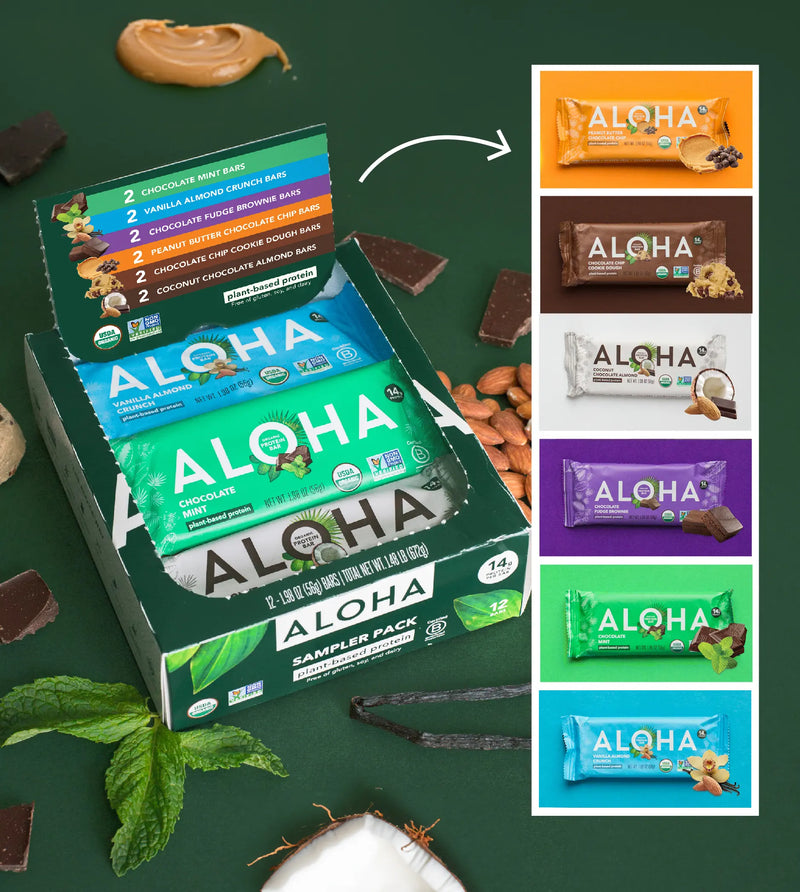 14g protein
Protein Bar Sampler - Variety Pack
Amazon returns policy · secure checkout
14g proteinProtein Bar Sampler #2 - Variety Pack
Amazon returns policy · secure checkout
14g proteinPeanut Butter Cup Protein Bars
Amazon returns policy · secure checkout
Tags
High Protein Snacks Pro Editorial Team
Independently researched and editorially reviewed. We compare real nutrition labels and never accept payment for coverage.
Get the best new protein snacks in your inbox
Weekly picks and honest reviews — no spam, unsubscribe anytime.
More from the journal
ALOHA vs GoMacro vs TruBar (2026): Which Plant-Based Protein Bar Wins on Protein, Sugar and Price?
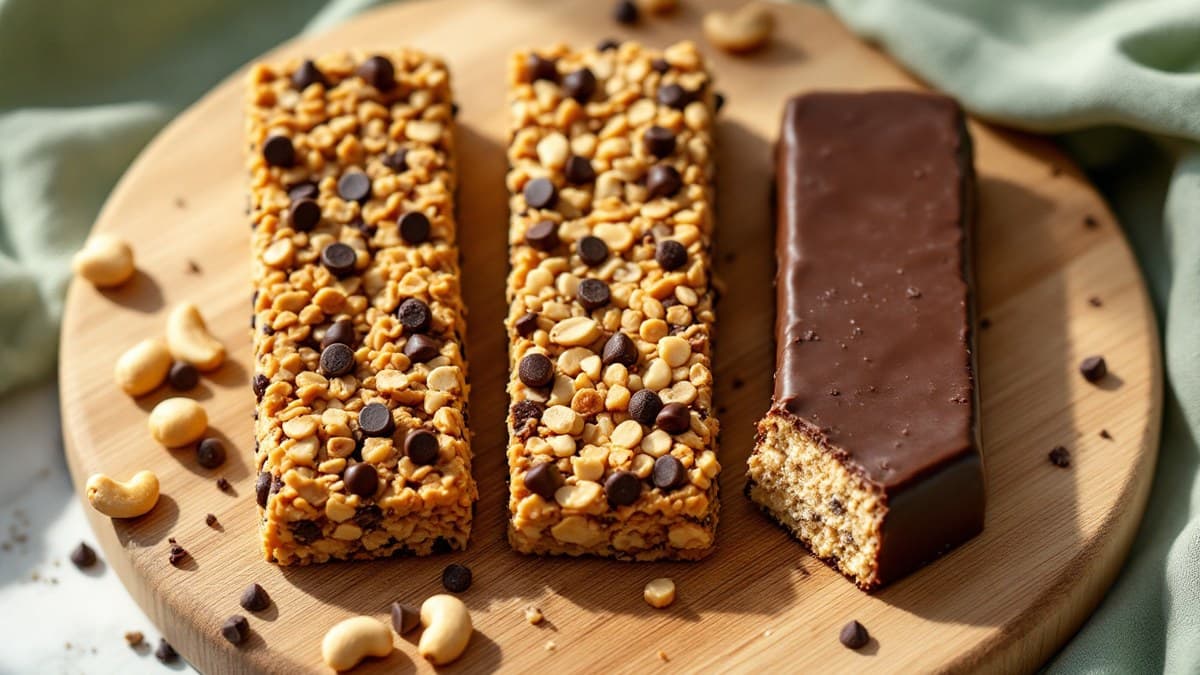
ALOHA has the most protein of the three standard bars: 14g in every flavor, for 220 to 260 calories and 3g to 4g of added sugar. TruBar is the lightest at 190 calories with 12g of protein and up to 14g of fiber, and TruBar PRO tops everything at 18g. GoMacro trails at 11g to 12g for 260 to 290 calories, but it is the only one without added fiber. Fourteen bars compared flavor by flavor on each brand’s own September 2026 labels.
Read more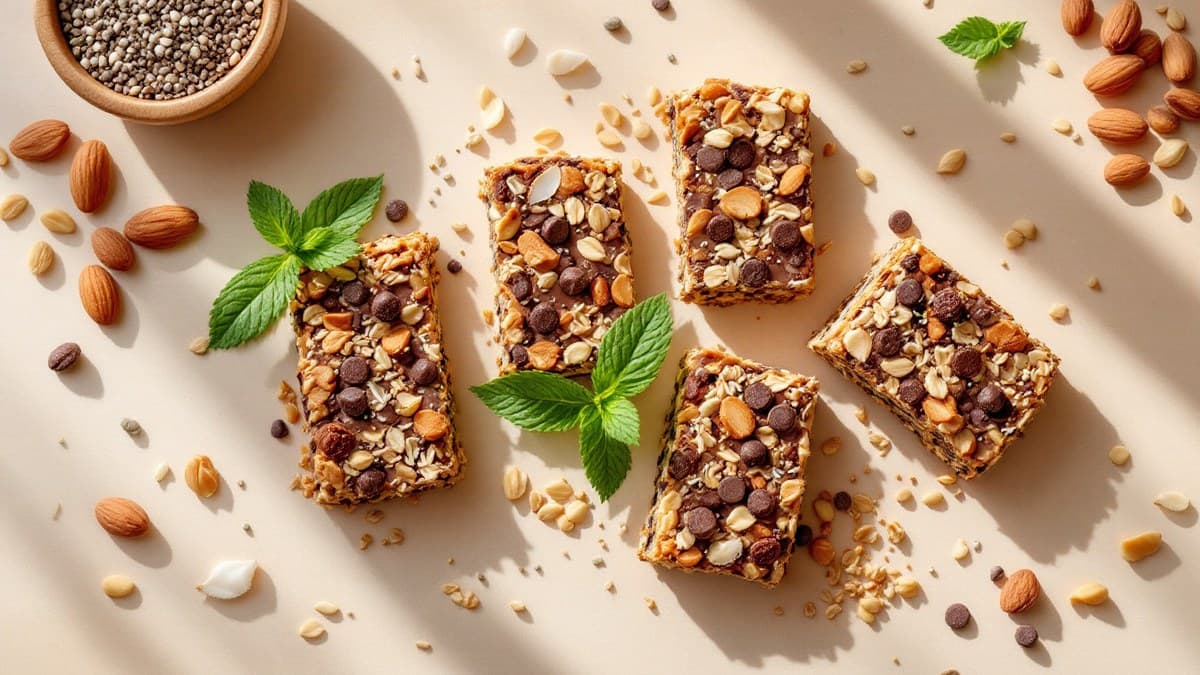
Best Vegan Protein Bars 2026: 4 Plant-Based Picks Ranked by Protein, Ingredients, and Value
The best vegan protein bar in 2026 is No Cow — 20g of plant-based protein from a pea and brown rice blend at 190–200 calories per bar, with no dairy, no soy, and no sucralose or Ace-K. For certified organic with no sugar alcohols, ALOHA Organic delivers 14g of protein from sprouted brown rice and pea protein. Four vegan protein bars ranked by protein density, ingredient honesty, and real-world availability — every nutrition figure verified from each brand's 2026 label.
Read more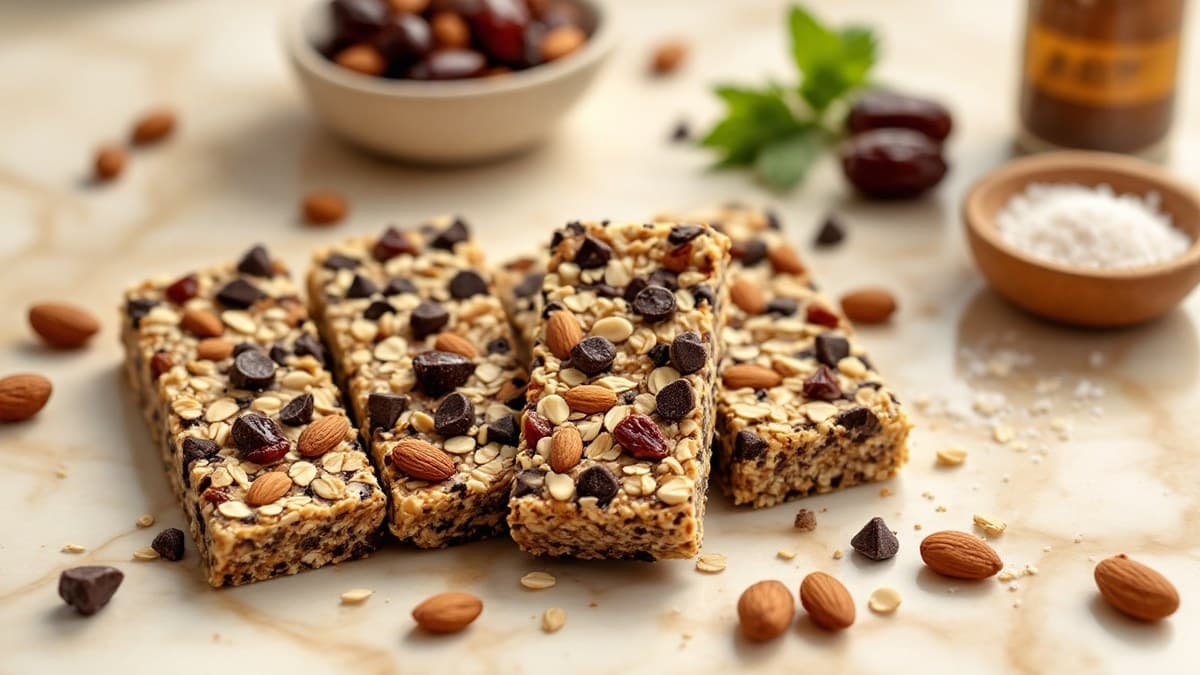
Best Organic Protein Bars (2026): 5 USDA-Certified Picks Ranked by Protein, Ingredient Quality, and Real Sugar Content
The best organic protein bar in 2026 is ALOHA Chocolate Chip Cookie Dough — 14g of complete plant protein at 240 calories with just 5g total sugar, USDA Organic certified, 10g of fiber, and one of the cleanest labels in the certified-organic category. For the shortest ingredient list on any organic bar in retail, Skout Organic Peanut Butter runs on three whole-food ingredients (dates, peanut flour, peanut butter) with zero added sugar. Five USDA Organic picks ranked by protein density, ingredient quality, and honest sugar content — every number verified from each brand's own published 2026 label.
Read more