Quest vs Barebells (2026): Which Protein Bar Wins on Protein, Fiber, and Sweeteners?
Quest edges out Barebells on protein efficiency — 21g of protein for 190 calories versus 20g for 200 — and wins clearly on fiber (12g vs about 3g) and protein quality, since Barebells' blend includes collagen. Barebells answers back with a genuinely candy-like taste most people find easier to eat regularly. Here is the verified head-to-head on calories, sugar, sweeteners, fiber, and protein source, plus which bar fits your goal.
The short answer
Our top protein bar picks
Editor-selected and ready to buy. As an Amazon Associate we may earn from qualifying purchases.
Buy the products in this guide: Chocolate Chip Cookie Dough Flavored Protein Bar · Chocolate Chip Cookie Dough Protein Bars · Oatmeal Chocolate Chip Protein Bars
 20g protein
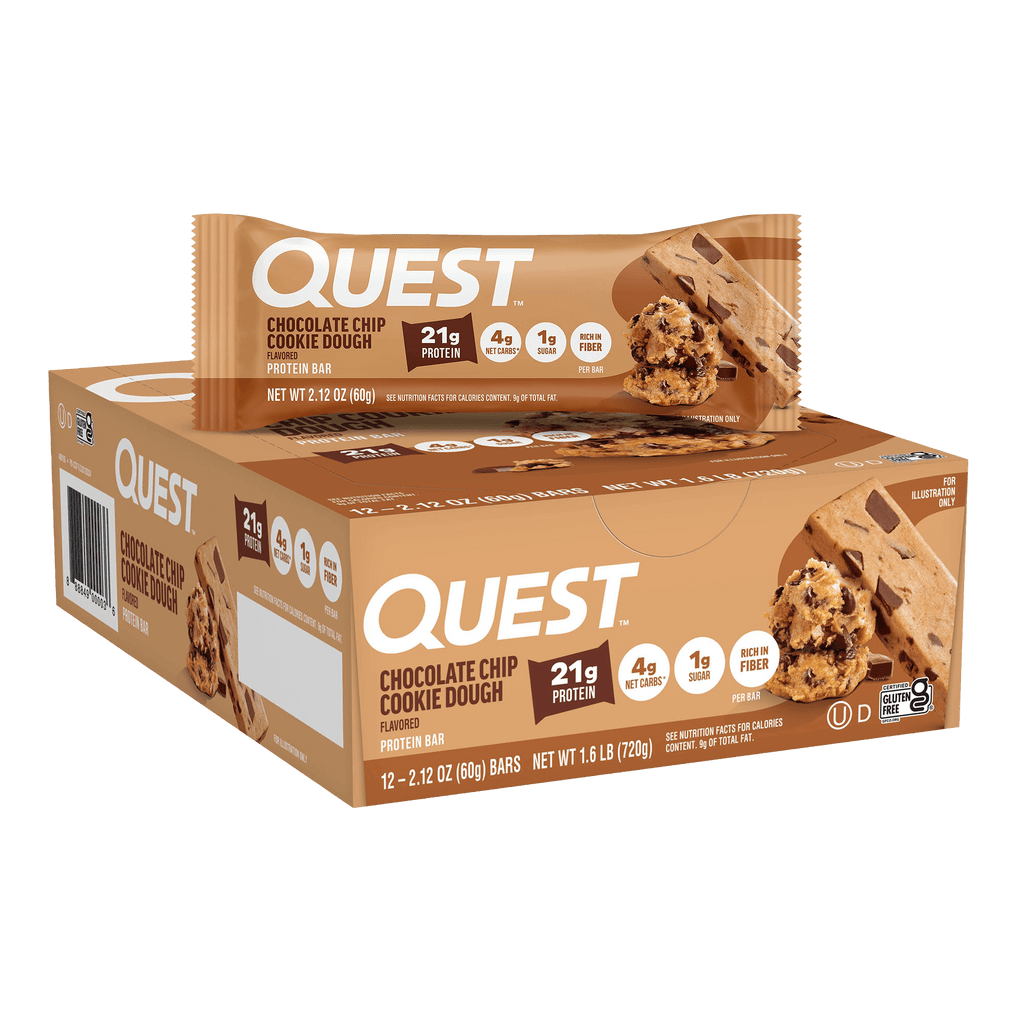
Chocolate Chip Cookie Dough Protein Bar
Amazon returns policy · secure checkout
 21g protein
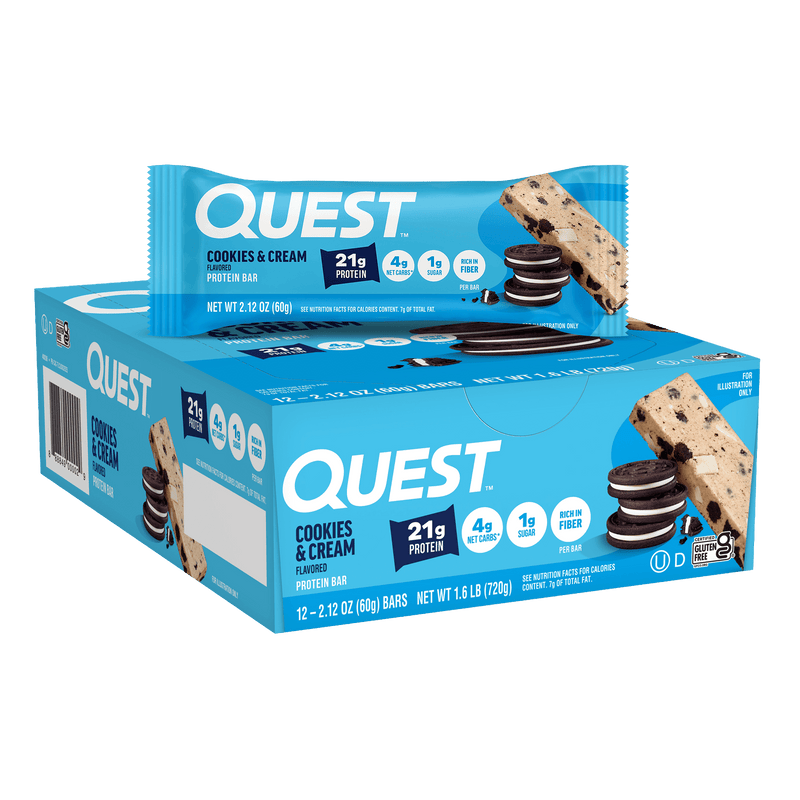
Cookies & Cream Protein Bars
Amazon returns policy · secure checkout
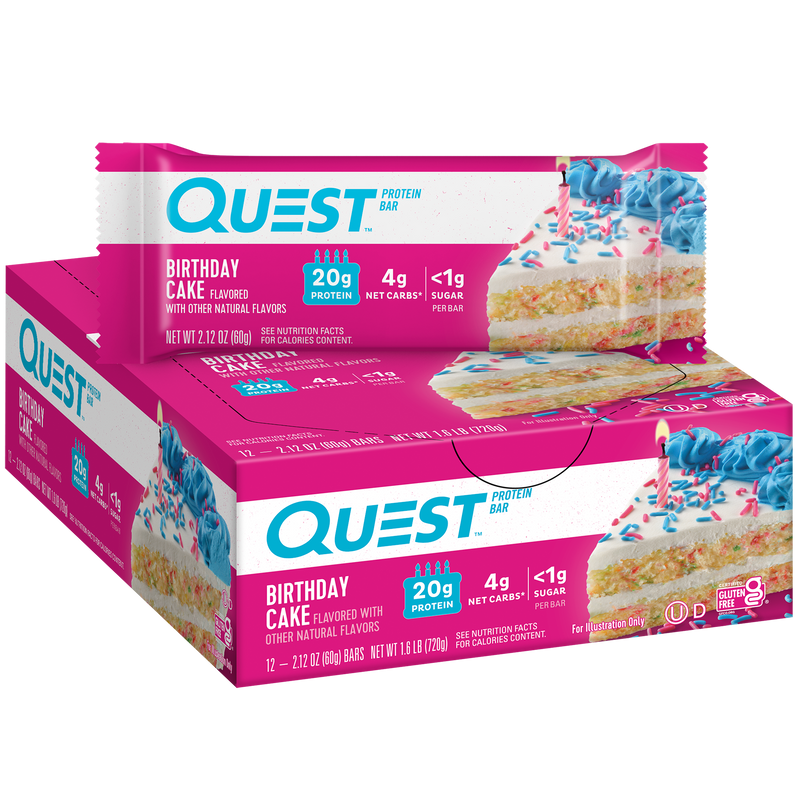 20g protein
Birthday Cake Protein Bars
Amazon returns policy · secure checkout
Quest vs Barebells: The Quick Verdict
- Most protein per calorie: Quest — 21g for 190 calories (11.1g per 100 cal) vs. Barebells at 20g for 200 calories (10.0g per 100 cal).
- Most fiber: Quest by a wide margin — 12g per bar vs. approximately 3g for Barebells.
- Cleanest protein source: Quest — whey protein isolate plus milk protein isolate, both complete proteins. Barebells' blend includes hydrolyzed bovine collagen, an incomplete protein that dilutes the 20g claim.
- Gentler sweetener on blood sugar and digestion: Quest — erythritol has a glycemic index near zero and a lower laxative effect than Barebells' maltitol at equivalent doses.
- Better taste and texture: Barebells, by a wide margin — its candy-bar-like nougat and coating is its single biggest advantage and the main reason people choose it over Quest.
- Lower calories per bar: Quest at 190 vs. Barebells at 200 — a small gap, but it adds up with the protein-per-calorie difference above.
Side-by-Side Nutrition: Flagship Bars
The fairest direct comparison is each brand's core flavor — Quest's Chocolate Chip Cookie Dough (60g) against a standard Barebells original bar (55g, using Cookies & Cream as the representative flavor since its macros match five of the six core flavors exactly).
| Per bar | Quest Cookie Dough (60g) | Barebells Cookies & Cream (55g) |
|---|---|---|
| Calories | 190 | 200 |
| Protein | 21g | 20g |
| Protein per 100 cal | 11.1g | 10.0g |
| Total carbs | 22g | 20g |
| Fiber | 12g | ~3g |
| Sugar | 1g | 1g |
| Sugar alcohols | 6g (erythritol) | ~5g (maltitol) |
| Net carbs | ~10g | ~10–12g |
| Fat | 9g | 7g |
| Sweeteners | Erythritol, stevia, sucralose | Maltitol, sucralose, Ace-K |
| Protein source | Whey protein isolate & milk protein isolate | Whey concentrate, caseinate, casein isolate, whey hydrolysate & collagen |
The headline numbers are close, but the details separate them. Quest delivers slightly more protein at fewer calories and dramatically more fiber, which is the biggest reason it tends to feel more filling despite being 10 calories lighter. Barebells matches it almost gram for gram on sugar and comes close on net carbs — the real differences are protein quality and sweetener choice, both covered below.
Barebells' Full Flavor Lineup (Verified)
Quest's official page we've verified only breaks out full macros for its flagship Cookie Dough flavor, but Barebells publishes matching numbers across its whole US lineup. Every flavor holds at 200 calories and 20g of protein — only carbs, sugar, and fat shift a gram or two by flavor.
| Barebells flavor (55g bar) | Calories | Protein | Total Carbs | Sugar | Fat |
|---|---|---|---|---|---|
| Cookies & Cream | 200 | 20g | 20g | 1g | 7g |
| Chocolate Dough | 200 | 20g | 20g | 1g | 7g |
| Caramel Cashew | 200 | 20g | 18g | 1g | 8g |
| Salty Peanut | 200 | 20g | 20g | 1g | 8g |
| White Chocolate Almond | 200 | 20g | 19g | 1g | 8g |
| Hazelnut Nougat | 200 | 20g | 18g | 2g | 9g |
Because Quest doesn't publish a full flavor-by-flavor macro table the way Barebells does, per our FAQ answer on the subject its standard bars run 20 to 21g of protein per 60g bar — treat the flagship Cookie Dough numbers above as representative of the line rather than universal to every flavor.
Sweeteners: Erythritol & Stevia vs Maltitol & Ace-K
This is the split that matters most if you've ever gotten an upset stomach from a protein bar. Quest keeps sugar near zero with erythritol (a sugar alcohol with a glycemic index near zero), stevia, and a trace of sucralose. Barebells uses maltitol as its primary sweetener — a sugar alcohol with a real glycemic index (around 53 on a 100-point scale where glucose is 100) — alongside sucralose and acesulfame potassium (Ace-K).
The practical difference: maltitol has a meaningfully bigger laxative effect than erythritol at equivalent doses, and it will move blood sugar more than the net-carb math on the label suggests. If you've had GI trouble with Barebells specifically, or you're managing blood sugar closely, Quest's erythritol-based formula is the gentler choice. If you want zero artificial sweeteners entirely, neither bar qualifies — both contain sucralose, and Barebells adds Ace-K on top.
Protein Quality: Complete Isolate Blend vs Collagen-Diluted Blend
This is the difference the front-of-package "20g protein" claims don't show. Quest's protein comes from whey protein isolate and milk protein isolate — both complete proteins containing all nine essential amino acids. Barebells' blend includes whey protein concentrate, calcium caseinate, and micellar casein isolate, which are also high quality, but also hydrolyzed bovine collagen. Collagen is missing tryptophan, one of the nine essential amino acids, which makes it an incomplete protein. Barebells does not disclose what share of its 20g is collagen versus dairy protein.
Why it matters: for post-workout recovery, where complete amino acid delivery drives muscle protein synthesis, Quest's blend is the stronger choice. For simply hitting a daily protein number, the difference matters less. ONE Bar is worth knowing about here too — like Quest, it uses milk protein isolate and whey protein isolate with no collagen, so if you want Barebells-level flavor variety without the collagen dilution, our ONE Bar nutrition guide is the next bar to compare.
Fiber and Net Carbs: Quest's Real Advantage
Quest's 12g of fiber per bar comes from added soluble corn fiber, and it is the single biggest nutritional gap between the two bars — four times Barebells' roughly 3g. That extra fiber is a real driver of satiety, which is a big part of why a 190-calorie Quest bar tends to feel like it fills you up more than its calorie count implies. On a net-carb basis (total carbs minus fiber minus sugar alcohols) the two bars land close together — Quest at roughly 10g, Barebells at roughly 10 to 12g — so the fiber gap shows up in fullness, not in keto-friendliness.
Which Bar Should You Buy?
Choose Quest if…
You want the most protein per calorie, the most fiber and satiety, a complete protein blend with no collagen, and a gentler sweetener profile for blood sugar and digestion. It's the stronger pick for post-workout recovery, strict keto tracking, and anyone who has had GI issues with maltitol-sweetened bars.
Choose Barebells if…
You've tried other protein bars and found them chalky, dry, or medicinal-tasting — Barebells' candy-bar texture is the reason people who otherwise avoid protein bars eat these consistently. It still delivers a real 20g of protein at 200 calories and 1g of sugar; the trade-offs are the collagen-diluted blend, lower fiber, and maltitol's higher GI and laxative risk at higher doses.
Consider ONE Bar if neither quite fits…
ONE Bar matches Quest on protein quality (no collagen, complete milk and whey isolate blend) while offering flavor variety closer to Barebells — the trade-off is 220 calories per bar, the most of the three. See the full breakdown in our ONE Bar nutrition guide.
Honest Caveats on Both Bars
- Neither is a whole food. Both are built from protein isolates, fibers, and sweeteners rather than whole-food ingredients like nuts, dates, or eggs. They're convenient high-protein snacks, not a substitute for whole-food nutrition.
- Quest's fiber and sweetener can also cause GI issues. Erythritol is gentler than maltitol on average, but the added soluble corn fiber and sugar alcohols in Quest bars still cause bloating or loose stools in some people, especially at more than one bar per day.
- Barebells' collagen amount is undisclosed. The brand does not publish what percentage of its 20g protein claim comes from collagen versus complete dairy protein, so the effective complete-protein content is lower than 20g by an unknown amount.
Frequently Asked Questions
Which has more protein, Quest or Barebells?
Quest's flagship Cookie Dough bar has slightly more — 21g versus 20g for Barebells — and does it in 10 fewer calories, so Quest wins on protein-per-calorie efficiency (11.1g per 100 calories vs. 10.0g). The 1g gap in absolute protein is small enough that most people should decide on taste, fiber, and protein quality instead.
Which bar is better for weight loss?
Quest edges it out on paper — more protein per calorie and 12g of fiber per bar drives more fullness than Barebells' roughly 3g. But the bar you'll actually keep eating consistently matters more for weight loss than a small macro edge, and Barebells' taste is a real advantage there for people who don't enjoy typical protein bars.
Does Barebells really contain collagen?
Yes. Alongside whey protein concentrate, calcium caseinate, micellar casein isolate, and whey protein hydrolysate, Barebells' protein blend includes hydrolyzed bovine collagen. Collagen lacks tryptophan, an essential amino acid, making it an incomplete protein. The brand does not disclose what share of the 20g is collagen. Quest and ONE Bar do not use collagen in their blends.
Which bar is gentler on digestion?
Generally Quest, because erythritol (its primary sugar alcohol) has a lower laxative effect at equivalent doses than the maltitol Barebells uses. That said, Quest's added soluble corn fiber can also cause GI issues in sensitive people, so individual tolerance varies. Eating one bar at a time rather than two or more in a day reduces the risk with either brand.
Are Quest and Barebells keto-friendly?
Both fit most keto budgets. Quest nets out to roughly 10g of net carbs per bar (22g total carbs minus 12g fiber), and Barebells lands in a similar 10 to 12g range once its sugar alcohols are subtracted. The caveat is that Barebells' maltitol has a real glycemic index (~53) that can raise blood sugar more than its net-carb math implies, which matters more on a strict ketogenic diet than Quest's near-zero-GI erythritol.
Bottom line: Quest wins the nutrition comparison — more protein per calorie, four times the fiber, a complete collagen-free protein blend, and a gentler sweetener. Barebells wins on taste, and for anyone who has quit protein bars because they tasted like supplements, that's not a small thing — 20g of protein and 200 calories you'll actually eat beats 21g and 190 calories you leave in the pantry. Get the full picture in our Quest nutrition guide and Barebells nutrition guide, see how ONE Bar splits the difference in our ONE Bar nutrition guide, or compare the full field in our best protein bars of 2026 guide and the protein snacks directory.
Shop our top protein bar picks
Editor-selected high-protein options related to this guide. As an Amazon Associate we may earn from qualifying purchases.
Buy the products in this guide: Chocolate Chip Cookie Dough Flavored Protein Bar · Chocolate Chip Cookie Dough Protein Bars · Oatmeal Chocolate Chip Protein Bars
20g proteinChocolate Chip Cookie Dough Protein Bar
Amazon returns policy · secure checkout
21g proteinCookies & Cream Protein Bars
Amazon returns policy · secure checkout
20g proteinBirthday Cake Protein Bars
Amazon returns policy · secure checkout
Tags
High Protein Snacks Pro Editorial Team
Independently researched and editorially reviewed. We compare real nutrition labels and never accept payment for coverage.
Get the best new protein snacks in your inbox
Weekly picks and honest reviews — no spam, unsubscribe anytime.
More from the journal
Ghost vs Grenade Carb Killa (2026): Which Protein Bar Wins on Protein-Per-Calorie, Fiber, and Sweeteners?
Grenade Carb Killa's best flavor delivers 23g of protein for just 203 calories (11.3g per 100 cal), while Ghost's 2-bar pack delivers 20g for 270 calories (7.4g per 100 cal) — but Ghost's blend is entirely collagen-free where Grenade's includes bovine collagen. Here is the verified head-to-head on protein quality, fiber, sweeteners, and price, using the label data already published in our individual Ghost and Grenade guides.
Read more
Protein Bar vs Protein Shake (2026): 17.7g vs 13.2g Protein Per 100 Cal — Which Wins for Muscle and Fullness?
We read the Nutrition Facts panel for three best-selling protein shakes and three best-selling protein bars from each brand's own product page on September 8, 2026. Shakes average 17.7g of protein per 100 calories; bars average 13.2g — but the single best bar (David, 18.7g/100 cal) beats every shake on that metric. Bars win on fiber and fullness. Cost is a wash at $0.12–$0.13 per gram of protein either way.
Read more
Celiac-Friendly Protein Bars (2026): 6 Certified GF Picks Ranked by Verified Nutrition
Quest Chocolate Chip Cookie Dough leads the certified gluten-free field — 21g of complete protein at 200 calories, 1g sugar, and third-party GFCO certification. RXBAR Chocolate Sea Salt is the cleanest whole-food option at 12g of protein and a five-ingredient label. Six real 2026 picks, each with verified nutrition, a real product photo, and a tracked buy button, plus how to actually verify a bar is gluten-free rather than just reading the front of the wrapper.
Read more