Best High-Protein Snacks for Breastfeeding (2026): 6 Picks Ranked Against the 71g Daily Target
Breastfeeding raises the protein RDA from 46g a day to 71g a day, an extra 25g you have to find somewhere while holding a baby. The best high-protein snack for breastfeeding in 2026 is fairlife Core Power Elite: 42g of complete, lactose-free milk protein in one 14 fl oz bottle at 230 calories, which covers the entire 25g increase and then some, one-handed, in about a minute. Six real snacks ranked on verified label data, with the protein-per-calorie math shown, the FDA's tuna rule explained, and an honest catch on every pick.
Our top high-protein picks
Editor-selected and ready to buy. As an Amazon Associate we may earn from qualifying purchases.
Buy the products in this guide: Core Power Elite High Protein Shake · Nutrition Plan High Protein Shake · Ultimate Chocolate High Protein Shake
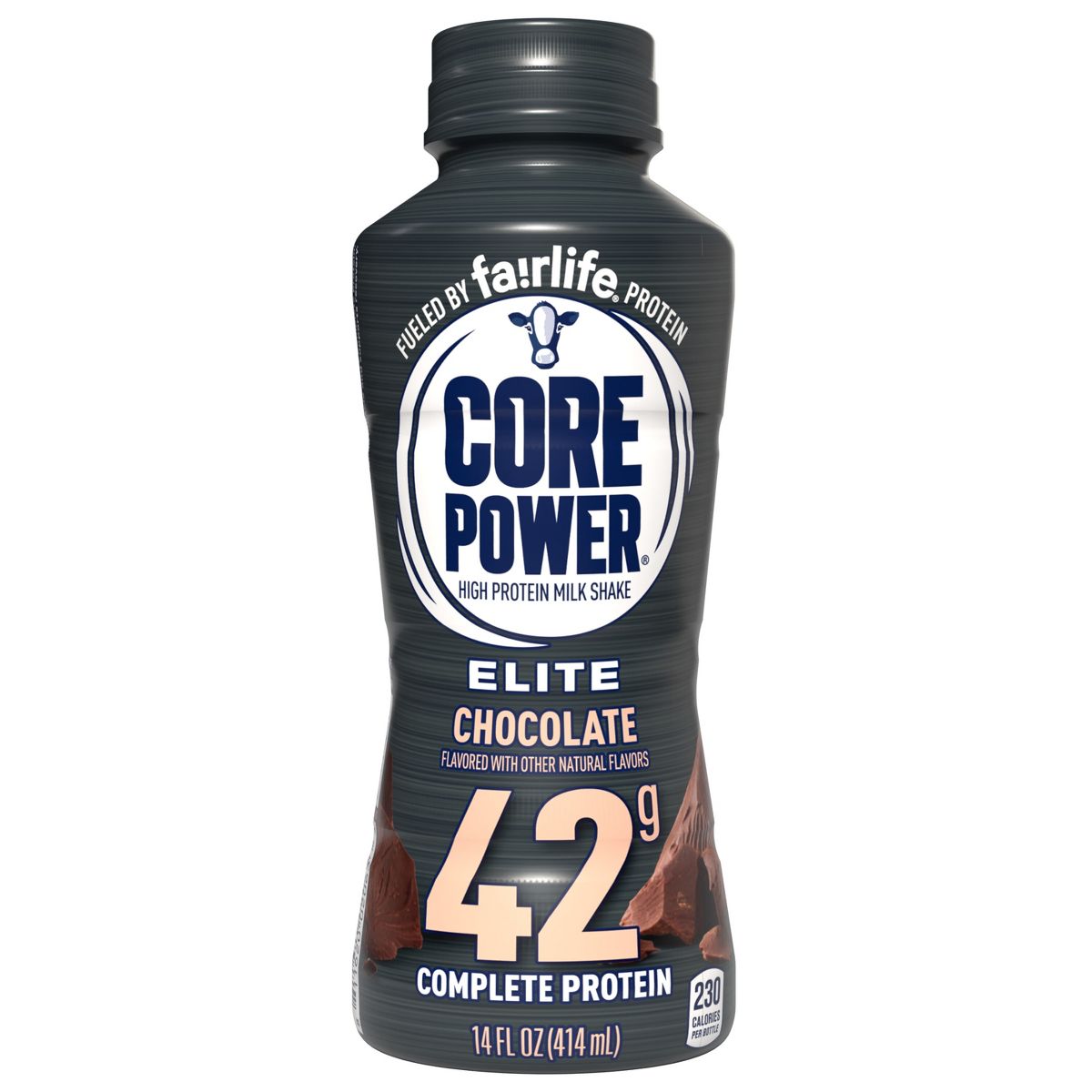 42g protein
Core Power Elite - Chocolate
Amazon returns policy · secure checkout
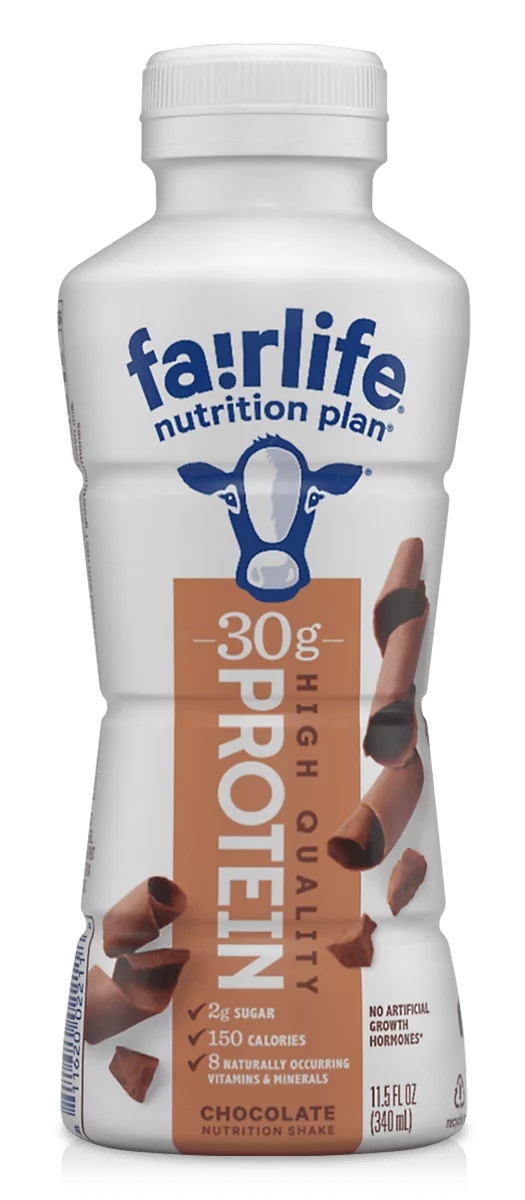 30g protein
Nutrition Plan Shake - Chocolate
Amazon returns policy · secure checkout
 30g protein
The 30-second answer
The best high-protein snack for breastfeeding in 2026 is fairlife Core Power Elite — 42g of complete, lactose-free milk protein in one 14 fl oz bottle at 230 calories. Breastfeeding raises the protein RDA from 46g a day to 71g a day, and that single bottle covers the entire 25g increase on its own, drinkable with one hand while you feed. If you want the same job done cheaper and shelf-stable, Premier Protein delivers 30g in 160 calories — 18.8g of protein per 100 calories, the best ratio here. If you want real food rather than a shake, a 5.3oz cup of Good Culture cottage cheese carries 19g.
Nobody warns you that the hungriest you will ever be is three weeks into breastfeeding, at 2am, with one usable hand. The advice you get is "eat more protein," which is true and completely useless without a number. Here is the number, and six snacks measured against it.
Why breastfeeding changes the protein math
The Dietary Reference Intakes set the protein RDA for women aged 19–50 at 46g a day. For lactating women in the same age band, the RDA is 71g a day (Dietary Reference Intakes reference tables, National Academies via NCBI). That is a 25g increase — a 54% jump — and it is on top of an extra energy requirement the CDC puts at 330 to 400 kilocalories per day for a well-nourished breastfeeding mother (CDC, Maternal Diet).
Twenty-five grams is roughly four eggs, or a chicken breast, or one of the shakes below. The problem is never that the number is huge. The problem is that it has to be found in the gaps — between feeds, during a nap, with one hand — which is why a snack that needs a plate, a fork and ten minutes of standing up does not get eaten. Every pick below is either drinkable or openable one-handed.
The 6 best high-protein snacks for breastfeeding, compared
| # | Snack | Protein | Calories | Protein / 100 cal | Share of the 25g increase | Needs a fridge? | Amazon rating |
|---|---|---|---|---|---|---|---|
| 1 | fairlife Core Power Elite, Chocolate | 42g | 230 | 18.3g | 168% | Chilled | 4.6 (24,940) |
| 2 | Premier Protein Shake, Chocolate | 30g | 160 | 18.8g | 120% | No | 4.6 (60,291) |
| 3 | Good Culture Classic Cottage Cheese, 5.3oz | 19g | 130 | 14.6g | 76% | Yes | 4.7 (4,274) |
| 4 | StarKist Tuna Creations Sweet & Spicy pouch | 16g | 90 | 17.8g | 64% | No | 4.7 (2,853) |
| 5 | ALOHA Oatmeal Chocolate Chip bar | 14g | 220 | 6.4g | 56% | No | 4.5 (437) |
| 6 | Chomps Original Beef Stick | 10g | 100 | 10.0g | 40% | No | 4.5 (11,059) |
Protein / 100 cal = (protein ÷ calories) × 100, calculated by us from the labeled figures — it is arithmetic, not a label claim. "Share of the 25g increase" is how much of the extra 25g of daily protein that lactation adds is covered by one serving. Nutrition is per one serving as sold, chocolate flavor where a flavor applies; other flavors vary by a few grams. Star ratings and rating counts were read from each product's own Amazon listing on 6 September 2026.
The 6 best high-protein snacks for breastfeeding in 2026
#1 Best Overall — fairlife Core Power Elite, Chocolate (42g)
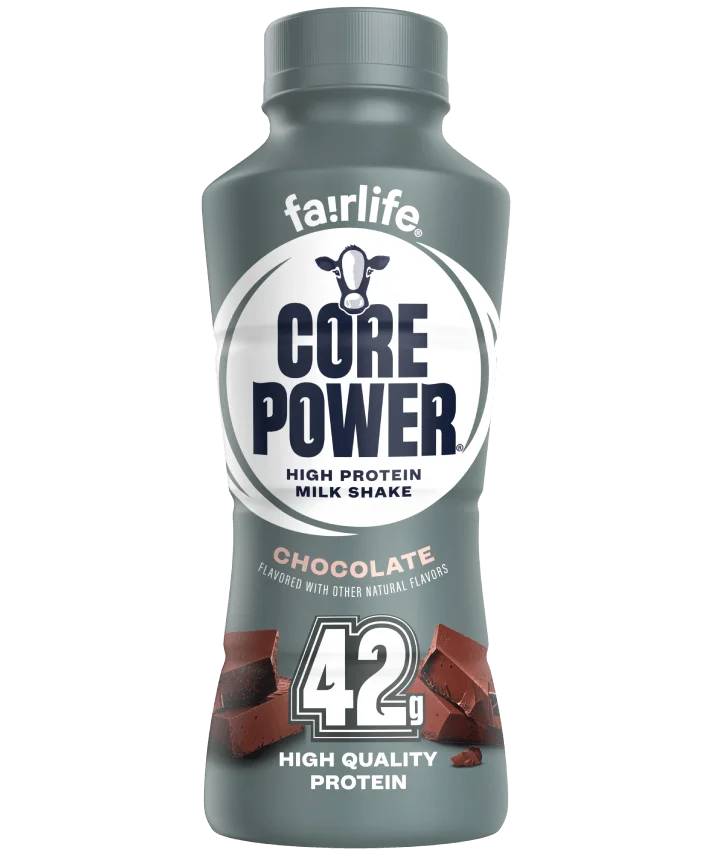
fairlife Core Power Elite — Chocolate
42g protein · 230 cal · 3.5g fat · 9g carbs · 7g sugar (all lactose) · 900mg calcium (70% DV) · lactose-free · 14 fl oz
Check price on Amazon →One bottle covers the entire 25g that breastfeeding adds to your day, with 17g left over. Nothing else on this list does that in a single serving, and nothing else does it in about sixty seconds with one hand. The protein is ultra-filtered milk protein, which is complete — it carries all nine essential amino acids — so it does not need to be paired with anything to count fully. It is also lactose-free, which matters more than it sounds: postpartum digestion is frequently unhappy, and 42g of dairy protein without the lactose is gentler than the same dose from ordinary milk. The 900mg of calcium is a genuine bonus, since calcium demand does not drop while you are producing milk.
The honest catch: it needs refrigerating, so it lives in the kitchen, not the diaper bag. It is also the most expensive way to buy protein on this page by a wide margin — you are paying for convenience and dose, not efficiency. And at 230 calories it is a snack, not a meal; if you are relying on it to cover a skipped lunch you will be hungry again in an hour.
#2 Best Value and Best Protein Per Calorie — Premier Protein Shake, Chocolate (30g)

Premier Protein Shake — Chocolate
30g protein · 160 cal · 1g sugar · 50% DV calcium · 30% DV vitamin D · 24 vitamins and minerals · shelf-stable · 11 fl oz
Check price on Amazon →At 18.8g of protein per 100 calories this is, quietly, the most efficient thing on the list — slightly ahead of the 42g Core Power, which surprises people who assume the biggest number wins. It clears the 25g increase on its own, and it is the only shake here that is shelf-stable until opened, so a case can live in the nursery, in the car, or beside the glider where you actually feed. With 60,291 Amazon ratings it is also the most-reviewed product in this entire guide by a factor of two, which is worth something when you are too tired to gamble on a new flavor.
The honest catch: it is sweetened with sucralose and acesulfame potassium. Both are permitted during breastfeeding and the doses here are small, but if you are avoiding non-nutritive sweeteners while nursing — a reasonable personal preference, not a medical rule — this is the pick to skip. The texture is also thinner and chalkier than Core Power; that is the trade you make for the price.
#3 Best Real-Food Option — Good Culture Classic Cottage Cheese, 5.3oz (19g)
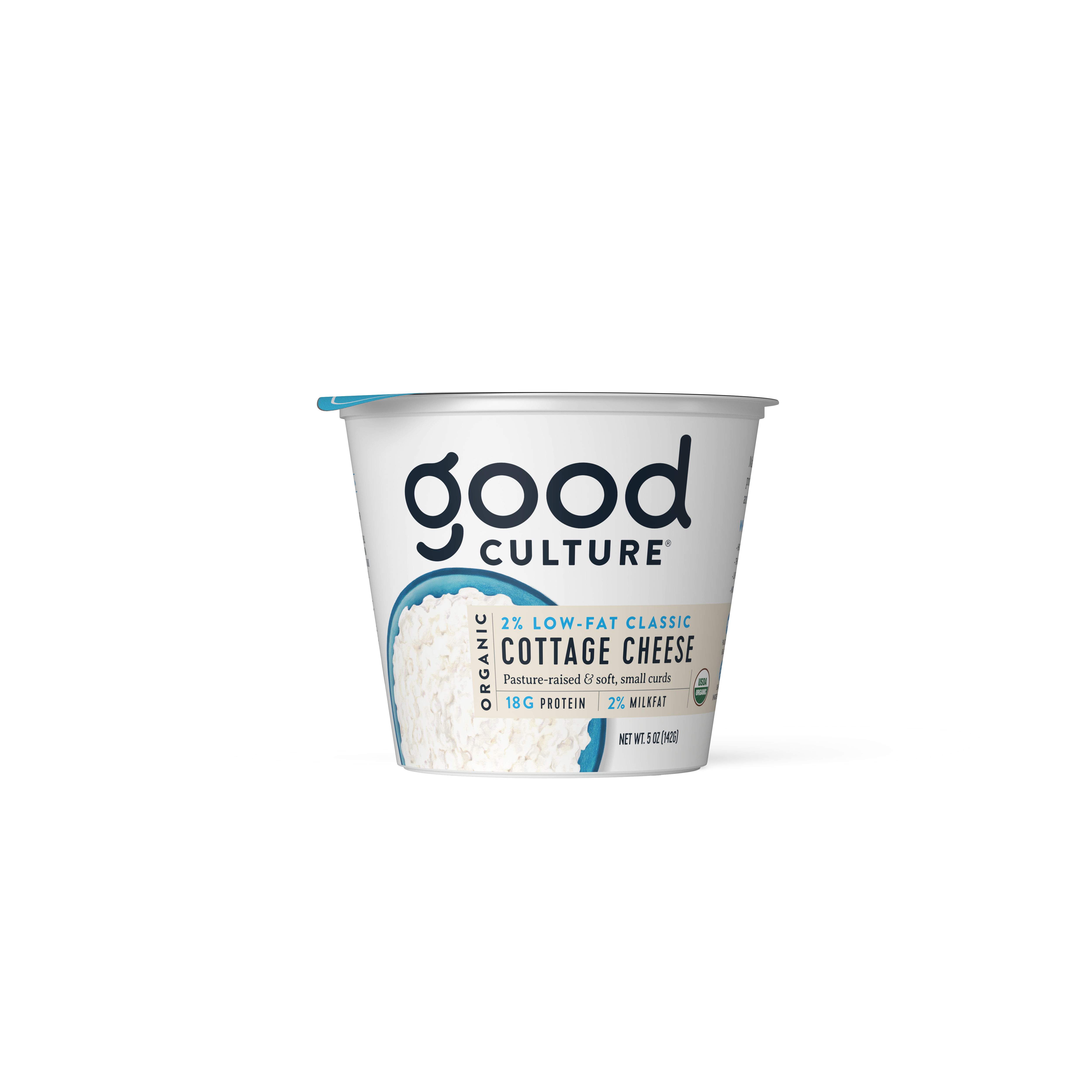
Good Culture — Classic Cottage Cheese, 5.3oz cup
19g protein · 130 cal · 3g fat · 5g carbs · 5g sugar · 520mg sodium · live and active cultures · 5.3 oz single-serve cup
Check price on Amazon →Nineteen grams of casein-dominant dairy protein in a peel-lid cup that needs one spoon and no assembly. Casein digests slowly, which is genuinely useful at the last feed of the night — it drips amino acids out over hours rather than all at once, so you are less likely to wake up ravenous at 3am. The live cultures are a real point of difference against a plain shake, and cottage cheese is one of the few protein foods that goes savory or sweet, so it survives being eaten every day for a month without becoming unbearable.
The honest catch: 520mg of sodium in one small cup is high — about 23% of a day's worth — and cottage cheese is the saltiest thing on this list by a distance. If you are watching sodium for blood pressure, this is a once-a-day food, not a graze. It also has to stay cold, and it is the one pick here that genuinely divides people on texture.
#4 Best for Omega-3s — StarKist Tuna Creations Sweet & Spicy Pouch (16g)
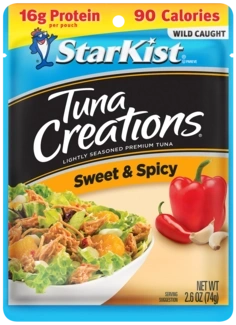
StarKist Tuna Creations — Sweet & Spicy
16g protein · 90 cal · 0.5g fat · 4g carbs · 360mg sodium · 170mg DHA + EPA omega-3 · no draining · 2.6 oz pouch
Check price on Amazon →This is the only pick that does two jobs at once. Sixteen grams of protein for 90 calories is the second-best ratio here, and it arrives with 170mg of DHA and EPA omega-3s — the fats that pass into breast milk and that the FDA specifically tells breastfeeding women to seek out from seafood. It is chunk light tuna, which the FDA lists as a Best Choice in its mercury guidance, and it is seasoned and needs no draining, so it can be eaten straight from the pouch with a fork and no cooking, no fridge and no cleanup.
The honest catch: the FDA advises 8 to 12 ounces of lower-mercury seafood per week while breastfeeding, so this is a two-or-three-times-a-week snack, not a daily one (FDA, Advice About Eating Fish). And be careful which tuna you buy: albacore or "white" tuna is a Good Choice, capped at one 4-ounce serving a week, not the two-to-three of light tuna. It also, unavoidably, smells like tuna in a small apartment.
#5 Best Dairy-Free Pick — ALOHA Oatmeal Chocolate Chip Protein Bar (14g)
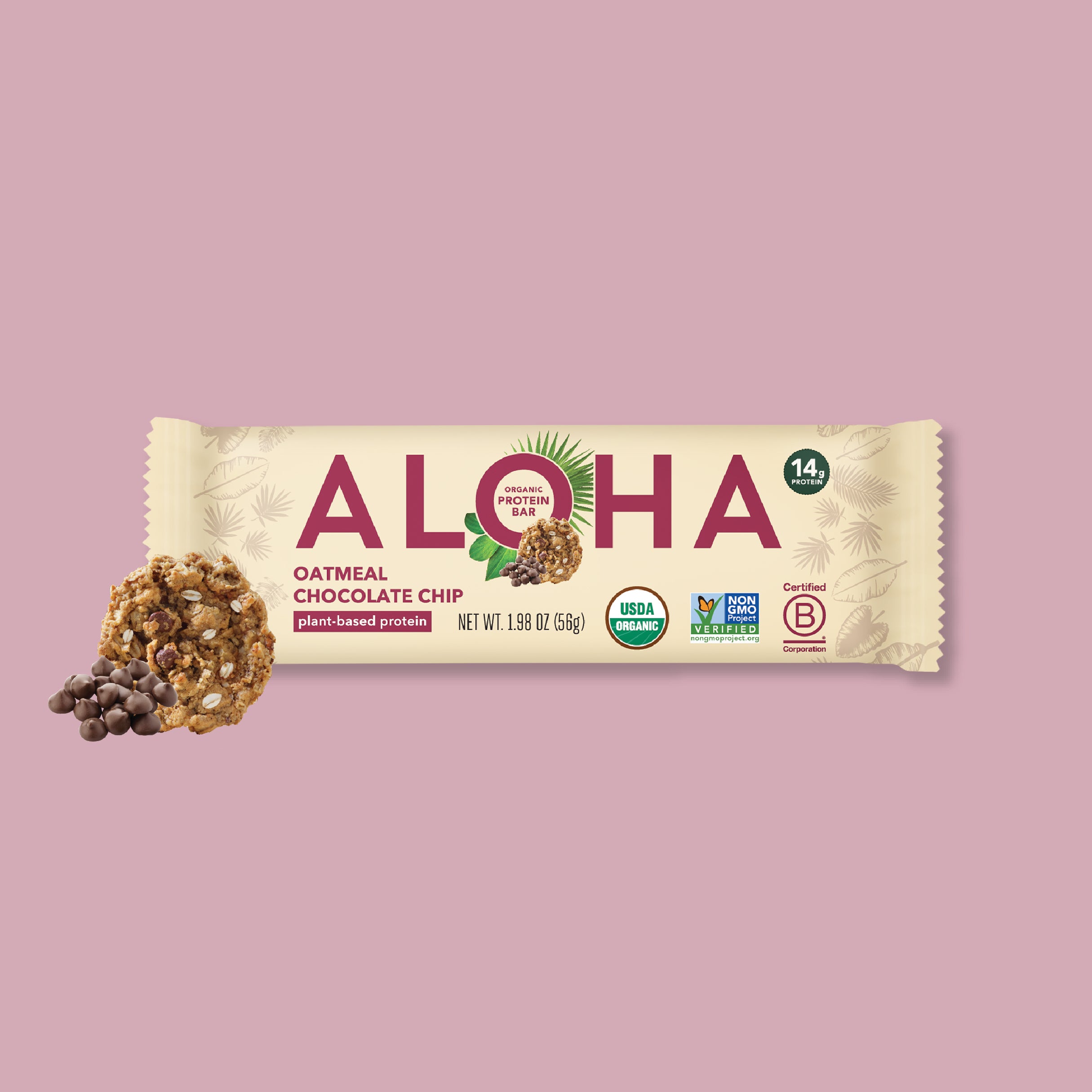
ALOHA — Oatmeal Chocolate Chip Protein Bar
14g plant protein · 220 cal · 10g fiber · 4g sugar · USDA Organic · no dairy, no soy, no gluten, no sugar alcohols · 1.98 oz bar
Check price on Amazon →A meaningful number of breastfeeding parents end up off dairy, usually because a pediatrician has raised cow's-milk protein allergy in a fussy or bloody-stooled baby. That eliminates four of the five picks above in one sentence, which is exactly why this bar is here. It is fully plant-based and free of dairy, soy and gluten, and — unusually for the category — it uses no sugar alcohols, so it will not add cramping to a gut that is already having a hard month. The 10g of fiber is the quiet headline: postpartum constipation is close to universal, and this bar carries more fiber than any other pick here by a factor of five.
The honest catch: at 6.4g of protein per 100 calories it is comfortably the least efficient thing on this list — you are buying 220 calories to get 14g. Plant protein also carries less leucine gram for gram than milk protein, so it does less per gram for muscle repair. And if 10g of fiber is a jump from your normal intake, introduce it gradually rather than eating two on day one.
#6 Best for the Diaper Bag — Chomps Original Beef Stick (10g)

Chomps — Original Beef Stick
10g protein · 100 cal · 7g fat · 0g carbs · 0g sugar · 380mg sodium · 100% grass-fed beef · shelf-stable · 1.15 oz stick
Check price on Amazon →Ten grams is the smallest number here, and this is still the snack most likely to actually get eaten, because it is the only one that survives three weeks forgotten at the bottom of a diaper bag. No fridge, no wrapper crumbs, no fork, no smell, openable with your teeth while the other arm is occupied. Zero sugar and zero carbs, from 100% grass-fed beef, and with 11,059 Amazon ratings it is the most-reviewed meat stick in our catalog. Treat it as the snack that stops the 4pm collapse, not as your protein strategy.
The honest catch: 380mg of sodium for 100 calories is a lot of salt per gram of protein, and at 10g you would need two and a half sticks to cover the lactation increase — that is nearly a gram of sodium. It is a top-up, not a base. Buy the multipack; single sticks at a checkout counter are roughly double the price per stick.
How much protein do you actually need while breastfeeding?
Seventy-one grams a day, if you are between 19 and 50. That is the Dietary Reference Intakes figure for lactation, against 46g for a non-pregnant woman of the same age — an increase of 25g. In practical terms, ordinary meals get most people to roughly the 46g baseline without trying, so the honest job is finding the extra 25g. One shake does it. Cottage cheese plus a tuna pouch does it with 10g to spare. Two beef sticks and a bar does it. The RDA is a floor for the general population, not a personal prescription: if you are exclusively feeding twins, recovering from a surgical birth, or back to training, ask your own clinician whether you should be higher.
Do protein shakes and bars pass into breast milk?
The protein itself does not pass through as protein. You digest it into amino acids, and your body uses those to build the proteins in milk, so eating more protein supports supply and your own recovery rather than changing what the baby drinks in any direct way. What can pass through are other things riding along in the product: caffeine, alcohol, and in some infants, intact cow's-milk protein that a sensitized baby reacts to. That is why the useful question about a protein snack while nursing is never "is the protein safe" — it is what else is in the wrapper.
Is the caffeine in protein bars and coffee-flavored shakes safe while breastfeeding?
In normal amounts, yes. The CDC describes a low-to-moderate caffeine intake as about 300mg or less per day — roughly two to three cups of coffee — for breastfeeding mothers. The trap is that caffeine is easy to lose track of once it stops arriving in a mug: coffee-flavored and mocha protein shakes, energy-branded bars, and chocolate-heavy products all contribute. None of the six picks above is a caffeinated product, which was deliberate. If you drink coffee as well, count the shake before you assume you are under.
How we picked
We started from the 25g gap rather than from a brand list, and required every pick to be edible one-handed with no preparation. Nutrition figures were taken from each product's own label or manufacturer page and cross-checked, not copied from a retailer summary — one bar on our shortlist was listed at 130 calories in a third-party database and is actually 220, and it was corrected before it reached this table. Star ratings come from each product's own Amazon listing, read on 6 September 2026. We deliberately excluded caffeinated products, anything requiring cooking, and bulk cases that only make sense at a warehouse club. Where a pick has a real drawback — sodium, cost, sweeteners, mercury limits — it is written into the entry rather than left out.
Frequently Asked Questions
What is the best high-protein snack for breastfeeding in 2026?
fairlife Core Power Elite is the best high-protein snack for breastfeeding in 2026 for most people: 42g of complete, lactose-free milk protein per 14 fl oz bottle at 230 calories, which single-handedly covers the 25g that lactation adds to the daily protein RDA. If you want it cheaper and shelf-stable, Premier Protein delivers 30g in 160 calories and has the best protein-per-calorie ratio on this list at 18.8g per 100 calories. If you want real food, a 5.3oz cup of Good Culture cottage cheese carries 19g.
How much protein do I need per day while breastfeeding?
The Dietary Reference Intakes set the RDA at 71g of protein per day during lactation for women aged 19 to 50, compared with 46g per day for non-pregnant women in the same age band. That is an extra 25g a day. The CDC separately recommends an additional 330 to 400 calories per day for a well-nourished breastfeeding mother, so the protein increase comes alongside a real increase in overall food, not instead of it.
Are protein bars safe while breastfeeding?
Ordinary protein bars are fine while breastfeeding. The things worth reading the label for are caffeine, which some energy-branded bars contain in coffee-sized doses, and sugar alcohols such as maltitol and sorbitol, which commonly cause bloating and cramping and are unpleasant on a postpartum gut. Herbal or botanical add-ins are the other reason to check, since those are far less well studied during lactation than the protein is.
Can I eat tuna while breastfeeding?
Yes, within limits set by mercury rather than by protein. The FDA advises 8 to 12 ounces per week of lower-mercury seafood for people who are breastfeeding. Canned light tuna, including the seasoned pouches, is on the FDA's Best Choices list, so two to three servings a week fits. Albacore or white tuna is a Good Choice and is capped at one 4-ounce serving a week, so it is not an equal swap.
Which high-protein snack is best if my baby has a dairy sensitivity?
The ALOHA Oatmeal Chocolate Chip bar, which is fully plant-based and free of dairy, soy and gluten, with 14g of protein and 10g of fiber per bar. The StarKist tuna pouch is also dairy-free at 16g of protein for 90 calories. Both avoid the cow's-milk protein that a pediatrician may ask you to eliminate if a breastfed baby is showing signs of cow's-milk protein allergy.
Do protein shakes increase milk supply?
Not directly. Milk supply is driven mainly by how often and how effectively milk is removed, not by any single food. What adequate protein and calories do is protect you: when intake falls short, the body prioritizes milk production and the shortfall is paid out of the mother's own reserves, which is why undereating while breastfeeding shows up as exhaustion rather than as an immediate supply drop. Eat enough for your own sake, and treat any specific supply concern as a question for a lactation consultant.
The bottom line
Breastfeeding adds 25g of protein to your day, and the winning snack is whichever one you will actually open at 2am. fairlife Core Power Elite clears the whole increase in one cold bottle. Premier Protein does nearly the same job cheaper and can live where you feed. Good Culture cottage cheese is the best of them if you would rather eat than drink. Keep Chomps in the bag for the days none of the above happens. If you were pregnant recently, our high-protein snacks for pregnancy guide covers the stage before this one, and the best tuna and salmon pouches goes deeper on the seafood picks.
This article is general nutrition information, not medical advice. Talk to your own doctor, midwife or lactation consultant about your situation, especially about allergies, medication and any concern about milk supply.
Shop our top high-protein picks
Editor-selected high-protein options related to this guide. As an Amazon Associate we may earn from qualifying purchases.
Buy the products in this guide: Core Power Elite High Protein Shake · Nutrition Plan High Protein Shake · Ultimate Chocolate High Protein Shake
42g proteinCore Power Elite - Chocolate
Amazon returns policy · secure checkout
30g proteinNutrition Plan Shake - Chocolate
Amazon returns policy · secure checkout
30g proteinTags
High Protein Snacks Pro Editorial Team
Independently researched and editorially reviewed. We compare real nutrition labels and never accept payment for coverage.
Get the best new protein snacks in your inbox
Weekly picks and honest reviews — no spam, unsubscribe anytime.
More from the journal
Best High-Protein Snacks at Sam's Club 2026: 10 Bulk Picks Ranked by Real Protein, Price Per Serving, and Ingredients
The best high-protein snack at Sam's Club in 2026 is the Fairlife Nutrition Plan Chocolate Shake 18-pack — 30g of complete dairy protein for 150 calories per 11.5oz bottle, sold in the Sam's Club exclusive 18-count for roughly $32–$36 (about $1.80–$2.00 per bottle, the cheapest 30g dairy shake anywhere in club-store retail). For the absolute-highest per-bottle protein, the Fairlife Core Power Elite 42g 12-pack lands at 42g/230 cal, and Muscle Milk Pro Series 40g is the alternative at 40g per 14oz bottle. On the whole-food side, FAGE Total 5% Plain Greek Yogurt in the 35.3oz Sam's tub delivers 18g per cup on a two-ingredient label. Ten Sam's Club-carried bulk picks — shakes, bars, meat sticks, cottage cheese, and yogurt — compared on real 2026 nutrition labels and typical Sam's Club per-serving price.
Read more
Best High-Protein Snacks at Target 2026: 10 Picks Ranked by Real Protein, Ingredients, and Shelf Price
The best high-protein snack at Target in 2026 is the Fairlife Nutrition Plan Chocolate Shake — 30g of complete dairy protein for 150 calories per 11.4oz bottle, the leanest protein-to-calorie ratio in Target's ready-to-drink cooler. For a real vegan alternative Target actually stocks, OWYN Pro Elite Chocolate hits 32g of complete plant protein at 200 calories. For grab-and-go dairy, FAGE Total 5% Plain Greek Yogurt delivers 16g per 6oz cup with a two-ingredient label, and Good Culture Organic Classic Cottage Cheese hits 14g per half-cup on organic milk. Ten Target-carried picks — shakes, bars, yogurt, cottage cheese, and meat sticks — compared on real 2026 nutrition labels, ingredient quality, and typical Target shelf price.
Read more
Best High-Protein Snacks at Walmart 2026: 10 Picks Ranked by Real Protein, Price, and Ingredients
The best high-protein snack at Walmart in 2026 is the Fairlife Nutrition Plan Chocolate Shake — 30g of complete dairy protein for 150 calories and just 2g of sugar per 11.4oz bottle, which is the best protein-to-calorie ratio of any ready-to-drink shake in Walmart's cooler. For the cheapest 30g protein hit, the Premier Protein Shake in a 12-pack is the value pick. For grab-and-go dairy, Oikos Triple Zero Vanilla delivers 15g of protein at 100 calories with 0g of added sugar, and FAGE Total 5% Plain Greek Yogurt hits 16g per cup in a 32oz meal-prep tub. Ten Walmart-carried picks — shakes, bars, yogurt, cottage cheese, and meat sticks — compared on real 2026 nutrition labels, ingredient quality, and per-serving cost.
Read more