Perfect Bar Original Peanut Butter Protein Bar vs Pure Protein Chocolate Peanut Butter
Pure Protein Chocolate Peanut Butter edges ahead on a protein + calorie + rating blend. Pure Protein Chocolate Peanut Butter scores higher in that blend because it offers more protein per serving (20g vs 17g), a lighter calorie hit (200 vs 330), more protein per 100 calories (10.0g vs 5.2g).
Full side-by-side of protein, calories, macros, and protein density for Perfect Bar Original Peanut Butter Protein Bar and Pure Protein Chocolate Peanut Butter below.
Perfect Bar
Wins on: Fiber

Protein
17g
Calories
330
Protein per 100 cal
5.2g
Pros
- Stronger shopper rating: 4.7 vs 4.5.
Cons
- Less protein per serving: 17g vs 20g.
- Higher calorie count: 330 vs 200.
Pure Protein
Wins on: Protein, Calories, Sugar, Sodium, Carbs, Fat, Protein per 100 cal
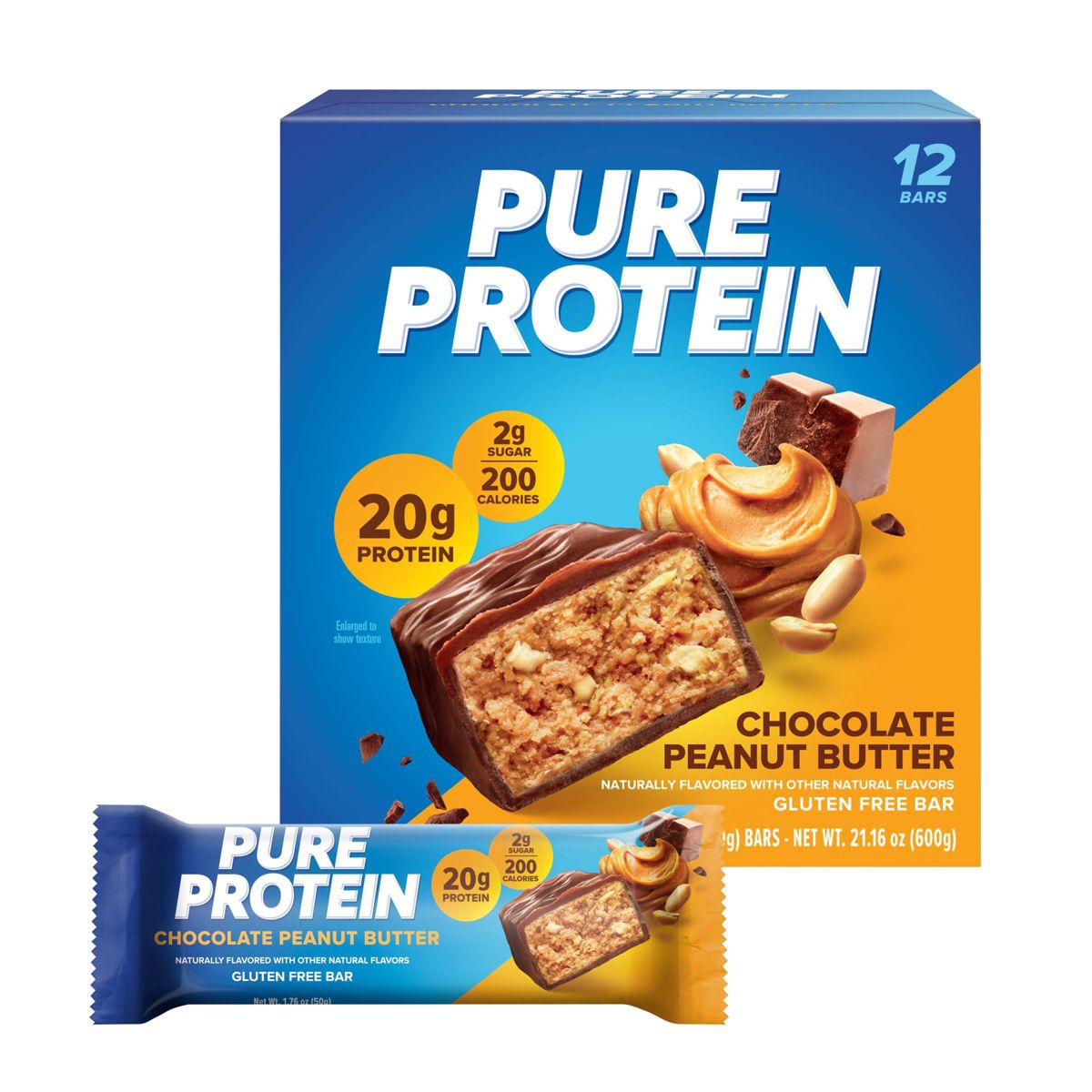
Protein
20g
Calories
200
Protein per 100 cal
10.0g
Pros
- More protein per serving: 20g vs 17g.
- Lower calorie load: 200 calories vs 330.
- Better protein density: 10.0g protein per 100 calories.
Cons
- Weaker review score: 4.5 vs 4.7.
| Metric | Perfect Bar Original Peanut Butter Protein Bar | Pure Protein Chocolate Peanut Butter |
|---|---|---|
| Protein | 17g | 20gBest |
| Calories | 330 | 200Best |
| Sugar | 18g | 6gBest |
| Fiber | 3gBest | 1g |
| Sodium | — | 0.2mgBest |
| Carbs | 25g | 17gBest |
| Fat | 18g | 7gBest |
| Protein per 100 cal | 5.2g | 10.0gBest |
“Healthier” depends on your goal — here’s the real winner on every number we track, so two people with different priorities can both get the right answer.
- Protein: Pure Protein Chocolate Peanut Butter wins, 20g vs 17g.
- Calories: Pure Protein Chocolate Peanut Butter wins, 200 vs 330.
- Sugar: Pure Protein Chocolate Peanut Butter wins, 6g vs 18g.
- Fiber: Perfect Bar Original Peanut Butter Protein Bar wins, 3g vs 1g.
- Sodium: Pure Protein Chocolate Peanut Butter wins, 0.2mg vs —.
- Carbs: Pure Protein Chocolate Peanut Butter wins, 17g vs 25g.
- Fat: Pure Protein Chocolate Peanut Butter wins, 7g vs 18g.
- Protein per 100 cal: Pure Protein Chocolate Peanut Butter wins, 10.0g vs 5.2g.
Pure Protein Chocolate Peanut Butter edges ahead on a protein + calorie + rating blend.
Pure Protein Chocolate Peanut Butter scores higher in that blend because it offers more protein per serving (20g vs 17g), a lighter calorie hit (200 vs 330), more protein per 100 calories (10.0g vs 5.2g). This blend won’t match your priorities if sugar, carbs, or diet fit matter more to you than protein, calories, and rating.
Frequently Asked Questions
Pure Protein Chocolate Peanut Butter has more protein per serving: 20g versus 17g.
Pure Protein Chocolate Peanut Butter is the lighter option at 200 calories, compared with 330 calories for the alternative.
Pure Protein Chocolate Peanut Butter is the more protein-dense pick at about 10.0g of protein per 100 calories.
"Healthier" depends on your goal: Pure Protein Chocolate Peanut Butter has more protein (20g vs 17g); Pure Protein Chocolate Peanut Butter has less sugar (6g vs 18g); Pure Protein Chocolate Peanut Butter is lower in calories (200 vs 330). Neither is objectively the "healthiest" for everyone — see the pick-by-priority breakdown above, or try our free AI Snack Finder to get matched to your specific goal.
Pure Protein Chocolate Peanut Butter edges ahead on a protein + calorie + rating blend. Pure Protein Chocolate Peanut Butter scores higher in that blend because it offers more protein per serving (20g vs 17g), a lighter calorie hit (200 vs 330), more protein per 100 calories (10.0g vs 5.2g). Because they are in the same category, this is a direct apples-to-apples comparison.
Get weekly protein snack picks
Data-ranked comparisons and new picks. No spam — unsubscribe anytime.