Best Cottage Cheese Snacks for Protein: Easy Sweet and Savory Ideas
A cup of low-fat cottage cheese carries about 28g of protein for 163 calories — more protein per calorie than a chicken breast — and 80% of it is slow-digesting casein instead of fast whey. Six real ways to use that, with USDA figures, not guesses.
The short answer
Our top Greek yogurt picks
Editor-selected and ready to buy. As an Amazon Associate we may earn from qualifying purchases.
 10g protein
 12g protein18g protein
Cottage Cheese by the Numbers (USDA Generic Values)
| Cottage cheese type | Serving | Protein | Calories | Carbs | Fat |
|---|---|---|---|---|---|
| Low-fat (1%) | 1 cup (226g) | 28g | 163 | 6g | 2g |
| Low-fat (1%) | 1/2 cup (113g) | 14g | 81 | 3g | 1g |
| Full-fat (4%, creamed) | 1 cup (225g) | 25g | 220 | 8g | 9.5g |
Standard USDA generic values for the food itself, not one brand's label — a specific carton's numbers will vary a few grams either way, so check the actual nutrition panel on whatever's in your fridge.
Why the Slow-Digesting Protein Actually Matters
Whey protein (the fast-digesting kind in most shakes and bars) spikes amino acids in the blood within about an hour, then clears quickly. Casein forms a gel in the stomach and releases amino acids over several hours instead — which is exactly why sports-nutrition researchers have studied casein specifically as a pre-bed protein source for supporting overnight muscle protein synthesis, rather than as a pre- or post-workout pick. Practically, that means cottage cheese is a better choice for a snack meant to hold you through a long stretch (an afternoon lull, before bed) than for the 30 minutes right after a workout, where a faster-digesting protein does more.
6 Ways to Actually Eat It
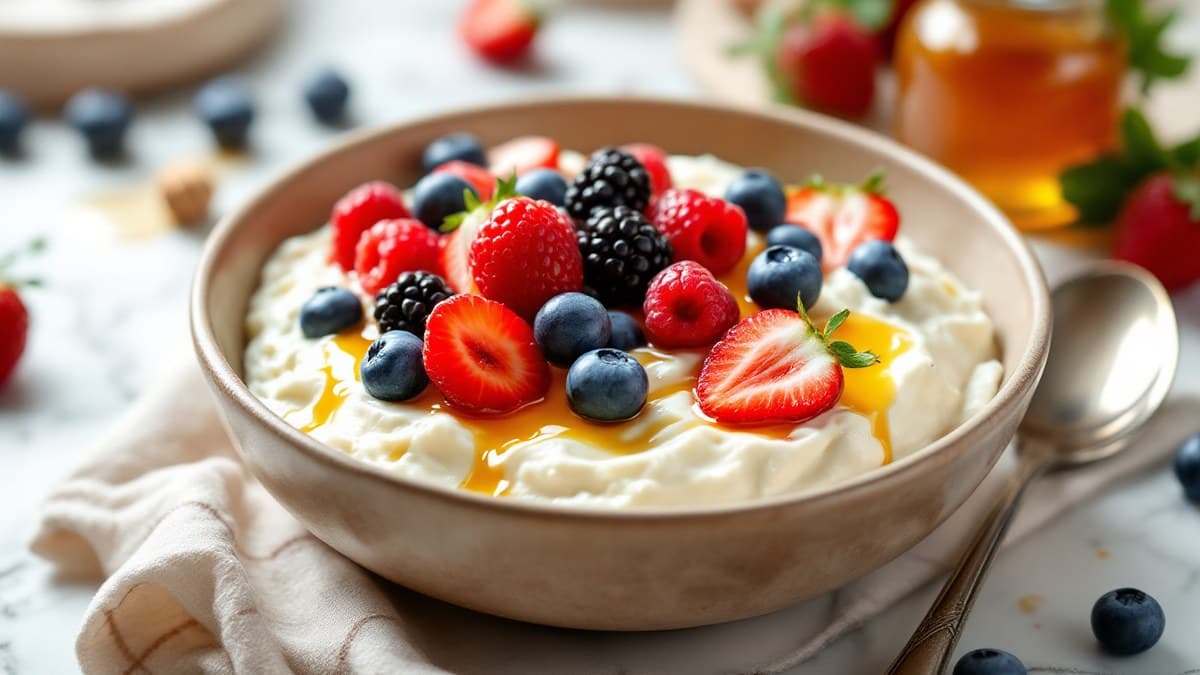
Cottage cheese + berries + a drizzle of honey
The closest thing to a dessert on this list: 1 cup of low-fat cottage cheese (28g protein) with a half-cup of berries and a teaspoon of honey lands around 220 calories with real fruit fiber alongside the protein. Frozen berries thawed for five minutes work just as well as fresh and cost less.
Whipped cottage cheese + everything bagel seasoning
Blending cottage cheese in a food processor for about a minute breaks down the curds into something closer to a thick, smooth dip — the protein and calories don't change, but the texture puts off far fewer people than the traditional curd form. Top with everything-bagel seasoning and eat with cucumber slices or whole-grain crackers.
Cottage cheese + hot sauce + black pepper
A genuinely savory option that avoids the tomatoes-and-veggies default: straight cottage cheese with a few dashes of hot sauce and cracked pepper eats more like a dip than a diet food. Good on its own or spooned over a baked potato.
Cottage cheese scrambled into eggs
Folding a half-cup of cottage cheese into scrambled eggs partway through cooking adds roughly 14g of protein and a noticeably creamier texture — a real technique used in high-protein breakfast cooking, not a gimmick. The curds soften into the eggs rather than staying distinct.
Cottage cheese + pineapple
An old-school pairing for a reason: the sweetness and acidity of pineapple cut through cottage cheese's tang more effectively than most other fruit. Canned pineapple in juice (not syrup) keeps the added sugar low.
Cottage cheese as a sandwich/wrap spread
Whipped cottage cheese swapped in for mayo or cream cheese on a sandwich or wrap adds protein without much flavor disruption — a simple swap rather than a new snack to plan around.
What to Watch For on the Label
Flavored, sweetened cottage cheese cups (the pre-mixed fruit-on-the-bottom style) frequently carry 10–15g of added sugar per serving — enough to meaningfully offset the protein advantage. Plain cottage cheese with your own fruit mixed in gives you control over that number; a pre-flavored cup does not.
Frequently Asked Questions
Is cottage cheese actually better than Greek yogurt for protein?
They're close. A cup of low-fat cottage cheese (28g protein, 163 calories) edges out a cup of plain nonfat Greek yogurt (roughly 20–23g protein, 130–150 calories) on total protein, though Greek yogurt has a slight edge on protein-per-calorie in some brands. The bigger practical difference is texture and taste, and the protein type: cottage cheese is casein-dominant, Greek yogurt still carries meaningful casein too since both start from milk, but cottage cheese's curd structure holds more of it.
Does cottage cheese cause bloating?
Cottage cheese contains lactose, so anyone with lactose intolerance may experience bloating or GI discomfort, more so than with Greek yogurt, which has less lactose due to straining. Lactose-free cottage cheese exists and carries the same protein numbers.
Is cottage cheese good before bed?
This is one of the few snack timing claims with real research behind it: casein's slow digestion is specifically why some sports-nutrition studies have looked at a pre-bed casein-rich snack (cottage cheese included) to support muscle protein synthesis overnight. It's a genuine, evidence-based use case, not just internet advice.
How much cottage cheese is too much in a day?
There's no hard cap, but cottage cheese runs 400–700mg of sodium per cup depending on brand, which adds up if you're eating multiple servings daily and also watching sodium for another reason (blood pressure, for example). Check the label on your specific carton.
Bottom line: a cup of low-fat cottage cheese carries about 28g of protein for 163 calories, using standard USDA figures — genuinely one of the most protein-efficient foods in an ordinary grocery store. Skip the sweetened cups, mix in your own fruit or savory add-ins, and use it as a slow-digesting option for a long stretch between meals rather than a fast post-workout snack. Compare more options in the protein snacks directory.
Shop our top Greek yogurt picks
Editor-selected high-protein options related to this guide. As an Amazon Associate we may earn from qualifying purchases.
10g protein12g protein18g proteinTags
High Protein Snacks Pro Editorial Team
Independently researched and editorially reviewed. We compare real nutrition labels and never accept payment for coverage.
Get the best new protein snacks in your inbox
Weekly picks and honest reviews — no spam, unsubscribe anytime.
More from the journal
String Cheese Protein: How Much Is in Each Stick? 4 Brands Compared (2026)
A standard string cheese stick (28g) delivers 6–7g of protein at 80–90 calories — roughly 8–9g of protein per 100 calories, which beats most crackers and granola bars. We pulled Nutrition Facts from four major brands (Sargento, Polly-O/BelGioioso, Frigo CheeseHeads, Organic Valley) and ranked them by protein density, sodium, fat, and cost.
Read more
Fairlife Milk Nutrition Facts 2026: 13g Protein per Cup, Lactose-Free — Full Label Breakdown
Fairlife ultra-filtered whole milk delivers 13g of protein and 6g of sugar per 8 fl oz cup — 62% more protein and 50% less sugar than regular whole milk, with zero lactose. Complete 2026 nutrition label breakdown for whole, 2%, and fat-free varieties, with honest price and taste comparison to regular milk.
Read more
Best High-Protein Snacks at Harris Teeter (2026): 7 Picks Ranked by Protein, Price, and Availability
Harris Teeter stocks a stronger protein-snack lineup than most regional grocers, including Fairlife Core Power Elite (42g protein), Quest Protein Bars (21g), Premier Protein shakes (30g), and multiple cottage cheese brands — all in one trip without a warehouse membership. Seven picks verified against 2026 Harris Teeter listings and label data, ranked by protein per serving, price per gram of protein, and grab-and-go convenience.
Read more