
Why Protein Snacks Keep You Full Longer

Why Protein Snacks Keep You Full Longer
Protein snacks are a smart choice to help you stay full for hours. Here's why: protein triggers hormones like GLP-1, PYY, and CCK that suppress hunger, while reducing ghrelin, the hormone that makes you feel hungry. It also digests more slowly than carbs or fats, providing steady energy and curbing cravings.
Key points:
- Hormonal Impact: Protein increases fullness hormones and reduces hunger hormones.
- Slow Digestion: Protein takes longer to break down, keeping you satisfied longer.
- Calorie Burn: Digesting protein burns more calories (20-30% of protein calories).
- Research Insight: Studies show snacks with 20-24g of protein delay hunger and reduce calorie intake later.
To maximize satiety, choose snacks with at least 10g of protein, low sugar, and added fiber. Examples include Greek yogurt, edamame, or protein bars. Protein isn't just fuel - it's a tool for managing hunger effectively.
How Protein Keeps You Full: The Science
How Protein Affects Hunger Hormones: Complete Guide
Hunger and Fullness Hormones
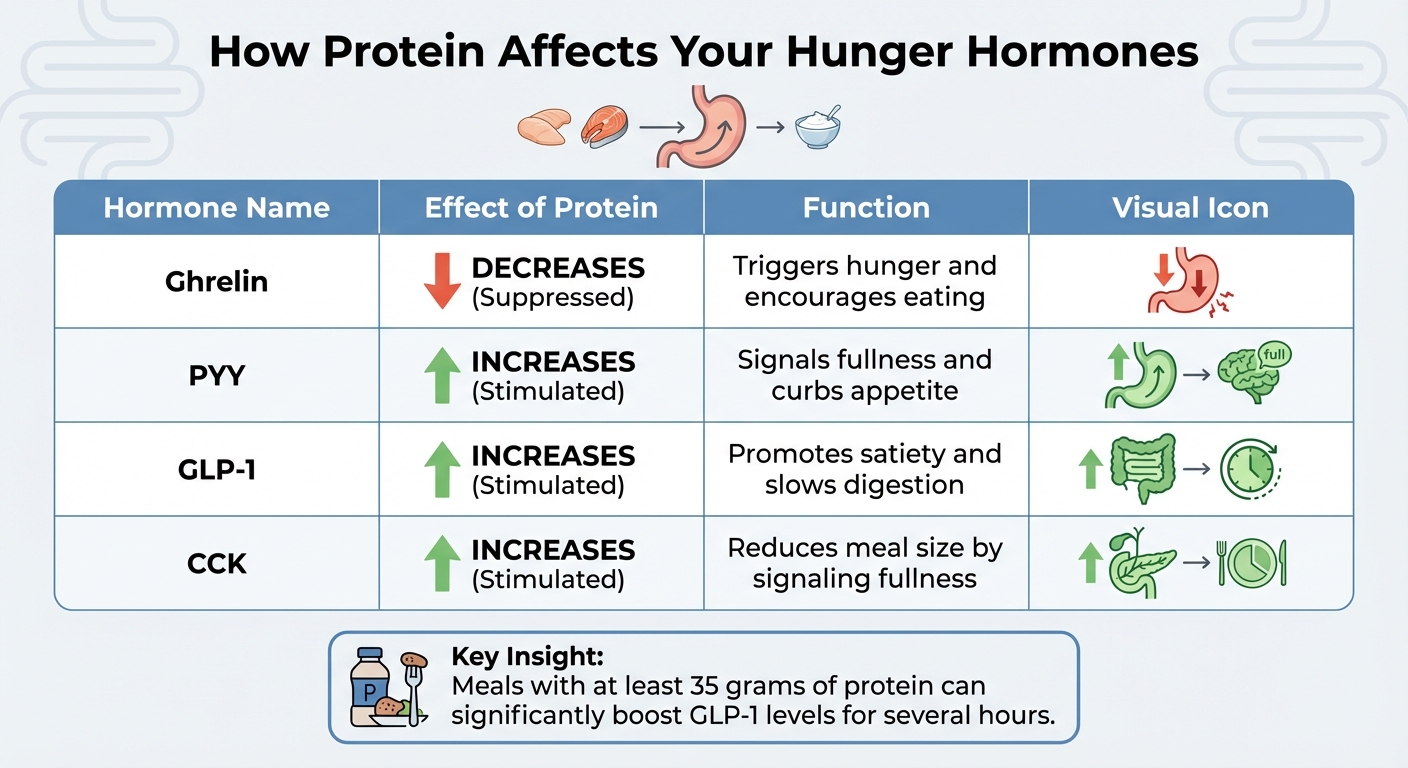
Eating protein triggers the release of hormones in your gut that help curb appetite - like GLP-1, CCK, and PYY - while lowering levels of ghrelin, the hormone that makes you feel hungry. Each of these plays a unique role:
- GLP-1 slows down how quickly your stomach empties, signaling your brain that you're full.
- CCK acts as an immediate "stop" signal during meals, helping you eat less.
- PYY stays active for a few hours after eating, keeping hunger at bay.
Research suggests that meals with at least 35 grams of protein can significantly boost GLP-1 levels for several hours.
| Hormone | Effect of Protein Intake | Function |
|---|---|---|
| Ghrelin | Decreases (Suppressed) | Triggers hunger and encourages eating |
| PYY | Increases (Stimulated) | Signals fullness and curbs appetite |
| GLP-1 | Increases (Stimulated) | Promotes satiety and slows digestion |
| CCK | Increases (Stimulated) | Reduces meal size by signaling fullness |
On top of these hormonal effects, the slow digestion of protein helps extend feelings of fullness even longer.
Digestion Speed and Energy Release
Protein takes its time to digest, staying in your stomach longer and releasing amino acids gradually. This steady release provides sustained energy without causing sharp spikes and crashes. Plus, the process of digesting protein itself burns calories - this is known as the thermic effect of food (TEF), which can increase daily energy expenditure by 8% to 10%.
Another interesting process is gluconeogenesis, where your liver converts amino acids into glucose. This conversion requires energy and strengthens the feeling of fullness. Altogether, the effects of a high-protein meal can keep you satisfied for about 3 to 5 hours. By understanding these processes, you can make smarter choices when picking high-protein snacks to stay full longer.
sbb-itb-a09e3e8
What the Research Shows
Greek Yogurt Studies
Research highlights Greek yogurt's ability to curb appetite effectively. In January 2013, Heather J. Leidy from the University of Missouri conducted a study with 15 healthy women. Each participant consumed 160-calorie afternoon snacks with different protein levels. The results were eye-opening: women who ate Greek yogurt with 24 grams of protein delayed their dinner by 54 minutes compared to those who skipped the snack. Specifically, they waited 178 minutes after eating the yogurt versus 124 minutes without a snack.
"An afternoon snack of Greek yogurt, containing 24 g protein, led to reduced hunger, increased fullness, and delayed subsequent eating compared to lower protein snacks in healthy women." - Heather J. Leidy, Researcher
The study also identified a protein threshold - 24 grams of protein significantly increased satiety, while snacks with less protein had minimal impact. Supporting this, a 2025 study by Nahla Al-Bayyari at Al-Balqa Applied University found that Greek yogurt with 30 grams of protein boosted satiety within just 30 minutes of consumption. Another trial showed that high-whey protein yogurt reduced calorie intake at the next meal by about 194 calories compared to a control yogurt.
These findings highlight Greek yogurt's role in appetite control and set the stage for exploring other protein-rich whole foods.
Nuts and Whole Food Protein Sources
Whole food proteins, beyond dairy, also contribute to prolonged fullness. A 2025 trial found that while Greek yogurt provided stronger immediate satiety, peanuts triggered a greater release of CCK, a hormone linked to feeling full. A 35-gram serving of roasted peanuts offers a mix of protein, healthy fats, and fiber - key components for slowing digestion and maintaining stable blood sugar levels.
Other examples of high-protein, high-fiber snacks include edamame, which delivers 18.4 grams of protein and 8 grams of fiber per cup, and roasted chickpeas, offering 14.5 grams of protein per cup. The takeaway? Snacks with 20 to 24 grams of protein are ideal for managing hunger and delaying your next meal effectively.
How to Choose High-Protein Snacks
What to Look For
When picking high-protein snacks, a few key nutritional factors can guide your choices. First, aim for at least 10 grams of protein per serving to help you feel full and support muscle maintenance. As Jessica Cording, MS, RD, CDN, IFNCP, puts it:
"While there is no official definition of a high-protein snack, I generally tell clients that a snack with 10-25 grams of protein is considered a high-protein snack".
In addition to protein, keep an eye on added sugar - less than 6 grams per serving is a good benchmark. Too much sugar can lead to cravings and reduce the satiety benefits of protein. Including fiber alongside protein is also a smart move since it slows digestion and helps stabilize blood sugar.
For the best nutritional punch, choose snacks with complete proteins, which contain all essential amino acids. These are found in animal-based foods like eggs, dairy, and meat, as well as plant-based options like soy and quinoa. To make your snack even more satisfying, follow the "trio rule": combine protein, fiber-rich carbs, and healthy fats. For example, try Greek yogurt with nuts and berries, or pair a hard-boiled egg with avocado.
With these tips in mind, let’s dive into some popular high-protein snack options.
Comparing Popular Options
Here’s how some common high-protein snacks stack up:
- Canned tuna: A 3-ounce serving delivers 20 to 25 grams of protein for just 168 calories, making it a great pick for weight management.
- Greek yogurt: Packed with 17 to 25 grams of protein per 6 to 7-ounce serving, it’s low in calories (90 to 120) and offers probiotics for gut health.
- Edamame: One cup provides 18.4 grams of protein, 8 grams of fiber, and 188 calories - a satisfying plant-based option.
- Cottage cheese: Known for its slow-digesting amino acids, a half-cup serving contains 12 to 14 grams of protein for just 127 calories.
If convenience is a priority, pre-packaged high-protein snacks are worth considering. For example, Quest Nutrition Protein Chips pack 19 grams of protein per bag at just 140 calories, while Chomps Grass-Fed Beef Sticks offer 9 grams of protein for 100 calories. When choosing protein bars, check that the protein count surpasses the sugar content, ideally keeping sugar under 10 grams.
For optimal satiety and effectiveness, stick to snacks in the 10 to 25-gram protein range, as the body can typically process 20 to 40 grams of protein at a time.
Conclusion
Science and research agree: high-protein snacks can be a powerful ally in managing appetite and maintaining energy levels.
These snacks work by activating satiety hormones like GLP-1 and PYY while lowering levels of ghrelin, the hormone that signals hunger. Protein’s slower digestion compared to carbs or fats ensures a steady energy supply and helps keep blood sugar levels stable.
Studies back this up, showing that high-protein snacks can reduce calorie consumption at later meals and extend the time between eating compared to snacks lower in protein. Since the body processes about 20–40 grams of protein at a time, spreading your intake throughout the day is a smart approach.
"Protein isn't just a macronutrient - it's a strategic tool that can help you feel satisfied longer, keep cravings in check, and support your weight goals." – Fantastic Nutrition
With over 90% of Americans snacking two to three times a day, opting for high-protein choices like Greek yogurt, edamame, or protein bars can make your snacks more effective. Look for options that offer at least 10 grams of protein to help curb hunger and keep you fueled. High-protein snacks aren't just about staying full - they’re a practical way to support balanced nutrition and better weight management.
FAQs
How much protein should a snack have to keep me full?
A snack containing 5 to 8 grams of protein is a great choice for keeping you feeling full. This protein range is considered high for snacks and plays a key role in managing appetite during the day.
What’s the best time of day to eat a protein snack for appetite control?
High-protein snacks can be a great choice for managing appetite and keeping energy levels steady throughout the day. Whether you enjoy them as a midday boost, a post-workout bite, or something to tide you over between meals, they help curb cravings and keep you feeling satisfied. There’s no wrong time to fit them into your routine!
Can plant-based protein snacks keep me full as long as animal-based ones?
Yes, snacks made from plant-based proteins, such as legumes, can be just as satisfying as those from animal sources. Thanks to their high fiber content, they help you feel full longer by slowing digestion and adding volume to your meals, making them a great choice for managing hunger.