
Ultimate Guide to Greek Yogurt for Gut Health

Ultimate Guide to Greek Yogurt for Gut Health
Greek yogurt stands out as a nutrient-packed option for improving gut health. Its thick texture and live probiotics support digestion, immunity, and even mood regulation. Here's what makes it special:
- Probiotics: Contains live cultures (Lactobacillus bulgaricus, Streptococcus thermophilus) that help balance gut bacteria and ease issues like bloating and constipation.
- Higher Protein: Offers nearly double the protein of regular yogurt - about 20g per 7-ounce serving - while being lower in sugar and lactose.
- Gut-Brain Connection: Over 90% of serotonin, a mood-regulating neurotransmitter, is produced in the gut, influenced by a healthy microbiome.
- Health Benefits: Regular consumption is linked to a 14% lower risk of type 2 diabetes and improved digestion after antibiotics.
Greek yogurt is versatile - use it in smoothies, dips, or as a substitute for sour cream. Choose products with the "Live and Active Cultures" seal for maximum probiotic benefits and avoid flavored varieties with high added sugar. Daily servings can help maintain a balanced gut microbiome and overall well-being.
GREEK YOGURT BENEFITS | 9 Insane Things That Happen When You Eat It Every Day
sbb-itb-a09e3e8
Probiotics in Greek Yogurt
Greek yogurt contains live bacteria that support digestive health.
Common Probiotic Strains in Greek Yogurt
Greek yogurt is made using Lactobacillus bulgaricus and Streptococcus thermophilus, two bacteria that transform lactose into lactic acid. As noted by the Harvard T.H. Chan School of Public Health:
The bacteria convert the sugar in milk, called lactose, to lactic acid, which thickens the milk and develops its distinctive tart flavor.
In addition to these, many brands include extra probiotic strains to enhance health benefits. Popular additions are Bifidobacterium, Lactobacillus acidophilus, Lactobacillus gasseri, and Lactobacillus plantarum. For instance, Lactobacillus gasseri BNR17 has been linked to reducing visceral fat and improving blood sugar levels after meals. Meanwhile, Lactobacillus plantarum HY7714 produces exopolysaccharides that help maintain gut barrier integrity by supporting intestinal tight junctions.
To ensure you're consuming live probiotics, check for the "Live and Active Cultures" seal on the packaging. This seal guarantees the product contained at least 1,000,000 colony-forming units (CFUs) per gram at the time of manufacture. Avoid yogurts labeled "heat-treated after culturing", as this process kills the beneficial bacteria. Even after straining, Greek yogurt can retain probiotic levels above 100,000,000 CFU per gram. These bacterial strains not only shape the yogurt's flavor and texture but also contribute to its digestive benefits.
How Probiotics Support Digestive Health
Probiotics play a key role in maintaining gut balance by controlling harmful bacteria while improving food digestion and nutrient absorption. They also aid in producing essential vitamins like thiamine, niacin, folate, B6, B12, and vitamin K. Additionally, live cultures produce lactase, which can help those with mild lactose intolerance digest dairy more easily.
The Mayo Clinic highlights their broader impact:
Healthy bacteria in the gut are critical to digestion. Research also shows that these tiny microbes play an important role in regulating the immune system, the inflammatory response and many other bodily functions.
The lactic acid produced by these probiotics creates an acidic environment that discourages pathogens like E. coli. Consuming Greek yogurt rich in probiotics can also help restore gut balance after antibiotic treatments. Certain strains, such as Bifidobacterium, are particularly effective in alleviating constipation and reducing symptoms of irritable bowel syndrome (IBS). Combined with Greek yogurt's dense nutritional profile, these probiotics make it a powerful ally for digestive health.
Nutritional Profile of Greek Yogurt for Gut Health
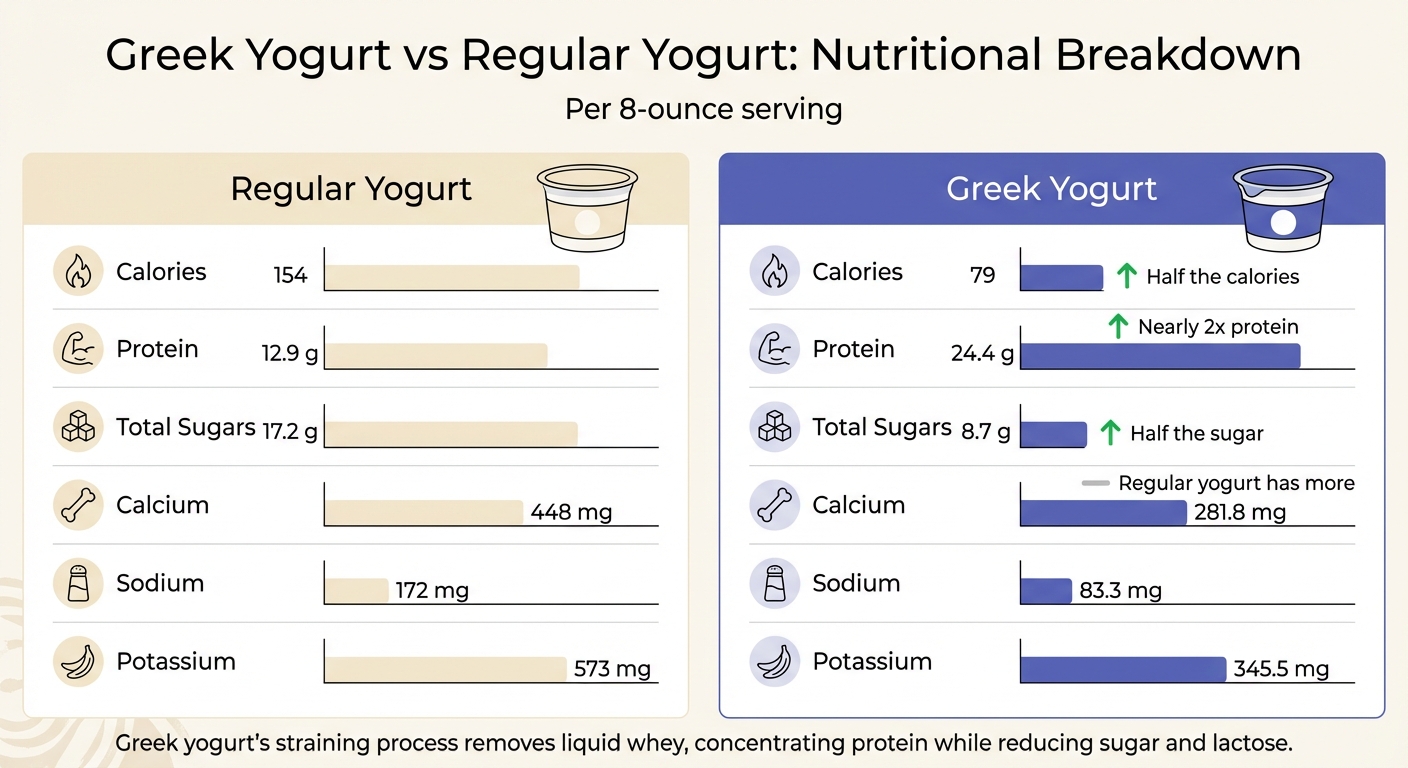
Greek Yogurt vs Regular Yogurt Nutritional Comparison
Greek yogurt isn't just about probiotics - it packs a nutrient punch that supports gut health in multiple ways. Thanks to its unique straining process, this yogurt boasts a thicker texture, nearly doubles the protein, and cuts lactose levels in half compared to regular yogurt.
Greek Yogurt vs. Regular Yogurt: Nutritional Comparison
When you compare Greek yogurt to its regular counterpart, the differences are clear. An 8-ounce serving of low-fat Greek yogurt offers 24.4 g of protein - almost twice the 12.9 g in regular yogurt. It also contains just 8.7 g of total sugars, significantly less than the 17.2 g in regular yogurt. However, the straining process does reduce some minerals, like calcium, which drops from 448 mg in regular yogurt to 281.8 mg in Greek yogurt per serving.
Here's how the two stack up nutritionally:
| Nutrient | Regular Yogurt (8 oz) | Greek Yogurt (8 oz) |
|---|---|---|
| Calories | 154 | 79 |
| Protein | 12.9 g | 24.4 g |
| Total Sugars | 17.2 g | 8.7 g |
| Calcium | 448 mg | 281.8 mg |
| Sodium | 172 mg | 83.3 mg |
| Potassium | 573 mg | 345.5 mg |
Nutrients That Support Digestive Health
Beyond its probiotics, Greek yogurt's nutrient profile brings additional digestive benefits. Its high protein content not only helps with muscle repair and keeping you full but also supports smooth muscle activity in the digestive tract. A 7-ounce serving delivers 43% of the daily value (DV) for vitamin B12 and 45% for selenium, while its reduced lactose makes it easier to digest for those with sensitivities.
Calcium and phosphorus in Greek yogurt play a role in maintaining the muscle contractions needed for regular bowel movements. Meanwhile, potassium helps keep the digestive system functioning properly, rounding out its gut-friendly benefits.
Best Greek Yogurt Products for Gut Health
Two Good Greek Yogurt - Vanilla

Two Good Greek Yogurt is a standout choice, offering just 80 calories per 6-ounce serving with 12g of protein and low sugar content. Sweetened with stevia, it includes essential starter cultures like L. bulgaricus and S. thermophilus, which are beneficial for gut health. Its low-sugar formula supports the growth of good gut bacteria, making it a great daily option. You can grab it for $5.99 on High Protein Snacks Pro, making it both gut-friendly and easy on the wallet.
Additional High-Protein Greek Yogurt Options
If you're looking for more options, High Protein Snacks Pro features a variety of high-protein Greek yogurts:
- Chobani High Protein: Delivers 20g of protein per serving with zero added sugar, sweetened with stevia. It also includes lactase enzymes, which can help with lactose digestion. Priced at around $1.99 per cup, it's a convenient and affordable choice.
- Oikos Pro: Similar to Chobani, it offers 20g of protein per serving and uses stevia for sweetness, keeping sugar levels in check.
For those seeking even higher protein content, :ratio PROTEIN offers a hefty 25g of protein per serving with no added sugar. However, it uses sucralose as a sweetener, which some studies suggest may not be ideal for gut health.
Prefer plain yogurt with no added sweeteners? Fage Total 0% is an excellent choice, providing 16–17g of protein along with beneficial strains like L. acidophilus, Bifidus, and L. casei. Alternatively, Nancy's Probiotic Greek Yogurt packs 20g of protein and includes tens of billions of probiotics per serving, featuring strains like BB-12 and LA-5.
"The most important thing to know is that [probiotics] are strain-specific - meaning, while one type may help with immunity, another might be better for gut health." - Karen Ansel, Registered Dietitian
Each of these products is designed to support gut health by reducing sugar intake and providing high-quality protein and beneficial cultures. If you prefer plain yogurt, it’s easy to customize by adding fresh fruit or a drizzle of honey for extra flavor. These options are versatile and can fit seamlessly into your daily routine, whether as a snack or part of a meal.
How to Add Greek Yogurt to Your Diet
Simple Meal Ideas with Greek Yogurt
Greek yogurt is a versatile addition to any meal, offering a mix of nutrients and probiotics. Whether it’s breakfast, lunch, or dinner, there are plenty of ways to include it in your daily routine. For breakfast, try mixing equal parts of milk and Greek yogurt to create creamy overnight oats packed with probiotics. You can also blend it into smoothie bowls to give them a protein boost.
At lunch or dinner, Greek yogurt can replace mayonnaise or sour cream for a healthier twist. Stir it into chicken, tuna, or chickpea salads for added protein, or use it as a topping for tacos, baked potatoes, or enchiladas. It’s also great for making yogurt-based ranch dressing, tzatziki, or even a Turkish-style garlic pasta sauce. Just keep in mind that heat can destroy probiotics, so it’s best to use Greek yogurt in cold dishes or add it to cooked meals after they’ve cooled.
For snacks, get creative! Make frozen yogurt bark with fruit and nuts, blend it into popsicles, or use it as a dip for veggies or apple slices. To maximize gut health benefits, pair Greek yogurt with prebiotic-rich foods like ground flaxseed, chia seeds, berries, or high-fiber cereals. Prebiotics help feed the probiotics, creating a perfect match for your digestive health.
When to Eat Greek Yogurt for Maximum Benefit
Timing can play a role in optimizing the probiotic benefits of Greek yogurt. Probiotics like Lactobacillus are more likely to survive stomach acid when consumed during a meal or about 30 minutes before eating. Early morning, between 6:00 AM and 7:00 AM, is an ideal time since stomach acidity is lower after fasting overnight, increasing the chances of live cultures reaching the intestines.
"Lactobacillus is more likely to survive the stomach's harsh environment and reach the intestines when taken either with a meal or 30 minutes before a meal." - Sarah Bence, OTR/L
However, consistency is more important than timing. Registered dietitian Karen Ansel emphasizes:
"RDs say when you eat yogurt isn't nearly as important for gut health as how often you eat it."
Since probiotics don’t permanently stay in the gut, making Greek yogurt a regular part of your diet is essential. Whether it’s at breakfast, after a workout, or as a midday snack, daily consumption helps maintain its digestive and recovery benefits. For convenience, you can explore options like Two Good Greek Yogurt on High Protein Snacks Pro to keep things simple and budget-friendly.
Potential Drawbacks and Considerations
While Greek yogurt is known for its gut-friendly perks, there are a few things to keep in mind before adding it to your routine.
Lactose Intolerance and Dairy Allergies
Greek yogurt contains less lactose than regular milk - about 4.2 grams per 3/4 cup compared to 12 grams per cup in milk. This is thanks to the straining process, which removes much of the liquid whey (where most lactose resides), and the live cultures that help break down the remaining lactose. As a result, many people with lactose sensitivities find it easier to digest.
That said, lactose intolerance and dairy allergies are two very different issues. Lactose intolerance occurs when the body lacks enough lactase, the enzyme needed to digest lactose, leading to symptoms like bloating, gas, abdominal discomfort, and diarrhea that can appear hours after eating. On the other hand, a dairy allergy involves an immune response to milk proteins like whey or casein, which can cause more severe reactions such as hives, swelling, breathing difficulties, or even anaphylaxis.
If you're lactose intolerant, start with small servings of Greek yogurt to gauge your tolerance. Taking lactase enzyme supplements before eating can also help reduce symptoms. For those with dairy allergies, plant-based alternatives like soy, almond, or coconut yogurt can be safer choices. Just ensure these options are fortified with protein and calcium to match the nutritional profile of dairy yogurt.
It's also worth keeping an eye on the sugar levels in flavored Greek yogurts, which can sneakily offset the health benefits.
Sugar Content in Flavored Greek Yogurts
Not all Greek yogurts are created equal, especially when it comes to added sugars. Some flavored options pack in 20–25 grams of sugar per 5-ounce serving, which is nearly the entire daily limit of 25 grams recommended for women. High sugar intake can counteract the gut health benefits Greek yogurt is known for.
"If you are trying to figure out what yogurt is best for your overall health, then it's a good idea to limit yogurts that seem like a dessert." – Amy Bragagnini, MS, RD, CSO, Academy of Nutrition and Dietetics
To keep things healthy, look for Greek yogurt with 8 grams or less of added sugar per serving. Plain, unsweetened varieties are an excellent choice - they're like a blank canvas you can enhance with fresh fruit, a dash of vanilla extract, or a sprinkle of cinnamon. Brands like Two Good Greek Yogurt are examples of low-sugar, high-protein options that deliver on health benefits.
Be cautious with "light" or "zero sugar" yogurts, as they often contain artificial sweeteners like aspartame or sucralose, or sugar alcohols, which can cause bloating or gas in some people. Similarly, if you're sensitive to thickeners like carrageenan or guar gum, it's best to avoid products that include them.
Conclusion
Greek yogurt is more than just a tasty snack - it’s a powerful ally for digestive health. Thanks to its live and active cultures, it helps maintain a balanced gut microbiome, strengthens the intestinal lining, and can ease digestive issues like bloating and diarrhea. With a significant portion of your immune system - up to 80% - residing in your gut, the probiotics in Greek yogurt also play a role in boosting your immune defenses.
Nutritionally, Greek yogurt packs a punch. A 7-ounce serving provides about 45% of your daily selenium needs and 43% of your Vitamin B12 intake. Plus, studies suggest that regular consumption may lower the risk of type 2 diabetes by 14% to 27%. Its thick, creamy texture is a result of the straining process, which also removes much of the lactose - making it a great option for those with mild lactose sensitivities.
To get the most out of Greek yogurt, choose products with minimal added sugars and active cultures. Look for the "Live & Active Cultures" seal, which guarantees at least 100 million beneficial cultures per gram. Opt for plain, unsweetened varieties and add your own toppings like berries, flaxseed, or nuts to boost fiber and support your gut microbes. Since probiotics don’t permanently stay in your gut, consistency matters - small, daily servings are more effective than occasional large portions.
Incorporating Greek yogurt into your diet is simple and versatile. Pair it with whole grains, vegetables, and fermented foods to create a diverse and thriving gut environment. Whether it’s part of your breakfast, a substitute for sour cream in recipes, or a protein-packed snack, Greek yogurt fits seamlessly into a healthy routine.
For more tips on choosing the right Greek yogurt for your needs, resources like High Protein Snacks Pro offer detailed comparisons to help you make informed choices. By making Greek yogurt a daily habit, you can support your gut health and overall well-being.
FAQs
How can I tell if Greek yogurt still has live probiotics?
When choosing yogurt, look for labels mentioning “live and active cultures” or certifications from groups like the NYA (National Yogurt Association) or IDFA (International Dairy Foods Association). These labels confirm the yogurt still contains helpful bacteria and hasn’t been heat-treated after fermentation - a process that can destroy probiotics.
How much Greek yogurt should I eat for gut health?
For better gut health, try including 1 to 2 servings of Greek yogurt in your daily diet - this equals about 1 to 2 cups. Greek yogurt is packed with probiotics, which can help with digestion, maintain a balanced gut microbiome, and may even lower the risk of certain health issues. To get the most out of it, go for plain, low-fat varieties with live and active cultures, and steer clear of those with added sugars.
Is Greek yogurt OK if I’m lactose intolerant or have IBS?
Greek yogurt can be a good option for individuals with lactose intolerance because it has less lactose than regular yogurt and contains live cultures that help with digestion. That said, tolerance levels can differ from person to person. For those with IBS, Greek yogurt might be easier on the gut if it includes live probiotics, but its impact depends on personal triggers and the specific type of Greek yogurt. Always factor in your own dietary requirements when deciding whether Greek yogurt is right for you.