
Protein Timing For Muscle Recovery: Guide
Protein Timing For Muscle Recovery: Guide
Protein timing can help you recover faster and build muscle more effectively. Here’s what you need to know:
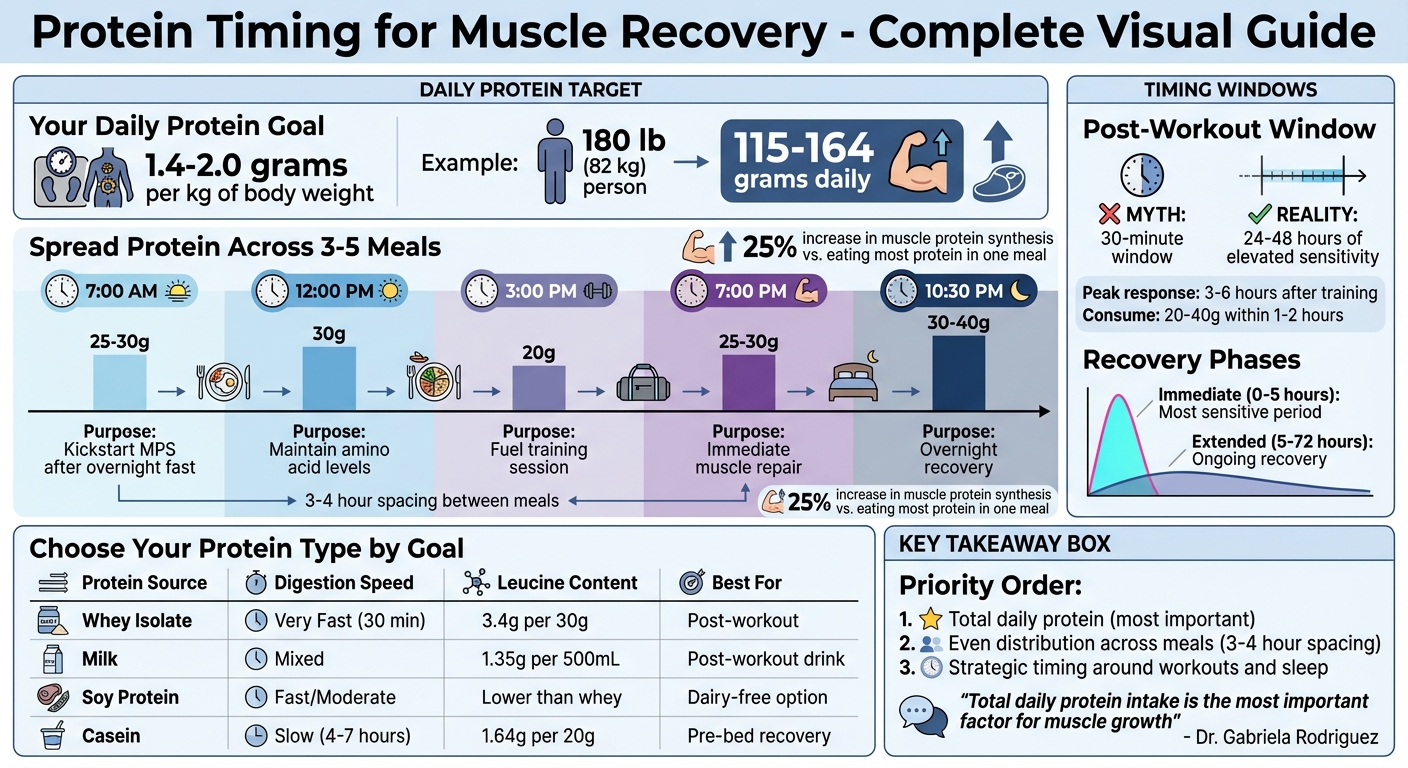
- Daily Protein Goal Matters Most: Aim for 1.4–2.0 grams of protein per kilogram of body weight. For example, if you weigh 180 lbs (82 kg), you need 115–164 grams daily.
- Spread Protein Intake: Divide your protein into 3–5 meals, each with 20–40 grams. This boosts muscle protein synthesis (MPS) by about 25% compared to eating most of your protein in one meal.
- Post-Workout Protein: Eat 20–40 grams of high-quality protein (like whey) within 1–2 hours after exercise. If you trained on an empty stomach, consume protein immediately.
- Pre-Bed Protein: A slow-digesting protein like casein (20–40 grams) before bed supports overnight recovery.
- Best Protein Sources: Whey protein, Greek yogurt, eggs, chicken, and casein are ideal. For plant-based options, try pea-rice blends or soy.
Key takeaway: Total protein intake is your top priority, but spreading it evenly across the day and timing it around workouts can enhance recovery and muscle growth.
Complete Protein Timing Guide for Muscle Recovery and Growth
How Muscle Protein Synthesis Works
Protein's Role in Muscle Repair
Muscle protein synthesis (MPS) is the process that builds new skeletal muscle proteins, driving muscle repair, adaptation, and growth after exercise. It plays a central role in maintaining and enhancing muscle health.
Every day, about 1% to 2% of skeletal muscle protein turns over naturally. Exercise amplifies both MPS and muscle protein breakdown (MPB), creating a temporary negative balance until protein is consumed. Dietary protein not only provides the essential amino acids needed to build new muscle tissue but also acts as a trigger for anabolic pathways like the mTOR pathway, which promotes muscle growth. Among these amino acids, leucine stands out as the most important for activating MPS.
"Ingested protein is rapidly digested and absorbed, providing building blocks to support the post-prandial increase in muscle protein synthesis, revealing that 'you are what you just ate'." - Luc J.C. van Loon, PhD
For muscles to grow, MPS must surpass MPB, creating a positive protein balance. Resistance exercise can increase MPS rates by 100% to 150% above baseline immediately after a workout. Consuming 20 grams of high-quality protein during this recovery period can enhance MPS by up to 40% for 4 to 6 hours.
Understanding these mechanisms helps explain why nutrient timing plays a crucial role in recovery and muscle building.
Recovery Windows Explained
The timing of protein intake is key to optimizing recovery, as muscles remain sensitive to protein well beyond the immediate post-exercise period. Recovery can be divided into two main phases, each requiring specific strategies for protein consumption.
The immediate window (0 to 5 hours) is when muscles are most sensitive to protein intake. During this phase, consuming 20 to 25 grams of fast-digesting protein, like whey, is usually enough to maximize the MPS response. MPS peaks between 1.5 and 3 hours after exercise but gradually returns to baseline even if amino acids are still available - a phenomenon known as the "muscle full" effect.
The extended window (5 to 72 hours) represents ongoing recovery. Muscles remain responsive to protein for at least 24 hours and, in some cases, up to 48–72 hours after exercise. A study led by José L. Areta in March 2013 at RMIT University found that consuming 20 grams of protein every 3 hours resulted in 31% to 48% greater MPS stimulation compared to other protocols, such as 10 grams every 1.5 hours or 40 grams every 6 hours.
These recovery windows highlight the importance of strategic protein intake to support muscle repair and growth effectively.
sbb-itb-a09e3e8
Optimizing muscle protein synthesis: exercise, timing of protein intake, protein quality, and more
Post-Workout Protein Timing
After exercise, consuming protein helps shift your body's balance from breaking down muscle to building it up, promoting repair and growth. Resistance training can double the rate of muscle protein synthesis, but without proper nutrition, muscle breakdown remains elevated.
You might have heard of the "30-minute window" for post-workout protein intake, but that's a myth. In reality, muscles remain sensitive to protein for up to 24–48 hours, with the peak response occurring 3–6 hours after training.
"The anabolic window exists, but it's much wider. Research now suggests the elevated capacity for muscle protein synthesis after resistance training lasts 24 to 48 hours, with the most pronounced effects in the first 3 to 6 hours." - Dr. Gabriela Rodriguez, Bariatric and Metabolic Surgeon
If you've eaten a protein-rich meal 1–2 hours before your workout, amino acids from that meal will still be circulating, effectively extending your post-workout window. However, if you train on an empty stomach, it's essential to consume protein right after your session.
Now, let's look at how much protein you should aim for after exercising.
How Much Protein to Eat After Exercise
To maximize muscle protein synthesis, aim for 20–40 grams of high-quality protein within 1–2 hours post-workout. This amount provides 700–3,000 mg of leucine, the key amino acid that triggers muscle building. Younger adults typically benefit from 20–25 grams, while older adults may need 30–40 grams to counteract anabolic resistance.
For a more personalized approach, consume 0.4–0.5 grams of protein per kilogram of lean body mass before and after exercise. For instance, a 180-pound (82 kg) individual with 20% body fat would need about 26–33 grams of protein per session. If your workout is endurance-based or high in volume, pair your protein with 1.0–1.5 grams of carbohydrates per kilogram of body weight. Delaying this carbohydrate-protein combo by just two hours can reduce muscle glycogen replenishment by 50%.
A study involving young male bodybuilders found that consuming 40 grams of whey isolate, 43 grams of glucose, and 7 grams of creatine immediately before and after exercise led to significantly greater increases in lean body mass and type II muscle fiber size compared to taking the same supplements at other times.
Best Protein Sources After Workouts
After a workout, fast-digesting proteins are your best bet since they quickly elevate blood amino acid levels. Whey protein isolate is often considered the gold standard. Luc J.C. van Loon, PhD, from Maastricht University explains:
"Whey protein seems to be most effective to increase post-exercise muscle protein synthesis rates. This is likely attributed to its rapid digestion and absorption kinetics and specific amino acid composition".
If you prefer whole foods, Greek yogurt is a convenient option. It offers both fast- and slow-digesting proteins along with probiotics. A single serving typically provides 15–20 grams of protein, making it an easy way to hit your post-workout target.
For those on the go, protein bars can be a practical choice. Look for bars with 20–30 grams of protein and 2–3 grams of leucine, such as those from High Protein Snacks Pro. If you follow a plant-based diet, pea-rice protein blends or soy protein are excellent alternatives. Just keep in mind that you'll likely need 30–40 grams to match the leucine content of whey protein.
Pre-Workout and Nighttime Protein
Post-workout protein is key for recovery, but timing protein intake before workouts and at night can keep muscle repair going strong around the clock. These strategies ensure your muscles are supported during both activity and rest.
Protein Before Training
Having 20–30 g of fast-digesting protein, like whey or essential amino acids (EAAs), about 30–60 minutes before your workout can make a big difference. This approach ensures your body has the amino acids it needs to reduce muscle breakdown and jumpstart repair. Research shows that pairing pre-exercise protein with resistance training can significantly boost muscle strength, growth, and recovery. In fact, studies suggest that taking EAAs before resistance training might lead to greater muscle protein synthesis compared to taking them afterward. If you’re training on an empty stomach, pre-workout protein becomes even more crucial to counteract the muscle breakdown that fasting can cause.
Just as pre-workout protein gets your muscles ready for action, protein before bed helps sustain repair during the overnight fast.
Protein Before Bed
Your muscles don’t stop repairing themselves while you sleep, but the lack of food overnight can slow the process. To keep muscle protein synthesis going, aim for 20–40 g of slow-digesting protein about 30 minutes before bedtime. Tim Snijders, an assistant professor at Maastricht University, highlights the benefits:
"Protein ingested prior to sleep is effectively digested and absorbed during overnight sleep, thereby increasing overnight muscle protein synthesis rates".
Casein protein is ideal for nighttime recovery because it digests slowly, releasing amino acids steadily over 4–7 hours. If you prefer whole foods, options like cottage cheese, Greek yogurt, or milk work well too. Research shows that consuming 40 g of casein before bed can boost overnight muscle protein synthesis by 22%. When paired with evening resistance training, this rate can increase by 37%. Older adults, who often face challenges with muscle building, may benefit most from the higher range of 30–40 g.
| Timing | Amount | Best Protein Type | Primary Benefit |
|---|---|---|---|
| Pre-Workout | 20–30 g | Fast-digesting (whey, EAAs) | Minimizes muscle breakdown |
| Nighttime | 20–40 g | Slow-digesting (casein, etc.) | Sustains muscle repair during sleep |
High-Protein Snacks for Recovery
Choosing the right high-protein snacks can make a big difference in muscle recovery. After a workout, your muscles are primed to absorb nutrients for up to 24–48 hours, which means what you eat during this time can directly influence how well your muscles repair and grow. The key is to match the digestion speed of your snack to your recovery needs.
Snacks for Immediate Recovery
Right after you finish your workout, your body needs fast-digesting protein to kickstart muscle repair. The first 60 minutes are crucial for this process. Here are some great options:
- Quest Nutrition Chocolate Chip Cookie Dough Protein Bar: Packed with 20 g of protein, this bar is a convenient post-workout option ($27.99).
- Quest Nutrition Protein Chips – BBQ: If you prefer something savory, these chips offer 19 g of protein per serving ($21.99).
- Two Good Greek Yogurt – Vanilla: This yogurt combines fast- and slow-digesting proteins, delivering 12 g of protein with just 80 calories per serving ($5.99).
"A high‐protein snack shortly after your workout can help repair your muscle tissues that are stressed after training and support muscle growth" - Tatiana Vélez‐Burgos, M.S., RD, CSSD, LND
For optimal muscle protein synthesis (MPS), aim for 20–40 g of protein in this window and drink water to aid digestion. Once you've taken care of immediate recovery, it's time to think about sustained muscle repair.
Snacks for Extended Recovery
While fast-digesting proteins work quickly, extended-release snacks provide a steady supply of amino acids to your muscles for hours. Greek yogurt is a standout choice because it naturally contains casein, a protein that releases amino acids slowly over 4–7 hours. A 7-ounce container typically offers about 20 g of protein, making it ideal for prolonged recovery.
If you're looking for variety, cottage cheese is another excellent option. Its casein content makes it perfect for filling in long gaps between meals or as a pre-bedtime snack.
"Casein is more slowly absorbed and may play a role in promoting overnight muscle protein synthesis and recovery when consumed before bed" - Hannah Molloy, Nutrition Manager at Danone
Studies show that MPS rates can increase by up to 109% at 24 hours post-exercise. By including extended-release snacks in your routine and spacing your protein intake evenly every 3 to 4 hours, you can ensure your muscles get the continuous support they need for optimal recovery.
Comparing Different Protein Sources
When it comes to optimizing muscle recovery, the type of protein you choose can make a big difference. Not all proteins are processed the same way in your body. By understanding the differences between fast- and slow-digesting proteins and deciding when to use whole foods versus packaged snacks, you can fine-tune your nutrition to support better recovery.
Fast-Digesting vs. Slow-Digesting Proteins
How quickly your body digests protein impacts how fast amino acids reach your muscles. Whey protein, for example, is one of the quickest options available. It delivers peak amino acid levels to the bloodstream in about 30 minutes, making it a go-to choice right after a workout when your muscles are most receptive to repair. Whey also boasts a biological value of 104, meaning your body can use it efficiently for muscle recovery.
On the other hand, casein protein digests much more slowly. It forms a gel in your stomach, releasing amino acids steadily over several hours. This makes casein ideal for recovery during longer gaps between meals or while you sleep.
Here’s a quick comparison of popular protein sources:
| Protein Source | Digestion Speed | Leucine Content (approx.) | Biological Value | Best Use Case |
|---|---|---|---|---|
| Whey Isolate | Very Fast (~30 min peak) | 3.4 g per 30 g | 104 | Post-workout recovery |
| Soy Protein | Fast/Moderate | Lower than whey | 74 | Dairy-free protein option |
| Milk (Fat-Free) | Mixed (Fast/Slow) | 1.35 g per 500 mL | 91 | Post-workout drink |
| Casein | Slow (4–7 hours) | 1.64 g per 20 g | 77 | Pre-bed or long gaps between meals |
Whey protein stands out because it easily hits the leucine threshold needed to trigger muscle protein synthesis (MPS) with just a 30 g serving. Other protein sources, like milk or beef, require larger servings to achieve similar effects. This makes whey a practical choice for timing-specific recovery.
Whole Foods vs. Packaged Snacks
The source of your protein also plays a role in recovery. Packaged protein snacks are convenient and deliver amino acids quickly, while whole foods provide additional nutrients that enhance recovery. For example, whole foods like eggs or milk contain a "food matrix" - a combination of proteins, fats, vitamins, and minerals - that can boost protein absorption and muscle repair.
"Whole foods also provide significant amounts of beneficial, and often essential, nutrients as part of their natural food matrix (i.e., vitamins, minerals, omega-3 fatty acids, growth factors, peptides, etc.) that likely play a role in exercise recovery and overall health." – Nicholas A. Burd, PhD, University of Illinois
A 2018 University of Illinois study compared whole eggs to egg whites in resistance-trained men. While egg whites caused a faster rise in blood amino acids, whole eggs led to greater muscle protein synthesis after exercise. The combination of fat and nutrients in whole eggs improved the body's ability to use the protein for recovery.
For quick recovery - like between two training sessions in one day - packaged snacks, such as whey protein bars, are a convenient option since they digest quickly. On the other hand, whole foods like Greek yogurt, chicken, or milk provide a mix of protein and micronutrients for sustained recovery. The key is to match your protein source to your timing needs, rather than sticking to one type throughout the day.
If you're looking for convenient options, check out High Protein Snacks Pro for a variety of snacks designed to support your post-workout recovery.
Spreading Protein Throughout the Day
To maximize muscle recovery, spreading your protein intake evenly throughout the day is key. Muscle protein synthesis (MPS) - the process your body uses to build muscle - has a limit. Your body can only use about 20–40g of protein at a time for muscle repair and growth. Anything beyond that won’t provide extra benefits.
MPS increases for about 1.5 to 3 hours after you eat protein, then gradually returns to baseline - even if amino acid levels remain elevated. Afterward, muscles enter a 3–5 hour refractory period where they’re less responsive to further protein intake. This is why dividing your protein intake across multiple meals is more effective than consuming it all in one or two sittings.
Research backs this up: spreading protein evenly across meals can increase MPS by about 25% over a 24-hour period compared to eating most of your protein at dinner. In a 12-week study, participants who distributed their protein intake more evenly gained 2.5 kg of lean mass, compared to 1.8 kg for those who concentrated their protein at dinner.
"The most important part, it seems based on the research, is total protein intake in a day. You can time the crap out of your protein, but if you're not eating enough per day, it's a drop in the bucket." – Shawn Arent, Ph.D., Professor of Exercise Science, University of South Carolina
For optimal results, aim for 25–30g of protein at breakfast and 30–40g before bed. These amounts help maximize MPS during critical anabolic windows.
Daily Protein Timing Guidelines
To make the most of MPS and avoid the refractory period, consistent protein intake is crucial. The goal is to consume 20–40g of high-quality protein every 3–4 hours throughout the day. This translates to about 0.40–0.55 g of protein per kilogram of body weight per meal. Each meal should also include about 3g of leucine - an amino acid that plays a key role in triggering MPS. You can find this in 25–30g of protein from sources like chicken, eggs, Greek yogurt, or whey protein.
For older adults, slightly higher amounts - 30–40g per meal - may be necessary to overcome anabolic resistance and effectively stimulate MPS. Studies also show that consuming 20g of whey protein every 3 hours is more effective at stimulating MPS over a 12-hour period than smaller, more frequent doses (10g every 1.5 hours) or larger, less frequent ones (40g every 6 hours). This 3–4 hour spacing ensures a steady anabolic environment without overwhelming your body’s ability to process protein.
Sample Daily Protein Schedule
Here’s a practical protein schedule for a 180 lb (82 kg) individual that follows these principles:
| Time | Meal/Occasion | Protein Target | Purpose |
|---|---|---|---|
| 7:00 AM | Breakfast | 25–30g | Kickstarts MPS after the overnight fast |
| 12:00 PM | Lunch | 30g | Maintains steady amino acid levels |
| 3:00 PM | Pre-Workout Snack | 20g | Provides amino acids for training |
| 7:00 PM | Post-Workout/Dinner | 25–30g | Aids immediate muscle repair and recovery |
| 10:30 PM | Pre-Sleep | 30–40g | Supports overnight MPS and prevents breakdown |
This plan totals about 130–150g of protein spread across five meals or snacks. Each serving is timed to maintain consistent amino acid levels and ensure your muscles are primed for recovery.
For example, breakfast could include three eggs, two slices of whole-grain toast, and Greek yogurt. Lunch might be a 4 oz chicken breast with quinoa and a side of vegetables. A pre-workout snack could be a protein bar or some beef jerky. Dinner might feature 5 oz of salmon with sweet potato and broccoli. Before bed, consider slow-digesting protein options like a casein shake, cottage cheese, or Icelandic skyr.
If you’re looking for convenient ways to hit your protein goals, High Protein Snacks Pro offers options like protein bars, jerky, and Greek yogurt. These snacks come with detailed nutritional info to help you stay on track.
Conclusion
Getting your protein timing right doesn’t have to be overwhelming. Research shows that while total daily protein intake is the top priority, spreading it evenly throughout the day can increase muscle protein synthesis by about 25% compared to cramming it all into one meal. The sweet spot? Aim for 20–40g of high-quality protein every 3–4 hours, and pay extra attention to breakfast and pre-sleep protein to keep your muscles in a recovery-friendly state.
"Total daily protein intake is the most important factor for muscle growth and preservation. Get this wrong, and nothing else will save you." – Dr. Gabriela Rodriguez, Bariatric and Metabolic Surgeon
This approach not only supports recovery but also makes sticking to your plan easier, especially when life gets hectic. Let’s face it - sitting down for a full meal every few hours isn’t always practical. That’s where high-protein snacks come in handy. Snacks like protein bars, beef jerky, or Greek yogurt can fill the gaps, preventing muscle breakdown and helping you stay on track with your daily protein target of 1.6–2.2 grams per kilogram.
For example, High Protein Snacks Pro offers convenient options like protein bars (20g per serving), beef jerky (9–11g per stick), and Greek yogurt (12g per serving). Their detailed nutritional info and filters make it easy to find snacks that fit your needs - whether you’re refueling after a workout or prepping for a good night’s sleep.
The bottom line? Focus on consistency over perfection. Spread your protein intake, prioritize quality sources rich in leucine, and use convenient options to stay on track. By sticking to these principles, you’ll set yourself up for better recovery, muscle growth, and long-term fitness success.
FAQs
Do I need protein on rest days too?
Yes, eating protein on rest days is crucial for maintaining and building muscle. While the overall amount of protein you consume daily is the most important factor, distributing it evenly across your meals can help optimize muscle protein synthesis. This steady intake aids recovery and provides your body with the nutrients it needs, even when you're not training.
How should I time protein if I work out early or late?
To help your muscles repair and grow, try to eat 15–25 grams of protein within two hours after your workout, no matter if you exercise in the morning or evening. Can’t fit that into your schedule? No problem. Just make sure to spread your protein intake evenly throughout the day, particularly around your workouts. This approach still supports muscle recovery and helps optimize muscle protein synthesis.
What’s the easiest way to hit my protein goal without cooking?
The simplest way to hit your protein target without cooking is to grab ready-to-eat, high-protein snacks that are easy to carry and quick to consume. Think protein bars, jerky, Greek yogurt, or protein drinks - these can pack anywhere from 15 to 30 grams of protein per serving. Just be sure to check the labels for protein content, sugar, and sodium levels to make sure they fit your fitness goals. These options make it super convenient to stay on track, even when you're on the move.