
Hydration and Protein: Why Both Matter

Hydration and Protein: Why Both Matter
Hydration and protein are two key factors that directly affect your physical performance and recovery. Here's why they matter:
- Hydration: Water regulates body temperature, supports cardiovascular function, and ensures nutrients are transported efficiently. Even mild dehydration (losing 2% of body weight in fluids) can impair endurance, focus, and muscle function. Severe dehydration (6–10%) can cause serious health risks like heatstroke or kidney failure.
- Protein: Essential for muscle repair and growth, protein provides amino acids that heal micro-tears caused by exercise. A lack of protein slows recovery, reduces strength, and increases the chance of injury. Endurance athletes need 1.2–2.0 grams of protein per kilogram of body weight daily.
- Together: Hydration helps transport protein to muscles, while protein improves fluid retention. Combining protein with carbs and electrolytes post-workout accelerates recovery, replenishes glycogen stores, and reduces muscle soreness.
Key Tips:
- Hydrate before, during, and after exercise. Aim for 16–24 ounces of fluid per pound of sweat lost.
- Consume 0.25–0.3 grams of protein per kilogram of body weight every 3–5 hours.
- Pair protein with fluids and carbs within 20–60 minutes post-workout for optimal recovery.
Balancing hydration and protein intake can help you train effectively, recover faster, and avoid setbacks.
Post-Workout Recovery | The Importance of Carbs, Protein, and Hydration for Athletes
Problems: Dehydration and Low Protein Intake
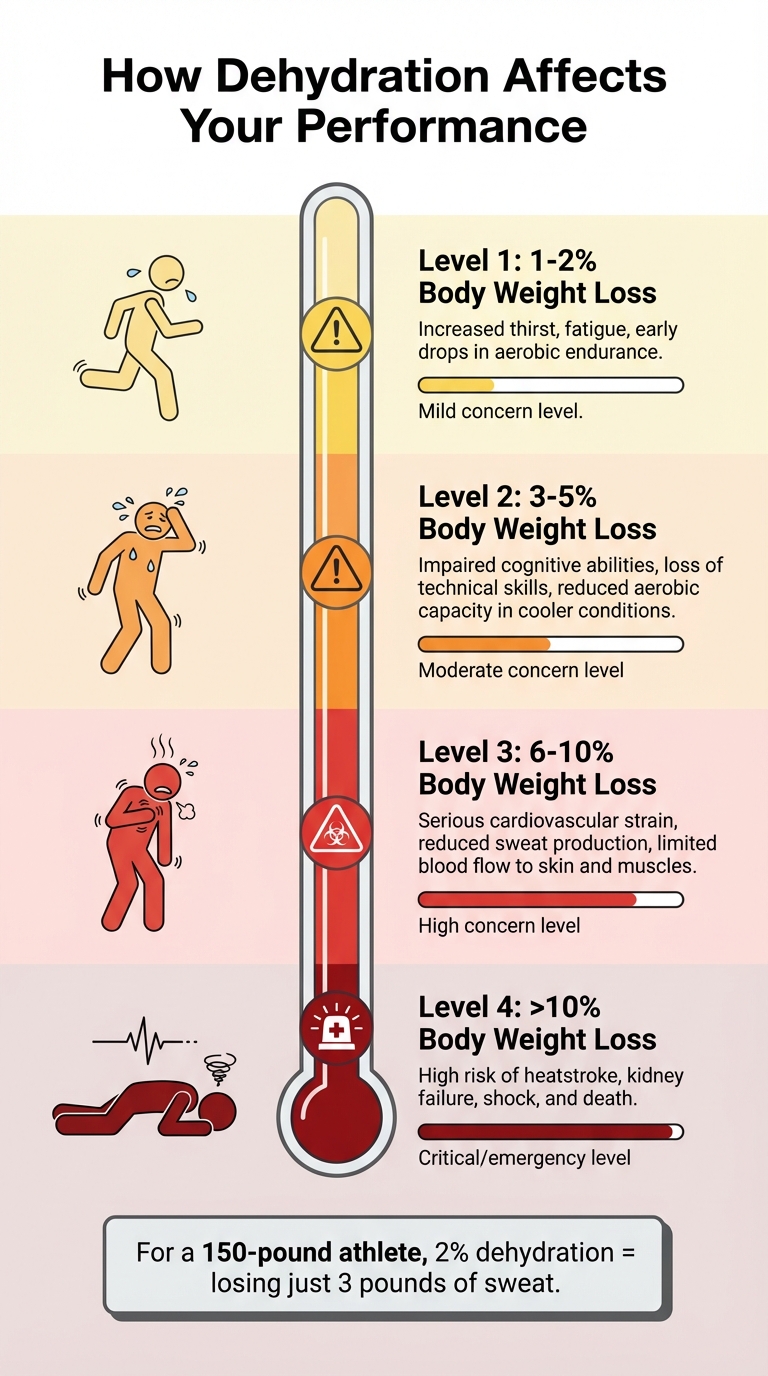
Dehydration Levels and Performance Impact Chart
Falling short on hydration or protein can derail your fitness goals and increase your risk of injury. These aren't minor setbacks - they can completely stall your progress.
Warning Signs of Dehydration
Dehydration often starts subtly, with signs like feeling unusually fatigued during workouts, headaches, dizziness, or a greater sense of effort than usual. As it worsens, the symptoms become more noticeable: dark-colored urine, dry mouth, flushed skin, muscle cramps, and an elevated heart rate despite low blood pressure.
The effects on performance are predictable. Losing just 2% of your body weight in fluids is enough to hurt your aerobic performance. For example, a 150-pound athlete could experience this after losing just 3 pounds of sweat. At 3% to 5% fluid loss, cognitive function and technical skills start to decline, even in cooler conditions. Push past 6% to 10%, and the strain on your body becomes severe - sweat production decreases, cardiac output drops, and blood flow to your skin and muscles is significantly restricted.
| Dehydration Level (% Body Weight Loss) | Impact on Performance and Health |
|---|---|
| 1% - 2% | Increased thirst, fatigue, and early drops in aerobic endurance |
| 3% - 5% | Impaired cognitive abilities, loss of technical skills, and reduced aerobic capacity in cooler conditions |
| 6% - 10% | Serious cardiovascular strain, reduced sweat production, and limited blood flow to skin and muscles |
| >10% | High risk of heatstroke, kidney failure, shock, and even death |
Dehydration doesn’t just impact your workout - it puts your entire cardiovascular system under stress. And while hydration is crucial for performance, protein is equally important for recovery.
How Protein Deficiency Affects Muscle Recovery
When you exercise, your muscles develop small tears that need amino acids from protein to heal and grow stronger. Without enough protein, these micro-tears don’t repair properly, slowing down your recovery.
The effects go beyond slower progress. Chronic protein deficiency can lead to a loss of lean muscle mass, which directly affects your strength, balance, and power. You may feel weaker, struggle with workouts, and risk undoing the benefits of your training. Not getting enough protein also increases your risk of injury by weakening your muscles and reducing the stability you need for consistent training.
"By chronically underdoing it on protein, you'll lose out on some of the best effects of exercising, like building muscle and boosting your energy levels." - Sarah Garone, Registered Nutrition and Dietetics Technician
Protein plays a key role in metabolism too. It’s highly satisfying and requires more energy to digest compared to carbs, so skimping on protein can slow your metabolism and make weight management harder. Over time, severe protein deficiency can weaken your immune system and even lead to anemia, further limiting your ability to train effectively.
How Hydration and Protein Work Together
Hydration and protein work hand in hand to improve recovery and athletic performance by ensuring nutrients are delivered efficiently and muscles are repaired effectively. When combined thoughtfully, they create benefits that neither can achieve alone. This partnership not only speeds up recovery but also enhances training results, as studies have shown.
The Combined Benefits of Protein and Fluids
Water plays a key role in transporting amino acids to muscles for repair and growth. Without adequate hydration, this transport process becomes less efficient.
After exercise, pairing protein with carbohydrates can significantly increase muscle glycogen synthesis - by as much as 40% to 100%. Glycogen serves as your muscles' primary energy source, so replenishing it quickly helps you recover faster and get back to training sooner.
"Post-exercise protein consumption added to CHOs can increase and maximize muscle glycogen synthesis by 40-100%, depending on post-CHO intake levels." - Jennifer Kurtz, PhD(c), CISSN, CSCS, EP-C
Protein also plays a role in improving fluid retention. Drinks that combine protein and electrolytes, such as chocolate milk, help maintain plasma volume and reduce fluid loss more effectively. Proper hydration not only reduces cardiovascular strain but also supports muscle protein synthesis, making it essential for recovery and performance.
Research on Protein-Carbohydrate-Electrolyte Combinations
Recent research highlights how precise combinations of protein, carbohydrates, and electrolytes optimize recovery. Findings from the International Society of Sports Nutrition suggest that consuming protein during endurance activities - around 0.25 grams per kilogram of body weight per hour - alongside carbohydrate-electrolyte solutions can minimize muscle damage and soreness. For example, a 150-pound athlete would need roughly 17 grams of protein per hour during extended training.
Timing is critical as well. When rapid recovery is required (within four hours), the best results come from consuming carbohydrates at 0.8 grams per kilogram per hour along with protein at 0.2 to 0.4 grams per kilogram per hour. This strategy not only restores glycogen faster but also provides the amino acids necessary for muscle repair, creating a balance between hydration and protein for sustained performance.
For workouts lasting over an hour, a 6% to 8% carbohydrate-electrolyte solution with added protein is more effective than water or carbohydrates alone in maintaining performance and fluid balance. Carbohydrates encourage better fluid intake, while sodium and protein help the body retain water where it’s needed most.
sbb-itb-a09e3e8
How to Balance Hydration and Protein Intake
Peak performance isn’t just about pushing harder during workouts - it’s also about fueling your body the right way. Balancing hydration and protein intake is essential, and the secret lies in making both a consistent part of your routine. Think of them as building blocks for your training, not just quick fixes when you feel thirsty or sore.
Hydration Strategies for Better Performance
Hydration starts long before you hit the gym or the trail. Begin the process early by drinking 500 mL the night before, another 500 mL when you wake up, and 400–600 mL about 20–30 minutes before exercise. This ensures your body is well-prepped with fluid reserves before the first drop of sweat appears.
During your workout, aim to sip 4–6 ounces of fluid every 15 minutes. If your session lasts longer than an hour, switch from plain water to a sports drink with 200 milligrams of salt per 16-ounce serving. This helps maintain your electrolyte levels, which are crucial for sustained performance.
"By the time you actually feel thirsty, it's too late ― you're already too low on fluids."
– Rayven Nairn, MS, RDN, LDN, Johns Hopkins University Student Health and Wellness Center
Once your workout wraps up, it’s time to rehydrate. Weigh yourself and drink 16–24 ounces of fluid for every pound of body weight lost. Alternatively, a quick check of your urine color can help - pale straw yellow is the goal for proper hydration.
Pair your hydration efforts with smart protein choices to fast-track recovery.
Protein Snack Strategies for Recovery
When it comes to protein, timing is just as important as quantity. Spread your protein intake evenly throughout the day, aiming for 0.25–0.3 grams per kilogram of body weight every 3–5 hours. For a 150-pound athlete, this works out to about 17–20 grams of protein per meal or snack.
The post-workout window is where hydration and protein work hand in hand. Within 20–60 minutes after exercise, have a high-protein snack paired with fluids to kickstart recovery. For instance, chocolate milk is a fantastic option - it provides the carbohydrates needed to replenish glycogen and the protein your muscles need to repair.
If you’re looking for more ideas, Greek yogurt is a solid choice, offering 18 grams of protein per 3/4 cup serving. Pair it with water-rich fruits like watermelon or oranges to tackle hydration and muscle repair in one go.
Creating a Daily Hydration and Protein Routine
Turning hydration and protein strategies into daily habits can help you stay consistent and improve your performance. Establishing clear goals for both hydration and protein intake ensures you're fueling your body effectively every day.
Daily Protein and Hydration Goals
To get started, set specific intake targets. For endurance athletes, the recommended protein intake is 1.2–2.0 grams per kilogram of body weight per day. For instance, if you weigh 150 pounds (68 kg), aim for about 82–136 grams of protein daily. Spread this amount across the day, consuming 0.25–0.3 grams per kilogram every 3–5 hours to maximize muscle recovery and growth.
Hydration needs vary based on your sweat rate and activity level. A simple way to estimate your fluid loss is by weighing yourself before and after a workout. For every pound lost, drink 16–24 ounces of fluid to rehydrate.
"The goal of drinking during exercise is to prevent excessive (>2% body weight loss from water deficit) dehydration and excessive changes in electrolyte balance to avert compromised performance."
– American College of Sports Medicine
Timing Protein and Fluids Around Workouts
When you consume protein and fluids can make a big difference in your performance and recovery. Start hydrating 2–4 hours before exercise with 14–22 ounces of fluid, and top it off with an additional 8–20 ounces about an hour before your workout. For protein, aim for 0.3 grams per kilogram (roughly 20–40 grams) 1–4 hours before exercise to keep your muscles fueled.
If your workout lasts longer than 60 minutes, sip 4–6 ounces of fluid every 15 minutes to stay hydrated. For endurance events over 90 minutes, consider adding 0.25 grams of protein per kilogram per hour to help reduce muscle damage and support performance. After your workout, take advantage of the recovery window by consuming 0.25–0.3 grams of protein per kilogram within 0–2 hours, paired with fluids to rehydrate and replenish glycogen stores. This post-workout combination is key to jumpstarting muscle repair and recovery.
Incorporating these strategies into your daily routine can set you up for better recovery and consistent performance. For quick and convenient recovery options that meet your protein needs, check out High Protein Snacks Pro. They offer a variety of protein-packed snacks, like bars and Greek yogurt, to help you hit your fitness and recovery goals.
Conclusion
Hydration and protein play a critical role in athletic performance and recovery. Studies reveal that combining protein with fluids can enhance fluid retention by up to 40% more than water alone and increase muscle glycogen synthesis by as much as 100% compared to using carbohydrates alone. These advantages translate to quicker recovery, better performance, and less muscle soreness after exercise.
To make the most of these benefits, consider incorporating these nutritional strategies into your routine. Review your daily protein and hydration goals regularly to ensure they align with your fitness needs. Aim to consume protein and fluids within the first 60 minutes after your workout - this is when your body is most ready to absorb nutrients and repair muscles effectively.
"You cannot out-train poor nutrition and hydration. Food is fuel and your body needs good nutrition to train and perform at your best!" – Nationwide Children's Hospital
Even a slight fluid loss, as little as 2%, can negatively affect performance. Keep track of your hydration levels, monitor how much you sweat during workouts, and fuel your recovery with high-quality protein sources.
FAQs
What are the signs of dehydration during a workout?
During exercise, dehydration can show up in several ways: feeling extremely thirsty, having dark-colored urine, experiencing dizziness, feeling fatigued, or noticing your performance drop off. Another clear sign is losing more than 2% of your body weight through sweat, which points to a significant fluid loss.
To keep your hydration levels in check, sip on water or an electrolyte-rich drink during your workout, especially if it's intense or lasts a long time. Paying attention to these signals and addressing them quickly can help you perform better and steer clear of potential health issues.
What are the best protein sources to help with recovery?
For recovery, some of the best protein sources come from animal-based options like lean meats, fish, eggs, and dairy. These foods provide complete proteins, meaning they contain all the essential amino acids your body needs. On the other hand, plant-based options - such as beans, lentils, quinoa, nuts, and seeds - are fantastic alternatives. By combining different plant-based proteins, you can create a balanced amino acid profile to support recovery.
Adding protein-rich snacks to your daily routine can make post-workout recovery more convenient. Portable options like protein bars, jerky, or Greek yogurt are not only easy to grab on the go but also help repair muscles and aid overall recovery.
Why should I combine protein, carbs, and electrolytes after a workout?
After a workout, combining protein, carbohydrates, and electrolytes is key to helping your body bounce back. Carbohydrates work to refill your glycogen stores, giving you the energy you'll need for your next session. Electrolytes replace the minerals you lose through sweat, keeping you hydrated and supporting muscle function. And protein? It’s all about repairing and rebuilding muscle tissue, so you come back stronger.
Getting the right balance of these nutrients can make a big difference in your recovery and performance. For something quick and easy, grab a protein bar or a drink that combines all three - simple and effective!