
Top 7 Health Benefits of Greek Yogurt

Top 7 Health Benefits of Greek Yogurt
Greek yogurt isn't just a snack - it's packed with nutrients that support your overall health. From aiding muscle recovery to improving digestion, this creamy, protein-rich food offers a range of benefits. Here's what you need to know:
- Protein Power: With 17–20 grams of protein per serving, it promotes muscle recovery and growth.
- Bone Support: High in calcium, magnesium, and often fortified with vitamin D, it helps maintain bone strength.
- Gut Health: Loaded with probiotics, it aids digestion and supports a healthy gut microbiome.
- Heart Health: Probiotics and nutrients can help manage cholesterol levels.
- Blood Sugar Control: Its low glycemic index and protein balance help reduce the risk of type 2 diabetes.
- Immune Boost: Probiotics, zinc, and selenium strengthen your immune system.
- Weight Management: High protein and low calories keep you full longer, helping control appetite.
Stick to plain, unsweetened varieties with "Live & Active Cultures" for maximum benefits. Whether as a post-workout snack, a breakfast base, or a sour cream substitute, Greek yogurt is a nutritious addition to your meals.
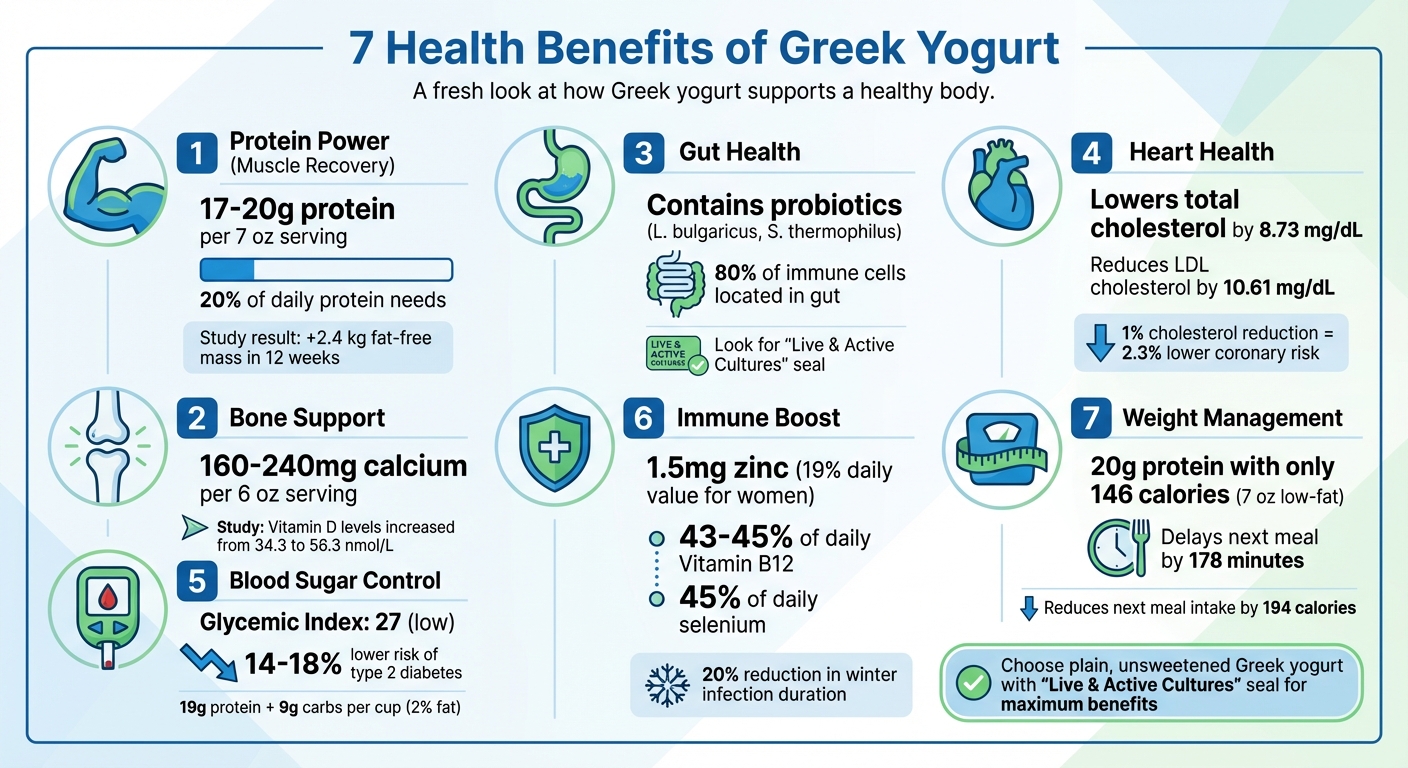
7 Health Benefits of Greek Yogurt with Nutritional Data
GREEK YOGURT BENEFITS | 9 Insane Things That Happen When You Eat It Every Day
sbb-itb-a09e3e8
1. High Protein for Muscle Recovery and Growth
Greek yogurt packs a punch when it comes to protein, offering around 17 to 20 grams per 7-ounce (200-gram) serving - that's about 2 to 3 times more than regular yogurt. This single serving provides roughly 20% of the daily protein needs for an active adult, making it a convenient and effective whole-food protein source.
What sets Greek yogurt apart is its unique protein profile. It contains both whey and casein proteins, which work together to optimize muscle recovery. Whey protein is absorbed quickly, kickstarting muscle protein synthesis right after exercise. Meanwhile, casein, which makes up about 80% of the protein, digests more slowly, delivering a steady stream of amino acids. This combination ensures both immediate muscle repair and long-term recovery.
Greek yogurt is also rich in leucine, an essential amino acid that plays a key role in triggering muscle protein synthesis. Research shows that a 20-gram protein dose is particularly effective for stimulating muscle growth compared to smaller amounts.
In a 12-week study, participants who ate fat-free Greek yogurt (providing 20 grams of protein per serving) saw impressive results. They gained 98 kg in total strength, added 2.4 kg of fat-free mass, and increased their biceps thickness by 0.46 cm - nearly four times more than those in the placebo group.
For best results, enjoy Greek yogurt right after your workout to quickly deliver essential amino acids to your muscles. Its high casein content also makes it an ideal bedtime snack, as it supports muscle recovery throughout the night. Opt for plain, unsweetened varieties to avoid added sugars that could derail your fitness goals.
Looking for more high-protein snack ideas? Check out High Protein Snacks Pro for detailed nutritional comparisons.
2. Supports Strong Bones
Greek yogurt isn't just about muscle recovery - it’s also great for building and maintaining strong bones. A typical 6-ounce serving delivers 160 to 240 mg of calcium, along with phosphorus, magnesium, and high-quality protein. These nutrients are crucial for keeping your bones dense and healthy throughout your life. Calcium, in particular, is the most abundant mineral in the body, with the majority stored in your bones to provide structure and strength.
What makes Greek yogurt even more effective for bone health is how its nutrients work together. Vitamin D plays a key role by helping your body absorb over 90% of the calcium you consume. Without enough vitamin D, your body struggles to maintain the calcium-phosphate balance needed for proper bone mineralization. Many Greek yogurt brands now fortify their products with vitamin D, so checking labels for this fortification can help you get the most out of it.
Research backs this up. In one study, older women who consumed vitamin D3 and calcium-fortified Greek yogurt daily for 84 days saw their serum vitamin D levels increase from 34.3 to 56.3 nmol/L. This also reduced markers of bone resorption (P=0.0228), which can help prevent conditions like secondary hyperparathyroidism, where calcium is pulled from bones.
To maximize bone benefits, pair Greek yogurt with resistance training or high-impact exercises, which stimulate bone formation. Opt for plain, unsweetened varieties fortified with calcium and vitamin D, and look for the "Live & Active Cultures" (LAC) seal to ensure probiotics that aid in nutrient absorption. Adults aged 19 to 70 should aim for 600 IU of vitamin D daily, while those over 70 need 800 IU.
3. Improves Digestive Health
Greek yogurt is packed with probiotics that help maintain a healthy balance of gut bacteria and support digestion. It’s made using Lactobacillus bulgaricus and Streptococcus thermophilus, which transform lactose into lactic acid. Many brands also include additional strains like Lactobacillus acidophilus, Bifidobacterium bifidum, and Bifidus regularis to further promote gut health.
These probiotics play a key role in breaking down nutrients and strengthening the intestinal barrier to protect against harmful pathogens. Considering that around 80% of your immune cells are located in the gut, this support is essential. Regularly eating Greek yogurt may also help alleviate common digestive issues like bloating, gas, constipation, and diarrhea.
For individuals with mild dairy sensitivities, Greek yogurt can be easier to digest since the fermentation process reduces lactose content.
"Healthy bacteria in the gut are critical to digestion. Research also shows that these tiny microbes play an important role in regulating the immune system, the inflammatory response and many other bodily functions." - Mayo Clinic
To get the most digestive benefits, choose products with the "Live and Active Cultures" seal, which guarantees at least 1,000,000 colony-forming units per gram. Steer clear of yogurts labeled "heat treated after culturing", as this process kills the beneficial bacteria. Additionally, stick to plain, unsweetened options, as added sugars can disrupt your gut microbiome. These gut-friendly qualities add to Greek yogurt’s overall contribution to better metabolic health.
4. Helps Manage Cholesterol Levels
Greek yogurt can play a role in supporting heart health by positively influencing cholesterol levels. The probiotics it contains - particularly strains like Lactobacillus acidophilus and Bifidobacterium lactis - help improve lipid profiles. According to the Harvard T.H. Chan School of Public Health, "helpful bacteria in the yogurt may reduce inflammation or improve the action of the body's natural insulin". These effects contribute to overall heart health, as supported by emerging research.
A meta-analysis of randomized controlled trials revealed that probiotic yogurt can lower total cholesterol by 8.73 mg/dL and LDL cholesterol by 10.61 mg/dL. To put this into perspective, a 1% reduction in cholesterol correlates with a 2.3% decrease in coronary risk, while a 10% drop in men aged 40 is linked to a 50% lower risk of heart disease.
Even full-fat Greek yogurt offers heart-friendly benefits thanks to its nutrient-rich composition. It provides calcium, protein, and probiotics, which help counterbalance concerns about its fat content. Kyla M. Lara-Breitinger, M.D., M.S., a cardiologist at Mayo Clinic, highlights this balance:
"If you eat a full-fat yogurt snack instead of a bag of chips or a beef stick, then despite the saturated fat in yogurt, you are also getting far better nutrients like calcium, protein and probiotics."
For the best results in managing cholesterol, aim to consume at least 7 ounces (200 g) of plain Greek yogurt daily. Look for products with the "Live & Active Cultures" seal. You can also use Greek yogurt as a substitute for sour cream or mayonnaise to boost heart health while enjoying its other benefits for muscles, bones, and digestion.
5. Lowers Type 2 Diabetes Risk
Plain Greek yogurt has a mean glycemic index (GI) of just 27, which is well under the low-GI cutoff of 55. This means it leads to a gradual rise in blood sugar instead of a sharp spike. The secret lies in how it’s made: the straining process removes much of the lactose and whey, leaving it with about half the carbohydrates and twice the protein compared to regular yogurt.
That protein-to-carb balance plays a big role. Protein slows digestion, which helps regulate how quickly glucose enters your bloodstream. For example, a typical cup of 2% fat Greek yogurt contains about 19 grams of protein and just 9 grams of carbohydrates. This combination helps stabilize blood sugar levels and keeps you feeling full longer.
Probiotics in Greek yogurt offer added benefits. Frank Hu, a Professor of Nutrition and Epidemiology at Harvard T.H. Chan School of Public Health, notes:
"One hypothesis is that the probiotics in yogurt may help to improve insulin sensitivity and reduce inflammation, but this hypothesis needs to be tested in randomized clinical trials."
The connection is supported by research. Studies show that eating yogurt regularly is associated with a 14% to 18% lower risk of developing type 2 diabetes. In fact, in 2024, the FDA approved a qualified health claim allowing yogurt producers to state that consuming yogurt may reduce the risk of type 2 diabetes.
For the best results, choose plain, unsweetened Greek yogurt with less than 10 grams of sugar and 15 grams of total carbohydrates per serving. Sweetened options tend to have a higher GI, averaging around 41. Want to boost the benefits? Add a tablespoon of ground flaxseed or a handful of fresh berries for extra fiber, which helps slow glucose absorption without causing a blood sugar spike.
6. Strengthens Immune Function
Did you know that up to 80% of your immune cells are located in your gut? This is why Greek yogurt, packed with probiotics, plays such an important role in supporting your immune system. These helpful bacteria not only boost immune cell production, but they also strengthen the intestinal lining, creating a barrier to block harmful pathogens.
Studies suggest that probiotics in fermented milk can reduce the duration of winter infections, like respiratory and gastrointestinal illnesses, by 20%, especially in older adults. In fact, elderly individuals who consumed yogurt daily for 8 to 12 weeks showed a lower risk of catching colds and a noticeable increase in natural killer cell activity, which is vital for fighting infections. Beyond probiotics, Greek yogurt's rich nutrient profile further supports your immune health.
A single 7-ounce serving of Greek yogurt provides 1.5 mg of zinc - 19% of the daily requirement for adult women. Zinc is essential for developing immune cells, as Amy Gorin, RDN, explains:
"Zinc contributes to the development of cells that are in charge of defending your body against toxins or threatening foreign substances".
That same serving also delivers 43% to 45% of your daily Vitamin B12 needs, which aids in red blood cell production and helps your body stay energized to combat illnesses. On top of that, Greek yogurt contains 45% of the daily value for selenium, a nutrient that shields immune cells from oxidative damage. The fermentation process also keeps zinc in a soluble form, making it easier for your body to absorb compared to non-fermented dairy.
For the best immune-boosting benefits, look for Greek yogurt with the "Live & Active Cultures" (LAC) seal to ensure you're getting plenty of probiotics. Stick to plain, unsweetened options to avoid added sugars, which can disrupt these beneficial bacteria. Pair your yogurt with fiber-rich foods like berries or flaxseed for an added boost, as fiber helps nourish the good bacteria in your gut.
7. Aids Weight Management
Greek yogurt isn't just about muscle recovery or bone health - it’s also a great ally in managing weight. A 7-ounce serving of low-fat plain Greek yogurt delivers 20 grams of protein with only 146 calories. That’s a lot of nutrition packed into a small calorie count, especially when compared to other snacks that are often higher in calories but less satisfying.
The protein in Greek yogurt plays a key role in controlling appetite. It triggers the release of hormones like PYY and GLP-1, which signal fullness. Plus, its thick, creamy texture slows digestion, stretching the stomach and sending "you’re full" signals through the vagus nerve.
Timing your Greek yogurt snack is just as important as its nutritional content. A randomized study at the University of Missouri observed 15 healthy women (average age 26) who ate yogurt snacks with varying protein levels. Those who consumed a yogurt snack containing 24 grams of protein delayed their next meal by 178 minutes, compared to just 124 minutes when they skipped the snack. Researcher Heather J. Leidy and her team concluded:
"In conclusion, an afternoon snack of Greek yogurt, containing 24 g protein, led to reduced hunger, increased fullness, and delayed subsequent eating compared to lower protein snacks in healthy women."
This delay in eating, known as the "second-meal effect", can naturally lead to a 20% to 30% reduction in calorie intake at your next meal. Another study involving 20 healthy men (average age 32.4) found that a high-whey protein yogurt snack reduced lunchtime calorie intake by approximately 194 calories compared to standard yogurts.
To get the most out of Greek yogurt for weight management, enjoy it as an afternoon snack (between 2–4 PM). Stick to plain varieties to avoid added sugars and keep the focus on its protein-packed benefits.
Nutritional Profile of Greek Yogurt
Greek yogurt is packed with essential nutrients, making it a standout choice for those looking to boost their diet. Each serving delivers a mix of vitamins and minerals that contribute to its many health benefits.
A 7-ounce (200-gram) serving of low-fat Greek yogurt contains 18 to 20 grams of protein - roughly double what you'd find in regular yogurt. This high protein content is thanks to the straining process, which removes liquid whey, leaving behind a thick, nutrient-rich product. Alongside protein, you'll get 222 mg of calcium (18% to 22% of your Daily Value), 1.4 mcg of Vitamin B12 (43% to 58% of the DV), plus potassium, iodine, and zinc.
The straining process also reduces sugar by 40% and sodium by 38% compared to traditional yogurt. With about 14% less lactose, Greek yogurt is often easier to digest for those with mild lactose sensitivity. Registered Nutritionist Nicola Shubrook highlights the importance of iodine, noting, "Iodine is essential for thyroid function, as well as for growth and metabolism". Greek yogurt provides this vital nutrient in every serving.
When choosing Greek yogurt, plain varieties are best to avoid added sugars, which can hit 16 grams (4 teaspoons) per serving in flavored options. Look for the "Live & Active Cultures (LAC)" seal to ensure you're getting probiotics like Lactobacillus bulgaricus, which support gut health. Opting for plain, LAC-certified yogurt keeps the nutrient content intact while delivering the health benefits discussed earlier. Whether you prefer nonfat, low-fat, or whole milk varieties, Greek yogurt provides a complete protein source with all nine essential amino acids your body needs.
For calorie-conscious eaters, a 6-ounce (170-gram) serving of Greek yogurt contains about 150 calories with 2% fat, while nonfat options can be as low as 92 calories per serving.
Conclusion
Greek yogurt packs a punch when it comes to nutrition. Just one 7-ounce serving delivers 18–20 grams of protein, which can aid in muscle recovery, strengthen bones, support digestion, and help with appetite control. Its nutrient profile may even contribute to reducing the risk of type 2 diabetes by up to 14% and plays a role in promoting heart health and a stronger immune system.
To get the most out of Greek yogurt, stick to plain, unsweetened options with the "Live & Active Cultures (LAC)" seal. This ensures you're avoiding unnecessary sugars while reaping the benefits of probiotics. Whether you enjoy it post-workout, use it as a creamy swap for sour cream or mayo, or pair it with fresh berries and chia seeds, Greek yogurt is a versatile addition to any meal plan.
If you're looking for more high-protein snack ideas, check out High Protein Snacks Pro. The platform offers detailed nutritional breakdowns and dietary filters, making it simple to find options that align with your needs - whether you're gluten-free, paleo, or just aiming to hit your protein goals.
Make Greek yogurt a part of your daily routine. Start with one serving today and enjoy the wide-ranging health perks of this protein-packed staple.
FAQs
How do I choose the healthiest Greek yogurt?
To choose the healthiest Greek yogurt, go for plain varieties with little to no added sugar. Look for options that are high in protein - ideally around 20 grams per serving - and contain probiotics for gut health. Check the Nutrition Facts label to ensure it provides at least 15% of the Daily Value for calcium. Plain, minimally processed Greek yogurt strikes the right balance, offering plenty of protein, beneficial probiotics, and low sugar content.
Is Greek yogurt OK if I’m lactose intolerant?
Greek yogurt can be a good option for people with lactose intolerance. Thanks to its fermentation process and live cultures, much of the lactose is broken down, leaving less than 1 gram of lactose per ounce. This makes it gentler on the digestive system compared to regular dairy products.
How much Greek yogurt should I eat per day?
It’s safe to consume up to 3 cups of unsweetened, nonfat, or low-fat Greek yogurt daily. This matches the USDA guideline, which recommends 3 cups of dairy each day for anyone aged 9 and older. However, your individual dietary needs may vary, so it’s always a good idea to check with a healthcare professional if you’re uncertain.