
Complete vs. Incomplete Proteins: Key Differences
Complete vs. Incomplete Proteins: Key Differences
Proteins are essential for your body, but not all proteins are created equal. Here's what you need to know:
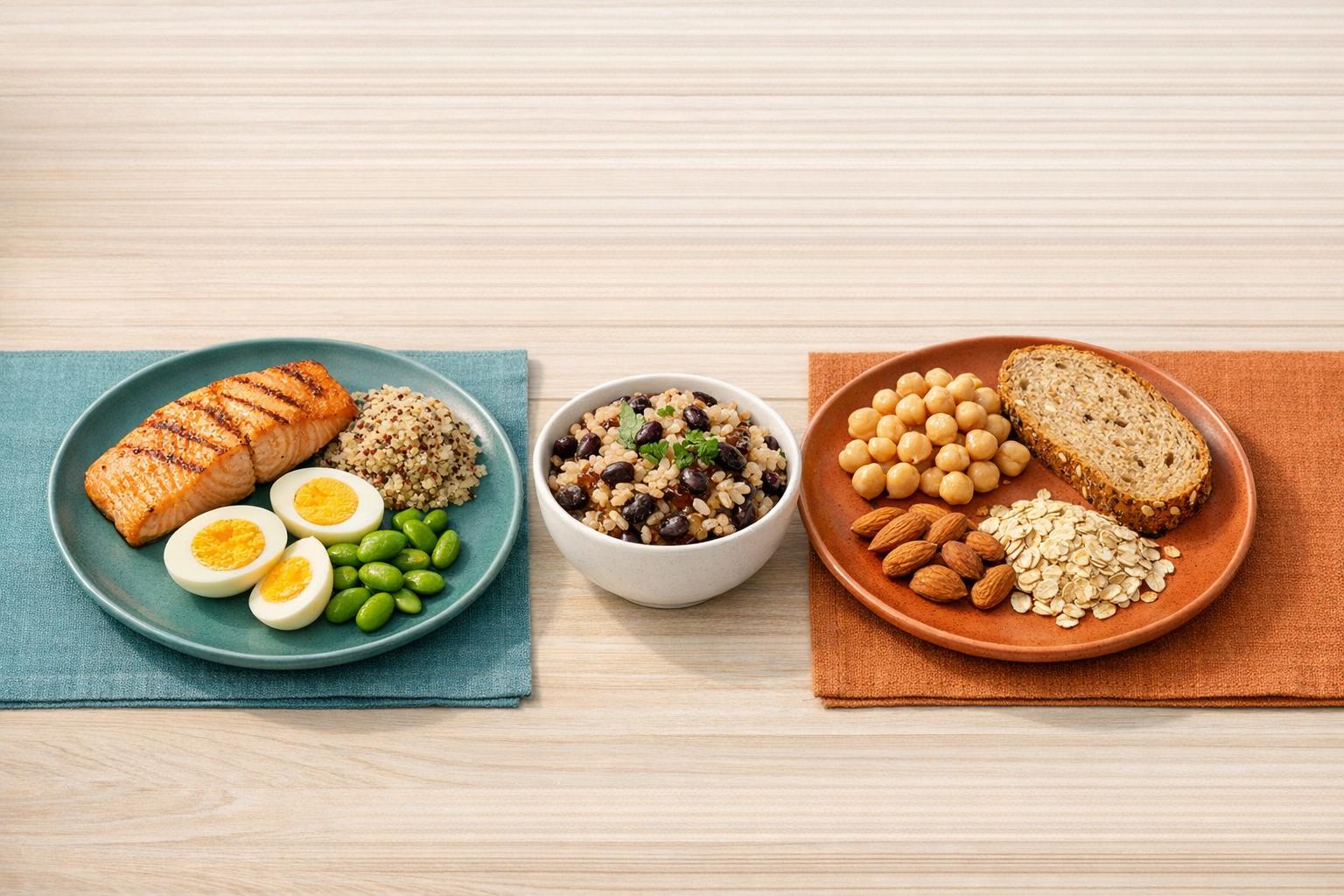
- Complete Proteins: These contain all 9 essential amino acids your body can't produce. Examples include animal-based foods like meat, fish, eggs, and dairy, as well as plant-based options like soy, quinoa, and buckwheat.
- Incomplete Proteins: These lack one or more essential amino acids. Common sources include beans, nuts, seeds, whole grains, and vegetables.
You don't need to eat complete proteins at every meal. Pairing incomplete proteins (like rice and beans) throughout the day can give your body the amino acids it needs. For a balanced diet, focus on variety and spread your protein intake across meals.
Quick Comparison
| Feature | Complete Proteins | Incomplete Proteins |
|---|---|---|
| Amino Acid Profile | All 9 essential amino acids | Missing one or more essential amino acids |
| Sources | Meat, fish, eggs, dairy, soy, quinoa | Beans, nuts, seeds, whole grains, vegetables |
| Nutritional Perks | High in muscle-supporting nutrients | Rich in fiber, antioxidants, and healthy fats |
| Best For | Muscle repair, athletes, omnivores | Vegetarians, vegans, heart-healthy diets |
Focus on variety, balance, and spreading protein intake across the day to meet your body's needs.
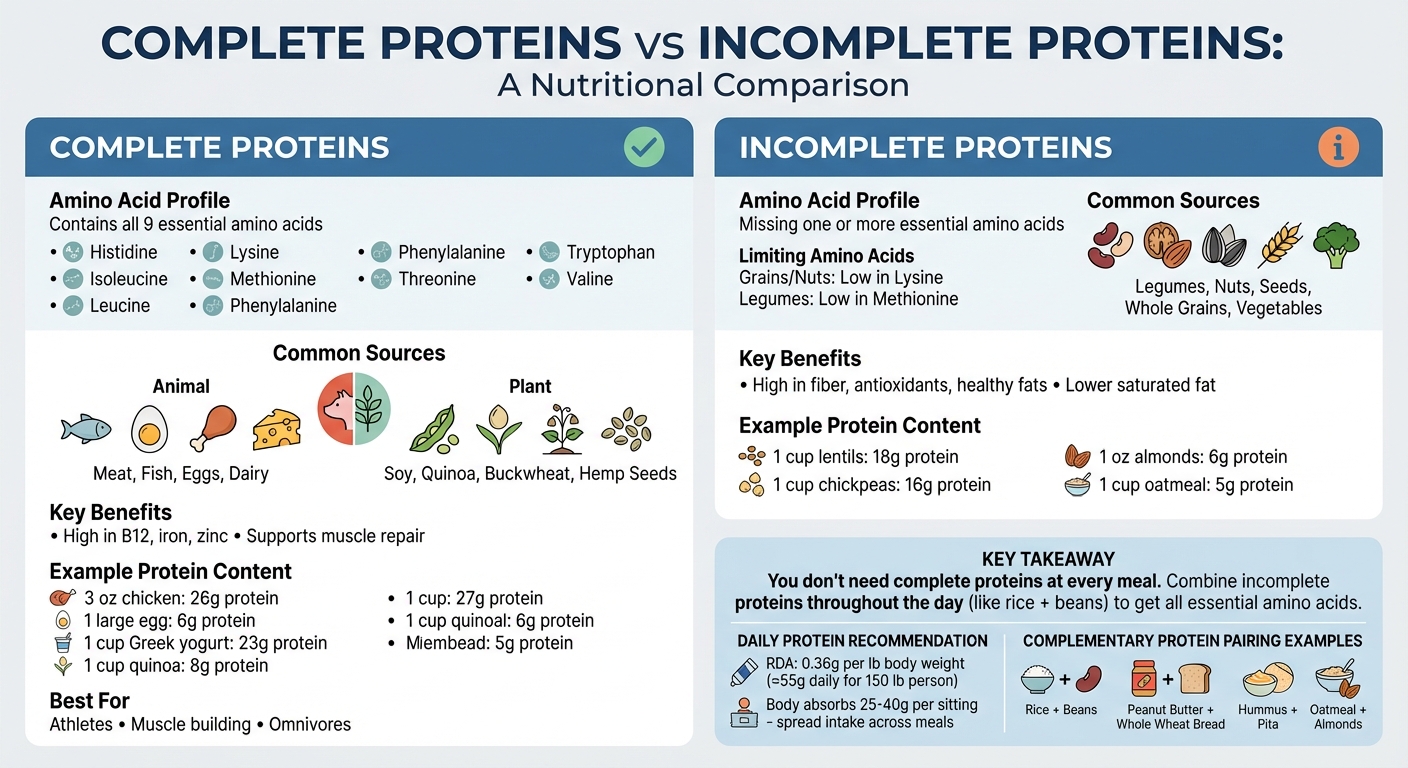
Complete vs Incomplete Proteins Comparison Chart
Complete, Incomplete, and Complementary Proteins
sbb-itb-a09e3e8
What Are Complete Proteins?
A complete protein contains all nine essential amino acids - histidine, isoleucine, leucine, lysine, methionine, phenylalanine, threonine, tryptophan, and valine. These amino acids are crucial for muscle growth, tissue repair, hormone regulation, immune function, and energy production, yet your body cannot produce them on its own .
According to Liebig's law, even if you consume enough total protein, a deficiency in any one of these essential amino acids can limit your body's ability to use it effectively.
Complete proteins come from both animal and plant sources. However, animal proteins are often highlighted because they naturally provide all nine amino acids in proportions that align closely with what your body requires.
Animal-Based Complete Protein Sources
Animal-based foods like poultry, fish, eggs, dairy, and red meats are reliable sources of all essential amino acids. For example:
- A 3-ounce serving of grilled chicken or lean steak provides about 26 grams of protein.
- One large egg contains roughly 6 grams of protein.
- A cup of plain fat-free Greek yogurt offers around 23 grams of protein.
Fish, in particular, is packed with essential amino acids, with 15% to 25% of its protein content coming from these nutrients.
Beyond protein, these foods also deliver important nutrients like vitamin B12, iron, calcium, vitamin D, selenium, choline, and omega-3 fatty acids. To balance nutritional benefits and health risks, opt for lean options such as skinless poultry, fish, and lean beef. Limiting red and processed meats can help reduce saturated fat intake and lower risks tied to heart disease and cancer.
"Eating healthy protein sources like beans, nuts, fish, or poultry in place of red meat and processed meat can lower the risk of several diseases and premature death." - Harvard T.H. Chan School of Public Health
Plant-Based Complete Protein Sources
While many plant proteins are incomplete, there are several plant-based foods that do provide all nine essential amino acids. Examples include soy products (like tofu, tempeh, and edamame), quinoa, buckwheat, amaranth, hemp seeds, chia seeds, spirulina, and nutritional yeast.
Here’s how these plant-based options stack up:
- One cup of cooked quinoa has about 8 grams of protein.
- Three tablespoons of raw hemp seeds provide around 10 grams.
- A 3-ounce serving of tempeh delivers roughly 11 grams.
Soy stands out among plant proteins because its amino acid profile is comparable to that of animal proteins.
Plant proteins often bring additional perks like fiber and antioxidants, while being lower in saturated fat. However, they can be slightly less digestible compared to animal proteins. Because of this, some experts recommend vegetarians aim for about 1.0 gram of protein per kilogram of body weight, rather than the standard 0.8 grams.
For those following vegetarian or vegan diets, eating a variety of these plant-based complete proteins throughout the day ensures your body gets all the essential amino acids it needs. Next, we’ll look at proteins that don’t provide the full range of essential amino acids.
What Are Incomplete Proteins?
An incomplete protein is a protein source that doesn't contain all nine essential amino acids in sufficient amounts. These amino acids are vital because the body can't produce them on its own. The amino acid that is lacking or present in the smallest quantity is referred to as the limiting amino acid.
Many plant-based foods fall into this category. For example, whole grains like brown rice and oats are often low in lysine, while beans and lentils are typically low in methionine. This doesn't make them any less valuable; it just means they need to be paired with other protein sources to create a complete amino acid profile. The good news? You don't need to eat these complementary proteins at the same meal. Your body is smart enough to combine amino acids from different foods consumed over a 24-hour period.
Milton Stokes, PhD, MPH, from the International Food Information Council, puts it this way:
"Incomplete proteins can be combined throughout the day to provide all the amino acids you need. You don't need to worry about having the right combination of foods at each meal; just focus on eating a variety of plant-based proteins throughout the day."
Even though they're considered incomplete, these proteins offer more than just amino acids. They come packed with other nutrients like fiber, antioxidants, vitamins, minerals, and healthy fats. For instance, just half a cup of legumes can provide 4 to 9 grams of protein along with a hefty dose of fiber.
Here’s a closer look at some common sources of incomplete proteins:
Common Incomplete Protein Sources
Plant-based incomplete proteins are found in a variety of foods, each with its own limiting amino acid.
- Legumes: Foods like lentils, black beans, chickpeas, and peas are generally low in methionine and tryptophan but are excellent protein sources. For example, one cup of cooked lentils contains 17–18 grams of protein, while a cup of chickpeas offers about 16 grams .
- Nuts and seeds: Options like almonds, walnuts, and pumpkin seeds are typically low in lysine. An ounce of hemp seeds delivers 9 grams of protein, pumpkin seeds provide 8 grams per ounce, and almonds offer 6 grams per ounce. They also bring healthy fats, magnesium, and zinc to the table .
- Whole grains: Foods such as oats, brown rice, and whole wheat are also low in lysine. A cup of cooked oatmeal contributes 4–6 grams of protein along with fiber and other key nutrients .
- Vegetables: While not as protein-dense, vegetables still add to your daily intake. A cup of cooked spinach contains about 5 grams of protein, while cooked broccoli and Brussels sprouts each offer around 4 grams per cup . Plus, they’re loaded with vitamins, antioxidants, and other micronutrients that benefit overall health.
Complete vs. Incomplete Proteins: Main Differences
The key difference between complete and incomplete proteins lies in their amino acid composition. Complete proteins provide all nine essential amino acids in sufficient amounts, while incomplete proteins lack one or more of these vital components. This doesn’t mean one is superior to the other - they simply fulfill different roles in your diet.
Complete proteins are often referred to as "high-quality" because they are particularly effective for muscle repair and tissue growth. These proteins are commonly found in animal products, as well as a few plant-based options like soy and quinoa. On the other hand, incomplete proteins come with their own perks, such as being rich in fiber, antioxidants, and healthy fats - nutrients that promote heart health and aid digestion.
You don’t need to consume complete proteins at every meal. By eating a variety of incomplete proteins over the course of a day, your body can still get all the essential amino acids it needs. For instance, the Recommended Dietary Allowance (RDA) for protein is about 0.36 grams per pound of body weight - equivalent to roughly 55 grams daily for a person weighing 150 pounds. Since the body can absorb only 25 to 40 grams of protein at a time, spreading your intake across meals and snacks is more effective.
Comparison Table: Complete vs. Incomplete Proteins
| Feature | Complete Proteins | Incomplete Proteins |
|---|---|---|
| Amino Acid Profile | Contains all 9 essential amino acids in sufficient amounts | Lacks or is low in one or more essential amino acids |
| Common Sources | Meat, poultry, fish, eggs, dairy, soy, quinoa, buckwheat | Beans, lentils, nuts, seeds, whole grains, vegetables |
| Key Nutritional Benefits | High in vitamin B12, iron, and zinc; supports muscle repair and tissue growth | High in fiber, antioxidants, and healthy fats; lower in saturated fat |
| Biological Value | Higher; easily absorbed and utilized by the body | Lower unless paired with complementary sources |
| Best Suited For | Omnivores, athletes, muscle building, keto diets | Vegans, vegetarians, heart-healthy diets |
| Limiting Amino Acids | None | Lysine (in grains/nuts), Methionine (in legumes) |
| Specific Examples | Chicken breast, Greek yogurt, salmon, tofu | Lentils, brown rice, almonds, spinach |
How to Combine Incomplete Proteins
You don’t need to stress about eating complementary proteins at every single meal. That’s because your body has an "amino acid pool" - a reserve of amino acids from foods you eat throughout the day. This means you can mix and match proteins from meals several hours apart. As Cynthia Sass, MPH, RD, clarifies:
"You don't have to eat complementary proteins together. As long as they are eaten over the course of the day, you will get the essential amino acids you need to meet your daily needs".
So, how can you make this work in your daily diet? Let’s look at some practical strategies.
One tried-and-true method is the grains + legumes combination. Grains are low in lysine, while legumes lack methionine. Together, they create a complete amino acid profile. This pairing is a staple in many cuisines around the world. Think rice and beans in Latin America or lentil soup with whole-grain bread in Mediterranean diets. These combinations ensure that incomplete proteins still contribute fully to your amino acid needs.
Another option is combining nuts or seeds with legumes. For example, Health.com suggested a meal of buckwheat soba noodles with almond butter sauce and black-eyed peas back in December 2025. This combination highlights how everyday ingredients can work together to provide a balanced amino acid profile.
For those who include some animal products in their diet, small amounts of complete proteins can enhance plant-based meals. Examples include whole-grain cereal with milk, yogurt sprinkled with walnuts, or classic macaroni and cheese.
Protein Pairing Examples
Here are some simple and effective meal ideas to help you complete your amino acid profile throughout the day:
| Meal Type | Combination | Rationale |
|---|---|---|
| Breakfast | Oatmeal topped with almonds | Grains and nuts balance each other's amino acids |
| Lunch | Rice and beans | Grains and legumes complement one another |
| Snack | Peanut butter on whole-wheat bread | Peanuts supply lysine to offset wheat's low levels |
| Dinner | Lentil soup with cornbread | Legumes and grains together provide all essential amino acids |
| Snack | Tortilla chips with bean dip | Corn and legumes complete the amino acid profile |
The bottom line? Focus on eating a variety of plant-based foods throughout your day rather than stressing over every single meal. As registered dietitian Krista Maguire puts it:
"Vegetarians and vegans don't need to worry about complementing foods at every meal. Just shoot for a well-balanced diet".
Protein Snack Options from High Protein Snacks Pro
High Protein Snacks Pro makes it easier to apply what you know about complete and incomplete proteins with a variety of convenient snack choices. The platform lets you filter options based on your fitness goals, whether you're focusing on muscle growth, weight management, or plant-based eating, while providing detailed nutritional breakdowns.
Complete Protein Snack Examples
Complete proteins contain all nine essential amino acids your body needs. If you're looking for a quick, protein-packed snack, here are a few options:
- Quest Nutrition Chocolate Chip Cookie Dough Protein Bar: With 20 grams of whey protein and just 200 calories, this gluten-free bar is perfect for post-workout recovery or curbing hunger between meals.
- Two Good Greek Yogurt in Vanilla: Each 5.3-ounce container delivers 12 grams of dairy protein at only 80 calories, making it a low-calorie yet satisfying choice.
- Chomps Grass-Fed Beef Stick in Original: This meat-based snack provides 9 grams of protein per stick at just 100 calories. It's both gluten-free and dairy-free, fitting well into paleo or Whole30 diets.
- Quest Nutrition Protein Chips in BBQ Flavor: For a savory option, these chips offer 19 grams of protein per serving at 140 calories - a crunchy alternative to protein bars.
Incomplete Protein Snack Examples
Plant-based snacks often lack one or more essential amino acids, but you can pair them strategically to create a complete protein profile. For example, a nut-based protein bar or almond butter can be balanced later in the day with a legume-based snack like hummus or chickpea crackers. Combining these foods ensures you meet your amino acid needs while enjoying a variety of flavors and textures.
These snack ideas not only help meet your protein goals but also support overall health, making protein an essential part of your daily routine.
Why Protein Matters for Your Health
Protein is a building block for more than 10,000 types of proteins in your body, playing a role in everything from hair structure to hemoglobin production. These proteins are vital for creating enzymes that regulate your metabolism and antibodies that help protect you from illness.
Your immune system heavily relies on protein. Certain amino acids, like histidine, contribute to the production of histamine, which is crucial for fighting infections. Without enough protein, your body becomes more susceptible to illnesses. As Kristina Freshour Hartman, a Registered Dietitian at Northwell Health, puts it:
"Without enough complete proteins, you might feel like your energy is zapped, or you're catching every bug that goes around".
In addition to supporting your immune system, protein plays a key role in tissue repair, making it essential to consume balanced amounts throughout the day.
When it comes to muscle repair and recovery, all nine essential amino acids - those your body can't produce on its own - are necessary. Complete proteins provide all of these amino acids in one source, making them particularly effective for muscle repair. Incomplete proteins can also help, but you'll need to eat a variety of them throughout the day to ensure you're covering all your bases.
Since the body doesn't store protein, spreading your intake across meals helps maximize absorption. The National Academy of Medicine recommends consuming at least 0.8 grams of protein per kilogram of body weight. For example, a 200-pound person would need about 73 grams of protein daily. However, your body can only process between 25 and 40 grams of protein at one time, so spacing out your intake is much more effective than eating it all in one meal. This approach ensures a steady supply of protein to support muscle repair, immune health, and hormone balance.
Gillian Culbertson, a registered dietitian at Cleveland Clinic, emphasizes:
"We can only absorb about 25 to 40 grams of protein per sitting, so making sure to space out protein intake throughout the day is important".
This limit on absorption highlights the importance of incorporating a variety of protein sources throughout the day. Whether you're relying on complete proteins or combining incomplete ones, the goal is to maintain consistent support for your muscles, immune system, and overall health.
Conclusion
Understanding protein types gives you the tools to fine-tune your diet. Complete proteins - like those found in meat, fish, eggs, and dairy - provide all nine essential amino acids your body needs. Certain plant-based foods, such as soy, quinoa, and buckwheat, also fall into this category. On the other hand, incomplete proteins lack one or more of these amino acids, but you can still meet your nutritional needs by combining them wisely.
Pairing incomplete proteins throughout the day - like beans and rice, hummus with pita, or peanut butter on whole-wheat bread - ensures you’re covering all essential amino acids. To maximize absorption, aim for 25–40 grams of protein per meal and spread your intake evenly across the day.
Platforms like High Protein Snacks Pro make hitting your protein goals easier. They offer convenient options, from complete protein sources like Greek yogurt and beef jerky to plant-based snacks you can mix and match. With detailed nutritional breakdowns and helpful filters, you can find snacks tailored to your needs.
The secret lies in keeping things simple and consistent. Combine different protein sources, balance your intake throughout the day, and enjoy the variety. With this knowledge, you’re ready to make smarter snack choices that support your health and wellness.
FAQs
Do I need to combine incomplete proteins in one meal?
No, you don’t need to combine incomplete proteins in a single meal. By eating a range of plant-based protein sources throughout the day, your body can piece together all the essential amino acids it needs to form complete proteins on its own.
How can I tell which amino acid a plant protein is missing?
To figure out which amino acid a plant protein might be missing, you can start by reviewing its amino acid profile. This can be done through lab testing, where the protein’s composition is analyzed, or by consulting trusted nutrition resources. These resources often include detailed breakdowns of amino acid content, making it easier to see if the protein is complete or lacking any essential amino acids.
How much protein should I eat per meal for best results?
For the best results, try to include 20-30 grams of protein in each meal. This range supplies your body with the amino acids it needs for muscle repair, recovery, and maintaining overall health. Of course, you can adjust this amount depending on your specific dietary requirements and how active you are.